Driving an electric or hybrid car in Iceland is one of the cleanest and most affordable ways to explore the country's main routes, and it suits most travelers who stay on paved roads. The country's compact size, renewable electricity, and chargers spaced along the Ring Road make electric driving practical even on a first visit.
Renting an electric or hybrid car in Iceland is increasingly common, and good car rentals in Iceland offer a wide choice of models. Road conditions and distances shape an electric road trip more than the car itself, so it helps to understand driving in Iceland before setting off.
An electric car comfortably covers Iceland's most popular routes, including the Ring Road, the Golden Circle, the South Coast, and the Snaefellsnes Peninsula, all of which have charging stations along the way. Travelers who prefer a set itinerary can follow self-drive tours that include overnight stays.
The real cost of an electric trip comes down to charging prices, driving range, and the kilometer-based road tax introduced in 2026, while Iceland's weather adds a seasonal factor. Read on for the practical details, from charging to driving in winter.
Why You Can Trust Our Content
Guide to Iceland is the most trusted travel platform in Iceland, helping millions of visitors each year. All our content is written and reviewed by local experts who are deeply familiar with Iceland. You can count on us for accurate, up-to-date, and trustworthy travel advice.
Key Takeaways
-
Electric and hybrid cars suit the Ring Road, Golden Circle, South Coast, and Snaefellsnes Peninsula, but they are not allowed on F-roads or in the Highlands.
-
Iceland's electricity is almost entirely renewable, mostly hydropower and geothermal, so low-emission electric travel is a good option.
-
Public charging costs roughly 30 ISK to 70 ISK (about 0.20 USD to 0.50 USD) per kilowatt-hour, and charging stays cheaper than petrol, though the gap narrowed after Iceland cut fuel taxes in 2026.
-
Most cars use a Type 2 plug for AC charging and CCS for DC fast charging, and a fast charger reaches 80 percent in about 20 to 60 minutes.
-
Cold weather cuts electric-car range by roughly 20 percent, so plan shorter daily drives and more frequent top-ups in winter.
Why Drive an Electric or Hybrid Car in Iceland
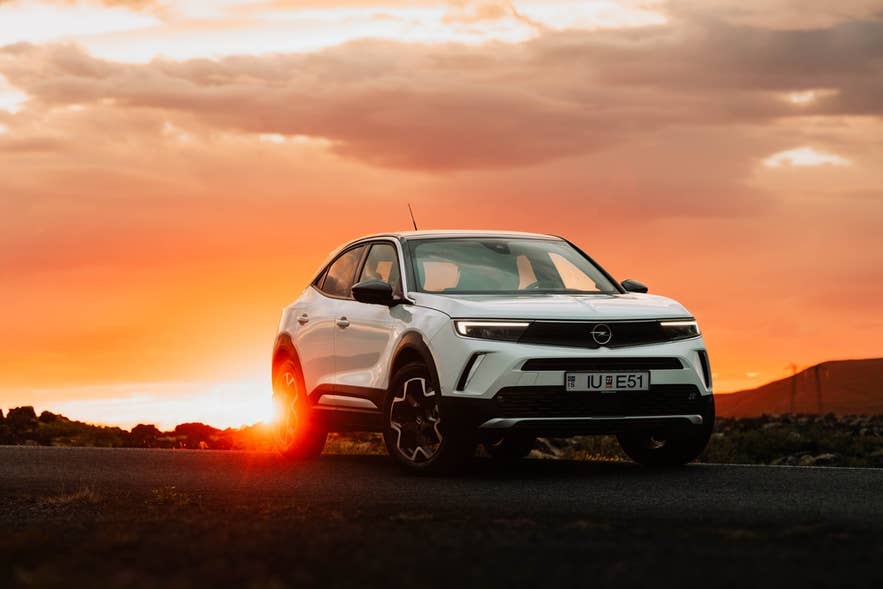
Iceland is one of the best places in the world to drive electric, because the grid is almost entirely renewable and the main sightseeing routes are short enough to cover between charges. Choosing an electric or hybrid car lowers both your emissions and your running costs.
Iceland generates close to 100 percent of its electricity from renewable sources, mostly hydropower and geothermal energy. That makes the power going into your battery some of the cleanest on the planet. Electricity also costs less per kilometer than petrol, and the quiet, smooth drive suits long days on the road.
Electric and hybrid cars are a common sight on Icelandic roads. Around six in ten new cars sold in Iceland in 2025 were electric or hybrid, accounting for approximately 62 percent of sales. Fully electric models alone made up just over a third.
Electric, Hybrid, or Plug-In Hybrid: Which One To Rent
If you want an electric or hybrid rental in Iceland, you will usually choose between three types. A fully electric car (EV) runs only on a battery, a hybrid runs mainly on petrol with electric help and never plugs in, and a plug-in hybrid (PHEV) can do both. Your choice depends on how far you drive each day and whether you want to charge at all.
| Type | How it works | Best for |
|---|---|---|
| Electric (EV) | Battery and electric motor only, with no petrol engine. Must be plugged in to charge. | Travelers who want to stay on the Ring Road and main routes with charging stops and enjoy the lowest running cost. |
| Hybrid (HEV) | Petrol engine plus an electric motor. Cannot be plugged in and recharges itself through braking and the engine. | Travelers who would rather not charge at all, or take longer remote drives. |
| Plug-in hybrid (PHEV) | Battery and electric motor, plus a petrol engine. Can be plugged in or run on petrol alone. | Travelers who want electric driving day to day, with a petrol backup for long or uncertain itineraries. |
Renting an Electric or Hybrid Car in Iceland
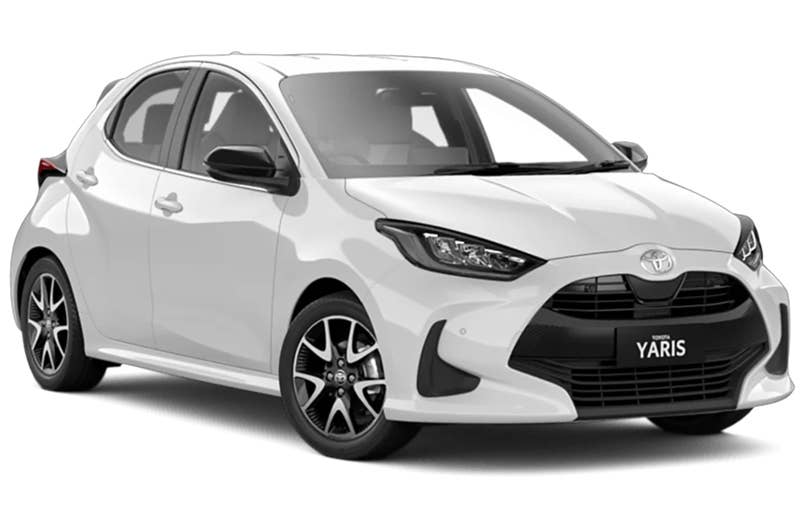
You can rent an electric or hybrid car in Iceland from most major car agencies, and Guide to Iceland's marketplace lets you compare them in one place. The widest choice is at the rental desks at Keflavik Airport, and you can also pick up car rentals in Reykjavik. Book early for summer when these cars are in high demand.
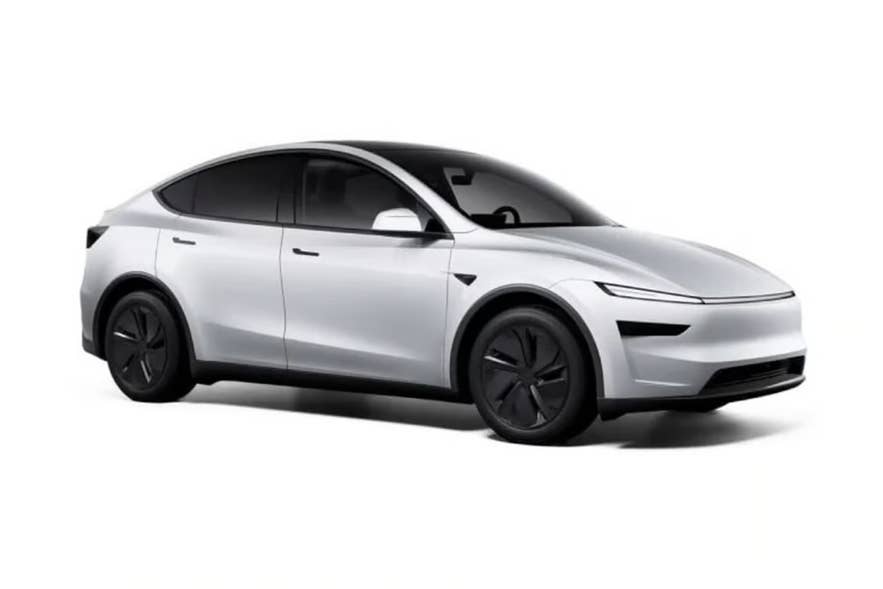
Fully electric options usually include the Tesla Model Y and other long-range cars, while hybrids and plug-in hybrids include models like the Toyota Yaris and the Mitsubishi Eclipse Cross plug-in 4x4. If you want a larger or all-wheel-drive car, you will find electric and hybrid SUVs in the lineup too.
Before you drive off, confirm three things: that the charging cable is included and matches the plug type, the car's range (how far it travels on a full charge), and that your insurance covers electric parts.
Where You Can and Can't Drive an Electric Car in Iceland
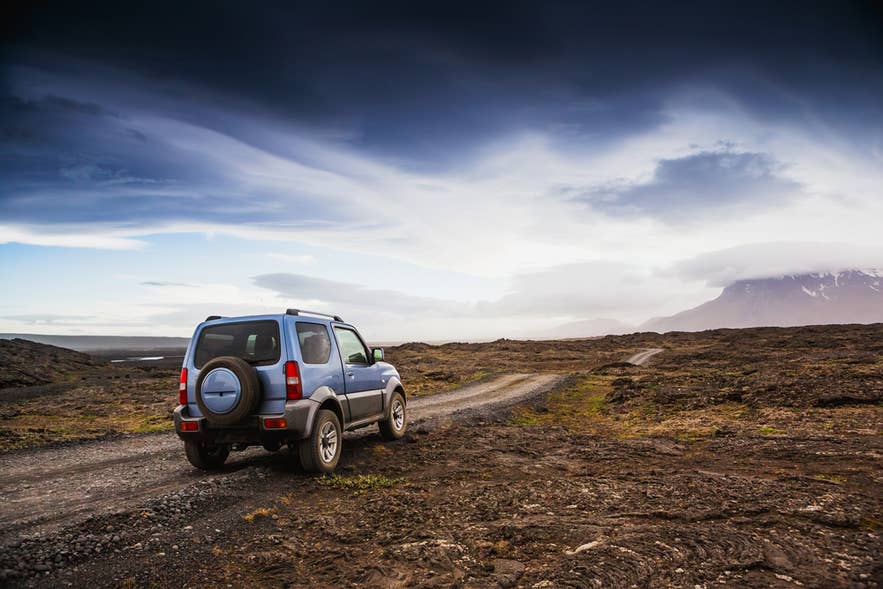
You can drive an electric car on all of Iceland's paved roads, but not on the F-roads or in the Highlands. That keeps almost every popular route open to an electric rental, with only the interior out of reach.
The Ring Road, the Golden Circle, the South Coast, and the Snaefellsnes Peninsula are all comfortable in an electric car, since chargers are spaced regularly along them. The Westfjords take more planning, as chargers there sit farther apart.
The Highlands and F-roads are where that changes. They demand a high-clearance 4x4, often involve crossing unbridged rivers, and rental insurance generally excludes electric cars on them. For any trip into the interior, choose from petrol 4x4 car rentals instead.
Charging an Electric Car in Iceland
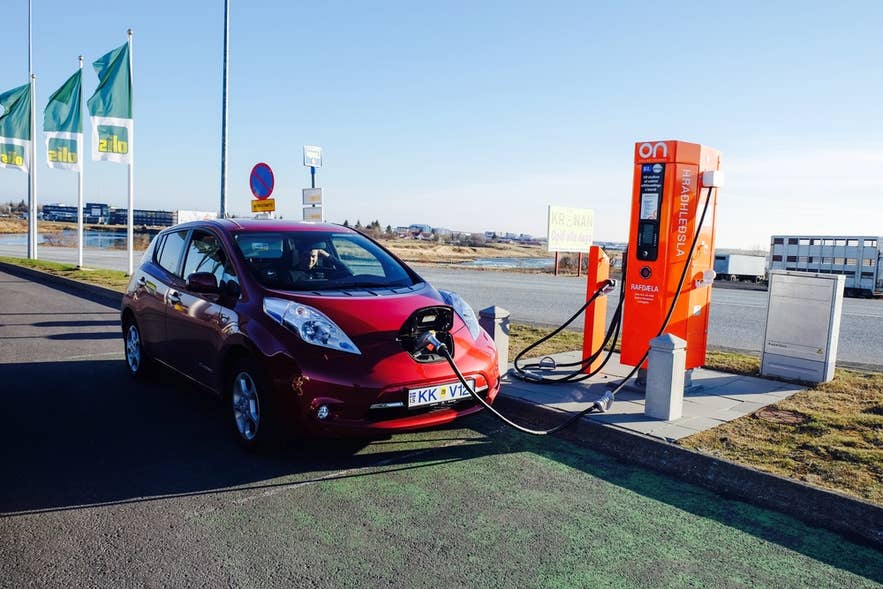
Charging an electric car in Iceland is straightforward, and the network keeps growing. The Ring Road has been covered by fast chargers since 2018, so you are rarely far from a top-up. A charging app such as PlugShare shows nearby stations, their plug type, and live availability.
The main charging networks are ON Power (Orka natturunnar), Isorka, N1, and Tesla. There are two ways to charge. Slower AC charging, best done overnight, uses a Type 2 plug (the standard European connector), while faster DC charging uses a CCS plug.
A few older cars or stations still use CHAdeMO, an older fast-charging standard. Tesla Superchargers, the brand's own fast-charging network, are now found around the country, and many of them accept non-Tesla cars that use CCS.
To find chargers along your route, a map app is the easiest tool. PlugShare maps every network in one place, while the ON Power, Isorka, and N1 apps show their own stations. Check a station's status before you count on it, since chargers can be busy or briefly offline.
It’s worth downloading and setting up the ON Power or Isorka apps in advance so you’re ready to charge when you arrive at a station. Some chargers accept contactless cards or registered RFID keys, but payment options vary, so having the apps ready can make charging smoother.
Electric Car Charging Costs and Times in Iceland
Charging is billed by the kilowatt-hour (kWh), the unit of energy a charger delivers, much like liters at a petrol pump. Public charging in Iceland costs roughly 30 ISK to 70 ISK (about 0.20 USD to 0.50 USD) per kilowatt-hour, and a DC fast charger gets most cars to 80 percent in about 20 to 60 minutes.
| Charger type | Typical power | Cost per kilowatt-hour | Time to 80 percent |
|---|---|---|---|
| AC (Type 2) | up to 22 kilowatts | about 27 to 48 ISK (0.20 to 0.35 USD) | 4 to 10 hours |
| DC fast (CCS) | 50 kilowatts and up | about 55 to 69 ISK (0.40 to 0.50 USD) | 20 to 60 minutes |
| Ultra-fast / Tesla Supercharger | 150 to 250 kilowatts | about 55 to 69 ISK (0.40 to 0.50 USD) | 15 to 30 minutes |
The figures above are based on ON Power's published rates as of mid-2026.
Charging slows down once the battery passes 80 percent, so fast-charge stops are most efficient when you unplug around that point and move on.
Use AC chargers for overnight charging at your accommodation, and DC fast chargers for quick top-ups during the day. Charging at Iceland's hotels or guesthouses is usually the cheapest option of all.
Electric Versus Petrol Running Costs in Iceland

Charging an electric car in Iceland costs less per kilometer than fuelling a petrol one, but the gap narrowed sharply in 2026, when the government scrapped fuel taxes and replaced them with a per-kilometer road charge that every vehicle now pays. Petrol settled at around 215–220 ISK (about 1.75 USD) per liter after the change.
As a rough guide, fully charging a long-range electric car on a public charger costs about 3,600 ISK to 5,200 ISK (about 26 USD to 36 USD), depending on whether you use AC or fast charging. Because both electric and petrol cars now pay the same per-kilometer road charge, the saving comes down to energy cost, where electricity still wins.
The takeaway is simple: an electric car is still the cheaper way to cover distance in Iceland, but it is no longer four times cheaper. Treat fuel savings as a bonus on top of the quieter drive and lower emissions.
Iceland's 2026 Per-Kilometer Road Tax and Rental Cars

Since 1 January 2026, every vehicle in Iceland, including rental cars, pays a distance-based road charge called the kilometer fee (kilometragjald) instead of fuel tax. For standard passenger cars, the rate is 6.95 ISK (0.05 USD) per kilometer.
Iceland's parliament approved the change in December 2025, replacing petrol and diesel fuel taxes with a single per-kilometer fee that applies no matter how a car is powered. Electric and plug-in hybrid drivers had already paid a version of this charge since 2024.
For visitors, rental companies collect the fee, usually as a daily rate or based on the odometer, so you may see it as a separate line on your rental or built into the price. When you book a car through Guide to Iceland, this kilometer fee is already included in the price you see, so there is nothing extra to arrange at the counter.
Driving an Electric Car in Iceland in Winter

Driving an electric car in Iceland in winter is very doable, but cold weather cuts range by roughly 20 percent on average, so plan shorter daily drives and more frequent charging. Check Iceland's weather before each trip, since conditions change quickly.
Cabin heating and cold batteries both draw extra power, which is why range drops. Plan shorter legs than in summer, charge earlier instead of waiting until the battery is low, and pick a 4x4 electric car for better grip on ice.
Electric Car Road Trip Tips for Iceland

A few habits make electric driving in Iceland effortless. The main idea is to charge around the things you already stop for, and never let the battery run too low before a long stretch.
Here are a few things to keep in mind:
-
Book early: Reserve your electric car months ahead for the summer peak from June to August, when demand is highest.
-
Plan charging around stops: Top up during meals, coffee breaks, and sightseeing rather than making charging a separate errand.
-
Watch the wind: Strong headwinds on open stretches use more battery than drivers expect, so keep an extra buffer on windy days.
-
Top up often: A quick charge at 50 percent can save trouble later, especially before remote sections.
-
Build a winter buffer: In cold months, plan shorter daily distances and charge earlier in the day.
-
Keep the cable handy: Carry the Type 2 cable from your rental, as some AC stations need it.
-
Use helpful sites to plan ahead: Check live conditions on Iceland's road information service and the SafeTravel site, and use a charging map such as PlugShare to find stations along your route.
Eco-Friendly Electric Car Itineraries in Iceland

These self-drive tours suit electric and hybrid cars well, since they mostly follow paved roads with charging available along the way. Most keep daily distances manageable, with overnight stops near charging that can be arranged.
-
10-Day Ring Road and Snaefellsnes Self-Drive Tour: A relaxed tour of the circle of Iceland with well-spaced charging and shorter daily drives.
-
7-Day Budget Ring Road Self-Drive Tour: A slower tour linking towns that usually have public chargers and affordable lodging.
-
7-Day Winter and Northern Lights Self-Drive Tour: A winter route built for cold-weather travel, with heated accommodation and charging on the shorter legs.
-
6-Day Express Ring Road Self-Drive Tour: A faster loop of Iceland along the main highway, where fast chargers are common.
-
3-Day Golden Circle and South Coast Self-Drive Tour: A short, scenic route with charging available at major stops, good for geothermal spas and waterfalls.
Enjoy Driving Electric in Iceland
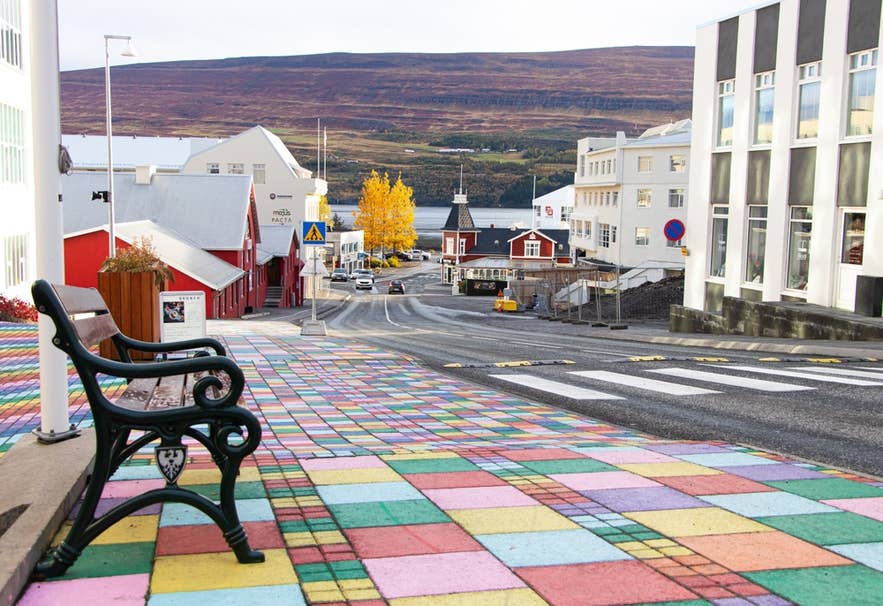
Chasing waterfalls, watching for the northern lights, or simply enjoying a quieter drive all pair well with an electric car in Iceland. With reliable paved roads, charging stations along every main route, and clean renewable power, an electric or hybrid car suits most visitors.
When you are ready to plan, compare options for car rentals in Iceland, get inspired by our guide to road trips in Iceland, and browse our wider Iceland travel information for practical tips.
How far can an electric car go on one charge in Iceland?
Is it cheaper to drive an electric car than a petrol car in Iceland?
A full charge for a long-range car costs roughly 3,600–5,200 ISK (about 26–36 USD) at public chargers. Charging at your accommodation is usually cheaper.
How long does it take to charge an electric car in Iceland?
Can you drive a Tesla in Iceland?
Is it safe to drive an electric car in Iceland in winter?
Do you need an app or card to charge an electric car in Iceland?
What happens if an electric car runs out of charge in a remote area?
Have you driven an electric car in Iceland, or are you planning to? Tell us which route you are most excited about, and share your charging questions in the comments below.

I’m Rebecca, Head of Content at Guide to Iceland. I’ve lived in Reykjavík for almost a decade and have traveled across the country in every season. I care about making travel information easy to find, accurate, and genuinely helpful.