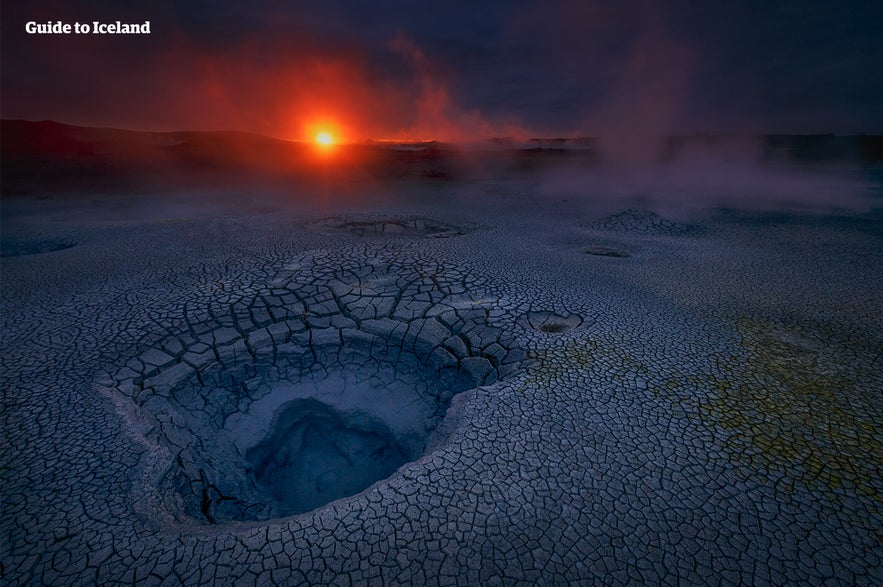
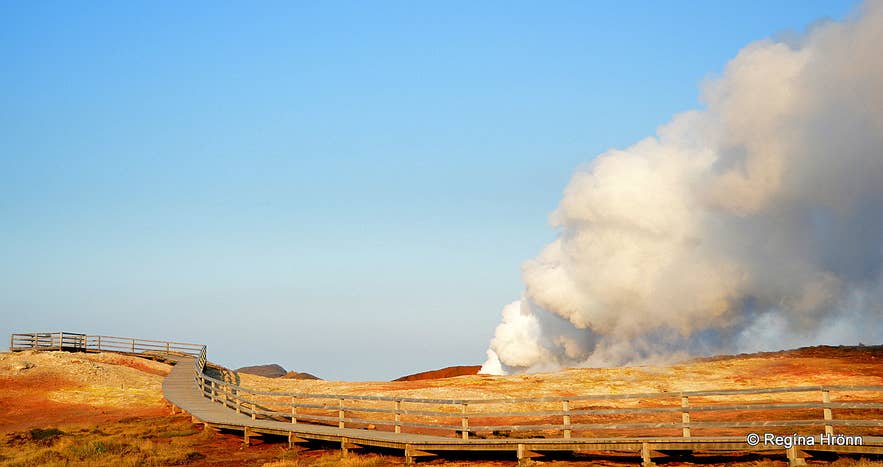
Gunnuhver is one of the most active geothermal sites in Iceland, located on the Reykjanes Peninsula in Southwest Iceland. The hot springs here are far too hot for bathing, but the area is known for its roaring steam vents and colorful mineral-stained earth. Read on to learn what makes Gunnuhver such a unique attraction in Iceland.
Gunnuhver Geothermal Area is an easy stop for travelers arriving in or departing from Iceland, thanks to its close location to Keflavik International Airport. It’s easy to visit with a car rental in Iceland or as part of one of the guided Reykjanes tours available.
Why You Can Trust Our Content
Guide to Iceland is the most trusted travel platform in Iceland, helping millions of visitors each year. All our content is written and reviewed by local experts who are deeply familiar with Iceland. You can count on us for accurate, up-to-date, and trustworthy travel advice.
What makes Gunnuhver especially interesting is its dramatic atmosphere. The ground hisses with escaping steam, boiling mud churns beneath the surface, and the smell of sulfur fills the air. The geothermal field sits in a highly active volcanic zone connected to the Mid-Atlantic Ridge, where the North American and Eurasian tectonic plates slowly pull apart.
Keep reading to learn how to get to Gunnuhver, what to see around the geothermal area, and the best ways to experience this unique part of the Reykjanes Peninsula.
Gunnuhver Geothermal Area at a Glance
-
Location: Reykjanes Peninsula, Southwest Iceland, just under an hour drive from Reykjavik
-
Type: High-temperature geothermal field
-
Known for: Powerful steam vents, boiling mud pools, and sulfur-rich terrain
-
Atmosphere: Steaming, windy, and strongly sulfuric with constant natural activity
-
Accessibility: Easy year-round access by a gravel road from Route 425
-
Walking access: Boardwalks and viewing platforms only (no off-trail walking allowed)
-
Safety note: Extremely hot ground and active geothermal activity throughout the area
-
Entry fee: Free to visit
-
Facilities: Small, free parking, with no major visitor center on site
-
Best experience: As part of a volcano hike and Reykjanes sightseeing tour
-
Nearby attractions: Reykjanes Lighthouse, Bridge Between Continents, Blue Lagoon
Geothermal Activity at Gunnuhver
The entire Reykjanes Peninsula sits on a highly active tectonic boundary where the North American and Eurasian plates are slowly pulling apart. This allows heat and magma from deep within the Earth to rise much closer to the surface than in most places in the world.
As a result, the area is filled with hot springs and geothermal fields, including Gunnuhver, as well as other notable sites like Krysuvik and the area beneath Lake Kleifarvatn.
At Gunnuhver, this underground heat shows itself in a dramatic way. Instead of calm, gently steaming pools, you get intense geothermal activity, such as boiling mud pools, roaring steam vents, and constantly shifting ground.
One of the most striking things about Gunnuhver is just how energetic it is compared to many other geothermal areas in Iceland. Gunnuhver mud pools bubble aggressively due to gases like sulfur dioxide and hydrogen sulfide escaping from deep underground. These gases also give the area its strong sulfur smell, which is completely natural in geothermal environments like this.
Gunnuhver is also part of an evolving geothermal system in the Reykjanes volcanic zone, which has seen renewed volcanic activity in recent years linked to the Svartsengi–Fagradalsfjall system.
Since 2021, eruptions at Fagradalsfjall and later activity near the Sundhnukur Crater row north of Grindavik have shown how dynamic the region is. You can explore this volcanic landscape through a hiking tour of Fagradalsfjall Volcano from Reykjavik.
Despite their raw power, Gunnuhver thermal springs are safely viewed from marked boardwalks designed to keep visitors away from dangerously hot ground.
The Folklore and Legend Behind Gunnuhver
Aside from its powerful geothermal activity, Gunnuhver is also known for one of the most famous ghost stories on the Reykjanes Peninsula. According to Icelandic folklore, the area was named after an angry ghost called Gunna, who is believed to have haunted the hot springs during the 18th century.
The story says that Gunna died suddenly after a dispute with a local farmer and later returned as a restless ghost, causing fear and strange disturbances in the area. A local priest was eventually called to stop the haunting.
According to legend, he trapped Gunna’s spirit inside the boiling geothermal springs, where she disappeared into the steam forever.
How To Get to Gunnuhver Hot Springs
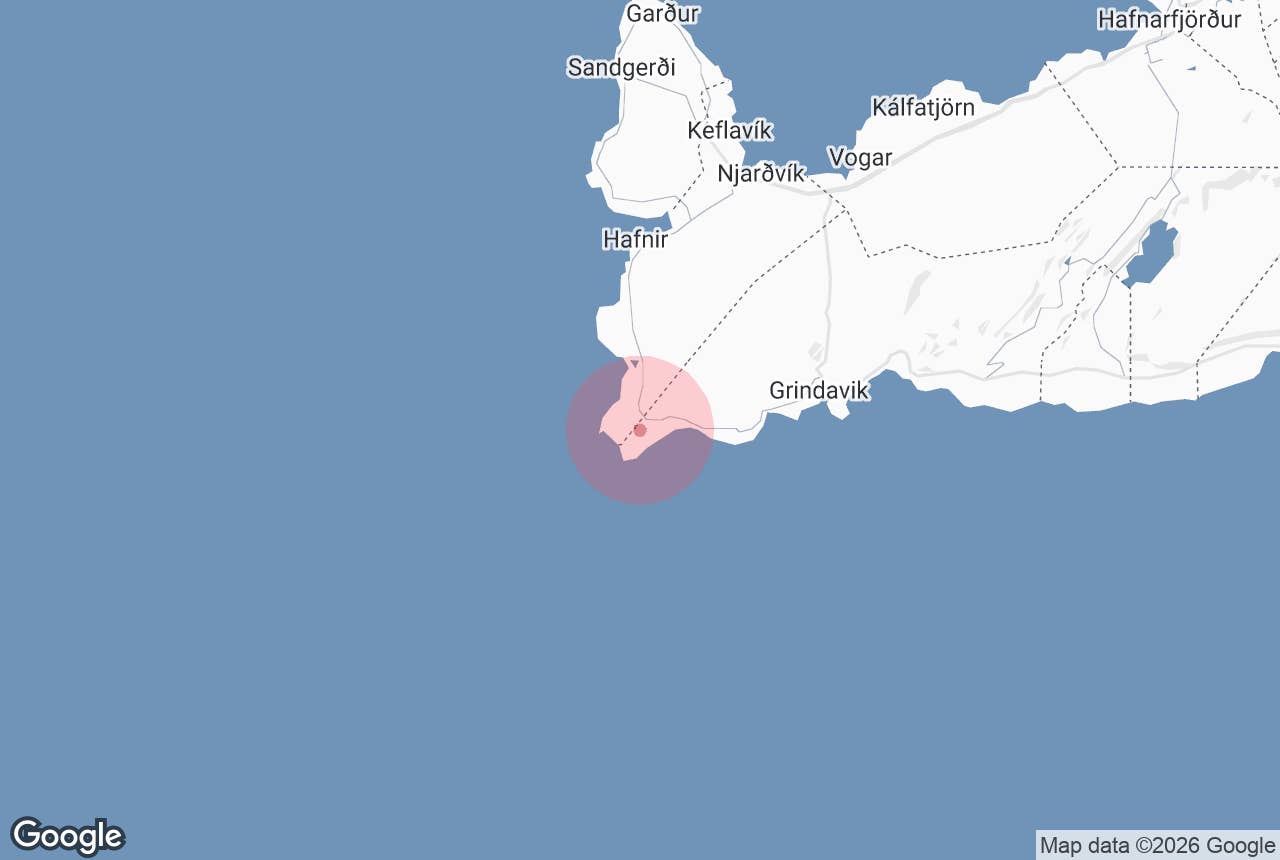
 Gunnuhver Hot Springs is located on the southwestern tip of the Reykjanes Peninsula. Thanks to its convenient location and easy road access, it is one of the simplest geothermal areas to visit in Iceland, whether you are joining a guided excursion or exploring on your own.
Driving to Gunnuhver from Reykjavik or Keflavik
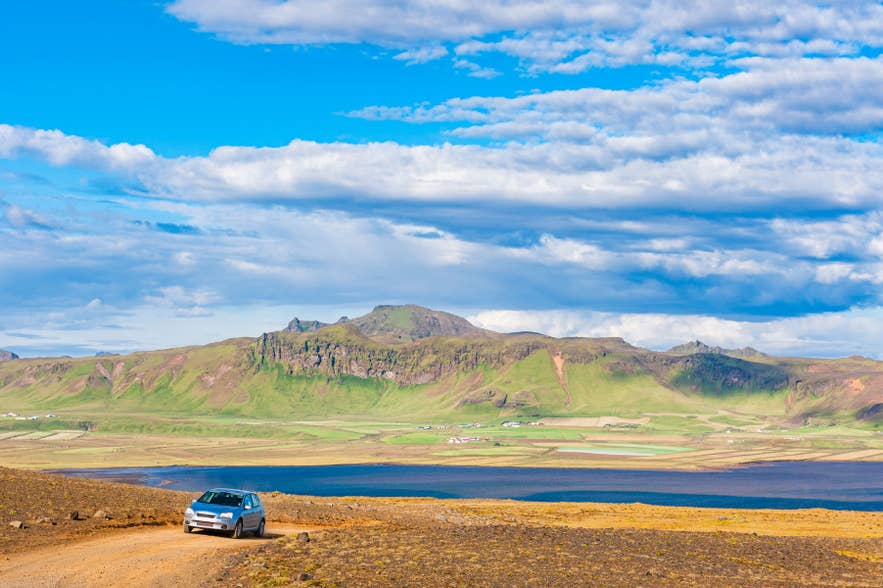 Driving is the easiest and most flexible way to visit Gunnuhver. From Reykjavik, the drive takes around 45–50 minutes by following Route 41 toward Keflavik and then continuing onto Route 425 along the Reykjanes coast.
If you’re arriving from Keflavik Airport, you can reach Gunnuhver in about 20 minutes by taking Route 41 and connecting to Route 425. The roads are paved and accessible year-round, though strong winds are common on the Reykjanes Peninsula.
For travelers planning a self-drive trip, renting a car in Iceland makes it easy to combine Gunnuhver with nearby attractions. Free parking is available near the geothermal area, followed by a short walk along the boardwalks to the viewing platforms.
Joining Reykjanes Tours
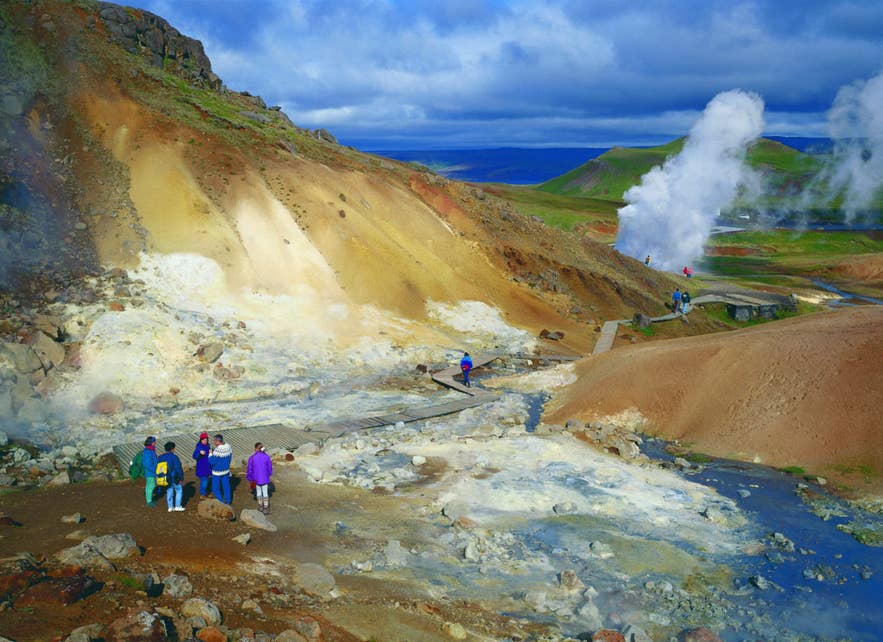 Many travelers choose guided Reykjanes tours to learn more about the region’s volcanic landscapes, geothermal activity, and recent eruptions. These tours often combine Gunnuhver with other major attractions across the peninsula, making them a convenient option for visitors without a rental car.
A popular tour option is the Reykjanes sightseeing tour with a volcano hike from Reykjavik, which combines volcanic landscapes with geothermal stops around the peninsula.
For a more personalized experience, a private Reykjanes Peninsula tour with transfer from Reykjavik or Keflavik Airport allows you to explore the region at a more flexible pace. For a full-day adventure and relaxation, a private Reykjanes tour with volcano hike & Sky Lagoon Spa combines sightseeing, hiking, and geothermal bathing in one itinerary.
What To See at Gunnuhver Geothermal Area
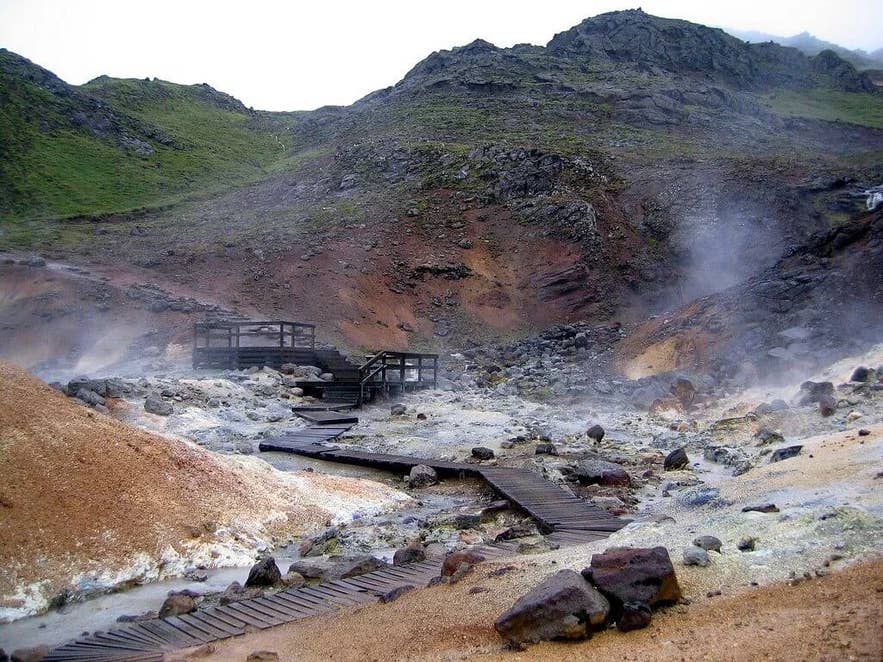 Gunnuhver is known for its raw geothermal power and dramatic volcanic scenery. While the area is not large, there is plenty to see from the boardwalks and viewing platforms, with steam constantly rising from the ground and geothermal activity happening in every direction.
Visiting Reykjanes’ Gunnuhver gives you the chance to experience the following:
-
Iceland’s Largest Mud Pool: Gunnuhver is home to Iceland’s largest mud pool, measuring around 65 feet (20 meters) wide. Superheated steam and volcanic gases keep the mud constantly boiling, filling the area with roaring sounds and thick clouds of steam.
-
Powerful Steam Vents: You’ll stand near the massive steam vents along the boardwalks. The geothermal heat is intense, and the constant hissing and roaring from escaping steam makes the entire area feel alive beneath your feet.
-
Boardwalks and Viewing Platforms: Raised wooden walkways guide you safely through the area while protecting the fragile ground. The viewing platforms allow you to get close to the steaming vents and Gunnuhver mud pools without stepping onto the unstable terrain.
-
Kisilholl Silica Hill: A short trail leads to an elevated viewing area on Kisilholl, a mineral-rich hill overlooking Gunnuhver. From here, you get wider views of the steaming geothermal field, surrounding lava landscapes, and the rugged coastline of the Reykjanes Peninsula.
-
Colorful Geothermal Landscape: The constant geothermal activity stains the earth in shades of yellow, orange, gray, and white due to sulfur and mineral deposits. Combined with the black lava fields and drifting steam, the landscape feels almost otherworldly.
Best Reykjanes Tours to Visit Gunnuhver Geothermal Area
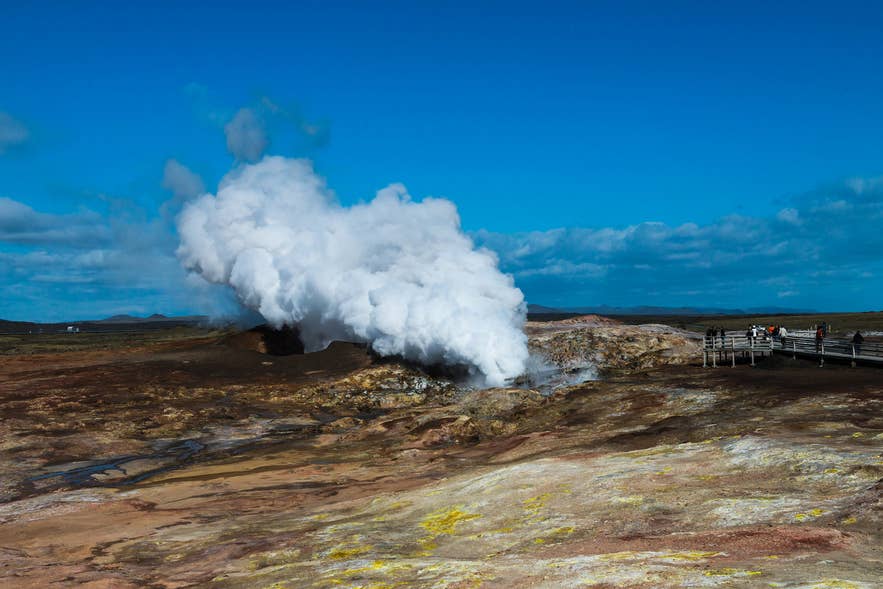 Exploring the Reykjanes Peninsula on a guided tour is a great way to see Gunnuhver along with other volcanic and coastal highlights in one trip. These tours are ideal for local insight, easy transport, and a well-planned itinerary while discovering the best things to do on the Reykjanes Peninsula without the need to drive.
Here are a few of the top Reykjanes tours with Gunnuhver included in the itinerary:
-
Volcano Hike & Reykjanes Peninsula Sightseeing Tour from Reykjavik: This tour combines active exploration and classic sightseeing in one day. Hike near the Fagradalsfjall volcanic area, with stops across the Reykjanes Peninsula, including Gunnuhver.
-
Small Group Reykjanes Tour with Optional Blue Lagoon or Keflavik Transfer: A relaxed tour that covers key Reykjanes highlights, including Gunnuhver hot springs. It offers flexible drop-off options at the Blue Lagoon or Keflavik Airport, ideal for travelers on tight schedules.
-
Private Reykjanes Peninsula Tour in a New Mercedes-Benz V-Class: A fully private experience with a comfortable vehicle and personalized itinerary across the peninsula.
Best Time To Visit Gunnuhver Geothermal Area
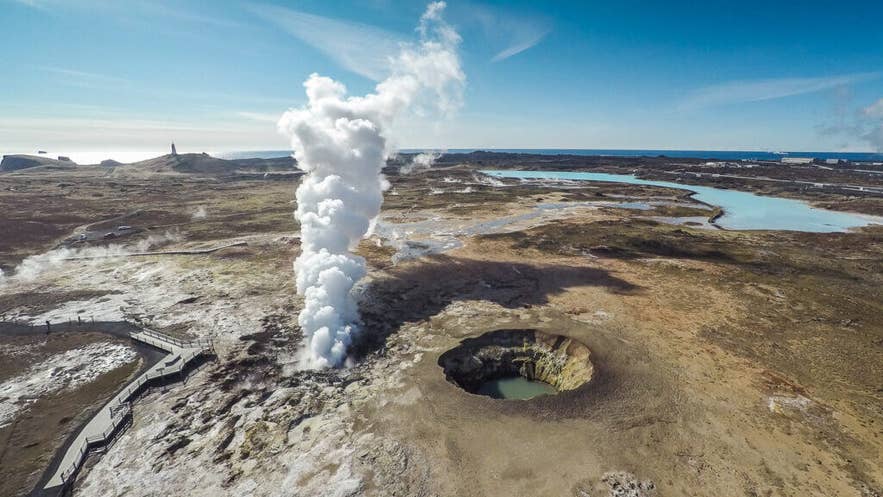 Gunnuhver thermal springs are accessible year-round, and each season offers a different experience on the Reykjanes Peninsula.
Icelandic summer brings milder temperatures, almost 24 hours of daylight, and easier driving conditions across the Reykjanes Peninsula. The boardwalks and viewing areas are usually clear of snow, making it easier to explore the geothermal field and nearby coastal viewpoints.
During the midnight sun season, the soft evening light also creates excellent conditions for photography. Summer self-drive tours in Iceland are especially popular, giving travelers the freedom to explore Gunnuhver and other Reykjanes highlights at their own pace.
If you’re planning to book one of the winter packages in Iceland, you’ll experience Gunnuhver in a completely different atmosphere. Cold air makes the steam vents look even more dramatic, with thick steam rising into the icy landscape. Snow and frost also create strong contrasts against the dark volcanic ground.
However, winter weather on the Reykjanes Peninsula can be windy and unpredictable. Remember to dress warmly and check road conditions before traveling.
If you’re into photography, early morning and late evening usually provide the best lighting conditions at Gunnuhver. This is especially true during summer, when the lower sunlight creates softer colors across the steam-filled landscape.
Nearby Attractions on the Reykjanes Peninsula
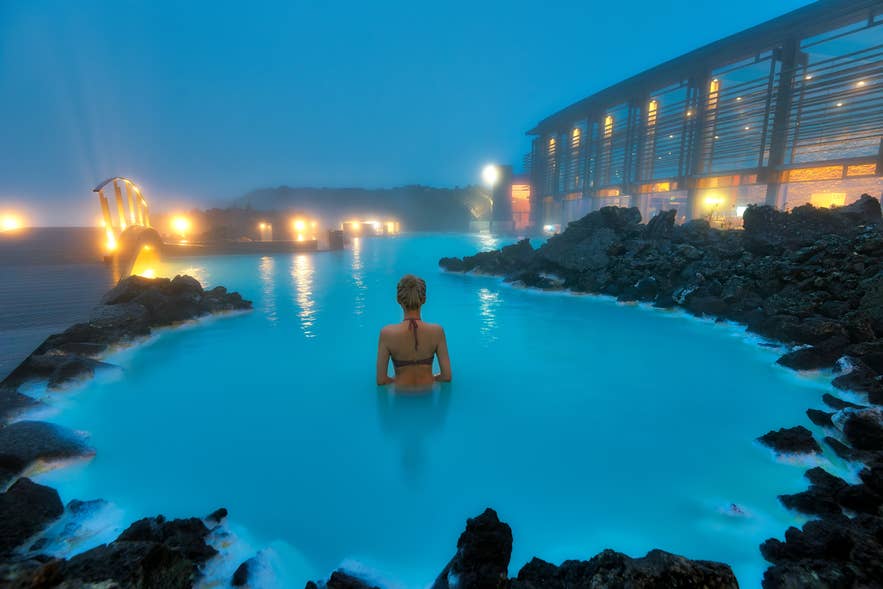 The Reykjanes Peninsula is packed with unique natural wonders that are easy to combine with a visit to Gunnuhver. Most attractions are only a short drive apart, making the region ideal for exploring the best things to do in Iceland during a layover.
-
Blue Lagoon: One of Iceland’s most famous geothermal spas, known for its milky-blue waters and relaxing silica-rich pools. If you plan to visit, book your Blue Lagoon ticket in advance.
-
Reykjanes Lighthouse: Iceland’s oldest lighthouse, set on dramatic cliffs with powerful Atlantic waves crashing below.
-
Bridge Between Continents: A symbolic footbridge where you can walk between the North American and Eurasian tectonic plates.
-
Krysuvik Geothermal Area: A colorful geothermal field with steaming vents, bubbling mud pots, and wooden walking paths.
-
Lake Kleifarvatn: A deep, mysterious lake surrounded by lava fields and black sand scenery.
-
Fagradalsfjall: A volcanic area known for its recent eruptions and hiking trails that cross fresh lava fields and dramatic volcanic landscapes.
Travel Tips for Visiting Gunnuhver Geothermal Area
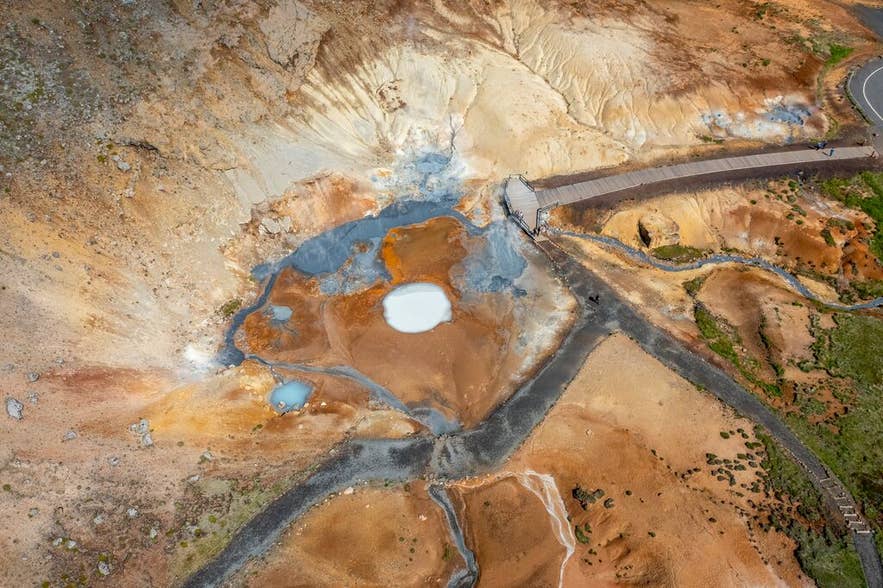 Gunnuhver is a powerful geothermal area, and a few simple tips can help you stay comfortable and safe while enjoying the experience.
-
Wear windproof clothing. Strong winds are common across the Reykjanes Peninsula year-round.
-
Use sturdy shoes. The terrain is uneven and can be slippery from steam and mineral deposits.
-
Stay on marked boardwalks. The ground is extremely hot and unstable outside designated paths, so stick to safe viewing areas at all times. Falling in the Gunnuhver hot springs can be fatal.
-
Be prepared for a strong sulfur smell. The geothermal gases can be intense, especially on still days, but it’s a natural part of the experience.
-
Avoid standing too close to mud pools. Boiling Gunnuhver mud pools can bubble and splatter without warning, so keep a safe distance.
-
Check weather conditions before visiting. Visibility and walking conditions can change quickly due to wind, rain, or fog.
-
Protect your camera. The combination of sulfur-rich steam, wind, and moisture can be harsh on equipment, so keep it covered when not shooting.
-
Plan extra time for nearby stops. Attractions like the Blue Lagoon and Reykjanes Lighthouse are close and worth adding to your itinerary.
Gunnuhver: A Must-See Stop on the Reykjanes Peninsula
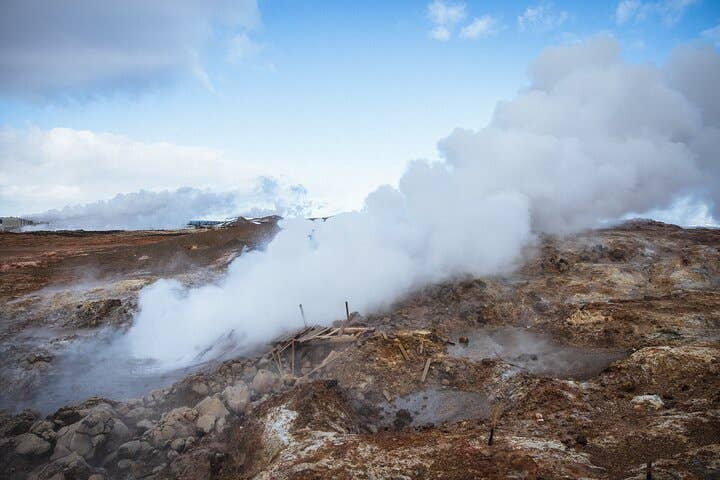 Gunnuhver offers a powerful glimpse into Iceland’s volcanic energy, making it one of the most memorable stops on the Reykjanes Peninsula.
Whether you’re exploring on your own with self-drive tours in Iceland or joining Reykjanes tours, Gunnuhver fits easily into any itinerary, thanks to its close location to Reykjavik and Keflavik Airport. It’s especially convenient for short visits or layovers, with many travelers also choosing nearby hotels near Keflavik Airport as a base for exploring the area.
In the end, Gunnuhver shows just how alive Iceland’s landscape really is, with heat, steam, and volcanic energy constantly reshaping the ground below.
Wo befindet sich Gunnuhver?
Wie komme ich nach Gunnuhver?
Ist der Besuch von Gunnuhver kostenlos?
Welche Tagestour eignet sich am besten für einen Besuch von Gunnuhver?
Anschließend führt die Sightseeing-Tour zu den wichtigsten Sehenswürdigkeiten von Reykjanes, darunter Gunnuhver und weitere vulkanische Highlights.
Wann ist die beste Zeit für einen Besuch von Gunnuhver?
Kann ich Gunnuhver im Winter besuchen?
Ist Gunnuhver für Besucher sicher?
Ist Gunnuhver für Kinder geeignet?
Brauche ich für einen Besuch von Gunnuhver einen Guide?
Eine geführte Tour hilft dir außerdem, Gunnuhver in die größere Landschaft der Halbinsel Reykjanes einzuordnen. Dabei erfährst du, wie nahegelegene Lavafelder, Geothermalzonen und jüngste Ausbrüche zum selben aktiven Vulkansystem gehören.
Kann ich bei Gunnuhver auf dem Geothermalboden laufen?
Riecht Gunnuhver nach Schwefel?
Wie groß ist das Schlammbad bei Gunnuhver?
Kann ich bei Gunnuhver Lava sehen?
Wie viel Zeit sollte ich bei Gunnuhver einplanen?
Was sollte ich bei einem Besuch von Gunnuhver anziehen?
Brauche ich für einen Besuch von Gunnuhver ein Allradfahrzeug?
Allerdings kann es auf der Halbinsel Reykjanes sehr windig sein, besonders im Winter. Daher können sich die Fahrbedingungen selbst auf guten Straßen anspruchsvoller anfühlen. Ein Allradfahrzeug wird nur empfohlen, wenn du in anderen Teilen Islands abgelegene Schotterstraßen erkunden möchtest.
Gibt es bei Gunnuhver Parkplätze?
Gibt es bei Gunnuhver Toiletten oder andere Einrichtungen?
Bevor du nach Gunnuhver fährst, empfehlen wir dir, Toiletten und andere Einrichtungen in nahegelegenen Orten, Sehenswürdigkeiten oder an Zwischenstopps auf der Halbinsel Reykjanes zu nutzen.
Welche anderen Sehenswürdigkeiten auf Reykjanes kann ich mit einem Besuch von Gunnuhver verbinden?
- Blaue Lagune: Entspanne dich im berühmtesten Geothermalbad Islands, das etwa 20 bis 25 Minuten von Gunnuhver entfernt liegt.
- Leuchtturm Reykjanes: Besuche Islands ältesten Leuchtturm, der auf dramatischen Klippen über den tosenden Wellen des Atlantiks thront.
- Brücke zwischen den Kontinenten: Überquere eine symbolische Brücke zwischen der nordamerikanischen und der eurasischen tektonischen Platte.
- Geothermalgebiet Krysuvik: Erkunde farbenfrohe heiße Quellen, dampfende Austritte und blubbernde Schlammbäder auf Holzstegen.
- Kleifarvatn: Bestaune einen tiefen Vulkansee, der von schwarzen Lavafeldern und einer beeindruckenden Berglandschaft umgeben ist.