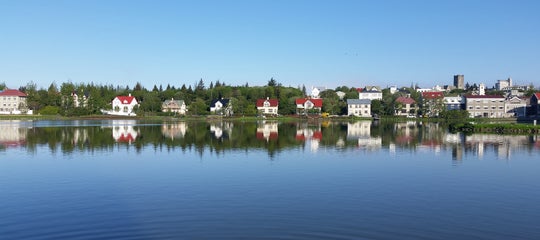
Reykjavik is home to many of the best museums and exhibition experiences in Iceland, and the best part is that many of these must-visit sites are located in some of Reykjavik's best walking routes, making it easy to do city sightseeing in a single day.
Why You Can Trust Our Content
Guide to Iceland is the most trusted travel platform in Iceland, helping millions of visitors each year. All our content is written and reviewed by local experts who are deeply familiar with Iceland. You can count on us for accurate, up-to-date, and trustworthy travel advice.
Museums offer travelers a deeper look at Iceland beyond its famous natural attractions. In a 2026 survey on the top experiences in Iceland recommended by tourism professionals, culture, history, and museums ranked as the second-most underrated experience.
Exploring these best museums should be on your top things to do in Reykjavik, especially if you are seeking indoor activities, family-friendly attractions, or a deeper understanding of Icelandic culture. After visiting many of these museums ourselves, we’ve picked the ones that are genuinely worth your time and ranked them by category below.
Best Museums in Reykjavik at a Glance
 In case you're short on time, this table gives you the best museums in Reykjavik at a glance, so you can pick the right fit before reading the full details below.
| Museum | Category | Best For | Adult Admission |
|---|---|---|---|
| National Museum of Iceland | History | First-timers and the full 1,000-year overview | 21 USD (3,000 ISK) |
| Settlement Exhibition | History | Standing inside a real Viking-age ruin | 21 USD (3,000 ISK) |
| Saga Museum | History | Bringing the sagas to life, interactive | 32 USD (4,000 ISK) |
| Reykjavik Maritime Museum | History | Fishing heritage and the Cod Wars | 18 USD (2,450 ISK) |
| Arbaer Open Air Museum | History | Families and summer visits | 18 USD (2,450 ISK) |
| World in Words | Culture | Norse mythology and medieval manuscripts | 21 USD (2,500 ISK) |
| Perlan | Nature & science | Nature lovers, views, indoor ice cave | 49 USD (6,890 ISK) |
| Whales of Iceland | Nature & science | Families and rainy days | 31 USD (4,300 ISK) |
| Aurora Reykjavik | Nature & science | Prepping for a northern lights hunt | 28 USD (3,900 ISK) |
| Hafnarhus | Art | Bold contemporary art (Erró) | 17 USD (2,430 ISK) |
| Kjarvalsstadir | Art | Iceland's best-loved painter | 17 USD (2,430 ISK) |
| Asmundarsafn | Art | Sculpture and a free sculpture garden | 17 USD (2,430 ISK) |
| National Gallery of Iceland | Art | Icelandic masters, central location | 18 USD (2,500 ISK) |
| Einar Jónsson Museum | Art | Sculpture garden by Hallgrimskirkja | 11 USD (1,500 ISK) |
| The Living Art Museum (Nylo) | Art | Best free museum, experimental work | Free |
| Hofudstodin | Art | One unexpected, immersive installation | 18 USD (2,250 ISK) |
| House of Collections | Art | Families and architecture lovers | 11 USD (1,500 ISK) |
| Icelandic Punk Museum | Quirky | Music fans, the cheapest and quickest stop | 8 USD (1,000 ISK) |
| Icelandic Phallological Museum | Quirky | One of the most unusual museum in the world | 25 USD (3,500 ISK) |
You can access several of these museums and attractions with the Reykjavik City Card, which includes options for a 24-hour city card, 48-hour city card, or 72-hour city card, saving time and money. If you plan to visit three or more of the city-run museums, the card usually pays for itself.
Whether you’re planning a short city stop or a full cultural itinerary, Reykjavik’s museums offer a fun, engaging, and memorable way to experience Iceland beyond its famous landscapes.
Top 8 Nature and History Museums in Reykjavik
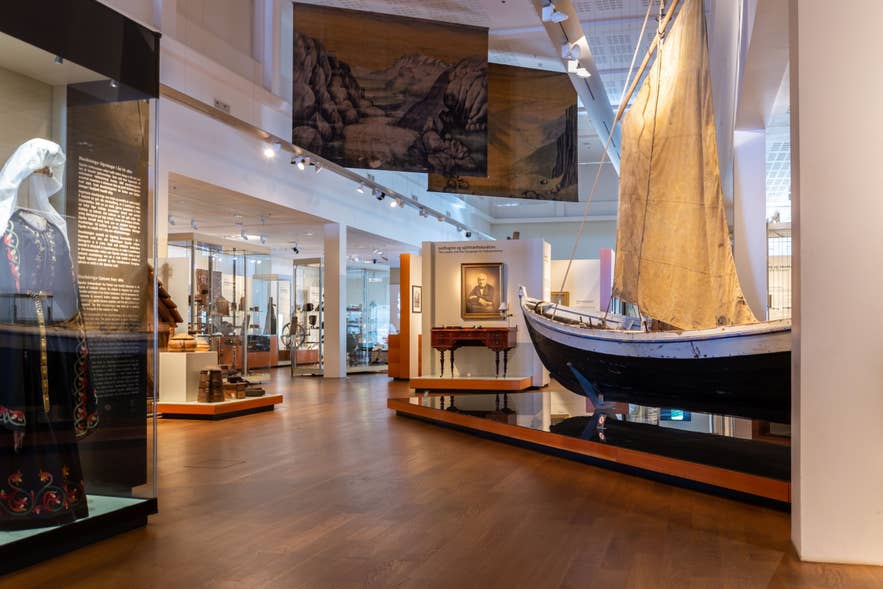
These museums are where Reykjavik’s past comes into focus. You’ll see Viking-age discoveries, early homes, fishing history, and the objects people once used every day.
Some exhibits are small and hands-on, while others are large and detailed, but all give you a real sense of how Iceland grew from its earliest settlements to the city you’re exploring now. If you only have time for one, make it the National Museum. If you’re traveling with kids, the Settlement Exhibition and Whales of Iceland are the easiest wins.
8. Reykjavik Maritime Museum
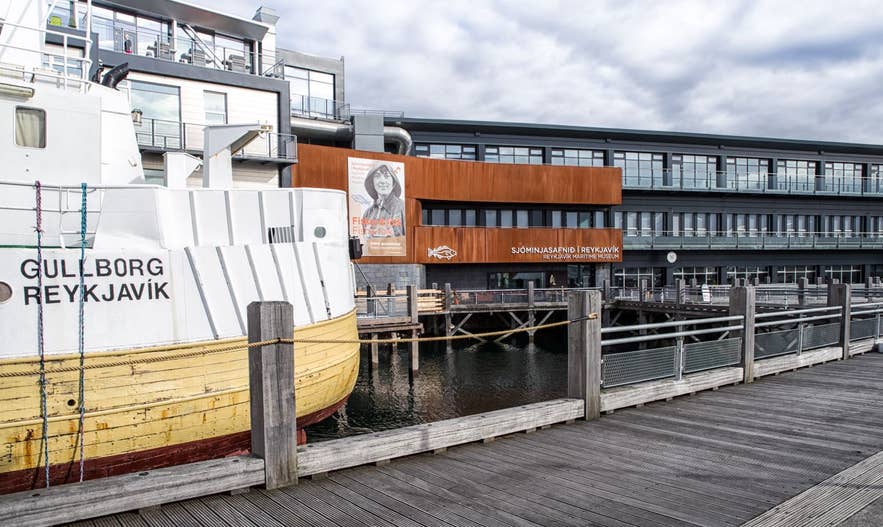
Nothing has been more vital to Iceland’s survival than fishing, so it’s no surprise that there's an entire history museum dedicated to the nation’s maritime past: the Reykjavik Maritime Museum. You can explore Iceland’s seafaring heritage at this maritime museum in Reykjavik, located in the newly renovated harbor area of the Grandi Harbor District.
The museum dives deep into the life and times of Icelandic fishermen, showing how fishing helped form the nation. It displays classic fishing artifacts, detailed model ships, mock-ups of wireless signal rooms, and a compass repair shop, among other things.
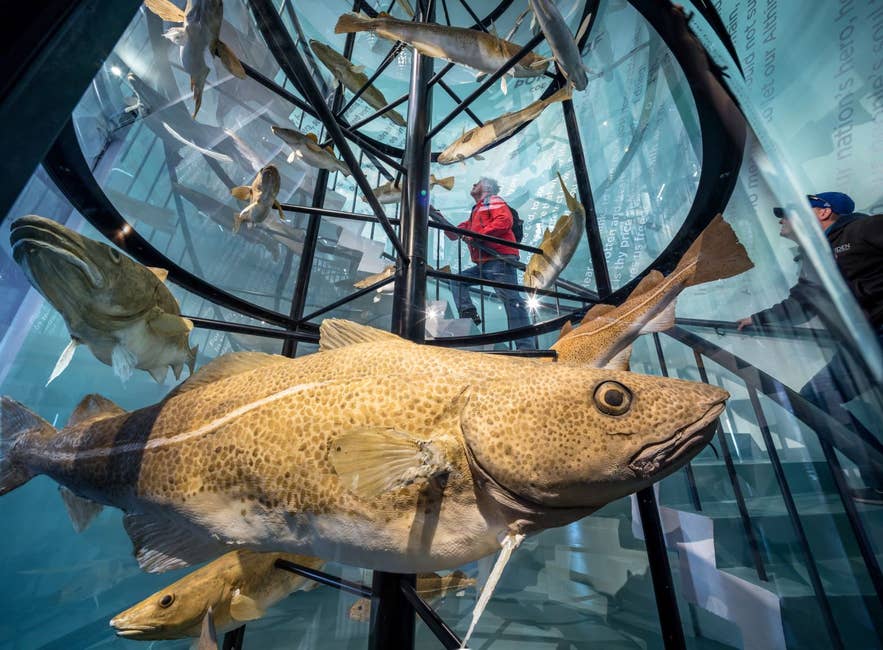 Here, you'll get a real sense of the harsh conditions early Icelandic fishermen endured and how their efforts laid the foundation for the nation today.
You also don’t want to miss the section about the Cod Wars, a fascinating look at Iceland’s struggle with the United Kingdom over fishing rights in the 20th century. You can even board and tour the Odinn, a real Coast Guard vessel that served through all three Cod Wars before being retired in 2006.
We recommend it for: history buffs and anyone curious about how a fishing nation became a modern country. The boarding tour of the Odinn is the highlight, so try to time your visit with a guided tour slot. The museum is run by the Reykjavik City Museum, so it’s free with the Reykjavik City Card.
Reykjavik Maritime Museum Admission Fee
-
Adults (18+): 18 USD (2,450 ISK)
-
Children (0–17): Free
-
People with Disabilities: Free
-
Óðinn Guided Tour: 13 USD (1,870 ISK)
-
Students (with a valid student card): 11 USD (1,500 ISK)
-
Museum + Óðinn Combo Ticket: 27 USD (3,730 ISK)
-
Reykjavik Culture Year Pass: 60 USD (8,400 ISK)
-
Reykjavik Culture Year Pass 67+: 18 USD (2,450 ISK)
-
ICOM & Reykjavik City Card Holders: Free
Reykjavik Maritime Museum Ratings
-
Reykjavik Maritime Museum - Google rating: 4.3 out of 5 stars
Reykjavik Maritime Museum Opening Hours
-
Daily from 10 AM - 5 PM
Reykjavik Maritime Museum Address
Directions to the Reykjavik Maritime Museum
Like many other locations on this list, the Reykjavik Maritime Museum is located in the Grandi District, by the harbor. It's a 25-minute walk from the city center and is easy to reach by buses 14 or 3. The closest bus stop is "Grandagarður".
If you’re driving a rental car, the best place to park is the gravel parking lot behind the building, right by the harbor.
7. Adalstraeti and Settlement Exhibition
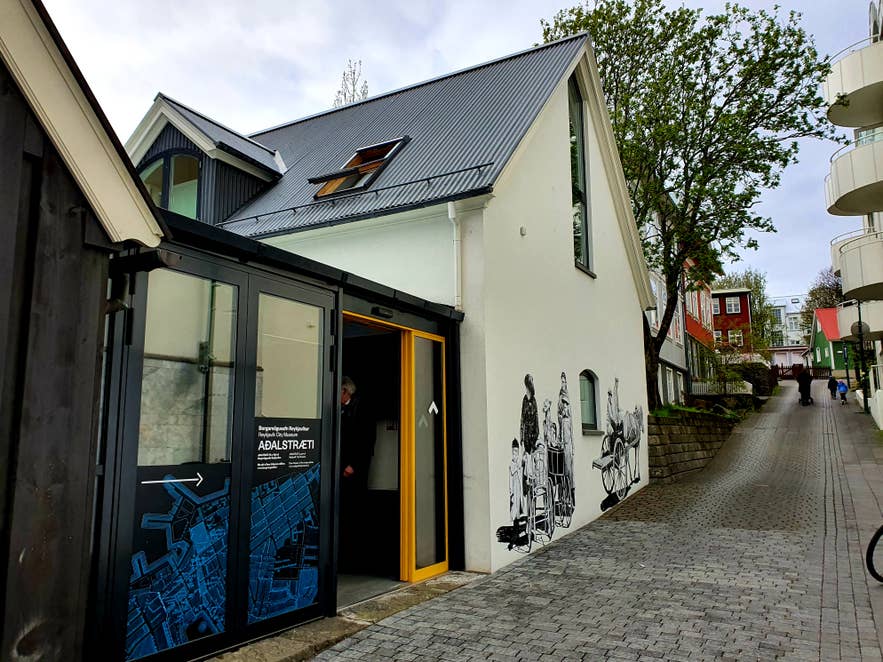
The Adalstraeti and Settlement Exhibition is built around an underground archaeological site where the oldest evidence of human habitation in Reykjavik was discovered in 2001, including a Viking longhouse from around 930–1000 AD.
The site also contains a boundary wall dated to 871±2 AD using volcanic ash layers, giving the museum its alternative name, Reykjavik 871±2. According to the Icelandic Sagas, this area may have been home to Iceland’s first settlers.
Visitors can explore the excavated longhouse, view artifacts from early Icelandic life, and learn about the history, environment, and daily activities of Reykjavik’s earliest residents.

In 2022, the Settlement Exhibition expanded to connect with the Adalstraeti Exhibition, which follows Reykjavik’s history to the present day. Highlights include a recreated 19th-century main street, virtual reality binoculars, and a reconstructed shop.
A single ticket grants access to both exhibitions through either entrance. For a deeper look into Reykjavik’s early history, you can also join a private Viking Age walking tour that includes the site.
We recommend it for: anyone who wants to stand inside a genuine Viking-age ruin rather than a recreation. It’s compact, central, and easily the most authentic Viking site in the city, making it ideal for a short visit or a rainy hour downtown.
Adalstraeti and Settlement Exhibition Admission Fee
-
Adults: 21 USD (3,000 ISK)
-
Children (0–17): Free
-
People with Disabilities: Free
-
Students (with a valid student card): 14 USD (1,930 ISK)
-
Reykjavik Culture Year Pass: 60 USD (8,400 ISK)
-
Reykjavik Culture Year Pass 67+: 17 USD (2,450 ISK)
-
ICOM & Reykjavik City Card Holders: Free
Adalstraeti and Settlement Exhibition Ratings
-
Adalstraeti - Google rating: 4.6 out of 5 stars
-
Settlement Exhibition - Google rating: 4.4 out of 5 stars
Adalstraeti and Settlement Exhibition Opening Hours
-
Daily from 10 AM - 5 PM
Adalstraeti and Settlement Exhibition Addresses
Directions to the Adalstraeti and Settlement Exhibition
As the two exhibitions are connected, you can either start with the Adalstraeti Exhibition or the Settlement Exhibition.
Both entrances are along the same street by Ingolfstorg Square, which is best reached on foot. The closest parking garage is by Reykjavik City Hall, where you'll also find the closest bus stop, "Ráðhúsið."
6. Whales of Iceland
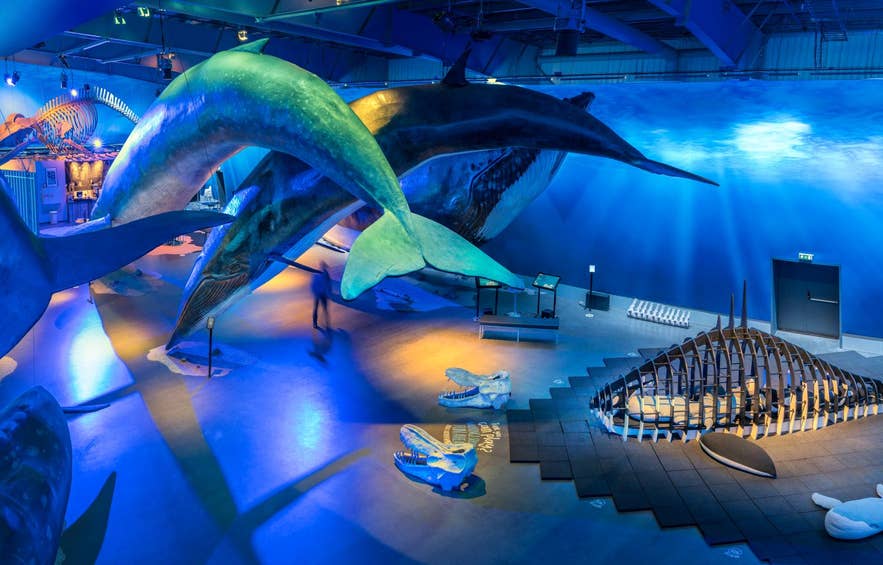
Whale watching is one of Iceland’s most popular experiences, and the Whales of Iceland exhibition offers a closer look at the giants of the deep. Located in the Grandi District near Reykjavik Old Harbour, it’s just a short walk from the city’s main whale-watching departure points.
The largest whale exhibition in Europe features 23 life-size models of species found in Icelandic waters, from harbor porpoises to a 25-meter (82-foot) blue whale. It's a great way to learn about the whales and dolphins you may encounter (or have already seen) on whale watching tours in Iceland.
Suspended from the ceiling, the hand-painted models are based on real whales and can even be touched gently, making the experience especially immersive.
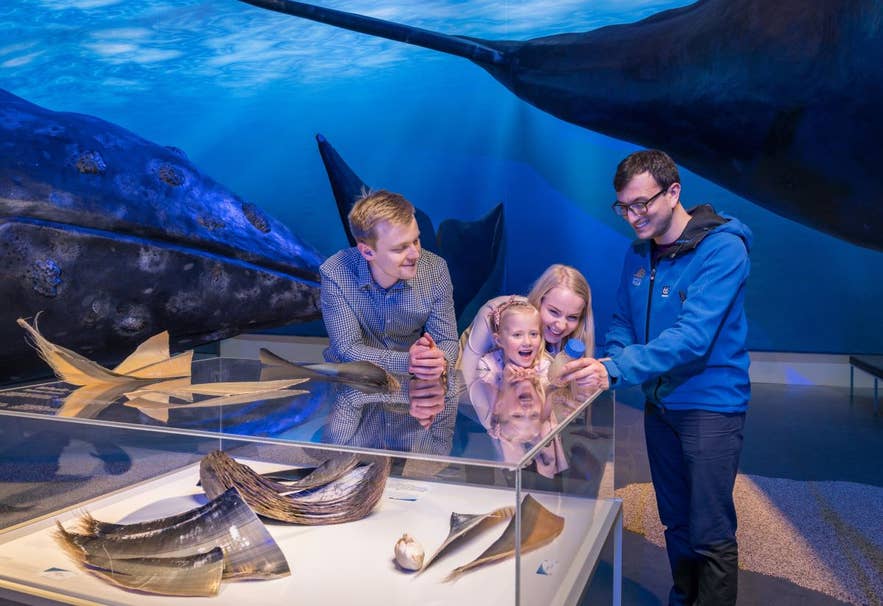 The exhibition uses blue lighting and whale sounds to create an underwater atmosphere, supported by interactive displays, a multilingual guidance app, and VR headsets that simulate swimming with whales and dolphins.
Free guided tours are included with your ticket and run twice a day (typically at 11 AM and 3 PM) for a deeper look at whale behavior, biology, and conservation. You can also book admission tickets to the Whales of Iceland Museum in advance, which helps during busy travel periods.
For a complete experience, pairing the exhibition with a whale watching boat tour lets you see these giants in their natural habitat.
We recommend it for: families, and for any traveler who wants to grasp the sheer scale of these animals before or after a boat tour. Visiting before you head out to sea makes it far easier to identify what you spot from the deck. More details are on the official Whales of Iceland website.
Whales of Iceland Admission Fee
-
Adults: 31 USD (4,300 ISK)
-
Children (7–15 years): 15 USD (2,150 ISK)
-
Families (2 adults + 2 children): 61 USD (8,600 ISK)
-
Children (0–6 years): Free
-
Reykjavik City Card holders: 30% discount on admission
Whales of Iceland Ratings
-
Whales of Iceland - Google rating: 4.2 out of 5 stars
Whales of Iceland Opening Hours
-
Daily from 10 AM - 5 PM
Whales of Iceland Address
Directions to Whales of Iceland
You'll find the Whales of Iceland exhibition in the Grandi Area in Reykjavik. It's a 30-minute walk from the city center, but you can enjoy views of the lively harbor along the way.
If you have a Reykjavik rental car, there's plenty of parking by the museum. Otherwise, you can take either bus 3 or 14, and stop at the "Grundaslóð" bus stop.
5. The Saga Museum
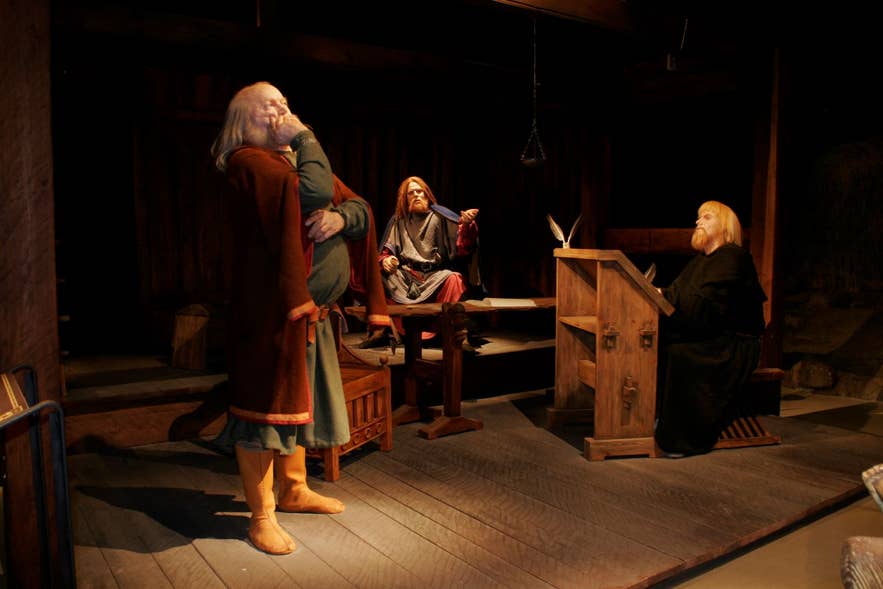 Step into Iceland’s epic past at the Saga Museum (Sogusafnid), where history comes to life! This small but dramatic Viking museum in Reykjavik uses life-like wax replicas of Icelandic historical figures to recreate key moments in the history of Iceland.
You’re handed an audio guide that narrates each scene as you pass the figures, available in Icelandic, English, French, German, Russian, Spanish, and Swedish.
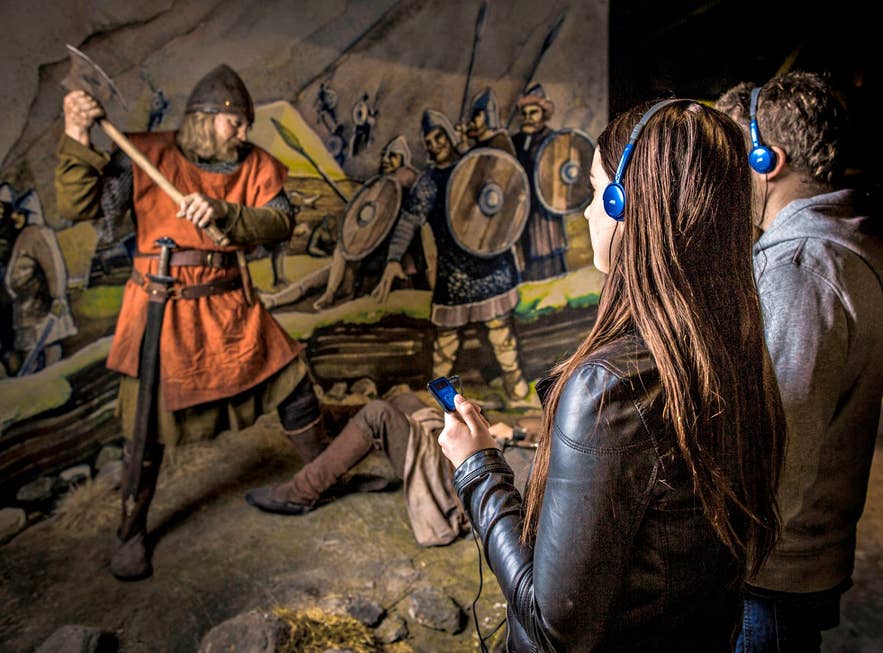
The displays draw on old manuscripts, with handmade clothing, tools, and weapons. Highlights include the founding of Althingi at Thingvellir National Park and the tale of Þorgeir, the lawspeaker said to have thrown his Norse idols into Godafoss Waterfall in North Iceland.
At the end of your visit, you can even dress up as a Viking, complete with helmet, chainmail, and sword, making the Saga Museum one of the most interactive history museums in Reykjavik.
We recommend it for: visitors who find the sagas hard to follow on the page. Seeing the key scenes recreated at life size, with a self-paced audio guide, is the most approachable introduction to Icelandic history in the city, and it pairs naturally with the Settlement Exhibition a short walk away.
Saga Museum Admission Fee
-
Adults: 32 USD (4,000 ISK)
-
Children: 10 USD (1,200 ISK)
-
Students / Seniors / People with Disabilities: 28 USD (3,400 ISK)
-
Family Ticket (2 adults + 2 children): 65 USD (8,000 ISK)
Saga Museum Ratings
-
Saga Museum - Google rating: 4.2 out of 5 stars
Saga Museum Opening Hours
-
Daily from 10 AM - 5 PM
Saga Museum Address
Directions to Saga Museum
From the city center, walking to the Saga Museum takes around 20 minutes. It's easy to reach by public bus, as buses 14 and 3 both stop at the "Grandagarður" stop, just across the street from the museum. Alternatively, you'll find plenty of parking by the museum.
4. World in Words
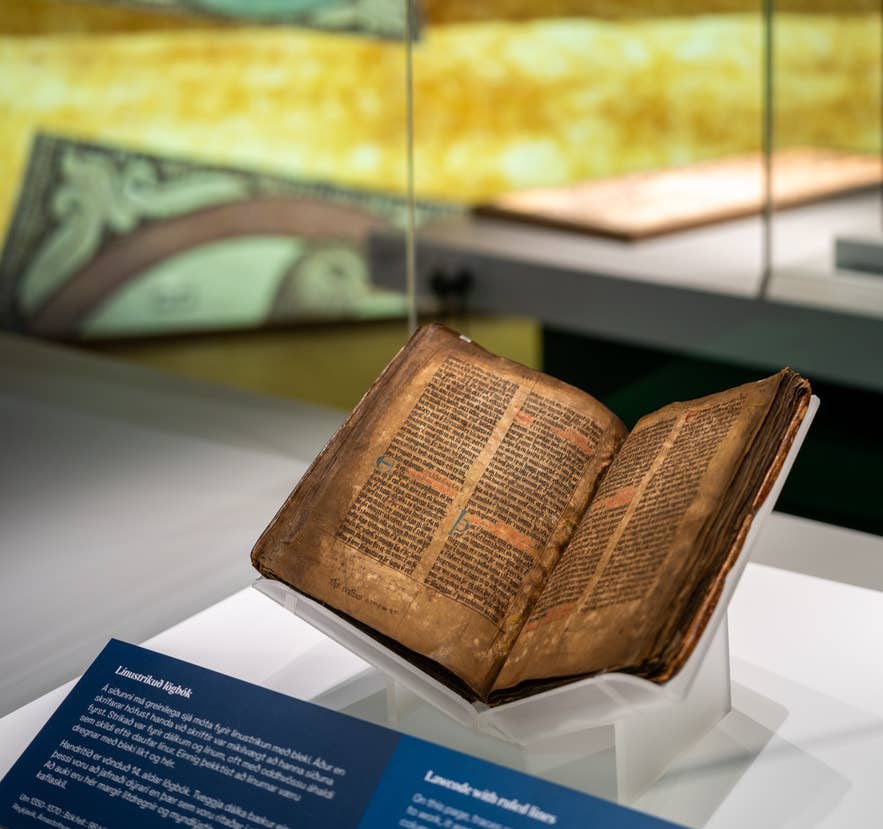 World in Words, opened in late 2024, is a modern, immersive introduction to Iceland’s literary heritage. It’s run by the Arni Magnusson Institute for Icelandic Studies, the national body that safeguards Iceland’s medieval manuscripts.
Inside the Edda building, you can see rare manuscripts such as the Poetic Edda (Codex Regius), the c.1270 book that preserves nearly all of Norse mythology, including the poems Völuspá and Hávamál, alongside interactive displays on mythology, law, folk belief, and daily life in early Iceland. Clear bilingual explanations make it accessible whether you’re a casual visitor or a saga enthusiast.
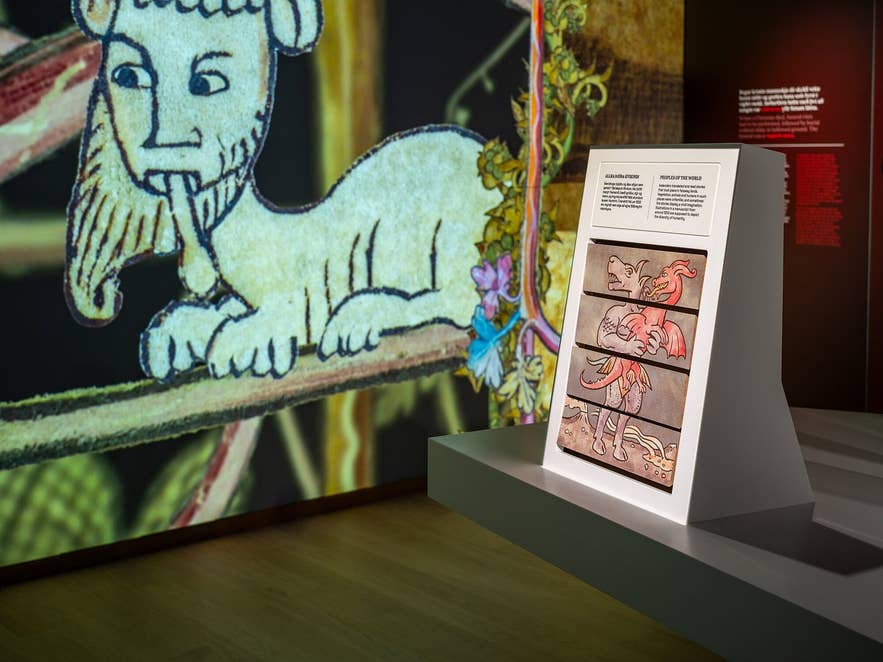 Its central location next to the National Museum of Iceland and the University of Iceland makes it an easy stop on a cultural Reykjavik day. You can get your World in Words tickets online or on-site.
It’s family-friendly, fully accessible, and self-paced, with most visits lasting one to two hours. There’s a small gift shop and a café on site.
We recommend it for: anyone interested in Norse mythology, the sagas, or Icelandic literature. It’s the freshest, most modern museum on this list, and seeing the actual Codex Regius, the source of nearly everything we know about the Norse gods, is a genuine bucket-list moment. Combine it with the National Museum next door.
World in Words Admission Fee
-
Adults: 21 USD (2,500 ISK)
-
Students: 10 USD (1,200 ISK)
-
Seniors: 10 USD (1,200 ISK)
-
Children under 18 / People with Disabilities: Free
World in Words Ratings
-
World in Words - Google rating: 5.0 out of 5 stars
World in Words Opening Hours
-
Tuesdays to Sundays from 10 AM - 5 PM. Closed on Mondays.
World in Words Address
-
Ground floor of Edda building, Arngrímsgata 5, 107 Reykjavik, Iceland.
Directions to World in Words Exhibition
The exhibition is within easy walking distance of central Reykjavik and close to several bus routes. The closest bus stops are "Þjóðminjasafn" (The National Museum) and "Háskóli íslands" (University of Iceland). Travelers with a rental car will find convenient parking around the Edda building.
3. Arbaer Open Air Museum
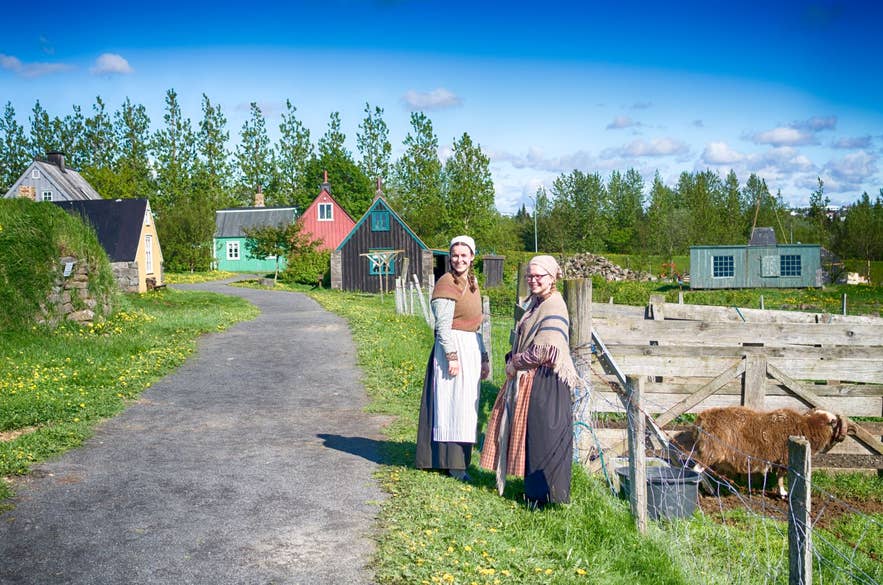
For a clear look at Old Iceland, the Arbaer Open Air Museum is one of the key sites that make up the Reykjavik City Museum. Set up like a small town, it has more than 20 preserved buildings from the 19th and early 20th centuries arranged around a square and a working farm, showing how Icelanders lived before industrialization.
Each building has its own story, from a professor’s home to the modest quarters of laborers. Traditional turf houses, WWII-era huts, and an old corner store show different periods of Reykjavik’s past.
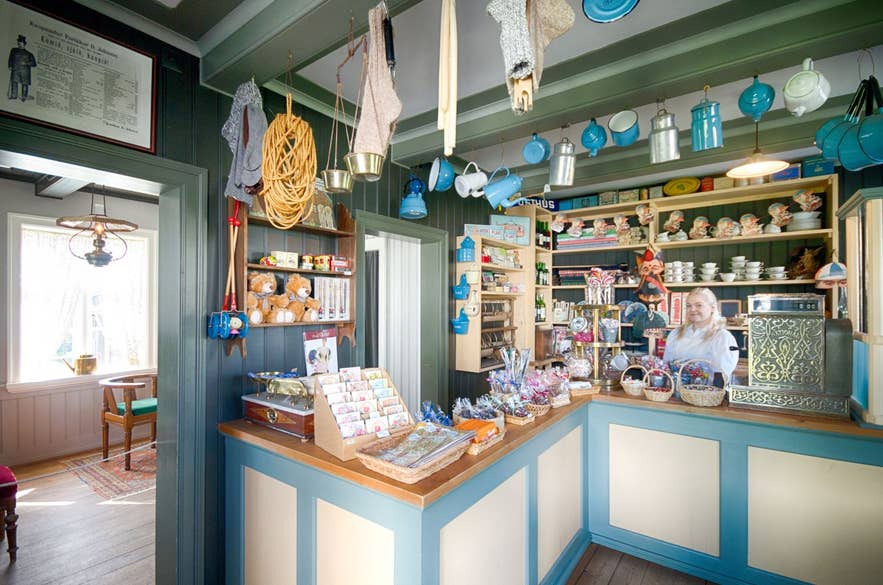 Staff in period clothing bring it to life, tending farm animals and demonstrating traditional household tasks. There’s also a small children’s room with classic mid-century toys, making it a great family-friendly, outdoor museum stop.
We recommend it for: families and travelers visiting in summer, when the buildings are open and staff are most active. Because it’s a 15-minute drive from downtown, it’s best saved for a day when you already have a rental car, and it pairs well with a stop in the nearby Ellidaardalur Valley.
Arbaer Open Air Museum Admission Fee
-
Adults: 18 USD (2,450 ISK)
-
Children (0–17): Free
-
People with Disabilities: Free
-
Students (with a valid student card): 11 USD (1,500 ISK)
-
Reykjavik Culture Year Pass: 60 USD (8,400 ISK)
-
Reykjavik Culture Year Pass 67+: 18 USD (2,450 ISK)
-
ICOM & Reykjavik City Card Holders: Free
Arbaer Open Air Museum Ratings
-
Arbaer Museum - Google rating: 4.6 out of 5 stars
Arbaer Open Air Museum Opening Hours
-
Daily from 10 AM - 5 PM
Arbaer Open Air Museum Address
Directions to Arbaer Open Air Museum
Located in Arbaer, a suburb of Reykjavik, it’s fairly easy to get to the museum. You can take buses 12 or 24 and exit at the "Árbæjarsafn" stop, but the easiest way to reach it is by rental car. It's around 5.5 miles (9 kilometers) from the city center.
2. Perlan Museum
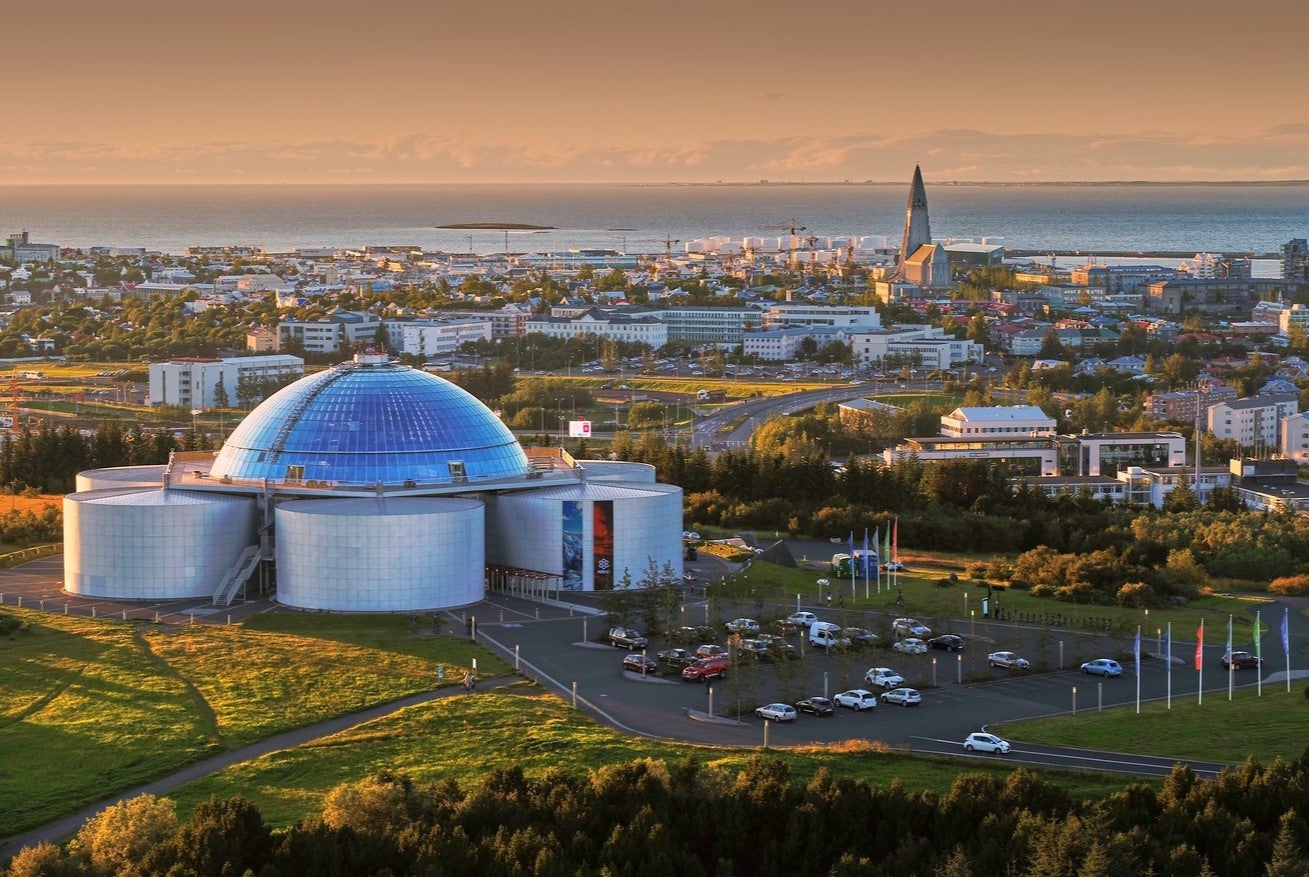 The iconic Perlan Museum is hard to miss during your time in Reykjavik. Towering over the city from Oskjuhlid Hill, this futuristic glass dome offers a panoramic view of the capital from its observation deck and lets you immerse yourself in Icelandic nature without leaving the city.
The Perlan "Wonders of Iceland" exhibition features the only real indoor ice cave in the world, a 100-meter (330-foot) tunnel built from more than 350 tons of snow inside one of the hot water tanks the dome sits on. It’s one of the most popular Reykjavik museums, so we recommend booking your Perlan tickets ahead of time. The cave is genuinely cold, but staff can lend you warm clothes if you need them.
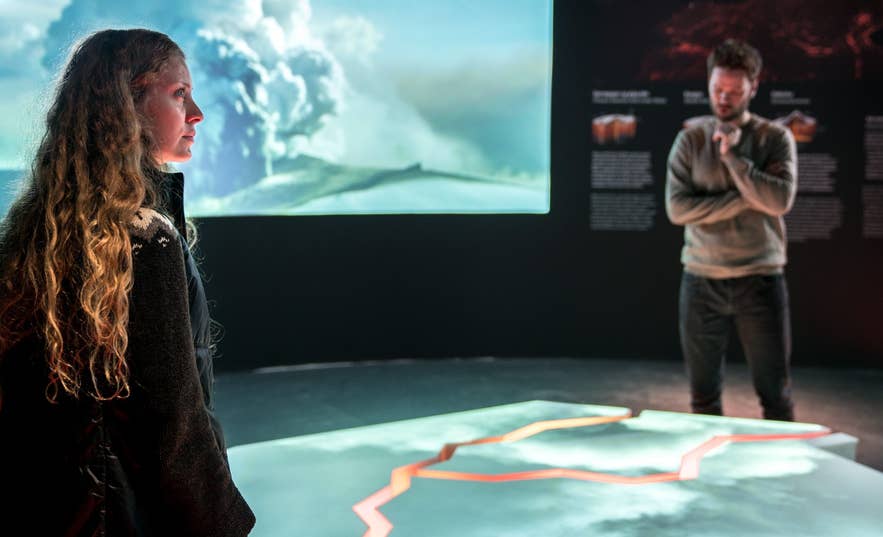
 Upstairs, an interactive wall reveals the forces of the glaciers and volcanic activity beneath you, alongside multimedia glacier displays. Another section explores Iceland’s volcanic eruptions, complete with shaking floors and eruptive displays.
There’s also an interactive exhibition on Icelandic water and a virtual reality telescope that lets you explore the birdlife, including puffins, at a reconstruction of the Latrabjarg cliffs. Don’t miss Perlan’s Northern Lights planetarium show, which lets you witness the northern lights even in summer.
We recommend it for: nature lovers, photographers, and anyone visiting in summer who won’t get to see a real ice cave or the northern lights firsthand. It’s the most polished and complete museum experience in the city, and the free observation deck alone is worth the trip up the hill. More on opening times is on the official Perlan website.
Perlan Admission Fee (On-site)
-
Adults: 49 USD (6,890 ISK)
-
Children (6–17 years): 33 USD (4,590 ISK)
-
Children (0–5 years): Free
Perlan Ratings
-
Perlan - Google rating: 4.5 out of 5 stars
Perlan Opening Hours
-
Daily from 9 AM - 10 PM
Perlan Address
Directions to Perlan
Perlan is located at the top of the Oskjuhlid Hill. It's a 40-minute walk from downtown Reykjavik and can easily be reached with a rental car. You can also take the Straeto bus number 18 and stop at either the "Perlan" bus stop or the "Veðurstofan" bus stop.
1. The National Museum of Iceland
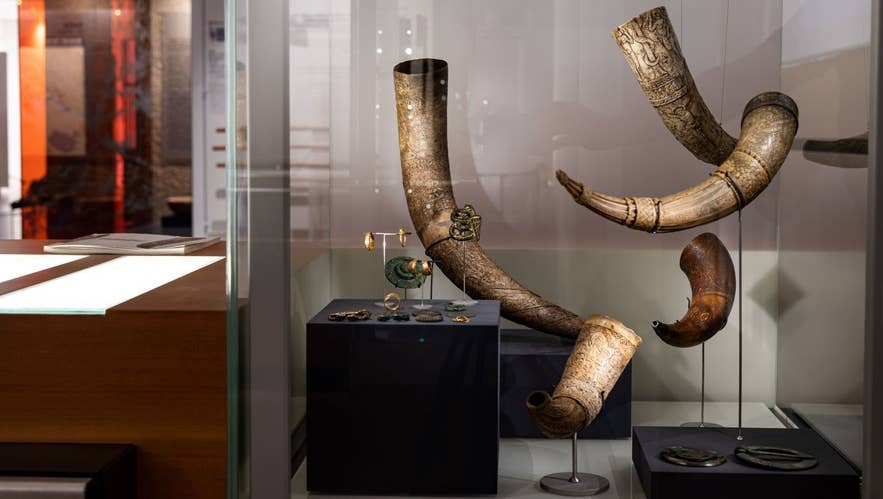
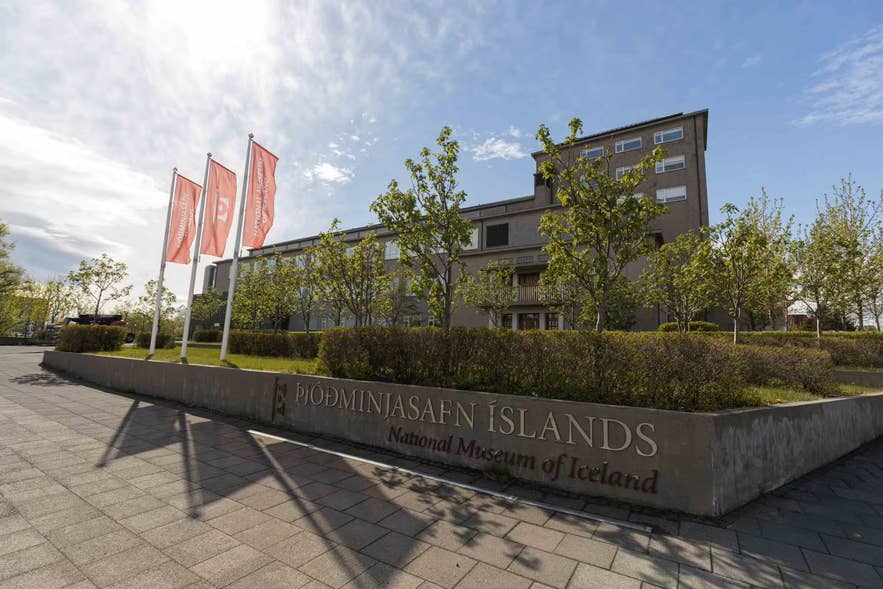
The National Museum of Iceland (Thjodminjasafnid) is where Iceland’s story comes together in one place, with a collection spanning early settlement artifacts to everyday 20th-century objects and showing how Icelandic society developed over more than a thousand years.
The permanent exhibition, "Making of a Nation," opens with the ship that carried Viking settlers across the North Atlantic and moves through centuries of change. Along the way, you'll see swords, drinking horns, religious pieces, domestic tools, and a bronze figure believed to depict the mythological Norse god Thor.
The upper floor continues from the 1600s onward, tracing life under foreign rule and the path to independence. You can listen to recorded historical voices through headphones, and a small hands-on room lets you handle and photograph objects.
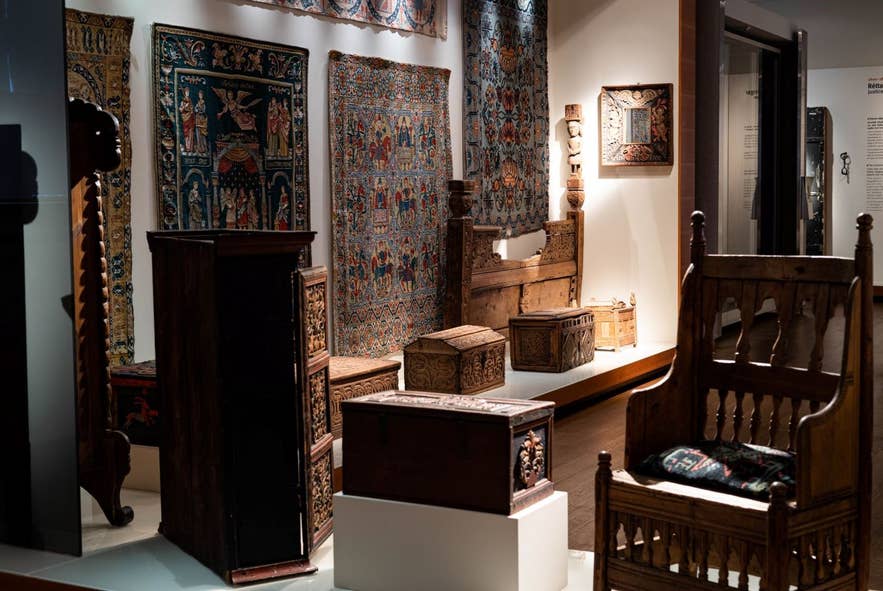
A free audio guide is available in nine languages, and English tours run on Wednesdays, Saturdays, and Sundays. Rotating temporary exhibitions cover everything from historic equipment to modern architecture, so the experience varies depending on when you go.
We recommend it for: everyone, and especially first-time visitors. If you read or visit only one museum in Reykjavik, this is the one that ties all the others together, giving you the full thousand-year arc before you dive into the specialist museums. Plan on at least two hours, and check current exhibitions on the official National Museum website.
National Museum of Iceland Admission Fee
-
Adults / Annual Pass: 21 USD (3,000 ISK)
-
Students / Seniors: 11 USD (1,500 ISK)
-
Children under 18: Free
-
People with Disabilities: Free
-
Reykjavik City Cardholders: Free
National Museum of Iceland Ratings
-
National Museum of Iceland - Google rating: 4.5 out of 5 stars
National Museum of Iceland Opening Hours
-
Daily from 10 AM - 5 PM
National Museum of Iceland Address
Directions to the National Museum of Iceland
The National Museum of Iceland is within a 15-minute walk from the downtown area, close to the Tjornin Pond, and next to the University of Iceland. You can also reach it by public bus number 12, stopping at the "Þjóðminjasafnið" bus stop, or by buses 1 and 3, stopping at the "Háskóli Íslands" stop.
If you have a rental car, there is parking available off Sudurgata Street or by the University of Iceland.
Top 8 Art & Design Museums in Reykjavik
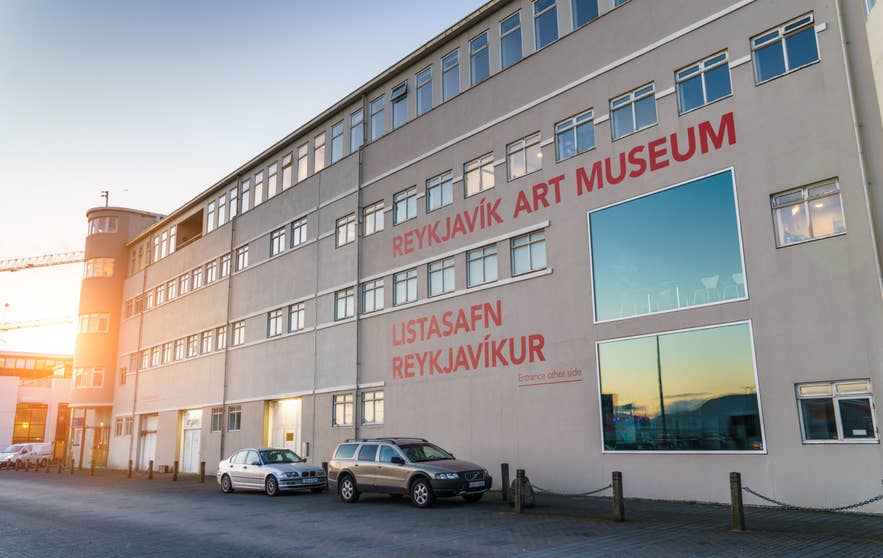 Reykjavik’s art and design museums show how creative the city really is. Here you’ll find classic Icelandic paintings, bold contemporary work, experimental installations, and sculpture spaces that feel like part of the artwork. Some museums focus on national treasures, while others highlight new voices shaping Iceland’s modern art scene. A handy tip: Hafnarhus, Kjarvalsstadir, and Asmundarsafn are all part of the Reykjavik Art Museum, so a single ticket gets you into all three within 24 hours.
8. The Living Art Museum
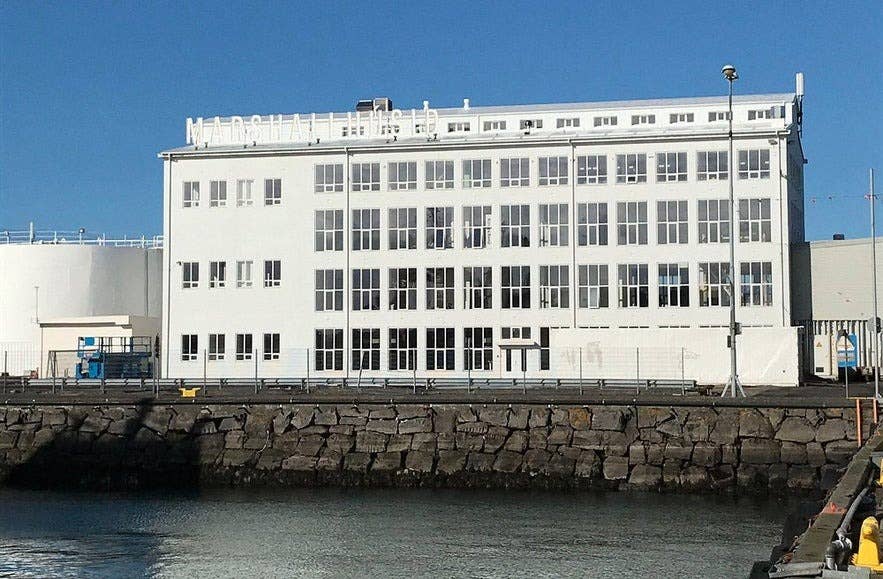 The Living Art Museum, also known as Nylo (short for "Nýlistasafnið"), is one of Reykjavik’s most distinctive contemporary art spaces. Founded in 1978 as an artist-run initiative, it sits in the Grandi Area inside the historic Marshall House, now a hub for modern and experimental art.
If you’re into contemporary or conceptual work, don’t skip it. Exhibitions often feature experimental installations, performances, and multimedia projects, and Nylo also maintains an extensive archive documenting the history of Icelandic contemporary art.
We recommend it for: art lovers on a budget and travelers exploring the Grandi harbor area, since admission is free. The same building houses other galleries and a well-regarded restaurant, so it’s an easy, low-commitment stop you can combine with the Maritime Museum and Whales of Iceland next door.
The Living Art Museum Admission Fee
-
Admission is free
The Living Art Museum Ratings
-
The Living Art Museum - Google rating: 4.4 out of 5 stars
The Living Art Museum Opening Hours
-
Wednesday - Sunday from 12 PM - 6 PM, closed on Monday and Thursday
The Living Art Museum Address
Directions to the Living Art Museum
The Living Art Museum is a 20–25 minute walk from the city center, following a scenic route along the harbor to the Grandi Area. You can also take bus number 14 or 3 and get off at the “Grandi” stop. For those driving, there is free parking available by the building.
7. Hofudstodin Art & Culture Center
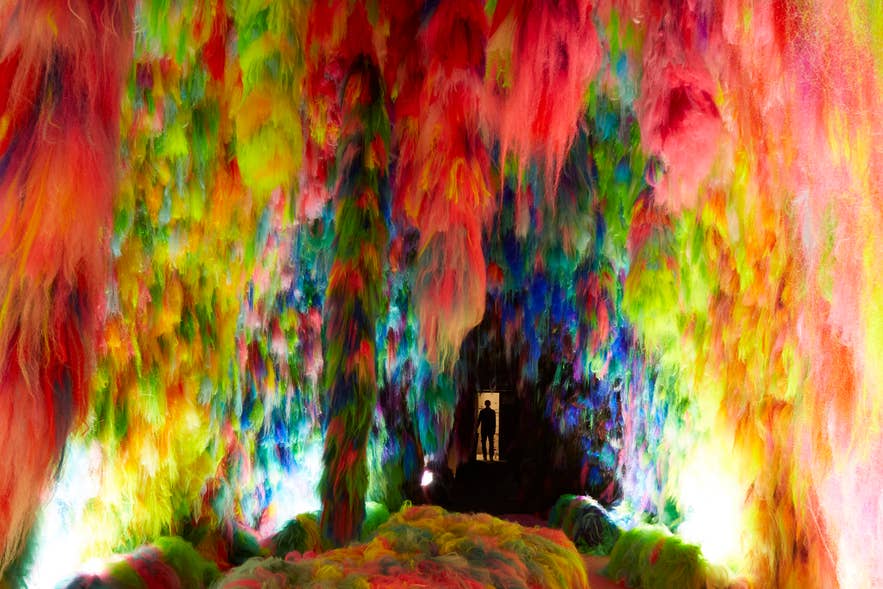
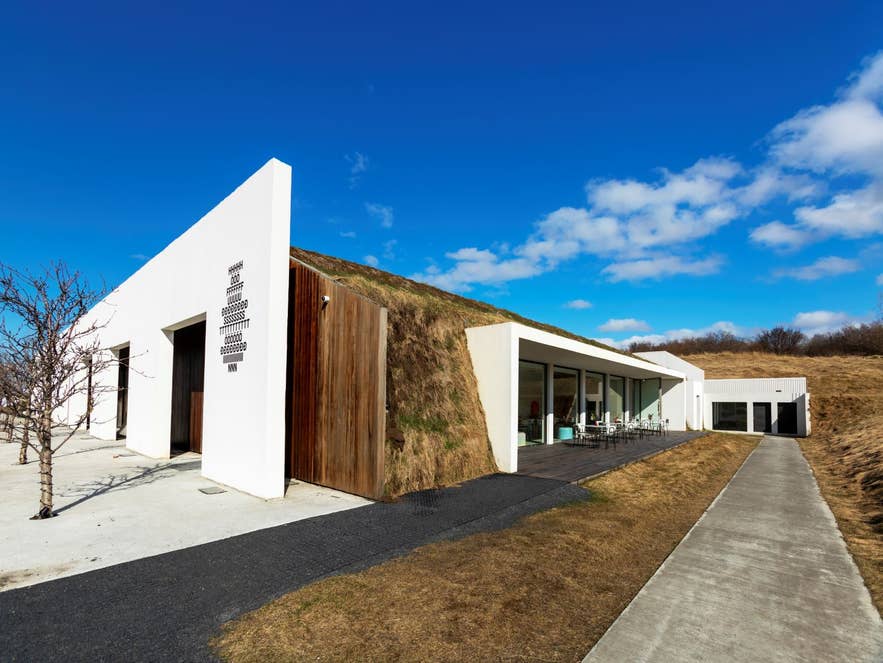 Hofudstodin is one of the most surprising museum experiences in Reykjavik and a must for fans of modern or experimental art. The centerpiece is Chromo Sapiens, a large immersive installation by Icelandic artist Shoplifter (Hrafnhildur Arnardóttir), who represented Iceland at the 2019 Venice Biennale. You move through rooms filled with intense color, soft textures, and a surrounding soundscape, in a space designed to heighten the senses.
Afterward, you can relax in the lounge, browse a design shop with pieces connected to the installation, or grab something at the café and bar (with outdoor seating in good weather). Because the space is compact and popular, it’s a good idea to book the Multi-Sensory Chromo Sapiens Art Installation ticket in advance.
We recommend it for: travelers who want one genuinely unexpected art experience and don’t mind heading slightly out of the center. It’s especially good for kids and anyone who finds traditional galleries dull, and the bike ride out through Ellidaardalur is part of the appeal in good weather.
Hofudstodin Admission Fee
-
Adults: 2,250 ISK
-
Seniors (67+): 1,650 ISK
-
Youth (12 to 17): 1,450 ISK
-
Children (5 to 11): 650 ISK
-
Infants (0 to 4): Free
Hofudstodin Ratings
-
Hofudstodin - Google rating: 4.5 out of 5 stars
Hofudstodin Opening Hours
-
Monday - Friday from 12 PM - 6 PM, Saturday - Sunday from 11 AM to 5 PM
Hofudstodin Address
Directions to Hofudstodin
Hofudstodin sits just outside central Reykjavik near the Ellidaardalur Valley and is simple to reach by bus, car, or bike. On weekdays, you can take bus 16 from Hlemmur D, and on weekends, bus 15 from Hlemmur C.
If you are driving, follow Vesturlandsvegur east and turn right before the exit by the N1 gas station, then take a left and another quick left to reach the parking area beside the building. Several bike paths through Ellidaardalur also lead directly to Hofudstodin, making it a pleasant and scenic ride.
6. The National Gallery of Iceland
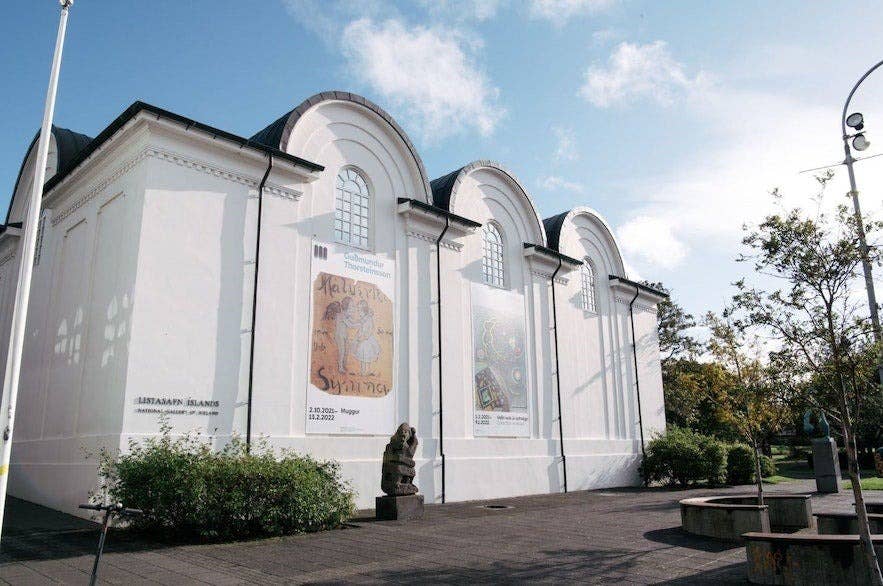 The National Gallery of Iceland sits by the Tjornin Pond in central Reykjavik, a short walk from the city’s main sights. It is Iceland’s leading art institution and one of the top art museums in Reykjavik, focusing on Icelandic visual art from the 19th century to today.
Its permanent collection includes works by many of Iceland’s most important artists, while rotating exhibitions highlight contemporary and international work. The building is modern and bright across multiple levels, with a museum shop and a café overlooking the pond.
We recommend it for: travelers who want to see the masters of Icelandic painting, figures like Jóhannes Kjarval and Ásgrímur Jónsson, in one place. Its central setting by the pond makes it the easiest art museum to fold into a downtown walk. Details on current shows are on the official National Gallery website.
National Gallery of Iceland Admission Fee
-
Adults (18+): 18 USD (2,500 ISK)
-
Students: 11 USD (1,500 ISK)
-
Seniors (67+): 11 USD (1,500 ISK)
-
Children (17 and younger): Free
-
Visitors with Disabilities & Care Partners: Free
-
Reykjavik City Card, ICOM, FÍSOS, SÍM, and Press: Free
National Gallery of Iceland Ratings
-
National Gallery of Iceland - Google rating: 4.2 out of 5 stars
National Gallery of Iceland Opening Hours
-
Daily from 10 AM - 5 PM
National Gallery of Iceland Address
Directions to the National Gallery of Iceland
The National Gallery is easy to reach on foot from most downtown locations, as it's right in the center, by the Tjornin Pond.
The closest bus stop is "Hallargarðurinn," where buses 1, 2, 3, 6, 11, and 12 stop. Paid street parking is available in the area for those arriving by car, but it's most convenient to park in the nearby parking garage under the Reykjavik City Hall.
5. The Einar Jónsson Museum
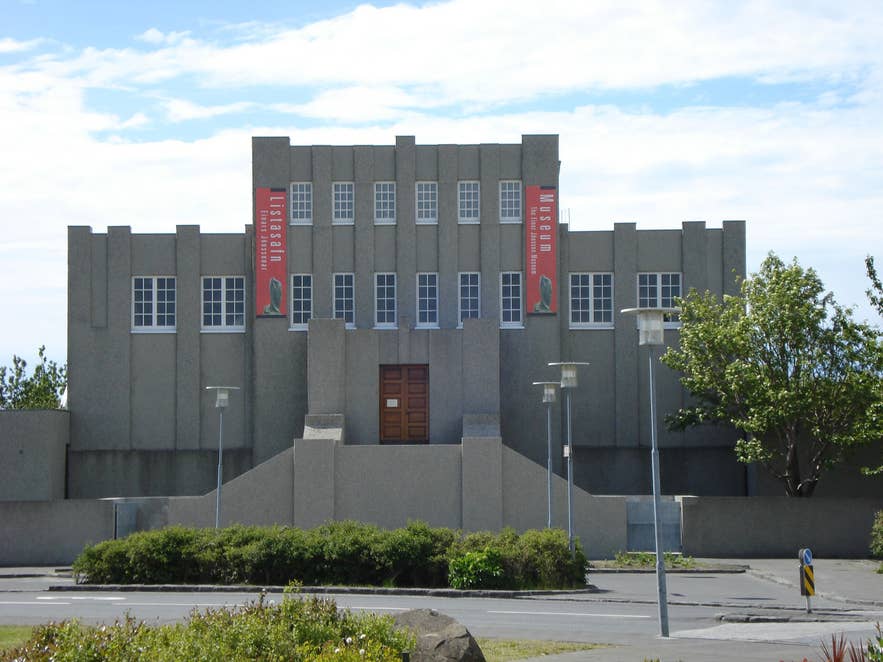
Photo from Wikimedia, Creative Commons, by TommyBee.
The Einar Jónsson Museum stands next to Hallgrimskirkja Church in central Reykjavik and is dedicated to Iceland’s first professional sculptor, Einar Jónsson.
It opened on 24 June 1923 as the first art museum in Iceland, designed by the artist himself to serve as his home and studio. The story behind it is unusual: in 1909, Einar offered his entire body of work to the nation as a gift, on the single condition that a museum be built to house it.
Inside, his sculptures explore mythology, spirituality, and the human condition in plaster, bronze, and marble. Outside, a peaceful sculpture garden with around 26 bronze casts is open to the public year-round.
We recommend it for: visitors already heading to Hallgrimskirkja Church, since it’s directly across the street. Even if you skip the indoor galleries, the free outdoor sculpture garden is one of the most peaceful and rewarding free stops in the city center.
Einar Jónsson Admission Fee
-
Adults: 11 USD (1,500 ISK)
-
Seniors (67+): 7 USD (1,000 ISK)
-
Students (with a valid ID): 7 USD (1,000 ISK)
-
Groups (15+ people): 7 USD per person (1,000 ISK)
-
Children under 18: Free
-
People with Disabilities: Free
-
School Groups: Free
-
ICOM, FÍM, FÍMK, FÍSOS, SÍM Members: Free
Einar Jónsson Museum Ratings
-
Einar Jónsson Museum - Google rating: 4.7 out of 5 stars
Einar Jónsson Museum Opening Hours
-
Tuesday - Sunday from 12 PM - 5 PM, closed on Monday
Einar Jónsson Museum Address
Directions to Einar Jónsson Museum
If you're exploring downtown Reykjavik, then reaching the Einar Jónsson Museum is easy. It’s a short walk from Reykjavik’s main shopping streets and other downtown landmarks, and just across the street from Hallgrimskirkja Church.
If you’re driving, there is limited parking in the area around Hallgrimskirkja Church, but it's best to park at one of the nearby parking garages and walk through the downtown area.
Public bus stops are all around a 15-minute walk away from the Einar Jónsson Museum, with the closest ones being the "Hallargarðurinn" stop by the Tjornin Pond, the BSI Bus Terminal, and the "Bíó Paradís" stop on Hverfisgata Street.
4. Asmundarsafn Museum
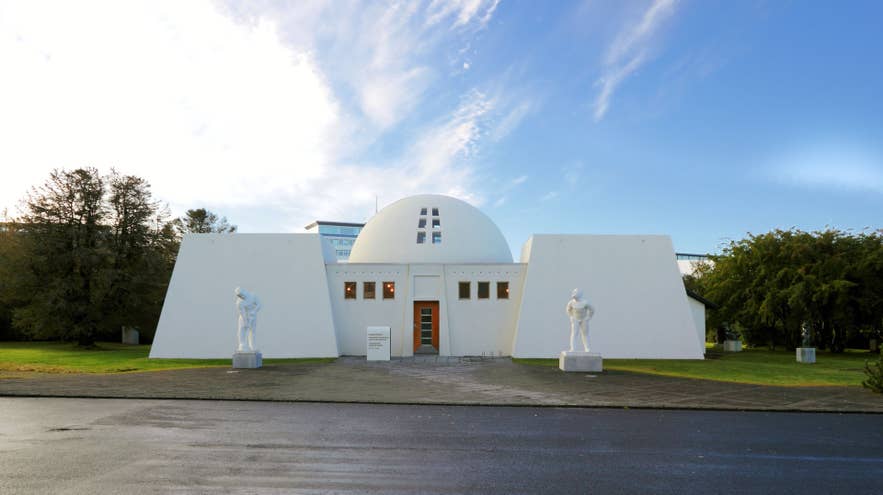 Asmundarsafn Museum sits in Laugardalur Valley, near the Reykjavik Botanical Garden and the Family Park & Zoo. Designed by sculptor Ásmundur Sveinsson as his own home and studio, its clean white curves and geometric forms make it one of the most distinctive museum spaces in the city.
The galleries trace Ásmundur’s development from early figurative work to the sharper, abstract pieces of his later years, alongside temporary exhibitions on sculpture and three-dimensional art. Outside, a dedicated sculpture garden surrounds the building with many of his larger works in an open, park-like setting.
We recommend it for: sculpture fans and families combining culture with a day in Laugardalur. The free outdoor sculpture garden can be enjoyed any time, and it’s an easy add-on to the Botanical Garden, the zoo, or a swim at Laugardalslaug. It’s part of the Reykjavik Art Museum, so it’s covered by the same shared ticket.
Asmundarsafn Admission Fee
-
Adults: 17 USD (2,430 ISK)
-
Students: 11 USD (1,500 ISK)
-
Visitors under 18: Free
-
People with Disabilities: Free
-
Annual Pass: 43 USD (5,950 ISK)
-
Annual Pass +1: 64 USD (8,950 ISK)
-
Annual Pass (ages 18–28): 30 USD (4,130 ISK)
-
Reykjavik City Cardholders: Free
Asmundarsafn Ratings
-
Asmundarsafn - Google rating: 4.6 out of 5 stars
Asmundarsafn Opening Hours
-
Daily from 10 AM - 5 PM
Asmundarsafn Address
Directions to Asmundarsafn
Asmundarsafn Museum is located a bit away from the city center, and while walking is possible, it's best to take a city bus or drive.
Walking from downtown Reykjavik to Asmundarsafn takes around 50 minutes one-way, but you can easily reach the closest bus stop, "Eingarteigur," with buses number 15, 17, 2, or 5.
If you have a rental car, you'll find plenty of parking by the museum. After your museum visit, we recommend visiting the Laugardalslaug Swimming Pool, which is in the same area!
3. Kjarvalsstadir Museum
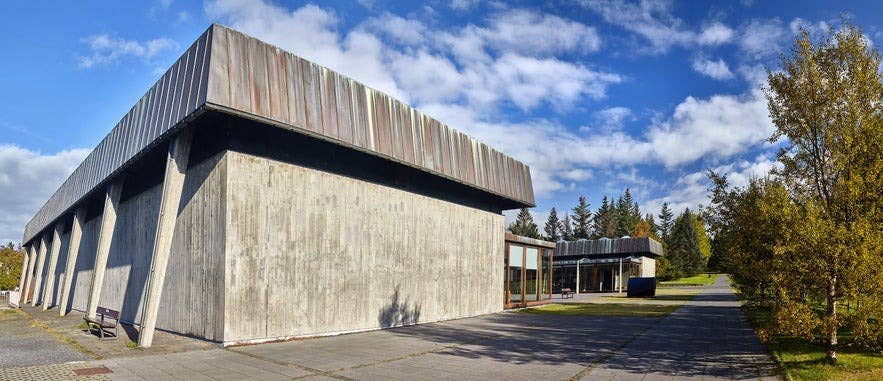 Kjarvalsstadir is located in the Klambratun Park in Reykjavik, close to Hlemmur Square. It's part of the Reykjavik Art Museum, alongside Hafnarhus and Asmundarsafn.
It’s named after Jóhannes S. Kjarval, one of Iceland’s most beloved painters, and a large part of the space is dedicated to his landscapes, portraits, and abstract works rooted in Icelandic nature and folklore. The museum also shows rotating exhibitions of modern and contemporary Icelandic artists.
The building is open and light, with large windows facing the park, a café with a park view, and a shop selling books, prints, and local design.
We recommend it for: anyone who wants to understand the artist most loved by Icelanders themselves. Kjarval shaped how the nation sees its own landscapes, so this is the most “Icelandic” of the art museums. The park setting makes it a relaxed stop, and it’s on the same shared Reykjavik Art Museum ticket.
Kjarvalsstadir Admission Fee
-
Adults: 17 USD (2,430 ISK)
-
Students: 11 USD (1,500 ISK)
-
Visitors under 18: Free
-
People with Disabilities: Free
-
Annual Pass: 43 USD (5,950 ISK)
-
Annual Pass +1: 64 USD (8,950 ISK)
-
Annual Pass (ages 18–28): 30 USD (4,130 ISK)
-
Reykjavik City Cardholders: Free
Kjarvalsstadir Ratings
-
Kjarvalsstadir - Google rating: 4.4 out of 5 stars
Kjarvalsstadir Opening Hours
-
Daily from 10 AM - 5 PM
Kjarvalsstadir Address
Directions to Kjarvalsstadir
Kjarvalsstadir is located in the Klambratun Park, within a 15-minute walk from the Hlemmur Square. It's easy to reach on foot, but you can also take public transport. The nearest bus stop is "Klambratún," which is around a 5-minute walk away from the museum.
If you have a rental car, you'll have no problem finding parking by the museum building.
2. Hafnarhus Museum
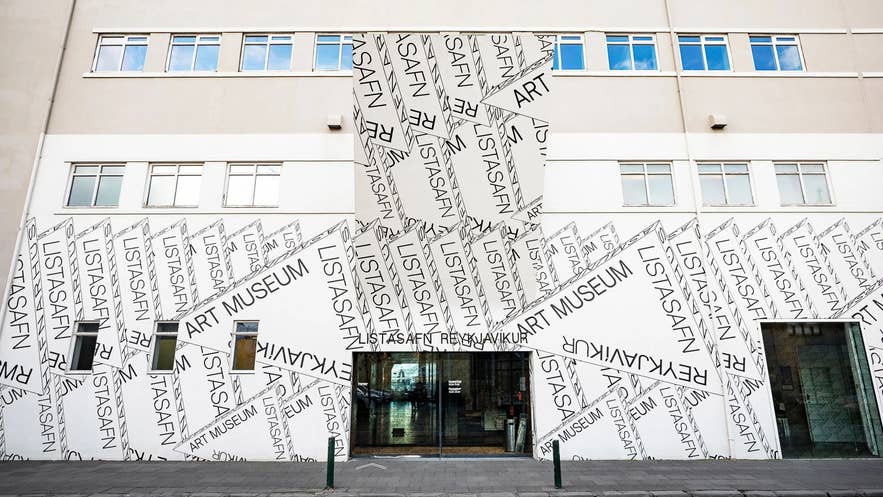 Hafnarhus sits by the old harbor in downtown Reykjavik. Originally a warehouse, it’s now one of the city’s leading contemporary art museums and part of the Reykjavik Art Museum, along with two other locations.
It holds the largest collection of works by Icelandic pop artist Erró, known for his colorful, detailed collage paintings, plus changing exhibitions of modern and experimental art that often tackle current social and cultural issues. The large, industrial space gives it a distinctly modern feel.
We recommend it for: contemporary art fans and anyone exploring the old harbor and downtown on foot. Of the three Reykjavik Art Museum sites, this is the most central and the most striking, and the Erro collection alone justifies the visit. Open late on Thursdays, it’s a good rainy-evening option.
Hafnarhus Admission Fee
-
Adults: 17 USD (2,430 ISK)
-
Students: 11 USD (1,500 ISK)
-
Visitors under 18: Free
-
People with Disabilities: Free
-
Reykjavik City Card Holders: Free
-
Annual Pass: 43 USD (5,950 ISK)
-
Annual Pass +1: 64 USD (8,950 ISK)
-
Annual Pass, ages 18–28: 30 USD (4,130 ISK)
Hafnarhus Ratings
-
House of Collections - Google rating: 4.2 out of 5 stars
Hafnarhus Opening Hours
-
Daily from 10 AM - 5 PM, and 10 AM - 10 PM on Thursdays
Hafnarhus Address
Directions to the Hafnarhus
Hafnarhus is close to the Old Reykjavik Harbor and next to the Kolaportid Flea Market and the Baejarins Beztu Hot Dog Stand.
The closest bus stop is by the harbor and is called "Hafnarhús," serviced by buses number 14 and 3. Otherwise, it's a short walking distance to the Laekjartorg Square, where many other buses connect.
There is parking behind the Hafnarhus museum, but it can be hard to find parking there and in the surrounding area. We recommend parking in a nearby parking garage, like the one under the Hafnartorg Area.
1. House of Collections (Safnahusid)
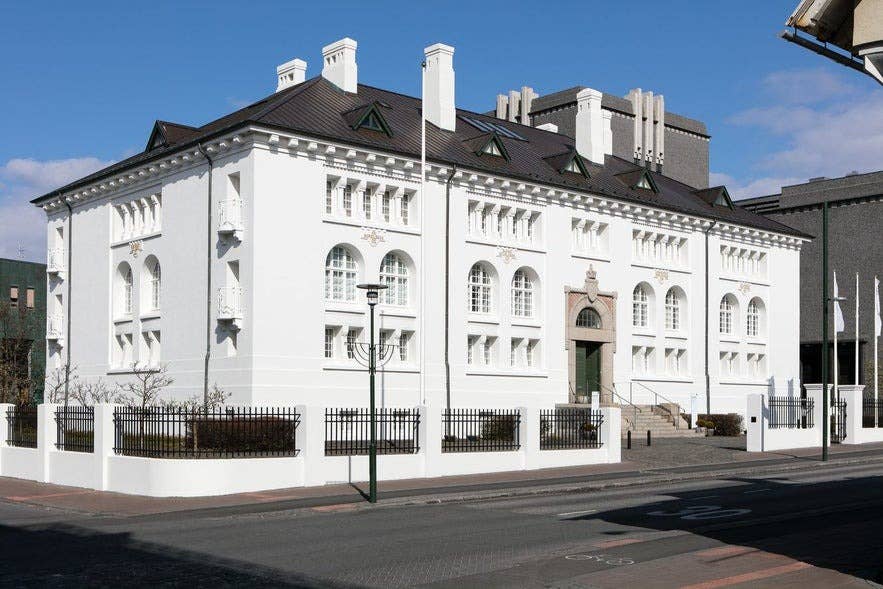 On Hverfisgata Street stands the House of Collections, known in Icelandic as "Safnahúsið." This beautiful early 20th-century building is a downtown Reykjavik landmark and today forms part of the National Gallery of Iceland.
Its main exhibition, Resistance, focuses on sustainability and ethical questions, connecting art and science and inviting visitors to reflect on their own experiences.
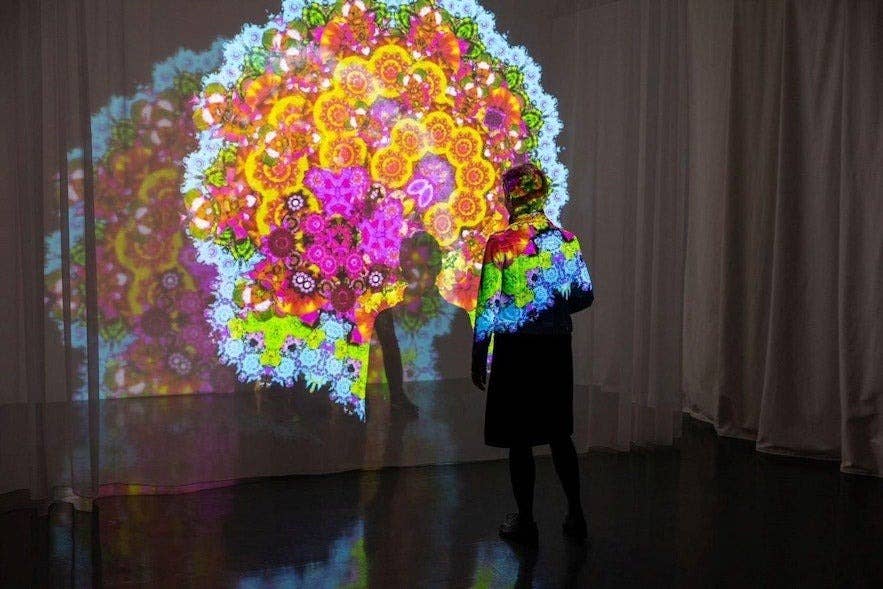 The exhibition spreads over four themed floors connected by a large staircase, and it’s best to start at the top and work down. It also includes interactive displays and games for children, making it a good family stop.
We recommend it for: families and architecture lovers. The building itself, one of the most beautiful in Reykjavik, is half the reason to go, and the four-floor layout with kid-friendly interactive displays makes it easy to visit with children. It’s free with the Reykjavik City Card.
House of Collections Admission Fee
-
Adults (18+): 11 USD (1,500 ISK)
-
Students: 7 USD (1,000 ISK)
-
Seniors (67+): 7 USD (1,000 ISK)
-
Children (17 and younger): Free
-
Visitors with Disabilities & Care Partners: Free
-
Reykjavik City Card, ICOM, FÍSOS, SÍM, and Press: Free
House of Collections Ratings
-
House of Collections - Google rating: 4.2 out of 5 stars
House of Collections Opening Hours
-
Daily from 10 AM - 5 PM
House of Collections Address
Directions to the House of Collections
It's hard to miss the grand white House of Collections at the end of Hverfisgata Street, close to Laekjatorg Square and Laugavegur Street. It's easy to stop by when exploring the city on foot, and you can take multiple buses to reach it.
The closest bus stops are on Laekjatorg Square and by the National Theatre of Iceland, a stop called "Þjóðleikhúsið."
Parking by the museum is very limited, but there are multiple parking garages within walking distance.
Top 3 Quirky Museums in Reykjavik
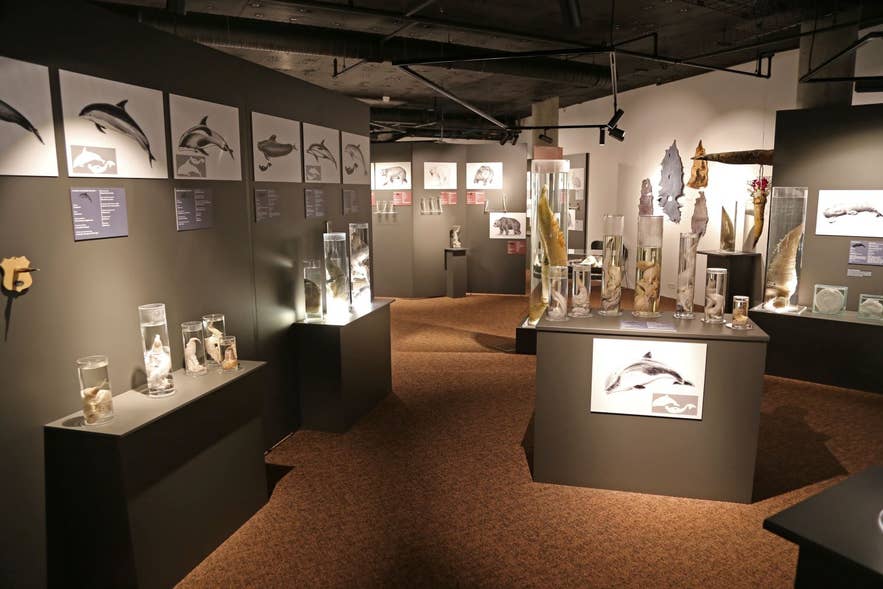 Reykjavik has museums that lean into the unexpected, offering experiences you won’t find in traditional galleries. Some dive into Iceland’s oddball history, others celebrate bold subcultures, but all deliver something unforgettable.
These spots are fun, unusual, and easy to explore as you wander through the city. If you like museums with personality, you’ll enjoy every stop on this list.
3. Aurora Reykjavik: The Northern Lights Center
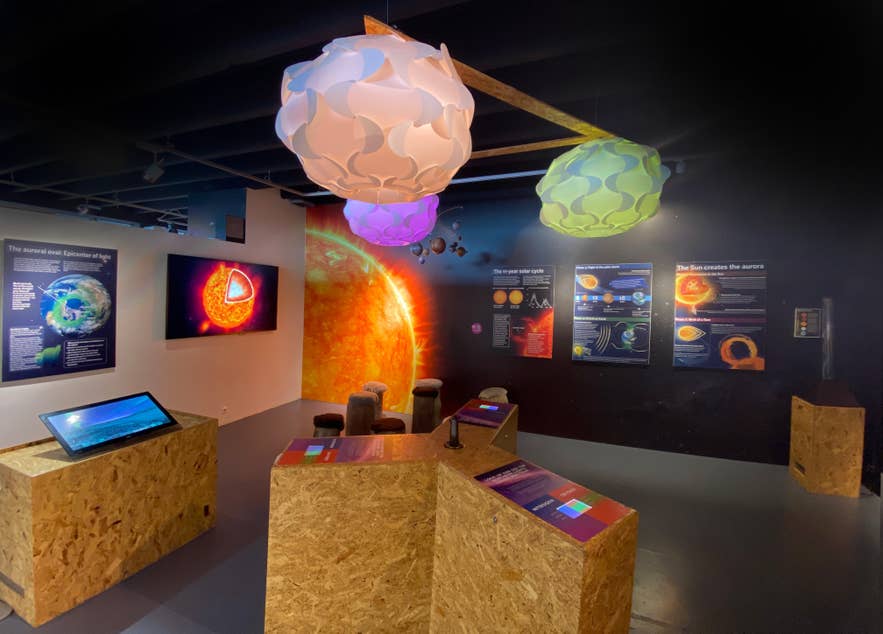 Aurora Reykjavik is one of the top museums in Reykjavik for learning how the aurora forms in Iceland’s skies. This interactive center blends history, science, and hands-on exhibits, making it a smart stop before joining northern lights tours.
It covers everything from traditional aurora legends to the physics behind the green, red, and purple displays, with virtual reality experiences and touchscreen exhibits showing how solar activity creates each one.
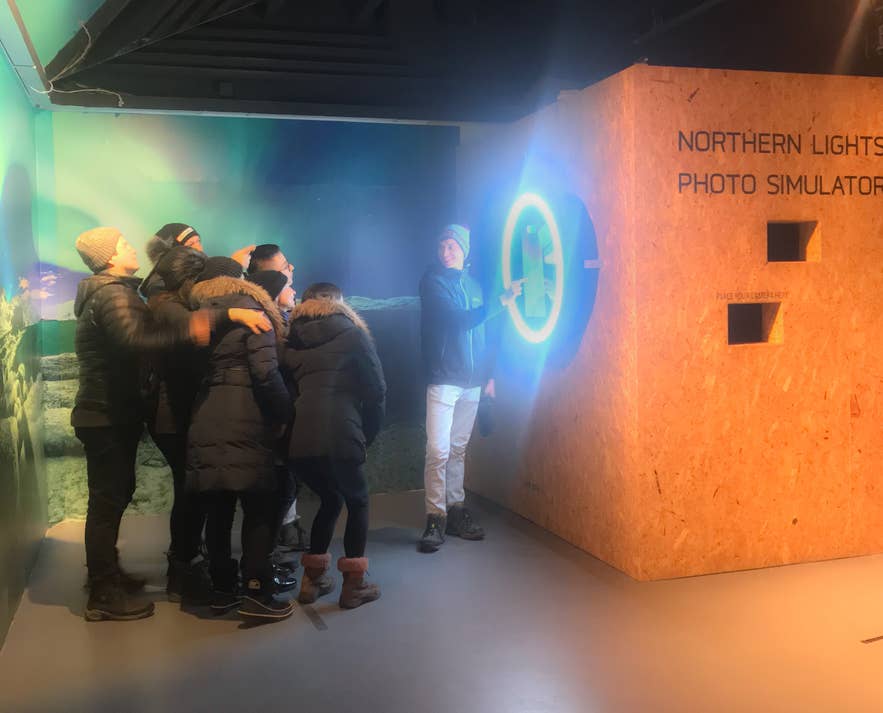 The highlight, especially for adults, is a photo booth that recreates real aurora conditions, where staff help you learn the camera settings for photographing the lights outdoors.
If you're planning to visit, it’s best to book your Aurora Reykjavik museum experience ahead of time to secure a spot.
We recommend it for: winter visitors planning a northern lights hunt. The 13-minute panoramic film and the camera-settings tutorial genuinely improve your odds of getting a good photo when you head out at night, making this the most practical preparation you can do indoors.
Aurora Reykjavik Admission Fee
-
Adults: 28 USD (3,900 ISK)
-
Students (with a valid ID): 25 USD (3,500 ISK)
-
Children (6–16 years): 14 USD (1,900 ISK)
Aurora Reykjavik Ratings
-
Aurora Reykjavik - Google rating: 4.4 out of 5 stars
Aurora Reykjavik Opening Hours
-
Daily from 9 AM - 7 PM
Aurora Reykjavik Address
Directions to Aurora Reykjavik
Aurora Reykjavik is a 30-minute walk away from the city center. Those arriving by rental car will find convenient parking close by, and public transport is also an easy option. Buses 14 and 3 both serve the area, with the nearest stop being the "Fiskislóð" bus stop.
2. The Icelandic Punk Museum
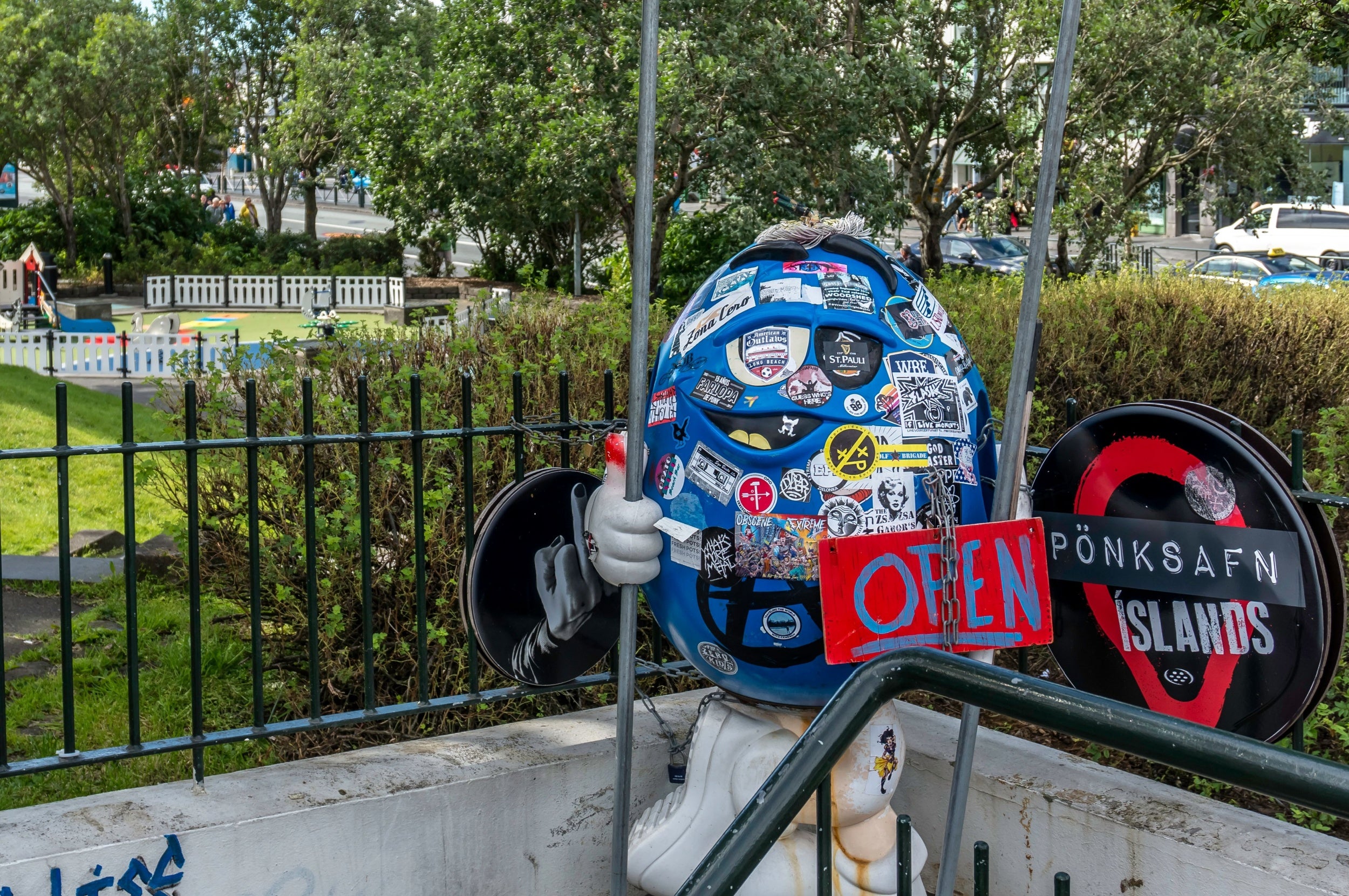 When exploring the nation’s culture and history, one cannot forget Icelandic music! The Icelandic Punk Museum is hidden at the bottom of Bankastraeti Street in downtown Reykjavik and is one of the more unique places you can visit during your trip to Iceland.
Fittingly for a punk museum, it’s underground in a former public toilet that sat unused until the museum opened here in 2016. Its grand opening was hosted by John Lydon (Johnny Rotten) of the Sex Pistols, though the museum itself was founded by Icelandic musician Dr. Gunni (Gunnar Larus Hjalmarsson).
Here, you can learn about this country’s punk scene, from its raw beginnings to the new wave explosion, which helped pave the way for some of the nation's most iconic artists, including Björk and Sigur Rós.
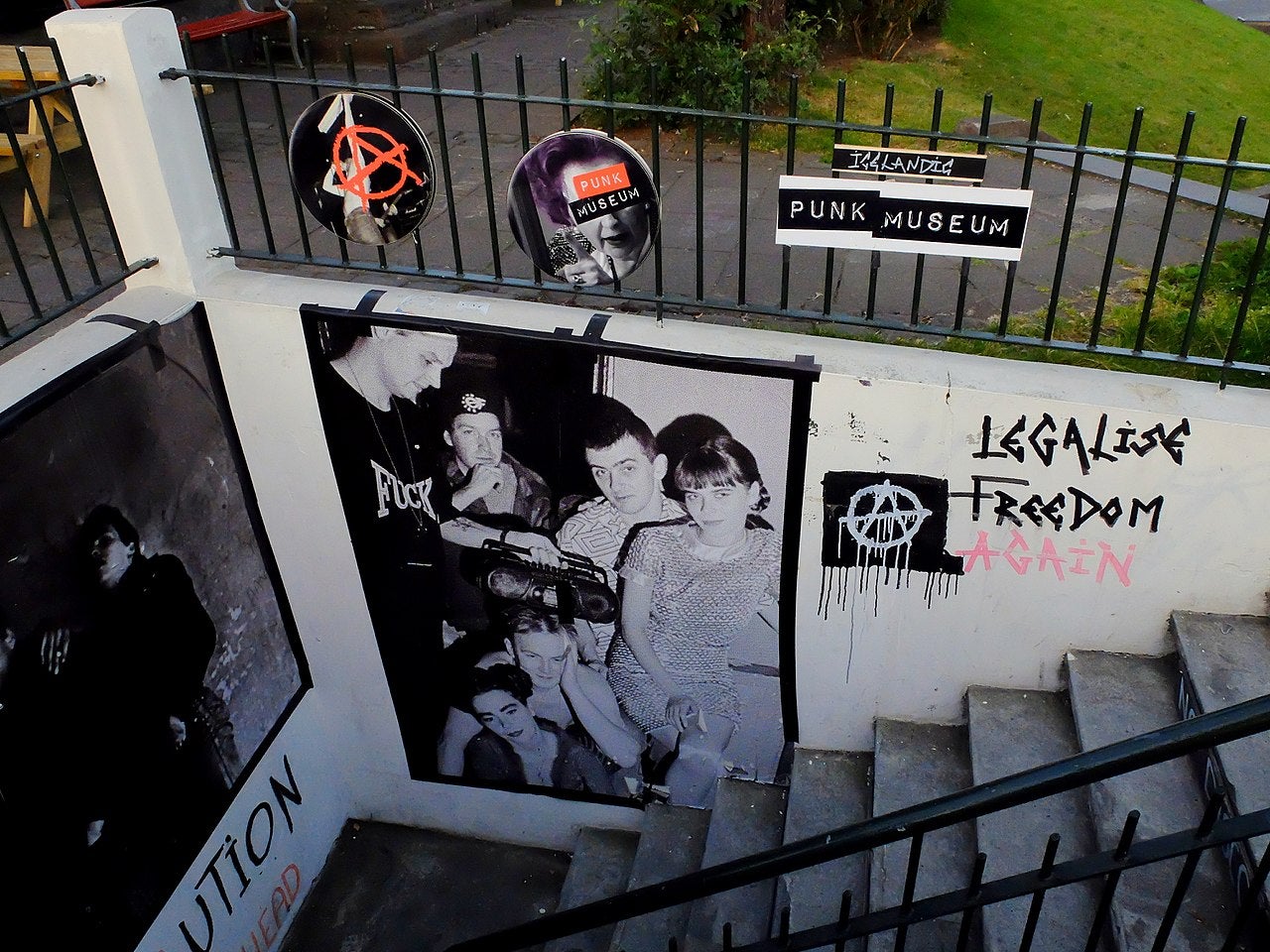
Photo from Wikimedia, Creative Commons, by Ziko van Dijk. No edits made
The old stalls serve as mini display rooms for photographs, posters, handbills, stage equipment, and instruments. There are streaming videos of classic club shows, headphones playing different Icelandic punk songs, and you can even try on a leather jacket and pose with a guitar or behind the drums.
Despite its small size and odd history, or perhaps because of it, this quirky and offbeat punk shrine is one of the best museums in Iceland.
We recommend it for: music fans and anyone curious about how a tiny island produced Björk and Sigur Rós. It’s the cheapest museum on this list and takes only 20 to 30 minutes, so it’s an easy, memorable detour while walking down Bankastraeti.
Icelandic Punk Museum Admission Fee
-
Adults: 8 USD (1,000 ISK)
Icelandic Punk Museum Ratings
-
Punk Museum - Google rating: 4.5 out of 5 stars
Icelandic Punk Museum Opening Hours
-
Daily from 10 AM - 6 PM
Icelandic Punk Museum Address
Directions to the Icelandic Punk Museum
The Punk Museum is at the base of Bankastraeti Street, which connects with the popular Laugavegur Shopping Street. It's best to access on foot, and you can take multiple bus lines to the nearby Laekjatorg Square.
If you have a rental car, it's best to park in one of the nearby parking garages. The closest ones are by Harpan Concert Hall, Reykjavik City Hall, or Tradarkot on Hverfisgata Street.
1. The Icelandic Phallological Museum
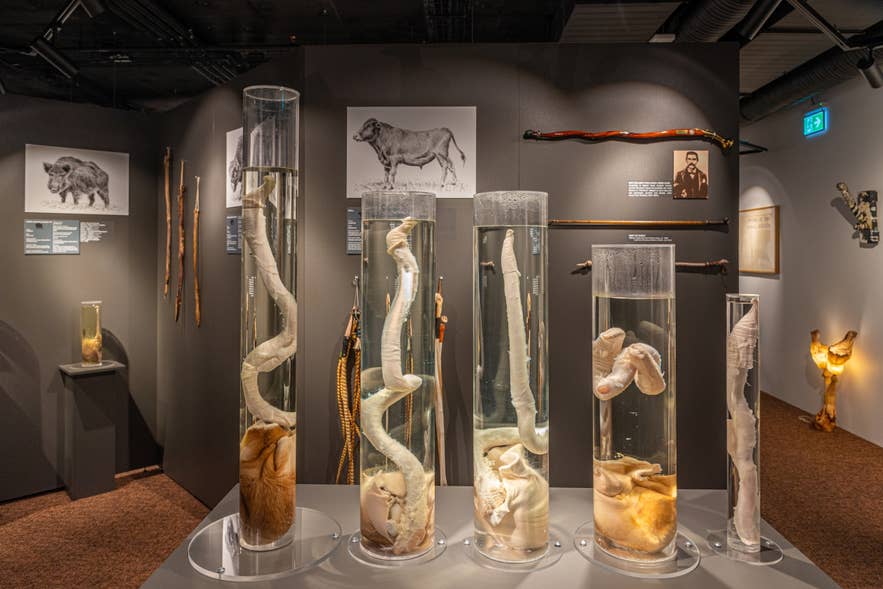 No list of the best museums in Reykjavik is complete without mentioning the Icelandic Phallological Museum. When it comes to quirky Icelandic museums, this site is undisputed!
Though not huge, it’s well worth a visit to the “famous penis museum,” as some tourists call it (and for the endless jokes that will inevitably accompany you).
Founded in Reykjavik in 1997, the museum spent several years in the northern town of Husavik before returning to the capital in 2011. Today it holds more than 280 specimens from almost all the land and sea mammals found in Iceland, plus a number of foreign species, ranging from a tiny hamster member to a colossal specimen from a sperm whale.
 You’ll also find an extensive collection of themed toys, trinkets, and utensils, plus an excellent gift shop where you can pick up a penis-shaped bottle opener or fridge magnet, and a café serving phallic drinks and goodies. Because the museum is compact and can get surprisingly busy, it’s worth booking tickets to the Icelandic Phallological Museum in advance.
We recommend it for: curious travelers with a sense of humor. It’s the only museum of its kind in the world and a genuine Reykjavik talking point. It’s compact (allow 45 minutes to an hour), centrally located, and surprisingly informative once you get past the novelty. You can verify current details on the official Icelandic Phallological Museum website.
Icelandic Phallological Museum Admission Fee
-
Adults: 25 USD (3,500 ISK)
-
Reykjavik City Cardholders: 20% discount on admission
Phallological Museum Ratings
-
Phallological Museum - Google rating: 4.3 out of 5 stars
Phallological Museum Opening Hours
-
Daily from 10 AM - 7 PM
Phallological Museum Address
Directions to the Phallological Museum
The Phallological Museum of Iceland is right in the city center, next to the Old Harbor and the Hafnartorg Shopping Area. It's an easy stop while exploring the Laugavegur and Austurgata Streets on foot.
The nearby Laekjartorg Square is a major connecting stop for public buses in Reykjavik. If you're looking for parking in Reykjavik, you can find an underground parking garage next to the museum.
Map of the Best Museums in Reykjavik
Use this map to see where Reykjavik’s top museums are located across the city, from the compact city center to the harbor and nearby neighborhoods.
Reykjavik Museums and What to Expect
Here’s a quick overview of what Reykjavik’s museums offer before you dive into the full list:
-
Diverse themes: Reykjavik’s museums cover nature, science, Viking heritage, art, design, maritime history, and quirky niche topics.
-
Interactive experiences: Perlan, Whales of Iceland, and Aurora Reykjavik use VR, hands-on exhibits, and sensory displays to engage visitors.
-
Viking and historical heritage: The National Museum, Settlement Exhibition, Saga Museum, Arbaer Open Air Museum, and Maritime Museum highlight early settlements and Icelandic history.
-
Art and design focus: The National Gallery, Hafnarhus, Kjarvalsstadir, Asmundarsafn, and Living Art Museum showcase Icelandic art, sculpture, and contemporary works.
-
Quirky, memorable museums: The Phallological Museum and Icelandic Punk Museum offer unusual, offbeat experiences unique to Iceland.
-
Accessible and convenient: Most museums are centrally located, walkable, or accessible by public transport; the Reykjavik City Card offers free or discounted entry.
-
Family-friendly and weather-proof: Museums are ideal for children and families, and indoor exhibits make them perfect for rainy days, winter visits, or short city stops.
Plan the Perfect Reykjavik Museum Tour
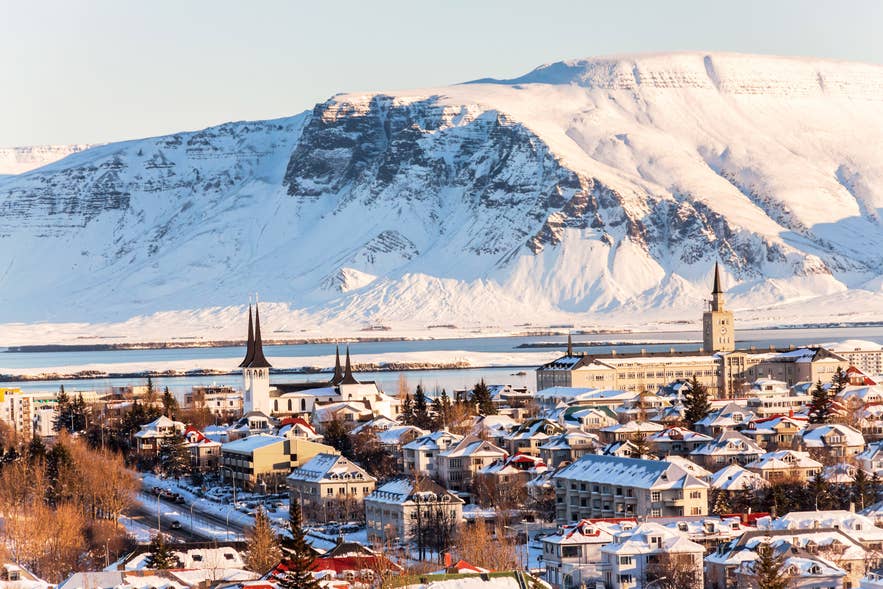 With so many incredible museums in Reykjavik, the challenge isn’t whether to visit, but deciding which ones to explore first. If you have only a day, our advice is to start with the National Museum of Iceland for the big picture, add World in Words or the Settlement Exhibition next door for Viking history, then finish at Perlan for nature and the view. Whether you’re into Viking folklore or modern creative collections, there’s a museum here for everyone.
Pro tip: Space out your museum visits with coffee breaks or strolls along the harbor. To make the most of your experience, you can even book Reykjavik walking tours to explore the city, museums, food, and more!
Are museums in Reykjavik open year-round?
What are the best museums in Reykjavik for first-time visitors?
Which Reykjavik museums have Viking or early settlement exhibits?
Which museums in Reykjavik offer bilingual or English-language exhibits?
What are the most interactive museums in Reykjavik for learning about Icelandic nature?
Which museums in Reykjavik are best for rainy days or winter weather?
What are the best art museums in Reykjavik?
How much does it cost to visit museums in Reykjavik?
Are Reykjavik museums kid-friendly?
Can I use the Reykjavik City Card for museum entry?
Are there free museums in Reykjavik?
With the Reykjavik City Card, even more museums become free. Cardholders get complimentary entry to major sites such as the National Museum of Iceland, the Settlement Exhibition, Arbaer Open Air Museum, the Reykjavik Maritime Museum, and all three Reykjavik Art Museum locations.
Have you visited these museums? Which ones are your favourites? Are there must-see places we missed on the list? Share your thoughts in the comments below!

I'm a local girl from Reykjavík. When not travelling around Iceland, you can usually find me downtown at concerts, shows or other artsy events. Feel free to contact me for advice about life in Iceland or anything else you might think of.