Icelandic is one of the oldest languages in Europe, preserving much of the grammar and vocabulary of Old Norse, which the Vikings spoke. Modern mainland Scandinavian languages like Norwegian, Swedish, and Danish have drifted further from their shared Norse roots, while written Icelandic has changed so little that today's Icelanders can read modernized editions of the medieval sagas.
During trips to Iceland, a handful of phrases is enough to break the ice with locals, order food, toast friends, and shrug off bad weather with the country's most famous saying.
Why You Can Trust Our Content
Guide to Iceland is the most trusted travel platform in Iceland, helping millions of visitors each year. All our content is written and reviewed by local experts who are deeply familiar with Iceland. You can count on us for accurate, up-to-date, and trustworthy travel advice.
This guide covers everyday greetings, travel phrases, drinking toasts, the untranslatable word jæja, and ten uniquely Icelandic proverbs and quotes. You'll also learn the unofficial national motto that sums up the Icelandic approach to life: Þetta reddast.
Read on to learn the phrases, or check out our guided tours of Iceland and self-drive tours around the country to plan a trip where you can practice your Icelandic.
What to Know About Icelandic Phrases
-
Icelandic is one of the most conservative living Germanic languages and the closest living descendant of Old Norse. Modern Icelanders can read modernized editions of the medieval sagas with relative ease.
-
The unofficial national motto is Þetta reddast, meaning "it will all work out." It reflects a relaxed, pragmatic attitude to problems.
-
Jæja (roughly "YIGH-ya") is the most versatile word in the language. It can mean "well then," "OK," "let's go," or "anyway," depending on tone.
-
The Icelandic word for "cheers" is skál (scowl), used when toasting with any drink.
-
Icelanders appreciate any effort to use their language. Even saying "takk" (thank you) will get a warm response.
Essential Icelandic Greetings
-
Halló (HA-loh) — "Hello."
-
Hæ (hye) — "Hi."
-
Góðan daginn (GOH-than DAI-yin) — "Good day."
-
Gott kvöld (goht KVUHLD) — "Good evening."
-
Bless (bless) — "Goodbye." Usually repeated as "bless bless."
-
Sjáumst (SYOW-mst) — "See you."
Basic Polite Phrases in Icelandic
-
Takk (tahk) — "Thanks."
-
Takk fyrir — "Thank you."
-
Takk fyrir mig — "Thank you for (having) me" (traditional thanks after a meal).
-
Gjörðu svo vel — "Here you go."
-
Fyrirgefðu — "Excuse me" or "I'm sorry."
-
Já (yow) — "Yes."
-
Nei (nay) — "No."
If you only remember one word, make it takk. It works for thanks, "yes please," and "got it."
How to Make Small Talk in Icelandic
-
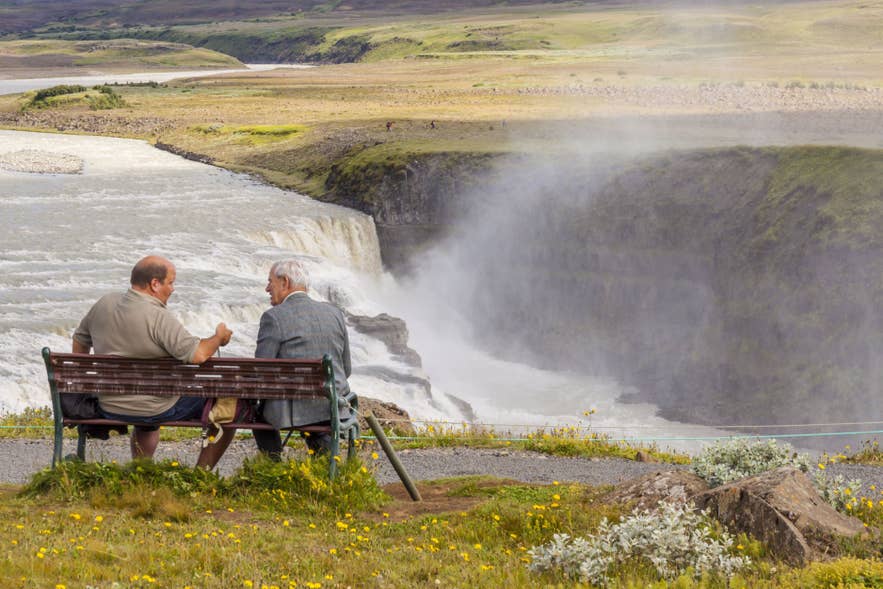
"Hvað segir þú?" — "What do you say?" / "How are you?"
-
"Hvernig gengur?" — "How's it going?"
-
"Allt gott?" — "All good?"
-
"Allt gott." — "All good."
-
"Bara fínt." — "Just fine."
-
"Mér gengur vel." — "I'm doing well."
Phrases for Ordering Food & Drink in Icelandic
-
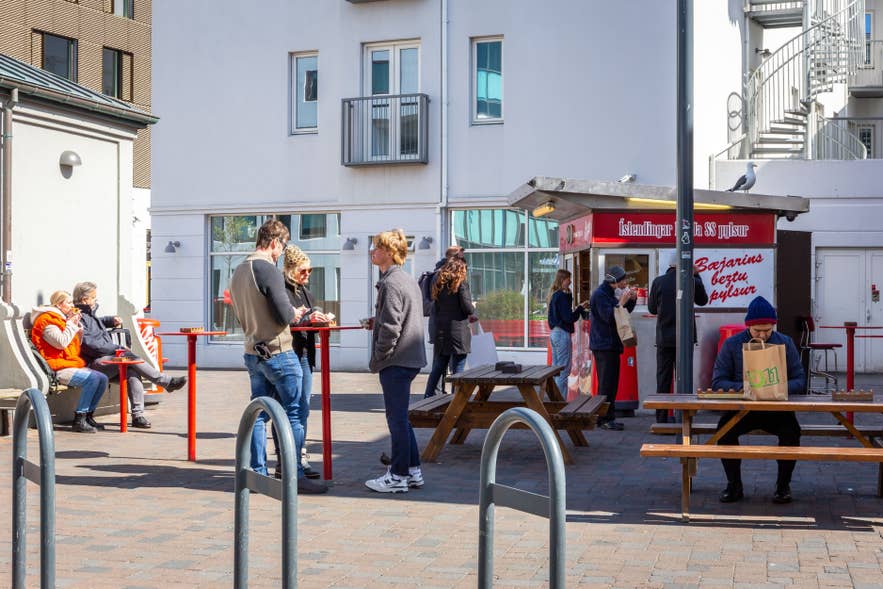
Einn bjór, takk — "One beer, please."
-
Eitt kaffi, takk — "One coffee, please."
-
Ég vil... — "I want..."
-
Má ég fá... — "Can I have...?"
-
Reikninginn, takk — "The bill, please."
-
Skál! (scowl) — "Cheers!"
-
Hvað kostar þetta? — "How much does this cost?"
When clinking glasses, Icelanders traditionally make eye contact while saying skál. Break the stare, and local superstition says you'll have seven years of bad luck in the bedroom.
Icelandic Numbers
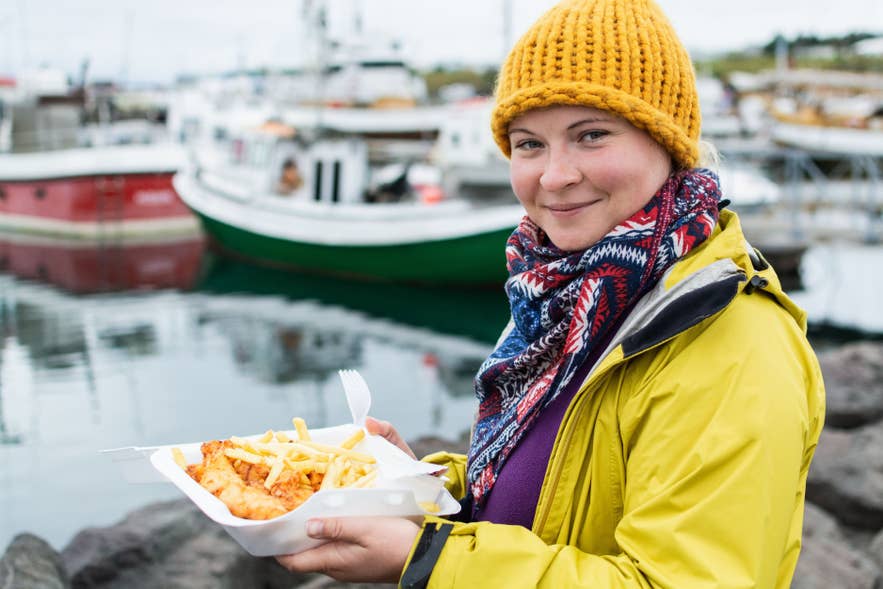 You don't need to count to a hundred in Icelandic, but knowing the basics helps when checking prices, reading signs, or ordering rounds.
Single digits
-
Einn (aytn) — 1
-
Tveir (tvair) — 2
-
Þrír (threer) — 3
-
Fjórir (FYOH-rir) — 4
-
Fimm (fim) — 5
-
Sex (sex) — 6
-
Sjö (syuh) — 7
-
Átta (OW-ta) — 8
-
Níu (NEE-u) — 9
Tens and Hundreds
-
Tíu (TEE-u) — 10
-
Tuttugu (TUT-u-gu) — 20
-
Þrjátíu (THRYOW-tee-u) — 30
-
Fjörutíu (FYUH-ru-tee-u) — 40
-
Fimmtíu (FIM-tee-u) — 50
-
Sextíu (SEX-tee-u) — 60
-
Sjötíu (SYUH-tee-u) — 70
-
Áttatíu (OW-ta-tee-u) — 80
-
Níutíu (NEE-u-tee-u) — 90
-
Hundrað (HUN-rath) — 100
Icelandic Phrases for the Weather and the Road
-
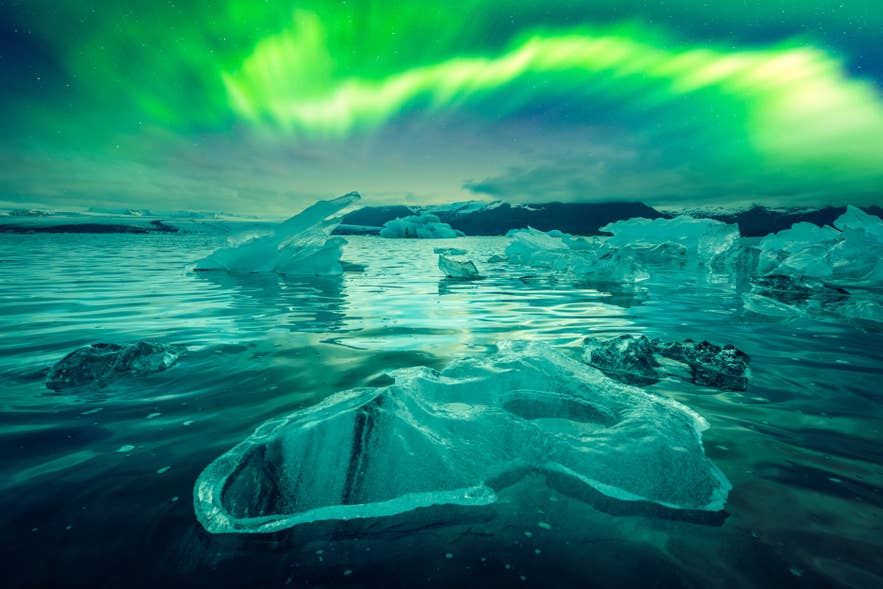
Þetta er gott veður — "This is nice weather."
-
Þetta er vont veður — "This is bad weather."
-
Það er vindur — "It's windy."
-
Það er snjór — "There's snow."
-
Er vegurinn opinn? — "Is the road open?" A useful question on a winter self-drive tour.
-
Fáránlegt veður — "Ridiculous weather."
Other Useful Phrases and Fun Icelandic Sayings
-
"Takk fyrir síðast" — "Thanks for last time."
-
"Gangi þér vel" — "Good luck."
-
"Ekkert stress" — "No stress."
-
"Ég er ekki fiskur" — "I am not a fish." A joking response you might hear when someone insists you drink more water.
-
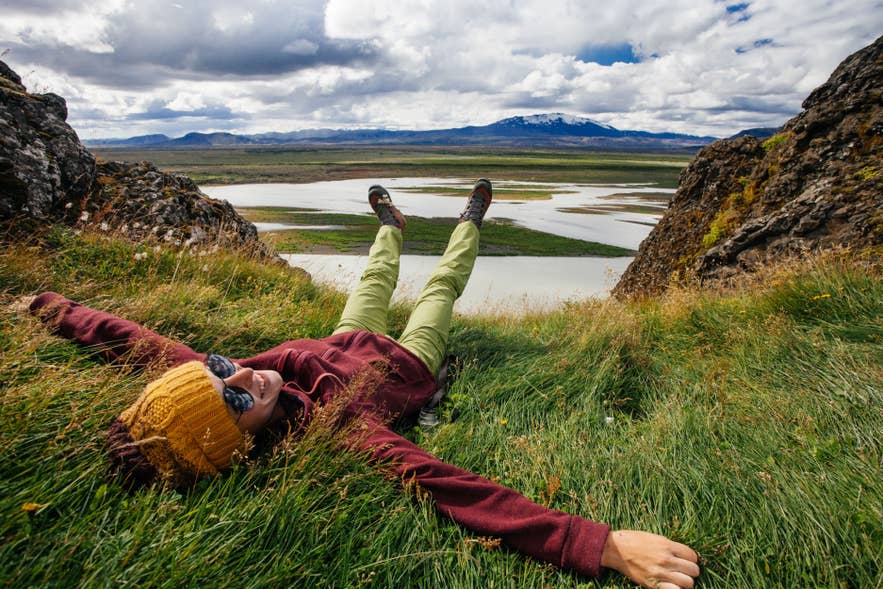
"Gluggaveður" — Literally "window weather." Beautiful weather that looks great from inside, but is actually too cold or windy to enjoy outside. Very relatable in Iceland.
The Magical Icelandic Word "Jaeja"
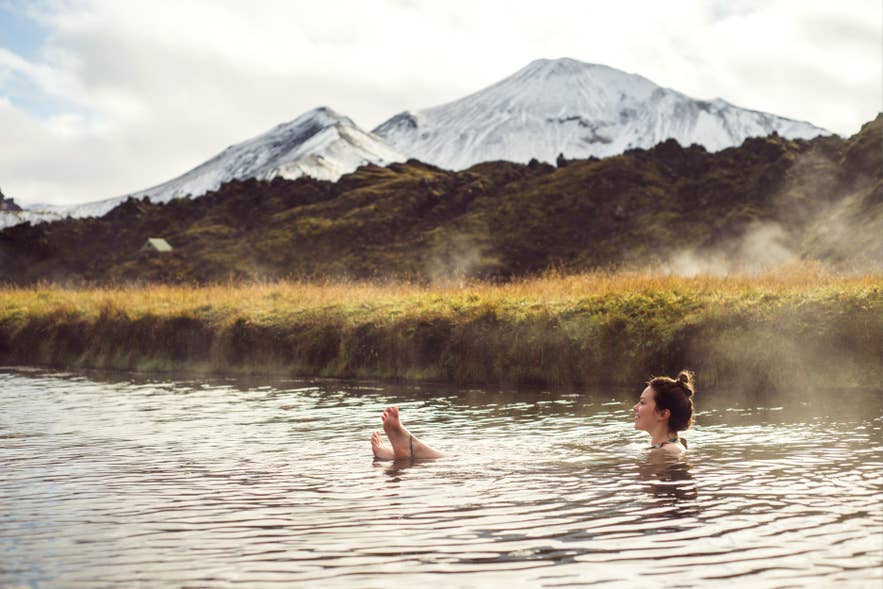 Icelandic has a strange little word called jæja (YIGH-ya). Depending on tone and context, it can mean:
-
"Okay, let's go."
-
"And how are you?"
-
"Oh, really?"
-
"Right then."
-
"Well, well."
-
"Anyway."
Icelanders use it to open conversations, end them, fill silences, and rally friends to leave a party.
Þetta Reddast: Iceland's Unofficial National Mantra
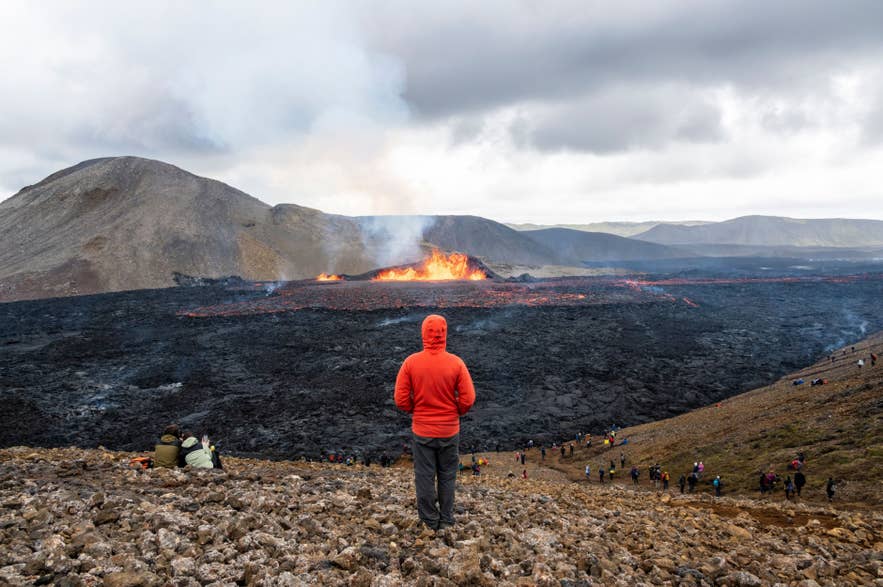 If there's one phrase that sums up Icelandic culture, it's Þetta reddast (THET-ta RED-ast). It roughly means "it will all work out" or "things will sort themselves out."
Icelanders use it when a volcano erupts under a glacier, the weather flips from sunny to blizzard, a car breaks down miles from anywhere, or a friend's wedding gets the wrong cake. After a thousand years of bad weather and surprise volcanoes, Icelanders have learned that panic rarely helps.
Ten Icelandic Proverbs and Quotes
-
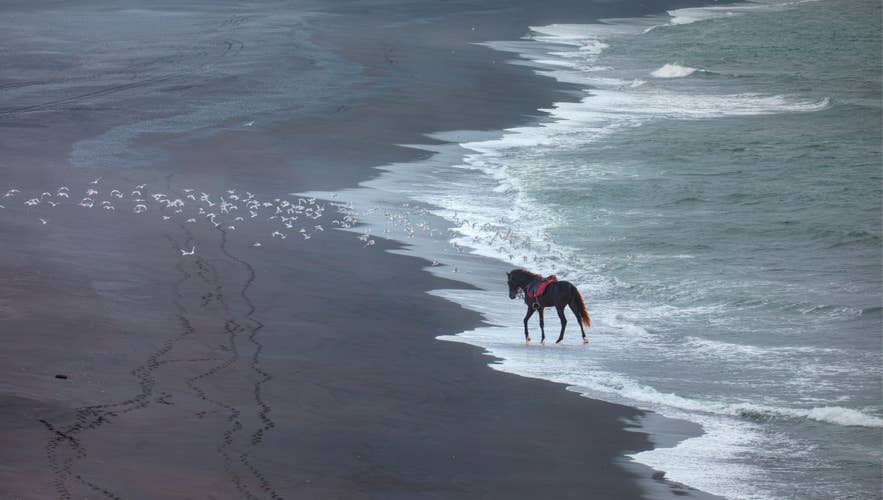
"Sjaldan er ein báran stök." ("A wave rarely comes alone.") — Bad news often arrives in threes.
-
"Ungur nemur, gamall temur." ("What is learned young is practiced old.") — Habits learned young stick for life.
-
"Betra er að vera einn en illa fylgdur." ("Better to be alone than in bad company.")
-
"Margur er knár þó hann sé smár." ("Many are strong though small.")
-
"Enginn veit hvað átt hefur fyrr en misst hefur." ("No one knows what they had until they lose it.")
-
"Þeir fiska sem róa." ("Those who row catch fish.") — You make your own luck through effort.
-
"Maður er manns gaman." ("Man is man's joy.") — From the Hávamál, stanza 47. People need each other; company is what makes life good.
-
"Hver er sinnar gæfu smiður." ("Each is the smith of their own fortune.") — You make your own luck.
-
"Blindur er bóklaus maður." ("Blind is the man without books.") — A classic Icelandic reverence for literacy and learning.
-
"Meðan grasið grær, deyr kýrin." ("While the grass grows, the cow dies.") — An equivalent of "too little, too late."
Saga-Era Wisdom from the Hávamál
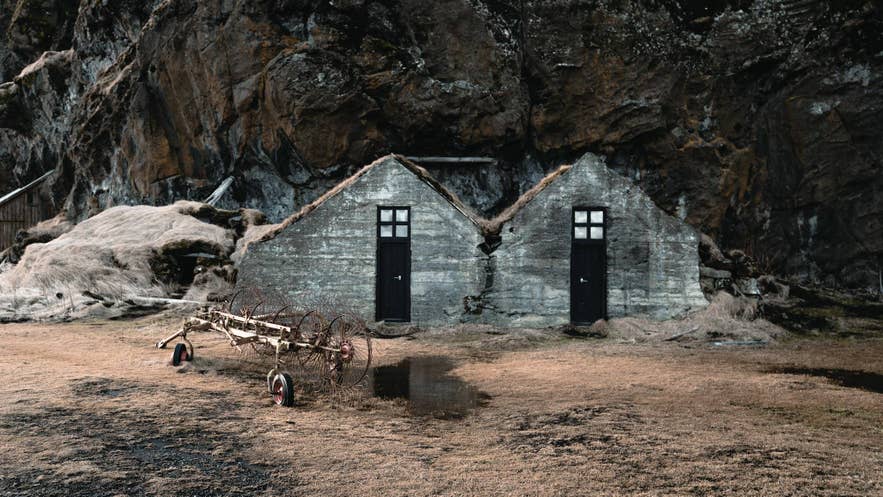
The Hávamál ("Sayings of the High One") is one of the most famous poems from medieval Norse literature. The “High One” refers to Odin, the chief god in Norse mythology, who was associated with wisdom, poetry, magic, war, and death.
For foreigners unfamiliar with Icelandic literary culture, the Hávamál is much more than an old poem. It is part of the Poetic Edda, a collection of Old Norse poems preserved in medieval Icelandic manuscripts. These texts are among the most important sources for what we know about Norse mythology, Viking-Age values, and early Scandinavian worldviews.
What makes the Hávamál especially interesting is that much of it reads less like myth and more like practical life advice. It offers short, memorable sayings about friendship, hospitality, caution, reputation, generosity, moderation, and how to behave wisely in an unpredictable world.
You may hear lines from the Hávamál quoted at weddings, funerals, graduations, speeches, and cultural events. For Icelanders, these verses can carry a sense of shared heritage, connecting modern life with the language, stories, and values of the Saga Age.
The most-quoted verse, on the lasting power of a good reputation, comes from stanza 76:
"Deyr fé, deyja frændr, deyr sjálfr it sama... en orðstírr deyr aldregi." — "Cattle die, kinsmen die, you yourself die. But the good reputation of someone who has earned it never dies."
Icelandic Phrases to Avoid as a Visitor
-
Don't pronounce the Icelandic Þ (thorn) as "P." It's "th" as in "think."
-
Don't assume Icelanders are offended when foreigners mangle their language. They're usually charmed, so long as you try.
-
Don't say Ég er Íslendingur (I'm Icelandic) unless you really are one.
If you do get stuck, the safe recovery line is Fyrirgefðu, ég tala ekki íslensku, "Sorry, I don't speak Icelandic." Icelanders almost all speak excellent English.
Easiest Ways for Visitors to Learn Icelandic
Icelandic has a reputation for being difficult, but visitors don't need fluency; a handful of phrases goes a long way. Here are the best ways to get started, from quickest to most involved.
-
Use a phrase guide or app. The fastest starting point is a phrasebook or a language app. Icelandiconline.com offers free Icelandic courses that cover pronunciation and basic vocabulary in short sessions, making it easy to pick up a few words before your trip.
-
Watch videos to learn pronunciation. Icelandic sounds unlike most European languages, and reading phrases off a page only gets you so far. SpeakViking and several other channels on YouTube have plenty of short pronunciation guides. Even 20 minutes of listening will help you tackle words like Þetta reddast or Eyjafjallajökull with more confidence.
-
Take a course. For those who want more than travel phrases, local language schools or the University of Iceland's distance learning program offer structured Icelandic lessons suitable for beginners.
-
Watch Icelandic films and series. Icelandic television is an immersive and enjoyable way to absorb the language naturally. Good starting points include the crime series Trapped (Ófærð) and the supernatural drama Katla, both available on streaming platforms with subtitles.
-
Listen to Icelandic music. Icelandic artists sing in both English and Icelandic — listening to Sigur Rós, Björk, or Ásgeir can help attune your ear to the rhythms of the language without it feeling like a study.
-
Practice in action. Nothing beats trying your phrases on real people. Icelanders are patient and genuinely appreciative when visitors make an effort, so don't be shy — order your coffee in Icelandic, say takk, and go from there.
Practice Your Phrases on a Trip to Iceland
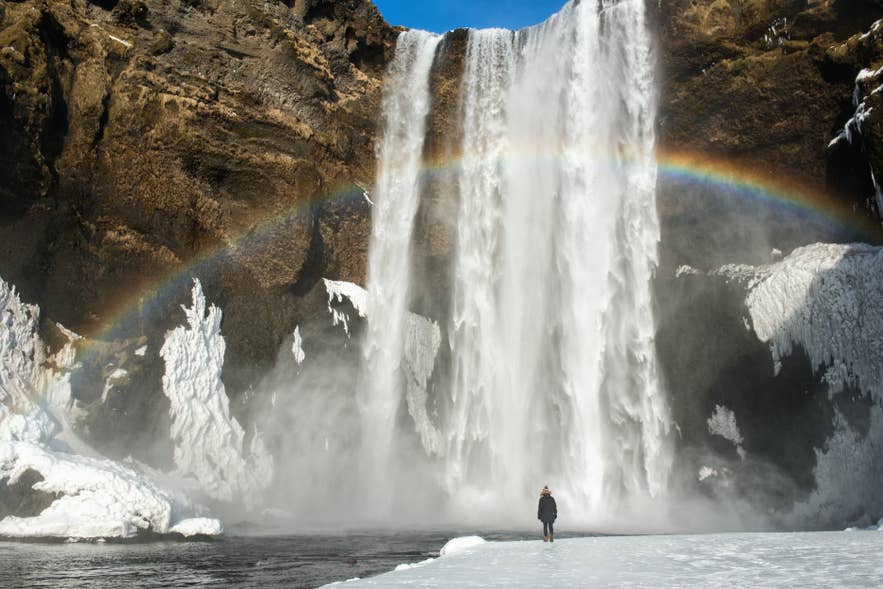
You do not need to speak Icelandic to travel around Iceland, as most locals speak excellent English. Still, simple words like takk, góðan daginn, and bless can make everyday interactions feel warmer, whether you are ordering coffee, checking into a hotel, buying gas, or asking a quick question in a shop.
Travelers based in the capital can use day tours from Reykjavik as an easy way to explore Iceland without worrying about logistics. For a longer trip, a self-drive package with a rental car in Iceland gives you more chances to stop in small towns, visit local cafes, and try a few phrases along the way. A full Ring Road loop gives you plenty of everyday travel moments where you can test your Icelandic skills.
Whatever you try, do not worry about mistakes. Icelanders are used to hearing visitors wrestle with the language, and a mispronounced takk is usually better than no takk at all. So go forth, book your trip, and let þetta reddast; it will all work out!
From Icelandic Phrases to Names, Sagas, and Culture
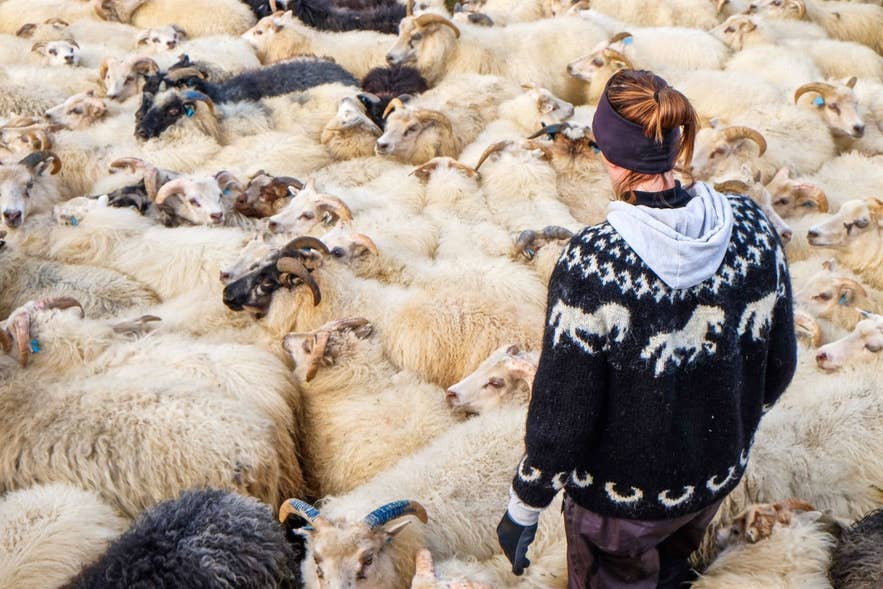 The sayings you'll hear in Iceland pull from a deep well. Many of them come out of the medieval sagas and the poems Icelanders have kept alive for a thousand years. Follow up with our guide to Icelandic sagas and their locations in Iceland, or zoom out to the full history of Iceland to see how these phrases ended up in everyday use.
The language also shows up in Icelandic names and their meanings, place names, literature, and folklore. Many Icelandic names still carry old meanings, while place names often describe the landscape, nearby farms, natural features, or stories connected to the area. If you want to feel more confident reading signs while traveling, our guide on how to pronounce Icelandic place names is a good next step.
If you enjoyed these everyday phrases, you may also like our guide to Icelandic sayings and proverbs, our overview of literature in Iceland, or our guide to Icelandic folklore. They offer a wider look at the stories, beliefs, and old expressions that still shape Icelandic culture today.
If you have questions about communicating in Iceland or planning your visit, feel free to ask in the comments, and we'll do our best to help. Do you have a favorite Icelandic word or phrase? Share it in the comments below.

I was born on the west side of Reykjavík and grew up downtown, so Iceland has been my back yard for most of my life. I'm a father of two, I've traveled on five continents, and I still haven't found a country that holds my attention the way this one does.
That's why I co-founded Guide to Iceland. We connect travelers directly with Icelandic operators, guides and hosts, so the advice and the services both come from people who actually live here.
I write about the practical side of a trip: what eating out in Reykjavík really costs, whether to pick Sky Lagoon or Hvammsvík, where to stop for food along the Ring Road, and which regions give you the best odds of clear skies for the northern lights. If you're planning a trip and something doesn't add up, message me.