Explore the top artists and bands in Iceland. Discover how Iceland produced legendary acts like Björk and Sigur Rós, plus more incredible musicians who'll transform your playlists forever!
Iceland’s population is barely bigger than a small international city, but its influence on modern music is staggering. Music in Iceland is shaped by centuries of storytelling traditions, long winter nights, and a culture that encourages everyone to create. These unique sounds make great additions to your playlists, from daily listening to scenic road trips through Iceland's dramatic landscapes.
Why You Can Trust Our Content
Guide to Iceland is the most trusted travel platform in Iceland, helping millions of visitors each year. All our content is written and reviewed by local experts who are deeply familiar with Iceland. You can count on us for accurate, up-to-date, and trustworthy travel advice.
Thanks to accessible home studio technology, Iceland has seen an eruption of creativity where musical innovation is the norm, not the exception. From Björk’s avant-garde pop experiments to Sigur Rós’s ethereal soundscapes and Laufey’s jazz revival, Icelandic musicians have built a sonic legacy that is impossible to ignore.
Scroll down for 15 of the greatest bands and artists you need to know from Iceland, and exactly why they’ve made their mark.
What To Know About Iceland’s Music Icons
-
The thriving music scene benefits from government arts grants, affordable spaces, and festivals like Iceland Airwaves.
-
Icelandic artists excel across all genres, from Björk's avant-garde pop to Sigur Rós's atmospheric post-rock to Laufey's jazz.
-
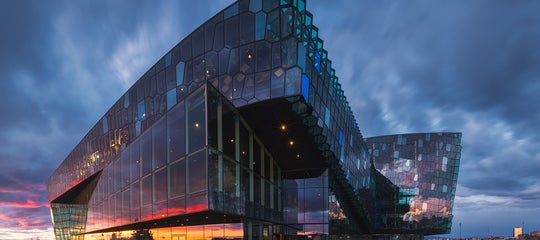
Reykjavik serves as the beating heart of Iceland's musical renaissance with venues like Harpa and Húrra.
-
Artists transform geographical isolation into a creative advantage, producing distinctive sounds that capture the country's dramatic landscapes.
-
Several Icelandic bands have achieved global success, from The Sugarcubes in the 1980s to Of Monsters and Men, which topped the US charts.
-
A new generation of artists like GDRN and VÆB ensures Iceland's musical influence continues growing.
-
Experience Icelandic music in extraordinary settings, from concert halls to volcanic locations where bands like KALEO have performed.
The Icelandic Music Scene
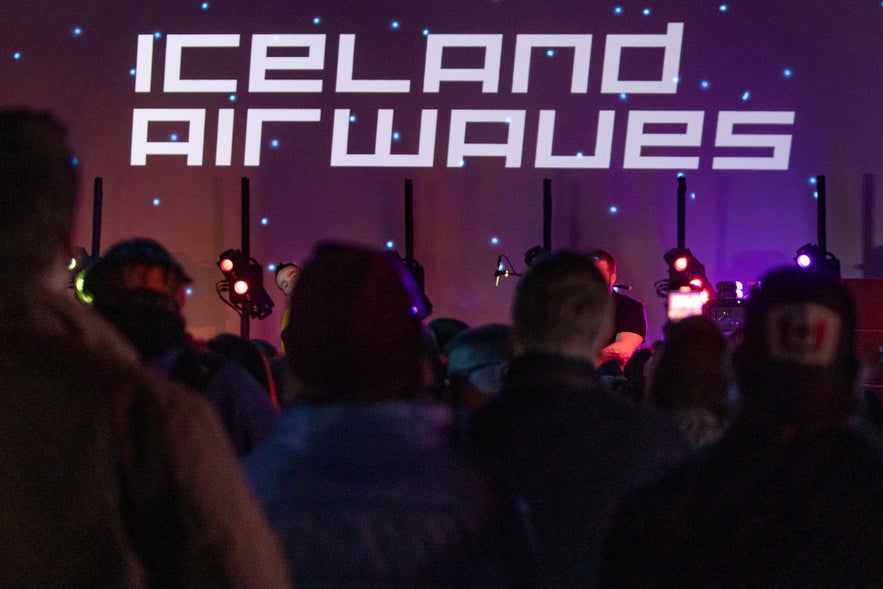 Iceland’s music scene is built on centuries of tradition, from medieval rímur (rhymed epic poems) and choir harmonies to the bold, genre-defying experimentation heard in Reykjavik’s clubs today. The soundscape ranges from glitchy electronica and art-rap to sweeping post-rock, with new styles emerging every year.
This creative surge isn’t an accident. Government arts grants, affordable rehearsal spaces, and festivals like Iceland Airwaves keep the momentum going. Meanwhile, venues such as Harpa and Húrra make room for every sound, never letting genres get in the way of originality.
From Björk’s groundbreaking VR operas to Laufey’s viral jazz ballads, Icelandic musicians constantly rewrite the rules, proving that real musical revolutions can come from the edge of the map.
Top 15 Greatest Artists and Bands in Iceland
As you explore the top 15 artists and bands in Iceland, you'll see why this small nation punches far above its weight in the global music scene.
From intimate synth-pop to full-throttle metal, these must-hear Icelandic music artists and bands have redefined what isolation sounds like and left their mark on listeners worldwide.
15. múm
Genres: Experimental electronic, folktronica, glitch-pop, ambient
Formed in Reykjavik in 1997, múm is an Icelandic indie band that turns gentle singing, laptops, and toy instruments into dreamy soundscapes. Their breakout album "Finally We Are No One" (Icelandic title: Loksins erum við engin) and the single "Green Grass of Tunnel" carried Icelandic indie far beyond its shores.
Instead of loud guitars, múm favors soft beats, accordions, and childlike melodies that feel like walking through foggy lava fields. They've scored films, made a Christmas EP, and even teamed up with Kylie Minogue, inspiring local bands to stay playful and brave.
14. Hatari
Genres: Industrial techno, performance art, EBM
Hatari blends pounding industrial techno with theatrical performance art, turning every show into a dark, leather-clad spectacle.
Formed in Reykjavik in 2015 by cousins Klemens Hannigan and Matthías Haraldsson, the group shocked Europe at Eurovision 2019 with "Hatrið mun sigra," finishing tenth and instantly gaining a worldwide following.
Their debut album "Neyslutrans" (2020) deepened the mix of growled vocals, icy synths, and political satire, while club single "Spillingardans" filled dance floors from Berlin to Reykjavik.
Hatari earns their spot for matching bold ideas with unforgettable stagecraft, an experience adventurous travelers can witness firsthand at local festivals.
13. Sólstafir
Genres: Post-metal, atmospheric metal, progressive rock
Formed in 1995, Sólstafir began as a loud black metal band but now combines heavy guitars with calm, dreamy sections, even incorporating strings and piano. Their hit "Fjara" and albums "Ótta" and 2024's "Hin Helga Kvöl" showcase this impressive range.
Lyrics are in Icelandic and often describe the island's wild landscape and harsh weather. On stage, they build long, rising waves of sound rather than quick songs, creating a mood that feels like driving across empty lava fields.
12. Daði Freyr
Genres: Synth-pop, dance-pop, electro-pop
Standing 2 meters tall and dressed in pixel-print sweaters, Daði Freyr is impossible to miss.
His 2020 song "Think About Things," created with his family-and-friends group Gagnamagnið, turned a cancelled Eurovision appearance into a global dance craze, topping 200 million streams and filling social media with cardboard-robot dance moves.
He followed up at Eurovision 2021 with "10 Years," placing fourth and confirming his knack for bright, feel-good synth-pop. Daði's 2023 album, "I Made an Album," blends catchy hooks with playful lyrics, making it ideal for Reykjavik's night scene or a coastal drive past black-sand beaches.
11. Ásgeir
Genres: Indie-folk, folk-pop, ambient electronica
Ásgeir's first album, "Dýrð í dauðaþögn (2012)," sold faster than any debut record in Iceland's history, reaching about one in 10 people in the country. He later recorded an English version called "In the Silence," which climbed to the top of Billboard's Heatseekers chart.
His newer albums, "Afterglow," the twin releases "Bury the Moon" and "Sátt," and 2022's "Time on My Hands" blend gentle folk melodies with light electronic touches. Around half a million listeners stream his music each month, making him one of the most successful Icelandic singers of his generation.
10. GusGus
Genres: Trip-hop, house, techno, downtempo
GusGus began in Reykjavik in 1995 as an art-film collective, then pivoted to punchy electronic music that mixed techno, house, and trip-hop. Their breakthrough album Polydistortion (1997) put Iceland's club scene on the map, while hits like "Polyesterday" and "Ladyshave" found UK chart success.
Across 12 albums (most recently "DanceOrama" in 2023), the core duo Biggi Veira and singer Daníel Ágúst keep evolving, now joined by Vök vocalist Margrét Rán for fresh sparkle.
Along the way, they've remixed Björk and Depeche Mode, sold more than 700,000 records, and built a reputation for immersive, visually charged live shows that still pack Reykjavik's dance floors.
9. Víkingur Ólafsson
Genres: Contemporary classical, classical crossover
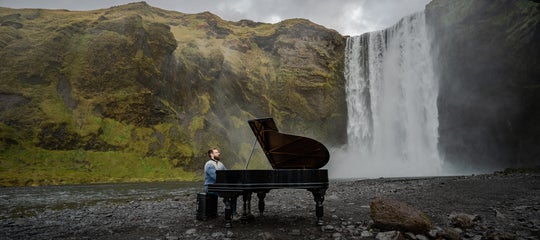
Víkingur Ólafsson is Iceland's star pianist, known for making classical music feel fresh and alive. He's been called "Iceland's Glenn Gould" for his bold, emotional style and has accumulated over one billion streams, more than any living classical pianist.
In 2025, he won a GRAMMY for his interpretation of Bach's Goldberg Variations, which he performed 90 times around the world.
Signed to the prestigious Deutsche Grammophon label, he's a global touring artist and festival founder, with a talent for mixing old masterpieces with new ideas. This includes premiering a major new concerto by composer John Adams.
8. Emilíana Torrini
Genres: Indie-pop, folk, trip-hop
Emilíana Torrini is one of Iceland's most distinctive vocal talents, seamlessly moving between musical worlds. Born in Kopavogur to Icelandic-Italian parents, Torrini first made international waves with the hypnotic "Gollum's Song" from "The Lord of the Rings: The Two Towers."
Her versatility shines in hits like "Jungle Drum," which soared to number one across Germany, Austria, and Belgium, and through collaborations with major artists like Kylie Minogue.
Known for her imaginative and genre-blending approach, which ranges from dreamy acoustic ballads to rhythmic electronic tracks, Torrini continues to captivate listeners while redefining Iceland's musical landscape with each new project.
7. Ólafur Arnalds
Genres: Neo-classical minimalism, ambient, cinematic score
Ólafur Arnalds is Iceland's award-winning composer, celebrated for blending classical music with subtle electronic elements. Born near Reykjavik, Arnalds creates deeply moving compositions recognized for their emotional depth and atmospheric elegance.
He won a BAFTA for his soundtrack to the acclaimed TV drama "Broadchurch" and composed original scores for productions such as Apple TV+'s "Defending Jacob," earning him an Emmy nomination. His music, which includes contributions to films like "The Hunger Games," has attracted billions of streams globally.
His album "some kind of peace" showcases his distinct style, gentle piano melodies woven seamlessly with electronic textures. This style creates soundscapes that perfectly complement Iceland's dramatic landscapes.
6. The Sugarcubes
Genres: Alternative rock, post-punk, indie rock
The Sugarcubes were Iceland's first internationally famous band, known for their playful style, catchy melodies, and bringing Icelandic music to the global stage. Formed in Reykjavik in 1986, the group became instantly recognizable for the distinct, expressive voice of singer Björk, who later achieved massive solo success.
Their debut album, "Life's Too Good (1988)," featured the iconic single "Birthday" and earned critical acclaim worldwide.
Though they split up in 1992, The Sugarcubes left a lasting legacy, paving the way for Icelandic artists internationally and becoming essential listening for travelers exploring Iceland's vibrant and quirky music culture.
5. KALEO
Genres: Blues-rock, folk-rock, hard rock
KALEO is Iceland's famous rock band known for powerful vocals, energetic songs, and unforgettable performances set against Iceland's breathtaking scenery.
Originating from Mosfellsbaer, near Reykjavik, they're most recognized worldwide for their song "Way Down We Go," which received a Grammy nomination and has over a billion Spotify streams.
The band is also celebrated for unique performances in iconic Icelandic locations, including a memorable live show inside Thrihnukagigur Volcano near Reykjavik.
Additionally, their striking music video for "Save Yourself" was filmed on top of Vatnajokull, Iceland's largest glacier, and on the floating icebergs of Fjallsarlon Glacial Lagoon.
4. Of Monsters and Men
Genres: Indie-folk, folk-pop, chamber-pop
When "Little Talks" first hit the airwaves, nobody expected an Icelandic folk band to become a global phenomenon. Yet Of Monsters and Men racked up 1.2 billion streams on that single alone and secured a spot in the US Billboard Top 10. The first band from Iceland to reach such heights since Björk ruled the alternative scene.
The five friends from Gardabaer captured lightning in a bottle, turning Nordic folklore and haunting melodies into stadium-filling anthems that somehow feel intimate despite their scale.
Their journey from "My Head Is an Animal" through "Beneath the Skin" to "Fever Dream" shows a band unafraid to evolve while keeping their storytelling heart intact. Songs like "Dirty Paws" and "Mountain Sound" continue to draw new listeners years later, proving that they're an Icelandic band with staying power.
3. Laufey
Genres: Jazz-pop, vocal jazz, bossa nova
Laufey claims the third spot by bringing jazz to listeners who never thought they'd fall for the genre. Her Grammy-winning album "Bewitched" showcases her talent for mixing classic jazz with original songwriting. Meanwhile, hits like "From the Start" and "Falling Behind" capture the warm, wistful mood that has made her stand out.
From performing with Iceland's Symphony Orchestra at 15 to studying at Boston's Berklee College, her gift for music showed early. When she shared her songs on social media, millions fell for her polished sound. By 2024, she had earned a Grammy and over a billion streams, demonstrating that jazz can still connect with today's listeners.
While exploring Iceland, enjoy her mellow tracks at Vesturbaejarlaug Pool, cozy Kaffi Vest, or Vik's black sand beaches. All are spots she's mentioned as her favorite places to visit in Iceland.
2. Sigur Rós
Genres: Post-rock, ambient, dream-pop
Sigur Rós translates Iceland into pure sound. Since 1994, these Reykjavik natives have created atmospheric compositions that transport listeners through fjords and lava fields without taking a single step.
Their breakthrough album "Ágætis Byrjun" introduced the world to frontman Jónsi's distinctive falsetto and their signature blend of orchestral elements with ambient electronics.
Meanwhile, their “Route One” project is designed for exploring the Ring Road, Iceland’s iconic 828-mile (1,332-km) circuit. During a 24-hour drive around the route, Sigur Rós live-streamed a continuously evolving soundtrack, using generative music to mirror the changing landscapes.
The highlights from this experiment became an eight-track album, an ideal companion for anyone traveling Iceland’s most famous road.
Their cinematic sound also appears across film and television, from their memorable "Game of Thrones" music cameo to contributions for "The Simpsons" and "Black Mirror."
Their most fascinating creation is "Vonlenska" (Hopelandic), an invented language of pure emotion that requires no translation. With over 10 million albums sold worldwide, Sigur Rós proves that Iceland's musical strength runs deep.
1. Björk
Genres: Art-pop, avant-garde electronic, experimental trip-hop
No one else could top this list. With a career spanning more than 30 years and over 40 million albums sold, Björk crafted a musical universe entirely her own. One where electronic beats meet orchestral swells, where ancient folk traditions collide with cutting-edge technology.
Her voice is instantly recognizable, shifting from primal screams to delicate whispers even within the same song. This vocal mastery has earned Björk 16 Grammy nominations and secured her a spot on Rolling Stone’s list of the greatest singers of all time.
But numbers hardly capture her impact. From her breakthrough with The Sugarcubes to groundbreaking solo works like "Homogenic," "Vespertine," and "Cornucopia," she's never stopped pushing forward, shattering artistic boundaries.
Music fans visiting Iceland can experience Björk's creative vision firsthand. The stark beauty of Grotta Lighthouse provided the perfect canvas for her "Stonemilker" video, which is worth visiting at sunset. Meanwhile, the hauntingly beautiful Hjorleifshofdi Mountain appears in the "Who Is It" music video.
Must-Hear Names Beyond the Top Artists and Bands in Iceland
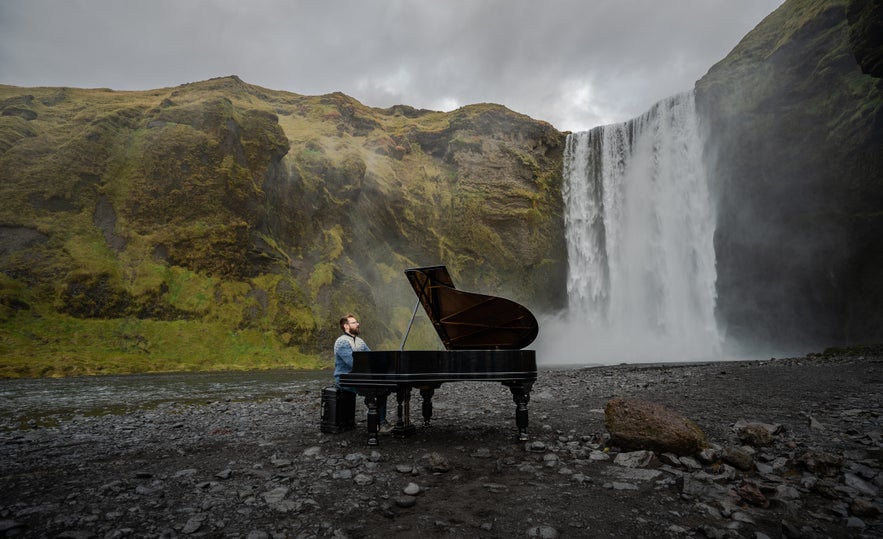
Beyond the top 15 artists and bands, Iceland's music scene brims with established acts and rising stars worthy of attention. Reykjavik's vibrant venues showcase this talent nightly, from intimate jazz clubs to pulsing electronic music spaces.
Established Icelandic Artists Making Waves
Retro Stefson dominated Iceland's charts from 2006 to 2016 with infectious dance-pop, while frontman Unnsteinn Manuel Stefánsson remains a cultural icon. Páll Óskar (Paul Oscar) stands as Iceland's most flamboyant pop star, bringing glamour and spectacle to every performance.
FM Belfast delivers pure electronic joy with their energetic live shows that transform any venue into a dance party. Vök, on the other hand, has earned a devoted following across Europe with their dream-pop and atmospheric electronic music.
Mugison rocks the scene with his powerful blend of blues, folk, and experimental sounds, delivering raw emotional performances that have made him a staple of Iceland's music landscape.
Meanwhile, Árstíðir enchants audiences with their harmonious blend of classical, folk, and rock influences, creating ethereal vocal arrangements that reflect Iceland's choral traditions.
Sóley Stefánsdóttir creates hauntingly beautiful piano compositions that blend dark lyrics with delicate melodies, while Skálmöld uniquely combines heavy metal with traditional Icelandic poetry to create epic musical sagas.
The Rising Stars of Iceland's Music Scene
The next generation of Icelandic musicians is already making international waves. VÆB has leapt onto the global stage, representing Iceland at Eurovision 2025 with their electro-pop track "Róa." The duo of Hálfdán Helgi and Matthías Davíð has quickly gained recognition beyond Iceland's shores.
GDRN captivates with smooth R&B vocals and jazz influences, winning multiple Icelandic Music Awards for her contemporary productions.
Meanwhile, Reykjavíkurdætur (Daughters of Reykjavík) delivers fierce feminist rap with provocative lyrics and energetic performances that challenge social norms.
For an even deeper dive into Iceland's rich musical landscape, check out the complete guide to Icelandic artists and bands, which covers even more genres and musicians that have shaped this extraordinary musical tradition.
Where to Experience Live Music in Reykjavik
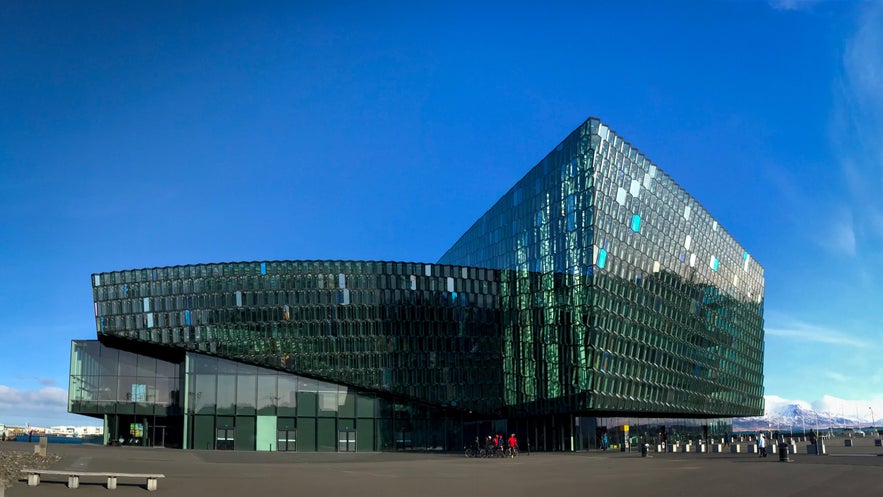 Reykjavik's compact city center makes it perfect for music lovers to explore multiple venues in a single evening. The best live music venues in Iceland include:
-
Harpa Concert Hall: This stunning glass structure hosts everything from the Iceland Symphony Orchestra to international pop acts
-
Húrra: A favorite for indie bands and electronic music with an intimate atmosphere
-
Gaukurinn: The place to catch rock, metal, and alternative performances
-
Kex Bar and Hostel: Regular jazz nights and acoustic sets in a cozy setting
-
Prikið: Historic cafe bar known for live DJ sets, jazz nights, and open-mic evenings.
The Icelandic Museum of Rock 'n' Roll, located in Keflavik near the international airport, also provides a fascinating overview of the country's musical heritage.
Interactive exhibits trace the development of Icelandic popular music from the 1950s to the present day, showcasing instruments, costumes, and memorabilia from the nation's most famous musicians.
How to Discover More Icelandic Music
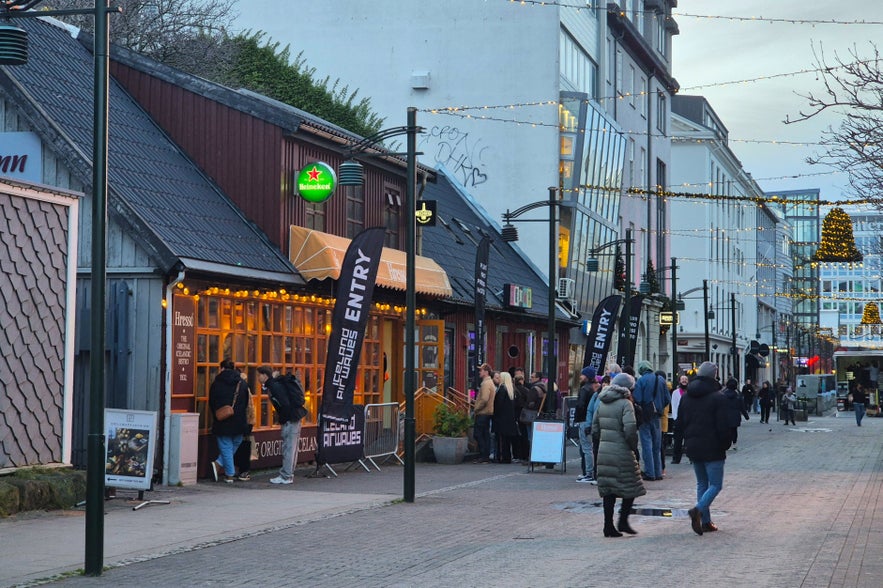 To dive deeper into the best Icelandic music beyond what you've read here:
-
Visit during a festival: Time your trip to coincide with Iceland Airwaves and other music festivals in Iceland for full immersion in the local scene.
-
Explore record shops: Stores like Lucky Records and Space Odyssey in Reykjavik offer expert recommendations.
-
Stream local playlists: Search for "Iceland" or "Icelandic" playlists on your preferred streaming platform.
-
Tune into Icelandic radio: RÚV's Rás 2 features contemporary Icelandic music.
The Future of Music in Iceland
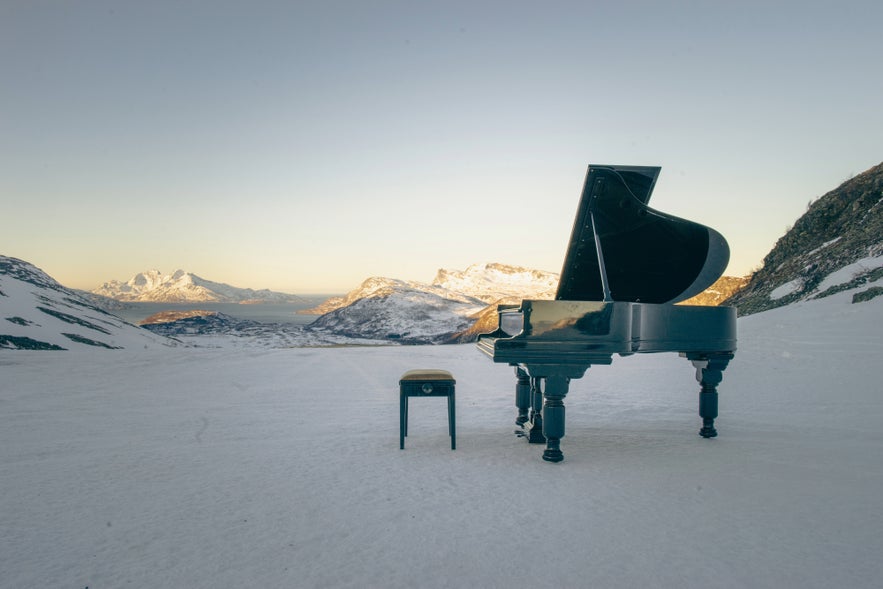 Iceland's musical influence shows no signs of slowing down. With a population smaller than most cities, continuing to produce globally recognized artists, this Nordic island remains proof that creativity flourishes when culture, community, and innovation collide.
From medieval rímur to viral TikTok hits, Iceland's artists continue redefining what's possible when a small island thinks big. As new voices emerge from Reykjavik's studios and beyond, one thing stays constant: Iceland's commitment to musical innovation that surprises the world.
What's your favorite Icelandic band? Have a go-to soundtrack for driving along those stunning coastal roads? Spotted any up-and-coming artists we missed? Maybe you caught one of these musicians live and have a story to tell? Share your thoughts in the comments below!

I’m drawn to the creative corners of Iceland. I love helping travelers discover the unexpected side of the country, whether that’s a hidden record store, a new tattoo studio, or a dramatic filming location off the beaten path. If you’re curious, open-minded, and up for something a little different, I’m here to point you in the right direction.