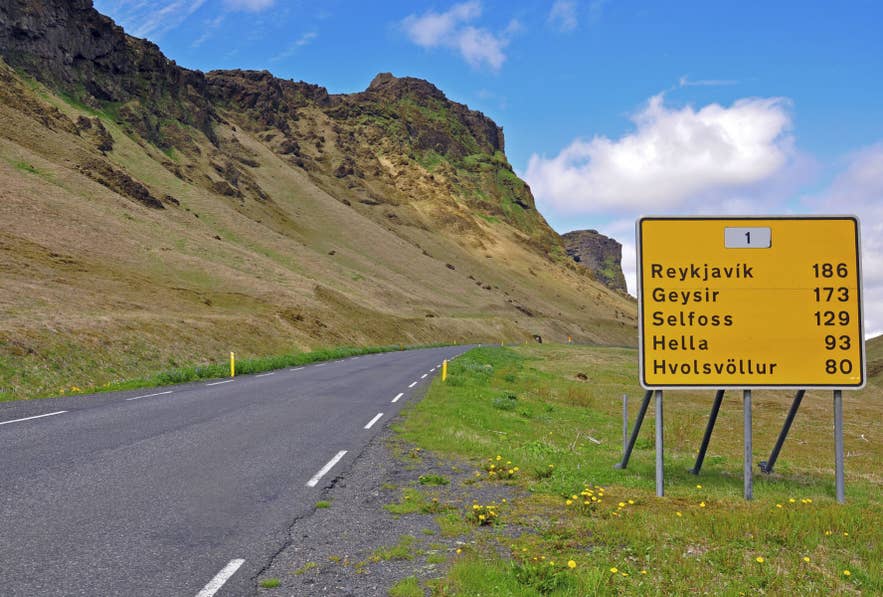
Icelandic place names follow consistent phonetic rules. Once you know a handful of letter combinations, you can pronounce Iceland's most-visited destinations correctly. Read on to make sense of the names you'll see on every road sign and itinerary.
If you are planning to rent a car for a self-drive trip around the Ring Road, joining guided day tours, or booking multi-day excursions, knowing how to pronounce Icelandic place names will help you navigate more confidently. It also makes it easier to identify destinations on maps, road signs, and itineraries.
Continue reading this guide to see the phonetic spelling and audio clip of 50+ destinations in Iceland. For the full Icelandic alphabet and the complete rules behind these sounds, see our complete guide to the Icelandic language.
Key Takeaways
-
Icelandic place names are phonetic. Once you know a handful of letter rules, you can pronounce most names correctly without prior study.
-
The 50+ destinations in this guide cover every major site you'll encounter on standard traveler routes.
-
The letter combinations that catch most visitors are Þ and ð (pronounced TH), æ (pronounced AI), ö (pronounced U), double L (pronounced TL with a clicking sound), and j (pronounced Y).
-
Stress is always on the first syllable of every Icelandic word.
How To Use This Icelandic Pronunciation Guide
Each entry in this guide includes a phonetic spelling that approximates the Icelandic pronunciation using English sounds. Capitalized syllables are stressed. Audio clips are included so you can hear native pronunciation. Most of the letter rules you need to read these phonetic spellings are summarized below.
-
Þ and ð: both letters sound like TH in English. One is voiceless (Þ as in "thing"); the other is voiced (ð as in "this"). Both are pronounced as TH in the phonetic spellings below.
-
æ: the Icelandic letter æ sounds like the AI in "eye" or "aisle." Pronounced as AI.
-
ö: the Icelandic letter ö sounds like the U in "urn" or "fur." Pronounced as U.
-
Double L (ll): a double L has a slight clicking sound, as TL is pronounced together.
-
j: Icelandic j sounds like English Y, as in "yes." Pronounced as Y.
-
hv: The combination HV sounds like KV. Pronounced as KV.
-
Stress: Icelandic stress is always on the first syllable of each word. No exceptions.
To learn more about Icelandic letters and how they are pronounced, check out our guide to the Icelandic language.
Reykjavík Place Names
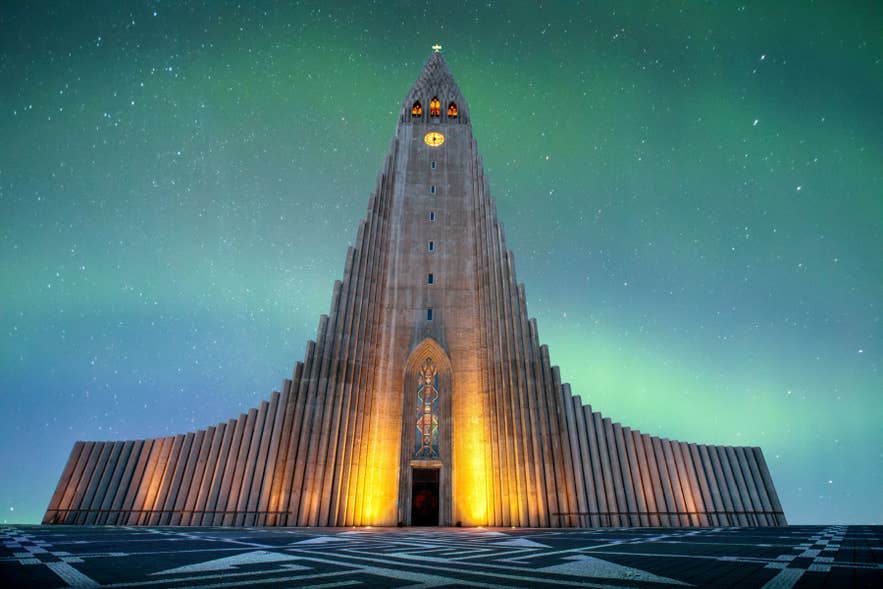
Reykjavík is the capital city, where most visitors spend their first and last day in Iceland. There are many things to do in Reykjavík, and knowing how to pronounce the Icelandic place names below will help you navigate some of the capital's main highlights.
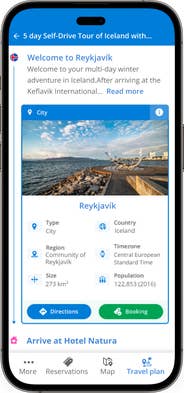
Reykjavík (RAYK-ya-veek)
The name means "smoky bay," from reykja (smoke) and vík (bay), a reference to the geothermal steam early settlers saw rising from the area.
Hallgrímskirkja (HATL-grims-kirk-ya)
This is a famous Lutheran church on the hill above downtown and one of Reykjavík's most recognizable landmarks. Hallgrímskirkja means "Hallgrímur's church," after the 17th-century Icelandic poet Hallgrímur Pétursson.
Skólavörðustígur (SKOH-la-vur-thu-stee-gur)
This rainbow-painted street towards Hallgrímskirkja Church is one of the most photographed spots in Reykjavík. Skólavörðustígur means "school cairn street," after a stone cairn that once marked the path to a school.
Laugavegur (LOY-ga-vegur)
The main shopping street in Reykjavík, lined with shops, cafes, and bars, is one of the city's most popular nightlife areas. Laugavegur means "pool road," after the geothermal washing pools women historically walked to along this route.
Tjörnin (TYUR-nin)
This is the central lake in Reykjavík, located near Reykjavík City Hall, the Parliament Building, the National Gallery, and the National Museum of Iceland. Tjörnin simply means "the pond" (tjörn + the definite article).
Bæjarins Beztu Pylsur (BYE-ya-rins BES-tu PIL-sur)
Operating since 1937, Bæjarins Beztu Pylsur is Iceland's most well-known hot dog stand. The name means "the town's best hot dogs."
Golden Circle Place Names
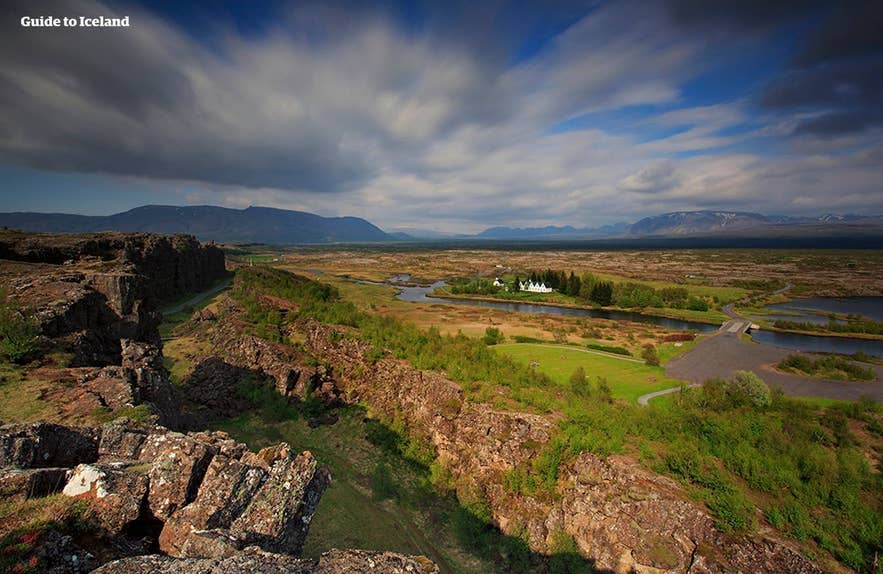
The Golden Circle is Iceland's most-visited day-trip route. If you plan to drive the Golden Circle, the Icelandic place names below will help you find your way between the loop's main sights and smaller stops along the way.
Þingvellir (THING-vet-lir)
This is a national park and historic site where you can see the rift between tectonic plates. Þingvellir means "parliament fields," after the open-air Alþingi (Iceland's parliament) that met here from 930 to 1798.
Gullfoss (GUTL-foss)
As one of Iceland's top waterfalls, Gullfoss has a powerful two-tier drop and dramatic canyon views. The name means "golden falls," from the golden hue the spray takes on in afternoon light.
Geysir (GAY-seer)
This is the hot spring that gave English the word "geyser." Geysir itself has been mostly dormant, but the smaller Strokkur Geyser next to it erupts every few minutes. The name comes from the Icelandic verb geysa, meaning "to gush."
Kerið (KEH-rith)
This volcanic crater lake has red volcanic slopes and bright blue water. Kerið means "the tub" or "the bowl," after the crater's shape.
Friðheimar (FREE-thay-mar)
This is a family-run tomato greenhouse and restaurant where tomato-base dishes are served among the plants. Friðheimar means "peaceful home."
Laugarvatn (LOY-gar-vatn)
The lakeside village of Laugarvatn is known for the traditional underground bread-baking experience and the Fontana Spa on the shore. The name means "pool lake" or "hot spring lake," after the geothermal water that feeds the bath.
Flúðir (FLOO-thir)
This small village is home to the Secret Lagoon, Iceland's oldest swimming pool. Flúðir means "rapids," from the river rapids nearby.
South Coast Place Names
The South Coast stretches from Reykjavík east to the glaciers, with waterfalls, black sand beaches, and a glacier lagoon along the Ring Road. These eleven Icelandic place names cover most of the spots you'll see on typical multiday tours in Iceland.
Seljalandsfoss (SEL-ya-lands-foss)
Just off the Ring Road, Seljalandsfoss is one of the most well-known walk-behind waterfalls in Iceland. The name means "pasture land falls," after the farm Seljaland nearby.
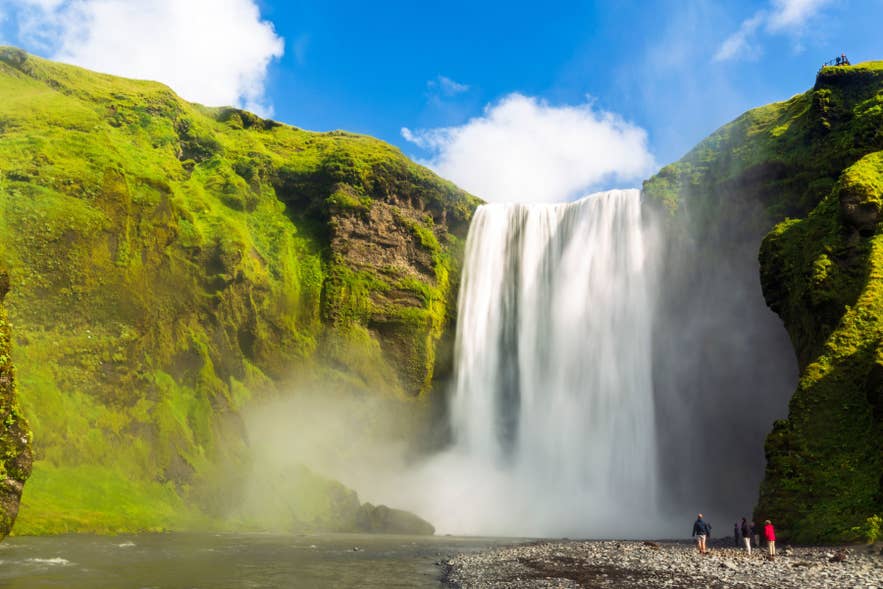
Skógafoss (SKOH-ga-foss)
One of the South Coast's most photographed stops is Skógafoss, a wide, powerful waterfall with frequent rainbows. The name means "forest falls," from skógur (forest) and foss (waterfall).
Reynisfjara (RAY-nis-fyar-a)
This is a black sand beach with basalt columns and strong Atlantic waves. Reynisfjara means "Reynir's beach," after a settler the area is named for.
Reynisdrangar (RAY-nis-dran-gar)
These basalt sea stacks rise from the ocean just off Reynisfjara Beach. Reynisdrangar means "Reynir's pillars," paired with Reynisfjara above.
Dyrhólaey (DIR-hoh-la-ay)
This is a coastal viewpoint with cliffs, arches, and panoramic views. Dyrhólaey means "hole-in-the-door island," after the natural sea arch that cuts through the headland.
Vík (VEEK)
The small village of Vík, which all South Coast travelers pass through on the Ring Road, is the closest settlement to Reynisfjara Beach. The name simply means "cove" or "bay."
Jökulsárlón (YEUH-kuls-owr-lohn)
This is a glacier lagoon filled with floating icebergs, where you can take an amphibious boat tour or a kayaking experience among the ice. Jökulsárlón means "glacier river lagoon."
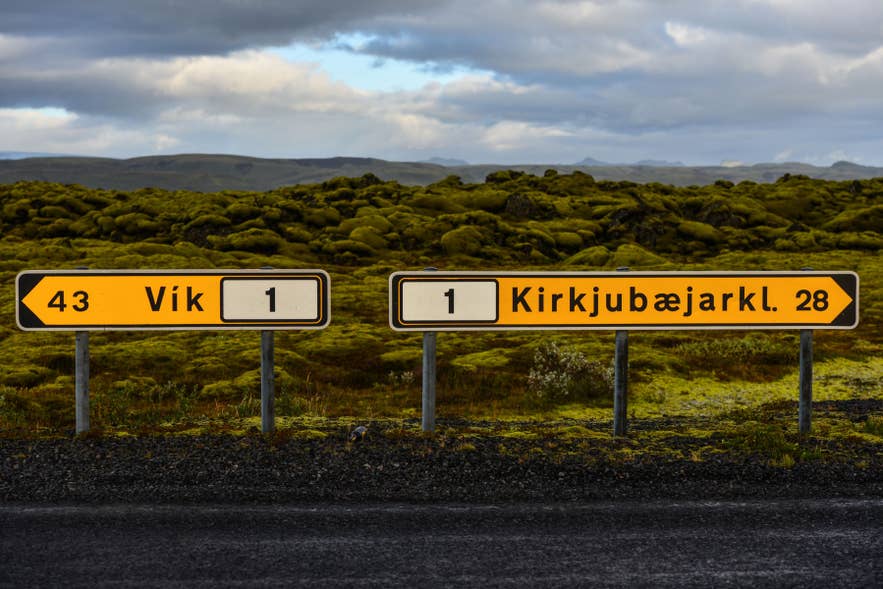
Kirkjubæjarklaustur (KIRK-yu-bai-yar-kloy-stur)
This is a common rest stop roughly halfway between Vík and Höfn. Kirkjubæjarklaustur means "church farm cloister," after a medieval Benedictine convent that once stood there.
Fjaðrárgljúfur (FYATH-rowr-glyoo-fur)
The serpentine canyon Fjaðrárgljúfur south of Kirkjubæjarklaustur has curved moss-covered walls and a winding river along the floor. The name means "feather river canyon."
Sólheimajökull (SOHL-hay-ma-yeuh-kuhtl)
An outlet glacier of Mýrdalsjökull, Sólheimajökull is accessible via guided glacier hikes that explore the ice formations up close. The name means "sun-home glacier."
Vatnajökull (VAT-na-yeu-kuhtl)
Covering roughly 8 percent of Iceland's land area, Vatnajökull is Europe's largest glacier, with multiple outlet glaciers reachable from the Ring Road. The name means "glacier of lakes," from vatna (of lakes, the genitive plural of vatn) and jökull (glacier).
Snæfellsnes Peninsula Place Names
Snæfellsnes is often called "Iceland in miniature" for the variety of landscapes packed into a single day's drive. The things to do in Snæfellsnes are spread across the peninsula, and most of the destinations below mark the main stops.
Snæfellsnes (SNAI-fels-nes)
This is the peninsula west of Reykjavík. Snæfellsnes means "snow mountain peninsula," after the glacier-capped Snæfellsjökull at the tip.
Snæfellsjökull (SNAI-fetls-yeuh-kuhtl)
The glacier-capped Snæfellsjökull Volcano is the centerpiece of Snæfellsjökull National Park. The name means "snow mountain glacier."
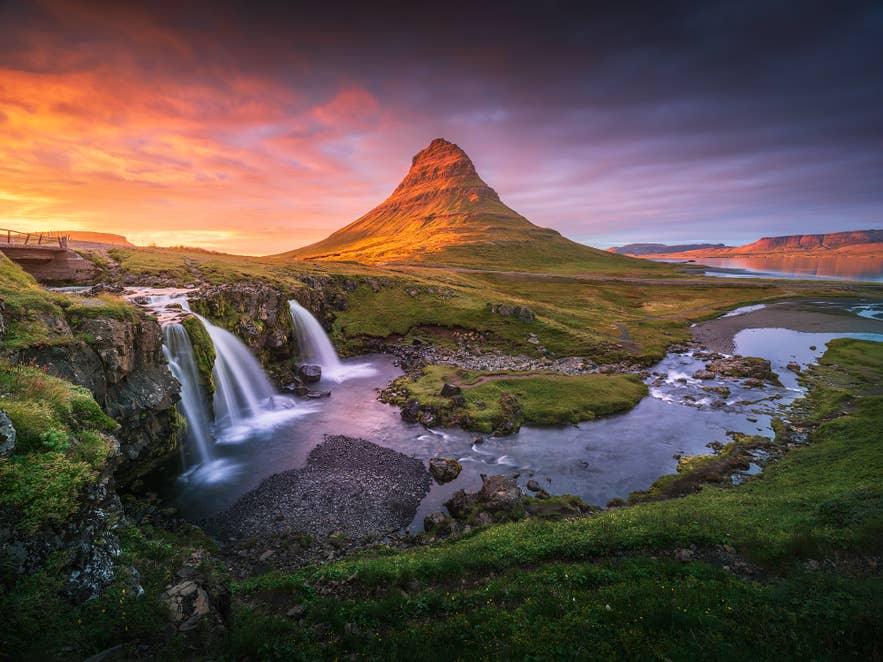
Kirkjufell (KIRK-yu-fetl)
This famous cone-shaped mountain is often photographed with the small Kirkjufellsfoss Waterfall in the foreground. Kirkjufell means "church mountain," after its resemblance to a church steeple.
Djúpalónssandur (DYOO-pa-lohn-san-dur)
This black pebble beach has dramatic coastal cliffs and the rusted remains of a 1948 shipwreck. Djúpalónssandur means "deep lagoon beach."
Búðakirkja (BOO-tha-kirk-ya)
One of the most photographed buildings in Iceland, Búðakirkja is a small black wooden church set in an open lava field. The name means "búðir church," after the historic trading-post hamlet (búðir = booths) it serves.
Arnarstapi (ART-nar-sta-pi)
The coastal village of Arnarstapi sits on the southern side of the peninsula, with cliffs, basalt rock formations, and a short hiking trail to Hellnar. The name means "eagle rock," from örn (eagle) and stapi (pillar of rock).
North Iceland Place Names
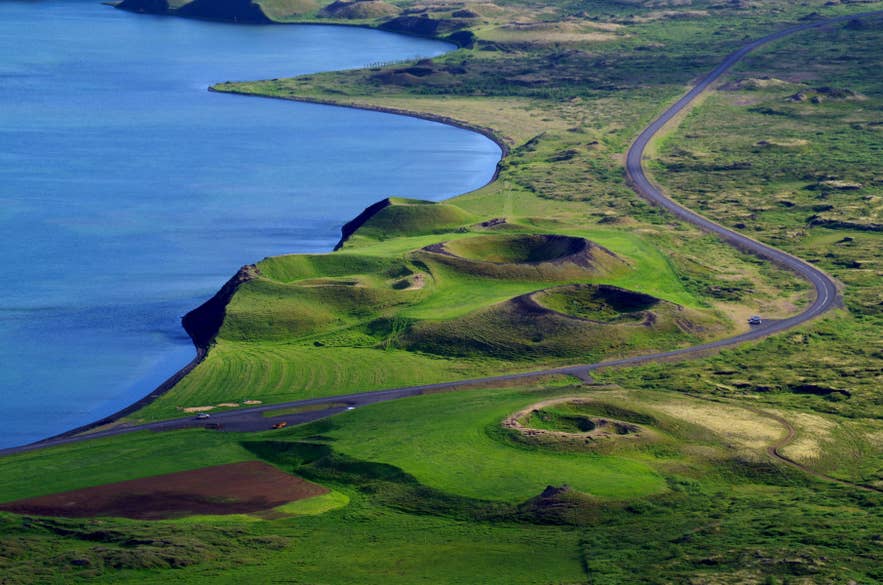
North Iceland centers on Akureyri and Lake Mývatn, but the must-visit destinations in North Iceland stretch much further. These destinations cover the regional capital, the whale-watching town, the historic waterfall, the volcanic lake, the horseshoe canyon, the herring town, and the coastal mountain peninsula.
Akureyri (AK-ur-ay-ri)
This is the largest urban area outside Iceland's Capital Region. Akureyri means "field on the sandspit."
Húsavík (HOO-sa-veek)
The coastal town of Húsavík is known for whale watching tours. The name means "house bay," after a house Viking explorer Garðar Svavarsson built here in the 9th century.
Goðafoss (GOH-tha-foss)
The historic Goðafoss Waterfall, known as the "waterfall of the gods," is where a lawspeaker reportedly threw statues of the Norse gods into the falls to mark Iceland's adoption of Christianity in the year 1000.
Mývatn (MEE-vatn)
This volcanic lake is surrounded by geothermal areas, lava fields, and pseudocraters. Mývatn means "midge lake," after the swarms of midges that gather around the lake in summer.
Ásbyrgi (OWS-bir-gi)
The horseshoe-shaped Ásbyrgi Canyon in Vatnajökull National Park has cliffs and shaded hiking trails. The name means "shelter of the gods," and Norse legend says the canyon was formed by a hoofprint of Odin's eight-legged horse Sleipnir.
Siglufjörður (SIG-lu-fyur-thur)
Tucked into a narrow fjord, the small fishing town of Siglufjörður was once Iceland's herring capital and is now home to the Herring Era Museum. The name means "siglu fjord," after Siglunes, the peninsula at the fjord's mouth.
Tröllaskagi (TRUTL-a-ska-gi)
The mountainous Tröllaskagi Peninsula sits between two fjords on the north coast, with dramatic landscapes and the scenic Route 76 drive along the coast. The name means "trolls' peninsula."
Reykjanes Peninsula Place Names
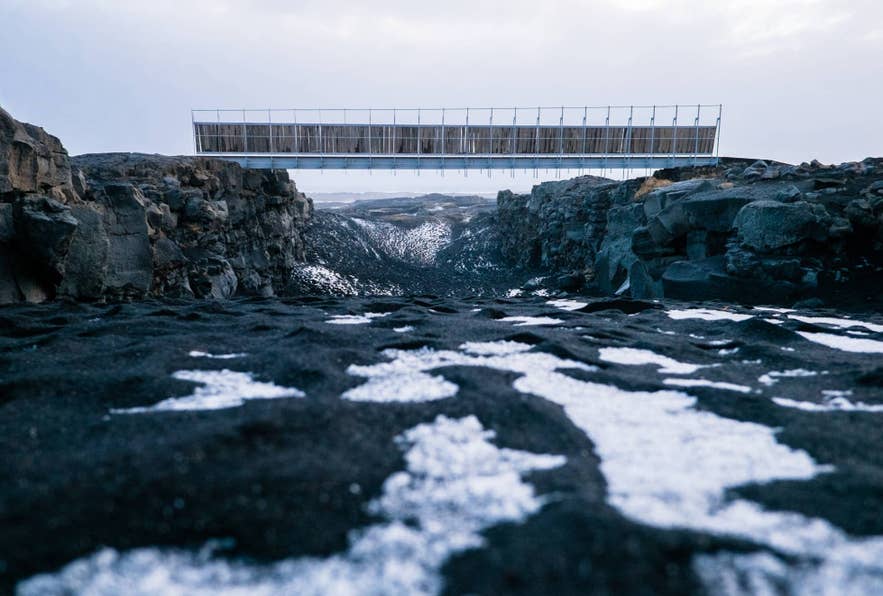
The Reykjanes Peninsula is where you arrive and where Iceland's most recent volcanic activity has been concentrated. The things to do on the Reykjanes Peninsula range from the airport town to the Blue Lagoon's neighbor and volcanic sites.
Reykjanes (RAY-kya-nes)
The name means "smoky peninsula," after the geothermal steam rising from its hot springs.
Keflavík (KEF-la-veek)
The town of Keflavík is home to Iceland's main international airport. The name means "driftwood bay."
Fagradalsfjall (FAG-ra-dals-fyatl)
The Fagradalsfjall Volcano erupted three times between 2021 and 2023, with hiking trails near the lava fields open when conditions allow. The name means "beautiful valley mountain."
Grindavík (GRIN-da-veek)
This is the fishing town near the Blue Lagoon. Grindavík means "gate bay."
Litli-Hrútur (LIT-li-HROO-tur)
A small mountain on the Reykjanes Peninsula, Litli-Hrútur, lent its name to the July 2023 eruption. The name means "little ram."
Sundhnúkur (SUND-noo-kur)
The Sundhnúkur Crater Row produced nine eruptions between December 2023 and August 2025, the longest run of volcanic activity on the Reykjanes Peninsula in modern times. The name means "channel peak."
Eastfjords Place Names
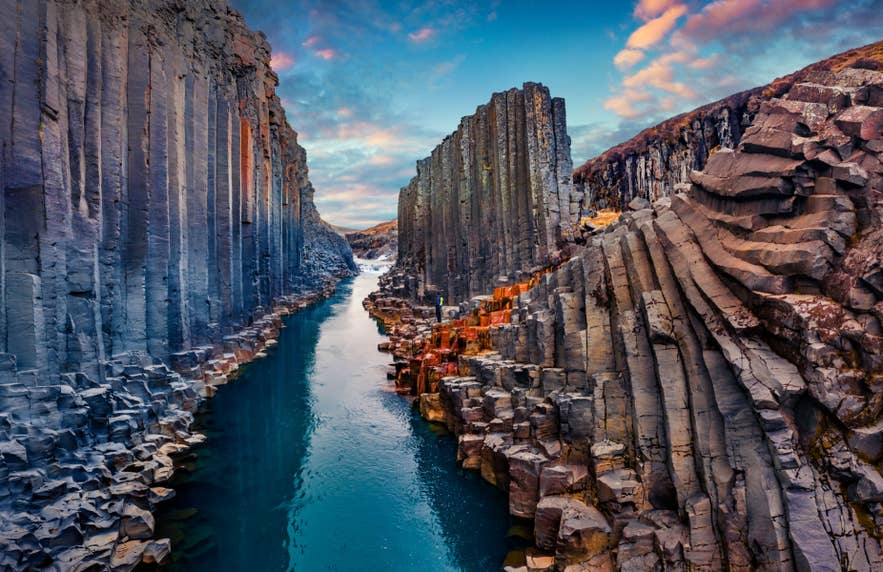
The Eastfjords run along Iceland's eastern coast in a series of dramatic, narrow fjords. Some of the best places to visit in East Iceland sit along this stretch, and the destinations below will help you find your way to them.
Stuðlagil (STU-thla-gil)
The Stuðlagil Canyon, known for its hexagonal basalt columns and bright blue glacial river, is one of the most photographed spots in East Iceland. The name means "basalt column canyon."
Seyðisfjörður (SAY-this-fyur-thur)
This colorful fjord town is known for its harbor, arts scene, and mountain surroundings. Seyðisfjörður means "cooking pit fjord," from seyður, an old word for a hot cooking pit.
Borgarfjörður Eystri (BOR-gar-fyur-thur AY-stri)
This is a remote fjord known for its hiking trails, quiet landscapes, and summer puffin colonies. Borgarfjörður Eystri means "eastern castle fjord," from a rocky outcrop (borg) that gave the fjord its name.
Höfn (HUPN)
The small town of Höfn in Southeast Iceland is known for its langoustine. Pronounced as a single syllable, the F sounds like P before the N. The name simply means "harbor."
Egilsstaðir (AY-gils-sta-thir)
This is the largest town in East Iceland and the main travel hub in the region. Egilsstaðir means "Egill's place," after a settler named Egill.
Djúpivogur (DYOO-pi-voh-gur)
Known for its harbor views and relaxed pace, the small coastal village of Djúpivogur is on the way south from Egilsstaðir. The name means "deep bay."
Westfjords Place Names
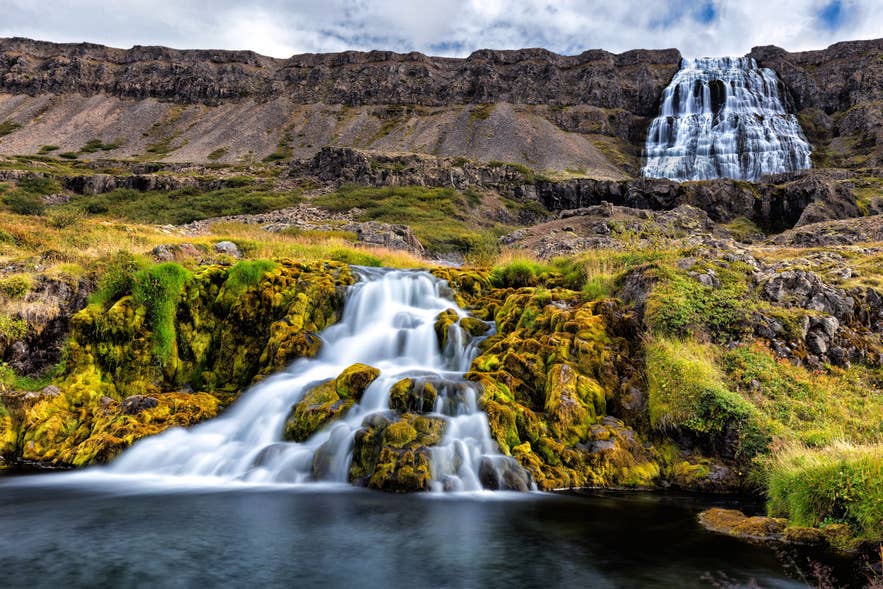
The Westfjords are Iceland's most remote and least-visited region. If you're joining one of the Westfjords tours, the destinations below will help you keep track of the route and the stops along the way.
Dynjandi (DIN-yan-di)
A large tiered waterfall, often called the "jewel of the Westfjords," with six smaller falls below the main drop. Dynjandi means "thunderous" or "thundering," after the sound the water makes.
Látrabjarg (LOW-tra-byarg)
The Látrabjarg Cliff at the westernmost point of Iceland is known as one of the most reliable spots for close-range puffin viewing in summer. The name means "resting place cliff."
Rauðisandur (ROY-thi-san-dur)
This long red-orange sand beach that stands out from Iceland's typical black sand beaches is reached via a steep mountain road. Rauðisandur means "red sand."
Ísafjörður (EE-sa-fyur-thur)
Ísafjörður is the largest town in the Westfjords and the main travel hub in the region. The name means "ice fjord."
Highlands Place Names
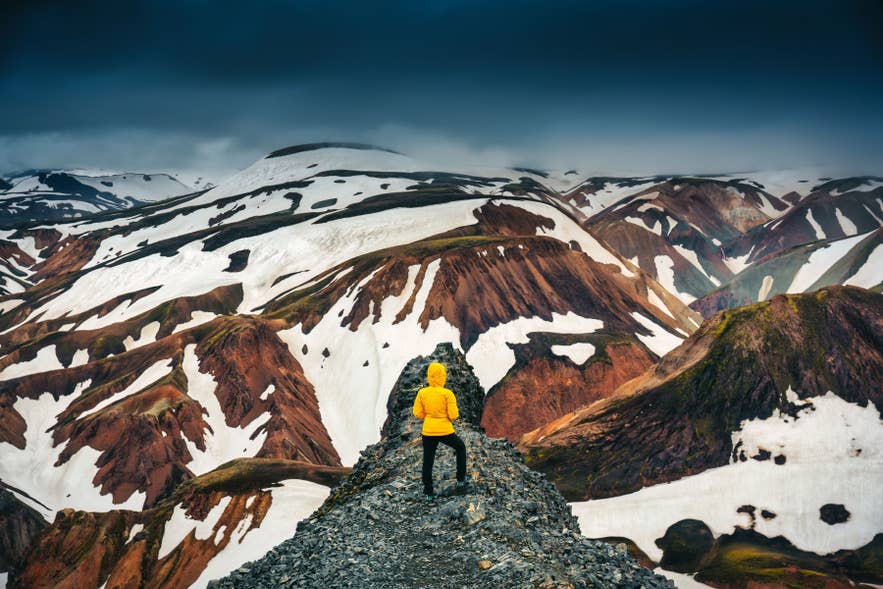
The Highlands are Iceland's interior, accessible only in summer via 4WD on rough mountain roads. The destinations below will help you find your way between the main places to visit in the Highlands.
Landmannalaugar (LAND-man-na-loy-gar)
The Landmannalaugar Area is known for colorful rhyolite mountains, hot springs flowing through the campsite, and the start of the Laugavegur Trail. The name means "pools of the land's people."
Þórsmörk (THOHRS-murk)
The glacier valley of Þórsmörk is surrounded by glaciers like Eyjafjallajökull and Mýrdalsjökull. The name means "Thor's forest."
Askja (ASK-ya)
The Askja Caldera in the Central Highlands is known for the Víti Crater Lake and the remoteness of its setting. The name literally means "box" or "caldera" in Icelandic.
Kerlingarfjöll (KER-ling-ar-fyutl)
The geothermal mountain range with hot springs, steaming vents, and colorful rhyolite peaks is accessible only in summer. Kerlingarfjöll means "old woman's mountains," after a folklore tale about a troll-woman turned to stone.
Hveradalir (KVER-a-da-lir)
The Hveradalir Geothermal Valley inside Kerlingarfjöll has steam vents, hot springs, and colorful terrain crossed by walking trails. The name means "hot spring valleys," from hver (hot spring) and dalir (valleys).
Fimmvörðuháls (FIM-vur-thu-howls)
The high mountain pass between Eyjafjallajökull and Mýrdalsjökull is popular as a day hike from Skógafoss to Þórsmörk. Fimmvörðuháls means "five cairns pass."
Eyjafjallajökull (AY-ya-fyat-la-yeu-kuhtl)
The Eyjafjallajökull Volcano sits in the Southern Highlands, and its 2010 eruption grounded flights across Europe for nearly a week and put Iceland on the world's news front pages. The name means "island-mountain-glacier."
Mýrdalsjökull (MEER-dals-yeuh-kuhtl)
The large ice cap covers the active Katla Volcano, sitting just east of Eyjafjallajökull and dominating the inland view from Vík and the Southern Highlands. Mýrdalsjökull means "marsh valley glacier."
How To Practice Icelandic Place Name Pronunciation
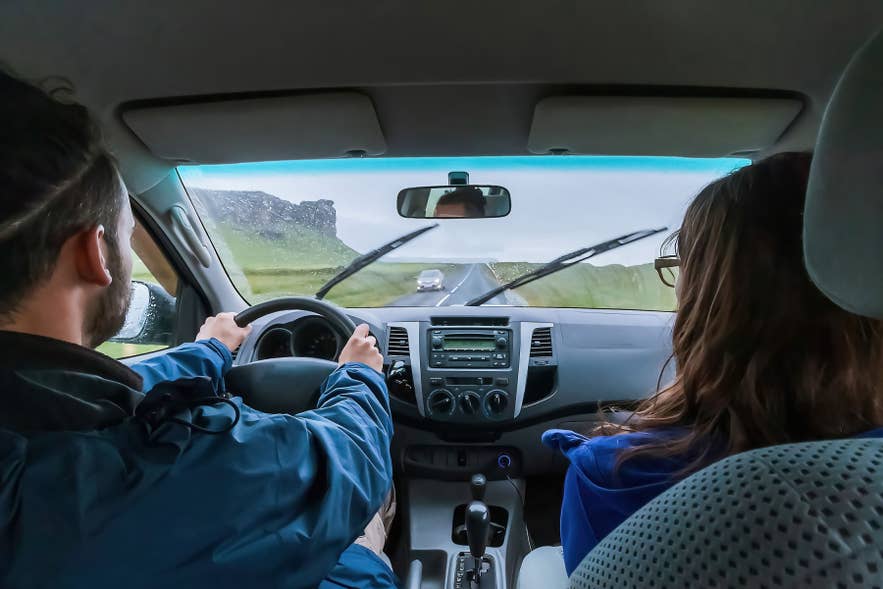
One of the easiest ways to practice Icelandic pronunciation is by using online tools. Websites like Forvo and Wikipedia often include audio recordings from native speakers, allowing you to hear how Icelandic place names are pronounced and repeat them at your own pace.
You can also improve your pronunciation by listening to Icelandic radio, such as RÚV Rás 2. While relaxing or driving in Iceland, you will hear common Icelandic place names spoken naturally, which helps you get used to pronunciation, rhythm, and stress patterns.
If you are unsure how to pronounce a name while traveling, you can also ask locals for help. Icelanders are used to visitors struggling with Icelandic pronunciation and are usually happy to assist.
A simple phrase you can use is: "Hvernig segi ég þetta?" (KVER-nig SAY-yi yeg THET-ta). This means "How do I say this?" You can also point to a place name on a map or your phone and say "Hvernig…" to ask how it is pronounced.
Know How To Pronounce Icelandic Place Names Before You Go
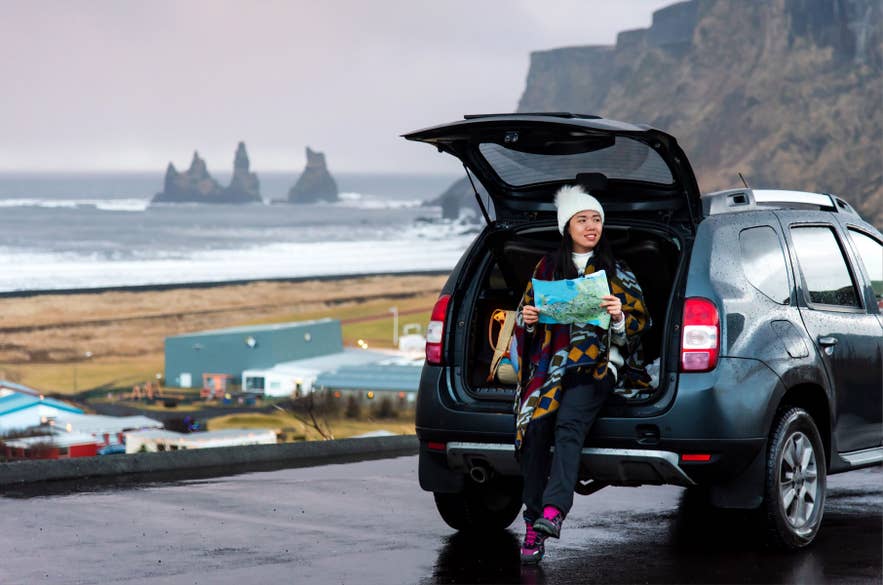
With the phonetic spellings, audio clips, and a few letter rules to guide you, you can pronounce most Icelandic place names. Listen to the audio for the ones you'll use most, practice them ahead of your trip, and don't hesitate to ask locals when you're unsure. Icelanders are accustomed to visitors mispronouncing names and are usually happy to help.
The sagas, folklore, and Viking-age poems of Iceland are packed with people and places whose names are still on modern maps. Dig deeper with our guide to Icelandic sagas and their locations in Iceland, or see the other side of Icelandic storytelling in our guide to folklore in Iceland.
How do you pronounce "foss" at the end of Icelandic waterfall names?
Why do so many Icelandic place names end in -jökull or -fjörður?
How do you pronounce the Icelandic letters Þ and ð?
What other Icelandic letters don't exist in English?
How do you break down long Icelandic place names?
Eyjafjallajökull breaks down as eyja-fjalla-jökull (island-mountain-glacier), and Kirkjubæjarklaustur breaks down as kirkju-bæjar-klaustur (church-farm-cloister).
Is the J in Icelandic place names pronounced like English J?
What's the longest Icelandic place name a traveler will encounter?
Do Icelanders mind if visitors mispronounce place names?
Which Icelandic place name gave you the most trouble? Share your pronunciation stories in the comments below.
Did this guide help you feel more confident pronouncing Icelandic place names? Let us know which ones you'll be using on your trip.

I was born on the west side of Reykjavík and grew up downtown, so Iceland has been my back yard for most of my life. I'm a father of two, I've traveled on five continents, and I still haven't found a country that holds my attention the way this one does.
That's why I co-founded Guide to Iceland. We connect travelers directly with Icelandic operators, guides and hosts, so the advice and the services both come from people who actually live here.
I write about the practical side of a trip: what eating out in Reykjavík really costs, whether to pick Sky Lagoon or Hvammsvík, where to stop for food along the Ring Road, and which regions give you the best odds of clear skies for the northern lights. If you're planning a trip and something doesn't add up, message me.