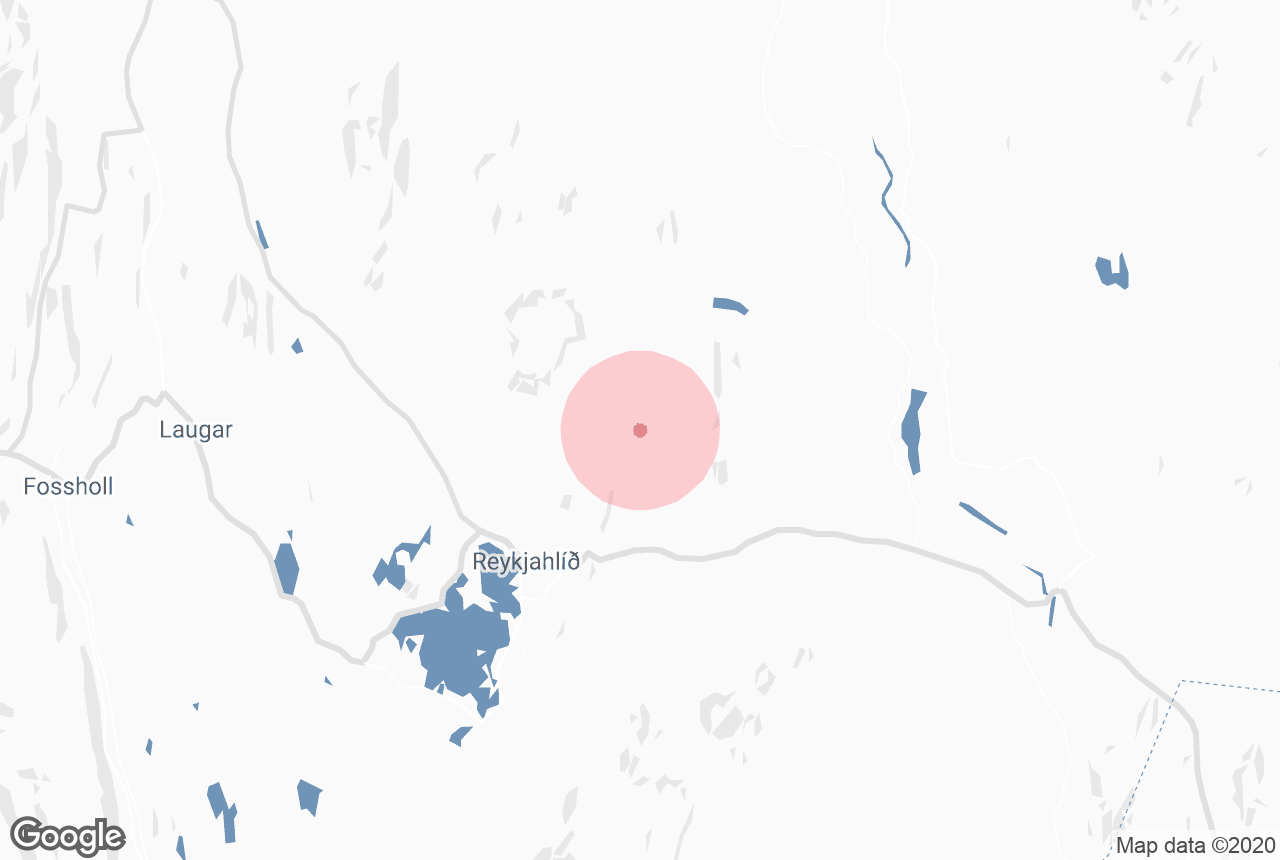
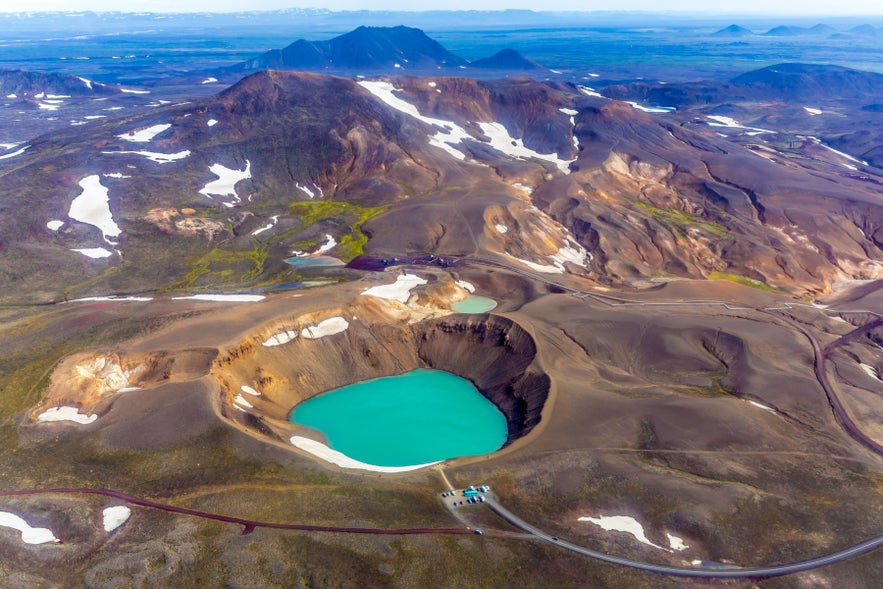
Krafla is a caldera located north of Lake Myvatn in North Iceland. It’s part of a greater volcanic system of the same name, famous for its rugged lava fields, bubbling geothermal areas, and the vivid blue-green Viti Crater.
Krafla’s eruption history forms part of the broader story of Iceland’s volcanoes. Our study of how often volcanoes erupt in Iceland explains how bursts of activity and quieter periods have shaped the country’s volcanic landscapes.
To see the traces of Krafla’s eruptions for yourself, join one of the Myvatn tours or excursions from Akureyri that visit the area. These trips bring you close to its lava fields and craters.
The surrounding area also includes some of the must-see destinations in North Iceland. Nearby highlights include the steaming Hverir Geothermal Area and the blue-green Viti Crater.
You can also explore Krafla and the nearby Myvatn area with a rental car in Akureyri or on self-drive tours in Iceland. Driving gives you the flexibility to combine these stops at your own pace.
Why You Can Trust Our Content
Guide to Iceland is the most trusted travel platform in Iceland, helping millions of visitors each year. All our content is written and reviewed by local experts who are deeply familiar with Iceland. You can count on us for accurate, up-to-date, and trustworthy travel advice.
Krafla at a Glance
-
Location: North Iceland, just north of Lake Myvatn
-
Type: Volcanic caldera within the Krafla Volcanic System
-
Height: 2,684 feet (818 meters) at its tallest peak
-
Caldera width: About 7 miles (10 kilometers) across
-
Fissure zone: Extends 56 miles (90 kilometers), including the famous Viti Crater
-
Key attractions: Viti Crater, Krafla Lava Fields, Leirhnjukur Geothermal Area, Krafla Geothermal Power Station, Earth Lagoon Myvatn
-
Best time to visit: Summer (June–September) for easy access
-
Getting there: Accessible by car from Lake Myvatn or via guided tours and self-drive options
The Power of Krafla: Volcano, Lava, and Energy
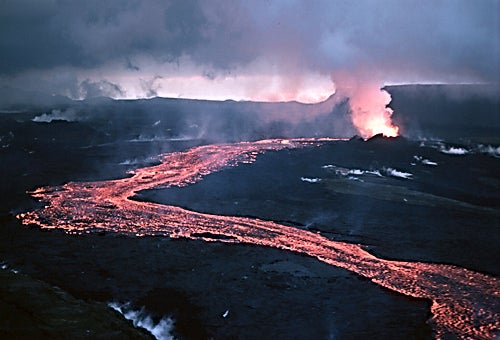
Photo from Wikimedia, Creative Commons, by Earthquakes Krafla. No edits made.
With 29 eruptions under its belt since settlement, Krafla Volcano has long had a reputation as an unpredictable and dangerous feature. Two of these eruptions were more significant than the rest.
During the Myvatn Fires from 1724 to 1729, the fissure erupted across much of its length and sent lava fountains so high in the air that they could be seen all the way across the Highlands on the South Coast.
No one was killed directly by this eruption, though the ash and toxic fumes may have caused some indirect deaths. It did, however, destroy three farms.
The second major eruptive episode at Krafla occurred between 1975 and 1984. Nine separate eruptions occurred, limiting services, industry, and tourism in the area, and dramatically changing it.
All these events have shaped the rugged lava fields and crater formations you can explore in Krafla today. The area is alive with geothermal activity, from steam vents rising from the ground to bubbling mud pools and craters like the famous Viti in Krafla.
Moreover, the raw power of Krafla is harnessed at the Krafla Geothermal Power Station, which taps the heat beneath the volcano to generate clean, renewable energy. This shows how Icelanders turn volcanic activity into practical use.
-
Learn more about the Volcanic Eruptions in Iceland: A Complete Timeline
Getting to Krafla
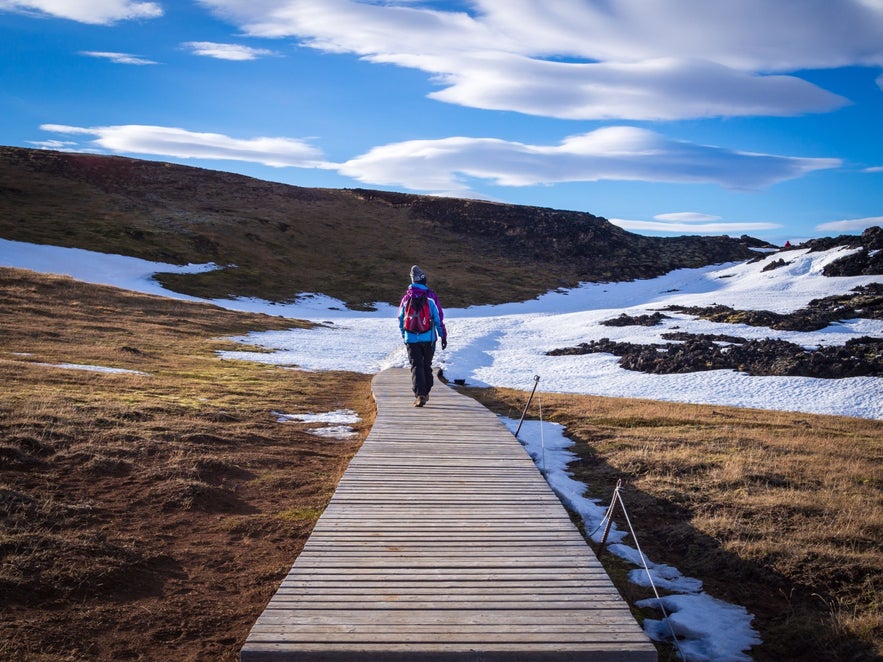 Krafla Caldera is easily accessible from the Lake Myvatn area in North Iceland.
For those who prefer flexibility, you can rent a car in Akureyri. From there, it’s about a 1–1.5-hour scenic drive along well-maintained roads, passing volcanic landscapes and lava fields along the way.
Self-drive tours in Iceland are another popular option. These packages typically include a vehicle, accommodation, and a planned itinerary, making it easy to combine Krafla with other attractions in Iceland.
The most common options are a North Iceland winter self-drive adventure by Lake Myvatn or a 7-day full Ring Road self-drive tour.
Road conditions are generally good in summer, but winter travelers should check for closures and drive carefully on icy roads.
Many travelers also visit Krafla as part of guided volcano tours, which include stops at the crater, lava fields, and geothermal areas.
Key Attractions in Krafla
The Krafla volcanic system is full of natural wonders that showcase Iceland’s volcanic power. From steaming craters to jagged lava fields, it’s home to some of the top natural attractions in Iceland waiting to be explored.
Viti Crater
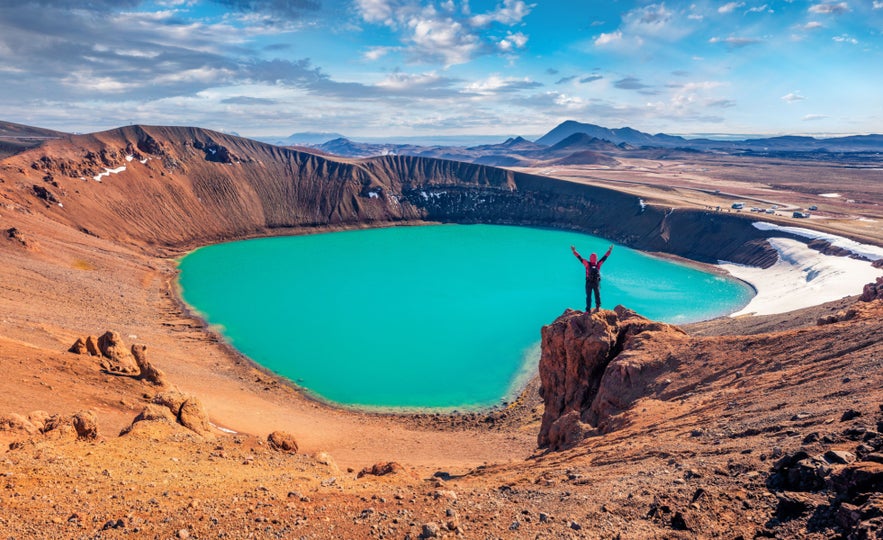
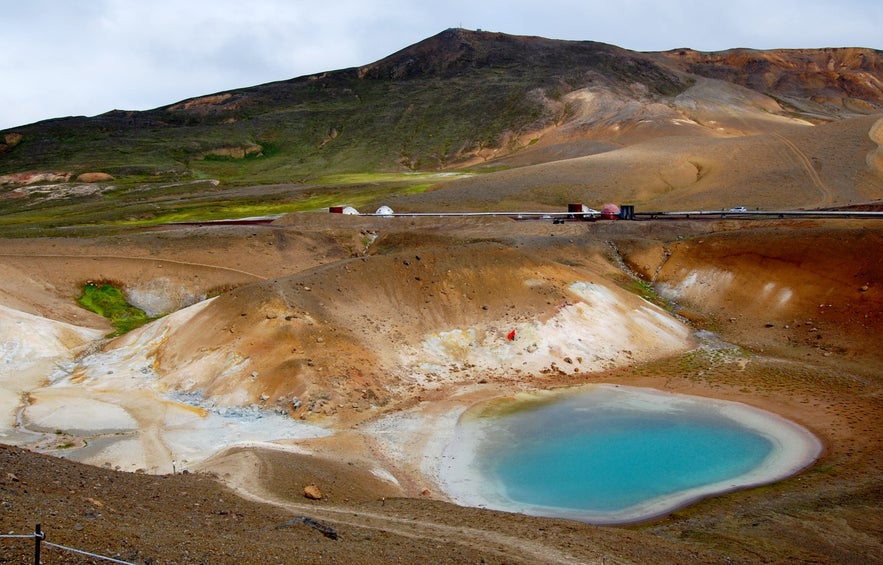
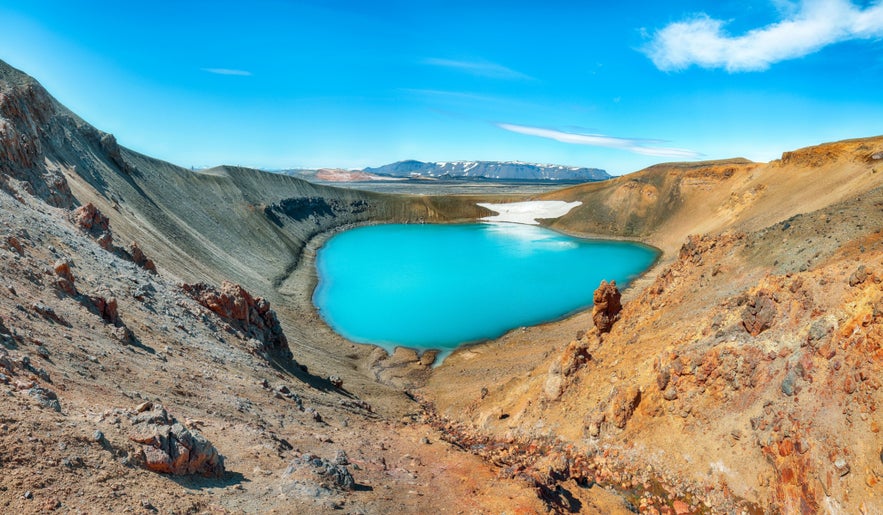 Viti in Krafla is a geothermal crater located within Krafla’s fissure zone and is known for its striking blue-green lake. This Viti is different from the one found in Askja and has its own distinct character and setting in North Iceland.
You can walk along the rim of the crater, enjoy sweeping views of the surrounding volcanic landscape, and take plenty of photo-worthy shots of the vividly colored water below.
Safety Tips: Always stay on marked paths, keep a safe distance from the crater edge, and be cautious of loose gravel and slippery ground, especially in wet or icy conditions.
Krafla Lava Fields
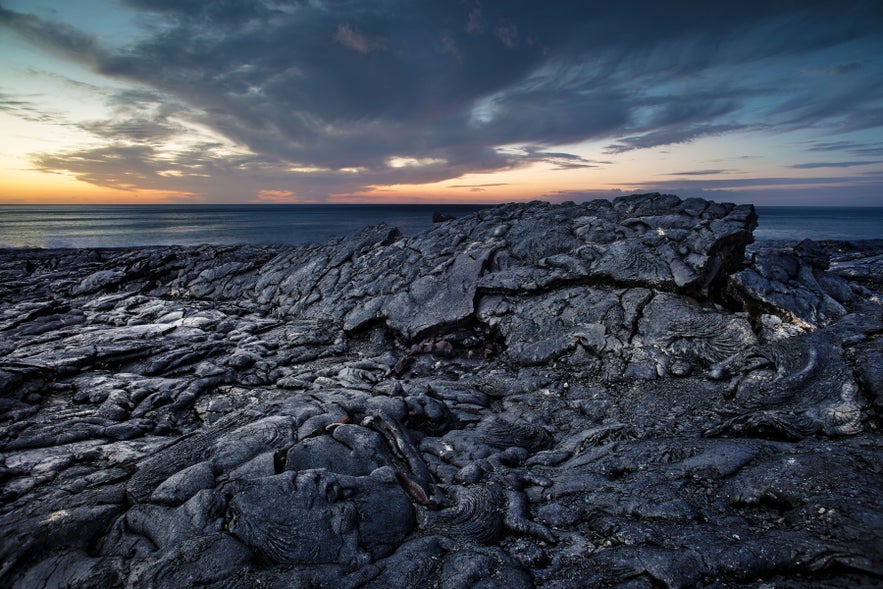 The Krafla Lava Fields were formed by a series of eruptions over centuries, most notably during the Krafla Fires. These vast fields of hardened lava create a rugged, otherworldly landscape that highlights the raw power of volcanic activity.
Take time to explore marked paths that wind through jagged lava formations. The textures and colors of the lava change with the light, making this area especially striking.
Safety Tips: Stick to designated trails, as lava surfaces can be sharp, unstable, and uneven. Wear sturdy footwear and avoid climbing on fragile formations.
Leirhnjukur Geothermal Area
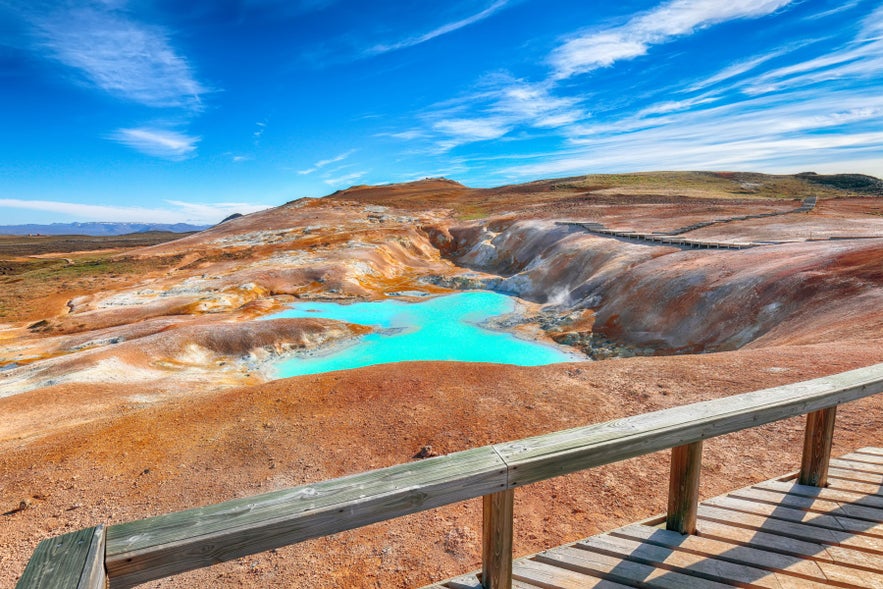 Leirhnjukur is one of the most active geothermal areas within the Krafla volcanic system, filled with steaming vents, fumaroles, and bubbling mud pools. The landscape here is constantly changing due to ongoing geothermal activity.
Short hiking trails lead you through an active volcanic environment where steam rises directly from the ground. It’s one of the best places in North Iceland to see geothermal forces up close.
Safety Tips: Stay strictly on marked paths, as the ground outside them can be dangerously hot and unstable. Pay attention to warning signs and avoid the area during poor visibility.
Krafla Geothermal Power Station
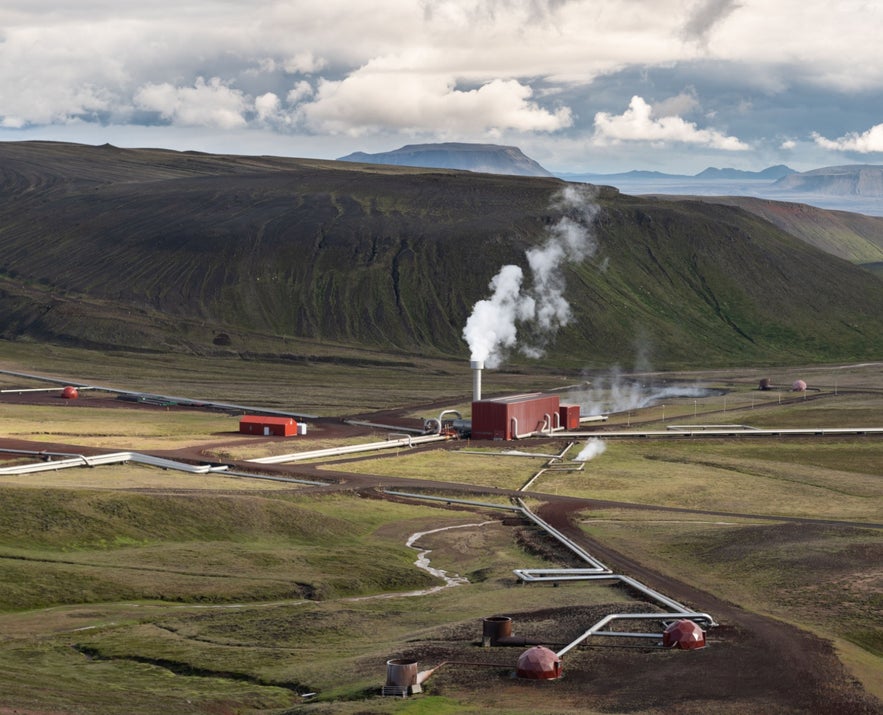 The Krafla Geothermal Power Station harnesses heat from beneath the volcanic system to produce clean, renewable energy. It stands as a prime example of how Iceland uses volcanic activity for sustainable power generation.
While access to the interior may be limited, you can view the facility from designated areas and learn about geothermal energy through nearby information displays when available.
Safety Tips: Follow posted signs and respect restricted areas, as this is an active industrial site.
Earth Lagoon Myvatn
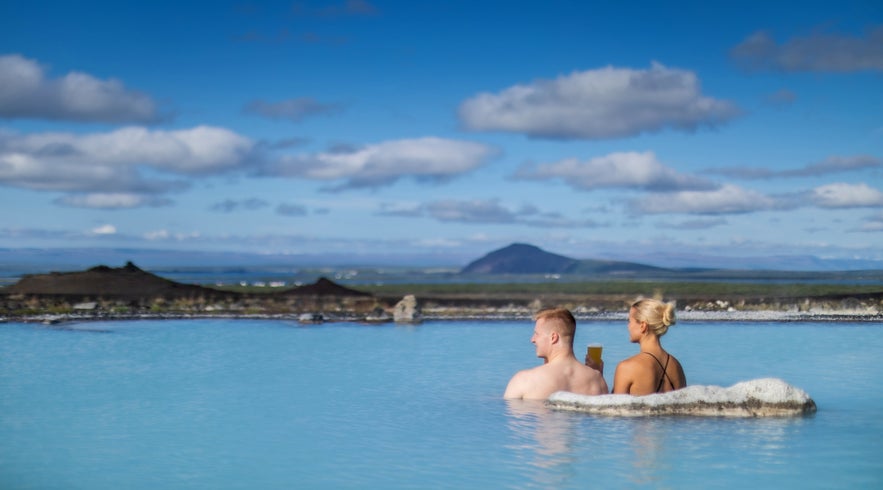 The Earth Lagoon Myvatn is a modern geothermal spa located near Krafla. The lagoon uses naturally heated geothermal water, offering warm, mineral-rich pools surrounded by stunning lava fields and North Iceland scenery.
Visitors can enjoy a range of experiences, from casual soaking to a combination of outdoor adventure and wellness. The lagoon is easily included in day trips or multi-activity packages, such as a hiking tour in Myvatn with Earth Lagoon from Reykjahlid.
Travel Tips: For a standalone visit, you can book Earth Lagoon Myvatn tickets in advance to secure entry.
More Places To Explore Around Krafla
The area around Krafla is packed with unique natural attractions and scenic spots. These nearby highlights make it easy to turn your visit into a full-day adventure in North Iceland:
-
Lake Myvatn – Famous for its birdlife, geothermal mud pools, and striking volcanic landscapes. A great spot for photography and nature walks.
-
Hverir Geothermal Area – A short drive from Krafla, this area features bubbling mud pools, fumaroles, and vivid mineral deposits.
-
Dimmuborgir Lava Formations – Known as the “Dark Castles,” these unusual lava pillars and caves make for an eerie and fascinating hike.
-
Reykjahlid – The charming village near Lake Myvatn, offering local cafes, accommodations, and easy access to nearby attractions.
-
Husavik – About an hour’s drive from Krafla, this town is Iceland’s whale-watching capital and offers charming local cafes and museums.
-
Godafoss Waterfall – One of Iceland’s most spectacular waterfalls, located west of Krafla. Perfect for short stops or photography sessions.
-
Grjotagja Cave – A small lava cave with a geothermal hot spring inside, known for its striking blue water.
Best Tours To Explore Krafla and Surroundings
 Exploring Krafla is easier and more rewarding with a guided tour. Whether you want to see steaming craters, rugged lava fields, or nearby highlights like Lake Mývatn and Goðafoss, these tours help you make the most of your North Iceland adventure without worrying about logistics.
-
Diamond Circle Tour from Akureyri – A full-day tour covering top North Iceland attractions such as Godafoss, Husavík, and Lake Myvatn, including Krafla, perfect for first-time visitors wanting to see it all.
-
Tour of the Highlights and Hidden Gems of Lake Myvatn Nature Reserve – Explore the best of Lake Myvatn, including geothermal areas, lava formations, and birdwatching spots, with an expert guide sharing local insights.
-
Snowshoeing Tour Combining Nature, Adventure, and Folklore from Myvatn – Experience Krafla’s winter landscapes on a guided snowshoe hike, while learning about local legends and the region’s volcanic history.
-
6-Day Summer Guided Tour Package to North Iceland – A multi-day adventure that combines Krafla with other North Iceland highlights, including waterfalls, geothermal areas, wildlife spotting, and cultural stops, all with accommodation and transport arranged.
Best Time To Visit Krafla
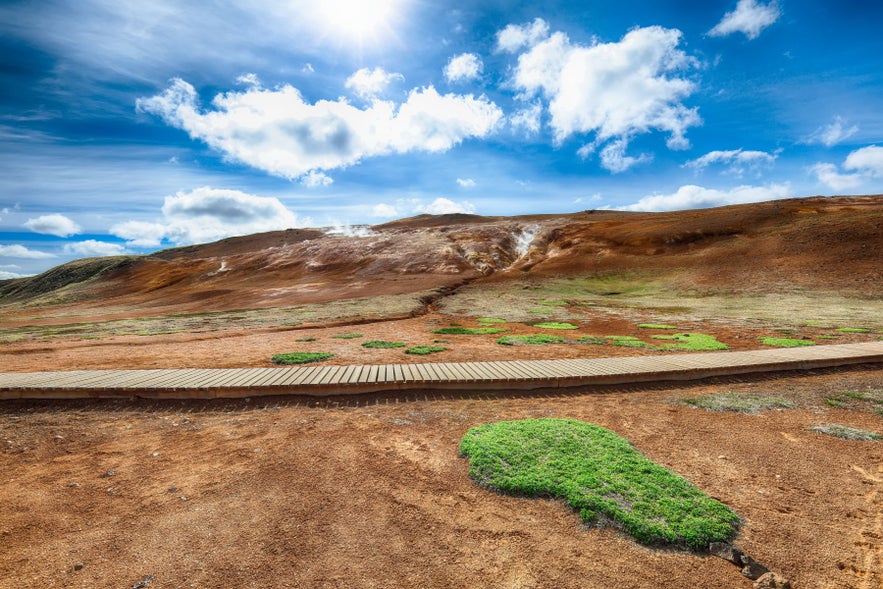 The best time to visit Krafla is during the summer months from June to September, when roads around Lake Myvatn are fully accessible, and hiking trails are clear of snow.
Summer in Iceland offers long daylight hours, including the midnight sun in June and July, making it easier to explore the Krafla volcanic system at a relaxed pace. This period is also ideal for visiting Viti in Krafla, walking through the lava fields, and safely exploring the Leirhnjukur Geothermal Area.
Late spring (May) and early autumn (September) are great shoulder-season options if you prefer fewer crowds. These months allow access to most attractions in Krafla, while offering cooler temperatures and softer light for photography.
Visiting Krafla in winter (November to April) is possible but more challenging. Snow, ice, and limited daylight can make access difficult, especially around geothermal trails. However, winter visits reward travelers with snow-covered lava fields, dramatic steam rising into icy air, and excellent northern lights viewing when conditions are right.
For winter visits, guided tours are a convenient option, but if you're planning on driving in January or February, we recommend planning your winter self-drive trips thoroughly.
Overall, summer offers the easiest and safest experience, while winter provides a more dramatic and adventurous way to explore one of the most powerful volcanic areas in North Iceland.
Travel Tips for Visiting Krafla in Iceland
 A little preparation when visiting Krafla goes a long way. Here are some practical tips to help you make the most of your trip to this North Iceland attraction:
-
Parking and accessibility: Krafla has designated parking areas near major attractions like Víti Crater and Leirhnjukur Geothermal Area. Most sites are easily accessible by car, but some hiking trails may require sturdy footwear.
-
What to wear: Layered clothing is essential, as the weather in Iceland can change quickly, even during summer. Waterproof jackets and sturdy shoes are recommended for walking on uneven lava fields and near geothermal areas.
-
Food and accommodation: The nearest village, Reykjahlid, offers cafes, restaurants, and guesthouses. Many travelers also combine Krafla visits with overnight stays in Myvatn hotels and accommodation.
-
Safety: Always stay on marked paths and follow warning signs. Steam vents, boiling mud pools, and unstable ground can be dangerous.
-
Best way to explore: Renting a car in Iceland is the best way to visit Krafla safely and efficiently. Summer self-drive tours are also popular, while guided tours to Myvatn are recommended for snow and ice conditions.
-
Photography Tips: Early morning or late evening light brings out the textures of lava fields and crater lakes. Keep a wide-angle lens handy to capture the expansive volcanic landscapes.
With these practical tips, your visit to Krafla and the surrounding North Iceland attractions will be safe, comfortable, and memorable.
Add Krafla to Your North Iceland Itinerary
 Krafla in Iceland is one of the most dramatic and unforgettable destinations in the north. The Krafla Volcano provides a fascinating glimpse into Iceland’s raw volcanic power, from steaming craters to rugged lava fields and the striking Víti crater.
The easiest way to explore Krafla is to rent a car, giving you the freedom to visit at your own pace. Many travelers also book Myvatn tours that include it, combining geothermal areas, lava formations, and nearby natural highlights in a single trip.
If you’re planning to stay overnight, there are plenty of great accommodation options around Myvatn that put you close to the action and ready for sunrise hikes or evening northern lights viewing. Whether you’re on a day trip or a multi-day North Iceland adventure, Krafla is an essential stop that will leave you awe-inspired!