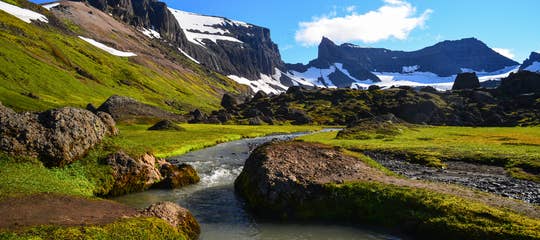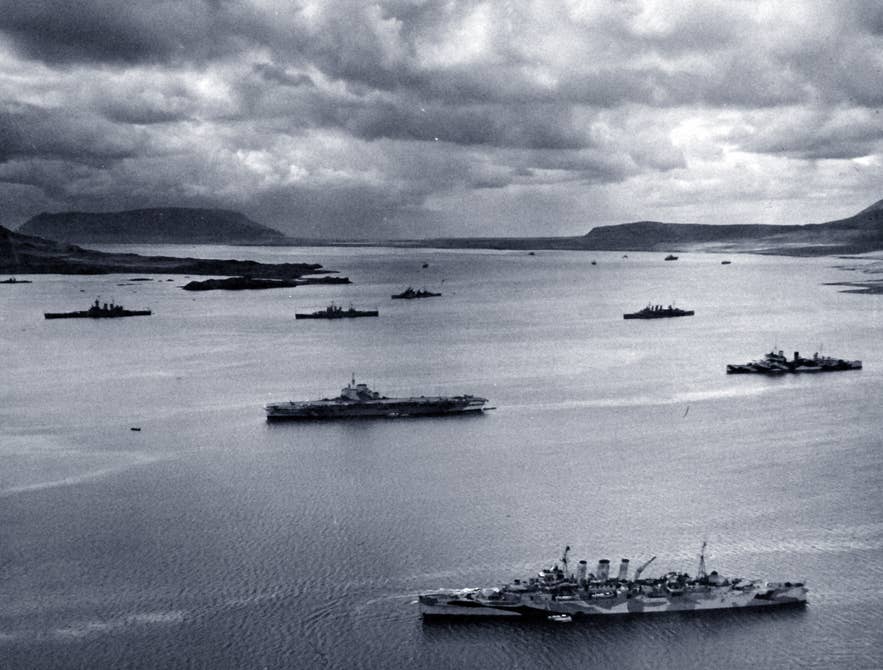
Iceland was officially neutral when World War II broke out in 1939, but the country quickly found itself drawn into the conflict because of its strategic position in the North Atlantic. The first invasion came not from Germany but from Britain, on May 10, 1940. You can still walk past many of the wartime sites today as part of a WWII tour of Reykjavik or at your own pace on self-drive tours.
Why You Can Trust Our Content
Guide to Iceland is the most trusted travel platform in Iceland, helping millions of visitors each year. All our content is written and reviewed by local experts who are deeply familiar with Iceland. You can count on us for accurate, up-to-date, and trustworthy travel advice.
The wartime period reshaped Iceland in ways that are still visible today. American forces built large airfields at Keflavik on the Reykjanes Peninsula, tens of thousands of soldiers were stationed across the island, and the history of Reykjavik shifted from a sleepy fishing capital to an internationally connected city. In 1944, Icelanders also seized the opportunity to declare full independence from Denmark.
In this guide, you’ll learn how Iceland entered the war, what life was like under occupation, where the major bases were located, and which World War II sites you can still visit today. Read on to discover the surprising story of how a small neutral island became one of the Allies' most important North Atlantic outposts, part of the complete history of Iceland.
Credit for image above: Photo from Wikimedia Commons, National Museum of the US Navy, public domain. No edits made.
Key Takeaways About Iceland in World War II
-
Iceland was officially neutral, but British forces occupied the country on May 10, 1940, in Operation Fork.
-
The United States began relieving British forces on July 7, 1941, under an agreement between the Icelandic, British, and American governments.
-
At its peak, the combined Allied garrison numbered in the tens of thousands (commonly reported around 30,000–40,000), amounting to roughly one-quarter to one-third of Iceland’s population at the time.
-
U.S. military engineers built two airfields at Keflavik (Meeks Field and Patterson Field) in 1942–43 as military airbases and staging points for Atlantic aircraft ferrying, convoy air cover, and anti-submarine operations. These were later merged and developed into the postwar Keflavik airfield.
-
Iceland declared full independence from Denmark on June 17, 1944, while still under American occupation.
-
The wartime occupation also led to the social phenomenon known as Astandid, or “the Situation,” with lasting cultural impact.
-
Around 230 Icelanders died during the war, mostly merchant marines and crew members on Icelandic ships sunk by German U-boats or mines in the North Atlantic.
-
You can still visit wartime sites in Reykjavik, the Reykjanes Peninsula, Hvalfjordur Fjord, and the Eastfjords today.
Iceland’s Neutrality at the Start of World War II
This rare color footage from 1939 captures Iceland as it was on the eve of the war: a quiet, sparsely populated island of farmers and fishermen, entirely unprepared for what was about to arrive at its shores.
When Germany invaded Poland in September 1939, Iceland was still in a personal union with Denmark under the Act of Union of 1918. The country had its own parliament, the Althingi, but Denmark handled its foreign affairs.
Iceland immediately declared neutrality, just as it had done in the First World War.
Neutrality, however, was a fragile position for a country sitting in the middle of the North Atlantic shipping lanes. When Germany invaded Denmark on April 9, 1940, Iceland was suddenly cut off from its sovereign and exposed to whichever side reached it first.
Within days, the Icelandic government took emergency action. The Althingi voted to take over all of the foreign affairs and powers previously handled by the Danish crown, and to appoint a regent. Iceland was, in effect, running itself for the first time in centuries, just as the war was about to arrive at its shores.
The British Invasion of Iceland in May 1940
Just one month after Denmark fell, British forces invaded Iceland in an operation codenamed Operation Fork. On the morning of May 10, 1940, Royal Marines came ashore in Reykjavik, with no warning to the Icelandic authorities and no resistance from a country that had no army of its own.
The first wave was small. Around 746 Royal Marines landed, detained German nationals, secured the harbor and the telegraph station, and moved quickly to occupy potential landing grounds and airfields.
The Icelandic government issued a formal protest at the violation of its neutrality but instructed the public to treat the soldiers as guests.
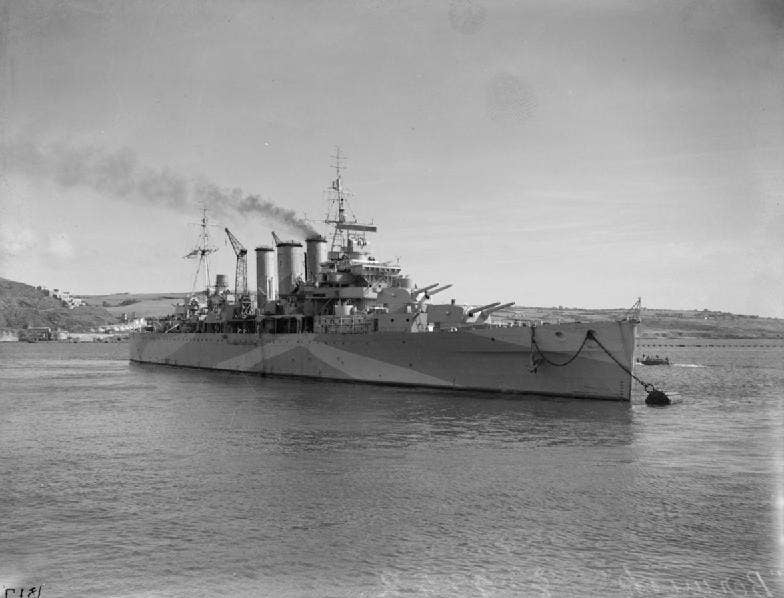
Photo from Wikimedia Commons, Imperial War Museums, Royal Navy, public domain. No edits made.
Britain's motive was simple. With Norway falling to Germany, the Royal Navy could not afford to let Iceland become a German base in the middle of the North Atlantic.
Britain moved first because Germany also had Iceland in its sights: plans and intelligence indicated that Hitler intended to use Iceland as a base to cut the North Atlantic supply lines to Britain.
The German response came from the Kriegsmarine, which completed a feasibility study on May 16, 1940, and presented the full invasion proposal (codenamed Operation Icarus) to Hitler on June 20, 1940. The German Navy believed it was possible to take the island using converted passenger liners and battleship support.
Ultimately, however, the commanders opposed the plan. British naval dominance made supplying a garrison uncertain; one of the two assigned battleships had just sustained torpedo damage, and resources were already committed to the planned invasion of Britain. Operation Icarus never materialized, and Iceland was spared a second invasion.
Within months, the British presence grew to around 25,000 troops, spread across bases in Reykjavik, the Hvalfjordur Fjord, the Reykjanes Peninsula, and as far away as the Eastfjords.
American Forces Take Over the Occupation in 1941
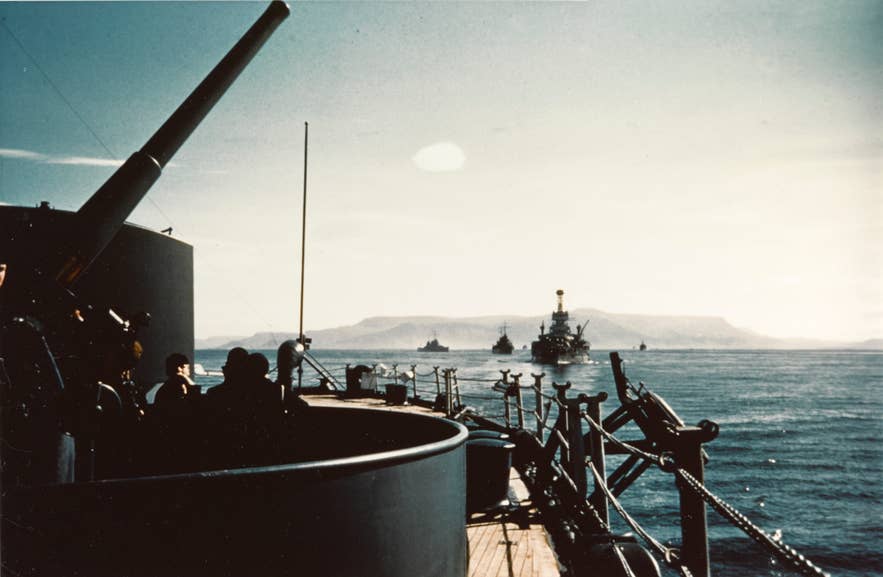
Photo from Wikimedia Commons, US Navy Naval History and Heritage Command, public domain. No edits made.
In the summer of 1941, Britain was stretched thin, and the United States stepped in. On July 7, 1941, US Marines began arriving in Iceland under an agreement between the Icelandic, British, and American governments.
The handover of garrison responsibilities proceeded through July. Crucially, this was five months before the attack on Pearl Harbor brought the U.S. officially into the war in December 1941.
The legal justification was unusual. Both Iceland and the United States were technically neutral at the time, so the US invoked the Monroe Doctrine, the 1823 principle establishing that America would treat any European attempt to control independent nations in the Americas as a threat to US security.
Iceland, sitting in the western hemisphere, qualified, and the US ultimately concluded that occupying it was a matter of national defense.
The American presence quickly dwarfed the British one. By the middle of 1942, around 24,000 US troops were in Iceland.
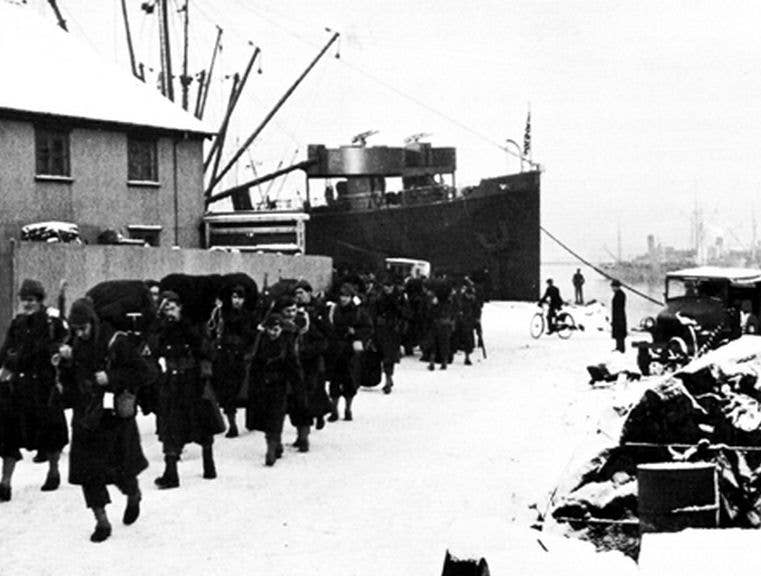
Photo from Wikimedia Commons, United States Army, public domain. No edits made.
By the end of that year, the US garrison had grown to about 38,000 personnel spread across some 300 camps and posts, with combined Allied strength peaking close to 40,000. For context, Iceland’s entire population at the time was only about 120,000.
The Americans took over major bases, expanded the airfields, and brought construction crews, supplies, and equipment on a scale Iceland had never seen. Iceland became a key refueling stop for aircraft being ferried to Britain and the Soviet Union, and a vital escort base for the North Atlantic convoys carrying food, fuel, and weapons to Europe.
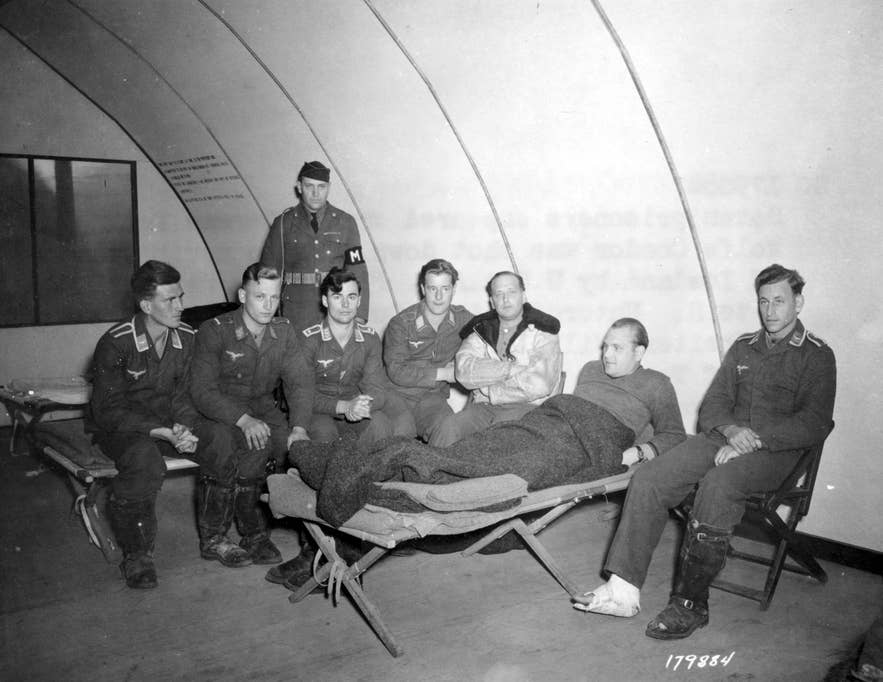
Photo from Wikimedia Commons, US Army Signal Corps Archive, public domain. No edits made.
USAAF units stationed in Iceland also flew active combat patrols over the North Atlantic, and engagements were not uncommon. In August 1943, USAAF fliers shot down a German Focke Wulf Condor off the north coast of Iceland and brought its seven surviving crew members to Camp Caledonia.
Construction of Keflavik Airfields and the Major Wartime Bases
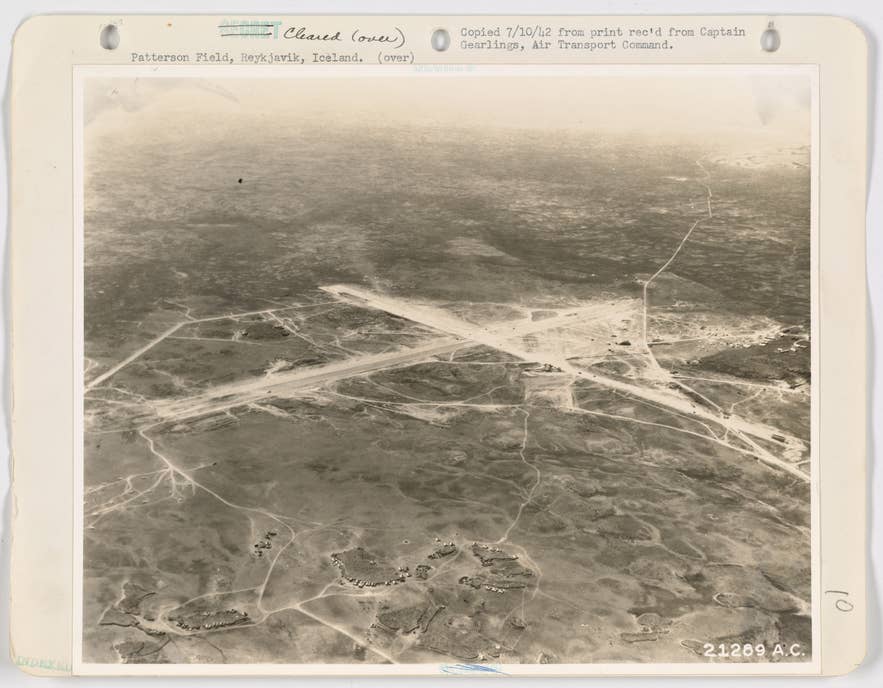
Photo from Wikimedia Commons, US National Archives and Records Administration, public domain. No edits made.
The most visible legacy of the war is at Keflavik on the Reykjanes Peninsula. US engineers built two airfields side by side: Patterson Field, opened in 1942, and Meeks Field, opened in March 1943. These served as military airbases and staging points for Atlantic aircraft ferrying, convoy air cover, and anti-submarine operations.
After the war, these airfields were combined and developed into what is now Keflavik International Airport, still Iceland’s main gateway today.
The base at Keflavik kept its military role long after the war ended. American forces largely left Iceland in 1947, returned in 1951 under a bilateral defense agreement (after Iceland joined NATO in 1949), and maintained a major presence through the Cold War.
The permanent U.S. base was closed in 2006, though Iceland continues to host NATO activities and occasional allied deployments. The former military housing area is now the Asbru district next to Keflavik, in the modern Reykjanesbaer municipality, with hotels, a campus, and businesses occupying the old barracks.
Other Key Wartime Bases in Iceland
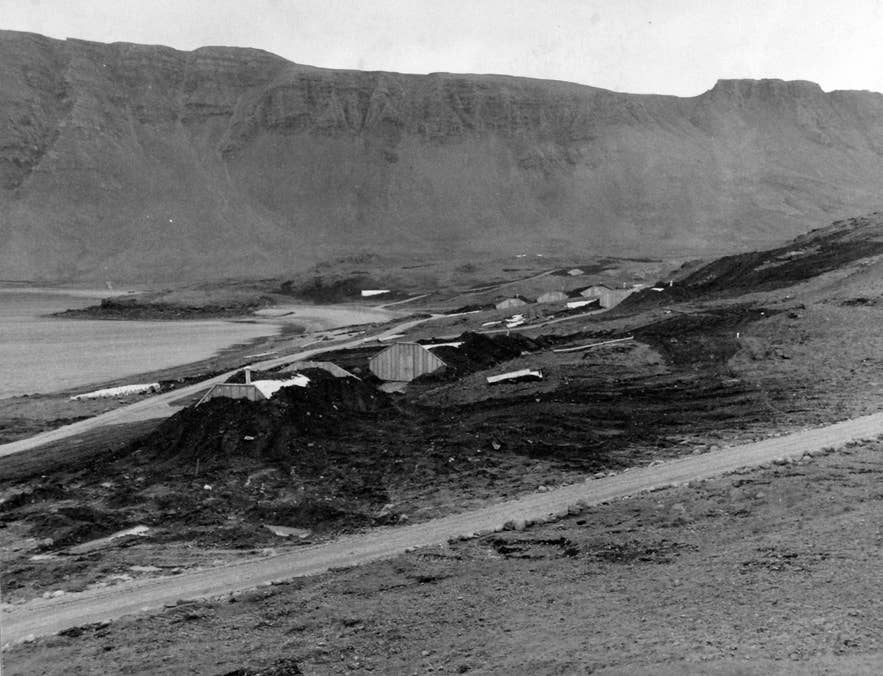
Photo from Wikimedia Commons, National Museum of the US Navy, public domain. No edits made.
Beyond Keflavik, the Allies built or expanded bases all around the coastline. Reykjavik Airport in the city center predated the war as a civil airfield. British forces used and expanded it during the occupation, and the camps surrounding it later gave their names to neighborhoods such as Camp Knox in the west of town.
Hvalfjordur Fjord on the west coast became the main British and American naval base in Iceland, with deep water and excellent shelter for the convoys assembling for the run to Murmansk in the Soviet Union.
Out east, the long fjord at Reydarfjordur Village sheltered thousands of Allied troops and became the largest Allied base outside the Reykjavik area, primarily for convoy assembly, repair, and logistics in East Iceland. Concrete bunkers, gun emplacements, and barracks foundations can still be found in all these areas.
Daily Life in Iceland During the Occupation
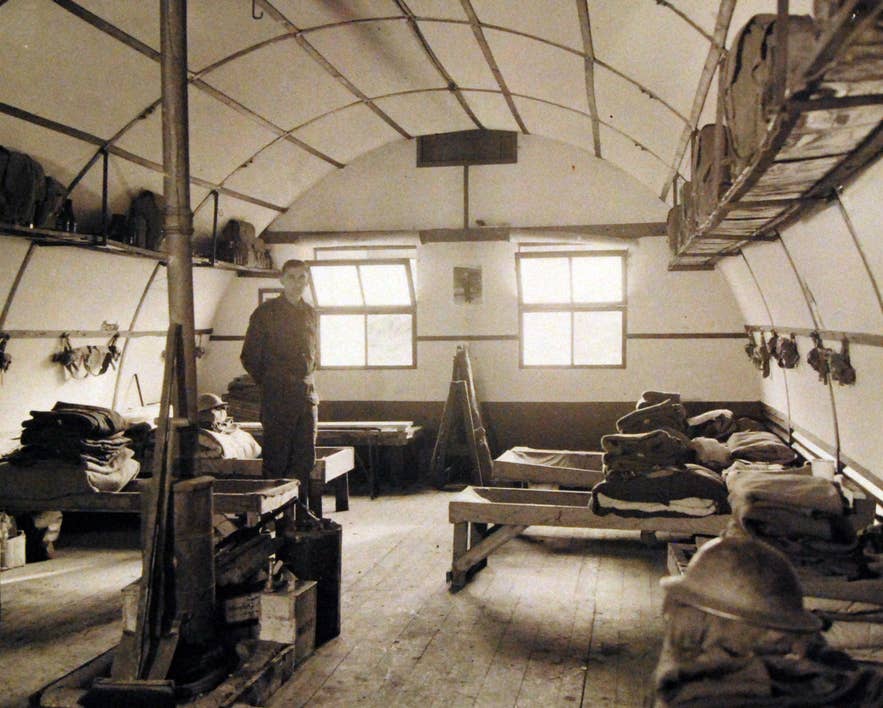
Photo from Wikimedia Commons, National Museum of the US Navy, public domain. No edits made.
For most Icelanders, the war did not bring fighting, but it did bring profound change. The pre-war years had been hard, with high unemployment and emigration to North America. Almost overnight, the arrival of tens of thousands of foreign soldiers created a massive demand for labor, services, and infrastructure.
Icelanders came to call the wartime period hin signuðu stríðsár, or the "Blessed War," a term that captured how the occupation-era boom lifted the country out of long-standing poverty.
The construction work itself was known as Bretavinnan, or "the British work," a term that originated with the early British occupation and expanded with large-scale American construction after 1941. By the end of the war, Iceland had transformed from one of the poorest countries in Europe to one of the wealthiest per capita.
The cultural impact was just as dramatic. Reykjavik is filled with new bars, dance halls, cinemas, and English-speaking soldiers.
International music, fashion, and language poured into a small, isolated society almost overnight. The post-war years saw Iceland firmly orient itself toward the United States and Western Europe rather than continental Scandinavia.
Astandid: Icelandic Women and Allied Soldiers
While Hollywood romanticized the dynamic in the 1942 romantic musical Iceland, casting the occupation-era social scene as lighthearted entertainment, the reality for many Icelandic women was considerably harsher.
The most controversial chapter of the wartime years is what Icelanders call Astandid, or “the Situation.” With Allied troops at one point numbering roughly half of the country’s native male population, many young Icelandic women began dating, befriending, and marrying foreign soldiers.
A few hundred Icelandic women are recorded as marrying Allied servicemen during the war (commonly cited between 250 and 450, depending on the source), while several thousand are reported to have had shorter relationships. Exact counts remain uncertain.
Children fathered by foreign troops were referred to as astandsborn, meaning "children of the situation," a term that captured the lasting social consequences of the occupation on Icelandic family life.
The Icelandic establishment responded with alarm. The government formed a state committee to investigate the issue, passed laws restricting contact between underage girls and soldiers, and set up a special juvenile court.
Some young women were placed under surveillance, summoned for medical examinations, or sent to a girls’ home at Kleppjarnsreykir in the west of the country. They were often publicly shamed in newspapers, with the women treated as the problem rather than the soldiers.
In recent years, this chapter has been re-examined as state-sponsored persecution of young women. Icelandic documentaries, books, and journalism have shed light on the personal stories behind Astandid, and the women involved are now widely seen as victims of moral panic rather than wrongdoers.
It remains one of the most controversial legacies of the wartime occupation in Iceland today.
Iceland Declares Independence in 1944
As the occupation reshaped Icelandic society from within, the war years were also quietly accelerating the country's long push for full political independence.
While Iceland was under Allied occupation, the Kingdom of Denmark was under German occupation. With Copenhagen unable to govern Iceland, Icelanders moved to take their independence into their own hands.
A national referendum held in May 1944 asked two questions: should the Act of Union with Denmark be terminated, and should Iceland become a republic?
Both passed by overwhelming margins: 99.47% voted to end the union with Denmark, and 95.04% voted in favor of a republican constitution, on a voter turnout of approximately 98%.
On June 17, 1944, at the ancient parliament site of Thingvellir National Park, the Republic of Iceland was formally declared, and Sveinn Björnsson was elected as its first president.
The date was not chosen by accident. June 17 is the birthday of Jón Sigurðsson, the 19th-century leader of the Icelandic independence movement, and it remains Iceland’s national day today.
Despite the awkward timing for Denmark, King Christian X of Denmark sent a conciliatory congratulatory message to the new republic.
Icelanders Who Died in World War II
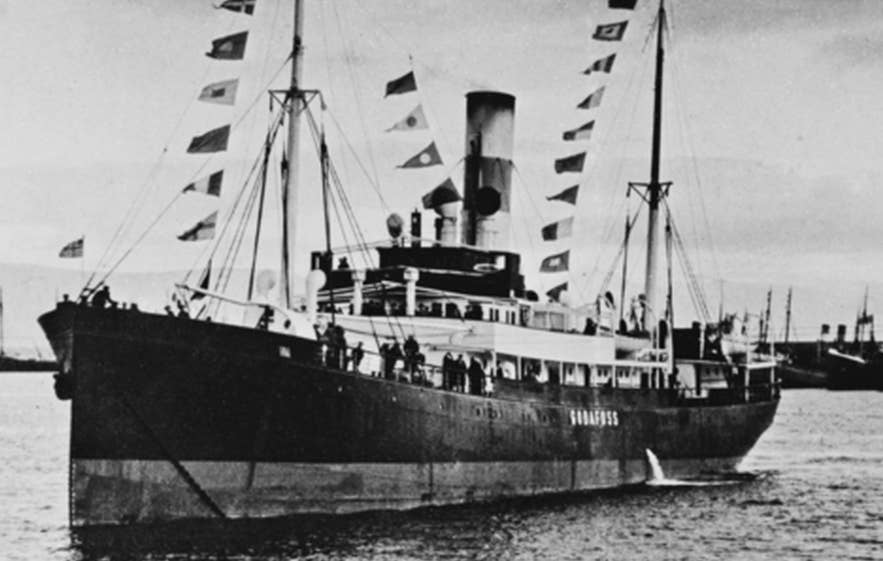
Photo from Wikimedia Commons, sourced from Ankerherz Verlag, public domain. No edits made.
Although Iceland never fielded an army and saw no land battles, the country did lose around 230 people during the war. Almost all of them were merchant marines, fishermen, and crew members on Icelandic ships sunk by German U-boats or mines while carrying fish and supplies to Britain.
One of the most devastating single losses was the sinking of the SS Godafoss, a cargo ship with passenger berths, off Gardskagi on November 10, 1944. The ship had stopped to rescue 19 survivors from the burning British tanker Shirvan, which had already been struck by U-300, when the same submarine struck again.
Of the 62 people on board (43 Icelanders and 19 British survivors already rescued from a tanker), around 24 died, making it the single greatest loss of Icelandic life in one day during the war as reported in Morgunblaðið, Issue 318 (23.11.2003).
World War II Sites in Iceland You Can Visit Today
 For history-minded travelers, Iceland offers a surprising amount of wartime heritage to explore. The sites below are listed in order of how easy they are to reach, starting with Reykjavik and the airport area and working outward.
Reykjavik Sights With a World War II Story
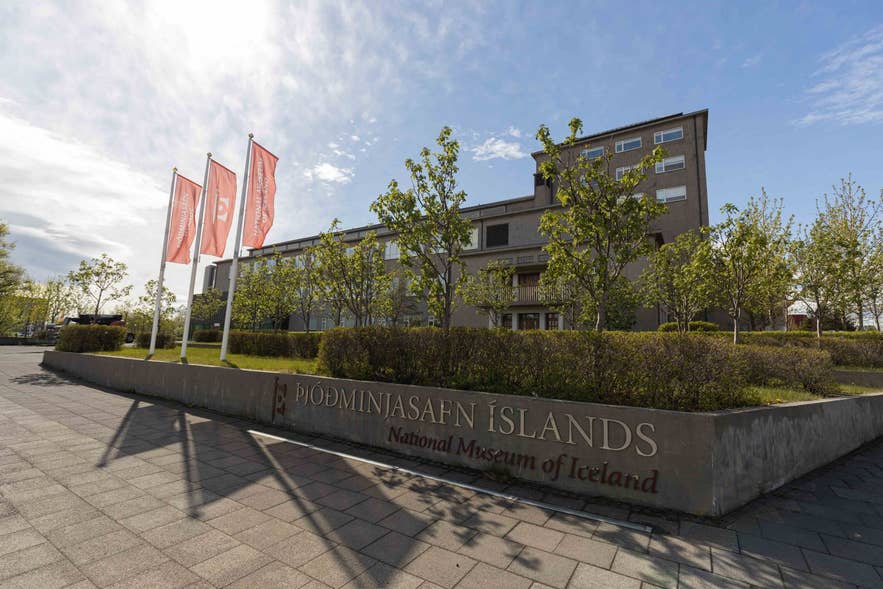 Most travelers spend at least part of their trip in Reykjavik City, and the capital is the best place to start. The National Museum of Iceland and the Reykjavik City Museum both cover the wartime years in their permanent exhibitions.
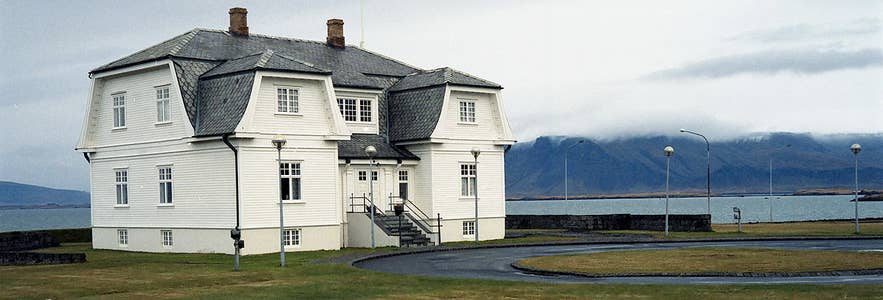
The Hofdi House on the seafront, best known today as the site of the 1986 Reagan-Gorbachev summit, was already a notable building during the war and is part of most city walks. Camp Knox in the west of the city is now a residential neighborhood, but the name lives on, and a few foundational remains can still be seen.
The Reykjanes Peninsula and Keflavik Airport Area
Every traveler who flies into Iceland lands on the Reykjanes Peninsula, which makes the area’s wartime sites easy to fit into a first or last day. The Asbru district next to Keflavik International Airport is built directly on the old US Naval Air Station, and many of its hotels and shops occupy former barracks.
The area pairs naturally with a stop at the Blue Lagoon on the way to or from the airport, and a pre-booked Blue Lagoon Comfort admission is the easiest way to soak before or after a flight.
Hvalfjordur Fjord and the West Coast Bases
An hour's drive north of Reykjavik, Hvalfjordur Fjord was the main wartime anchorage for British and American warships. Today, the fjord is a quiet detour off the Ring Road, with the wartime piers, fuel depots, and bunker foundations still visible along the shore.
The War and Peace Museum brings the occupation period to life with original vehicles, uniforms, and exhibits, and is best visited on the Reykjavik War Tour. The fjord also pairs well with a visit to Glymur Waterfall at its head and makes an easy half-day add-on from the capital.
Icelandic Wartime Museum in Reydarfjordur
For travelers heading further afield, the dedicated Icelandic Wartime Museum (Íslenska stríðsárasafnið) in Reydarfjordur Village in the Eastfjords is the country’s most thorough WWII exhibition.
The museum sits in the area where the British built their largest base outside Reykjavik. The displays cover the daily lives of soldiers and Icelanders, original uniforms, vehicles, and weapons, plus a small theater showing wartime footage.
The remains of barracks and gun emplacements are visible in the hills above the town, making it a natural stop on Ring Road trips through East Iceland.
How to See Iceland’s World War II Sites on Your Trip
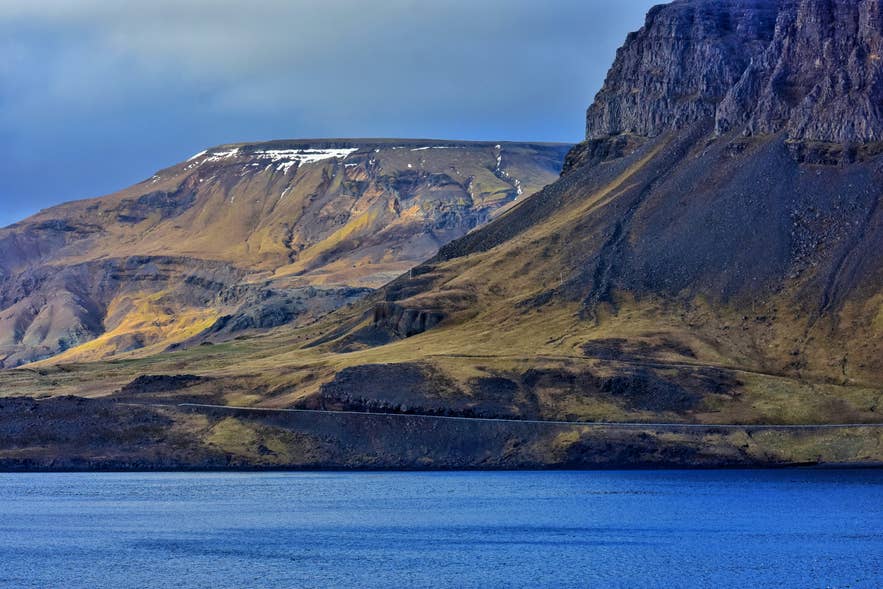 The simplest way to dig into Iceland’s wartime history is to join a guided Reykjavik WWII walking tour, which covers the key sites in the capital with a local guide who can fill in the social and political background. It pairs well with one of the broader day tours from Reykjavik, which can take you out to Hvalfjordur Fjord or along the Reykjanes Peninsula.
To reach the more remote sites, especially the Icelandic Wartime Museum, the most practical option is a self-drive tour along the Ring Road and the Eastfjords. You can also browse focused Eastfjords tours if you are basing yourself in that region.
Iceland in World War II: A Quiet Front That Changed Everything
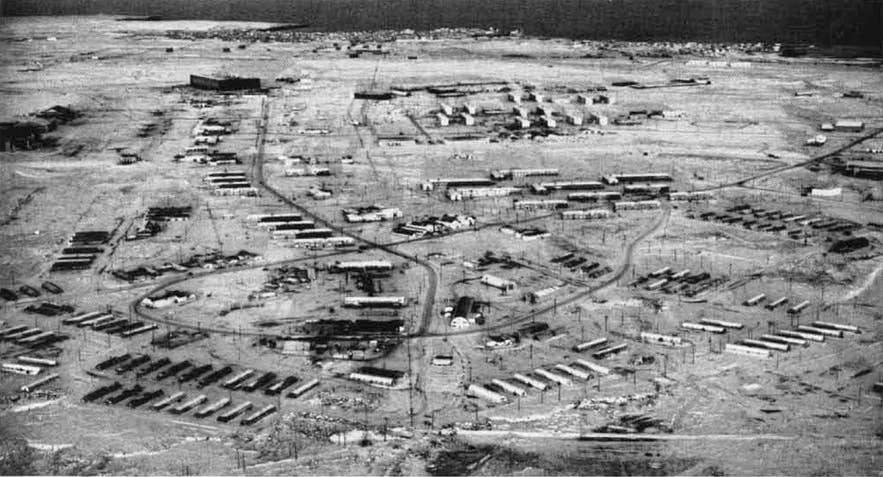
Photo from Wikimedia Commons, US Navy Naval Aviation News, public domain. No edits made.
Iceland was never a battlefield in the conventional sense, but its position in the North Atlantic made it one of the most strategically important islands of the war. The Allied occupation protected the convoy routes that kept Britain and the Soviet Union supplied, and it left behind airports, roads, and a transformed economy that modernized Iceland almost overnight.
We reached out to Sandra Gunnarsdóttir, a local historian, to reflect on what the wartime years meant for Iceland's longer trajectory. She points to the occupation as the final push toward independence, noting that Denmark's own occupation by Nazi Germany left it with little control over the situation.
The occupation created many new jobs for Icelanders, for example by building new roads and airports... Iceland had an economic boom which was partly thanks to the Marshall aid.
She notes that this combination of political independence, wartime infrastructure, and post-war economic support set Iceland on a path that would have been difficult to imagine in 1939.
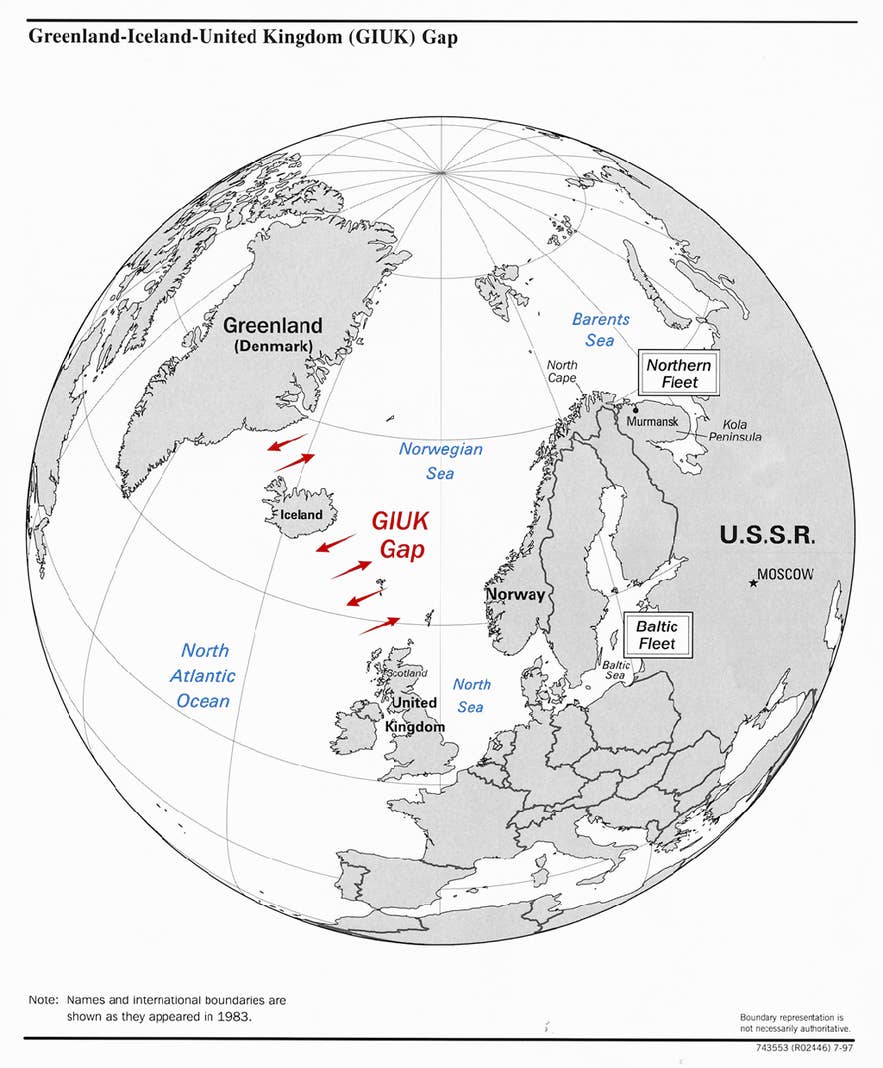
Map from Wikimedia Commons, Central Intelligence Agency, public domain. No edits made.
The wartime experience also shaped the country's Cold War path. Iceland joined NATO as a founding member in 1949 and signed a defense agreement in 1951 that returned US forces to Keflavik for decades. That presence finally ended in 2006, but the infrastructure, the institutions, and the international orientation those years brought have defined Iceland ever since.
The complete history of Iceland traces that longer arc, while the history of Reykjavik and the best museums in the country offer some of the most direct ways to encounter the wartime period in person.
Was Iceland invaded in World War II?
Which side was Iceland on in WWII?
What was Hitler's plan for Iceland?
Why is Iceland in NATO if it has no army?
What happened to Iceland after WWII?
Why did the US pull out of Iceland?
Did you visit any World War II sites on your trip to Iceland, or do you have a family story from the occupation years? Share your thoughts in the comments below, and let us know if you have any questions about Iceland’s wartime history or which wartime sites are worth visiting today.

I was born on the west side of Reykjavík and grew up downtown, so Iceland has been my back yard for most of my life. I'm a father of two, I've traveled on five continents, and I still haven't found a country that holds my attention the way this one does.
That's why I co-founded Guide to Iceland. We connect travelers directly with Icelandic operators, guides and hosts, so the advice and the services both come from people who actually live here.
I write about the practical side of a trip: what eating out in Reykjavík really costs, whether to pick Sky Lagoon or Hvammsvík, where to stop for food along the Ring Road, and which regions give you the best odds of clear skies for the northern lights. If you're planning a trip and something doesn't add up, message me.