Visit Reynisfjara Black Sand Beach, the world-famous volcanic shore on Iceland’s South Coast, known for its basalt columns and the dramatic Reynisdrangar Sea Stacks. Read on to learn how to reach it, when to go, and how to stay safe at the most dangerous beach in the country.
Reynisfjara Black Sand Beach sits beside the village of Vik, 117 miles (188 kilometers) from Reykjavik and about a 2.5-hour drive along the Ring Road. Known for its black sands, basalt columns, and Atlantic waves, it’s a must-see on South Coast tours.
Reynisfjara asks for more care than any other beach in Iceland. Sneaker waves surge much farther up the sand than they look like they will, and accidents have happened here. A warning light at the entrance shows how much of the shore is open on the day you visit. Check it before you walk down, and read the safety section just below.
Why You Can Trust Our Content
Guide to Iceland is the most trusted travel platform in Iceland, helping millions of visitors each year. All our content is written and reviewed by local experts who are deeply familiar with Iceland. You can count on us for accurate, up-to-date, and trustworthy travel advice. The safety, access, and public transport information on this page was last verified against RÚV, SafeTravel, and Strætó on 25 August 2026.
What draws people here in the first place is the sand itself. It’s black because of its volcanic origins, formed from lava that flowed into the ocean and was ground down by the waves over centuries.
Reaching it means a short turn off the Ring Road onto Route 215, which no bus serves, so most visitors either rent a car or join guided tours. If you’re driving, staying in nearby Vik gives you more time in the area and puts you within easy reach of the Jokulsarlon Glacier Lagoon further east.
Use this guide to plan the drive, pick your timing, and work out what the light at the entrance will let you see when you arrive.
Reynisfjara at a Glance
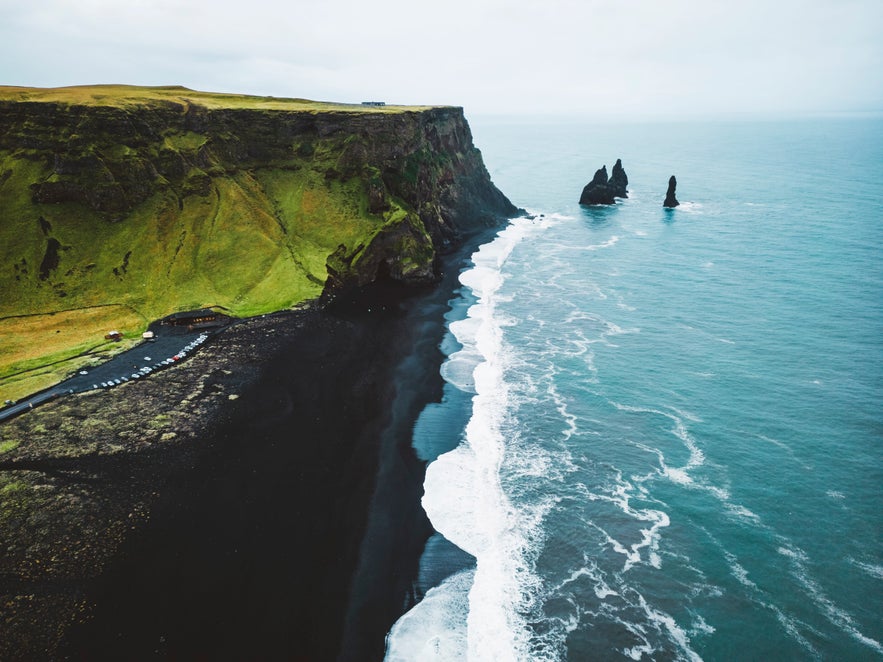 Here are quick facts about Reynisfjara Black Sand Beach.
| Location | Reynishverfisvegur (Route 215), off the Ring Road on Iceland’s South Coast. |
|---|---|
| Distance from Reykjavik | 117 miles (188 km), about a 2.5-hour drive. |
| Distance from Vik | 7 miles (11 km), about a 12-minute drive. |
| Opening hours | Open 24 hours. Access to the shoreline itself depends on the warning light at the entrance. |
| Parking | 1,000 ISK at the car park closer to the beach, or 750 ISK at the one further away. No entrance fee for the beach. |
| Public transport | No bus serves the beach. The nearest stop is in Vik, 7 miles (11 km) away, on Route 52. |
| Facilities | Restaurant and cafe by the car park. No restrooms on the beach, and the nearest are in Vik. |
| Safety | Sneaker waves have killed visitors here. The warning lights run yellow, orange, and red. On red, the beach closes, and the basalt columns and Halsanefshellir Cave are off limits. |
| Best for | Black sand, basalt columns, the Reynisdrangar Sea Stacks, seabirds in summer, northern lights in winter. |
Safety Tips for Visiting Reynisfjara Black Sand Beach
 Reynisfjara is one of Iceland’s most dangerous natural sites, and the risk is not obvious from the car park. Read this section before you walk down to the sand.
Why Reynisfjara Beach Is Dangerous
Sneaker waves surge far up the shore without warning, and lives have been lost here. The ocean can look calm minutes before a wave reaches the base of the cliff.
The most recent death was in August 2025, when a nine-year-old girl was swept into the sea. The warning light was yellow at the time, not red. That detail matters more than any other on this page.
What Reynisfjara's Warning Lights Mean
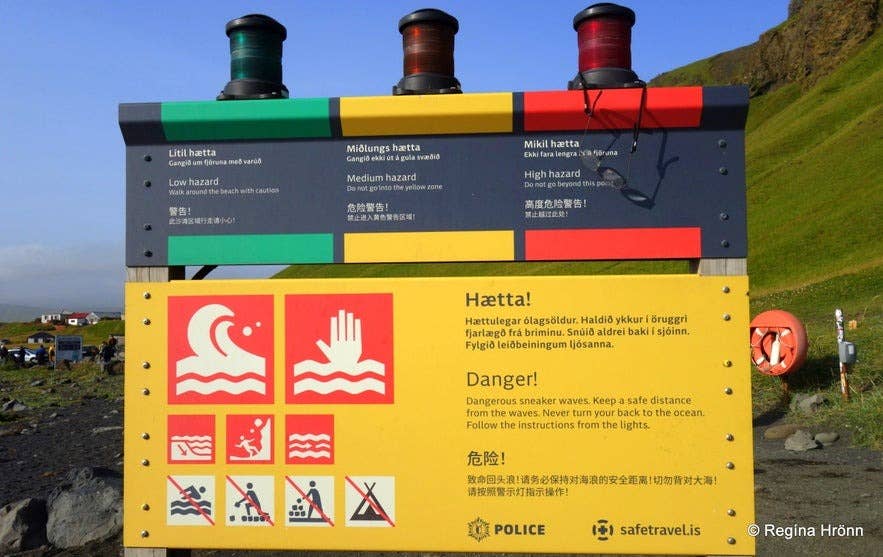 Warning lights at the entrance tell you what the sea is doing. There are three levels, and none of them means the beach is safe:
-
Yellow: moderate hazard. Stay alert and cautious.
-
Orange: considerable hazard. Stay at least 82 feet (25 meters) back from the sea.
-
Red: severe hazard. The beach is closed, but the designated viewing area above it stays open.
Check the light when you arrive, not before you leave, because conditions shift through the day. Look up the SafeTravel wave hazard forecast for Reynisfjara before you set out as well.
Local safety officers can also tighten access at short notice, whatever the light says, so respect any closures you find on the day.
New Access Rules at Reynisfjara Beach
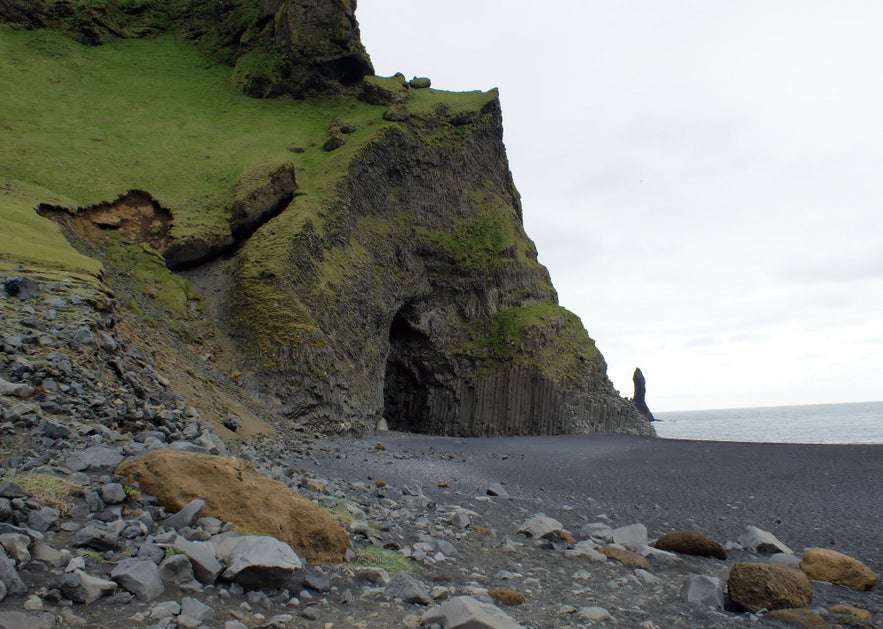 Two things changed after the 2025 death. The basalt columns and Halsanefshellir Cave are now off limits whenever the red light is flashing. The risk algorithm behind the lights was adjusted, so red now triggers earlier than it used to.
A gate was also installed at the viewing platform at the end of that summer. Plan for the possibility that the columns and cave are closed on the day you visit, even in otherwise calm weather.
How to Stay Safe at Reynisfjara Beach
Keep these rules in mind for the whole time you’re on the beach:
-
Stay well back from the water’s edge even on a yellow light.
-
Never turn your back on the ocean, even if it appears calm.
-
Watch for falling rock near the cliff face.
-
Keep children with an adult at all times and hold hands near the water, the rule parents repeat in our study of how good Iceland is for kids.
-
Never enter the water. The currents defeat strong swimmers, and would-be rescuers have died here.
The Halsanefshellir Cave deserves particular caution, because it offers no retreat inland if a wave comes in behind you. Reynisfjara is a place of great beauty, and it demands respect for its natural hazards to ensure a safe visit.
The 2026 Reynisfjara Erosion
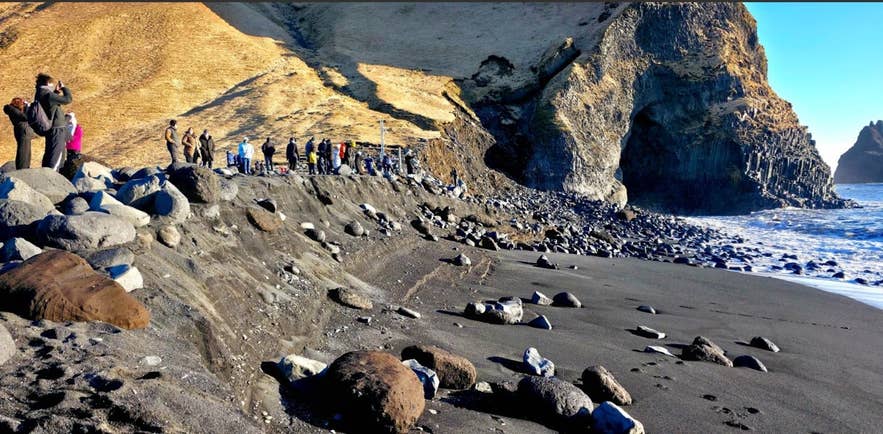
Photo from mbl.is, by Jónas Erlendsson. Reynisfjara on February 2, 2026.
In February 2026, Reynisfjara Black Sand Beach went through one of the most dramatic shoreline changes ever recorded at the site. A run of powerful storms stripped much of the sand off the beach, the coastline retreated far enough to reach the warning signs, and a large embankment collapsed off the slopes of Reynisfjall Mountain.
Headlines announced that the beach had vanished, which overstates it. By the start of March 2026, a great deal of sand had already returned, and the shoreline began working its way back toward its former appearance. You can see the recovery in the video above, posted on March 5th.
The episode is still worth understanding before you go, because the beach you find today may look nothing like the photos that put it on your list. Here is what caused the change and what it means on the ground.
What Caused Reynisfjara's Erosion
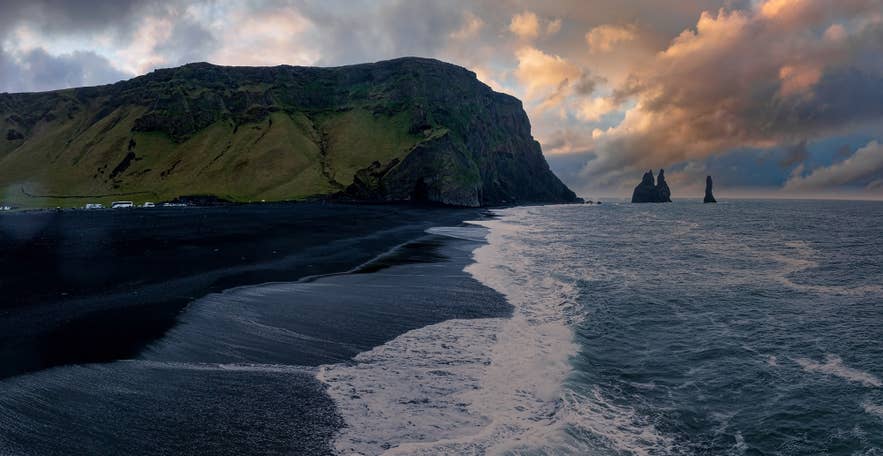 The main cause was an unusually long period of strong easterly winds over the winter of 2025 to 2026. These winds drove powerful waves toward the South Coast and pushed sand westward, cutting off the natural supply of new sand that normally arrives from the east.
In an interview with RÚV, Iceland’s national broadcast service, farmer and landowner Guðni Einarsson said the erosion was “by far the greatest that we have seen,” and that the sea had rolled large basalt boulders westward along the beach.
Much of that sand is believed to have settled closer to Dyrholaey. Guðni explained that “a few weeks of westerly winds” could help bring it back, and a coastal specialist at Vegagerdin, Iceland’s Road and Coastal Administration, agrees the beach should recover once the wind turns.
What Reynisfjara's Erosion Means for Your Visit
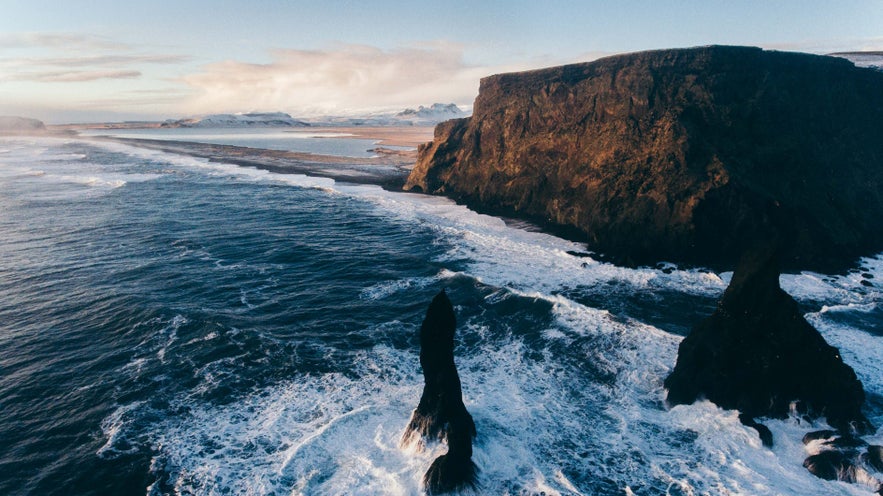 The Reynisdrangar Sea Stacks and the basalt columns are still there, and the columns did not collapse. How close you can get to them on any given day is set by the warning light at the entrance, not by the erosion.
What has changed is the footing. Boulders moved by the sea now sit across parts of the shore, and a narrower beach leaves less room to retreat from a wave. The landowners, who fund and carry out maintenance themselves, have been shoring up the viewing platform and warning signs with boulders cleared off the sand.
Travelers should keep in mind that Reynisfjara is a naturally shifting landscape. Photographs more than a year old are no longer a reliable guide to what you’ll find.
Top Things to See at Reynisfjara Black Sand Beach
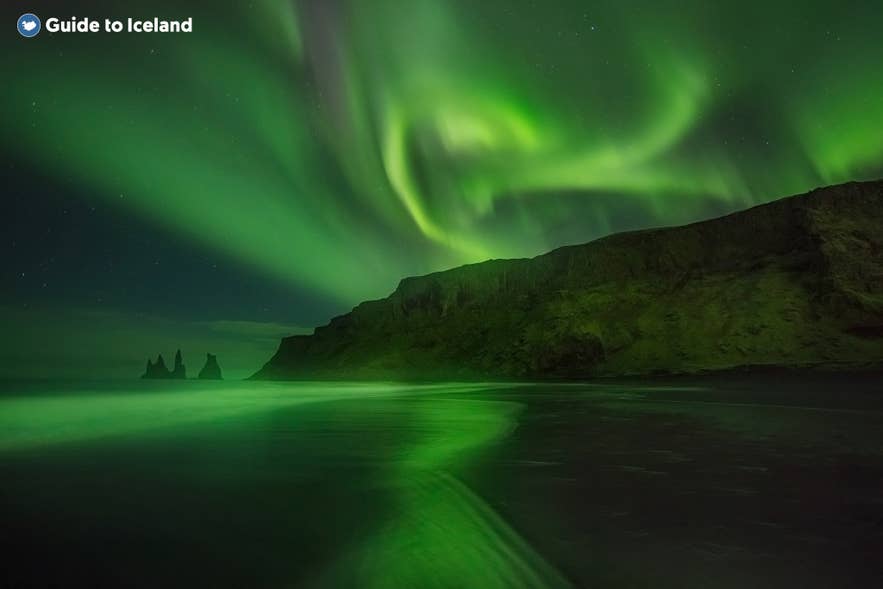 Reynisfjara packs an unusual number of features into one short stretch of coast. Here are the highlights worth your time, and the stories behind them.
1. The Volcanic Black Sand of Reynisfjara
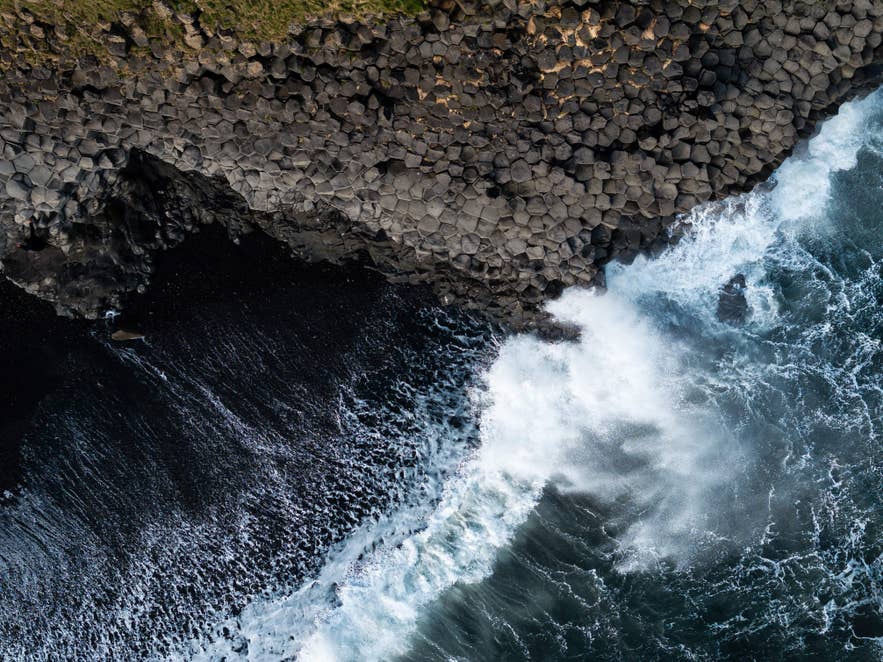 Reynisfjara is an example of a black sand beach, a landscape found all around Iceland. They’re formed from volcanic lava, creating a dramatic contrast against the powerful waves of the Atlantic Ocean.
Look closely, and you’ll see the sand is made of tiny basalt grains rather than the quartz of a tropical beach. The 2026 erosion also scattered large boulders across parts of the shore, so the footing is rougher than older photos suggest.
2. The Basalt Columns of Reynisfjall Mountain
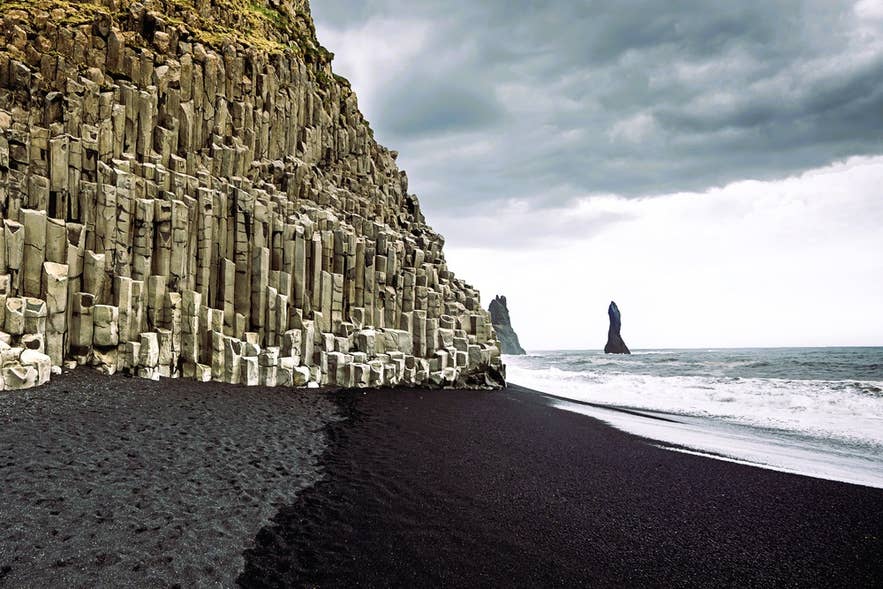
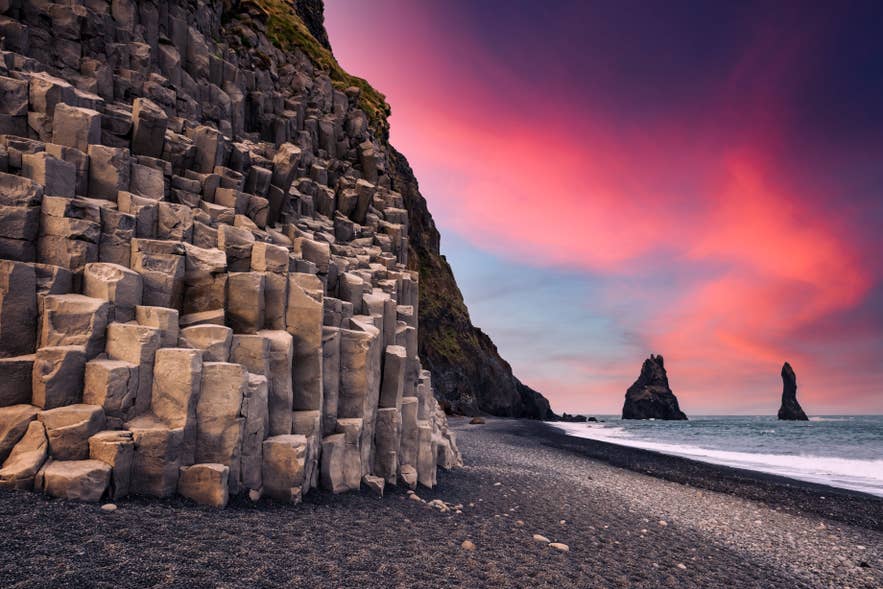 A standout feature of Reynisfjara is the towering basalt columns along the cliffs of Reynisfjall Mountain. These hexagonal rock formations were shaped by cooling lava and create an impressive backdrop for the beach.
Approaching the columns is prohibited whenever the red warning light is flashing, a rule introduced in August 2025. Climbing them damages the formations and is dangerous in any conditions, so admire them from a distance.
3. Halsanefshellir Cave
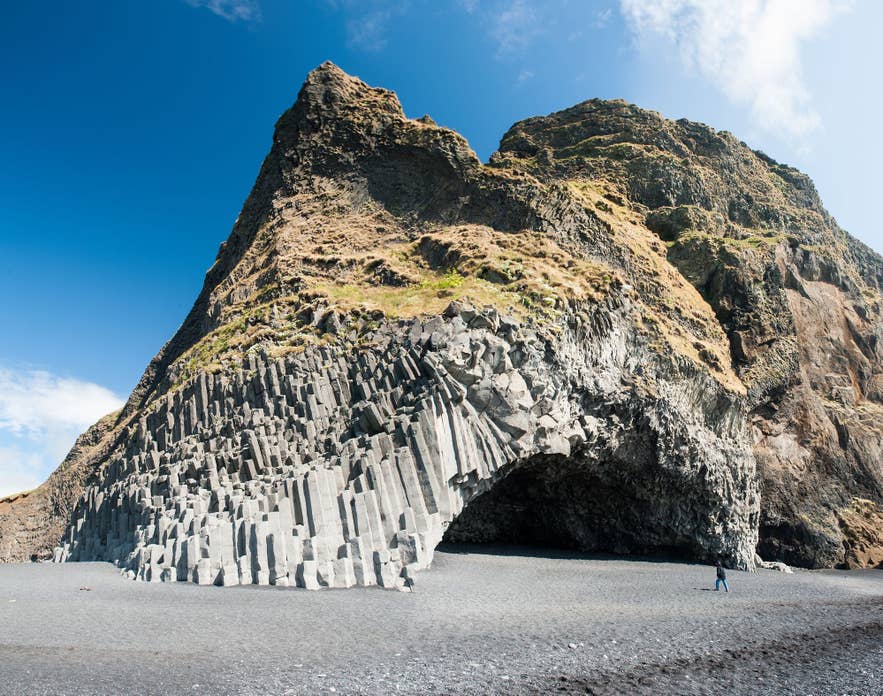 By the basalt columns, Reynisfjara features a cave known as Halsanefshellir Cave. It’s known for its fascinating basalt formations, with geometric rock patterns shaped by volcanic activity and erosion.
Visitors once entered the cave at low tide, but that is no longer permitted. Two separate rules now apply. Since August 2025, entering the cave has been prohibited whenever the red warning light is flashing. On top of that, the February 2026 erosion left the cave mouth exposed to the sea.
The distinction matters for anyone planning a trip. Sand returning to the beach will not by itself reopen the cave, because the red-warning closure is a standing rule that applies whenever conditions call for it.
4. The Reynisdrangar Sea Stacks and Their Troll Legends
Offshore, the Reynisdrangar Sea Stacks rise dramatically from the ocean, and they’re the first thing most visitors notice on reaching the shoreline. They can also be seen from Vik at a completely different angle, which makes an overnight stay in the village doubly worthwhile.
According to local folklore, these sea stacks were once trolls trying to pull ships from the ocean to shore. The trolls made the mistake of going out too late at night. Dawn broke on the horizon, and with the sunlight they turned into solid stone.
Another legend tells of a husband whose wife was kidnapped and killed by two trolls. The man followed them down to Reynisfjara, where he tricked them into staying out during the day, turning them into stone and ensuring they would never kill again.
5. A Game of Thrones Filming Location
In season 7 of HBO’s Game of Thrones, Reynisfjara stood in for the shore below Eastwatch-by-the-Sea, the fortress at the eastern end of the Wall. Episode 5 gives you the clearest look, when Jon Snow and his crew gather on the sand before heading north.
The Wall and the castle were added by computer, so the cliffs, columns, and sea stacks on screen are exactly what you see from the beach today.
Fans can build a whole route around this. The series filmed at more than a dozen Icelandic locations, several within an hour’s drive. Our guide to Game of Thrones filming locations in Iceland maps out the rest.
6. Puffins and Nesting Seabirds
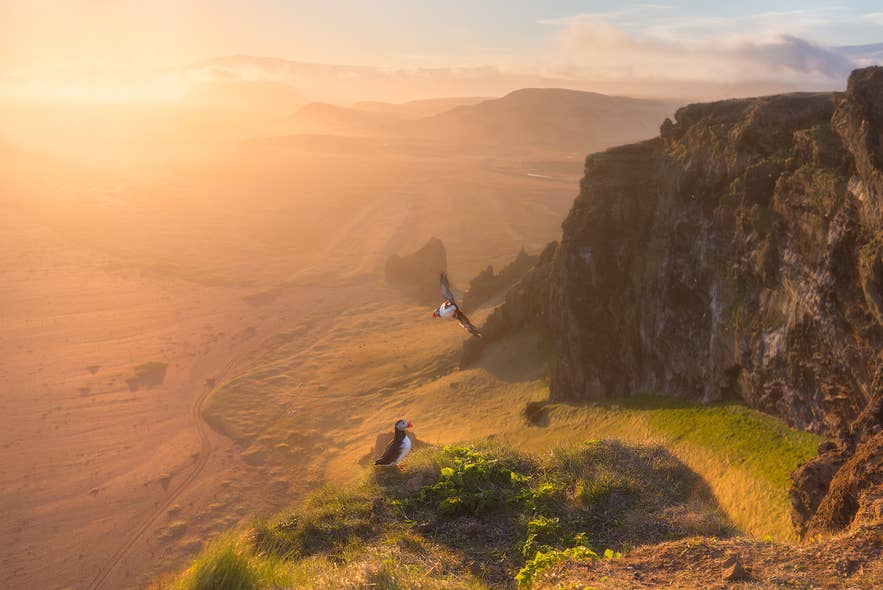 The cliffs and sea stacks are home to thousands of nesting seabirds, including puffins, fulmars, and guillemots. That makes Reynisfjara a rewarding stop for birdwatchers.
Puffins arrive in May and leave by mid-August, so a summer visit is your only chance to see them. Early morning and evening are the most active hours, because the birds spend the middle of the day out fishing.
Bring binoculars, because the birds nest high on the cliff faces and well out of easy camera range. For closer views, our guide to where to find puffins in Iceland ranks the colonies worth a detour. There are also birdwatching tours that put you within a few feet of a burrow.
Best Time to Visit Reynisfjara Black Sand Beach
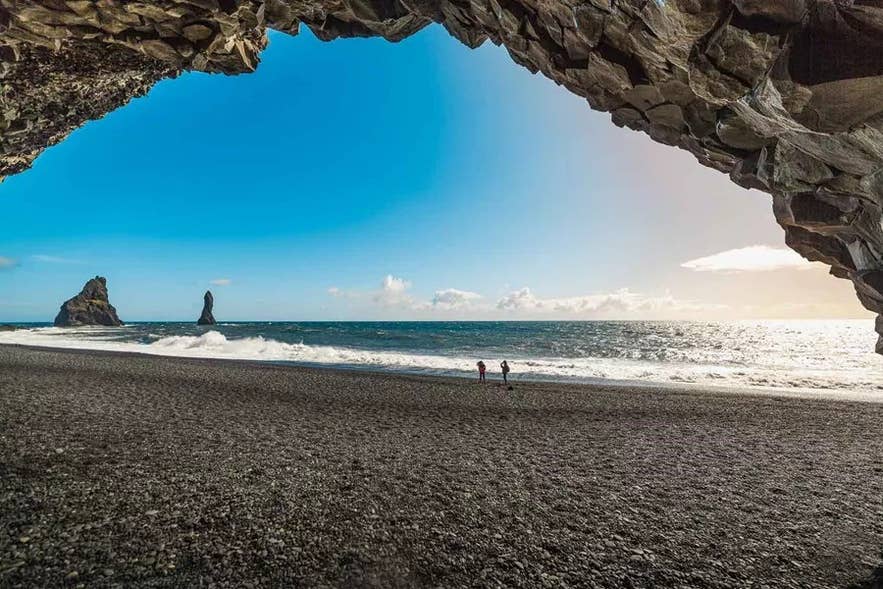 Reynisfjara is open all year, and the best time to visit depends on what you want from it. Daylight, crowds, and the odds of finding the warning light on red all shift with the season.
Here’s how each season compares:
-
Summer (June to August): mild weather, long daylight hours, and the calmest sea conditions of the year. This is the only window for puffins, and the best for the contrast of black sand against green cliffs. Expect the busiest car park.
-
Spring and autumn (April, May, September, October): fewer crowds and dramatic waves against the basalt columns, with enough daylight for a comfortable South Coast drive. A good compromise for photographers.
-
Winter (November to March): a moody, otherworldly landscape with a chance of northern lights overhead. Daylight is short, storms are frequent, and this is when the light is most likely to be red.
Time of day matters as much as season. Early morning and late evening bring the softest light and the emptiest sand, and tour buses tend to arrive in a cluster around midday.
Whenever you go, check the warning light and the wave hazard forecast before you set out, because the beach is known for its dangerous sneaker waves.
How to Get to Reynisfjara Black Sand Beach
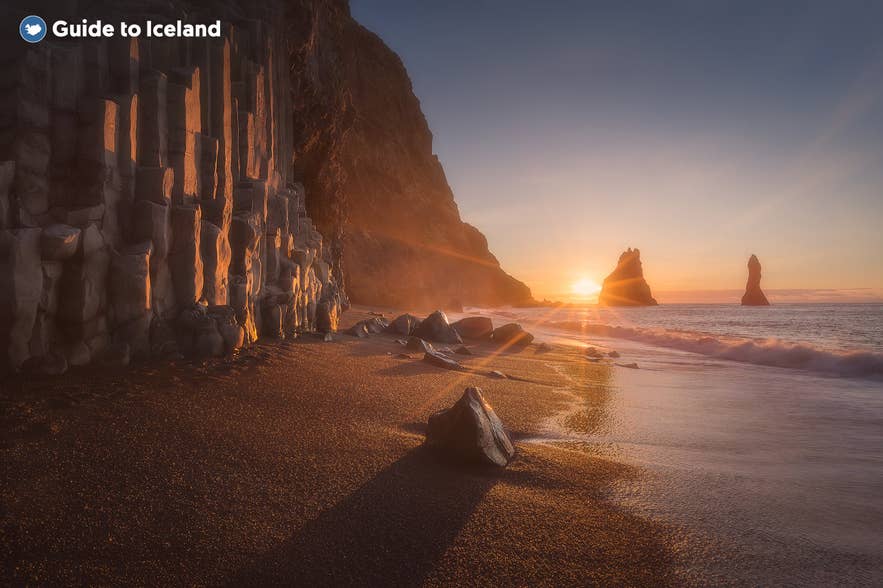
Reynisfjara sits at the end of Route 215, a short paved side road off the Ring Road. The turn is easy to miss, and no public bus goes down it, so knowing the route in advance saves a wrong turn or two. Here’s exactly how to get there.
Driving to Reynisfjara From Reykjavik
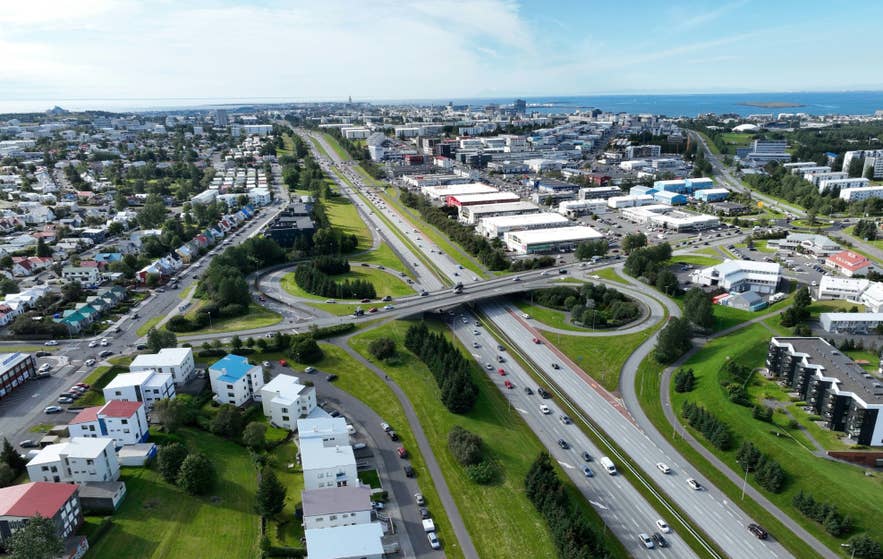 Head east out of Reykjavik on Route 1, the Ring Road, passing through Hveragerdi, Selfoss, Hella, and Hvolsvollur. The road then runs along the South Coast past Seljalandsfoss Waterfall and Skogafoss Waterfall.
Two signed turnoffs come in quick succession as you near Vik. Route 218 leads to Dyrholaey Rock Arch and comes first, so keep going and take the second one, Route 215, marked Reynishverfisvegur.
From there it’s roughly 3.5 miles (5.5 km) down to the car park, ending at the shore. The whole drive is 117 miles (188 km) and takes about 2.5 hours without stops, though almost nobody drives the South Coast without stopping.
Driving to Reynisfjara From Vik
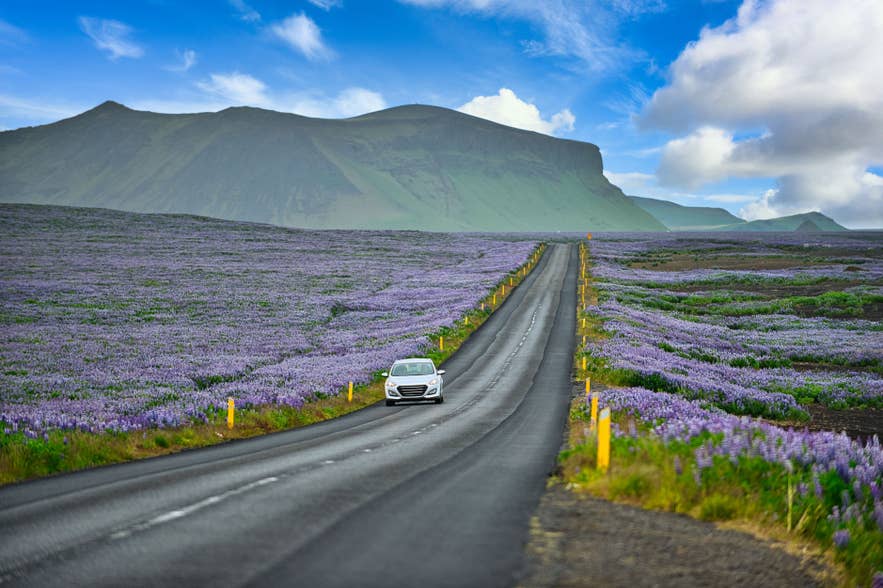 If you’re staying in Vik, drive west on Route 1 for about 3 miles (5 km), then turn left onto Route 215 and follow it to the end. The full trip is 7 miles (11 km) and takes about 12 minutes.
Route 215 is paved and suitable for any two-wheel-drive car year-round. It's exposed to the wind, though, and this stretch of coast counted more storm days than anywhere else in our study of the windiest and least windy months in Iceland. Open car doors carefully and check road conditions before setting out in winter.
Parking at Reynisfjara Black Sand Beach
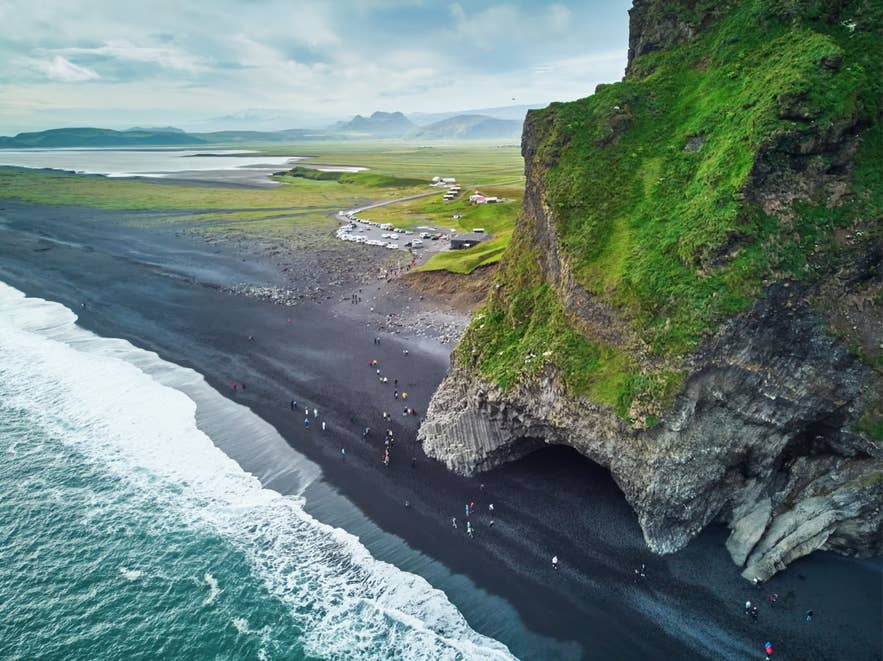 There are two car parks. The one closer to the beach costs 1,000 ISK, and the one further back costs 750 ISK. There’s no entrance fee for the beach itself.
The landowners run and fund the car parks along with all site maintenance, including the viewing platform and warning signs. Payment is taken on site, and the closer car park fills up fast in summer.
Reaching Reynisfjara by Public Bus
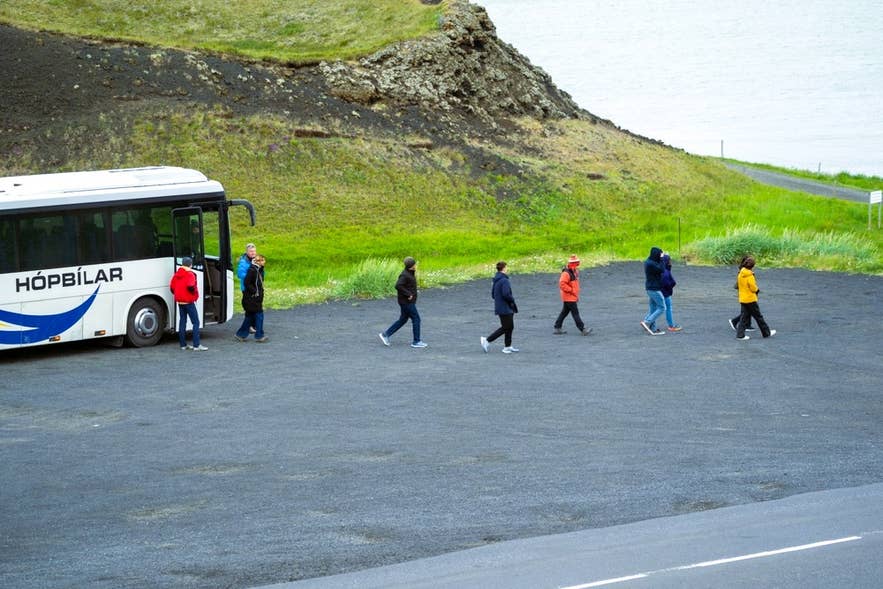 No bus goes to Reynisfjara. The nearest stop is in Vik, 7 miles (11 km) away, and there’s no onward service down Route 215, so you’d need a taxi, a tour, or a rental car for that last leg.
The bus that reaches Vik is Route 52, running between Reykjavik and Hofn. It replaced the old Route 51 service along this coast in January 2026, so older guides naming Route 51 are out of date. Here’s what to know:
-
It runs four days a week, on Tuesdays, Thursdays, Fridays, and Sundays.
-
Eastbound, it leaves Mjodd terminal in Reykjavik at 2:21 PM and reaches Vik at 5:00 PM.
-
Westbound, it leaves Vik at 5:20 PM and gets back to Mjodd at 7:59 PM.
Those two times are only 20 minutes apart, which means a same-day bus trip from Reykjavik isn’t possible. Anyone traveling by bus needs to stay overnight in Vik and visit the beach the following day.
For most travelers, a guided tour or a rental car is far simpler. Confirm current timetables on the Straeto site before you rely on the bus, as rural schedules change seasonally.
Tours That Visit Reynisfjara Black Sand Beach
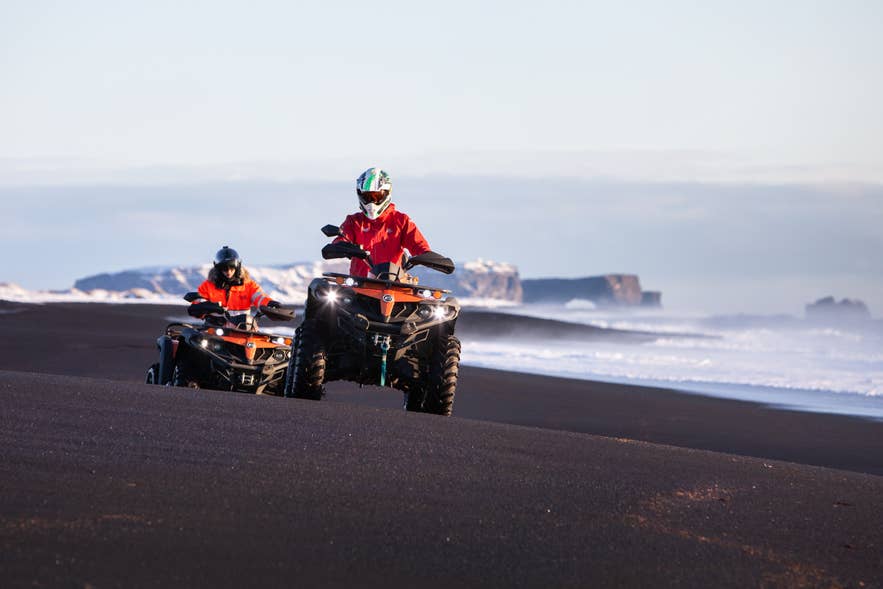 Reynisfjara appears on most South Coast tours, so you have plenty of ways to visit without driving yourself. The options below start with a single day out of Reykjavik or Vik and build up to full trips around the country. South Coast tours score above the average for all Icelandic day tours and trail only the Golden Circle in review volume, based on how Iceland’s tours compare on review scores.
Guided Day Tours to Reynisfjara Beach
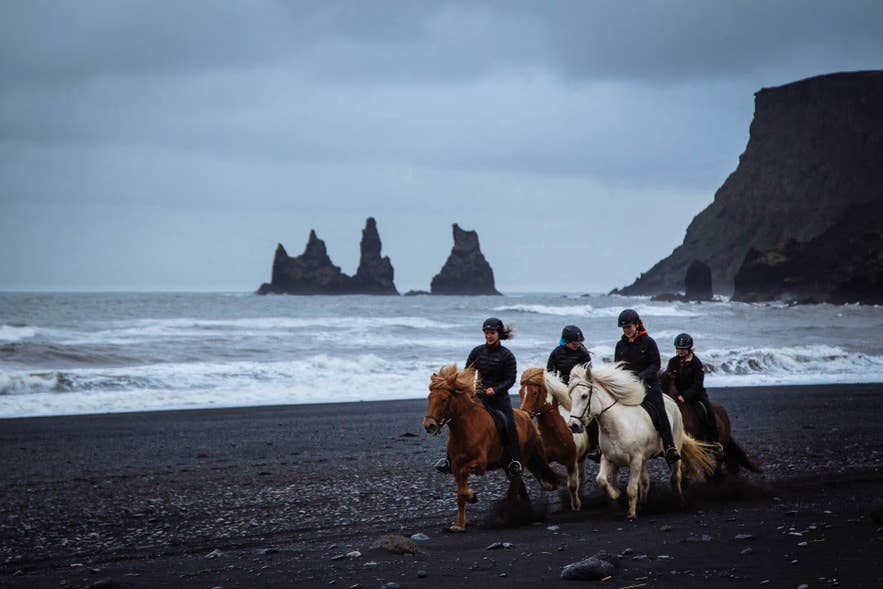 Day tours from Reykjavik take the 2.5-hour drive off your hands, and your guide reads the warning light and the surf so you don’t have to judge the conditions yourself.
-
South Coast Day Tour: Visit Reynisfjara and other South Coast highlights like Seljalandsfoss, Skogafoss, and Dyrholaey. Enjoy comfortable transportation and expert insights from local guides.
-
South Coast Glacier Tour: Hike Solheimajokull Glacier and visit Reynisfjara, Seljalandsfoss, and Skogafoss with a guide, all in one day from Reykjavik.
Tours from Vik work differently. They run out across the volcanic sands themselves, so you cover ground that a stop at the car park never reaches.
-
Horseback Riding Tour on a Black Sand Beach: Ride Icelandic horses across black sand and lava fields, and experience their unique tolt gait.
-
Black Sand Beach Buggy Tour: Drive a buggy along volcanic sands and sea cliffs for an adrenaline-filled ride through Vik’s striking landscapes.
Guided Multi-Day Tours Featuring Reynisfjara Beach
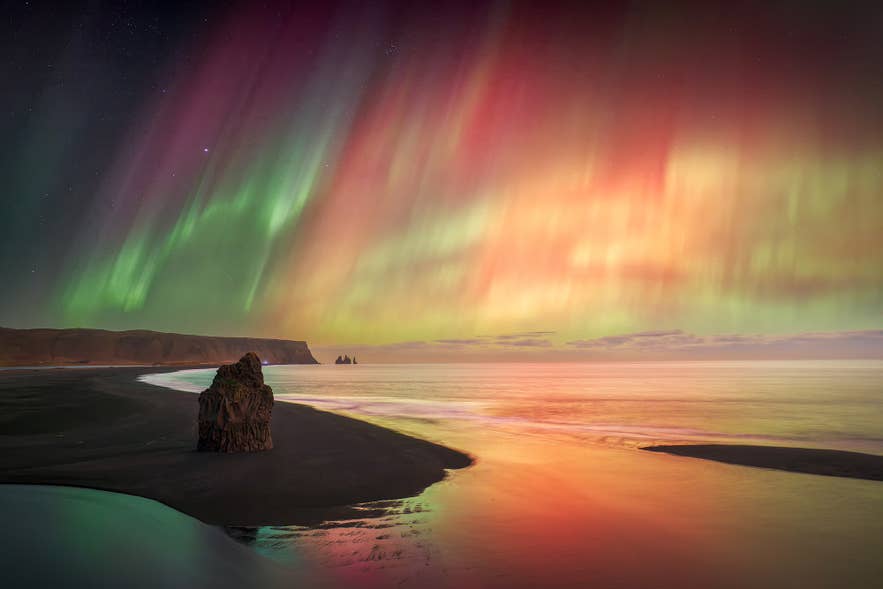 Multi-day tours suit travelers who want to explore the whole South Coast with a guide and stay overnight in Vik or nearby towns.
These are the most popular winter tours:
-
2-Day Winter Tour: Visit Reynisfjara and a blue ice cave, with accommodation and transportation included for an unforgettable winter experience.
-
3-Day Winter Tour: Delve deeper into Iceland’s South Coast with visits to Reynisfjara, Jokulsarlon Glacier Lagoon, ice caves, and prime spots for northern lights hunting.
-
6-Day Winter Tour: A comprehensive journey featuring the South Coast, Golden Circle, and blue ice caves, with plenty of opportunities to see the aurora borealis.
Guided summer tours cover the same ground with longer daylight and easier road conditions:
-
2-Day Guided Summer Tour: Visit South Coast highlights like Seljalandsfoss, Skogafoss, Reynisfjara, and Jokulsarlon Glacier Lagoon, with a glacier hike and lagoon boat ride.
-
6-Day Guided Summer Tour: Explore the South Coast and Golden Circle, including Reynisfjara, waterfalls, volcanic sites, and coastal views, across 6 days and 5 nights.
-
One-Week Guided Ring Road Adventure: Circle Iceland’s Ring Road, covering Reynisfjara, the Golden Circle, Akureyri, and Myvatn, plus waterfalls, glaciers, and volcanic landscapes.
Vacation Packages Including Reynisfjara Beach
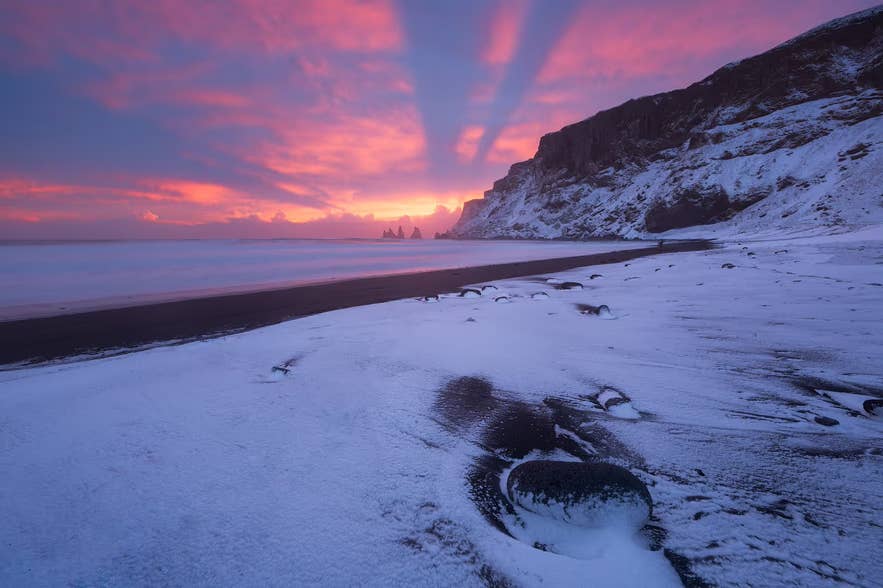 Vacation packages combine hotel stays, airport transfers in Reykjavik, day tours, tickets like the Blue Lagoon, and multi-day guided tours to Reynisfjara. They give you a complete trip without any driving.
These are the most popular winter packages that visit the beach:
-
5-Day Winter Package: A compact option that includes visits to Reynisfjara, blue ice caves, and northern lights excursions.
-
6-Day Winter Package: A slightly longer itinerary offering a more in-depth exploration of Iceland’s South Coast and Golden Circle.
-
7-Day Winter Package: The ultimate winter experience, combining South Coast highlights, ice cave adventures, and breathtaking northern lights tours.
Summer packages cover the same ground with the midnight sun overhead, and the calmer sea means a better chance of finding the beach fully open. These two include Reynisfjara:
-
5-Day Summer Package: Guided tours of the Golden Circle and South Coast, with Reynisfjara, Seljalandsfoss, Skogafoss, and Jokulsarlon Glacier Lagoon.
-
6-Day Summer Package: Adds Reykjavik city time and the Snaefellsnes Peninsula to the South Coast and Golden Circle route.
Self-Drive Tours Stopping at Reynisfjara Beach
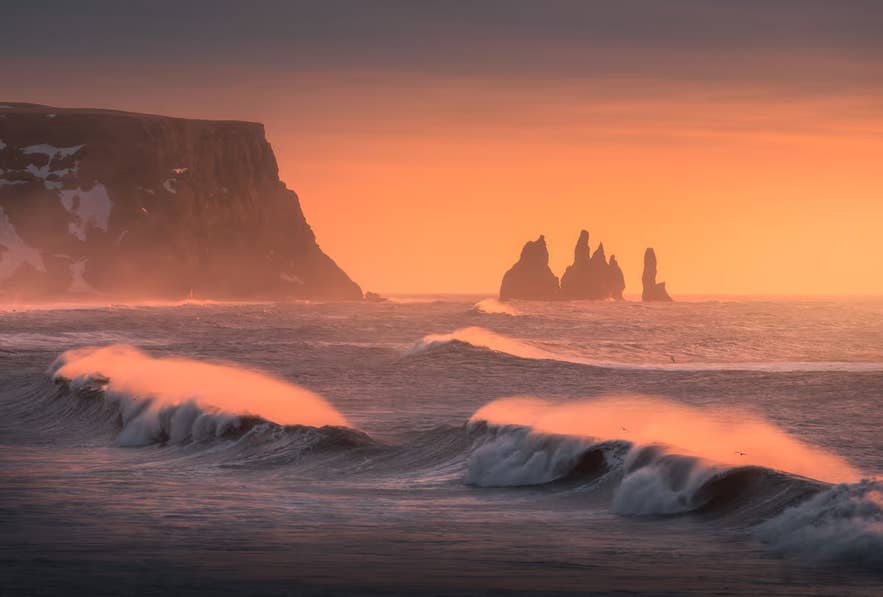 Self-drive tours in Iceland bundle your car and accommodation with a set route, so you keep the flexibility of driving yourself without planning every night. Reynisfjara is a standard stop on the South Coast leg.
Enjoy clear roads and long daylight hours on summer self-drive tours, which pair the beach with stops at Seljalandsfoss, Skogafoss, and Dyrholaey:
-
One-Week Summer Self-Drive: A balanced itinerary for travelers with limited time, focusing on South Coast highlights and the Golden Circle.
-
10-Day Summer Self-Drive: An extensive journey covering Iceland’s South Coast, Golden Circle, and other top attractions, including Reynisfjara.
-
Two-Week Summer Self-Drive: The ultimate Iceland adventure, taking you around the entire Ring Road and including iconic landmarks like Reynisfjara, Jokulsarlon Glacier Lagoon, and Diamond Beach.
Witness the beach under a blanket of snow on winter self-drive tours, which add seasonal highlights like ice caves and northern lights hunting. Always check road conditions before each leg:
-
6-Day Winter Self-Drive: A shorter itinerary ideal for winter travelers, focusing on Reynisfjara and other South Coast gems.
-
7-Day Winter Self-Drive: A detailed exploration of Iceland’s winter landscapes, featuring visits to blue ice caves and other seasonal highlights.
-
One-Week Winter Self-Drive: Experience the beauty of Iceland’s South Coast, including Reynisfjara, while chasing the northern lights.
If you prefer to plan it all yourself, you can rent a car and use this guide to stops along the South Coast and Ring Road to build your own route.
Where to Stay Near Reynisfjara Black Sand Beach
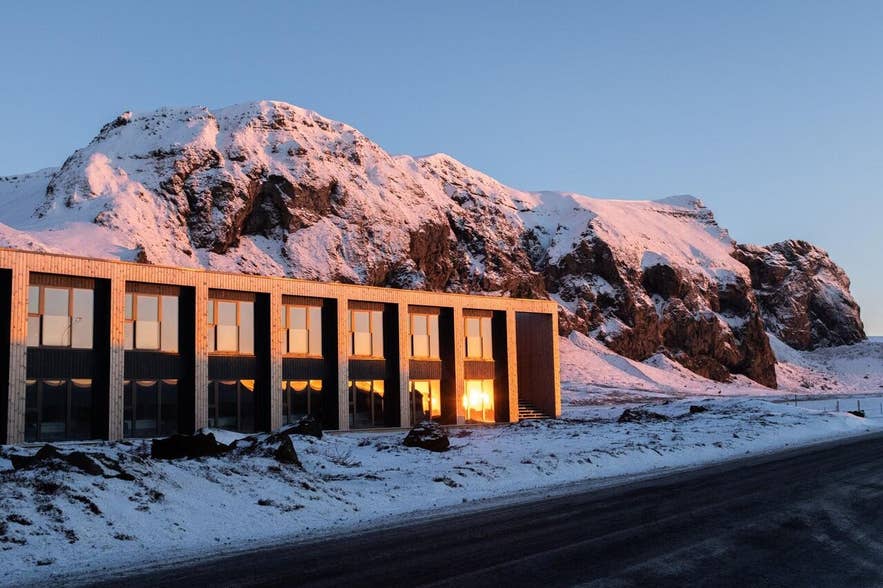 Stays near Reynisfjara are the surest way to catch the beach early or late in the day, when the car park is quietest. Book between June and September well ahead, as rooms near Vik fill up fast.
Accommodations Closest to the Beach
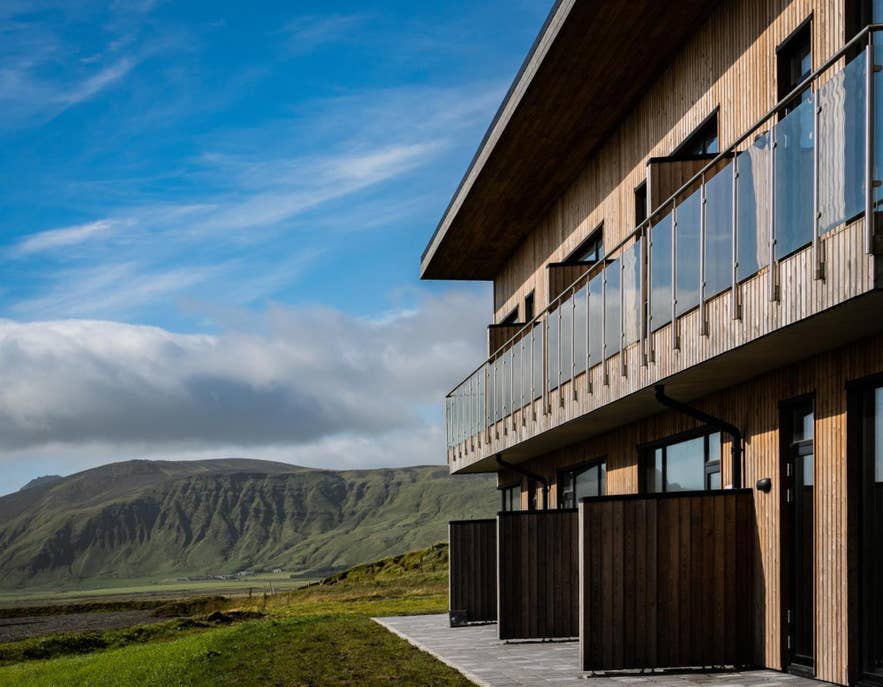
Just outside Vik, a small cluster of properties sits about a five-minute drive from Reynisfjara, closer than the village center. These two stand out:
-
Black Beach Suites: This accommodation offers modern, spacious apartment-style rooms with stunning views of the ocean and the black sand landscape. It’s ideal for those seeking comfort and a touch of luxury close to the beach.
-
The Barn Hostel: A budget-friendly option in the same area, offering both private rooms and dormitory-style accommodations. This is perfect for travelers looking for affordability and a social atmosphere.
Hotels in Vik
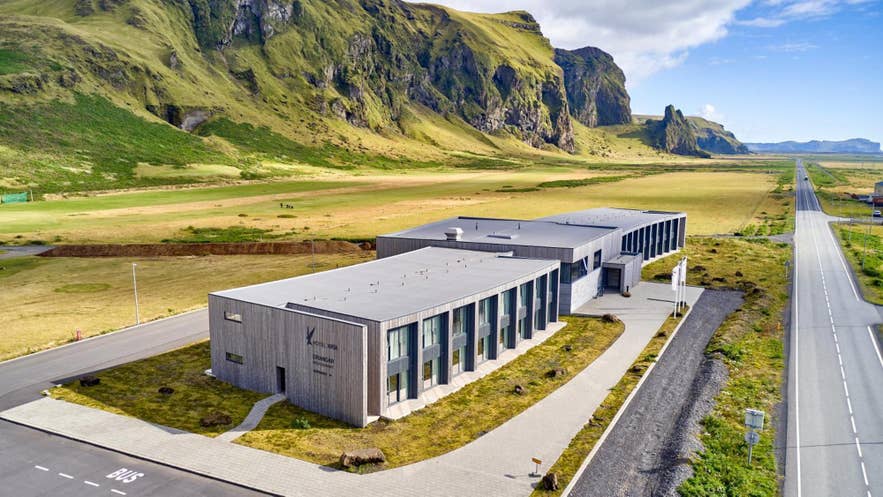 Just a 12-minute drive from Reynisfjara, the village of Vik has the largest choice of rooms in the area. See all accommodations in Vik, or start with these:
-
Hotel Kria: A popular 3-star hotel with stylish rooms, an on-site restaurant, and proximity to Vik’s main attractions.
-
Hotel Vik I Myrdal: Another 3-star favorite, offering cozy rooms and excellent service, ideal for those who want to stay in comfort while exploring the South Coast.
-
Hotel Dyrholaey: A large 3-star hotel on the South Coast, offering 150 comfortable rooms, a well-equipped gym, and an in-house restaurant.
-
Hotel Burfell: A cozy 20-room countryside hotel that resembles a farmhouse, located on the outskirts of Vik.
Camping in Vik
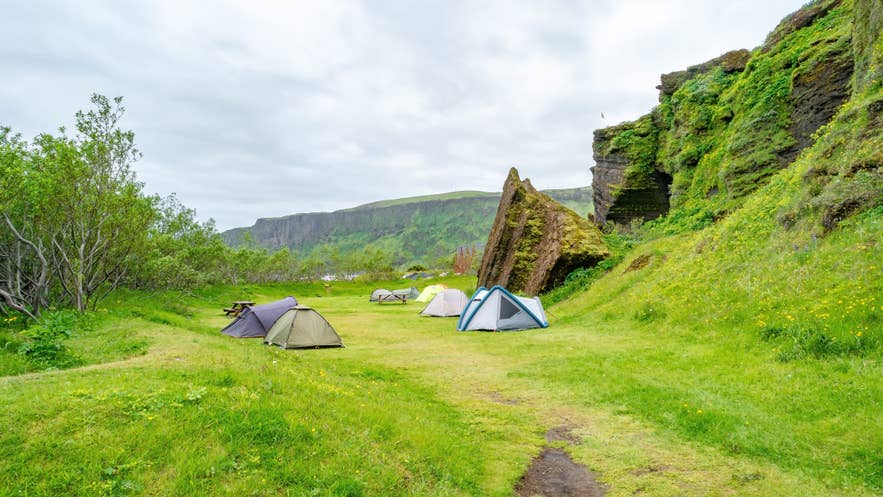 Vik Campsite sits a 12-minute drive from Reynisfjara, so renting a campervan puts you within reach of Reynisfjara at both ends of the day.
That matters here more than at most attractions. If the light is red when you arrive, you can come back the next morning without losing a hotel booking or redrawing your route.
Campervans suit photographers who want the sea stacks in early light and road trippers driving the full Ring Road, though Vik Campsite only operates from late April to early November.
If you want a restaurant and a hot shower after a windy day on the sand, or you're visiting outside camping season, book a hotel in Vik instead.
Where to Eat Near Reynisfjara Black Sand Beach
 After exploring Reynisfjara’s dramatic landscapes, you’ll likely work up an appetite. There is a restaurant and cafe by the car park at the beach itself, and Vik has several more options.
Here are some of the best restaurants in Vik:
-
The Soup Company: Known for its hearty soups and fresh bread, this cozy spot is perfect for warming up after a windy day at the beach. Their lamb soup and seafood soup are local favorites.
-
Black Crust Pizzeria: A unique spot serving black-crusted pizzas inspired by Iceland’s volcanic landscapes. Their creative toppings and crispy, flavorful crust make it a standout choice for pizza lovers.
-
Halldorskaffi: A welcoming restaurant serving various dishes, including Icelandic lamb, fish, burgers, and vegetarian options. It’s a great place for a relaxed meal.
-
Smidjan Brugghus: If you’re in the mood for craft beer and comfort food, this brewery offers a delicious menu featuring burgers, ribs, and Icelandic-inspired sides.
-
Berg Restaurant: A fine-dining experience offering modern Icelandic cuisine with a focus on fresh, local ingredients. With an elegant atmosphere and beautifully plated dishes, it’s ideal for those looking to enjoy a more upscale meal.
Most of these sit within a few minutes’ walk of each other in the village center, so it’s worth driving the 12 minutes from the beach rather than settling for whatever’s open at the car park.
Other Attractions Near Reynisfjara Black Sand Beach
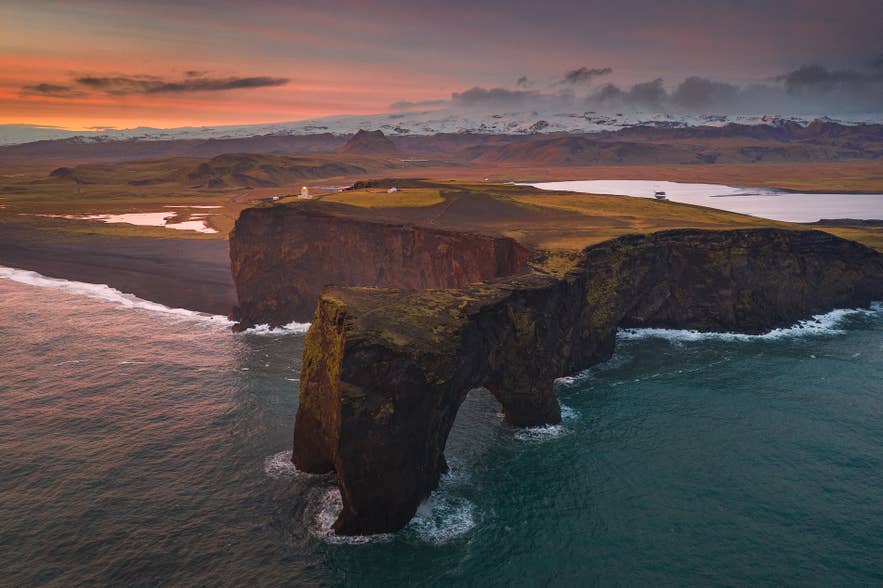 Reynisfjara sits along the South Coast, next to Vik. Anyone driving the Ring Road or heading to Jokulsarlon Glacier Lagoon passes right by, which makes it an easy addition to any Iceland itinerary. Waterfalls and glaciers lie to the west, and Iceland’s largest national park to the east.
-
Dyrholaey Rock Arch, 10 minutes west: The closest major landmark, reached on Route 218 just before the Reynisfjara turnoff. It draws far larger numbers of seabirds than Reynisfjara, and from May to August it's one of the best places to see puffins in Iceland.
-
Vik i Myrdal, 12 minutes east: The nearest village, with restaurants, fuel, restrooms, and a red-roofed church on the hill above town that looks out over the sea stacks.
-
Skogafoss and Seljalandsfoss Waterfalls, 30 to 45 minutes west: Two of Iceland’s most photographed falls, both signposted off the Ring Road. You can walk behind the curtain of water at Seljalandsfoss in summer.
-
Solheimajokull Glacier, 35 minutes west: An outlet glacier close enough to the road for a short walk to the ice edge. A glacier hike here takes you across the ice past crevasses with expert guides, who explain how the glacier is changing.
-
Eyjafjallajokull Volcano, 45 minutes west: The ice cap that grounded European air traffic in 2010, visible for miles along the Ring Road on a clear day.
-
Vatnajokull National Park and Skaftafell Nature Reserve, 2 hours east: Outlet glaciers, glacier lagoons, black sand deserts, and the best hiking trails in South Iceland.
-
Mount Katla, 40 minutes: Visit dazzling blue ice caves in Myrdalsjokull Glacier on a Katla Ice Cave tour departing from Vik. Each year the caves form differently, with shimmering ice patterns shaped by glacial movement.
-
DC-3 Plane Wreck, 25 minutes west: Explore the iconic wreck on Solheimasandur, a striking black sand plain. Reach it by hiking 2.5 miles (4 kilometers) each way, taking a shuttle, or joining an ATV tour.
Practical Travel Tips for Visiting Reynisfjara
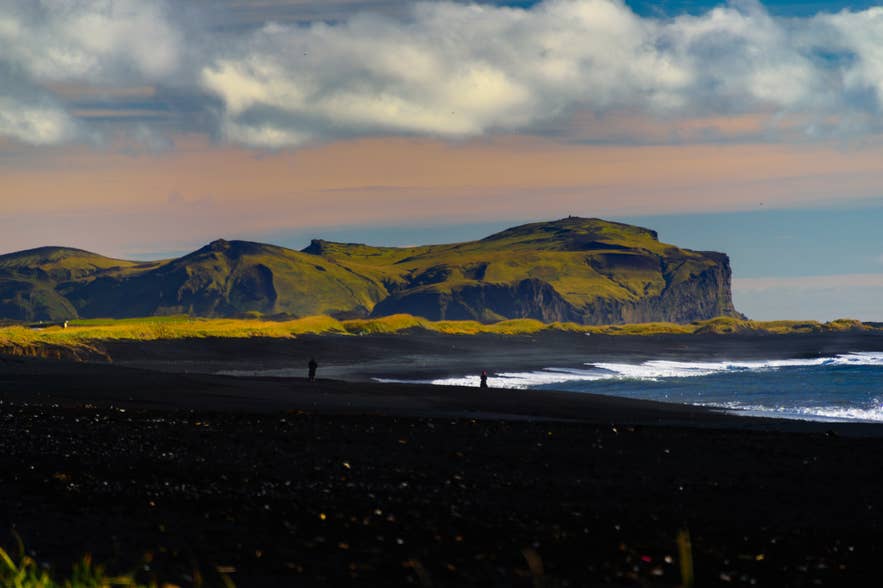 A few logistics make the difference between a rushed stop and a good visit. Here’s what regular visitors know:
-
Look up the forecast before you leave. Phone signal is patchy on this stretch of coast, so check the wave hazard forecast while you still have Wi-Fi. Knowing red is likely lets you plan a backup, such as the viewing platform above the beach or the black sands at Vikurfjara Black Sand Beach on the far side of Reynisfjall Mountain.
-
Allow 30 minutes to an hour. That covers the walk from the car park, time with the columns and sea stacks, and photos. Guided tours typically allot around 40 minutes, so build in more if you want an unhurried visit.
-
Dress for wind and spray. Reynisfjara is one of the windiest spots on the South Coast, and even a July afternoon here is cooler than one in Reykjavik, according to our 26-year temperature study. Wear windproof, waterproof layers and sturdy footwear, and expect salt spray on your camera lens.
-
Budget for parking. Parking is 1,000 ISK at the closer car park and 750 ISK at the one further back. Have a card ready, and arrive with a full tank, as the nearest fuel is in Vik.
-
Arrive early or late. Visiting in the early morning or later evening helps you avoid the tour bus rush and enjoy the beach at its quietest.
-
Use the facilities in Vik. Black Beach Restaurant by the car park works for a lunch break or early dinner, but there are no restrooms on the beach. The nearest are in Vik, along with shops for anything you’ve forgotten.
-
Tread lightly. The landowners fund and maintain this site themselves, from the car parks to the safety signage. Stay on marked paths, leave the basalt formations alone, and give nesting birds a wide berth.
-
Prepare your car for winter driving. Between November and March, make sure your rental has winter tires and check road conditions each morning. A guided tour removes the risk entirely.
Plan Your Visit to Reynisfjara Black Sand Beach

Reynisfjara changes by the day. The sea decides how much of the beach is open when you arrive, so check the wave hazard forecast the night before you go. On the day itself, treat the light at the entrance as the final word. It stays the final word even if the sky is clear and other people are ignoring it.
Because the light can close the sand, keep a backup in mind. The viewing platform above the beach still gives you the sea stacks and the surf, and Dyrholaey Rock Arch sits ten minutes away.
Whatever the light says, give yourself longer than a tour bus allows. An hour at the beach and a loop through the top things to do in Vik makes a better day than a rushed photo stop.
Reynisfjara is also a good introduction to the rest of this coast. Compare the best black sand beaches in Iceland before you fix your route, or browse black sand beach tours that put you on the volcanic sands with a guide.
Build the rest of your drive around the South Coast, and Reynisfjara becomes one stop among many. Check the light, plan around it, and it will be the one you remember.
Is it safe to visit Reynisfjara?
Is Reynisfjara still worth visiting after the erosion?
While the shoreline has shifted, the beauty and dramatic atmosphere that make Reynisfjara world-famous are still intact.
What caused the recent erosion at Reynisfjara?
Will Reynisfjara return to its previous appearance?
How do I get to Reynisfjara?
Are there guided tours available at Reynisfjara?
Why is the sand at Reynisfjara black?
When is the best time to visit Reynisfjara?
Are there facilities at Reynisfjara?
More facilities are available in the village of Vik, about a 12-minute drive away.