Icelandic elves, known as the huldufolk or hidden people, are one of the most enduring threads in the country's folklore and everyday life. Read on to discover who they are, where to see elves in Iceland, the stories told about them, and whether Icelanders truly believe in them.
Few traditions capture visitors quite like the idea that Iceland's rocks and hills are home to a hidden people. The belief runs deep through Icelandic folklore, surfaces in the streets of Reykjavik, and remains a favorite curiosity among things to do in Iceland. Many travelers first learn about the huldufolk on culture tours that pair sightseeing with local storytelling.
Why You Can Trust Our Content
Guide to Iceland is the most trusted travel platform in Iceland, helping millions of visitors each year. All our content is written and reviewed by local experts who are deeply familiar with Iceland. You can count on us for accurate, up-to-date, and trustworthy travel advice.
Elf folklore is woven into the landscape across the whole country, from southern lava fields to the eastern fjords, and it is easy to build into self-drive tours around Iceland.
Throughout this guide, we lean on the University of Iceland folk-belief survey conducted in 2023, the largest and most recent study of what Icelanders believe about elves and the supernatural. Led by folklorist Terry Gunnell and answered by close to 2,800 people, it continues a line of national surveys reaching back to 1974.
Keep reading to learn where the hidden people live, the famous stories that surround them, and how seriously modern Iceland still takes its elves.
Key Takeaways
-
Two names, one idea: Icelandic elves are usually called huldufolk, the hidden people, while alfar is the older Norse word for them.
-
Homes in the landscape: The huldufolk are believed to live inside rocks, hills, and lava fields, in a world that runs parallel to ours.
-
Belief endures, quietly: A 2023 University of Iceland survey found that about 45 percent of Icelanders consider the existence of elves at least possible.
-
Real consequences: Road and building projects have occasionally been altered around sites tied to the hidden people, including a court case near Reykjavik in 2013.
-
Where to see elves in Iceland: Hafnarfjordur, Kopavogur, Borgarfjordur Eystri, and Akureyri are among the best-known huldufolk places to visit.
The Huldufolk: Iceland's Hidden People
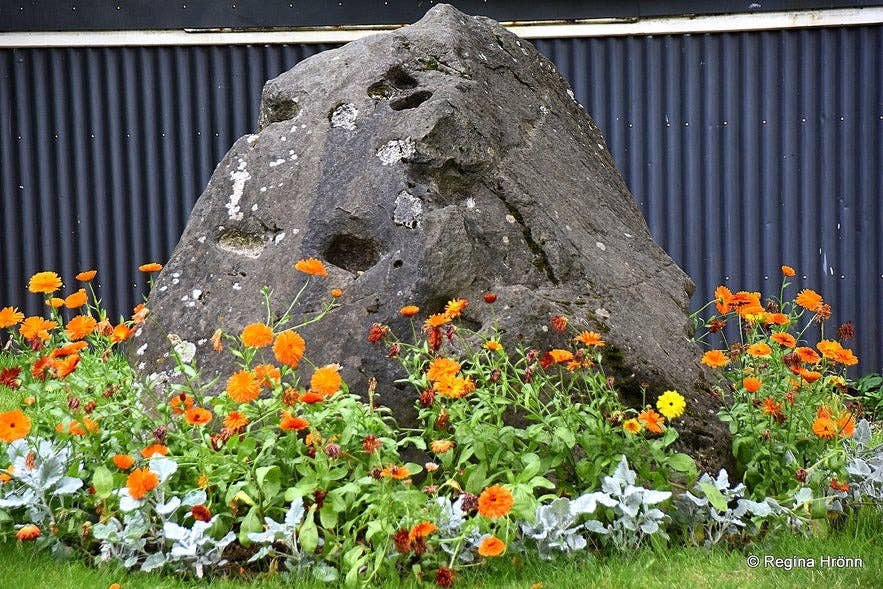
Icelandic elves are supernatural beings from folklore who are believed to live hidden in nature, alongside but unseen by humans. They are most often called huldufolk, meaning "hidden people," a word that comes from the Old Norse term for something covered or concealed.
The huldufolk are usually described as close to human in size and appearance. In the 2023 University of Iceland folk-belief survey, most respondents who pictured them saw them as a similar size to people. They are imagined living much as Icelanders once did, keeping livestock, fishing, and dressing in old-fashioned clothing in an invisible world inside the rocks.
Huldufolk vs Alfar
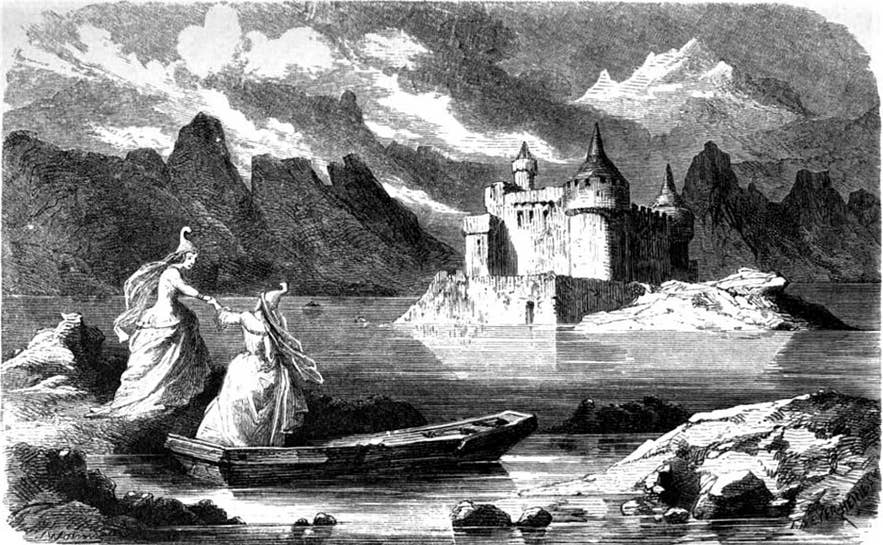
Photo from Wikimedia Commons, by Théodore Meyer-Heine. No edits made.
In Iceland, the words alfar (elves) and huldufolk (hidden people) are often used to refer to the same thing. The older term is alfar, tied to the elves of Norse mythology recorded in the Poetic Edda and the Prose Edda, the medieval Icelandic books that preserve the old myths. Over the centuries, the two ideas blended together.
The line between them stays genuinely blurry. In the 2023 survey, around 40 percent of Icelanders said there is no difference between alfar and huldufolk, only about 21 percent said there is, and the rest were unsure. Where people did draw a distinction, most described huldufolk as the more human-like of the two.
Icelandic Elves vs Trolls
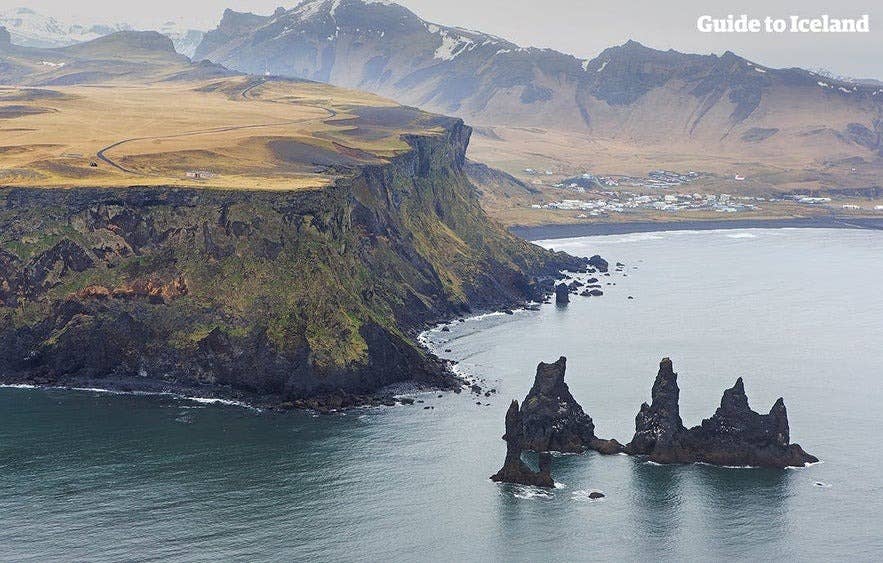
Elves are often confused with trolls, though the two could hardly be more different. Trolls are usually giant, slow, and tied to mountains and rock formations like the Reynisdrangar Sea Stacks. The huldufolk, by contrast, are human-sized, refined, and live quietly among us.
Trolls, ghosts, sea monsters, and land spirits each have their own traditions. Iceland's Christmas folklore even casts the Yule Lads as the sons of a troll, and the lava field of Dimmuborgir in North Iceland is tied to them rather than to elves. For the wider cast of characters, see our complete guide to Icelandic folklore.
The Origins of Icelandic Elves
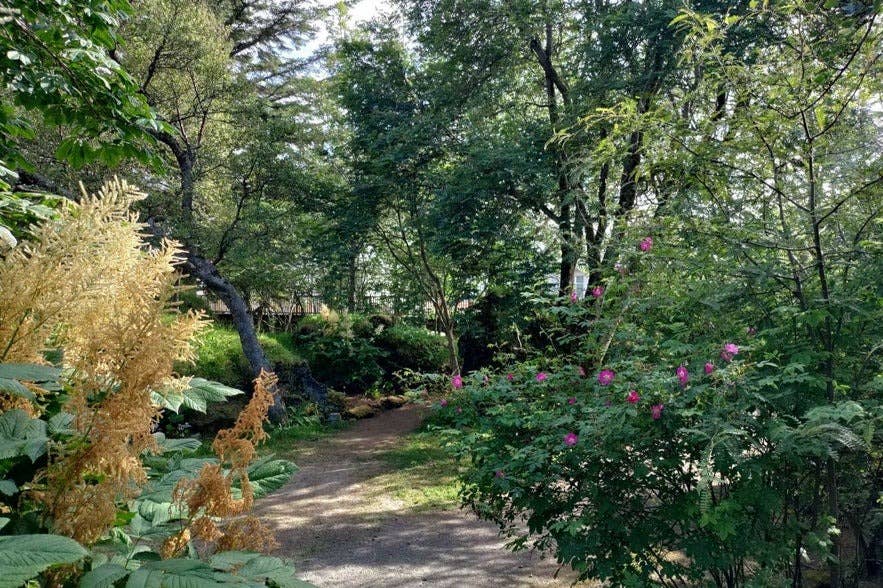
Belief in Icelandic elves grew from a blend of Norse settlement and the dramatic, unstable land the settlers found. Stories of beings inside the rocks helped explain a country shaped by lava, earthquakes, and sudden weather.
These hidden beings run through early literature in Iceland and the wider world of Norse mythology. You can see the medieval manuscripts that preserve these myths at the World in Words exhibition in Reykjavik.
One of the foremost authorities on folklore in Iceland, who has studied these beliefs for decades, frames the heritage plainly.
The folk beliefs were brought to Iceland from Norway and adapted to local circumstances. They are thus both Nordic and Icelandic.
After Iceland converted to Christianity around the year 1000, the older beings were reshaped to fit the new faith. One widely told origin story explains the hidden people as the lost children of Eve. When God came to visit, Eve had not finished washing all of her children, so she hid the dirty ones and denied they existed.
Knowing the truth, God declared that what was hidden from him would stay hidden from people. The concealed children became the first huldufolk. The tale was recorded in the 19th-century folklore collection of Jón Árnason, the scholar often called the Brothers Grimm of Iceland.
Where the Hidden People in Iceland Live
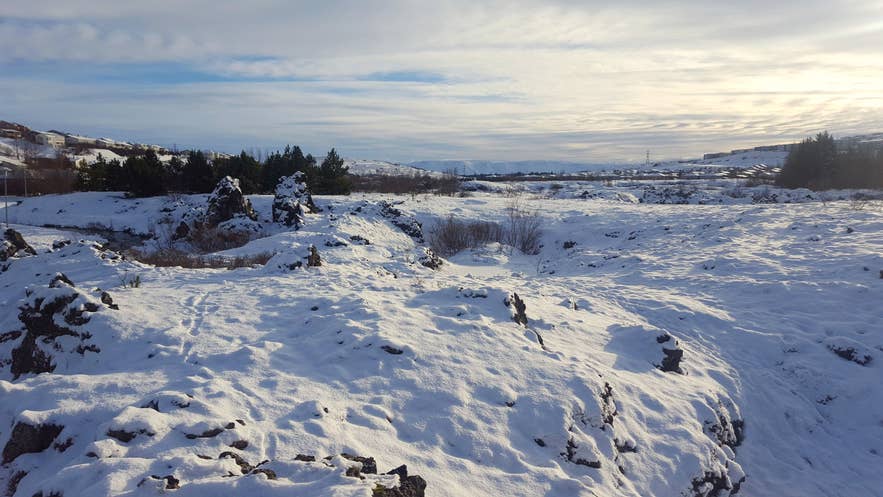
The huldufolk are said to live inside rocks, cliffs, hills, and lava fields, and they're said to move between homes around New Year's Eve. Some sites carry special weight: alagablettir, or "enchanted spots," are left undisturbed because something is believed to live there.
Their world looks much like ours but stays invisible to most eyes, and they are believed to reveal themselves only when they choose. That is why so few people report a clear sighting. In the 2023 survey, just under 6 percent of Icelanders said they had ever seen an elf or hidden person.
Where To Experience Elf Folklore in Iceland
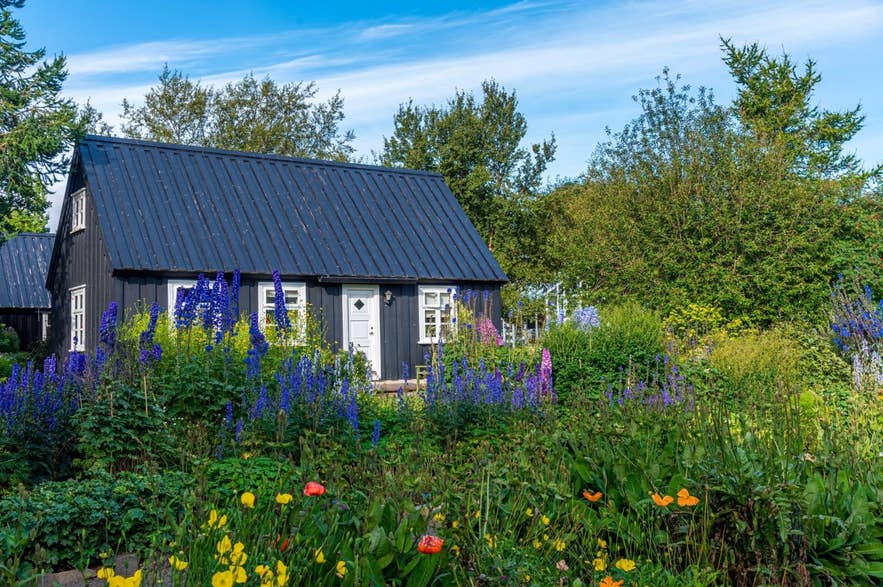
A sighting is never guaranteed, but several towns and sites across Iceland let you walk the landscapes tied to the hidden people and hear their stories firsthand. The folklore folds easily into a wider journey if you rent a car or join guided culture tours. These are the best-known huldufolk places to visit, from the capital area to the east and north of the country:
-
Hafnarfjordur: Unofficially called Iceland's elf capital, Hafnarfjordur is said to hold one of the largest communities of hidden people in the country. Located just south of Reykjavik, it's easy to visit. You can wander the lava gardens of Hellisgerdi Park or cross the surrounding folklore-rich lava fields on an easy horse-riding tour.
-
Alfholl Hill in Kopavogur: In Kopavogur, the road narrows and curves to pass a low rock known as the elf hill. Crews built around the stone after construction reportedly stalled, and the site is protected today.
-
Reykjavik: The capital is the starting point for most elf-themed outings, from a downtown folklore walking tour to a folklore-themed horse-riding tour across nearby lava fields. It is also home to the Icelandic Elf School, or Alfaskolinn, founded in 1991 by folklorist Magnús Skarphéðinsson.
-
Alfaborg in Borgarfjordur Eystri: A prominent rock called Alfaborg rises beside the village of Bakkagerdi in Borgarfjordur Eystri, in the Eastfjords. Local legend holds that the queen of the Icelandic elves lives here with her court, and an easy path leads to a viewpoint on top.
-
Akureyri in North Iceland: The Akureyri Botanical Gardens in North Iceland have a mapped hidden-folk trail called the Huldustigur, with guided walks led by a local seer.
Famous Icelandic Elf Stories and Encounters
Most elf folklore lives in stories of contact between people and the hidden people, and the best-known are surprisingly specific. The classic is the tale of Hildur, Queen of the Elves, recorded in Jón Árnason's collection.
In the story, a farmer's quiet housekeeper turns out to be the elf queen. Each New Year's Eve, she rides to a hidden palace, until a curious shepherd follows her into the elf world. The tale captures motifs that recur across Icelandic folklore, including elves who marry into human life and the belief that the hidden people travel on New Year's Eve.
Encounters are still reported in modern Iceland. After surviving a 2010 car crash, member of parliament Árni Johnsen credited the hidden people in a nearby boulder with saving him, and had their rock moved to safety near his home in thanks.
The folklore can even reach the courts. Iceland's road authority has fielded so many elf-related questions that it has used a standard reply, explaining that projects are sometimes paused at a site until the hidden people are believed to have moved on.
The best-known example came in 2013, near Alftanes on the edge of Reykjavik. A road project was halted by a Supreme Court case brought by a group called Friends of Lava, who argued the route would damage a lava field said to hold an elf church. The disputed rock, known as Ofeigskirkja, was eventually moved aside rather than destroyed.
Belief in Icelandic Elves Today
Belief in Icelandic elves is widely misunderstood abroad. Most Icelanders do not claim that elves literally walk the hills. Many do grow up with the stories, though, and treat the hidden people as a meaningful part of their culture.
The survey record bears this out. The 2023 University of Iceland folk-belief survey found that about 45 percent of Icelanders considered the existence of elves at least possible, while only around 8 percent were certain they exist. Belief has slowly declined since the first such survey in 1974, when far fewer people were willing to rule the hidden people out.
Gunnell, who ran the 2023 survey, describes the everyday belief simply. The hidden people, he says, are thought to "inhabit the rocks and hills around farms," and they are "the same size as us."
For many Icelanders, the stories are less about proof and more about respect for the land. The same survey points to this. When people reported trouble after disturbing an enchanted alagablettur, most blamed the hidden people. That habit of leaving certain rocks and hills alone quietly helps protect fragile, slow-growing landscapes.
Discovering the Hidden People on Your Iceland Trip
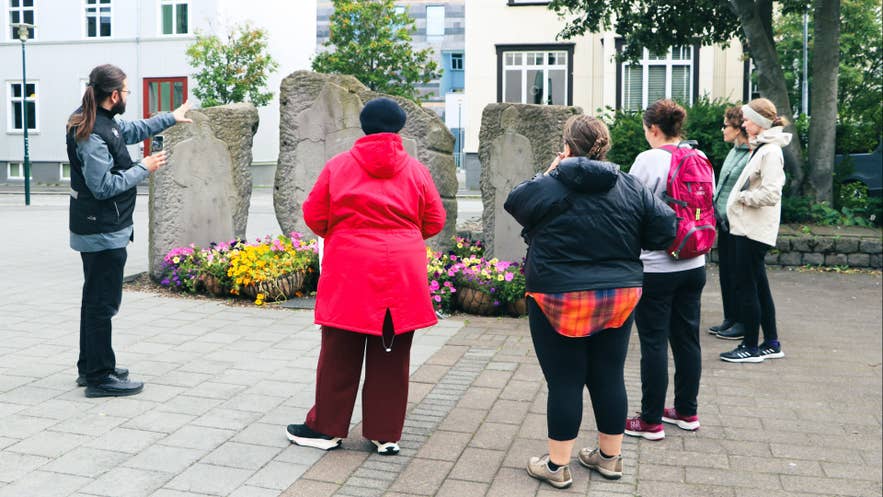
Icelandic elves seem to endure partly because they remain tied to real places and everyday habits, not only to old books. The huldufolk give travelers a different way to read the landscape, where a mossy boulder or a lone hill might be someone's home, and where leaving it undisturbed is its own small courtesy.
Whether you wander the town of Hafnarfjordur, climb Alfaborg Rock, or simply notice a rock left standing in an odd spot, the folklore rewards a little curiosity. To weave the hidden people into a wider journey, plan self-drive tours of the country or join one of the guided tours that bring Iceland's folklore to life.
Do Icelanders really believe in elves?
What do Icelandic elves look like?
Are Icelandic elves dangerous?
Why do some Icelandic roads curve around rocks?
Can tourists see elves in Iceland?
How many types of huldufolk are there?
When do the hidden people move home?
What fascinated you most about this article on Iceland's hidden people and elf traditions? Was there a particular legend, folklore site, or story that captured your imagination? Let us know your favorite part in the comments below.

I'm an Icelandic folklorist writing about Icelandic nature and culture for travelers. I share practical guides, cultural insights, and tips on hidden spots, helping you experience the best of Iceland and maybe come to love it as much as I do!