Trolls in Iceland are legendary giants said to turn to stone in sunlight, shaping some of the country’s most dramatic landscapes. Discover Icelandic troll folklore and the best places to see troll formations as you travel around the island.
Icelandic trolls are a key part of Icelandic folklore, used for centuries to explain unusual rock formations and the island’s rugged scenery. Many of the best places to see in Iceland are said to be trolls frozen in place, and as you explore the Ring Road, you’ll encounter these formations across black sand beaches, volcanic landscapes, and coastal cliffs.
Why You Can Trust Our Content
Guide to Iceland is the most trusted travel platform in Iceland, helping millions of visitors each year. All our content is written and reviewed by local experts who are deeply familiar with Iceland. You can count on us for accurate, up-to-date, and trustworthy travel advice.
Many self-drive tours and guided tours in Iceland include stops at these locations, making troll folklore a natural part of your journey. You can even take a folklore walking tour in Reykjavik to learn about all sorts of tales about trolls, elves, and more.
This guide explains Icelandic troll folklore and shows you where to see the most famous troll formations in nature. Keep reading to plan your own troll-themed route around Iceland.
Key Facts About Trolls in Iceland
-
Icelandic trolls are legendary creatures connected to mountains, cliffs, caves, and remote wilderness areas across the country.
-
According to folklore, trolls turn to stone in sunlight, which is why many unusual rock formations in Iceland are linked to troll legends.
-
Some of Iceland’s most famous natural attractions, including Reynisdrangar, Hvitserkur, Dimmuborgir, and Lomagnupur, are tied to stories about trolls and giants.
-
Many troll locations are easy to visit on Ring Road, South Coast, and Snaefellsnes Peninsula itineraries, making them popular stops on self-drive and guided tours.
-
Dimmuborgir in North Iceland is closely tied to Icelandic Christmas folklore, featuring Grýla, the Yule Lads, and the Yule Cat.
-
Troll stories remain an important part of Icelandic culture today, appearing in local traditions, place names, folklore tours, and souvenir shops across Iceland.
-
Travelers can experience troll folklore year-round, but should always check weather and road conditions before visiting remote natural sites.
What to Know About Trolls in Icelandic Folklore
Trolls are among the oldest beings in Icelandic folklore and part of a wider Scandinavian storytelling tradition. In Iceland, they are especially tied to the landscape itself.
The word “troll” covers a range of creatures, including giants such as jotnar, risar, and skessur. They are usually described as large, magical, and incredibly strong, but not particularly clever.
They usually live far from people in caves, mountains, and coastal cliffs, and can be dangerous to travelers, especially those caught out at night or in bad weather.
The most important rule in Icelandic troll folklore is that trolls cannot survive daylight. They must return to their caves before sunrise.
If they are caught outside, they turn to stone instantly. This idea appears across Iceland and is used to explain everything from offshore sea stacks to isolated rock pillars.
Folklore also says trolls cannot tolerate the sound of church bells. Many stories describe trolls fleeing into the mountains or being killed when bells rang, a motif that likely reflects how Christianity reshaped Iceland’s older beliefs and made its way into the landscape’s stories.
As Dr. Emily Zarka explores in the video above, these Icelandic troll stories reflect the real risks of moving through difficult terrain before modern roads and navigation. Trolls are often seen as part of the natural world, which is why so many rock formations are said to be troll remains.
For early settlers, this was a way of making sense of a landscape that could feel unfamiliar and unpredictable. For modern travelers, it adds another layer to their experience of Iceland’s nature.
The Difference Between Icelandic Trolls and the Hidden People
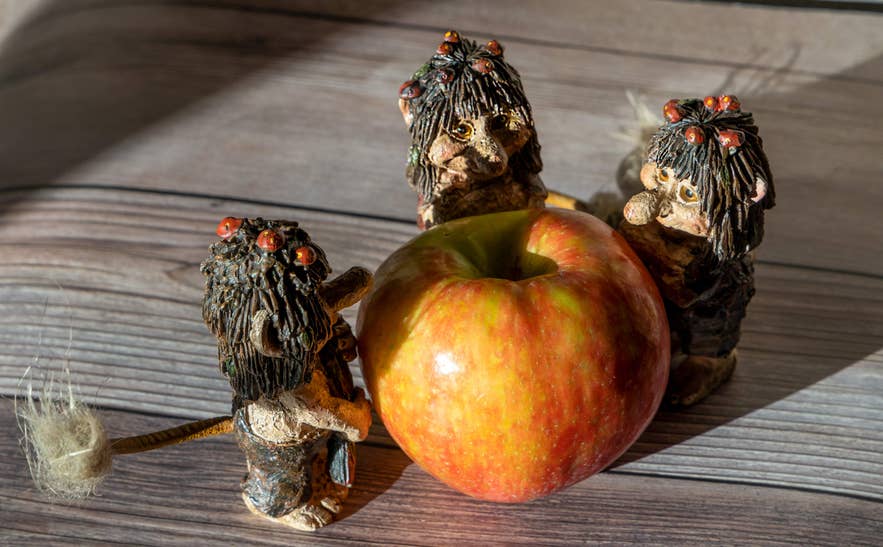
Travelers looking for souvenirs in Iceland will often come across statues, storybooks, and playful troll figures inspired by the country’s rich folklore traditions. Trolls are among the most famous creatures in Icelandic folklore, but they are often confused with elves, or huldufolk (“hidden people”), the other Icelandic folklore celebrity.
While both are tied to Iceland’s supernatural traditions, they represent very different parts of the landscape and folk belief.
In Icelandic folklore, huldufolk are human-like beings who live hidden within rocks, lava fields, and hills. They are usually described as peaceful and closely connected to human society, unless their homes are disturbed.
Trolls, by contrast, are wild beings linked to Iceland’s rugged wilderness. Folklore describes them as enormous, powerful, and sometimes dangerous creatures that live in mountains, caves, and remote coastal cliffs.
One of the most famous beliefs about Icelandic trolls is that sunlight turns them to stone, which is why many beautiful rock formations are connected to troll legends. The Reynisdrangar Sea Stacks on Reynisfjara Black Sand Beach, for example, are said to be trolls caught by the sunrise.
This contrast between the hidden world of the huldufolk and the untamed wilderness of the trolls still shapes Icelandic storytelling today and adds another layer of meaning to Iceland’s dramatic landscapes.
Famous Troll Locations in Iceland You Can Visit
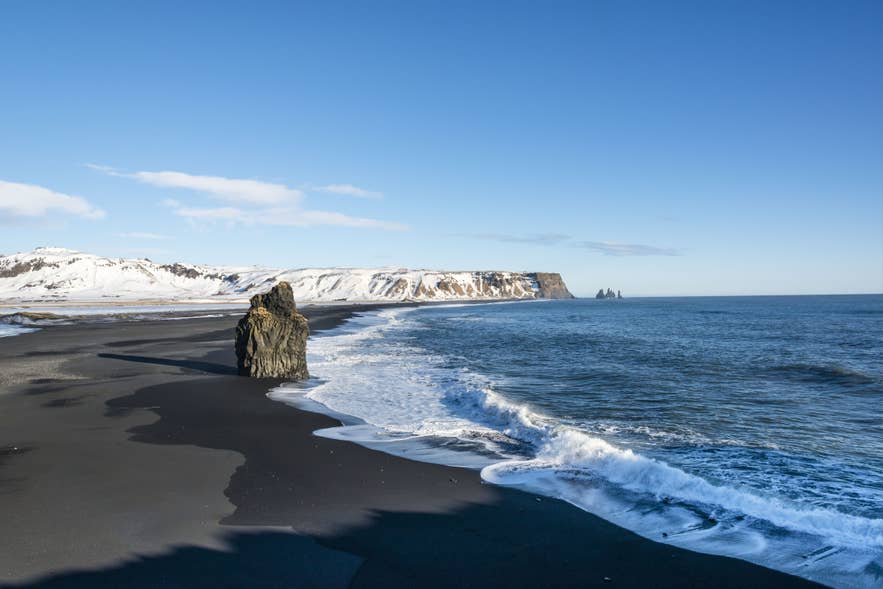
Many of Iceland’s most dramatic natural landmarks are connected to troll legends, where unusual rock formations and sea cliffs were explained through folklore long before modern geology. Visiting these places adds cultural context to Iceland’s landscapes and the stories that shaped them.
These famous troll locations are among the best places in Iceland to experience folklore alongside nature.
Reynisdrangar Sea Stacks at Reynisfjara Beach
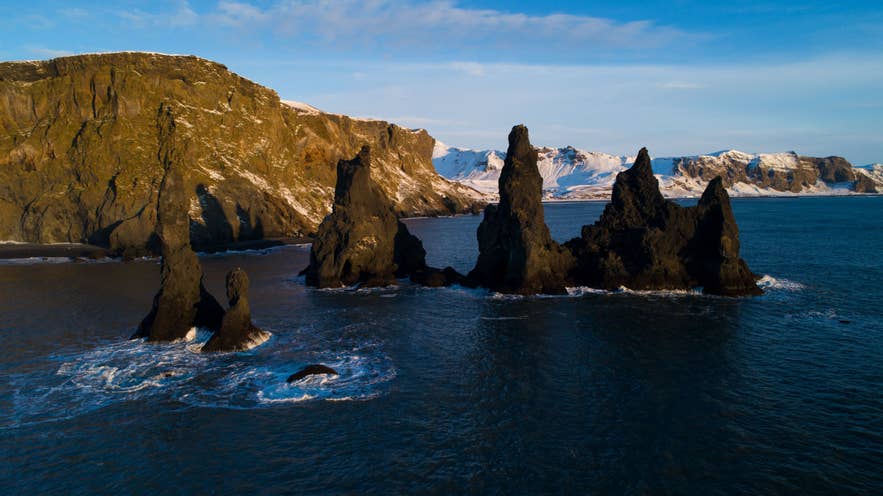
The towering Reynisdrangar Sea Stacks rise from the Atlantic Ocean beside the famous Reynisfjara Black Sand Beach on Iceland’s famous South Coast.
According to folklore, the rock formations were once trolls dragging a ship toward shore during the night. They were caught by the sunrise before reaching land and turned to stone, remaining frozen in the sea forever.
Today, Reynisfjara is one of Iceland’s most visited natural attractions and a popular stop on South Coast tours. The beach is known for powerful sneaker waves and dangerous currents, so visitors should always stay well away from the shoreline.
Geysir Geothermal Area in the Golden Circle
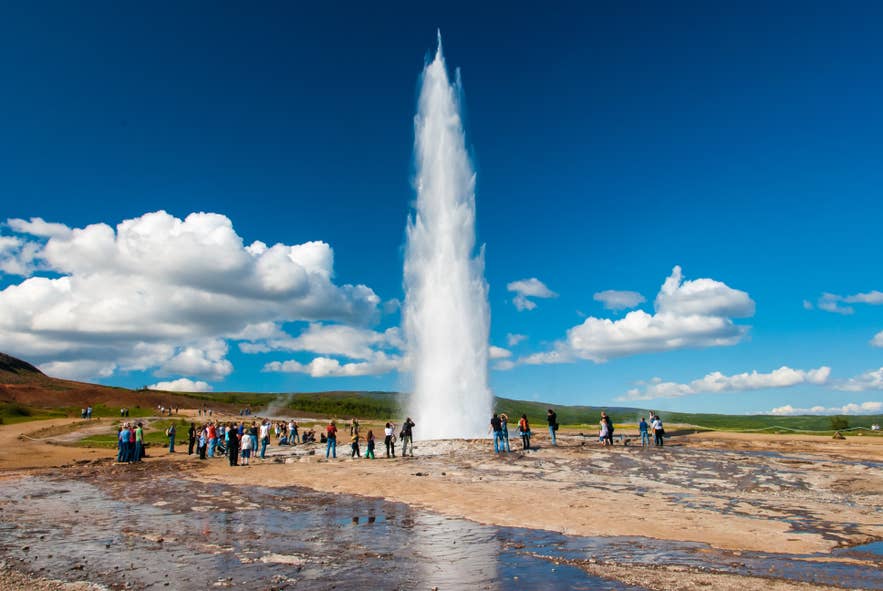
The Geysir Geothermal Area is one of the most visited stops on Iceland’s famous Golden Circle, known for its bubbling hot springs and the reliable Strokkur Geyser, which shoots boiling water up to 98 feet (30 meters) into the air every few minutes.
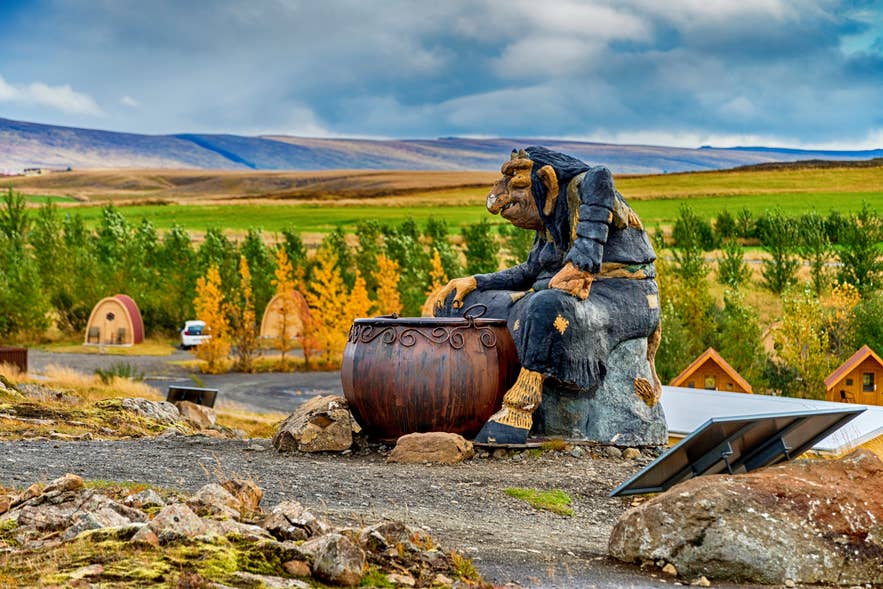
Near the bubbling hot springs stands a tall wooden carving of a troll, which celebrates the folklore that runs through this part of South Iceland. The figure is the gentle giant Bergþór, who is said to live inside nearby Mt. Blafell.
According to legend, Bergþór once befriended a local farmer and asked to be buried at the church at Haukadalur, just a short distance from Geysir, with his walking staff and treasure chest beside him.
Geysir isn’t the only spot on Golden Circle tours tied to troll folklore. At Thingvellir National Park, where the Icelandic parliament Althingi was founded in 930 AD, you’ll encounter stories of the half-troll Ármann in Mt. Ármannsfell.
Ármann is the protector of the Althingi and the surrounding plains, and is reportedly related to Bárður Snæfellsás, the guardian spirit of the Snaefellsnes Peninsula.
Snaefellsnes Peninsula and Bárður Snæfellsás
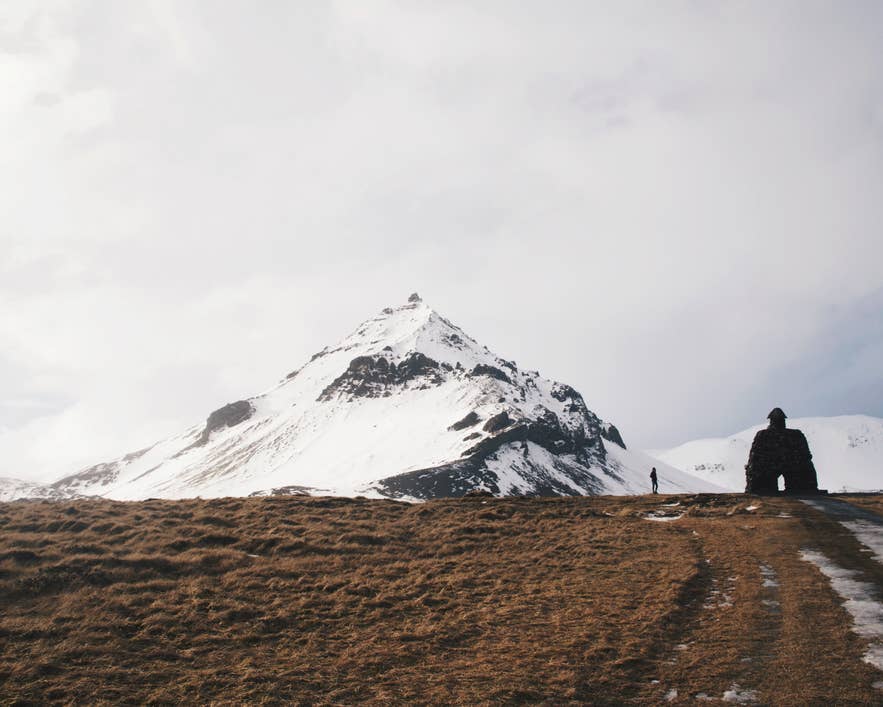
The Snaefellsnes Peninsula is often called “Iceland in Miniature” because of its diverse landscapes, including glaciers, lava fields, mountains, and dramatic coastlines.
The region is closely tied to Bárður Snæfellsás, a legendary half-troll and half-human figure from Icelandic folklore. According to the legend of Bárður Snæfellsás, he settled in the area before disappearing into the Snaefellsjokull Glacier, where he became a guardian spirit of the Snaefellsnes Peninsula.
Many of the top places to see on the Snaefellsnes Peninsula are tied to his legend, such as the Hitardalur Valley, which was supposedly the site of a big troll party, and the dramatic Raudfeldsgja Gorge, where Bárður Snæfellsás is said to have killed his two nephews to avenge his daughter.
A large stone statue of Bárður stands near Arnarstapi Village, a popular stop on Snaefellsnes tours known for its beautiful ocean cliffs. It’s a key landmark for travelers interested in Icelandic folklore.
Hvitserkur Rock on the Vatnsnes Peninsula
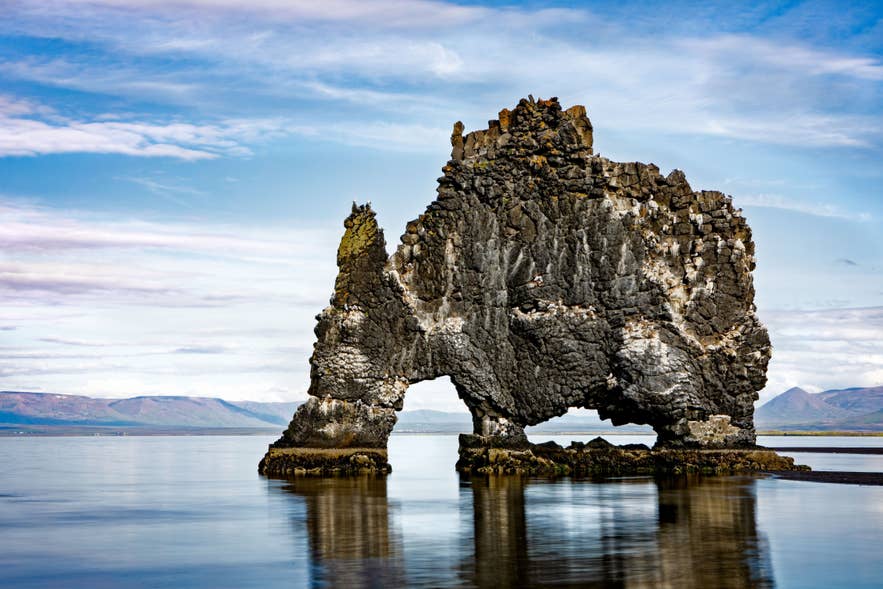
Hvitserkur is a striking basalt sea stack on the Vatnsnes Peninsula in Northwest Iceland. Its unusual shape has earned comparisons to a dragon, rhinoceros, or drinking dinosaur.
Folklore says Hvitserkur was once a troll attempting to destroy the bells of the nearby Thingeyrarklaustur Monastery. The troll stayed out too long after sunrise and turned to stone in the sea.
The surrounding coastline of the Vatnsnes Peninsula is a beautiful, hidden destination that’s often overlooked, and one of the best places in Iceland for seal watching, so don’t miss out on a visit. It’s an easy 1.5-hour detour that can be added to self-drive tours that pass through North Iceland.
The Giantess in the Cave in Keflavik
Down by the marina in the town of Keflavik on the Reykjanes Peninsula, a dark opening in the cliffs leads into the cave of Skessan, a famously gentle giantess named Sigga. The cave was opened in 2008 and has since become one of the most charming family stops on the Reykjanes Peninsula.
Inside, visitors meet a 16-foot (5-meter) statue of the giantess herself, sitting beside her oversized furniture, cooking pot, and treasures. The cave is based on the beloved children’s books by Icelandic author Herdís Egilsdóttir, whose stories portray Sigga as a kind-hearted troll who befriends the children of Keflavik.
The cave is free to visit and especially popular with families traveling to or from Keflavik International Airport. It’s a memorable, lighthearted introduction to Icelandic troll folklore and shows how these legends remain woven into everyday life across the country.
Raudholar Red Hills near Reykjavik
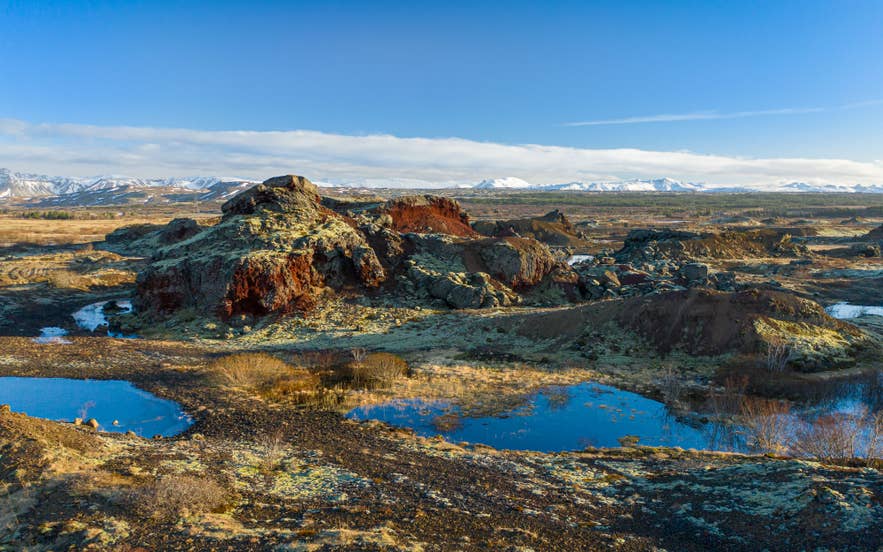
Raudholar, meaning “Red Hills,” is a striking cluster of deep maroon pseudo-craters just east of Reykjavik, formed roughly 5,200 years ago when molten lava flowed over wet ground and triggered steam explosions.
According to the folklore of the mystical Raudholar, two small mounds in the area, known as Tröllabörn or “the Troll Children,” were trolls caught out at sunrise and turned to stone.
The Red Hills sit inside Reykjavik’s Heidmork Nature Reserve and are easy to reach on a short detour from the capital. Walking trails wind between the craters, and the surrounding lava field is also home to a popular Reykjavik horse riding tour that lets you explore the volcanic landscape on the back of an Icelandic horse.
Olfusa River and the Giantess Jora in Selfoss
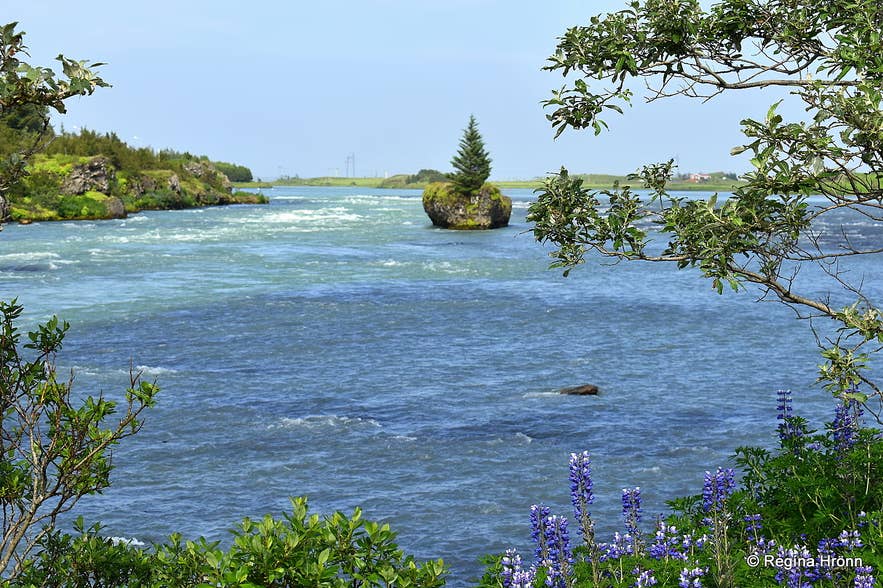
The Olfusa River runs through the town of Selfoss in South Iceland and is the country’s largest river by volume. Travelers crossing the bridge to town can spot a huge, lone rock sitting mid-stream, topped with a single pine tree. This rock is called Jóruklettur.
Supposedly, the rock was hurled into the river by the temperamental giantess Jóra, a young woman from a nearby farm who flew into such a rage at a horse fight that she tore the leg off the winning stallion and ran off with it. She is said to have thrown the boulder into the Olfusa River and used it as a stepping stone, transforming into a fearsome giantess in the process. The spot is still known as Tröllkonuhlaup, “the Giantess’s Leap.”
Jóra eventually settled in a cave near Mt. Hengill, where she terrorized travelers until she was killed with a silver axe at sunrise, an act that, according to legend, also gave the nearby Oxara River in Thingvellir National Park its name. Staying in Selfoss is convenient for exploring South Iceland, and Jóra’s rock is an easy folklore stop right in the heart of town.
Drangey Island in Skagafjordur

Drangey Island rises steeply from Skagafjordur Fjord in North Iceland and is famous for its towering cliffs and seabird colonies, including puffins during summer.
According to local legend, Drangey was once a troll cow that turned to stone when the sun rose as a group of trolls attempted to cross the fjord during the night.
Drangey also features prominently in Grettis saga, where the outlawed warrior Grettir Ásmundarson spent his final years hiding on the island. The saga is filled with trolls and supernatural encounters, including a famous scene where Grettir battles a troll-woman in a cave behind a waterfall at Sandhaugar.
Summer boat tours from Saudarkrokur allow visitors to reach the island, where hiking trails lead across the grassy cliffs with sweeping views over Skagafjordur.
Dimmuborgir Lava Field Near Lake Myvatn
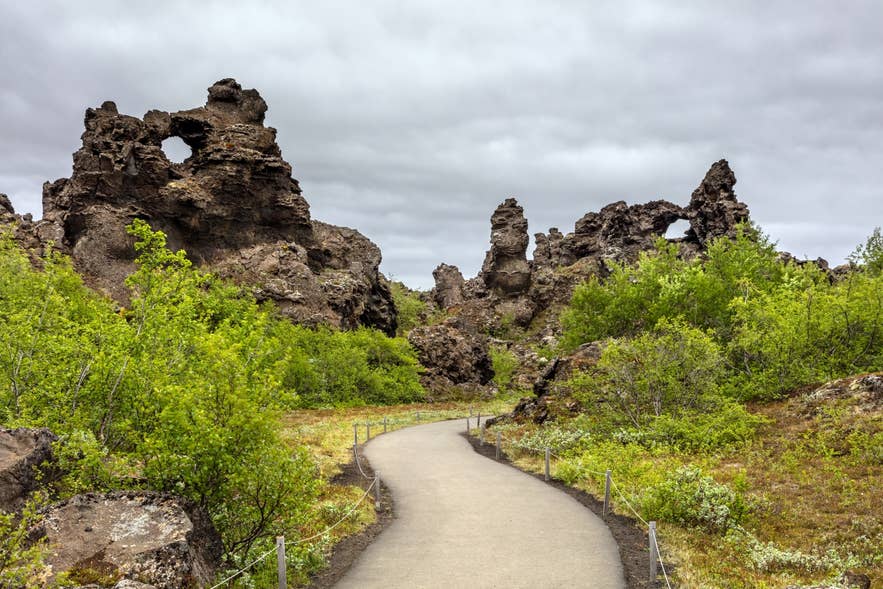
Dimmuborgir, meaning “dark fortress,” is a lava field near Lake Myvatn known for its towering lava pillars, caves, and unusual volcanic formations.
In Icelandic folklore, Dimmuborgir is said to be the home of the Icelandic Yule Lads and their giantess mother, Grýla. The eerie lava formations helped inspire stories about trolls and other supernatural beings living in the area.
Marked walking trails make Dimmuborgir easy to explore year-round, though the snow-covered lava formations are especially atmospheric during winter.
The Troll Peninsula in North Iceland
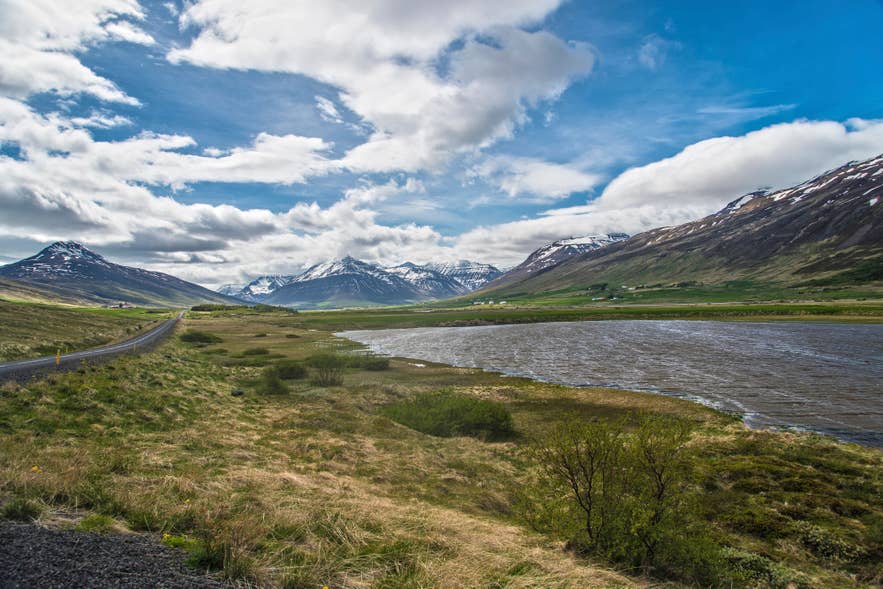
Trollaskagi, meaning “Troll Peninsula,” stretches between the Skagafjordur and Eyjafjordur fjords in North Iceland and takes its name directly from the trolls and giants said to inhabit its rugged mountains in Icelandic folklore.
With its steep valleys, dramatic peaks, and isolated coastal cliffs, the peninsula was long considered an ideal hiding place for supernatural beings. Local legends describe trolls roaming the mountains after dark, while several unusual rock formations throughout the region are said to be trolls turned to stone by the sunrise.
Trollaskagi is one of North Iceland’s most scenic regions, known for its mountain landscapes, coastal roads, and outdoor adventures. Guided options include a multi-day Arctic Coastline and Trollaskagi tour or a private kayaking adventure on the peninsula for those who want to explore the landscape up close.
Travelers visit the area for hiking, skiing, whale watching, and road trips through charming fishing villages such as Siglufjordur and Hofsos. The peninsula is also home to Trollafoss, a troll-named waterfall that adds another folklore landmark to the route. It is also easily accessible from Akureyri, often called the capital of North Iceland.
Lomagnupur Mountain in South Iceland
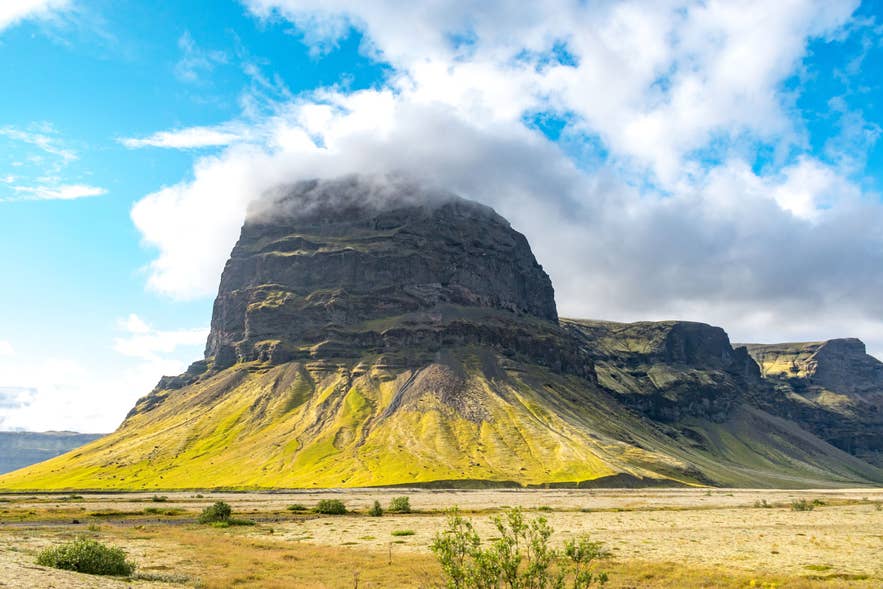
Lomagnupur is a towering cliff-faced mountain that rises dramatically above the black sand plains of South Iceland, between Kirkjubaejarklaustur and Skaftafell Nature Reserve. Its steep rock walls and isolated shape make it one of the most recognizable landmarks along the South Coast and a striking sight for travelers driving toward Vatnajokull Glacier and Jokulsarlon Glacier Lagoon.
According to Icelandic folklore, Lomagnupur is the home of the bergrisi, or mountain giant, one of Iceland’s four legendary landvaettir, which are the guardian spirits said to protect the country. These protective beings appear in the medieval saga Heimskringla, in the story of Ólafur Tryggvason.
The bergrisi is believed to guard South Iceland, while the other three landvaettir protect the remaining regions of the country: a dragon in the east, a giant eagle in the north, and a bull in the west. These four guardian spirits remain an important national symbol and appear on Iceland’s coat of arms as well as Icelandic krona coins.
Today, Lomagnupur is not only tied to Icelandic mythology but is also considered one of the South Coast’s most impressive natural landmarks. Its dramatic scenery and ever-changing light make it a favorite photography stop for travelers exploring Iceland’s Ring Road.
Latrabjarg Cliffs in the Westfjords
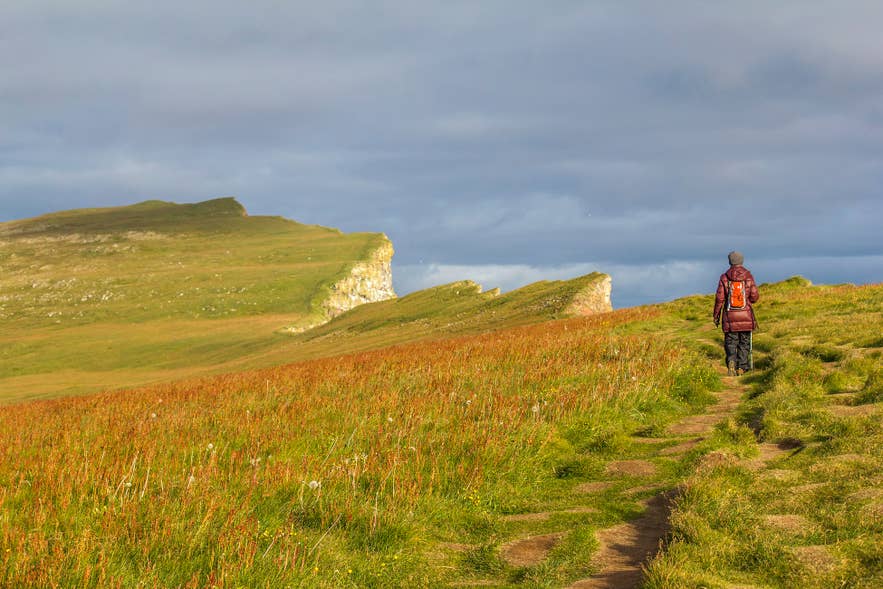
Latrabjarg is a 14-kilometer (8.7-mile) stretch of towering sea cliffs in Iceland’s remote Westfjords and marks the westernmost point of northern Europe. Rising up to 441 meters (1,447 feet) above the Atlantic Ocean, it is one of Europe’s largest bird cliffs and one of the best places in Iceland to see puffins in their natural habitat.
Latrabjarg is said to be home to giantesses, trolls, and other supernatural beings hidden within the cliffs. One legend tells of Ólafur, a farmer who was hunting foxes on the cliffs on New Year’s Eve when he overheard mysterious voices in the rocks discussing how much longer he would live.
The voices turned out to be trolls that started pursuing him. Ólafur escaped by loading his gun with silver buttons torn from his sweater and firing at them as he fled. He managed to reach the safety of his farm before the troll could catch him.
Today, Latrabjarg is a popular destination for birdwatchers and photographers exploring the Westfjords. Thousands of puffins nest along the cliff edges, making it one of the easiest and most spectacular places in Iceland to see puffins up close.
How to Explore Troll Locations in Iceland
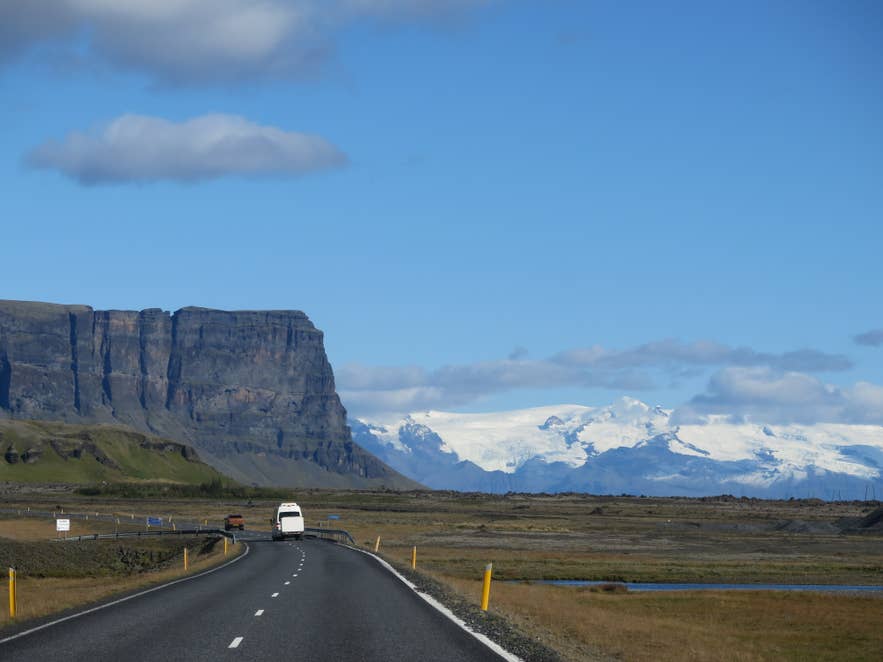
The best way to see Iceland’s famous troll formations on trips to Iceland is by traveling the Ring Road or exploring regions known for folklore, including the South Coast, North Iceland, and the Snaefellsnes Peninsula. Many of Iceland’s most famous natural landmarks tied to troll legends are easy to visit along popular sightseeing routes.
Here are the best ways to explore Iceland’s troll locations:
-
Self-drive tours offer the flexibility to stop at viewpoints, explore hiking trails, and travel at your own pace with a rental car.
-
Guided tours provide local insight into Icelandic folklore, history, and geology, helping travelers better understand the stories behind the landscapes.
-
South Coast tours are ideal for visiting places like Reynisfjara Beach and the Reynisdrangar Sea Stacks.
-
Ring Road tours often include stops at Hvitserkur, Dimmuborgir, and Lake Myvatn.
-
Snaefellsnes Peninsula tours combine dramatic scenery with folklore linked to Bárður Snæfellsás and other legendary figures.
Adding these folklore locations to your itinerary is a great way to experience both Iceland’s dramatic nature and the legends that have shaped the country’s storytelling traditions for centuries.
Troll Place Names Across Iceland
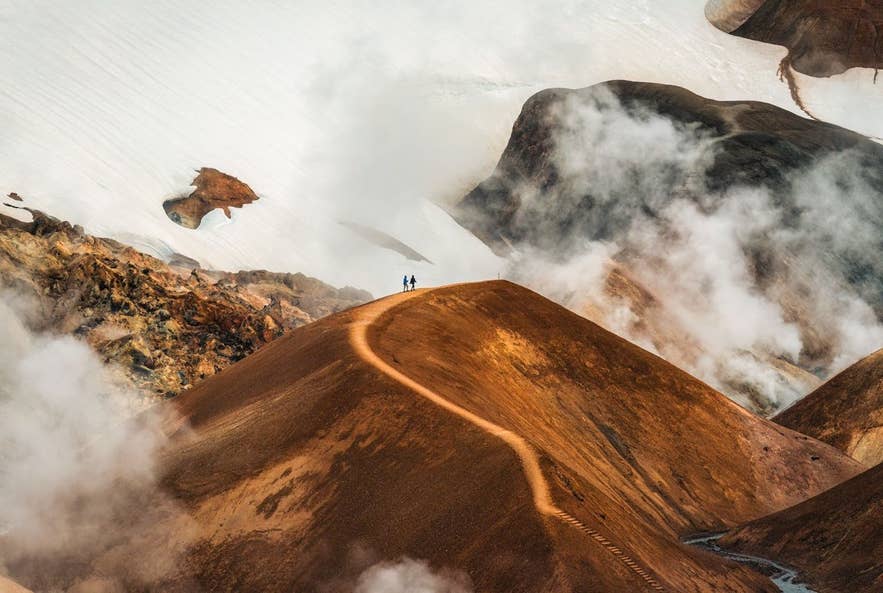
Beyond the most famous landmarks, troll-inspired place names appear all over Iceland, from the cliffs of the Westfjords to the remote fjords of the east. Icelandic words like tröll (troll), skessa (troll-woman), risi (giant), and kerling (old woman) turn up in mountain names, rock pillars, and entire valleys.
In the Capital Area, in the Mosfellsdalur Valley, you can hike to the hidden Troll Waterfalls. In the northeastern Highlands, Skessugarður (“the troll-woman’s garden”) is a natural ridge of boulders that folklore credits to an angry giantess.
In East Iceland, Lodmundarfjordur is named after Loðmundur, an early settler from the sagas whose magical powers and feats of strength gave him a troll-like reputation.
The word kerling, often used for petrified troll-women, names countless rock pillars and peaks across the country, including a sea stack just off Drangey and the Kerlingarfjoll Mountain Range in the central highlands.
Other troll place names worth seeking out include Trollafossar Waterfall in West Iceland, next to the Troll Garden of the Fossatun Country Hotel, and Trolladyngja, a vast shield volcano in the Highlands whose name translates as “Troll’s Dome.”
The Westfjords are scattered with similar landmarks tied to local troll legends — at Drangsnes on the Strandir coast, for example, a troll is said to have shaped the geothermal hot tubs beside the sea. It’s even said that three trolls once tried to separate the region from the rest of Iceland!
These names are a reminder that Icelandic troll folklore isn’t confined to the country’s most visited sites. Every region has its own rich troll stories written into the landscape.
Trolls in Icelandic Christmas Folklore
Trolls are still an important part of Icelandic culture today, especially through the country’s unique Christmas traditions and folklore.
The most famous figure is Grýla, a fearsome giantess said to live in the mountains with her lazy husband, Leppalúði. According to folklore, Grýla kidnaps badly behaved children during Christmas and cooks them in her cauldron.
The household also includes Jólakötturinn, the Yule Cat, a giant feline said to eat anyone who didn’t receive new clothes for Christmas.
Grýla is also the mother of the 13 Yule Lads, mischievous troll-like characters who visit children during the 13 nights leading up to Christmas. Each Yule Lad has a distinct personality and name tied to playful behavior, including Door Slammer, Sausage Swiper, and Spoon Licker.
According to folklorist Terry Gunnell, this is part of what makes the Icelandic Yule Lads unique. “Their names suggest that they used to steal things from houses, but we don’t hear about them being as terrifying as Grýla,” he said.
Historically, they take rather than give, but with time, they have turned their ways and have become quite generous.
Today, the Yule Lads are a beloved part of Icelandic Christmas celebrations. Children place shoes in their windows during the 13 nights before Christmas, and each night the Yule Lads leave small gifts for well-behaved children, while naughty children are traditionally left a potato.
These stories remain deeply connected to Icelandic Christmas traditions, blending folklore, humor, and winter customs that are still celebrated across Iceland every holiday season.
Exploring Iceland’s Troll Locations and Folklore
Troll stories offer a different way to experience Iceland’s landscapes. Instead of seeing only geological formations, you begin to notice how stories are tied to specific places.
This connection between folklore and environment is part of what makes traveling in Iceland unique, especially when exploring remote or dramatic areas.
For more insight, explore our guide to folklore in Iceland or browse day tours from Reykjavik to start planning your trip.
Are trolls part of Icelandic folklore?
Why do trolls turn to stone in Icelandic folklore?
What are the most famous troll locations in Iceland?
What is the difference between trolls and giants in Icelandic folklore?
Who is Gryla in Icelandic folklore?
What are the Yule Lads in Iceland?
Which troll locations are easiest to visit from Reykjavik?
What is the connection between trolls and Iceland’s landscapes?
Are there troll-themed attractions in Iceland for families?
Where can you learn more about Icelandic troll folklore?
Have you spotted a troll-shaped rock while traveling in Iceland? Which location stood out the most? If you’re planning your trip and want to include troll locations, ask your questions in the comments below!

I was born on the west side of Reykjavík and grew up downtown, so Iceland has been my back yard for most of my life. I'm a father of two, I've traveled on five continents, and I still haven't found a country that holds my attention the way this one does.
That's why I co-founded Guide to Iceland. We connect travelers directly with Icelandic operators, guides and hosts, so the advice and the services both come from people who actually live here.
I write about the practical side of a trip: what eating out in Reykjavík really costs, whether to pick Sky Lagoon or Hvammsvík, where to stop for food along the Ring Road, and which regions give you the best odds of clear skies for the northern lights. If you're planning a trip and something doesn't add up, message me.