Tjornin is Reykjavik’s charming pond that locals adore. It is one of the city’s most recognizable landmarks and a home to ducks, swans, and seasonal birds. Sometimes called “The Biggest Bread Soup in the World,” it has earned this playful nickname from the long-standing tradition of feeding large amounts of bread to the birds.
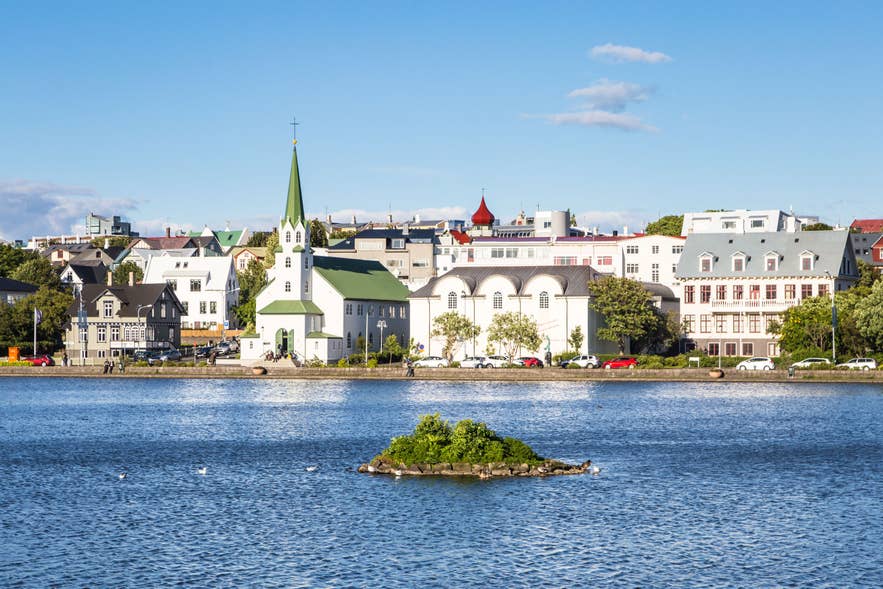
Tjornin Pond is where locals usually stroll, feed the ducks, and slow down right in the heart of downtown Reykjavik. Surrounded by colorful houses and historic buildings, it is also a natural stop on many Reykjavik walking tours and walking routes, making it easy for you to experience this spot.
Why You Can Trust Our Content
Guide to Iceland is the most trusted travel platform in Iceland, helping millions of visitors each year. All our content is written and reviewed by local experts who are deeply familiar with Iceland. You can count on us for accurate, up-to-date, and trustworthy travel advice.
Tjornin Pond is actually one of the many lakes in Iceland, but it is commonly referred to as a pond because of its relatively small size and shallow depth. Its central location, only a 10-minute walk from the Skolavordustraeti Rainbow Street, makes it incredibly convenient for visitors staying in nearby hotels and accommodations in Reykjavik.
Read on to discover what makes this simple pond one of Reykjavik’s most memorable stops.
Tjornin Visitor Information
-
Location: Downtown Reykjavik, beside Reykjavik City Hall.
-
Size: Approximately 8 hectares in surface area.
-
Depth: Average depth of around 1.9 feet (57 centimeters) and a maximum depth of about 2.6 feet (80 centimeters).
-
Best time to visit: Year-round, with summer offering active birdlife and winter bringing frozen sections of the pond.
-
Entry fee: Free.
-
Opening hours: Accessible at all hours.
-
Main highlights: Peaceful walking paths, birdwatching, scenic city views, and reflections of Reykjavik’s colorful houses on the water.
-
Wildlife: Ducks, swans, geese, and seasonal migratory birds, including Whooper Swan, Mallard, Common Eider, Arctic Tern, and Black-headed Gull.
-
Nearby attractions: Popular nearby stops include Hljomskalagardur Park, Hallgrimskirkja Church, and Harpa Concert Hall.
-
Accessibility: Generally flat and easy to walk, with a paved walkway. It's wheelchair and stroller-friendly.
-
Facilities nearby: Public restrooms, benches, paved paths, cafes within walking distance, and paid parking options.
History & Formation of Tjornin Pond
The name Tjornin comes from the Old Norse word “tjörn,” meaning a small pond, and is linguistically related to the Northern English word “tarn,” used for mountain lakes. The pond’s formal historical name, “Reykjavíkurtjörn,” directly translates to “the pond of Reykjavik.”
Tjornin Pond has been part of Reykjavik’s landscape for more than a thousand years. The pond first formed around 800 AD when a gravel barrier separated part of the coastline from the sea, creating a shallow lake connected to the surrounding wetlands.
At that time, the area looked very different from modern Reykjavik. Forests of birch and willow covered the landscape, and the pond stretched much closer to the shoreline than it does today. Early settlers arriving during Iceland’s Age of Settlement likely chose the area around Tjornin because of its access to fresh water, fertile land, fishing, and sheltered coastal surroundings.
The area may have offered another valuable resource as well: walruses. Archaeological evidence suggests they once lived along Iceland’s southwestern coast, including near present-day Reykjavik. They were valued for their ivory, meat, and hides, and may also have held cultural or symbolic importance for Norse settlers.
Heavy hunting eventually led to their extinction in Iceland, but visitors can still see walrus bones built into a Viking-age longhouse at The Settlement Exhibition, just a short walk from Tjornin.
According to Icelandic history, Ingolfur Arnarson settled in Reykjavik around 874 AD, and the area surrounding Tjornin quickly became an important part of the growing settlement.
How Reykjavik’s Growth Shaped Tjornin Pond
Over the centuries, farming, deforestation, and urban development have gradually transformed both the pond and its ecosystem. Scientific evidence suggests the lake was once partially connected to the ocean and contained brackish water before eventually becoming a freshwater pond.
As Reykjavik expanded, Tjornin was also significantly reshaped by human activity. Parts of the lake were reduced through land reclamation and landfill, with estimates suggesting that up to 30% of its original size has been lost.
Surrounding wetlands were gradually drained, and nearby development, including roads and the expansion of the University of Iceland, further altered the natural landscape. Invasive plant species such as thistle and chervil have also affected nesting conditions in some areas, showing how closely the pond’s ecosystem is tied to the city’s development over time.
Despite these changes, Tjornin remains a defining feature of central Reykjavik. Nearby landmarks such as Reykjavik City Hall help establish it as one of the city’s most recognizable locations.
Today, Tjornin serves as a peaceful gathering spot where you can slow down, enjoy the view, and take a break in the middle of Iceland’s capital.
Where Is Tjornin Located?
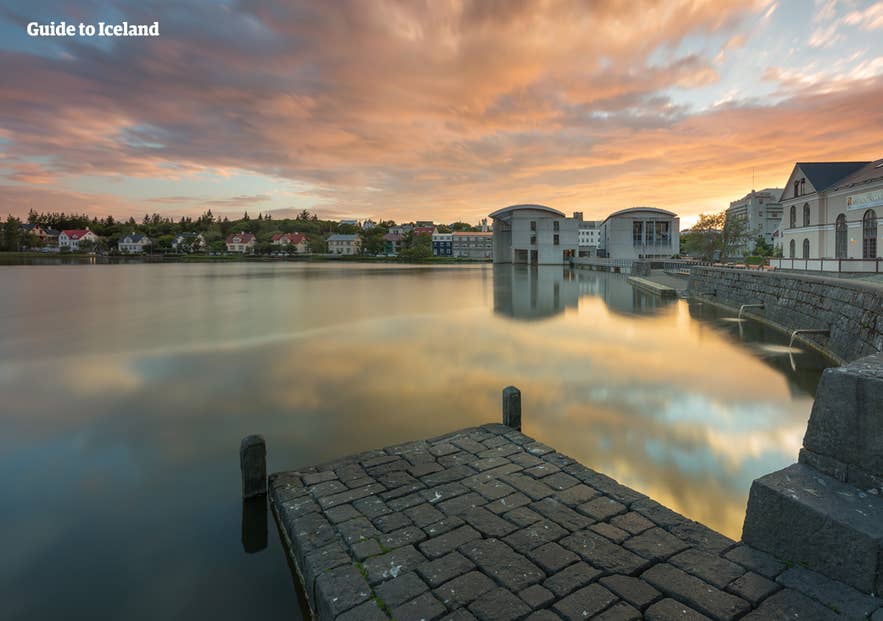
Tjornin is found in downtown Reykjavik, just beside Reykjavik City Hall. Because it sits in the city center, you can easily include it in walking tours of Reykjavik without needing extra transport.
Getting there is simple, whether you’re on foot, using public transport, or renting a car in Iceland.
-
Walking: The easiest way to reach Tjornin is on foot. It’s within a short walking distance from most downtown hotels, shops, and attractions. You can comfortably explore it as part of a Reykjavik city tour.
-
Bus: Reykjavik’s local buses (Straeto) make it easy to reach Tjornin. The closest stops are Laekjargata by Maedragardur Park and Radhusid (City Hall), all just a 2–5 minute walk from the pond. For a more flexible sightseeing option, the Reykjavik hop-on hop-off bus pass also stops nearby in the city center, making it easy to combine Tjornin with other major attractions.
-
Car & Parking: The most convenient place to park near Tjornin is the City Hall Parking Garage (Radhus) at Tjarnargata 11, beneath the City Hall. You’ll also find nearby street parking along Tjarnargata and Frikirkjuvegur. Reykjavik parking is typically paid, with rates around 270 ISK (2 USD) for the first hour and about 140 ISK (1 USD) per hour afterward.
Top 5 Best Things To Do at Tjornin Lake
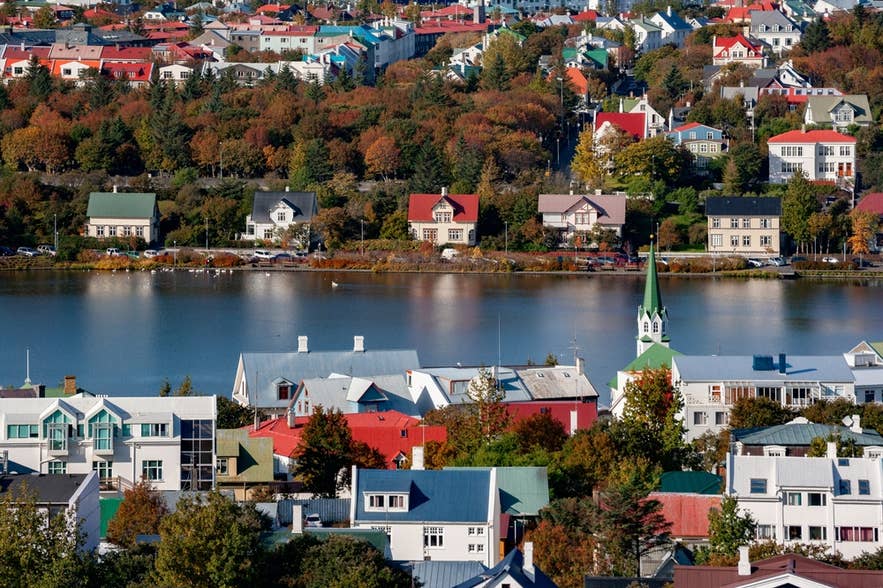 If you’re wondering what to do at Tjornin, you’ll find it’s more than just a pretty pond in the middle of Reykjavik. It’s a simple, local spot where you can unwind, take a break, and enjoy some of the best city views without leaving the center.
Below are some of the best things to do at Tjornin Pond.
5. Visit Cafes and Bakeries Near Tjornin
 One of the nicest things to do around Tjornin is to start your day with a coffee or breakfast from one of the nearby cafes, then slowly wander over to the pond. The area around Adalstraeti, Laekjargata, and nearby downtown streets is packed with some of the best breakfast spots in Reykjavik.
A great option is IÐNO, the historic cafe and cultural venue located right on the edge of Tjornin. On sunny days, its outdoor patio is one of the best places around the pond to sit with a coffee, meal, or drink while watching the birds on the water. If you’re considering stopping by, check out our IÐNO review to learn more about what makes it a favorite spot among locals and visitors.
You can also stop by nearby places like Reykjavik Roasters for specialty coffee or grab traditional Icelandic pastries from Kaffi Loki or BakaBaka Bakery.
If you want a more guided experience, a private Reykjavik walking and food tour is also a great way to explore the area, combining Icelandic food with a relaxed stroll that includes a stop at Tjornin.
4. Relax on the Benches by Tjornin
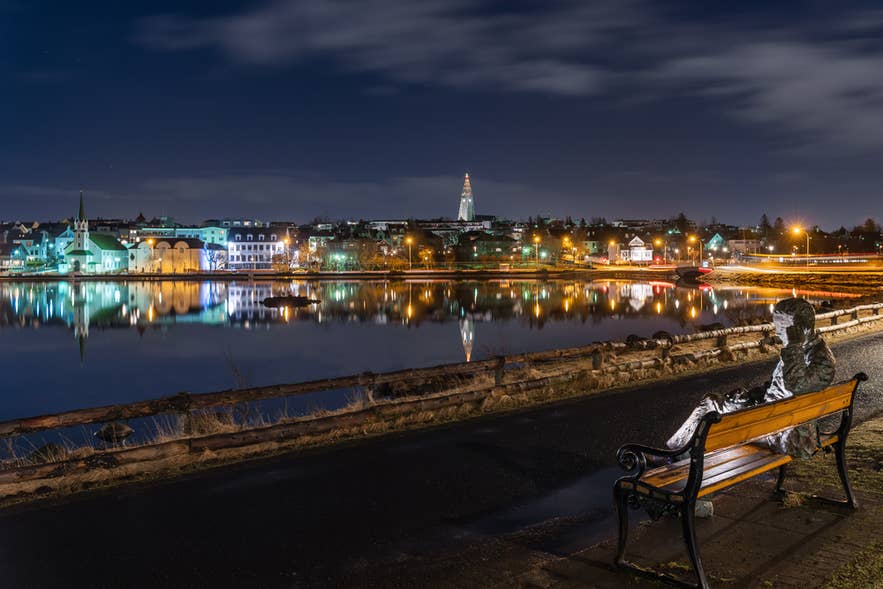 Sometimes the best way to enjoy Tjornin is simply to slow down and sit for a while. The benches around the pond are scattered in quiet, scenic spots where you can watch the water, birds, and everyday local life unfold. It’s especially nice around Tjarnargata and Frikirkjuvegur, with the views a bit more open and relaxed.
You can grab a coffee to-go from nearby cafes and just sit by the water, especially along the quieter side facing Frikirkjan Church. It’s a simple moment, but it really shows what makes Tjornin special.
3. Ice-Skate in Winter at Tjornin Pond
When temperatures stay low for long enough, parts of Tjornin can freeze over and turn into a natural skating spot right in the middle of the city. If you’re in Reykjavik during the winter months, the pond is a great place to experience a cozy local side of Iceland that’s often included in winter vacation packages in Iceland.
Ice skating on Tjornin is actually a long-standing local tradition. The Reykjavik Ice Skating Association was founded here in 1892, and locals have been using the frozen pond as a natural rink ever since.
The ice is generally considered safe during proper freezing conditions because Tjornin is quite shallow, with an average depth of about 1.9 feet (57 centimeters) and a maximum depth of around 2.6 feet (80 centimeters). Still, conditions can change quickly, so it’s important to always check local safety updates before stepping onto the ice.
Even though it’s usually safe when fully frozen, there are still memorable stories, like in 2009, when the ice briefly gave way during a horse parade. Thankfully, no one was injured, but it’s a reminder that conditions should never be taken for granted.
If you’re exploring Reykjavik with kids, Tjornin Lake ice skating in winter is a great activity for a fun and easy city-center experience, and even when skating isn’t possible, the frozen pond and snowy surroundings still make it one of the most atmospheric winter stops in downtown Reykjavik.
2. Watch the Birdlife Up Close at Tjornin
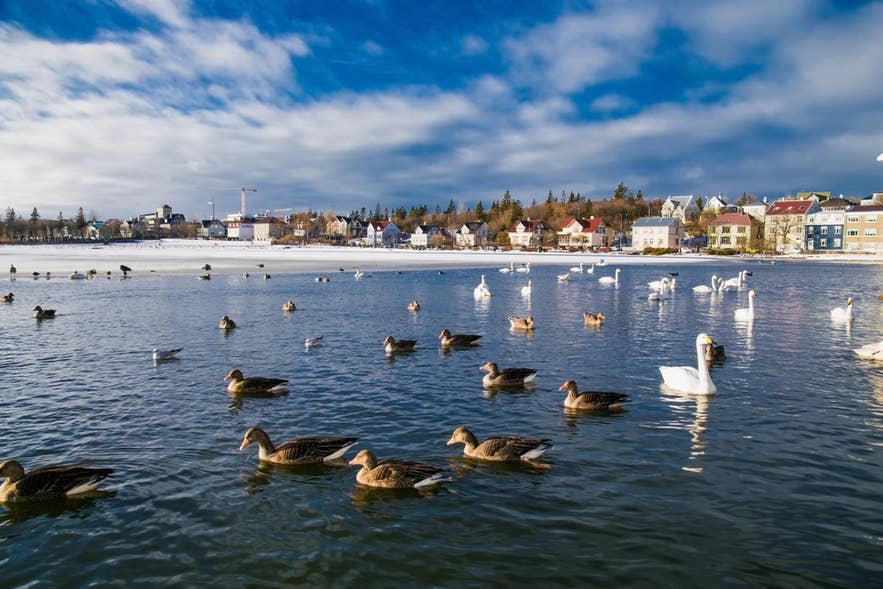 Tjornin Lake is one of the best places in Reykjavik to see birdlife without leaving the city center. Swans, ducks, geese, and seasonal migratory birds gather around the pond throughout the year, especially near the quieter southern edges and walking paths beside Reykjavik City Hall.
The pond is particularly active in spring and summer, when large numbers of waterbirds arrive to breed and moult. It’s also an important stopover site for migratory species. You can often spot birds such as Mallards, Eiders, Scaup, and Gadwall, along with many other seasonal visitors that use the sheltered waters of Tjornin as a resting and feeding area.
Early mornings are usually the calmest time for watching birds up close and taking photos without large crowds.
Since visiting the pond is completely free, this is also one of the cheapest things to do in Reykjavik if you want a relaxing activity that doesn’t require tours, tickets, or transportation outside downtown.
If you plan to feed the birds, locals recommend using grains or seeds instead of bread. Reykjavik City Council has also asked visitors to avoid feeding birds from May to August because leftover bread tends to attract large numbers of seagulls and other predatory birds around the pond.
1. Take a Relaxing Walk Around Tjornin
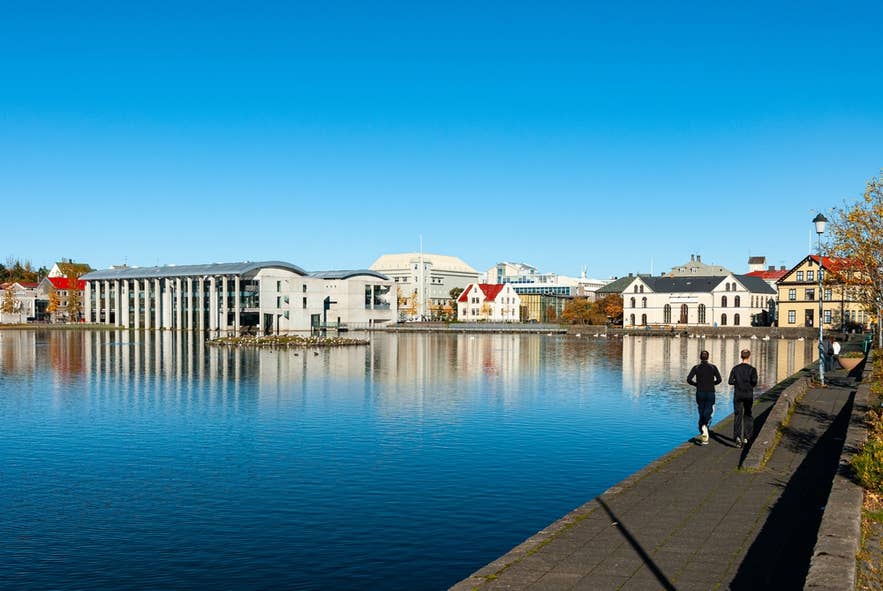 One of the best ways to experience Tjornin is by taking a slow walk around the pond. The walking paths are flat, easy to follow, and loop through some of the nicest parts of central Reykjavik. Along the way, you’ll pass Reykjavik City Hall, quiet benches, small footbridges, and views of colorful houses reflecting on the water.
At the southern end of the pond, the paths continue into Hljomskalagardur Park, a peaceful green space with trees, open lawns, and additional walking trails. It’s home to Hljomskalinn, the low-rise, tower-shaped music pavilion that gives the park its name and adds a unique architectural landmark right by the pond.
You can also take a slow walk through the park’s sculpture garden on the west side, where works by six pioneering Icelandic female sculptors are on display. It makes a nice stop to explore, take photos, or simply pause in a quieter part of the park.
If you’re planning Iceland city breaks during the shoulder season, this is also one of the most popular things to do in Reykjavik in April. The weather is usually mild enough for comfortable city walks while still offering a chance to see snowy mountain views in the distance.
Best Time To Visit Tjornin Lake
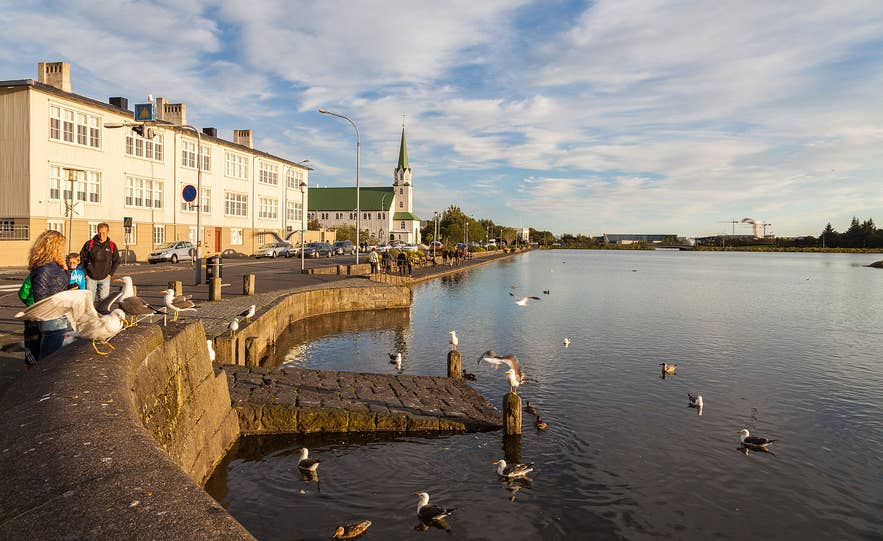
Photo from Wikimedia, Creative Commons, by Diego Delso. No edits made.
Tjornin is one of those spots in Reykjavik that changes a lot with the seasons, so the “best time” really depends on the kind of experience you want. Since it sits right in the city center, you can easily drop by any time of year.
Summer (June–August)
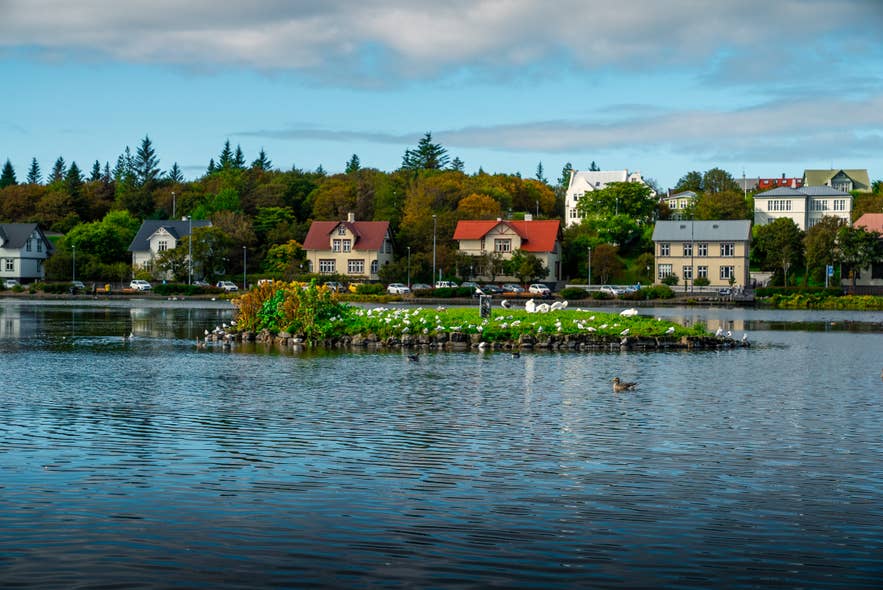 Summer in Iceland is when everything feels a bit lighter, and Tjornin is no exception. The long daylight hours from the midnight sun make it easy to visit at almost any time of day, with soft light often stretching well into the evening.
If you’re planning a full trip, Iceland summer packages often have Reykjavik as a starting point, making it easy to explore Tjornin along with the best things to do and places to visit in Iceland.
During this season, you can expect:
-
Calm water reflecting Reykjavik’s colorful houses and sky that barely gets dark
-
Lush green surroundings that make the walking paths extra pleasant
-
Peak bird activity, with ducks, swans, and geese everywhere, especially near Reykjavik City Hall
-
Ideal conditions for a private Reykjavik walking tour with a Viking guide
Winter (November–March)
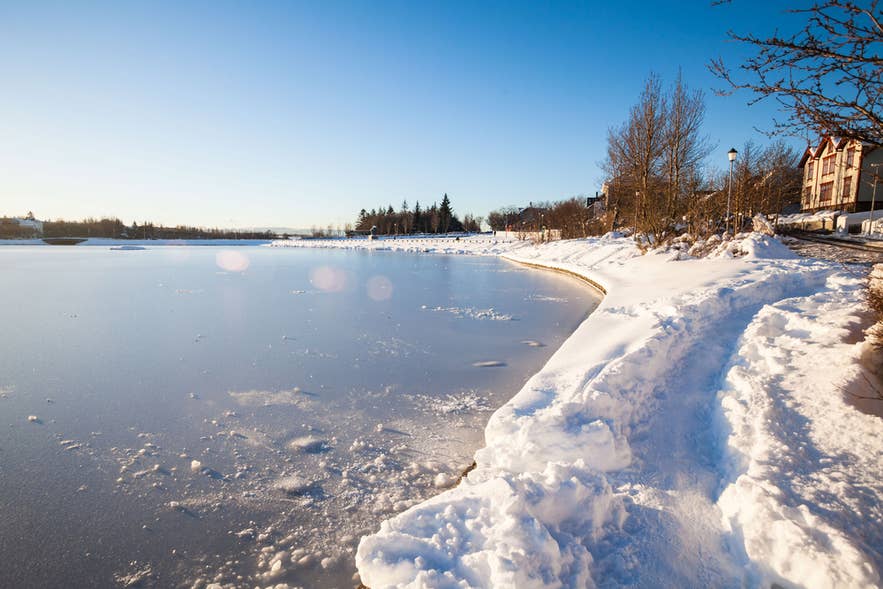 Winter turns Tjornin Pond in Reykjavik into something more quiet and scenic. For anyone experiencing winter in Iceland, this is a great example of how the city slows down and takes on a softer, more local feel.
When temperatures drop, the pond often freezes, and the whole area becomes calm and peaceful. If you’re planning a longer trip, it’s also the perfect season to explore the area through winter vacation packages in Iceland.
Here’s what you can typically experience during this time:
-
Frozen sections of the pond create a classic Reykjavik winter scene
-
Sometimes used for casual ice skating when conditions allow
-
Snow-covered benches, paths, and rooftops around the pond add a cozy feel
-
Great for a short, peaceful stop while exploring downtown Reykjavik in the cold
How To Photograph Tjornin Pond in Reykjavik
 Tjornin is one of the easiest places in Reykjavik to get great photos without leaving the city center. It’s small, but the mix of water, birds, and surrounding landmarks gives you a lot to work with if you time it right.
-
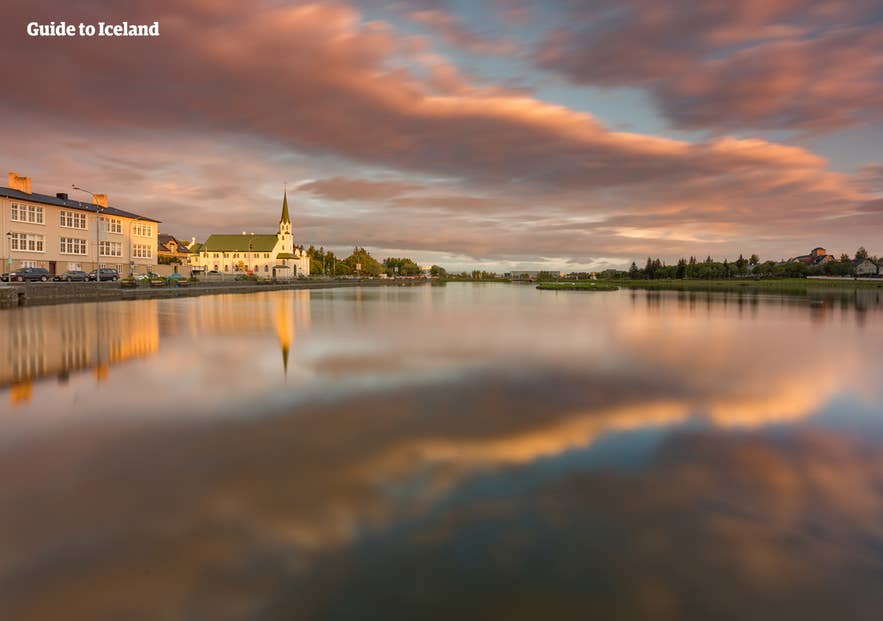
Capture morning reflections. Early morning is when Tjornin is at its calmest. The water is usually still, giving you clean reflections of City Hall and the colorful houses.
-
Photograph the sunset light. Late evening light softens the whole scene at Tjornin. This is when the water picks up warm tones and strong reflections.
-
Use a wide-angle lens. This helps you fit in the full scene: the pond, skyline, and buildings, all in one frame, especially from the walking paths along Tjarnargata.
-
Try low angles. Getting close to the ground works well here, especially for ducks on the water or reflections of buildings across the pond.
-
Focus on birdlife. Swans, ducks, and geese are everywhere here. A zoom or telephoto lens lets you capture close shots without disturbing them, especially near the southern and eastern edges of the pond.
-
Shoot from the Frikirkjuvegur side. The area near Frikirkjan Church gives you one of the most balanced views of the pond, with water in the foreground and the city rising behind it.
-
Go for winter shots. In colder months, frozen sections near City Hall create strong contrast shots, with ice in the foreground and glass buildings and snow in the background.
-
Don’t miss the northern lights. On clear nights with strong aurora activity, Tjornin can be a great city-center spot to capture the northern lights reflecting over the water. A tripod helps a lot here for long exposure shots. Check out our guide on how to photograph the northern lights in Iceland.
Tjornin Pond in Literature and Cinema
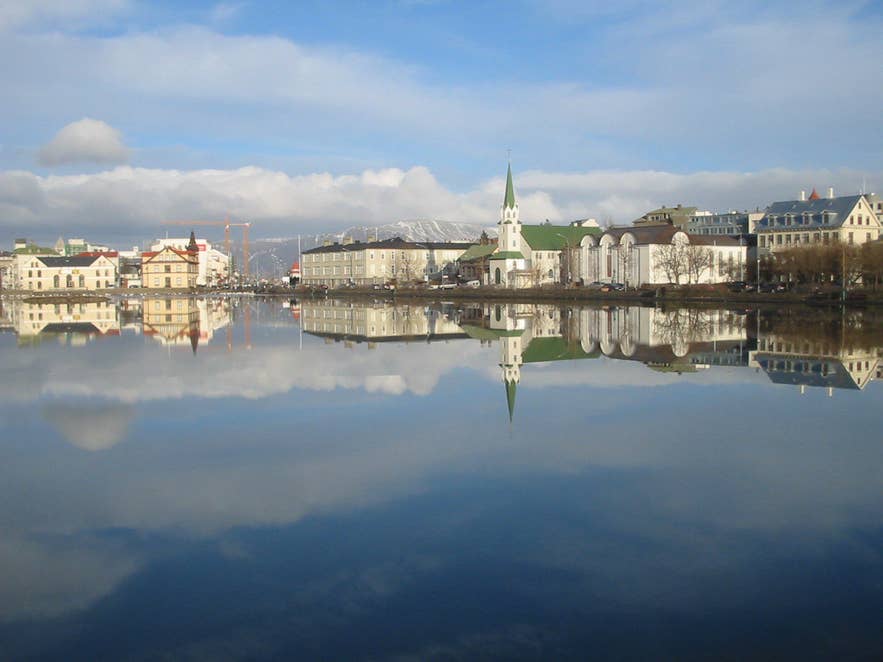
Photo from Wikimedia, Creative Commons, by Helgi Hall. No edits made.
Tjornin appears in Icelandic literature and visual media mainly as a backdrop to everyday life in Reykjavik.
In film and television, the Tjornin Pond appears in Iceland's urban landscape, featured throughout "Crocodile”, episode 3 of season 4 of Netflix’s Black Mirror, which was filmed in Reykjavik and other locations around Iceland. It's also referenced in the 2010 Icelandic comedy Gauragangur, directed by Gunnar B. Guðmundsson, which uses Reykjavik city-center locations as part of its setting
In literature, it is mentioned in “The Copyart Murders” by Geoffrey Gates, where Reykjavik locations are used as part of the city’s urban backdrop. It also appears in “The Ice Lands” by Steinar Bragi, a novel set partly in and around Reykjavik, where the city’s landscape, including Tjornin, contributes to the story’s atmosphere of urban and psychological contrast.
Beyond these examples, Tjornin is more commonly featured in photography, documentaries, travel media, and Reykjavik-based visual storytelling than as a major standalone filming location. Its central location, historic surroundings, and reflective views of the city skyline have made it one of the most recognizable urban landscapes in Iceland.
Nearby Attractions To Combine With Your Tjornin Visit
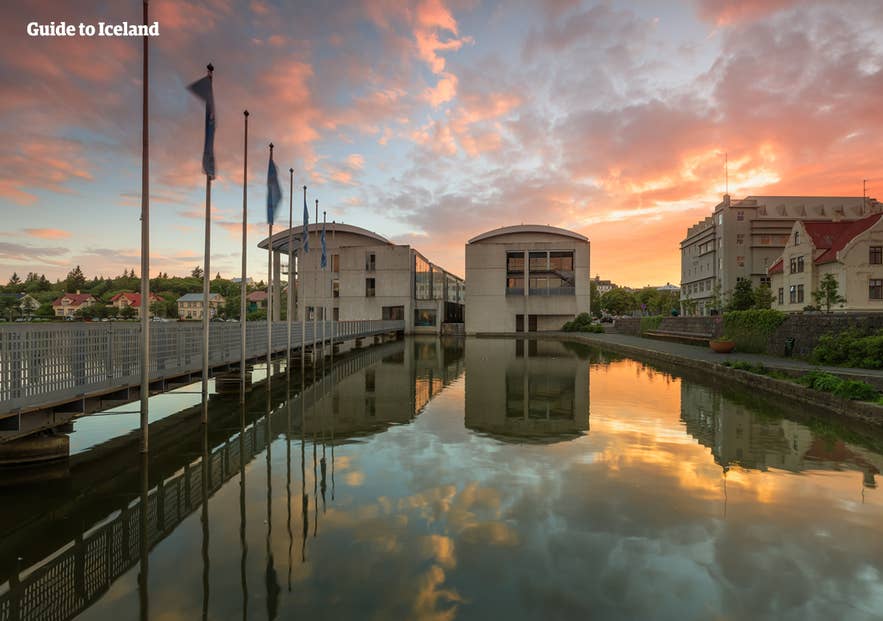
Tjornin is located in the heart of Reykjavik, which means you can easily pair your visit with some of the city’s most popular landmarks, cultural spots, and walking streets.
-
Reykjavik City Hall (about 0.06 miles / 0.1 kilometers) – Right beside the pond, known for its modern glass design and large 3D map of Iceland inside.
-
Frikirkjan Church (about 0.06 miles / 0.1 kilometers) – The charming white church by the pond, offering one of the most photogenic angles of Tjornin.
-
Adalstraeti and The Settlement Exhibition (about 0.3 miles / 0.5 kilometers) – Exhibitions that explore the remains of a Viking-age longhouse and the earliest days of Reykjavik.
-
National Museum of Iceland (about 0.3 miles / 0.5 kilometers) – Showcases Iceland’s history from settlement to modern times, with well-curated exhibits and artifacts.
-
Austurvollur Square (about 0.4 miles / 0.65 kilometers) – A lively public square surrounded by cafes and the Icelandic Parliament building.
-
Rainbow Street (about 0.5 miles / 0.75 kilometers) – A colorful pedestrian street leading up toward Hallgrimskirkja, lined with small shops, cafes, and photo spots.
-
Icelandic Phallological Museum (about 0.5 miles / 0.8 kilometers) – A unique museum in downtown Reykjavik featuring one of the world’s most unusual collections.
-
Hallgrimskirkja Church (about 0.6 miles / 1 kilometer) – Reykjavik’s iconic church, about a 10–15 minute walk uphill with great city views from the tower.
-
Harpa Concert Hall (0.7 miles / 1.1 kilometers) – A short walk toward the waterfront, famous for its glass architecture and harbor views.
-
Reykjavik Harbor (0.7 miles / 1.1 kilometers) – A scenic waterfront area, known for its restaurants and walking paths. It’s where most whale watching tours depart.
-
Laugavegur Street (about 1.1 miles / 1.8 kilometers) – The main downtown street filled with shops, cafes, restaurants, and local boutiques where you can buy Icelandic souvenirs.
Local Tips for Visiting Tjornin in Reykjavik
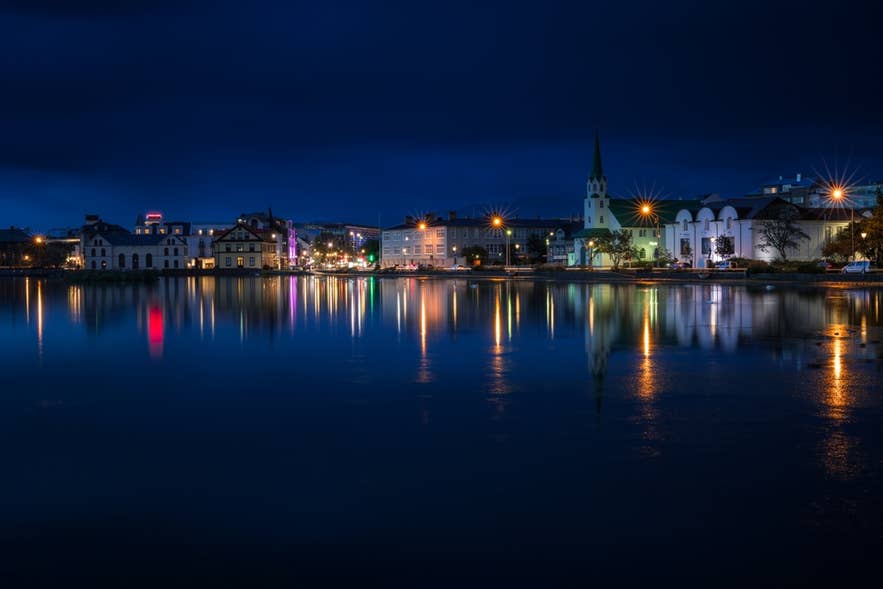
Tjornin Pond is a simple place to enjoy, but a few local tips can make your visit more comfortable and help you experience it like a Reykjavik local.
-
Best time for calm views: Early mornings and late evenings are usually quieter, with better reflections on the water.
-
Watch your step in winter: Paths can get icy, especially around Tjarnargata and the edges near City Hall.
-
Have a picnic: The south-east corner, adjacent to Hljomskalagardur Park, is a great place to spread out on the grass, with plenty of green space, benches, and trees overlooking the water.
-
Don’t feed birds bread: If feeding, use grains or seeds instead. Bread is discouraged as it attracts seagulls and can harm water quality.
-
Check the weather quickly: Icelandic weather can change fast, so it’s worth checking weather updates before planning a long stop.
-
Combine nearby stops: Tjornin is best enjoyed as part of a walk through downtown Reykjavik, not as a standalone attraction.
-
Purchase a Reykjavik City Card: Visit Reykjavik City Hall, also home to Guide to Iceland, the city’s official tourism provider, where you can easily buy a Reykjavik City Card for discounts on museums, pools, and attractions around the city.
Why Tjornin Should Be on Your Reykjavik Itinerary
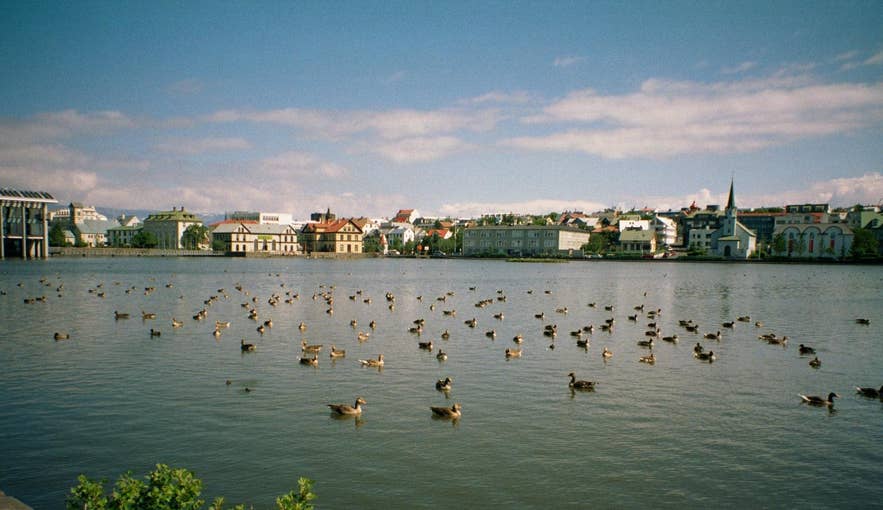
Photo from Wikimedia, Creative Commons, by Adrian Simmons. No edits made.
Tjornin Pond shows you a softer side of Reykjavik. It’s right in the city center, yet it still feels calm, local, and slightly removed from the busier streets around it.
The pond is also a great stop to fit into wider travel plans. Many visitors on self-drive tours in Iceland or weekend breaks use Reykjavik as their base, and Tjornin is one of the most convenient and relaxing spots to include between bigger attractions.
Whether you’re walking past on a sightseeing route, stopping for photos, or just sitting by the water with a coffee, it’s an easy place to slow down and experience everyday life in the capital.
Where is Tjornin located in Reykjavik?
Is Tjornin free to visit?
How much time do I need at Tjornin?
Do I need a guided tour to visit Tjornin?
One great option is a private Reykjavik walking tour, where you can explore at your own pace with a local guide and get deeper insights into the area.
Can I walk around Tjornin?
When is the best time to visit Tjornin?
In summer, you can also enjoy long golden evenings thanks to the midnight sun. Meanwhile, winter provides early daylight hours, with late afternoon light creating a calm, atmospheric feel with snow and ice adding to the scenery.
Is it safe to visit Tjornin at night?
Is Tjornin worth visiting in winter?
Can I see the northern lights at Tjornin?
For better chances of seeing strong displays, many visitors also join a northern lights tour from Reykjavik, which takes you outside the city to darker locations with clearer skies.
Can I ice skate on Tjornin?
Is Tjornin suitable for families with kids?
Tjornin is also one of the best attractions when exploring Reykjavik with kids, since everything is close by, easy to navigate, and doesn’t require any travel outside downtown.
What animals can I see at Tjornin?
The pond is especially active in spring and summer when birdlife gathers in larger numbers for breeding and moulting.
Can I feed the birds at Tjornin?
Why should I avoid feeding bread to the birds at Tjornin?
Are there cafes near Tjornin?
Is parking available near Tjornin?
Have you visited Tjornin Pond in Reykjavik, or is it on your Iceland travel list? We'd love to hear about your experience, favorite photo spot, or any tips you discovered during your visit in the comment box below!

Michael Chapman is a British travel writer living in Reykjavík. A former scuba and lava cave guide, he draws on firsthand experience to write about Iceland’s nature and culture. He’s also the author of Hidden Iceland (2020).