Learn about wildlife and animals in Iceland and how different species have adapted to the country’s volcanic landscapes and challenging climate. Despite limited vegetation, Iceland supports a range of land, bird, and marine animals that have shaped both its ecosystems and its cultural identity.
Before human settlement, the Arctic fox was the island’s only land mammal, while birds and marine species dominated the natural environment. Over time, additional animals were introduced, resulting in the diverse wildlife seen today. Many visitors encounter these species through wildlife tours that focus on specific habitats.
Common ways to observe Icelandic animals include birdwatching tours near nesting cliffs and wetlands, horse riding tours in rural areas, and whale-watching tours along the coast. In winter, one can try a dog-sledding experience in Myvatn, which reflects the continued use of working animals in North Iceland.
Understanding where these animals live and how they interact with Iceland’s environment provides useful context for travelers exploring the country. Continue reading for a closer look at Iceland’s wildlife, including where different species are found and when they are most commonly seen.
Why You Can Trust Our Content
Guide to Iceland is the most trusted travel platform in Iceland, helping millions of visitors each year. All our content is written and reviewed by local experts who are deeply familiar with Iceland. You can count on us for accurate, up-to-date, and trustworthy travel advice.
Key Takeaways
-
Icelandic horses have a unique extra gait called the tölt, along with the faster skeið. Comfortable riders can sometimes experience them on horse riding tours.
-
Reindeer in Iceland roam wild in the East, having originally been introduced for farming but never domesticated.
-
Feral mink and rabbits, once brought for fur or released as pets, now thrive in the wild and cause unexpected challenges to ecosystems.
-
Puffins are incredibly common in Iceland during summer—look for them on cliffs, islands, and even on short boat tours from Reykjavik.
-
Reykjavik Family Park & Zoo offers an easy way to see native and domestic Icelandic animals—like Arctic foxes, seals, sheep, and reindeer—right in the capital area.
Domestic Animals in Iceland
 The vast majority of animals in Iceland that you’ll see are domestic. After all, this is a nation that relies heavily on agriculture.
Though farm animals might not seem fascinating at first, their adaptation to Iceland's harsh climate and their roles in the country’s history have made them essential to human survival. These creatures have supported Icelanders through tough times, showcasing their importance to the nation’s heritage and way of life.
The Icelandic Sheep
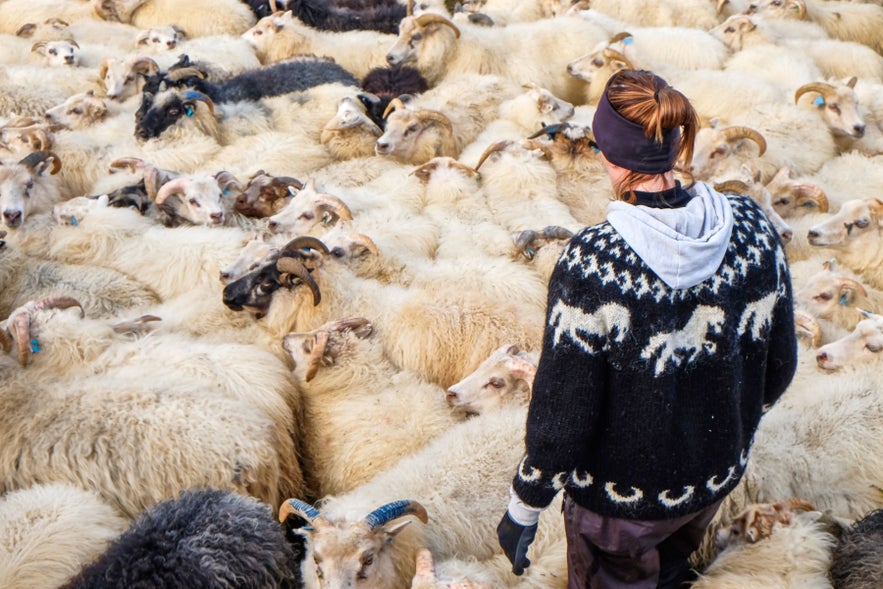 The Icelandic Sheep were the lifeblood of Iceland for centuries. The first settlers from Norway brought them to the island, and their wool and meat helped humans survive Iceland’s harsh conditions.
There are under 350,000 winter-fed sheep in Iceland in 2025. Our study on where to see sheep in Iceland traces the fall from roughly 828,000 in 1980, a drop of more than half.
While not being the most exciting animals in Iceland, their role in the country’s history has been significant. Whenever the nation has gone through terrible struggles or a surge in growth, it has always returned to sheep.
For example, the 1783 eruption of Lakagigar Craters was the most fatal in the country’s history. Up to 25 percent of the population died, primarily because of famine caused by the 80 percent of the nation’s sheep lost to the ash’s poisons.
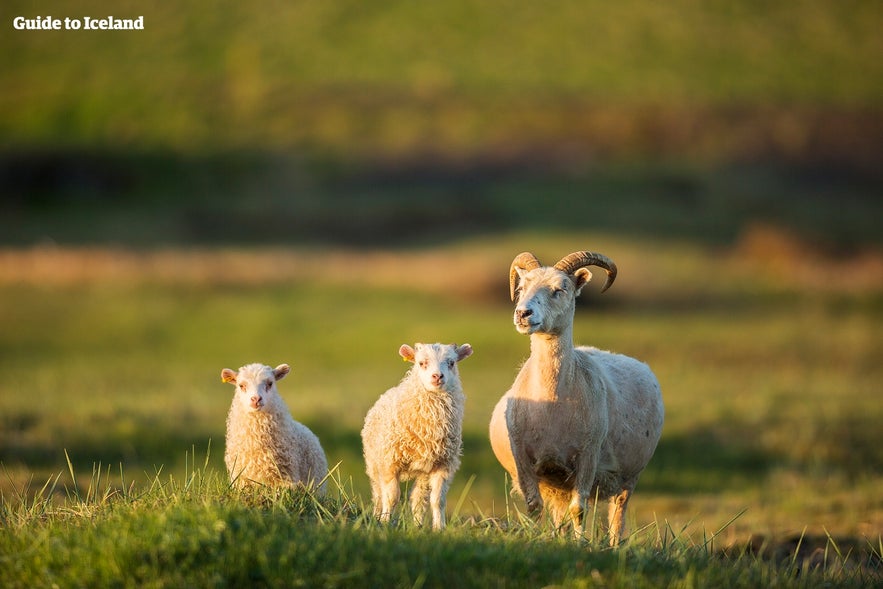
At the same time, Iceland's growth and industrial development during World War I were also tied to sheep. With much of Europe’s countryside consumed by war, demand for Icelandic wool surged. The resulting economic boost from sheep products during those four years played a key role in shaping modern Iceland.
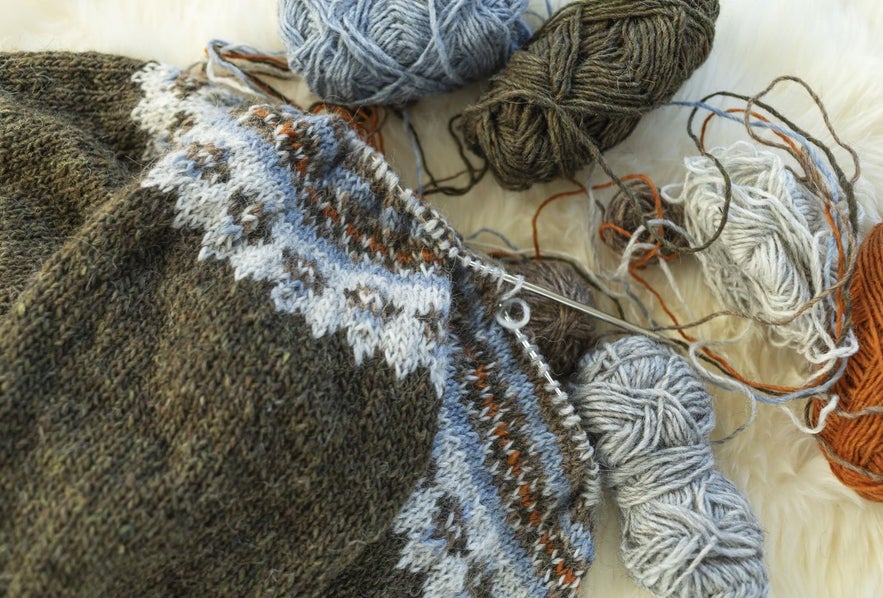
Their wool is used to create handicrafts, such as the Icelandic sweater, also called “lopapeysa.” The lopapeysa is an ideal layering piece, providing warmth and protection for winter activities in Iceland. To get authentic lopapeysa, visit the Handknitting Association on Skolavordustigur Street.
Many of Reykjavik’s best restaurants incorporate lamb into their dishes, as it’s a staple in Icelandic cuisine outside of fish dishes. The nation’s iconic lamb soup, in particular, is celebrated worldwide for its rich, hearty flavor. This flavor of Icelandic lamb has a curious, almost haunting origin rooted in tradition.
Each summer, sheep are set free to roam the Highlands, grazing on Icelandic wildflowers and herbs. This diet infuses their meat with a distinct taste before it reaches the table. The result is a flavor closely connected to the land and a centuries-old way of life.
- Learn more about Icelandic Food
- Check out The 10 Weirdest Things about Icelandic People & Culture
The Icelandic Sheepdog
Like the livestock of Iceland, Icelandic Sheepdogs developed from their Nordic cousins when brought to Iceland by early settlers hundreds of years ago. Since then, they have been essential in aiding farmers, herding, and guarding property.
As most animals brought to Iceland, they’re smaller than their relatives abroad. Due to the country's long isolation, they’re also more vulnerable to disease. In fact, their population declined so drastically by the late 19th century that the breed came dangerously close to extinction.
After a ban on other dog breeds entering the country and later pet vaccines and modern veterinary care that made this first step redundant, the population has recovered. Other than their size, Icelandic sheepdogs share the same fluffy coat and curled tails as many other sheepdog breeds.
They also share the same behavior. The sheepdogs are energetic, resilient, agile, and friendly, making them great companions for those with the time and space to let them exercise. The majority of Icelandic sheepdogs live out in the country, where they can utilize their energy and herding instincts to help their owners.
The Icelandic Horse
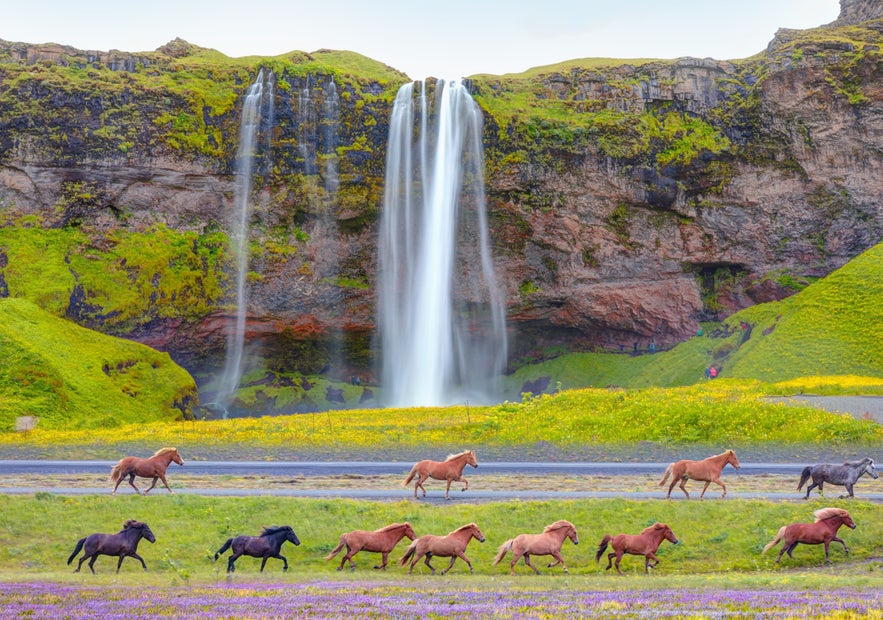
Icelandic horses are not at all like other breeds. At first sight, it appears that they only differ in terms of height, as they rarely reach 59 inches (150 centimeters) tall.
After a few minutes in their company, however, it becomes apparent that Icelandic horses are more friendly, curious, and intelligent than other horses. These character traits have made them a central part of Icelandic identity.
The reason for their unique charm is due to their descendants. Very few horses could fit within a longboat when Iceland was first settled, and the best horses would have been chosen to bring on the journey.
Since many of the early settlers were wealthy chieftains, they would only take the very best of their stock with them. That meant that, as the settlement period ended, Iceland had a healthy population of the sturdiest, strongest, and most intelligent horses from Norway.
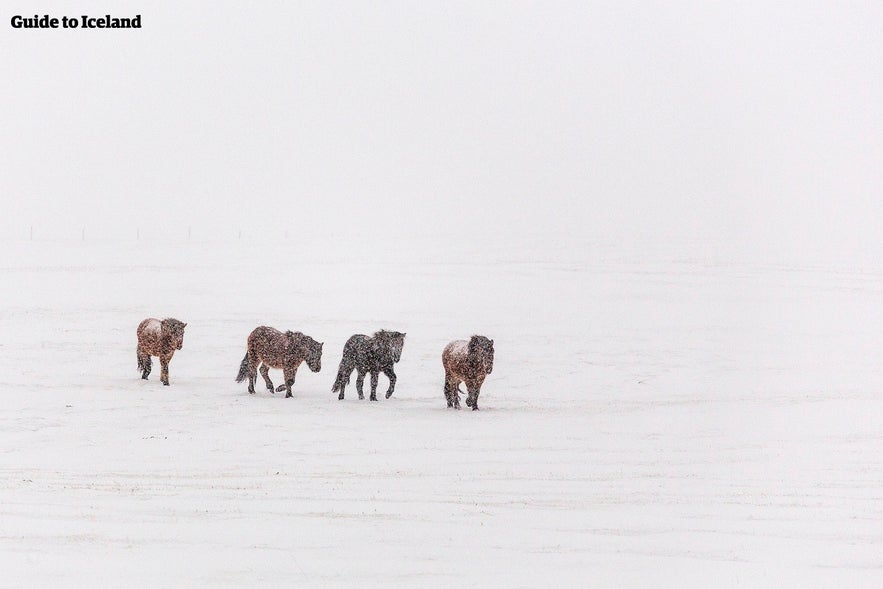
Icelandic horses are not particularly concerned by the winter weather in Iceland. Initially, the horses were almost solely used for transportation and sometimes for battles between clans. Over the centuries, however, they were used more and more for farm work and became central to the nation's survival.
Those in possession of a horse were able to travel from the country to the towns and trading posts, allowing them to develop more wealth and opportunity. Those without one were left isolated and more impoverished as a result.
As equestrian sports became more and more popular, Icelandic horses became noted for something else — while most breeds around the world have three or four “gaits” (styles of walking, such as the trot and gallop), Icelandic horses had five.
Icelandic horses are known for two unique gaits: the smooth, four-beat tölt, and the faster, racing skeið. The tölt is especially prized for its comfortable ride over rough terrain, and many riding tours give experienced riders the chance to try it firsthand.
- Learn more about the Enchanting Gaits of the Icelandic Horse
- See more about Icelandic Horseback Riding
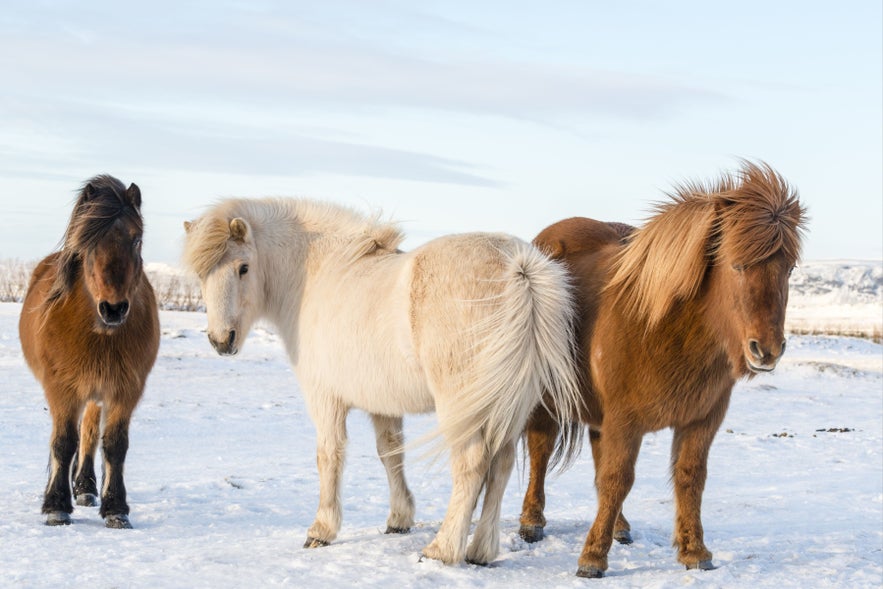 Icelandic horses are popular for competitions, riding, and their meat. They've become very popular in riding competitions and exhibitions because of their character, appearance, and unique qualities. More Icelandic horses now live outside the country than inside; 100,000 live abroad, compared to the 78,000 living domestically.
However, those horses are not spread evenly across the country. Our data on where horses live in Iceland by region shows South Iceland holds roughly a third of them, and Northwest Iceland is the only region where they outnumber people.
However, those who leave Iceland can never return, and no other breeds are allowed on the island. These restrictions are because the isolated native breed is susceptible to diseases, and a foreign infection could cripple the whole population.
Cows in Iceland
A less commonly seen farm animal in Iceland is the cow, but the country does have a unique breed. You might be able to spot them on summer self-drive tours or by simply renting an affordable car.
Like the horses, Icelandic cattle were brought over with Norway’s earliest settlers and have since developed unique traits. They are, for example, smaller than their European counterparts and very susceptible to foreign diseases.
Unfortunately, while Icelandic horses’ other qualities compare favorably to similar breeds worldwide, the qualities of Icelandic cattle do not. The Agricultural University of Iceland released a study saying that Swedish cows would produce more milk at a lower cost and suggested that making the switch would benefit the economy.
Although the Icelandic population is not as connected to their cows as to their horses, there was still resistance to this idea.

For a millennium, Icelandic cattle have produced essential dairy products, many of which have become an integral part of the nation’s culture. One particularly notable example is Icelandic skyr, a thick, yogurt-like cheese.
For this reason, many consider them too crucial to Icelandic heritage to desert. You can enjoy authentic Icelandic skyr at the Erpsstadir Farm in West Iceland and Efstidalur Farm in the Golden Circle area, where you can also meet the cows that produce the milk for this traditional treat.
Iceland has also been developing premium Angus beef. For a taste, you can visit The Grillmarket in Reykjavik, where high-quality meat is featured in their dishes. Alongside their Angus beef options, the restaurant features other creative dishes made from locally sourced ingredients.
Native Wildlife in Iceland
 After reading this far, you might be wondering what animals are native to Iceland. As has been noted, Iceland has just one indigenous land mammal. However, that is not to say that the native wildlife of Iceland lacks diversity.
There’s a wealth of Icelandic fauna in the country’s seas and skies, which draws visitors worldwide. It’s one of the best places to visit for bird watching, seal watching, and whale watching.
Whale Watching in Iceland
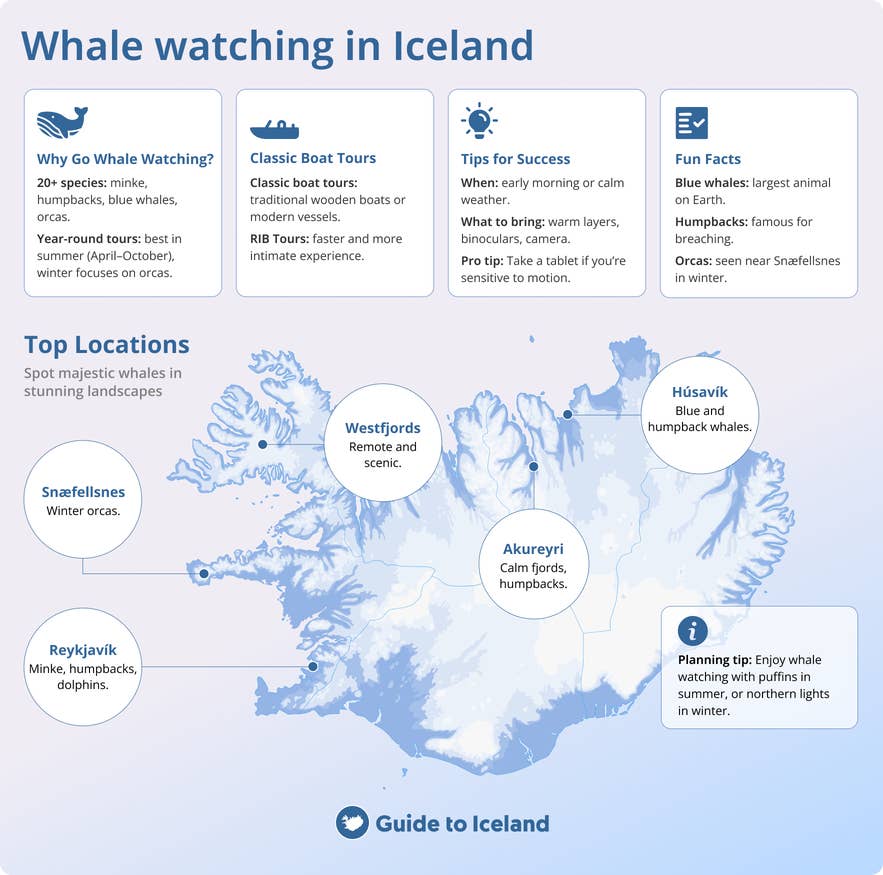
Iceland’s fertile sub-Arctic waters, fed by the Gulf Stream, are home to over 20 different whale and dolphin species. It’s one of the best places in the world for whale watching, especially during the summer when the great whales migrate here to feed. How reliable that is depends on where you sail from. Our study of where to find whales in Iceland found every harbor clears an 85% sighting rate in summer, with Husavik’s Skjalfandi Bay highest at roughly 97% and Reykjavik’s Faxafloi Bay the only one holding around 80% through winter.
With a variety of whale-watching tours available, the experience varies by departure port, boat type, and operator. Our study of the best whale-watching companies in Iceland explores these operator differences.
Beyond offering opportunities to see whales, the industry is changing how Icelanders view them. This shift is part of a long and complex relationship between Icelanders and the creatures of the deep. As seafarers, many accounts from early Icelanders depict whales as terrible leviathans. An incredibly famous story tells of a warlock who attempted to take over Iceland by transforming into a whale before being rebuffed by a different guardian spirit on all four shores.
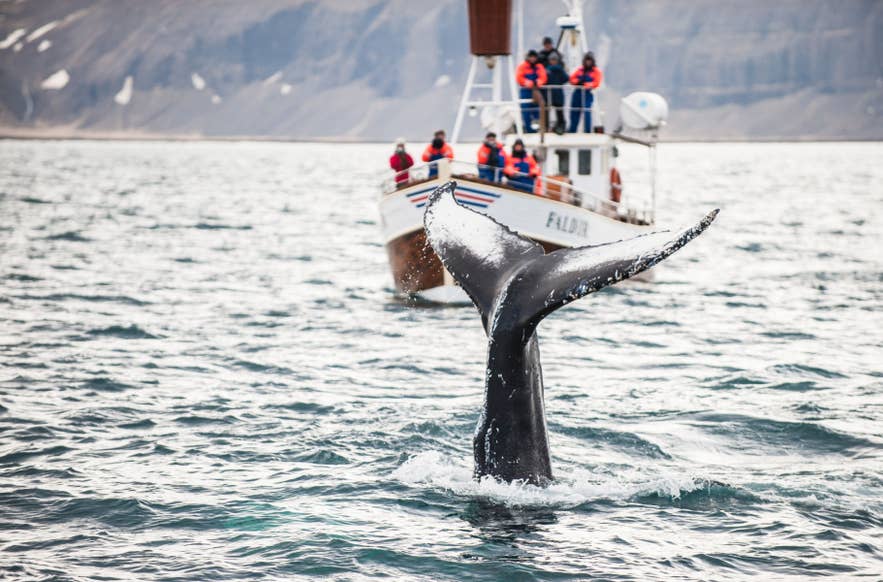 However, while feared when in their natural environment, whales were appreciated when they washed up on the beaches. The meat from a stranding could feed communities, and their oil could supply candles and lanterns. The word for “hvalreki” in Icelandic means both windfall and a beached whale.
Iceland began commercial whaling in the late 19th century, later than most other nations, and struggled with the pressures against it for many decades. Commercial whaling has been outlawed and reinstated several times due to stock populations, international pressure, and local opinions.
While whaling continues on a small scale today, there is a constant debate within the country about whether it has a future. What indeed does have a future, however, is whale watching. Tours are leaving from ports all across the country, with incredibly high success rates and a diverse wealth of life to see.
Arctic Foxes of Iceland
 Photo by Jonatan Pie
Before human settlement, the Arctic fox was the only land mammal that lived in Iceland. They walked over sea ice to the island during the last ice age, only to be stranded there when it melted over 10,000 years ago.
Incredibly adaptable creatures, they managed to sustain themselves by feeding on eggs, birds, invertebrates, and berries.
The foxes were hunted extensively for fur and livestock protection when humans arrived. With the development of fur farms, the former reason no longer applies, but farmers still maintain that population control is essential for their economy.
While hunting disrupted the fox populations, human arrival meant a wealth of new food in rodents, food waste, and lambs, allowing the species to survive.
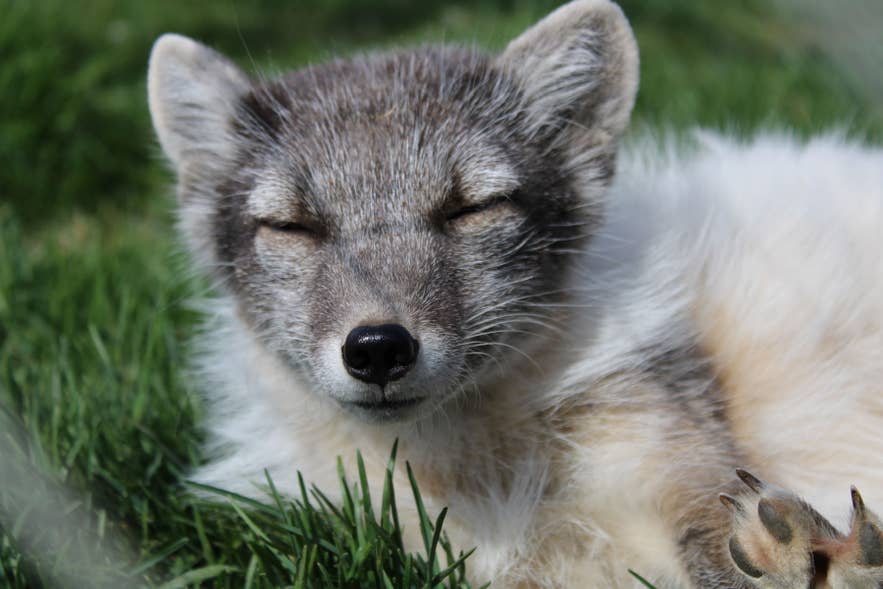 The Arctic foxes in Iceland come in two colors: white and blue. White foxes change their coat completely between seasons, going from snow-white in winter to brown and white in summer.
Blue foxes do not change coats, but their fur is bleached throughout summer so that they’re much lighter by the arrival of winter. However, both variants thicken their fur throughout the colder months and lose it when the weather warms.
Our study of where to find Arctic foxes in Iceland shows they live across the country but are most concentrated in the Westfjords. The best place to see them is the remote Hornstrandir Nature Reserve. For those eager to spot an Arctic fox, options include booking a 10-hour Arctic Fox Tour or even a 3-day guided tour in Hornstrandir.
Since 2007, there has been an Arctic Fox Center in the village of Sudavik. The center has led the way in researching these animals, educating people about their threats, and promoting eco-tourism.
Seals of Iceland
 Seals have used Iceland’s shores as a place to haul out, breed, and shed for millennia. Its cold, fertile waters and long stretches of rocky, uninhabited coast allowed large colonies to evolve before humans ever set foot here.
Their numbers and lack of fear of humans were a blessing when settlers arrived. Seals provided the people with essential resources, from Icelandic food to clothing to oil, which helped make the stark new country habitable.
Their populations were dwindling heavily by the 20th century, when more and more were taken for fashion rather than necessity, but their numbers today are relatively stable.
 Photo by Einar Jonnson
Seals were hunted in Iceland for centuries, partly because they damage fishing gear and carry sealworm, a parasite found in cod. A 2019 regulation banned seal hunting, though landowners can apply to continue limited traditional hunting.
The Icelandic Seal Center in the village of Hvammstangi researches seals and the threats they face. You can visit the Seal Center's informative exhibition about this charming marine mammal while exploring North Iceland.
Two seal species live and breed on Iceland's shores, the harbor seal and the gray seal. The best places to see them are the Vatnsnes Peninsula, Ytri Tunga Beach on the Snaefellsnes Peninsula, and Jokulsarlon Glacier Lagoon.
Iceland's harbor seals have fallen to about a third of their 1980 number, according to our analysis of where to see seals in Iceland. The species is now listed as endangered. Staying 230 to 330 feet (70 to 100 meters) from resting seals helps protect the sites they still use.
They’re not the only species to frequent Icelandic waters, however. Harp, bearded, hooded, and ringed seals are occasional visitors, and even walruses are sometimes seen in the Westfjords. Walruses used to have a large population here, but were hunted to extinction in the 17th century.
- Learn more about Seals and Seal Watching in Iceland
Puffins of Iceland

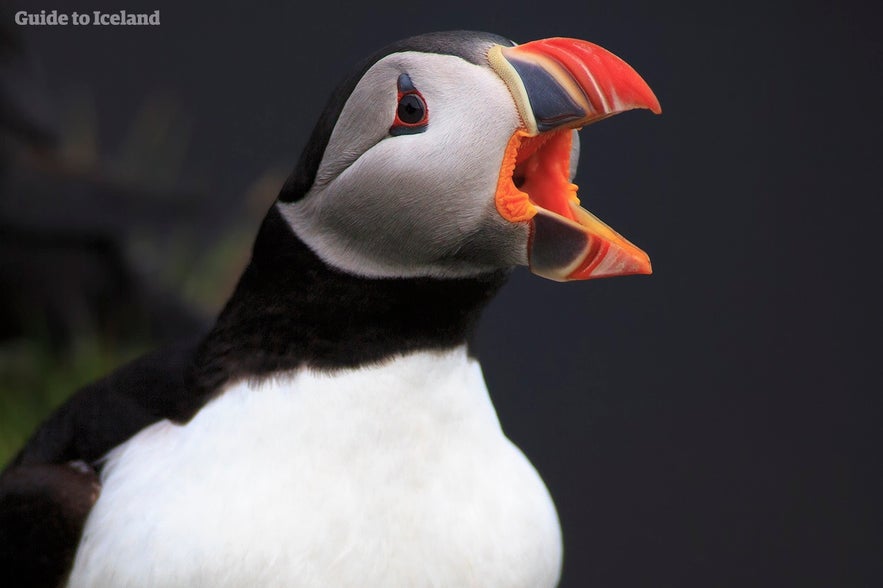
Puffins are considered rare and elusive birds in most of the world, but there’s a wealth of them in Iceland. Their arrival in April and May marks the beginning of summer, and they can be easily seen up close in many parts of the country until August.
Iceland holds close to half of Europe’s Atlantic puffins and roughly a third of the global population, with around 2 million nesting pairs. Our count of Iceland’s biggest puffin colonies puts the national total at 2,679,000 nesting burrows. Puffins gather in colonies, so if you spot one, you may see hundreds more nearby.
Puffins can be appreciated by boat and by land. From Reykjavik’s Old Harbor, it's easy to jump on an hour-long tour to one of two islands, Lundey and Akurey, just out in the bay, where they nest in the thousands.
These vessels are small enough to get close to the rocky shores, and many tours include binoculars so they can be seen more clearly. Many whale-watching tours also include a detour to these islands.
- Discover Where to Find Puffins in Iceland
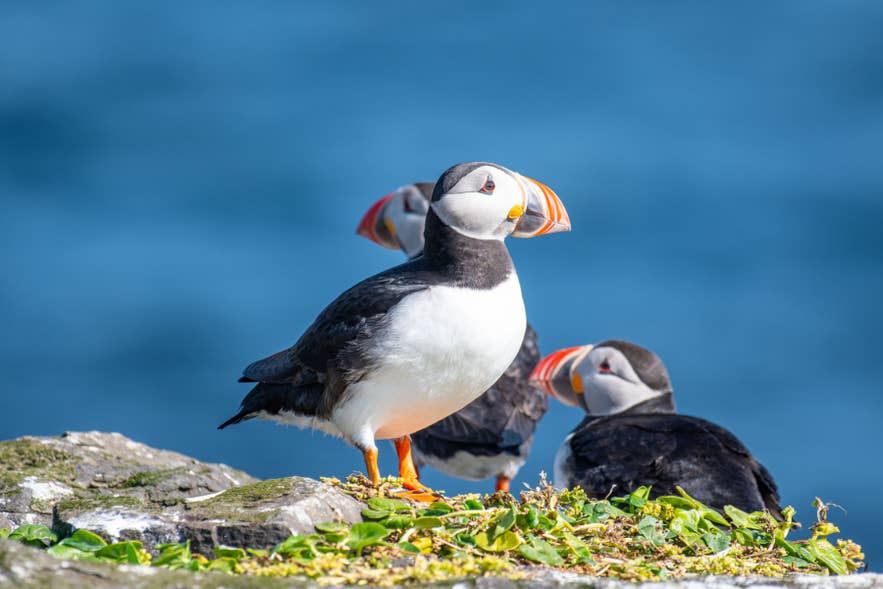 Those traveling to the Westfjords need not even board a boat to see puffins in summer. The Latrabjarg Cliffs, which are up to 1,444 feet (440 meters) high and stretch for 8.7 miles (14 kilometers), are impressive in their own right, but the wealth of birdlife makes them awe-inspiring.
Walking along the edge of this cliff makes it possible to get within arm’s length of the nesting puffins. They have no fear of people and will only fly off if someone tries to touch them. At such proximity, the details of their painted beaks and adorable expressions are on clear display.
These are not the only places puffins nest, however. You can find them in huge populations around the Westman Islands, on the Dyrholaey Rock Arch, in Borgarfjordur Eystri, and on Grimsey Island in the North. Along the South Coast, you can see them on this Ingolfshofdi puffin tour, near the town of Hofn.
While the dramatic nature around Iceland is the most memorable way to see them, puffins can also be seen by boat near the Capital Area. It's why this Reykjavik puffin tour is one of the more popular summer excursions in Iceland.
Other Birds of Iceland
 Puffins are the most popular bird in Iceland, but this tiny island has an enormous wealth of avian life. The cliffs of Latrabjarg in the Westfjords and Krysuvikurbjarg on the Reykjanes Peninsula are home to thousands of individuals and many different species, such as guillemots, fulmar, gulls, auks, sandpipers, and peewits.
You can also find Arctic terns and sea eagles around the coasts. There’s an equal amount of diversity in freshwater. About 15 duck species breed at Lake Myvatn, more than at any other lake in Europe, according to our study of where to find birds in Iceland. Geese and whooper swans also gather at Lake Myvatn in summer.
Outside of aquatic environments, there are even more species: gyrfalcons, golden plovers, snipes, and ptarmigans all call the island home.
However, no discussion about the birds of Iceland would be complete without a mention of the raven. While this is one of the world’s most widespread animals, they’re ubiquitous here and revered for their intelligence and importance to Icelandic folklore and pagan beliefs.
Non-Native Wildlife in Iceland
 Iceland only had one native land animal when the Norse first arrived here. Today, there are multiple species that can be found across the country.
None arrived naturally, either being brought over by humans or sneaking across on boats. However, all have established themselves successfully, for better or worse.
Reindeer in East Iceland

Reindeer in East Iceland are a common sight. Our study on where to see reindeer in Iceland ranks Fljotsdalsherad around Egilsstadir as the most likely place to see a herd during winter. They have also been seen on the fjord slopes around Reydarfjordur, Faskrudsfjordur, Stodvarfjordur, Breiddalsvik, and Djupivogur.
Reindeer were brought over to Iceland in the 18th century. Initially, they were supposed to be farmed, but Icelanders never took to the practice. The population of Icelandic reindeer, therefore, became wild.
About 5,000 reindeer now live in the country. The reindeer in Iceland are most commonly found around Snaefell Mountain, on the higher ground throughout summer, and in the warmer lowlands through winter. They have also been seen as far south as Jokulsarlon Glacier Lagoon and as far north as the Vopnafjordur Fjord.
While reindeer are popular across Iceland, their population is seasonally controlled due to concerns that they could compete with free-roaming sheep for grazing land. This could seriously impact the economy during harsh winters or major volcanic eruptions, which are not uncommon in Iceland.
Rodents and Mink in Iceland
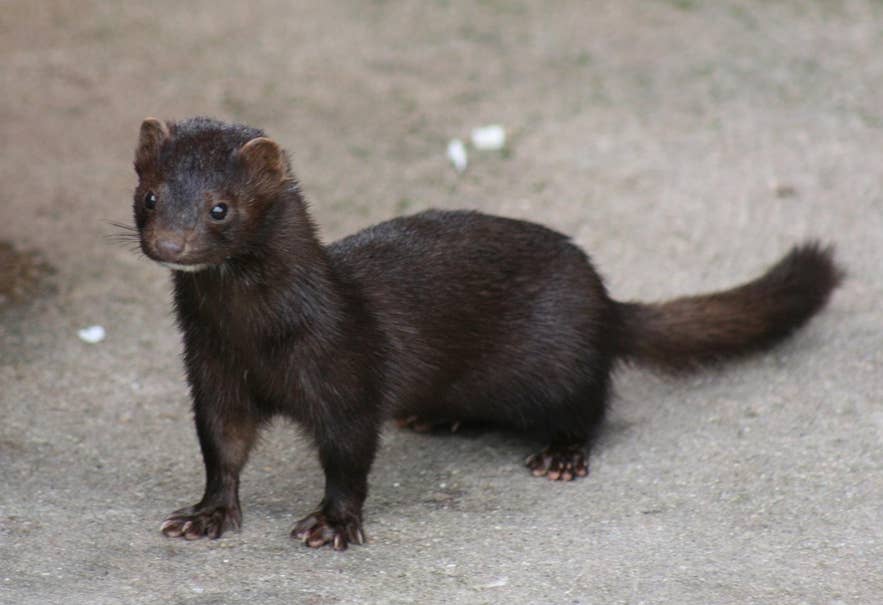 Photo by Pdreijnders, from Wiki Creative Commons. No edits.
Throughout history, whenever humans discovered and settled new lands, they brought rodents with them, and Iceland is no exception. Along with wood and house mice, brown rats came over either with early settlers or later with trading ships. The rats primarily live in populated areas, while the mice have spread across the country.
Iceland also has a population of wild mink that was established more recently. They were imported for fur farms throughout the early 20th century but escaped and became feral. They’re often spotted fishing around Reykjavik and hunting for bird eggs and have become the bane of chicken farmers across the country.
Rabbits are another invasive species and came even more recently than the mink. The majority of the rabbits are descendants of pets released around 2010. In Oskjuhlid Hill and Ellidaardalur Valley, both forested areas in Reykjavik, they gnaw through tree roots and fences, damaging nature and human constructions alike.
Polar Bears from Greenland
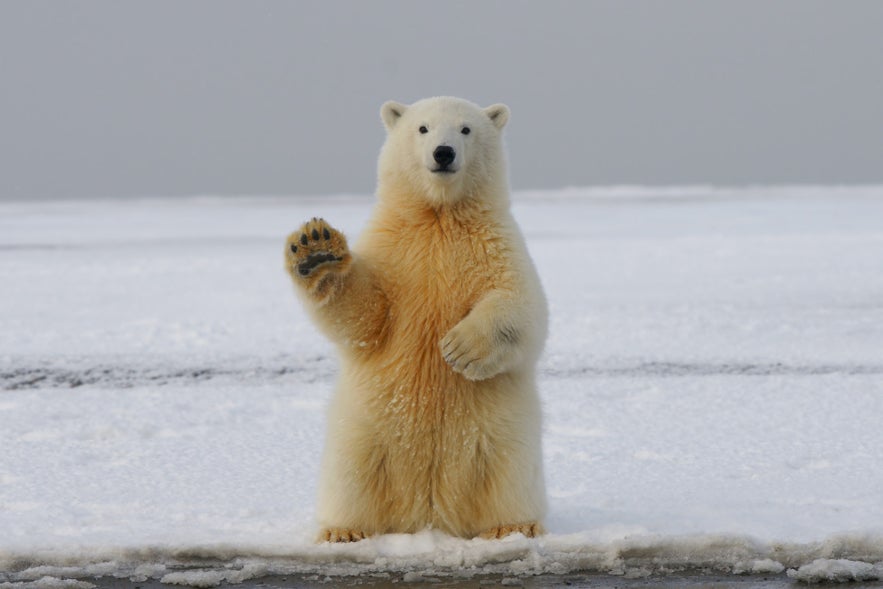 Photo by Hans-Jurgen Mager
The polar bear is not one of the native Icelandic animals but a rare visitor from Greenland. Contrary to what many think, polar bears do not have a permanent population in Iceland.
On rare occasions, polar bears get stranded on drifting icebergs that carry them from Greenland to Iceland’s shores, typically in the Westfjords—but these incidents are extremely uncommon and not something visitors need to worry about.
Unfortunately, when they arrive, they’re likely to be starving and, therefore, pose a significant threat to those living in the region. Considering this and the cost of capturing, bringing to health, and returning the polar bear to its home (estimated at 85,000 USD), they’re killed upon arrival.
Experience Iceland's Wildlife Firsthand On Your Adventure
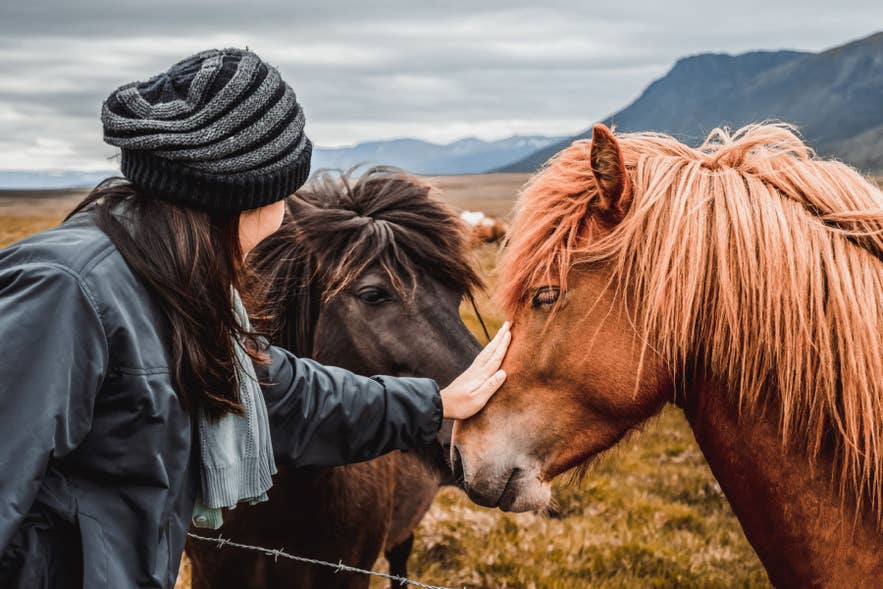 In just over a thousand years, Iceland has transformed from a stark, uninhabited island with a single native land mammal into a place where domestic life flourishes against the odds. Today, no matter where you travel, signs of resilience and adaptation are all around—thriving even in the most unforgiving landscapes.
Of course, you are more likely to find animals that live in Iceland if you know where to look. From the great whales to the runaway rodents, Iceland’s animals and wildlife are ever shaping this nation’s character.
What is the most famous animal in Iceland?
What animals can you see in Iceland as a tourist?
Are there zoos or places to see animals in Reykjavik?
Can Icelandic wildlife be photographed?
Are there wild animals in Iceland?
How can you stay safe from wildlife in Iceland while hiking?
You can also make your presence known by talking or clapping occasionally to avoid startling them.
Are Icelandic horses different from other horses?
Where can you see puffins in Iceland?
Are there dangerous animals in Iceland?
Can you see whales in Iceland?
Where can you see reindeer in Iceland?
Can you see seals in Iceland?
Whether you’re interested in learning about what animals live in Iceland or where to see them, we hope this guide has helped you. We’d love to hear and respond to any comments or questions you may have in the section below.

Hi, I’m Richard. I lived in Iceland for a decade, during which I traveled the country extensively and worked as a guide for several leading travel companies. I’m passionate about writing and sharing the best travel experiences Iceland has to offer so visitors can discover and enjoy the magic of this incredible country just like I did.