Learn everything you need to know about golf in Iceland. Find out why Iceland is one of the best places to play golf. Explore our list of Iceland's unique and beautiful golf courses and plan your next Icelandic golfing trip with our tee time booking tips.
Golf in Iceland is unlike anywhere else in the world. Fairways wind through ancient lava fields, greens overlook rugged coastlines, and during summer, extended daylight allows for tee times late into the evening beneath the midnight sun. Whether experienced as part of curated vacation packages or woven into flexible self-drive tours, golf fits seamlessly into a broader journey through Iceland’s dramatic landscapes.
Why You Can Trust Our Content
Guide to Iceland is the most trusted travel platform in Iceland, helping millions of visitors each year. All our content is written and reviewed by local experts who are deeply familiar with Iceland. You can count on us for accurate, up-to-date, and trustworthy travel advice.
With around 65 golf courses serving a population of fewer than 400,000 people, Iceland ranks among the countries with the highest number of golf courses per capita worldwide. The result is a destination where striking natural scenery meets relatively uncrowded play, offering both challenge and tranquility in equal measure.
Many of Iceland’s top courses sit close to geothermal spas, glacier viewpoints, and scenic coastal routes, making it easy to combine championship-level golf with Iceland’s most iconic attractions. This guide highlights standout courses, the best time to play, typical green fees, and practical planning advice to help you design a golf trip in Iceland that balances unforgettable rounds with extraordinary landscapes.
Key Takeaways: Golf in Iceland
-
Iceland has around 65 golf courses, giving it one of the highest numbers of courses per capita in the world.
-
Most golf courses in Iceland are 9-hole layouts, but several high-quality 18-hole championship courses are located near Reykjavik and throughout the countryside.
-
The best time to play golf in Iceland is June through August, when courses are in peak condition, and extended daylight allows for late evening and even midnight sun rounds.
-
Golf in Iceland is defined by natural terrain, including lava fields, coastal cliffs, fjords, volcanic craters, and geothermal landscapes. Courses are typically designed around the existing environment rather than reshaped land.
-
Westman Islands Golf Course is often considered the most unique course in Iceland, built within and around a volcanic crater on Heimaey Island.
-
Green fees vary by location and season, with 18-hole rounds near Reykjavik generally ranging higher than rural courses, especially during peak summer months.
-
Most 18-hole courses require proof of handicap, typically with a maximum of 36.
-
Advance tee time booking is recommended during June and July.
-
Golfing in Iceland is easy to combine with sightseeing, as many courses are located near major attractions such as the Golden Circle, Vatnajokull National Park, geothermal spas, and coastal driving routes.
-
Renting a car is the most convenient way to access multiple courses, particularly for travelers planning a self-drive golf itinerary across regions.
-
Mini golf and disc golf are also popular in Iceland, with indoor options like Minigarðurinn in Reykjavik and scenic outdoor disc golf courses throughout Iceland.
What Makes Golf in Iceland Exceptional
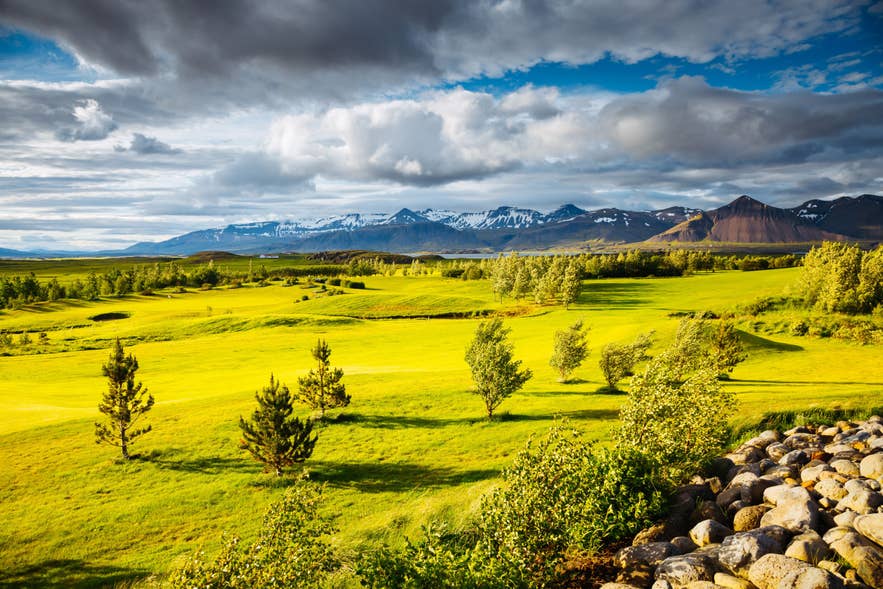
Golf in Iceland is shaped by the natural landscape and practical travel advantages.
Courses are designed around existing terrain rather than heavily reshaped environments, and many are located close to major attractions. This makes it easy to combine golf with sightseeing in Iceland.
Key factors that set golf in Iceland apart include:
-
Natural terrain: Courses are often built on lava fields, coastal land, or near fjords and mountains. The ground conditions and surroundings influence how each course plays.
-
Wind exposure: Many courses sit near the ocean, where wind plays a consistent role in strategy and club selection.
-
Extended summer daylight: From late May through July, Iceland experiences the midnight sun, allowing golfers to play late into the evening.
-
Short travel distances: It is possible to play in multiple regions during one trip due to relatively compact driving times between courses.
These factors make golf in Iceland straightforward to include in a broader travel itinerary while offering playing conditions that differ from traditional parkland courses.
Top 10 Golf Courses in Iceland
Iceland has 65 golf courses across the country. While many are smaller 9-hole layouts, several 18-hole courses stand out for their design, location, and playing conditions. Below are some of the most notable golf courses in Iceland.
10. Siglufjörður Golf Club (Siglufjordur, North Iceland)
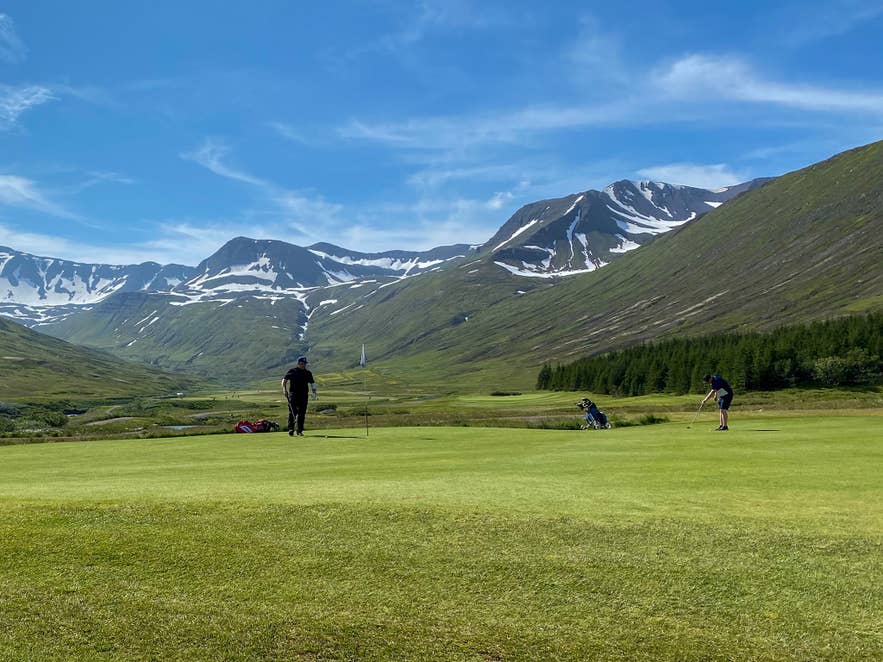
Photo from Siglo Golf
Holes: 9
Par: 70
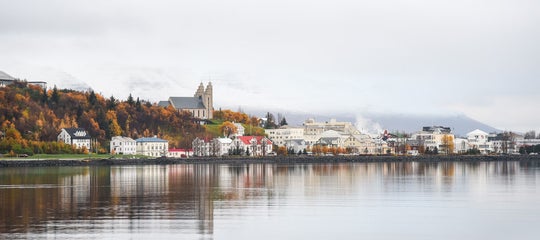
Siglufjörður Golf Club, also known as Hólsvöllur, is located in the narrow fjord town of Siglufjordur in North Iceland. Surrounded by steep mountains and coastal scenery, the course offers one of the most dramatic small-course settings in Iceland.
Playing golf is also one of the enjoyable things to do in Siglufjordur, especially during the summer months when the days are long and the fjord scenery is at its most vibrant.
The nine-hole layout makes effective use of its compact terrain, incorporating gentle elevation changes and natural contours. While not long in distance, the course requires thoughtful shot placement, particularly when wind conditions funnel through the fjord. The greens and fairways are maintained to a solid standard, providing an enjoyable round for both local players and visiting golfers.
Siglufjörður Golf Club delivers a quiet and scenic golf experience that contrasts with the more exposed coastal courses of southern Iceland. Its fjord-side location and intimate atmosphere make it a rewarding stop for golfers exploring North Iceland.
9. Hornafjörður Golf Club (Hofn, Southeast Iceland)
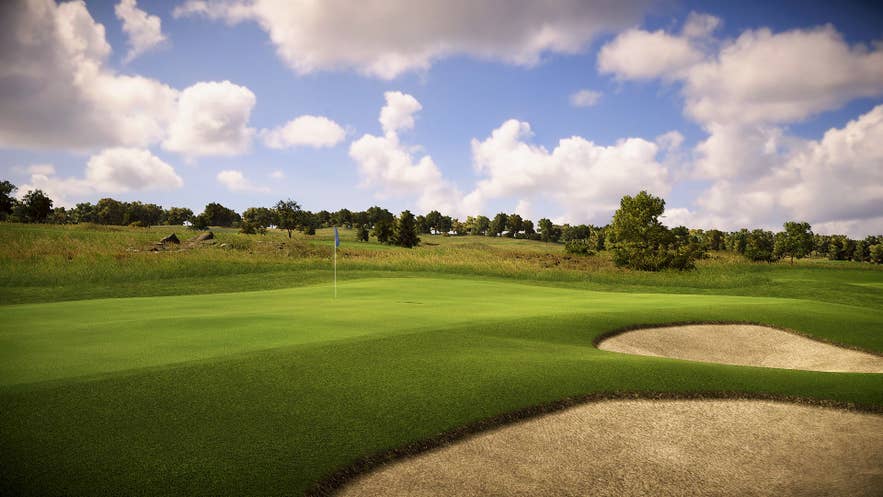
Photo from Golfklúbbur Hornafjarðar
Holes: 9
Par: 35
Hornafjörður Golf Club’s Silfurnesvöllur course is located near the coastal town of Hofn in Southeast Iceland. Originally established in 1971 and later redesigned in the mid-2000s, the course was rerouted to take greater advantage of its seaside setting.
The nine-hole layout stretches along the coastline, with several holes offering direct views of the Atlantic Ocean. The terrain is relatively flat compared to many Icelandic golf courses, but coastal winds frequently influence club selection and strategy. Water features and open exposure add technical elements to what might otherwise appear to be a straightforward round.
Silfurnesvöllur is often included as part of a South or Southeast Iceland itinerary, particularly for travelers visiting Vatnajokull National Park or the nearby glacier lagoons. Its coastal scenery and relaxed pace provide a memorable golfing experience in a less-traveled part of Iceland.
8. Geysir Golf Course (Haukadalur, South Iceland)
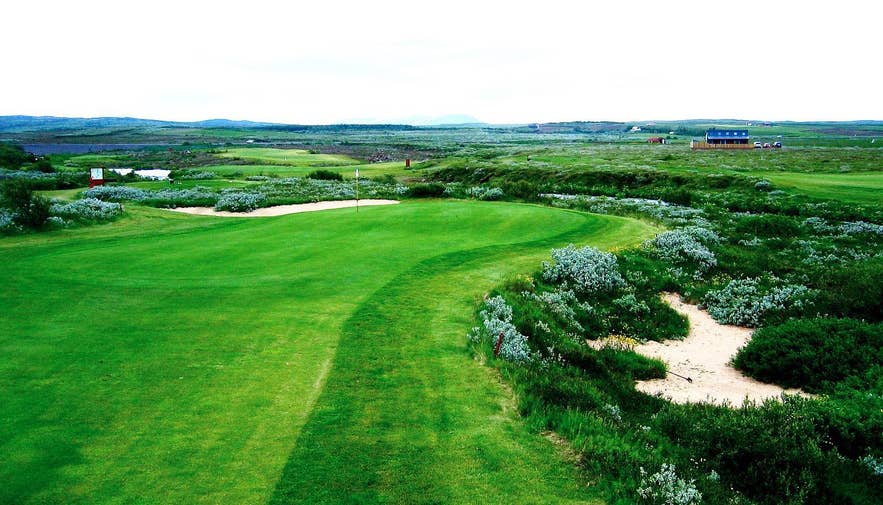
Photo from Hótel Geysir
Holes: 9
Par: 37
Situated in Haukadalur Valley along Iceland’s famous Golden Circle route, Geysir Golf Course offers one of the most uniquely located golfing experiences in the country. The course lies near the geothermal area that includes the Great Geysir and Strokkur, placing it within one of Iceland’s most visited natural regions.
Geysir Golf Course's nine-hole layout is relatively open and set across gently rolling terrain, with fairways framed by low vegetation and distant mountain views.
Compared to many lava-dominated courses in Southwest Iceland, Geysir’s landscape is softer and more forgiving, making it accessible to a wide range of players. However, the exposed setting means wind can become a significant factor during play.
Its proximity to Gullfoss Waterfall and Thingvellir National Park makes Geysir Golf Course a convenient addition to a day of sightseeing. The course provides a relaxed but scenic round that pairs well with exploration of Iceland’s iconic natural landmarks.
7. Reykjavík Golf Club (Reykjavik, Capital Region)
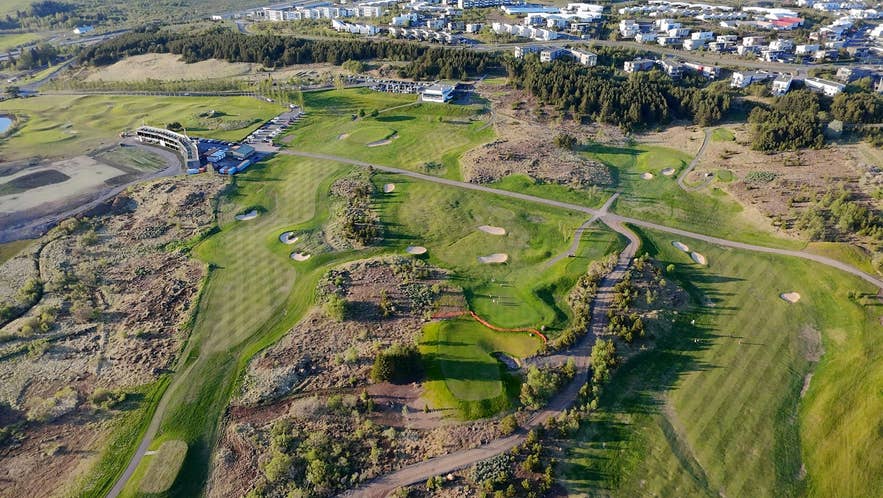
Photo from Golfklúbbur Reykjavíkur
Holes: 18
Par: 71
The Grafarholt Course at Reykjavík Golf Club is Iceland’s oldest 18-hole golf course, officially opened in 1963. Located on the eastern edge of Reykjavik, Grafarholt has long been considered one of the country’s most prestigious and demanding championship layouts.
Built across rugged volcanic terrain, the course incorporates natural lava fields, rolling hills, and elevated tee boxes. The design emphasizes strategic positioning rather than sheer length, with undulating greens and uneven lies frequently testing approach play. Native grasses, heather, and lava rock border many fairways, punishing inaccurate shots and reinforcing the course’s distinctly Icelandic character.
Grafarholt has hosted numerous national and international competitions over the decades and remains a cornerstone of competitive golf in Iceland. Its combination of history, conditioning, and technical challenge makes it a must-play course for serious golfers visiting Reykjavik.
6. Oddur Golf Club (Gardabaer, Capital Region)
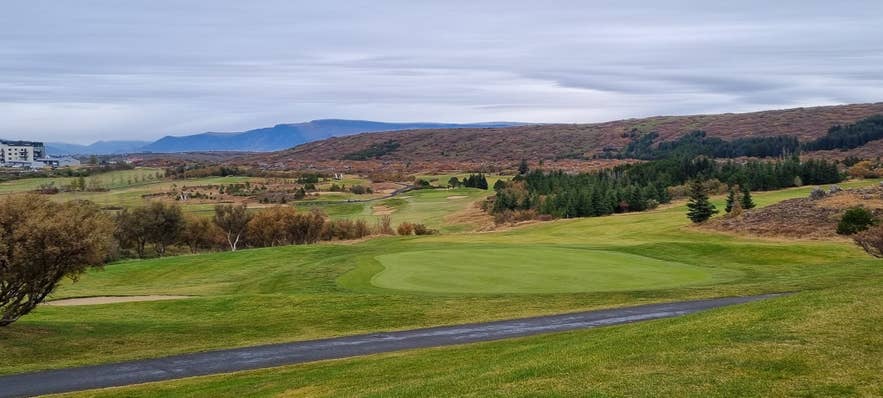
Photo from Golfklúbburinn Oddur
Holes: 18
Par: 71
Located in Gardabaer, just about 6 miles (10 kilometers) south of Reykjavik, Oddur Golf Club’s Urriðavöllur course is widely regarded as one of Iceland’s premier championship layouts. The course was originally opened as nine holes in 1990 and expanded to a full 18-hole configuration in 1997. Since then, it has hosted several major national tournaments, including the Icelandic Golf Championship, reinforcing its reputation as a top competitive venue.
Urriðavöllur is routed through heathland terrain shaped by lava from the nearby Burfell Volcanic System. The layout makes strategic use of natural contours, lava rock formations, and gently undulating fairways. While the course does not rely heavily on water hazards, its bunkering, green complexes, and subtle elevation shifts demand careful shot placement and thoughtful course management.
The greens are consistently well-maintained, and the open terrain means wind conditions can significantly influence play. The club also offers a modern clubhouse, practice facilities, and dining services, making Oddur Golf Club a complete golfing destination within easy reach of the capital.
5. Hlíðavöllur Golf Course (Mosfellsbaer, Capital Region)
Holes: 18
Par: 72
Located in Mosfellsbaer, just about 15 minutes (16.4 km / 10.19 miles) from Reykjavik, Hlíðavöllur is one of Iceland’s most established championship golf courses. This 18-hole, par-72 layout is set on the edge of Kollafjordur Bay, framed by the majestic Mount Esja, offering breathtaking natural surroundings throughout the round.
The course is known for its broad fairways, vast and reliable greens, and consistently excellent playing conditions. Its balanced design combines length with technical challenges, making it well-suited for intermediate and advanced players. Adding to the experience, the rugged lava rock terrain in the rough provides a uniquely Icelandic and beautifully challenging element to the game.
Hlíðavöllur also features a modern clubhouse with quality dining options that have incredible views of Mount Esja, making it a complete golfing destination just outside the capital.
4. Akureyri Golf Club (North Iceland)
Holes: 18
Par: 71
Located in North Iceland, just south of the Arctic Circle, Akureyri Golf Club is one of the most recognized courses in the country thanks to its northern location and strong tournament reputation. Officially acknowledged by The Royal and Ancient Golf Club of St Andrews as the world’s most northerly 18-hole golf course, it offers a truly unique playing experience.
Set above the scenic Eyjafjordur Fjord and surrounded by mountains, the course boasts breathtaking views and an idyllic natural setting. Unlike many southern Icelandic courses, Akureyri Golf Club features more trees and shrubs than any other course in Iceland, giving it a distinct moorland character. The layout winds through broad ridges with clusters of trees, rock outcroppings, and occasional water hazards, adding variety and complexity.
Strong winds and notable elevation changes are among the primary challenges, demanding strategic play and adaptability. The course hosts the famous Arctic Open every June, where golfers have the rare opportunity to play under the midnight sun.
Facilities include a driving range, practice putting green, and a clubhouse with a restaurant and bar, making Akureyri Golf Club both a competitive venue and a memorable destination for golfers of all skill levels.
3. Keilir Golf Club (Hafnarfjordur, Capital Region)
Holes: 18
Par: 71
Located in Hafnarfjordur, approximately 8.6 miles (14 kilometers) southwest of Reykjavik, Keilir Golf Club is one of Iceland's most technically intriguing and accessible courses. The club is named after Mount Keilir, one of the most striking and recognizable natural landmarks of the Reykjanes Peninsula, a distinctive conical peak that rises prominently from the surrounding lava fields.
Keilir is best known for its distinctive split layout. The front nine is dramatically set across rugged lava fields, where precision is essential. Errant shots can easily disappear into hardened volcanic rock, creating a uniquely Icelandic and unforgiving challenge.
In contrast, the back nine transitions to more traditional terrain on old farmland along a small coastal peninsula. Here, the landscape opens up with classic fairways and greater exposure to the sea. Water hazards and coastal winds become significant factors, requiring strategic play and adaptability.
The striking contrast between volcanic lava terrain and seaside links-style golf makes Keilir one of the most diverse and technically interesting rounds in Iceland, demanding both accuracy and skill from players.
2. Brautarholt Golf Course (Kjalarnes)
Holes: 12
Par: 70
Located in Kjalarnes, approximately 20.1 miles (32.5 kilometers) from Reykjavik, Brautarholt Golf Course is widely regarded as one of the most visually impressive golf courses in Iceland. Set along a dramatic coastal peninsula, the course blends seamlessly with its natural surroundings.
Several holes sit directly above the Atlantic Ocean, with cliffside fairways and greens creating breathtaking views and unforgettable tee shots. On clear days, players can also see the Snaefellsjokull Glacier in the distance, adding to the course’s already spectacular scenery.
Despite having 12 holes rather than the traditional 18, Brautarholt is highly praised for its exceptional design quality and memorability. Elevation changes, exposed coastal winds, and cliffside greens demand careful shot planning and strategic play, making each hole both challenging and rewarding.
Facilities include a clubhouse with a restaurant and pro shop, as well as rental options for golf clubs, trolleys, and carts. A practice area with a chipping green and putting green allows players to fine-tune their skills before heading out.
After your round, you can unwind at the nearby Hvammsvik Hot Springs, located just a short drive away along the scenic Hvalfjordur Fjord. These oceanside geothermal pools offer a tranquil setting to relax and soak while enjoying sweeping views of the surrounding mountains and coastline, the perfect way to end a day on the course. You can secure entry in advance with a Hvammsvik Hot Springs ticket.
1. Westman Islands Golf Course (Vestmannaeyjar)
Holes: 18
Par: 70
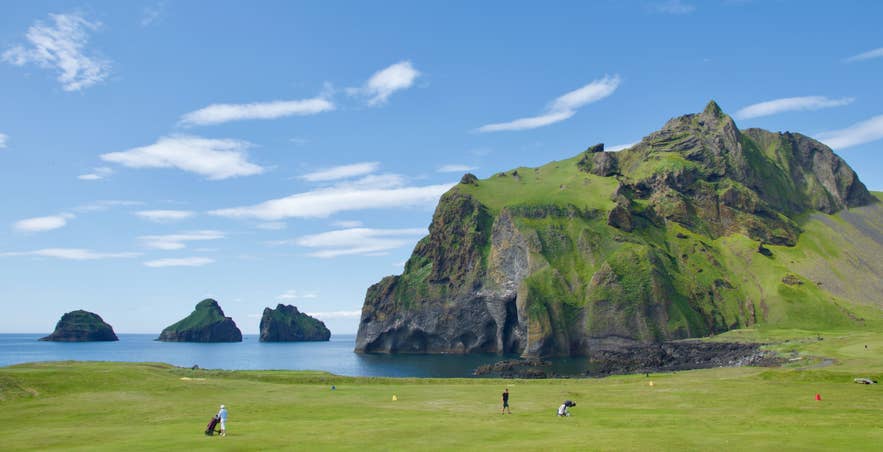
Widely considered the most distinctive golf course in Iceland, the Westman Islands Golf Course is located on Heimaey, the only inhabited island in the Vestmannaeyjar Archipelago off Iceland’s southern coast. The course is set within and around a volcanic crater formed by past eruptions, giving it one of the most dramatic and memorable settings in the country.
Built across lava fields shaped by volcanic activity, many fairways are bordered by rugged lava rock, while the Atlantic Ocean surrounds much of the course. The combination of volcanic terrain, coastal exposure, and natural elevation creates both visual impact and technical challenge.
Players can enjoy astonishing ocean views, dramatic coastal cliffs like the famous Elephant Rock, and surrounding mountains throughout the round. It is also common to spot Atlantic puffins nesting nearby during the playing season.
Although reaching the course requires a ferry from the mainland (adding extra travel time), many golfers consider it the most unique and unforgettable round in Iceland.
The course is open from May to September and offers club rentals, a putting green, and a driving range. A clubhouse on-site provides refreshments and a place to relax after the round, completing the experience at one of Iceland’s most iconic golfing destinations.
The Best Time to Play Golf in Iceland
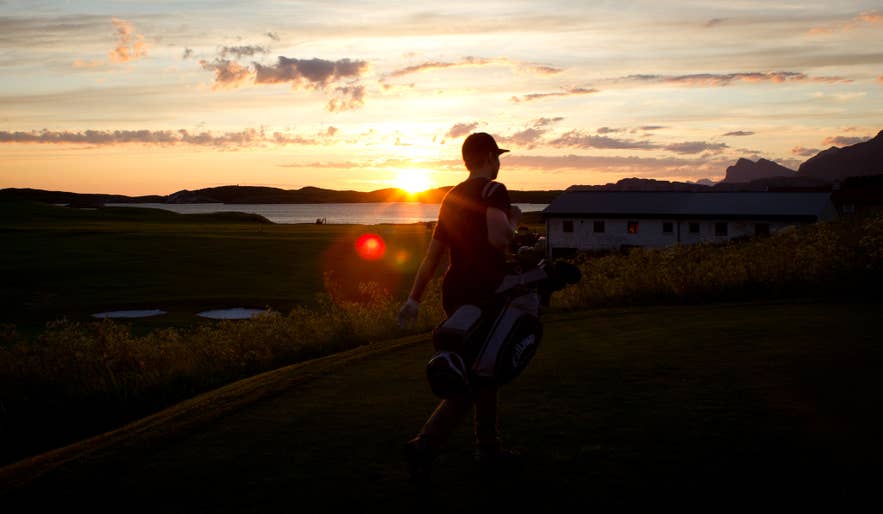
Photo from Flickr, Creative Commons, by Eirik Jensen. No edits made.
The best time to play golf in Iceland is from June to August, when courses are in peak condition, daylight hours are longest, and the weather is generally mild. While the official golf season runs from May through September, the Icelandic summer months offer the most reliable playing conditions and the unique experience of golfing under the midnight sun.
Each part of the season offers slightly different playing conditions:
-
May and early June: Courses reopen for the season. Conditions are generally good, and daylight hours increase quickly. Temperatures are cooler, and some courses may still be drying out after winter.
-
Late June and July: This is peak golf season. Iceland experiences the midnight sun, allowing for late evening tee times. Course conditions are usually at their best, and temperatures are milder. This is also the busiest period, so advance booking is recommended.
-
August: Conditions remain strong, with slightly shorter daylight hours than June and July. Wind can become more noticeable later in the month.
-
September: Fewer visitors and quieter tee times. Weather becomes less predictable, and some courses may close later in the month depending on conditions.
Average summer temperatures range between 50–59 F (10–15 C). Wind is common throughout the season, especially on coastal courses. Layered clothing and waterproof outerwear are recommended.
Midnight Sun Golfing in Iceland
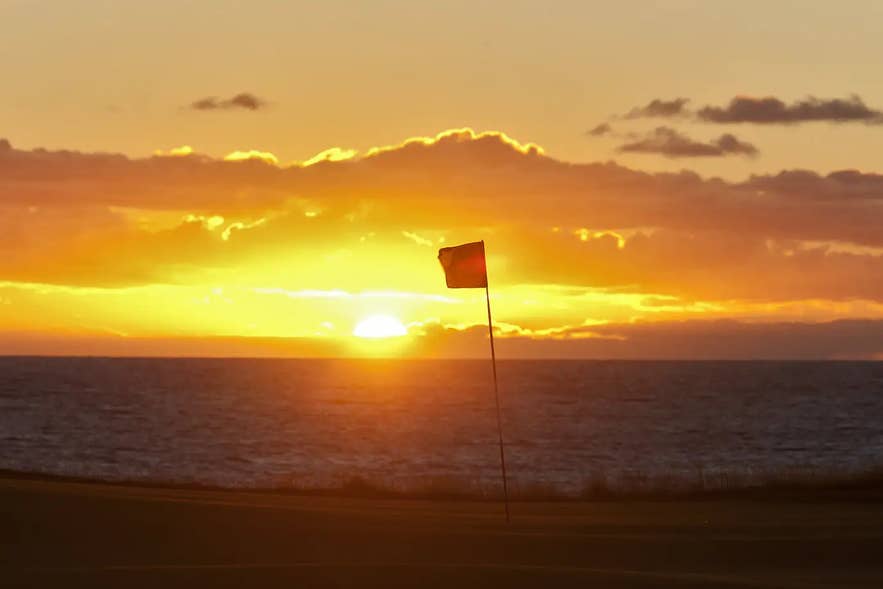
Midnight golfing, or midnight sun golfing, is a unique golfing experience that takes advantage of Iceland's natural phenomenon known as the midnight sun. It allows golfers to play golf late into the night when the sun is still visible.
During the summer months, Iceland experiences up to 21 hours of daylight due to its proximity to the Arctic Circle. This occurrence is possible in Iceland from mid-May to mid-August when the sun doesn't fully set on the horizon. The peak of the midnight sun in Iceland usually falls on June 21.
You can check out our complete guide to the midnight sun in Iceland to know more about this spectacular phenomenon and help you plan your next Icelandic midnight sun vacation.
Some golf courses in Iceland offer special tee times for midnight golfing. It allows golfers to experience the unique atmosphere of playing golf under the midnight sun.
However, despite the sun's rays, it's somehow much colder during the night than in the day. To fully enjoy the experience of midnight golfing, it's best to dress in layers to stay warm. Nevertheless, midnight sun golfing has become an incredibly popular tourist attraction in Iceland.
Golf Costs and Green Fees in Iceland
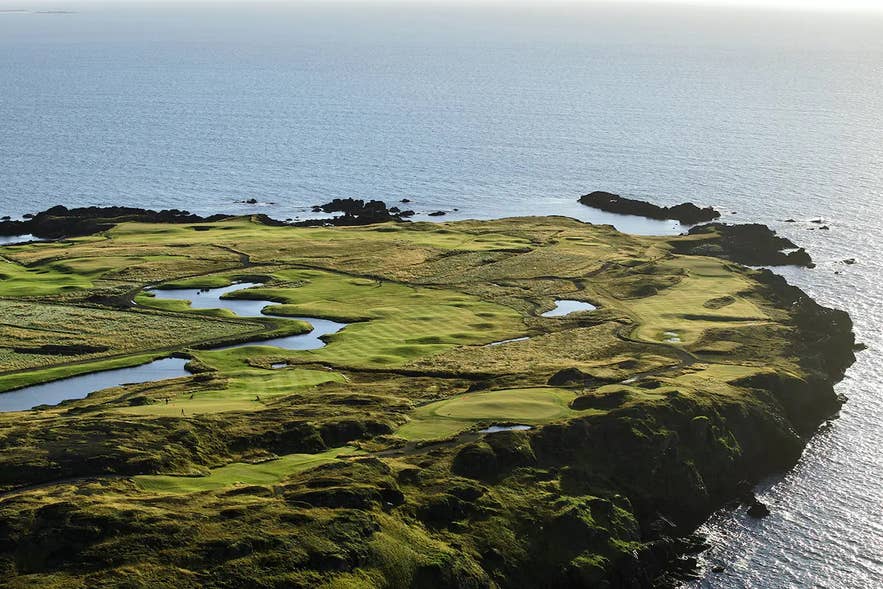
The cost of playing golf in Iceland depends on the course location, season, and tee time. Golf courses near Reykjavik and major tourist areas in Iceland are typically more expensive than rural courses.
-
18-Hole Green Fees in Iceland: For 18-hole championship golf courses in Iceland, especially in the Reykjavik area, green fees during peak season (June and July) usually range from 100–120 USD (14,000–17,000 ISK) per round. Outside the capital region, 18-hole green fees in Iceland generally range from 65–100 USD (9,000–14,000 ISK), depending on the course and time of day. Some golf courses in Iceland offer discounted rates in May and September.
-
9-Hole Green Fees in Iceland: Smaller 9-hole golf courses in Iceland are more affordable. Green fees typically range from 20–55 USD (3,000–8,000 ISK), with lower prices more common in rural areas of Iceland.
Golf Equipment Rental in Iceland
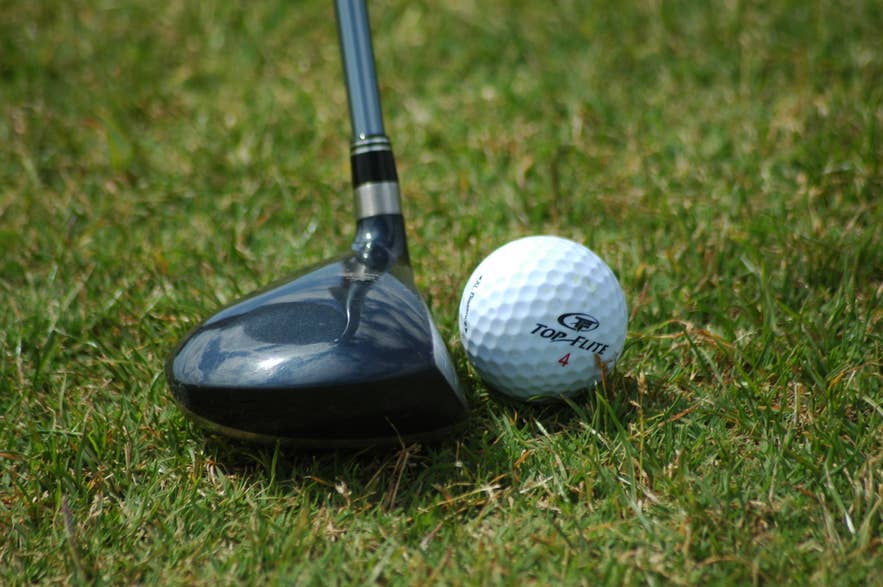
Photo from Flickr, Creative Commons, by Wojciech Kulicki. No edits made.
Most 18-hole golf courses in Iceland offer rental equipment. Typical rental prices include:
-
Golf club rental in Iceland: 45–60 USD (6,000–8,000 ISK)
-
Pull trolley rental in Iceland: 7–18 USD (1,000–2,500 ISK)
-
Electric trolley rental in Iceland: 20–35 USD (3,000–5,000 ISK)
-
Golf cart rental in Iceland: 55–70 USD (8,000–10,000 ISK)
Golf carts are not available at all golf courses in Iceland.
Tee Time Booking and Handicap Requirements for Golfing in Iceland
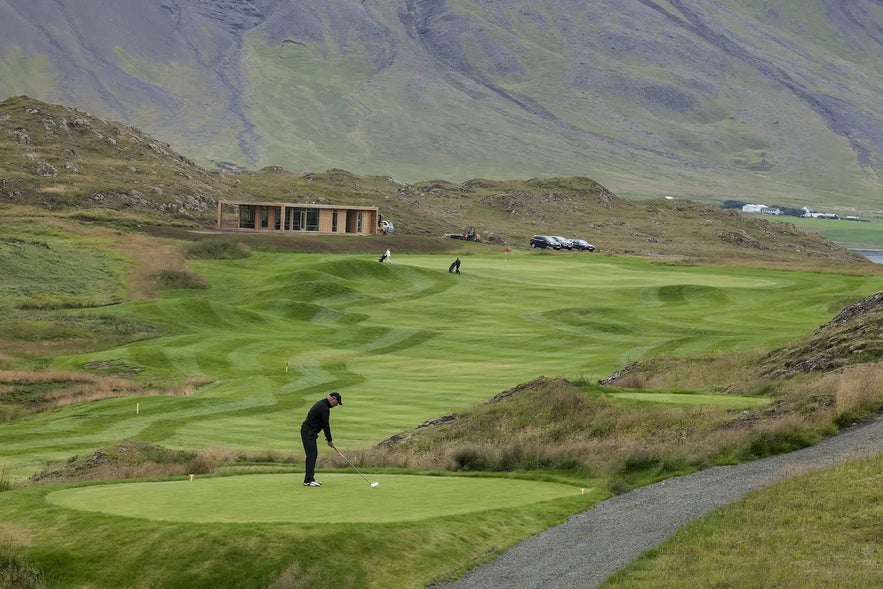
Booking tee times for golfing in Iceland is straightforward, but advance planning is important, especially during the summer season.
Booking Tee Times in Iceland
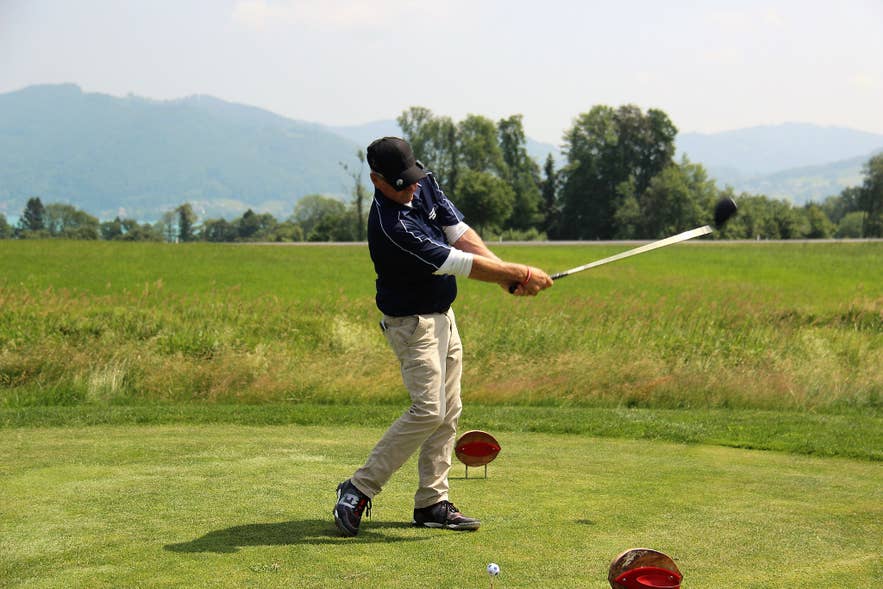
Photo from Flickr, Creative Commons, by Special Olympics nationale Sommerspiele 2018. No edits made.
Most golf courses in Iceland offer online booking through their official websites. Tee times can also be reserved by phone. During peak months, particularly June and July, popular courses near Reykjavik and along major travel routes can fill quickly.
To secure preferred time slots:
-
Book at least several days in advance during peak season
-
Schedule earlier in the day if you are traveling between regions
-
Confirm travel time before finalizing your tee time
Many golf clubs in Iceland accept credit and debit card payments, and English is widely spoken.
Handicap Requirements for Golf in Iceland
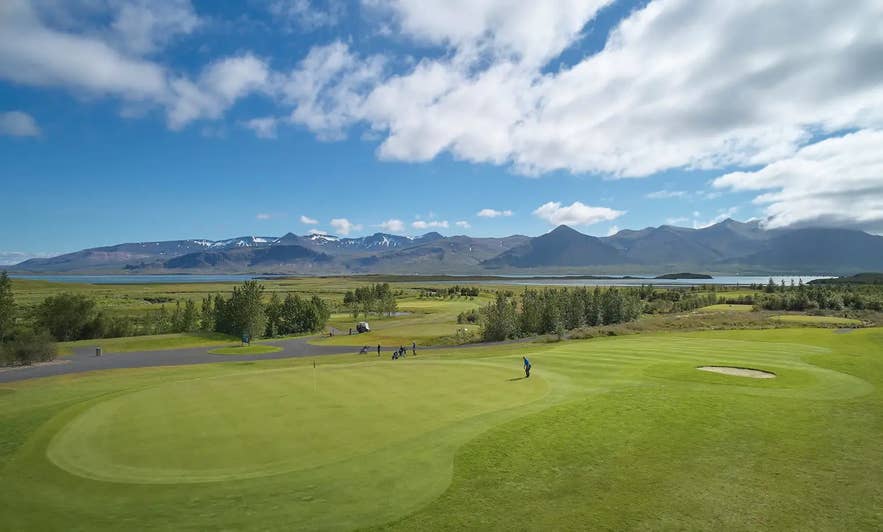
Many 18-hole golf courses in Iceland require proof of handicap. A maximum handicap of 36 is common, although requirements may vary by club.
Some smaller 9-hole courses may not require formal handicap verification, but it is recommended to check with the course before arrival.
Visitors are usually expected to:
-
Provide a handicap certificate or digital record
-
Follow local pace-of-play guidelines
-
Observe course rules and etiquette
Accommodation and Transportation for Your Golfing Trip in Iceland
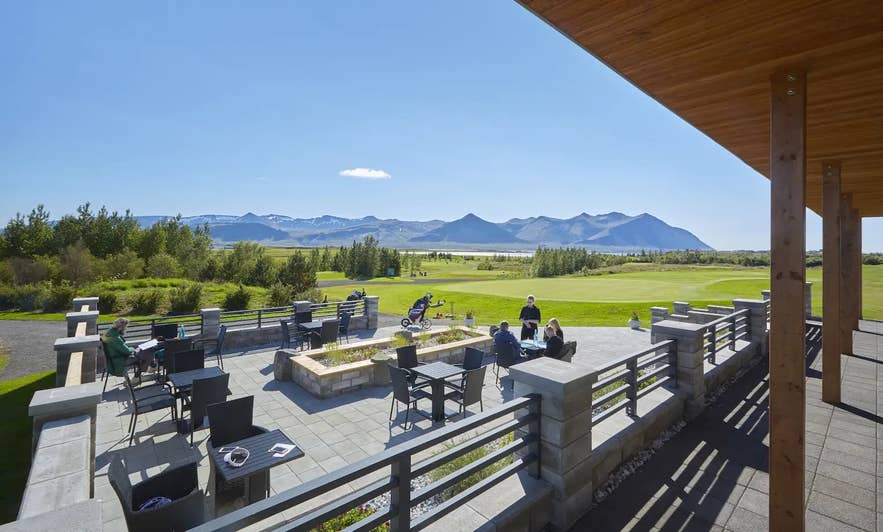
When planning your Iceland golf trip, choosing the right place to stay and arranging transportation are key to a smooth and enjoyable experience.
If you’re targeting multiple courses around Reykjavik, such as Keilir Golf Club, Brautarholt Golf Course, and Reykjavík Golf Club, browsing accommodation in Reykjavik gives you a convenient city base with easy driving access, vibrant dining options, and nightlife. Some of the well-reviewed options, like Fosshótel Reykjavík, Alda Hotel Reykjavík, and Berjaya Reykjavík Marina Hotel, provide comfort and easy access to nearby courses.
For a broader itinerary that takes you around the country, explore accommodation in Iceland to find countryside hotels, guesthouses, and luxury stays that complement multi-day golf routes.
While traditional golf resorts are rare in Iceland, there are golf-friendly hotels worth considering. Hotel Hamar in Borgarnes sits beside a golf course and offers relaxed comfort with outdoor hot tubs. In North Iceland, Hotel Kea makes an excellent base near Akureyri Golf Club.
For transportation, renting a car in Iceland is by far the most convenient way to reach courses scattered across varying terrain. Booking in advance helps ensure the best rates and availability.
If driving isn’t your preference, you can also arrange private drivers or join guided tours that include transportation, letting you focus on your game and the stunning scenery without worrying about logistics.
Icelandic Mini Golf and Frisbee Golf

Photo from Flickr, Creative Commons, by Austin Kirk. No edits made.
Mini golf and frisbee golf are also becoming increasingly popular in Iceland, offering fun and accessible alternatives to traditional golf for both locals and visitors.
In Reykjavik, the most popular place to try mini golf is Minigarðurinn, an indoor activity center that combines creative mini golf courses with a lively social atmosphere. It is a great option year-round, regardless of weather conditions.
Mini golf is a scaled-down version of traditional golf, and Icelandic courses often feature imaginative designs and playful obstacles. Windmills, waterfalls, bridges, and themed layouts add an extra layer of entertainment, making it an enjoyable activity for families, groups of friends, and travelers of all ages.
Meanwhile, frisbee golf, also known as disc golf, follows a similar concept to traditional golf, but players throw flying discs into metal baskets instead of hitting a ball with clubs.
Several disc golf courses across Iceland are set in scenic natural areas and range in difficulty from beginner-friendly layouts to more technical challenges. Many are free to use, and players can either bring their own discs or rent them on site, where available.
Golf in Iceland: A Unique Playing Experience
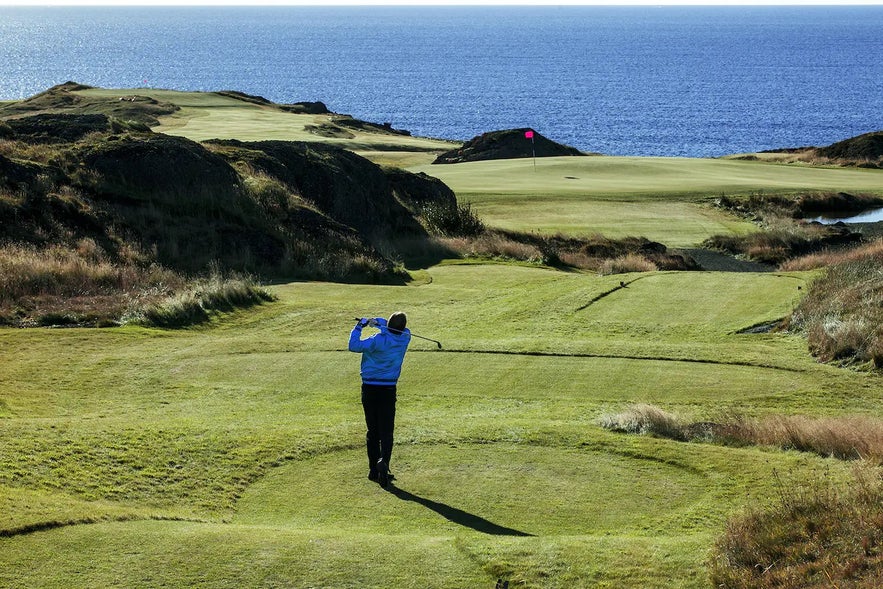
Golf in Iceland offers a combination of natural terrain, extended summer daylight, and accessible travel routes that set it apart from many traditional golf destinations. From lava-lined fairways and coastal holes to northern courses near the Arctic Circle, the variety of playing environments allows golfers to experience different conditions within a single trip.
With roughly 65 courses across the country, flexible self-drive tours, and structured vacation packages available, it is possible to design a golf trip that fits different budgets and schedules. Whether staying near Reykjavik or traveling between regions, golfers can combine tee times with Iceland’s major attractions.
By choosing the right season, booking in advance, and planning transportation carefully, golfing in Iceland can be easily integrated into a broader travel itinerary. The result is a golf experience shaped by landscape, weather, and light, one that differs from traditional parkland courses and offers something distinct for players visiting Iceland.
Is there golf in Iceland?
How many golf courses are in Iceland?
What are the best golf courses in Iceland?
Are there golf courses in Reykjavík?
What golf courses are near Reykjavík?
What is the northernmost 18-hole golf course in Europe?
Can you play midnight sun golf in Iceland?
Is there a golf course built in a volcanic crater in Iceland?
When is the best time to play golf in Iceland?
Are there golf courses by the ocean in Iceland?
Does Iceland have golf driving ranges?
What makes golf in Iceland unique?
What's your favorite Icelandic golf course? Do you want to play golf on your next visit to Iceland? Let us know in the comments below, and share your stories about your first time playing golf in Iceland!

Michael Chapman is a British travel writer living in Reykjavík. A former scuba and lava cave guide, he draws on firsthand experience to write about Iceland’s nature and culture. He’s also the author of Hidden Iceland (2020).