Iceland is a Nordic country, not Scandinavian, though the two labels are often confused. The country's ties to Norway, Sweden, Denmark, and Finland go back more than a thousand years, through shared history, language, and the modern Nordic Council.
The words "Nordic" and "Scandinavian" are often used as if they mean the same thing, which is where the confusion about Iceland begins. The mix-up is understandable: Iceland was settled by Norse seafarers and Vikings, spent centuries under Norwegian and then Danish rule, and still speaks a language rooted in Old Norse.
Why You Can Trust Our Content
Guide to Iceland is the most trusted travel platform in Iceland, helping millions of visitors each year. All our content is written and reviewed by local experts who are deeply familiar with Iceland. You can count on us for accurate, up-to-date, and trustworthy travel advice.
What ties Iceland to its neighbors is not shared borders but a shared way of life: a Nordic welfare model, languages grown from the same root, and formal cooperation through the Nordic Council, since 1952. Those bonds show up in Iceland's international ties, which still lean north despite the distance.
This guide covers where Iceland fits among the Nordic countries, why it is sometimes called Scandinavian, and how to see that heritage on a visit. Read on to settle the labels for good and to find the places where that thousand-year history still shows up across the country.
Key Takeaways About Iceland and the Nordics
-
Iceland is one of the five Nordic countries, alongside Denmark, Finland, Norway, and Sweden, plus three autonomous territories: Greenland, the Faroe Islands, and the Aland Islands.
-
Scandinavia refers strictly to Denmark, Norway, and Sweden, although Iceland is often grouped in because of its shared Viking ancestry and language.
-
Norse settlers arrived from Norway and the British Isles in the late 9th century, with Ingólfur Arnarson credited as the first permanent settler around 874 AD.
-
Iceland came under Norwegian and then Danish rule, became a sovereign state in 1918, and a fully independent republic on June 17, 1944.
-
Icelandic is the North Germanic language closest to Old Norse, while Danish, Norwegian, and Swedish have changed far more over time.
-
Iceland was a founding member of the Nordic Council in 1952 and still cooperates with its neighbors on politics, welfare, education, and culture.
Iceland's Place Among the Nordic Countries
Iceland is one of the five Nordic countries, alongside Denmark, Finland, Norway, and Sweden. The Nordic region also takes in three autonomous territories: Greenland and the Faroe Islands, both tied to Denmark, and the Aland Islands, which belong to Finland but are Swedish-speaking.
These countries are collectively called Norden, meaning "the North." They stretch across Northern Europe, from the Baltic Sea up to the Arctic Ocean. Iceland itself lies far out in the North Atlantic, at the western edge of this Nordic world, and you can see exactly where Iceland is located on a map.
Despite that distance, Iceland is fully Nordic, both legally and culturally. Icelanders can travel, study, and work freely across the other Nordic countries under long-standing agreements, including a shared passport-free area.
The Difference Between Nordic and Scandinavian Countries
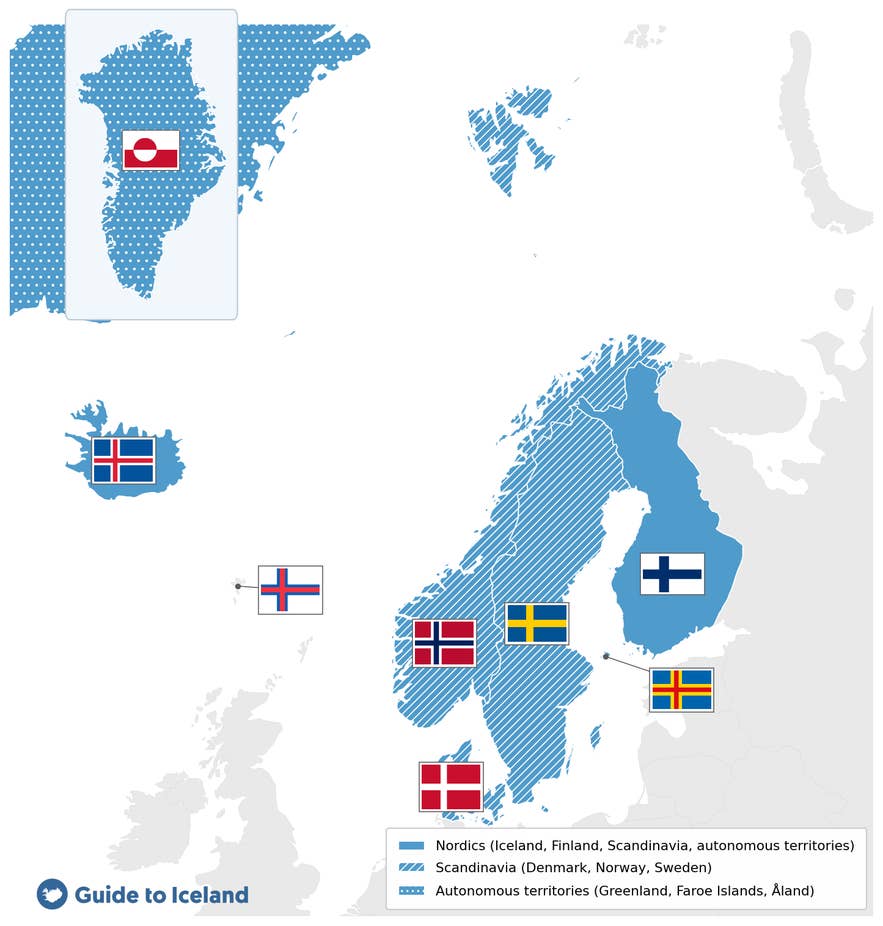
The difference between Nordic and Scandinavian countries comes down to how many countries each term covers. Scandinavia means just Denmark, Norway, and Sweden, the three countries that share the Scandinavian Peninsula and closely related languages.
The Nordic region is broader, adding Iceland and Finland, plus the territories of Greenland, the Faroe Islands, and Aland. So every Scandinavian country is Nordic, but not every Nordic country is Scandinavian.
Iceland is still sometimes called Scandinavian because of its Viking roots and North Germanic language. In international usage, though, "Nordic" is the more accurate label whenever Iceland is included.
The Norse Settlement of Iceland
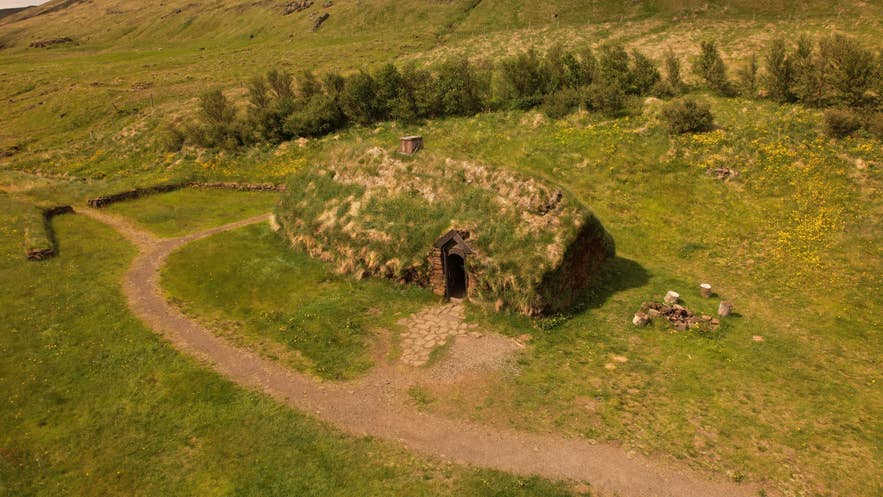
Iceland entered the Nordic world through Norse settlement in the Viking Age. The first Norseman recorded to reach the island, Naddoddur, arrived in the 9th century and named it Snaeland, or "Snowland." Permanent settlement followed soon after.
Ingólfur Arnarson is traditionally regarded as the first permanent settler, said to have arrived from Norway around 874 AD and to have settled where his high-seat pillars washed ashore, on the site of modern Reykjavik. Thousands more followed from Norway and the Norse settlements of the British Isles.
Their migration is recorded in two medieval texts, the Book of Settlements (Landnamabok) and the Book of Icelanders (Islendingabok). The settlers brought their language, farming, Norse gods, and the legal tradition behind the Althing, Iceland's parliament, founded at Thingvellir National Park in 930 AD.
Norwegian and Danish Rule of Iceland
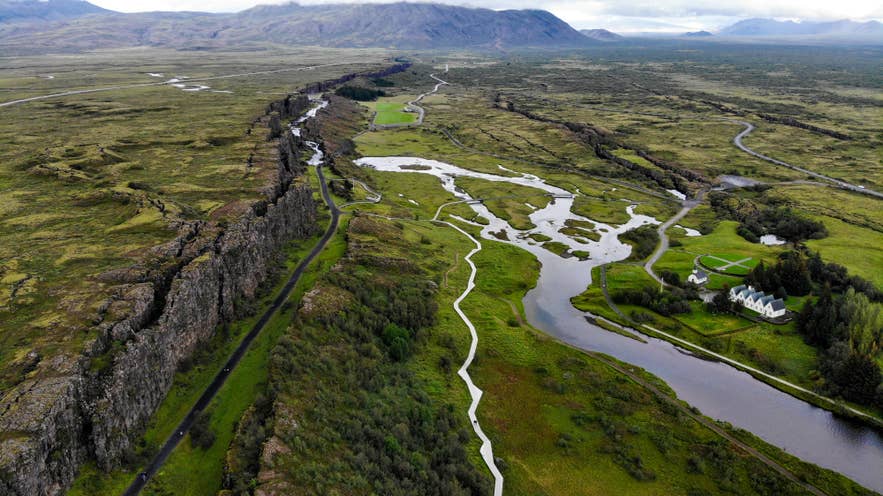
Iceland spent nearly seven centuries under Norwegian and then Danish rule. It was an independent commonwealth from 930 to 1262. After a period of violent feuding known as the Age of the Sturlungs, Icelandic chieftains signed the Old Covenant in 1262 and recognized King Haakon IV of Norway as their king.
When the Norwegian and Danish crowns united under one monarch in 1380, Iceland came under Danish rule along with Norway. From 1397 to 1523, all the Nordic kingdoms were briefly joined under a single ruler in the Kalmar Union.
Local historian Sandra Gunnarsdóttir notes that this long Danish chapter is one that most visitors miss.
Most have no idea that we were under Danish rule for half a millennium. This shaped Iceland's identity, mostly by limiting trade with other nations.
That monopoly let Icelanders trade only with licensed Danish merchants at fixed prices, and it held back the country's economy for generations. Trade opened to Danish subjects around 1787, but full free trade came only in 1855, a cause central to the independence movement led by Jón Sigurðsson.
Centuries later, that same determination to control its own trade remains part of Iceland's identity, seen, for example, in how Iceland guards its fishing grounds, keeps its own currency, and has stayed outside the European Union.
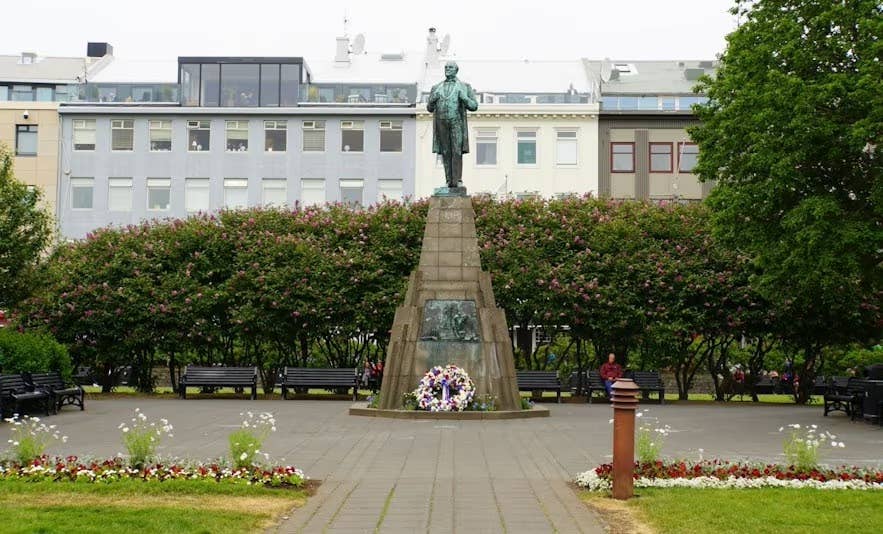 The last formal tie between Iceland and Norway ended in 1814, when Denmark, which by then controlled both, handed Norway to Sweden but kept Iceland for itself. Iceland then won back self-rule step by step: a restored Althing in the 19th century, home rule in 1904, sovereignty in 1918, and full independence as a republic on June 17, 1944.
Sandra Gunnarsdóttir sees the Second World War as the turning point for Iceland.
Iceland was occupied by British and later American troops to keep the North Atlantic out of German hands, and with Denmark under Nazi occupation, the moment gave the independence movement its "final push."
You can get more comprehensive insights into these events in our complete guide to the history of Iceland.
Old Norse and the Icelandic Language
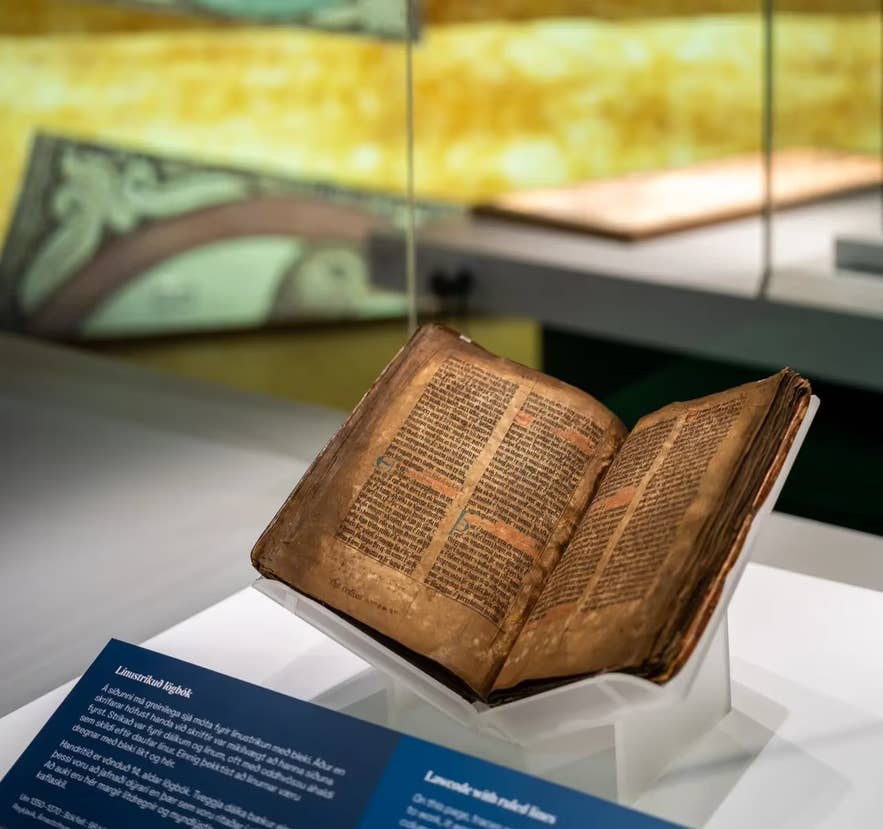 Icelandic is the modern language closest to Old Norse, the language the Viking settlers carried across the North Atlantic. The Nordic languages fall into two unrelated families: Icelandic, Faroese, Norwegian, Danish, and Swedish are North Germanic languages descended from Old Norse, while Finnish belongs to the separate Finno-Ugric family.
Icelandic has changed the least of the North Germanic group. The island's isolation and a strong tradition of copying manuscripts kept it close to its roots, while the mainland Scandinavian languages changed much more through centuries of trade and contact with the European mainland.
From the 12th and 13th centuries, Icelanders wrote down their laws, sagas, and poetry in their own language, at a time when most of medieval Europe wrote in Latin. These manuscripts preserve Iceland's early history and much of what we know about Norse mythology.
Historian Sandra Gunnarsdóttir explains that the literary heritage also became an important part of the Icelanders' fight for independence in the 19th century, and that it still, to this day, shapes the country's national pride.
Icelanders can still read these texts because our language did not evolve as much as other Nordic languages.
The reach of these texts also goes well beyond Iceland. J.R.R. Tolkien, for example, drew many of his Middle-earth names, including Gandalf and most of the dwarves in The Hobbit, from the Dvergatal, a catalog of dwarf names in the Poetic Edda.
You can see medieval manuscripts like these in person at the World in Words Exhibition in the Edda Building in Reykjavik, home to the Árni Magnússon Institute.
Iceland and the Nordic Council
Iceland's modern ties to the other Nordic countries run mainly through the Nordic Council, which it helped found in 1952. Denmark, Iceland, Norway, and Sweden were founding members, and Finland joined in 1955.
The Council seats parliamentarians from all five states plus Greenland, the Faroe Islands, and Aland, and Iceland holds 7 of its 87 seats. Beyond passport-free travel, cooperation extends in varying degrees to education and welfare rights, cultural funding, and common positions on some international issues.
The Council also awards annual prizes for literature, music, film, and the environment, where Icelandic artists are regular contenders. It is one more strand of the broader international relations that keep Iceland connected to its neighbors.
The Nordic Model in Iceland
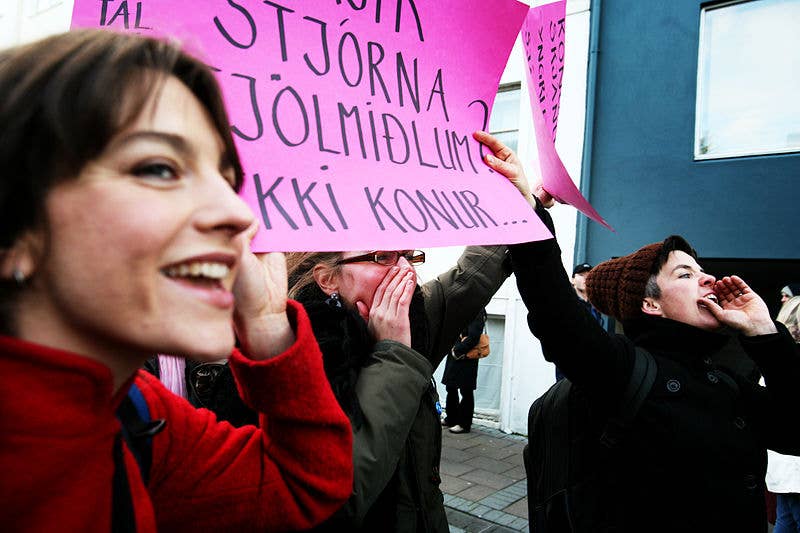
Photo from Wikimedia, Creative Commons, by Magnus Fröderberg. No edits made.
Iceland shares the Nordic model with its neighbors, a common set of social and political values across the five countries. It pairs a market economy with a strong welfare state, including low-cost healthcare, generous parental leave, and high public trust.
Iceland has ranked first in the world for gender equality for years and stands among the highest-ranked countries for press freedom and social trust. Iceland has also had two female presidents, including current president Halla Tómasdóttir, and two female prime ministers.
Everyday life in Iceland reflects other Nordic values: children of all backgrounds attend the same public schools, and high taxes fund visible public services.
Norse Heritage Sites in Iceland
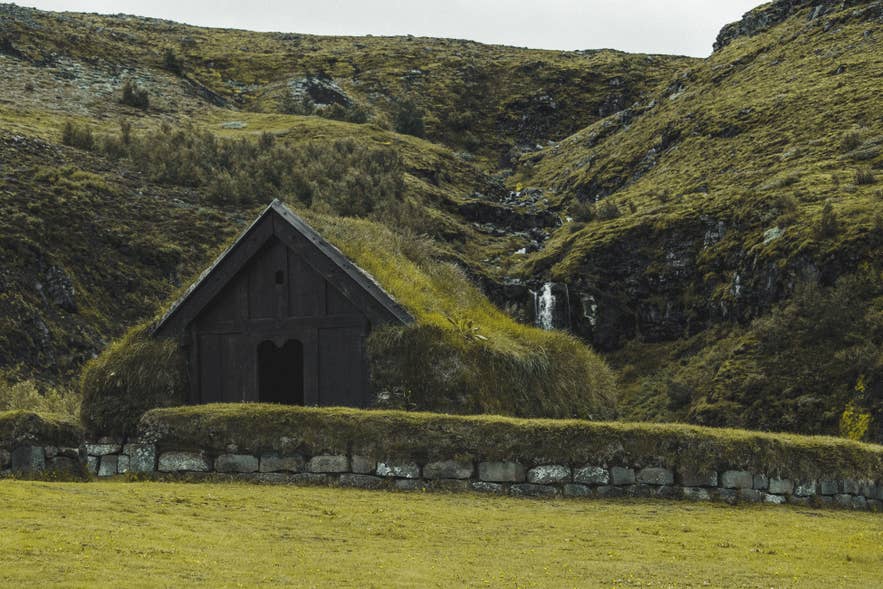
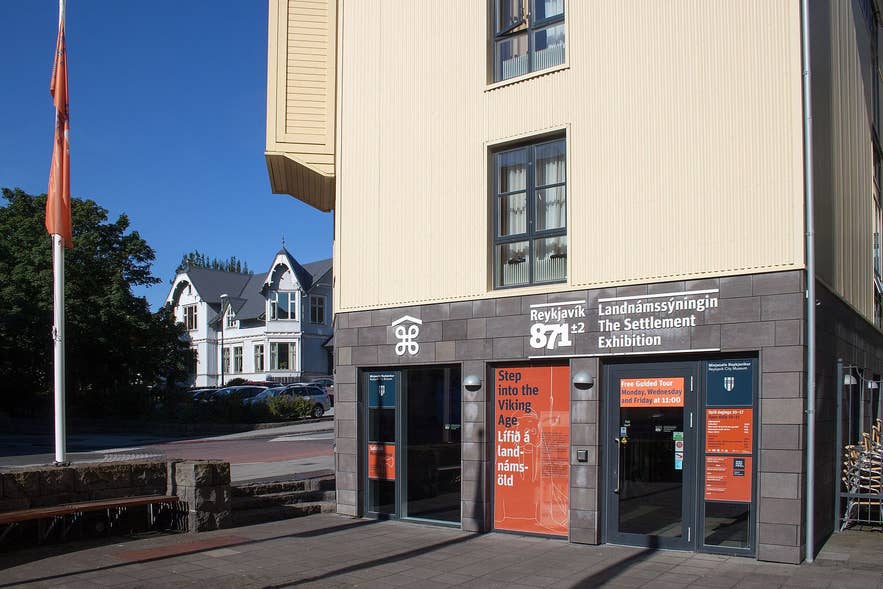
You can see Iceland's Norse heritage at sites across the country, starting in the capital. The Reykjavik Settlement Exhibition is built around an excavated Viking-age longhouse, the National Museum of Iceland traces the path from settlement to republic, and the Saga Museum recreates figures from the settlement age.
Beyond Reykjavik, the Settlement Center in Borgarnes, the Eiriksstadir Longhouse in West Iceland, and the assembly site at Thingvellir National Park reflect roots Iceland shares with the wider Norse world. Turf-roofed farmhouses, Lutheran churches, and old fjord and farm names echo the same heritage.
Historian Sandra Gunnarsdóttir especially recommends the reconstructed Commonwealth Farm in Thjorsardalur, a replica of a medieval Icelandic farmhouse. "You can get a feel for what life was like in the medieval period, and it's a fun place for families to visit," she says.
Living tradition carries the Norse past too. Icelandic folklore still holds figures once known across the Norse world, from the old gods Odin and Thor to the elves and hidden people (huldufolk).
Exploring Iceland and the Nordic Region
Exploring Iceland and the wider Nordic region is easy, since Reykjavik sits within reach of every Nordic capital. Year-round direct flights connect Iceland to Copenhagen, Oslo, Stockholm, and Helsinki, as well as Nuuk in Greenland and Vagar in the Faroe Islands.
Iceland and Greenland tours and the ferry linking Iceland with the Faroe Islands and Denmark offer alternative ways to explore more of the Nordics.
If you're flying between North America and another Nordic country, Icelandair's Stopover program lets you break the journey for up to seven nights in Iceland at no added airfare. Our guide on what to do during a layover and our stopover packages cover how to make the most of that time.
To trace Iceland's Norse heritage at your own pace, self-drive tours let you string together sites spread across the country on a route and timetable that suits you. If your time is short, Golden Circle tours reach the original Althing assembly site at Thingvellir in a single day from Reykjavik, paired with Geysir and Gullfoss.
In the capital itself, museum tickets get you into the Reykjavik Settlement Exhibition and its excavated Viking-age longhouse, the National Museum, and the Saga Museum, all without a car. For the stories behind the sites, Viking history and saga tours put a guide alongside you to explain the people and events the sagas record.
Iceland and the Nordic Countries Today
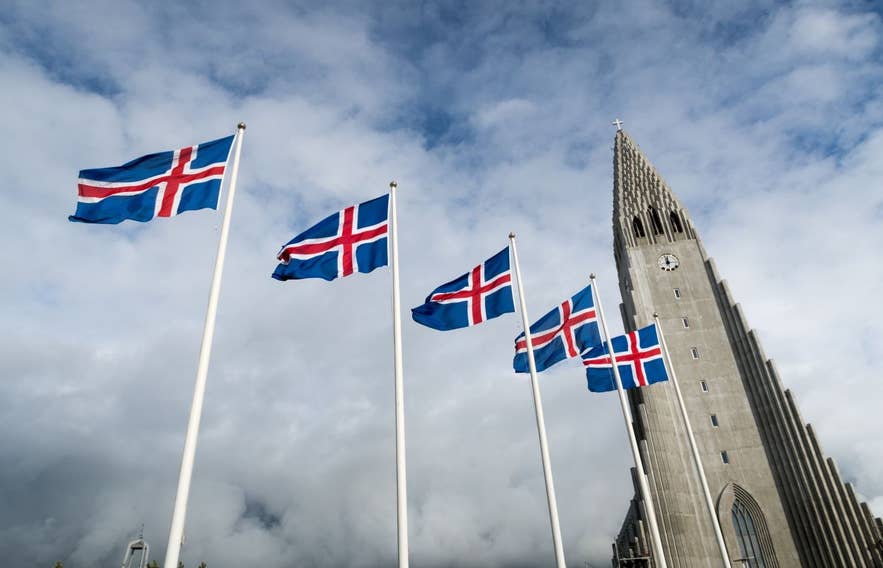
Iceland is a Nordic country in the fullest sense: settled from Norway, ruled by Norway and then Denmark, and still tied to its neighbors through the Nordic Council and a shared social model. What sets it apart is how much of that past survives in its language, place names, and public life.
To dig deeper, read our guides on the history of Iceland, the story of the Icelandic Vikings, and where Icelanders come from. Together, they trace how a remote island in the North Atlantic became, and remains, one of the five Nordic nations.
Was Iceland ever ruled by another Nordic country?
Is Icelandic similar to the other Nordic languages?
Is Iceland a member of the Nordic Council?
Why does Iceland's flag look like the other Nordic flags?
Is Iceland a monarchy like some of its Nordic neighbors?
How did Iceland become independent from Denmark?
Is Iceland in the European Union?
Have you traveled to Iceland and another Nordic country, or spotted details in Reykjavik that reminded you of Copenhagen, Oslo, or Stockholm? Share your experience in the comments below.

I was born on the west side of Reykjavík and grew up downtown, so Iceland has been my back yard for most of my life. I'm a father of two, I've traveled on five continents, and I still haven't found a country that holds my attention the way this one does.
That's why I co-founded Guide to Iceland. We connect travelers directly with Icelandic operators, guides and hosts, so the advice and the services both come from people who actually live here.
I write about the practical side of a trip: what eating out in Reykjavík really costs, whether to pick Sky Lagoon or Hvammsvík, where to stop for food along the Ring Road, and which regions give you the best odds of clear skies for the northern lights. If you're planning a trip and something doesn't add up, message me.