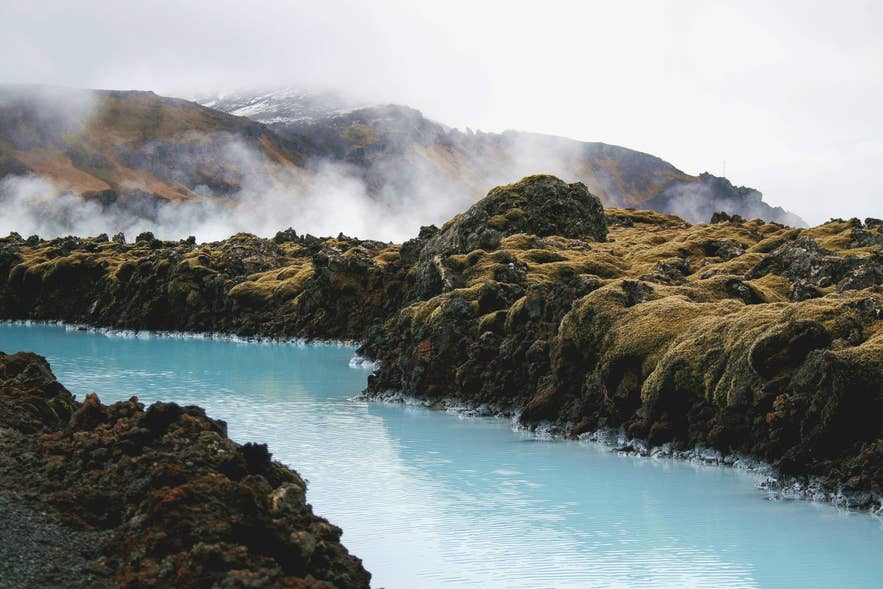
Discover Icelandic moss up close on your trip to the Land of Fire and Ice. Iceland’s volcanic environment creates ideal conditions for mosses and lichens, which spread across lava fields and rocky terrain in many parts of the country.
Many travelers first notice the moss-covered landscapes on self-drive tours along the Ring Road, hiking excursions through the Highlands, or day trips from Reykjavik. These green lava fields are especially common along the South Coast, the Reykjanes Peninsula, and other volcanic regions.
Why You Can Trust Our Content
Guide to Iceland is the most trusted travel platform in Iceland, helping millions of visitors each year. All our content is written and reviewed by local experts who are deeply familiar with Iceland. You can count on us for accurate, up-to-date, and trustworthy travel advice.
Fjallagros, often called Icelandic moss, is a special type of lichen with the scientific name Cetraria islandica. Icelanders have used fjallagros in food, traditional remedies, and herbal products for centuries, which makes it one of the country’s traditional wild ingredients.
This guide explains what Icelandic moss really is, what makes fjallagros special, where you can see moss-covered landscapes in Iceland, and why these fragile environments need protection.
Key Takeaways About Icelandic Moss
-
Iceland is home to more than 460 moss species and over 800 lichens, with new species discovered regularly.
-
The soft green lava fields seen across Iceland are usually covered by a mix of moss species, especially woolly fringe-moss.
-
Three woolly fringe-moss species — Racomitrium lanuginosum, Racomitrium ericoides, and Racomitrium canescens — are among the most common plant species in Iceland.
-
Fjallagros, also called Icelandic moss, is not a moss but a lichen called Cetraria islandica.
-
Fjallagros has been used in Icelandic food, herbal remedies, teas, skincare, and schnapps for centuries.
-
Iceland’s mosses and lichens grow slowly and are easily damaged, so visitors should stay on marked paths when visiting moss-covered landscapes.
-
Mosses and lichens are pioneer species that colonise bare lava and create the soil that makes all other Icelandic plant life possible.
-
Iceland’s moss fields act as carbon sinks and water reservoirs, playing a vital role in the country’s environmental health.
What To Know About Icelandic Moss
Iceland’s volcanic landscapes are covered by a wide variety of mosses and lichens that thrive in cool temperatures, clean air, and rocky volcanic terrain. According to the Natural Science Institute of Iceland, the country is home to around 460 moss species and more than 800 lichens species, with new species still being discovered regularly.
Mosses are especially noticeable in Iceland because they grow well on lava fields and other volcanic surfaces where larger plants struggle to survive. Over centuries, grazing has limited taller vegetation in many areas, allowing mosses and lichens to spread widely across the landscape.
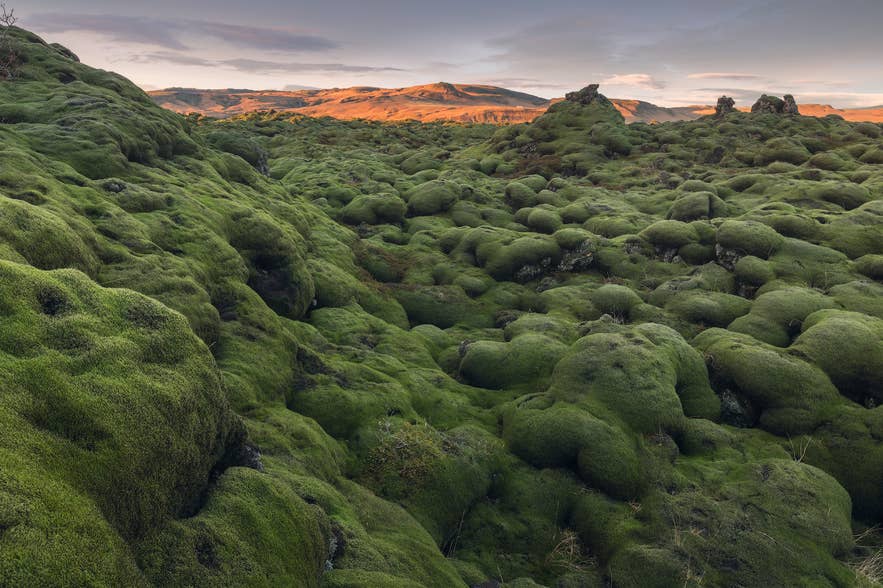
The thick green carpets covering many lava fields are usually not made from a single species. Instead, they are a mix of mosses, lichens, and other low-growing plants. Among the most common are several species of woolly fringe-moss, especially Racomitrium lanuginosum, Racomitrium ericoides, and Racomitrium canescens.
Fjallagros, often called Icelandic moss in English, is different. Despite the name, it is not a moss but a lichen called Cetraria islandica. Lichens form through a natural partnership between fungi and algae, allowing them to survive in harsh environments like Iceland’s lava fields and Highlands.
Why Moss Matters: Iceland's Most Hardworking Plant
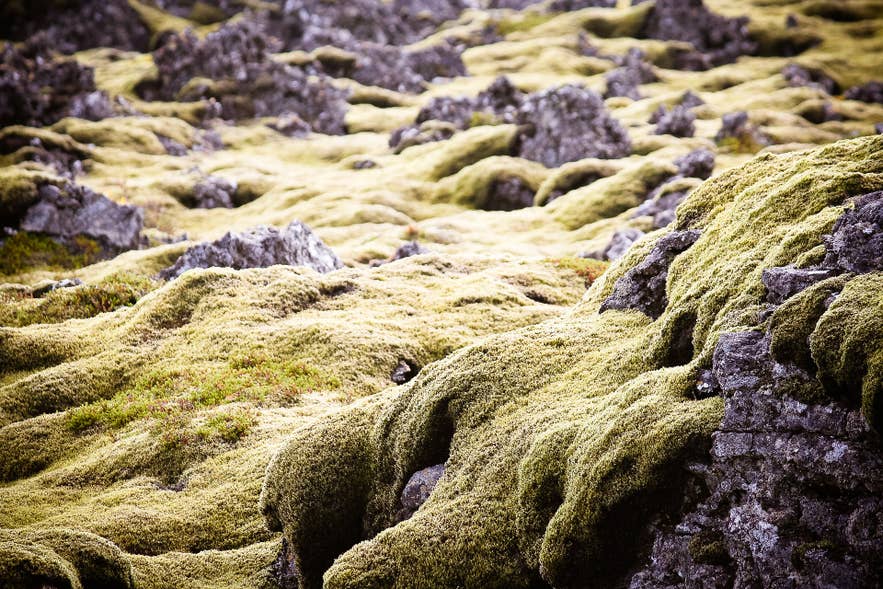 Most visitors notice Iceland's moss-covered lava fields and think of them as a backdrop, beautiful, green, and ancient. But these landscapes are actually doing some of the most important ecological work in the country, quietly and constantly.
Mosses and lichens are what ecologists call pioneer species. After a volcanic eruption leaves nothing but bare rock, they are among the very first living things to arrive. By slowly breaking down the rock surface, they begin building soil, a process that takes centuries. Without that first step, nothing else in Iceland's landscape could follow. Every highland meadow and grassy valley in the country owes its existence, in part, to moss.
As moss grows, dies, and decomposes, it adds organic matter to the ground and helps other plants take hold. Some lichens also pull nitrogen directly from the air and deposit it into the soil, acting as a natural fertilizer. This is why restoring damaged moss landscapes is so difficult. You cannot simply replant moss and expect it to recover quickly. The soil-building process starts almost from scratch.
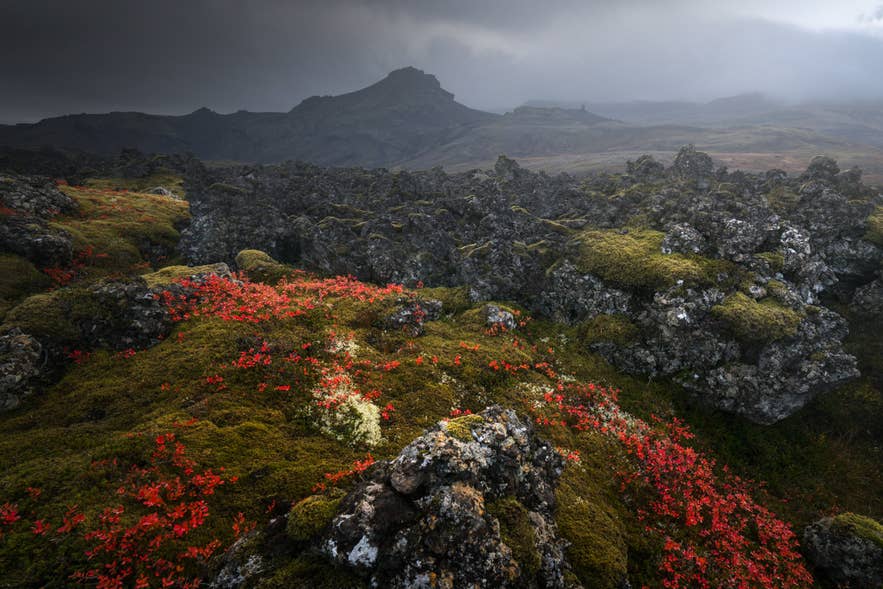 Moss also acts like a sponge, absorbing rainfall and glacial meltwater and releasing it slowly back into the ground. This keeps Iceland's soil stable and helps prevent erosion. Iceland actually has one of the worst soil erosion problems in Europe, largely caused by centuries of sheep grazing that stripped vegetation from vast areas. Where moss cover disappears, the thin volcanic soil beneath it can be carried away by wind and rain within years.
These landscapes are also alive with wildlife. The dense, layered structure of moss fields shelters insects and invertebrates that feed birds like the golden plover and Arctic tern. Even the Arctic fox depends on the food web that healthy moss fields support. What looks like a simple green carpet is, up close, an entire ecosystem.
And it is surprisingly fragile. Moss in Iceland grows slowly in the cold climate, and older lava fields like Eldhraun have been building their thick green cover since the eruption of 1783, meaning what you walk on today may have taken over 200 years to grow.
Iceland's moss fields also store significant amounts of carbon in their mats and the soil beneath them, making their protection increasingly important as the country faces the effects of climate change.
Fjallagros: Iceland's Ancient Super Ingredient
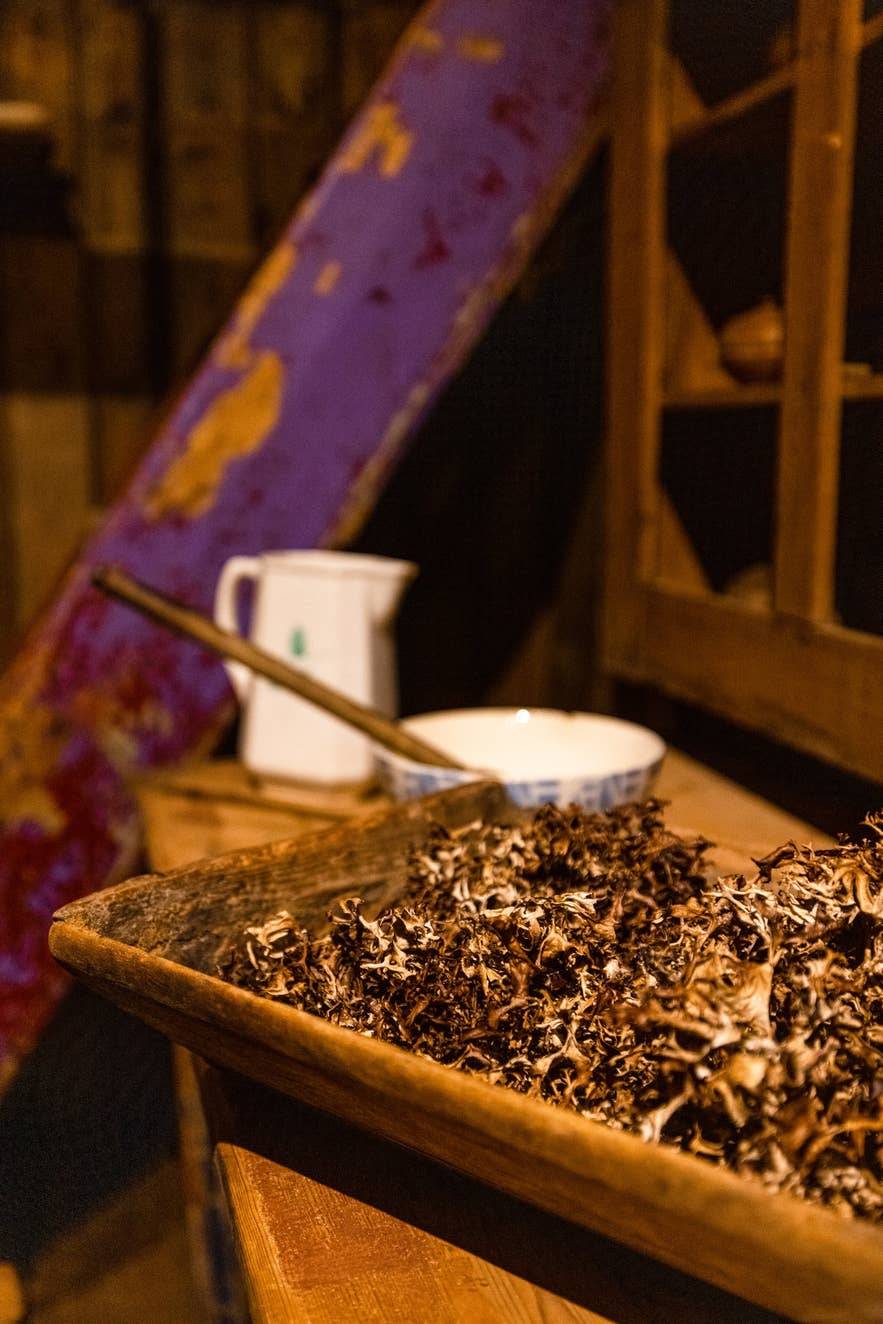 While Iceland has hundreds of moss and lichen species, fjallagros became especially important because of its long history in Icelandic food, medicine, and daily life. It may not be a moss, but it is a lichen that has been collected and used in Iceland for centuries alongside other traditional Icelandic herbs.
During difficult periods, Icelanders dried and stored fjallagros to help stretch meals, adding it to porridge, bread, sausages, milk dishes, and skyr. It was also commonly used in traditional remedies for coughs, digestion, sore throats, and skin irritation, often prepared as a bitter herbal tea.
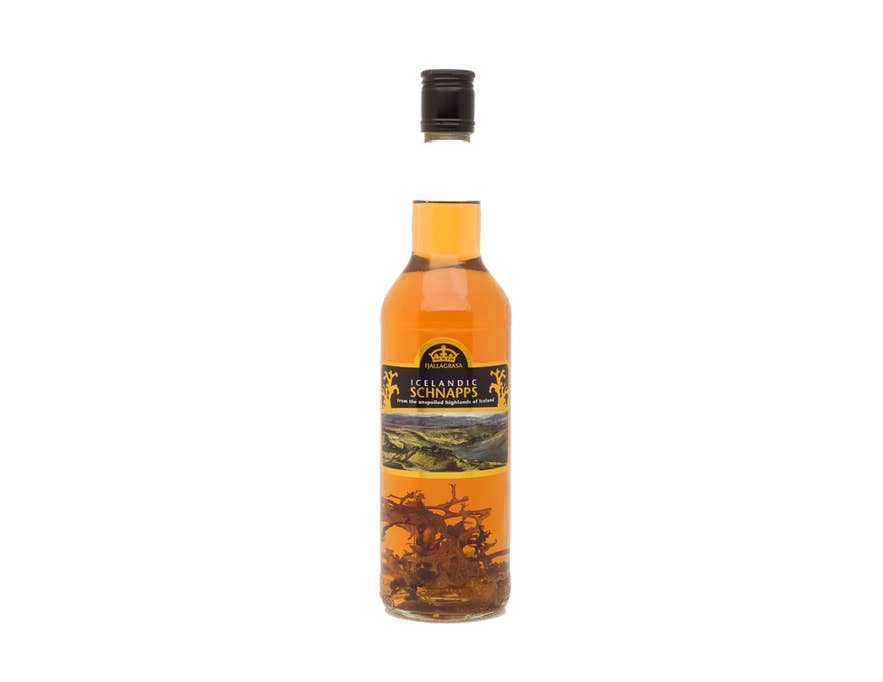 Today, fjallagros still appears in Icelandic products ranging from teas, syrups, lozenges, and herbal supplements to skincare products and alcoholic drinks. Famous chefs like Gísli Matt, who runs Ylja Restaurant at Laugaras Lagoon, also find creative ways to use fjallagros in their dishes.
Fjallagros usually appears in smaller, branching patches mixed among other mosses and lichens across rocky volcanic terrain.
Where To See Icelandic Moss in Iceland
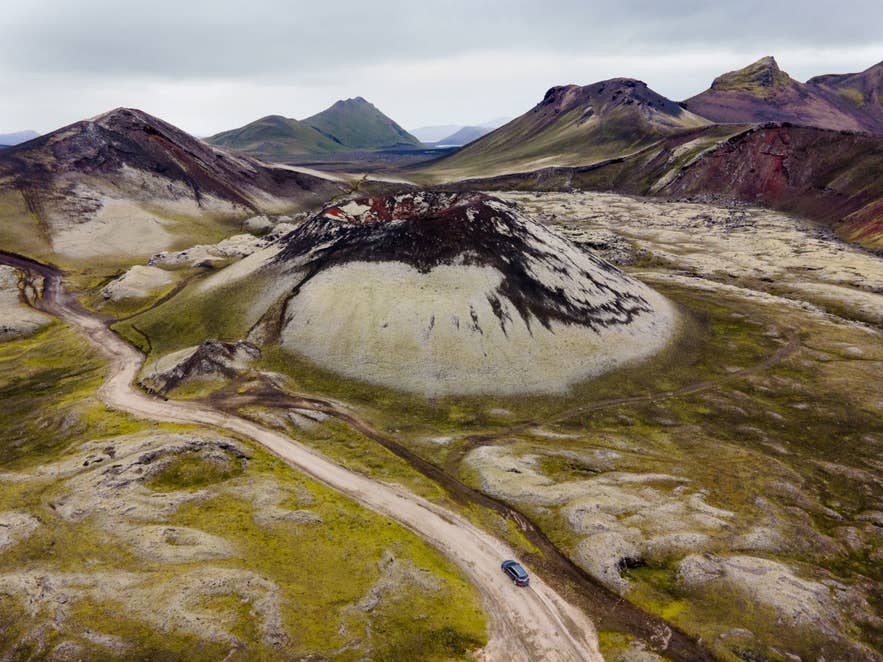 The easiest way to see Iceland’s moss-covered lava fields is simply by traveling around the country. You will probably spot these landscapes even if you are not actively looking for them, including on your transfer from Keflavik International Airport to Reykjavik, where lava fields stretch across much of the Reykjanes Peninsula.
Late summer is among the best times to see these landscapes, when the moss looks thickest against dark volcanic rock. Moss fields are also especially striking during spring and fall, when their bright green color contrasts with snow-covered mountain tops and black lava fields.
From Reykjavik, a Golden Circle tour offers easy opportunities to see moss-covered lava fields and rocky volcanic terrain at Almannagja Canyon in Thingvellir National Park. You will also spot plenty of moss while on a self-drive trip along the Ring Road and the Snaefellsnes Peninsula. The Berserkjahraun lava field on Snaefellsnes is one of the most striking moss-covered lava fields in the region.
Another top place to experience Iceland’s moss fields up close is the Eldhraun Lava Field on the South Coast, where thick green carpets spread across one of the world’s largest lava fields. For even more dramatic volcanic scenery, a hiking tour in the Highlands during summer passes through wide moss-covered landscapes.
In North Iceland, the lava pillars of Dimmuborgir near Lake Myvatn are another striking spot to see moss spreading over volcanic rock. For travelers who want a guided experience of Iceland’s volcanic landscapes, browsing volcano tours is a good place to start.
Why You Should Never Step on Icelandic Moss
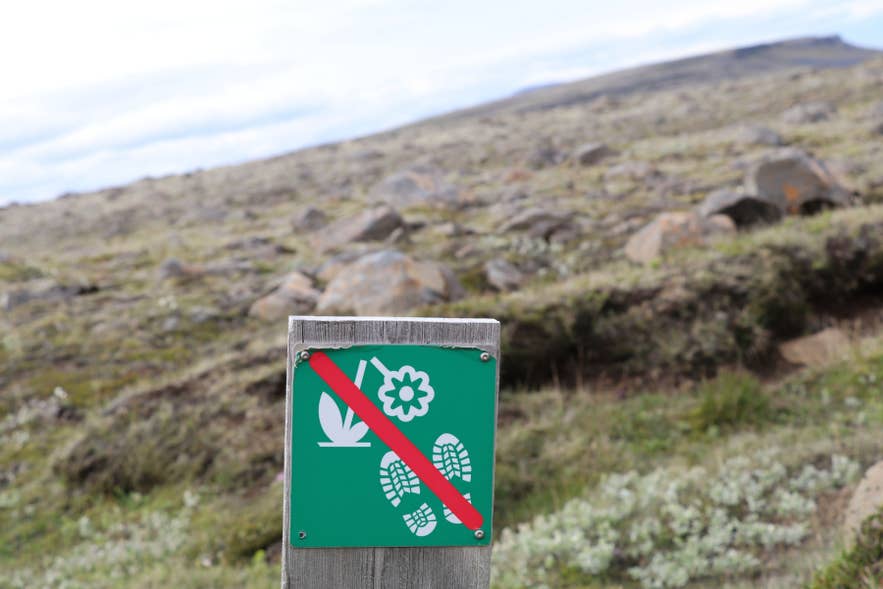
Stepping on Icelandic moss is often listed among the main things to avoid in Iceland because these landscapes are far more delicate than they appear. Mosses and lichens grow very slowly in Iceland’s cold climate, so even a single footprint can leave marks that remain visible for years.
One well-known example is Fjadrargljufur Canyon in South Iceland, which saw a sharp rise in visitors after appearing in Justin Bieber’s 2015 music video for “I’ll Show You.” The video showed Bieber moving through fragile mossy landscapes, and the canyon later faced heavy pressure from increased foot traffic, leading to temporary closures in May 2019 so the area could recover.
Another Bieber-related Iceland video, “Cold Water” by Major Lazer, also drew criticism from Icelandic environmental groups for showing dancers on fragile moss.
When moss is damaged, the thin soil underneath becomes exposed to wind and rain, which makes it harder for plants and lichens to grow back. With more visitors exploring Iceland’s lava fields and volcanic landscapes, including the recent Fagradalsfjall eruption site on the Reykjanes Peninsula, some areas have already started to show signs of wear.
To help protect these fragile environments, stay on marked paths and walk on gravel, dirt, or bare rock instead of moss-covered ground; it's an easy way to practice sustainable tourism in Iceland.
Icelandic Moss and Your Visit to Iceland
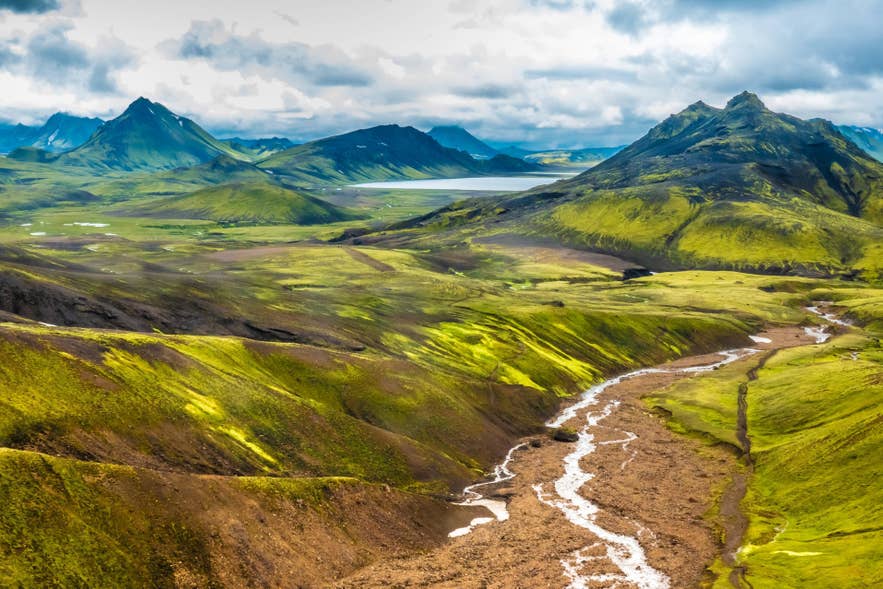
Icelandic moss is one of the most recognizable natural features in Iceland, covering lava fields, volcanic slopes, and rocky landscapes across the country. While fjallagros is one of the best-known species, Iceland’s green volcanic scenery is actually made up of hundreds of mosses and lichens adapted to the country’s harsh environment. Iceland’s lava fields and volcanic slopes are also home to distinctive wildlife that thrives in these volcanic surroundings.
Fjallagros also remains part of Icelandic culture through herbal teas, traditional remedies, skincare products, and modern cuisine. Read our guide to food in Iceland to discover more traditional ingredients and local dishes, or explore the history behind the Icelandic lopapeysa sweater and its connection to Icelandic nature and culture.
What is the green moss covering lava fields in Iceland?
Is Icelandic moss the same as the moss covering Iceland’s lava fields?
What types of moss and lichen grow in Iceland?
What is the best time to see Icelandic moss?
Does Icelandic moss grow all year round?
Can you walk on moss in Iceland?
Is Icelandic moss edible?
What is fjallagros used for in Iceland?
Have you spotted Icelandic moss during your travels in Iceland? Share your favorite moss-covered landscape in the comments below.

I was born on the west side of Reykjavík and grew up downtown, so Iceland has been my back yard for most of my life. I'm a father of two, I've traveled on five continents, and I still haven't found a country that holds my attention the way this one does.
That's why I co-founded Guide to Iceland. We connect travelers directly with Icelandic operators, guides and hosts, so the advice and the services both come from people who actually live here.
I write about the practical side of a trip: what eating out in Reykjavík really costs, whether to pick Sky Lagoon or Hvammsvík, where to stop for food along the Ring Road, and which regions give you the best odds of clear skies for the northern lights. If you're planning a trip and something doesn't add up, message me.