Kayaking in Iceland offers a quiet, close-up way to experience glacier lagoons, mountain-lined fjords, coastal wildlife, and peaceful inland waterways. Guided tours provide the equipment, instruction, and local knowledge that allow many beginners to take part.
Available kayaking tours in Iceland range from short paddles lasting around 1.5 hours to multi-day expeditions through remote parts of the Westfjords. Routes and experience requirements vary, so there are options for families, first-time kayakers, and experienced paddlers.
Glacier lagoon tours operate at locations such as Jokulsarlon, Fjallsarlon, and Solheimajokull. Sea kayaking is available near Mount Kirkjufell and across the Westfjords, while river and canal tours offer another way to explore the countryside.
Most kayaking tours operate between May and September, while some glacier lagoon tours continue into October. Tour lengths, minimum ages, equipment, and difficulty levels vary. Weather and water conditions may also affect the route or cause a departure to be rescheduled.
Why You Can Trust Our Content
Guide to Iceland is the most trusted travel platform in Iceland, helping millions of visitors each year. All our content is written and reviewed by local experts who are deeply familiar with Iceland. You can count on us for accurate, up-to-date, and trustworthy travel advice.
To add firsthand insight, we spoke to Gardar Hafsteinsson, an experienced sea kayaking guide from Vestur Adventures, running the top-rated kayaking tour around the iconic Kirkjufell Mountain. He shared what beginners can expect, how guides assess the weather, why paddling offers a different perspective, and how to behave when wildlife approaches.
His advice appears throughout this guide alongside current information and practical safety tips. Read on to compare kayaking locations, choose the right season and route, and prepare for kayaking in Iceland.
Key Takeaways
-
Kayaking tours in Iceland explore glacier lagoons, fjords, rivers, inland canals, and coastal waters.
-
Many guided day tours welcome beginners and provide instruction before entering the water.
-
The overall kayaking season runs from May to October, although many individual tours finish in September.
-
Operators provide kayaks, paddles, flotation devices, and essential safety equipment, but protective clothing varies.
-
Kayakers may see seabirds, seals, whales, or dolphins, but wildlife sightings are never guaranteed.
What a Kayaking Tour in Iceland Is Actually Like
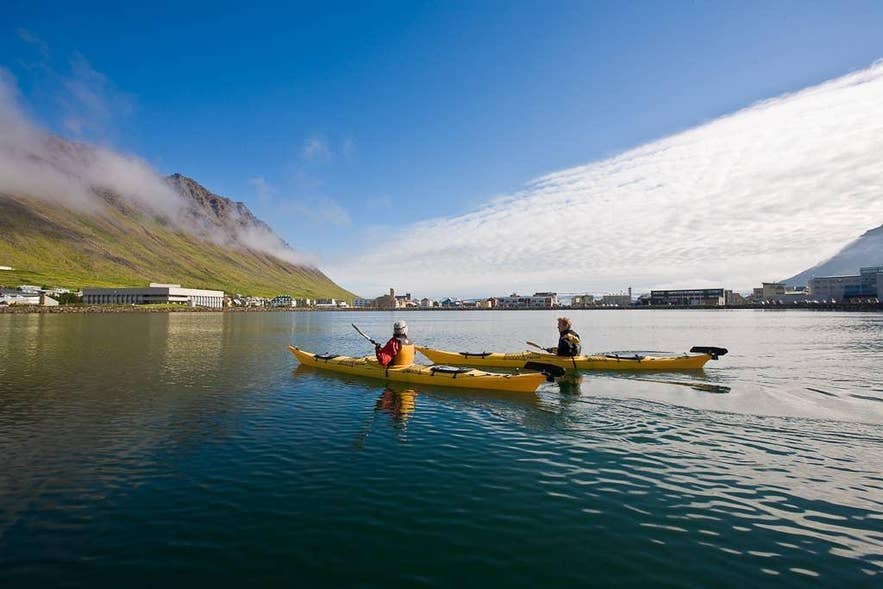
A kayaking tour in Iceland can take you through some of the country's most impressive waters, with routes shaped by glaciers, mountains, coastlines, and open countryside. The pace and effort involved depend on the route, weather, and water conditions.
Guided tours normally begin on land. Your guide explains the equipment, paddling technique, and safety procedures before anyone enters the water. Many tours welcome beginners, so previous kayaking experience is usually unnecessary, although longer and more demanding routes may require it.
Once on the water, the appeal is as much about the perspective as the paddling. Around Mount Kirkjufell, Gardar says sitting at sea level without engine noise offers a different view from the familiar roadside viewpoints. In calm conditions, the water can become remarkably still beneath the mountain.
I think it's the combination of the scenery and how peaceful it feels once you're out on the water.
That quiet, water-level perspective is one of the defining features of kayaking in Iceland, although the surroundings and level of difficulty vary by route.
How To Choose Between Iceland's Kayaking Tours
Kayaking tours in Iceland fall into four broad categories. Glacier lagoons offer iceberg-filled scenery, sea kayaking explores fjords and coastal waters, river and inland routes include family-friendly options, and multi-day expeditions travel farther into remote areas.
|
Tour type |
What you may see |
Experience needed |
Typical length |
Typical operating period |
|---|---|---|---|---|
|
Glacier lagoon |
Icebergs, glacier tongues, and meltwater landscapes |
Usually none, but good fitness may be required |
1.5 to 2.5 hours, or up to 4 hours when combined with hiking |
May to October |
|
Sea kayaking |
Fjords, bays, mountains, seabirds, seals, and occasionally other wildlife |
Usually none, though longer routes may require experience |
2 to 5 hours |
May to September |
|
River or inland waterway |
Farmland, birdlife, and calm waterways |
Usually none, though requirements vary by route |
1 to 3 hours |
Mainly May to September |
|
Multi-day expedition |
Remote fjords, islands, or nature reserves |
Good fitness is needed; experience requirements vary |
3 to 6 days |
June to September |
Operating months vary by tour and may change with weather and water conditions.
Glacier Lagoons
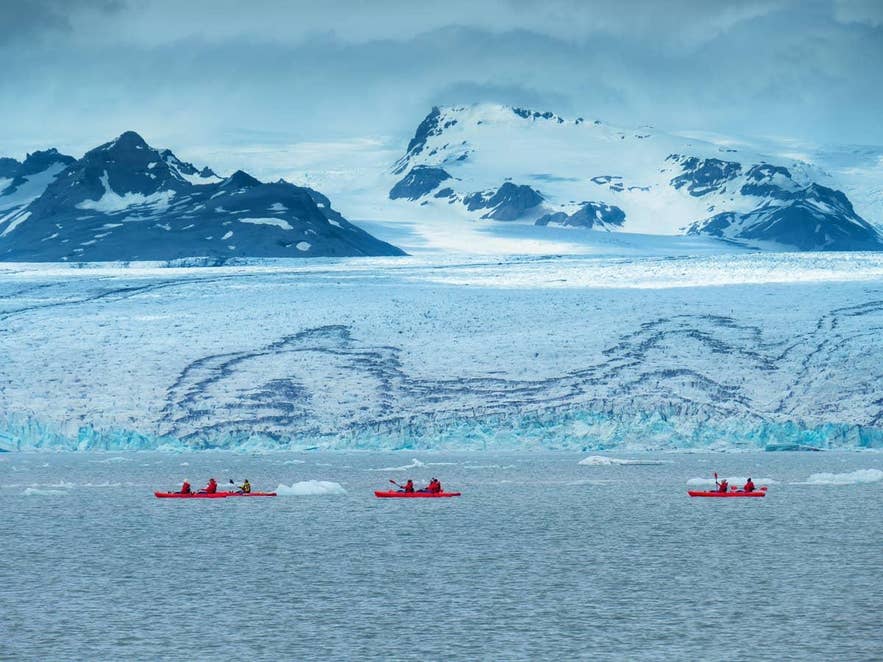
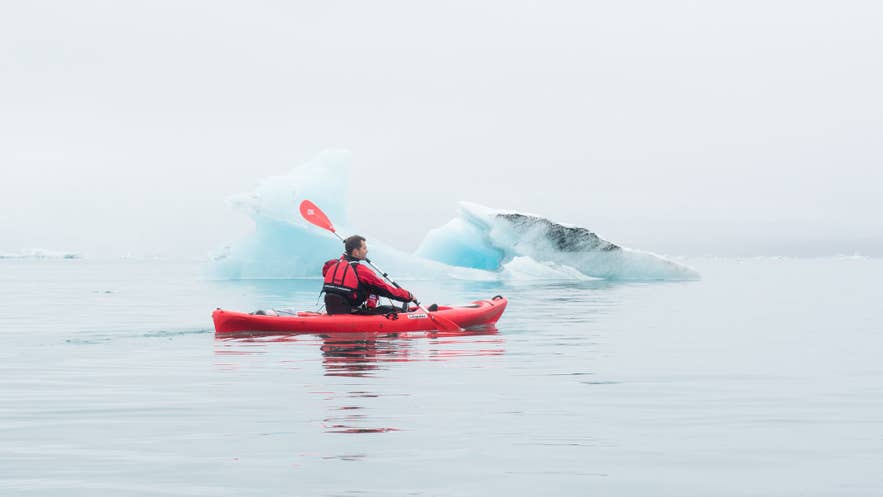
Glacier lagoon kayaking means paddling among icebergs on a lake formed by glacial meltwater. Jokulsarlon Glacier Lagoon is the best-known location. Tours also run at Fjallsarlon Glacier Lagoon, Solheimajokull Glacier Lagoon, and a remote lagoon near Flaajokull.
Because the water is extremely cold, operators provide flotation devices, protective paddling suits, and other safety equipment. Guides select routes and distances from the ice according to current conditions.
Jokulsarlon and Fjallsarlon lie close together in Southeast Iceland, but the paddling experiences differ. Jokulsarlon is larger and better known, while Fjallsarlon offers a quieter setting beneath its glacier tongue.
Farther west on the South Coast, Solheimajokull offers views of the glacier's front edge. Near Flaajokull in Southeast Iceland, reaching the water may form part of a longer journey through a more remote landscape.
Sea Kayaking
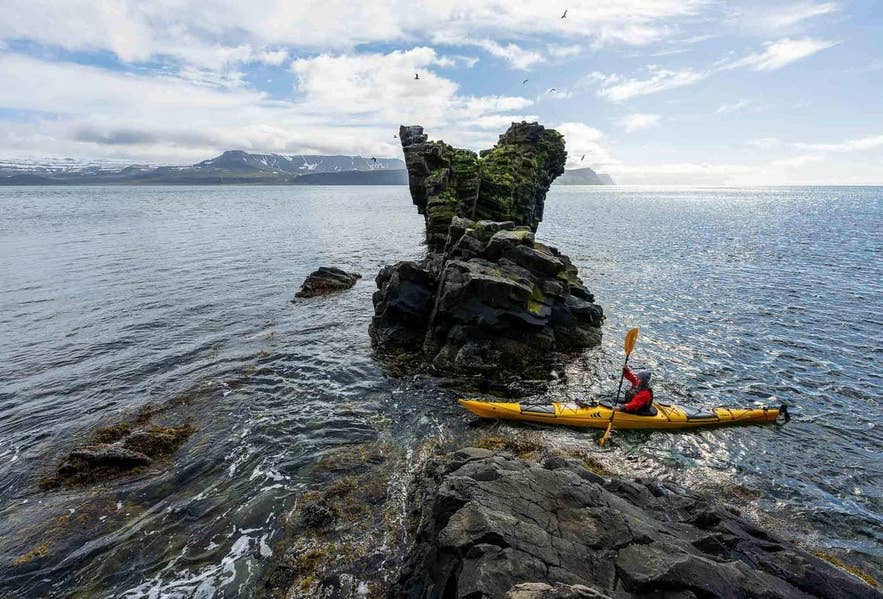
Sea kayaking tours explore sheltered fjords, bays, and coastal waters around Iceland. Destinations include Kirkjufell within the wider Breidafjordur Bay area on the Snaefellsnes Peninsula, Onundarfjordur in the Westfjords, and Siglufjordur in North Iceland.
These routes offer views of mountains, islands, skerries, and coastal settlements. Depending on the location, kayakers may also see seabirds, seals, or other wildlife, but sightings are never guaranteed.
You have mountains all around you, small beaches and sections of coastline that you simply experience differently from the water.
Routes around Kirkjufell and Siglufjordur can suit first-time paddlers, while longer routes near Flateyri may demand more stamina or previous experience. Some Westfjords tours offer transfers from Isafjordur Town, but meeting arrangements vary.
Rivers and Lake-to-Sea Routes
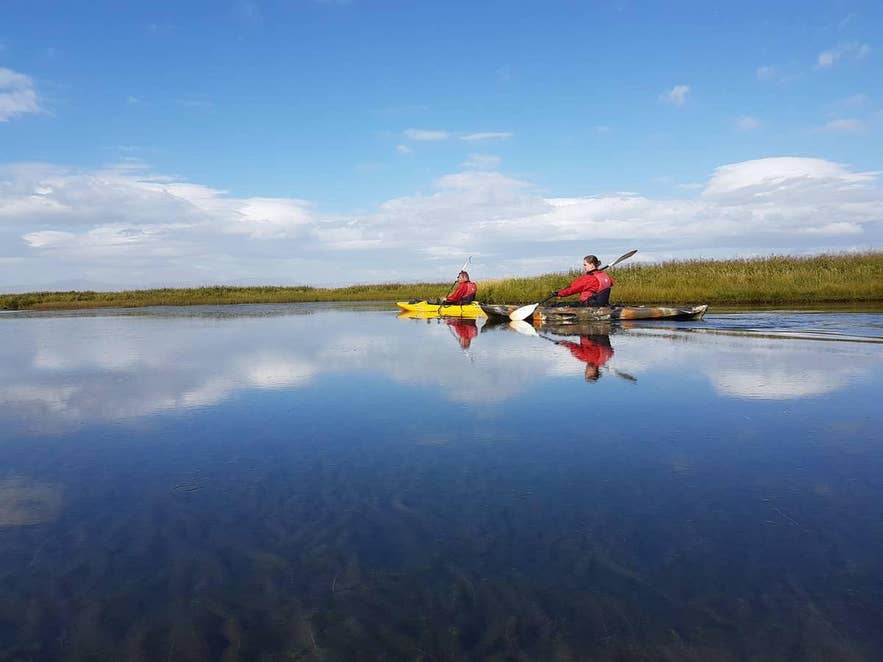
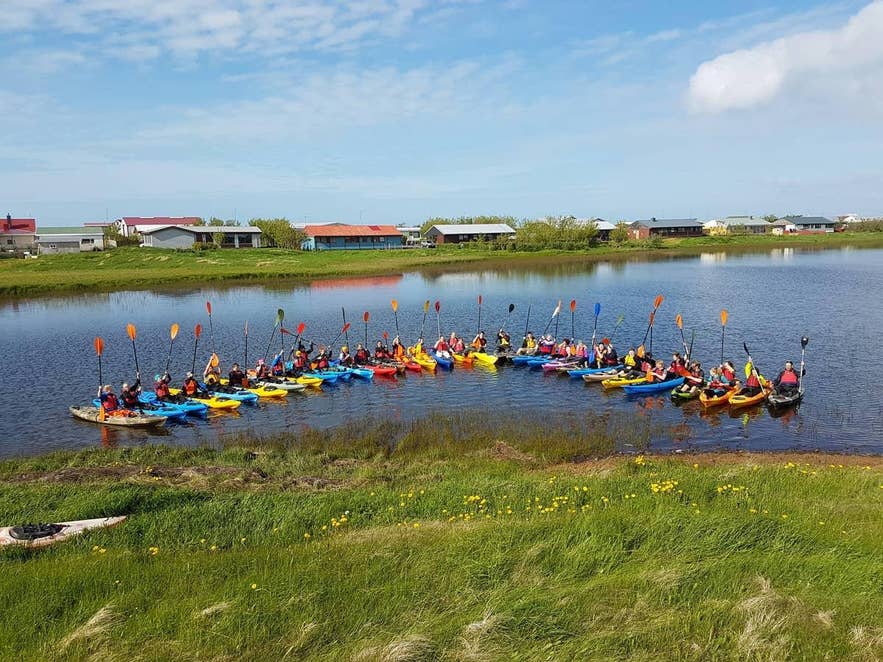
River and inland-waterway tours offer a different setting from glacier lagoons and coastal kayaking. The main locations include the coastal village of Stokkseyri in South Iceland and the Svarta River near Varmahlid Village in North Iceland.
Stokkseyri lies south of Selfoss Town and within easy reach of Reykjavik. Routes follow the shallow canals around Longudael Lake and may continue along the Hraunsa River toward the coast. On clear days, several glaciers may be visible in the distance.
The surroundings change as paddlers move between the lake, narrow canals, wetlands, and the coast. Offshore, Atlantic waves break over a submerged lava ridge formed by the Great Thjorsa lava flow.
North Iceland also offers river kayaking in the Skagafjordur Region, where routes pass through open countryside. The rural setting provides a contrast to Iceland's glacier lagoons and coastal waters.
Multi-Day Sea Kayaking Expeditions
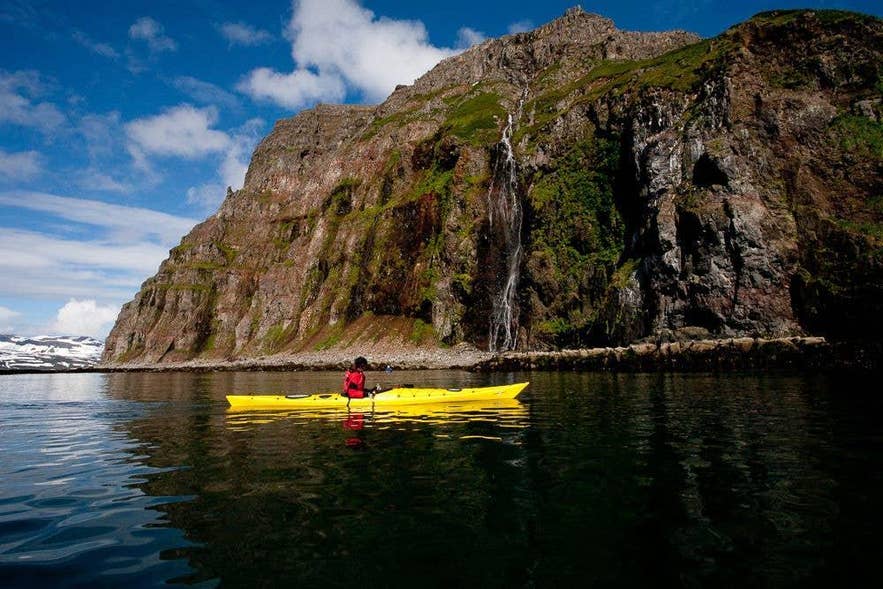
Multi-day kayaking takes paddlers beyond the usual day-tour routes to remote fjords, islands, and stretches of coastline. These expeditions are concentrated in the Westfjords, where Isafjordur Town usually serves as the meeting and transfer point.
Camping expeditions carry tents and other equipment in the kayaks, while some routes use a remote farmhouse as a base. Destinations may include Isafjardardjup, Vigur Island, and Hornstrandir Nature Reserve, with possible views toward Drangajokull Glacier.
Daily routes depend on the weather, sea conditions, and the group's ability. Fitness and experience requirements vary, and these trips require more preparation than guided day tours.
When To Go Kayaking in Iceland
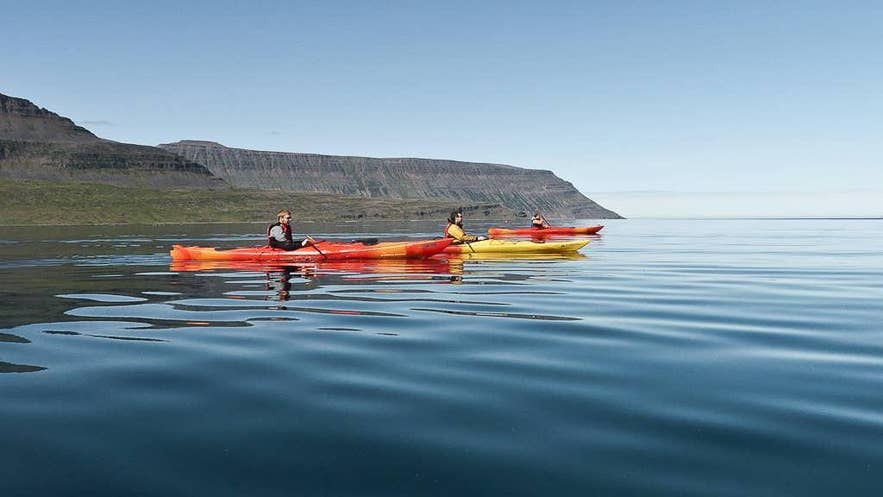
The kayaking season in Iceland generally falls between May and October, although no single operating period applies to every tour. Many sea and inland-water tours finish in September, while some glacier lagoon tours continue into October.
Outside their scheduled seasons, tours may be unavailable because weather and water conditions are less suitable for kayaking.
June and July bring Iceland's longest days. Gardar says late paddles near Kirkjufell can still feel like daytime, with soft golden light falling across the mountain and surrounding coastline.
This light is most pronounced during the weeks around midsummer. The midnight sun kayaking tour under Kirkjufell Mountain operates from May to September and generally lasts about three hours, including roughly two hours on the water.
If puffin watching is a priority, June and July generally offer the best opportunity because they fall within the main nesting season. Puffins usually return to Iceland's coasts from late April and depart during August, but sightings on kayaking tours are never guaranteed.
Cold Water and Kayaking Safety in Iceland
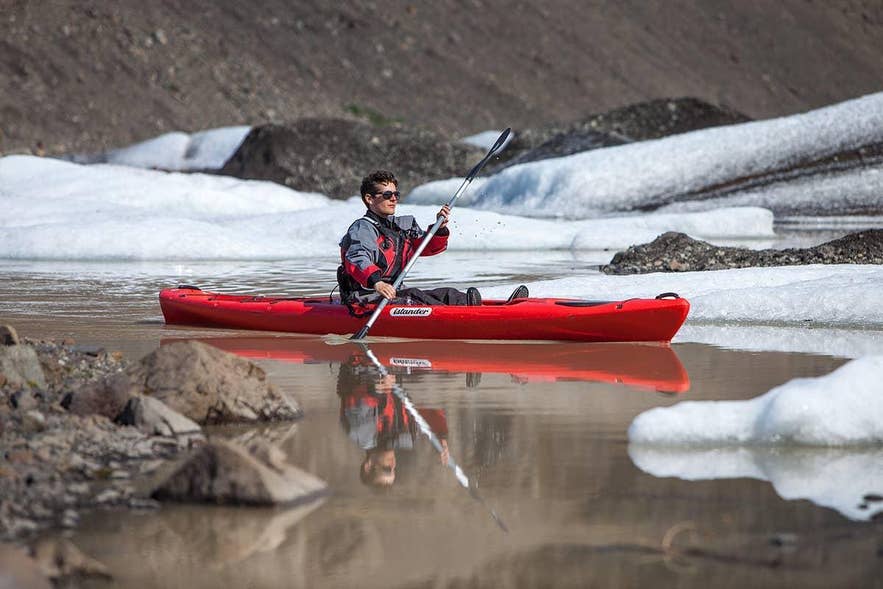
The sea and glacier lagoons around Iceland remain cold throughout the kayaking season. Operators manage the risks with protective clothing, flotation devices, safety briefings, and routes adapted to the weather and water conditions.
Gardar emphasizes that the sea around Grundarfjordur remains cold even in summer. He says capsizing is very unusual on his tours, but the guides still treat the cold-water risk seriously. He adds that only a handful of guests have entered the water during his eight years of guiding in Grundarfjordur Town.
Protective clothing depends on the tour and current operating practices. Glacier lagoon and coastal tours may provide drysuits, paddling suits, jackets, trousers, or other waterproof layers, along with flotation devices and essential safety equipment. Check the individual equipment list before booking.
Kayak designs also vary. Many beginner-friendly day tours use stable sit-on-top kayaks, which are easy to enter and handle. Longer coastal and expedition routes generally use enclosed sea kayaks in single or tandem designs, which offer greater speed and storage capacity.
What To Bring on a Kayaking Tour
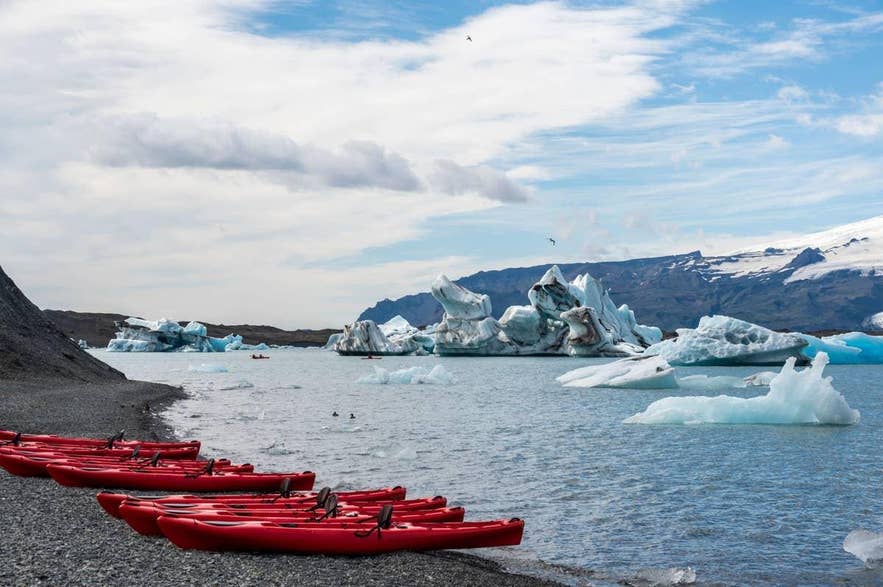
You do not normally need to bring specialist kayaking equipment for a guided tour. The kayak, paddle, flotation device, guide, and essential safety equipment are included. Protective clothing and the personal items you need to pack vary by tour.
|
The operator generally provides |
Bring yourself |
|---|---|
|
Kayak and double-bladed paddle |
Warm wool or synthetic base layers |
|
Personal flotation device |
Warm socks and a spare pair |
|
Tour-specific protective clothing |
A change of clothes |
|
Essential safety equipment |
A warm hat |
|
Guide and pre-launch safety briefing |
Sunglasses and sunscreen |
|
Other items listed in the tour inclusions |
Water and a securely protected camera or phone |
Avoid denim and cotton layers. They retain moisture, dry slowly, and can become cold and uncomfortable beneath protective clothing. Gloves, footwear, and waterproof phone cases are supplied on some tours but not others, so check the tour's inclusion and packing lists.
Multi-day expeditions have more extensive requirements, which may include sleeping bags, personal clothing, and equipment carried in the kayaks. Follow the operator's expedition-specific packing list.
For broader clothing advice, see our guide to what to wear in Iceland. You can also use this guide on how to pack for travel in Iceland when preparing for the rest of your trip.
Wildlife You Might See and How To Behave Around It
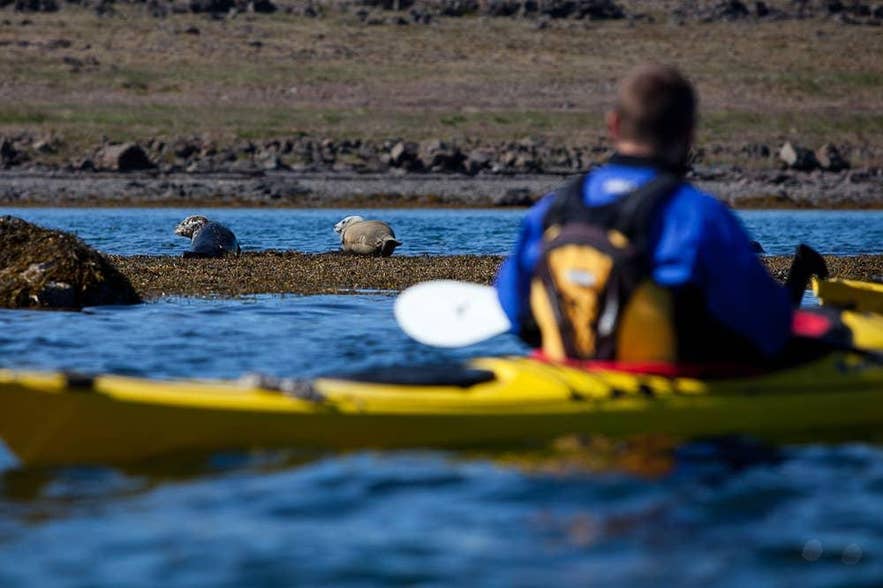
Kayaks move quietly and sit low on the water, allowing them to enter shallower coastal areas than larger boats. Depending on the route and season, paddlers may see seals, puffins, eider ducks, Arctic terns, and other seabirds. Wildlife sightings are never guaranteed.
When wildlife appears, Gardar advises paddlers not to approach, surround, block, or chase it for a photograph. Stay with the group, follow the guide's instructions, and leave the animal space to move away. The most effective response is often to reduce your movement instead of trying to get closer.
Sometimes the best thing you can do is stop paddling and just watch.
Remaining still gives a curious animal the choice to approach or leave. As visitor numbers around Kirkjufell and the Snaefellsnes Peninsula have grown during his years of guiding, Gardar adds that keeping groups controlled and preventing people from chasing wildlife has become increasingly important.
Booking a Kayaking Tour in Iceland
Kayaking asks for relatively little preparation. Gardar says many of his guests are complete beginners rather than experienced kayakers or adventure athletes. The important requirements are being comfortable on the water, following instructions, and having reasonable general mobility.
There are many kayaking tours in Iceland, ranging from glacier lagoons in Southeast Iceland to remote fjords in the Westfjords. If you are planning a trip around the Snaefellsnes Peninsula, booking accommodation in Snaefellsnes lets you stay near the water and make kayaking part of a longer visit.
How cold is the water when kayaking in Iceland?
Do you get wet on a kayaking tour in Iceland?
How close do seals get to kayaks in Iceland?
Is a glacier lagoon or a fjord better for a first kayaking trip in Iceland?
What is the difference between a sit-on-top kayak and an enclosed sea kayak?
What is the difference between a kayak and a canoe?
Are you planning a kayaking tour in Iceland? Which type of water or destination interests you most? If you have already been kayaking in Iceland, where did you paddle, and did you encounter any wildlife? Tell us in the comments below.

Michael Chapman is a British travel writer living in Reykjavík. A former scuba and lava cave guide, he draws on firsthand experience to write about Iceland’s nature and culture. He’s also the author of Hidden Iceland (2020).