We analyzed 13,959 traveler comments about 33 hot springs, geothermal lagoons, and swimming pools across Iceland to find out which places travelers actually recommend. The results reveal a clear gap between the country’s most famous bathing spots and the places visitors rate most highly.
Iceland has dozens of geothermal bathing spots, and the activity ranks first among the top experiences in Iceland recommended by tourism professionals. To find out which places travelers recommend most, we analyzed 13,959 comments covering 33 of the best hot springs in Iceland, geothermal spas, and swimming pools.
We looked at how often each place appeared in discussions, how positive or negative the comments were, and which experiences travelers associated most strongly with each location. The Blue Lagoon received more attention than any other place, while travelers directly comparing Iceland’s two best-known lagoons more often favored Sky Lagoon.
Why You Can Trust Our Content
Guide to Iceland is the most trusted travel platform in Iceland, helping millions of visitors each year. All our content is written and reviewed by local experts who are deeply familiar with Iceland. You can count on us for accurate, up-to-date, and trustworthy travel advice.
Smaller geothermal spas also performed strongly. Krauma Spa, GeoSea Geothermal Baths, and Vok Baths earned some of the highest positive sentiment in the study.
We also compared the Reddit findings with more than 30,000 TripAdvisor and Facebook reviews of the same places to check whether the wider patterns matched. The results show which hot springs attract the most praise, which receive the most criticism, and what travelers value most about each one.
If you are planning your own geothermal stops, you can also browse hot spring tours and spa and wellness experiences around Iceland.
Key Findings
-
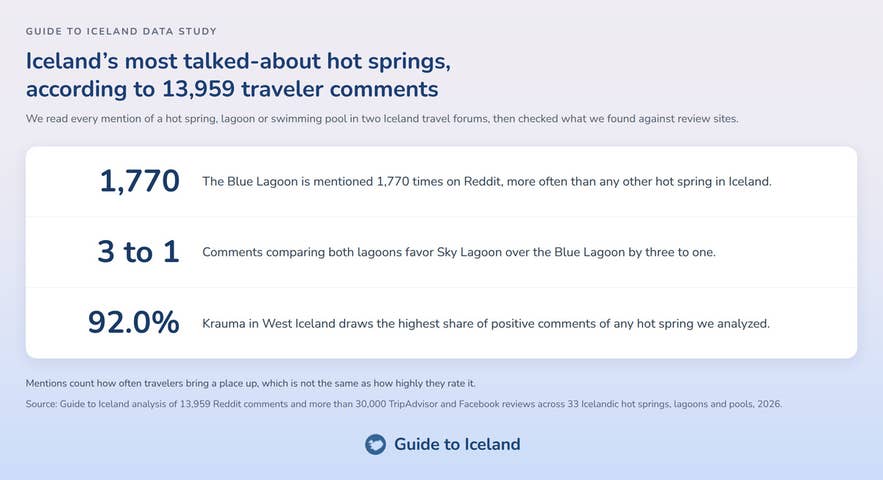
The Blue Lagoon is the most talked-about hot spring in Iceland, with 1,770 mentions. That is more than every place below Sky Lagoon added together.
-
Travelers who have tried both lagoons prefer Sky Lagoon three to one. Of the 521 comments that mention both, 53 state a clear preference, and Sky Lagoon takes 40 of them.
-
Krauma in West Iceland is the best-loved hot spring in the study, at 92% positive. GeoSea in Husavik follows at 86.8%, and Vok Baths in East Iceland at 83.6%.
-
The three best-known lagoons of the southwest and south rank last on sentiment. The Blue Lagoon (70.1%), the Secret Lagoon (72.6%), and Sky Lagoon (73.6%) fill the bottom three places of the 12 that had enough comments to score.
-
Iceland’s municipal swimming pools are the third most discussed bathing option in the study. The pools earned 335 mentions and an authenticity score 13 times the average.
-
The single highest-upvoted comment in the study tells travelers to bathe where Icelanders bathe. A single adult ticket to a Reykjavik city pool costs 1,500 ISK, against 11,990 ISK for the cheapest Blue Lagoon entry.
-
Winter is the season travelers describe most fondly. Hrunalaug and other dark-sky pools earn ten times the average northern lights talk.
Cite This Study
The charts and data in this study are free to use under CC BY 4.0. Credit Guide to Iceland and link to this page. Every chart has an Embed button underneath it with ready-to-paste code.
Iceland’s Hot Springs Ranked by Mentions, Sentiment, and Price
 Every number in this study sits in one place below. Mentions count how often travelers bring a place up, and the positive share is the portion of sentiment-bearing comments that are positive. Admission is the cheapest adult ticket at the time of writing.
|
Hot spring |
Mentions |
Positive share |
Region |
Adult admission from |
|---|---|---|---|---|
|
Blue Lagoon |
1,770 |
70.1% |
Southwest |
11,990 ISK |
|
Sky Lagoon |
1,128 |
73.6% |
Southwest |
14,990 ISK |
|
Local swimming pools |
335 |
76.2% |
Nationwide |
Varies by municipality |
|
Secret Lagoon |
265 |
72.6% |
South |
4,500 ISK |
|
Hvammsvik |
247 |
80.9% |
West |
5,900 ISK |
|
GeoSea |
138 |
86.8% |
North |
7,490 ISK |
|
Forest Lagoon |
117 |
77.6% |
North |
7,490 ISK |
|
Vok Baths |
116 |
83.6% |
East |
7,690 ISK |
|
Reykjadalur |
97 |
79.5% |
South |
Free (excluding parking fees) |
|
Earth Lagoon Myvatn |
69 |
78.9% |
North |
7,900 ISK |
|
Laugarvatn Fontana |
62 |
76.5% |
South |
7,490 ISK |
|
Krauma |
61 |
92.0% |
West |
7,900 ISK |
|
Laugardalslaug |
41 |
Not scored |
Southwest |
1,500 ISK |
|
Hrunalaug |
36 |
Not scored |
South |
3,000 ISK |
|
Seljavallalaug |
22 |
Not scored |
South |
Free |
Positive shares are shown only for the 12 places with at least 25 comments that expressed a clear opinion. Admission prices were checked in September 2026, but they vary by season and time slot, so the listed prices should be treated as starting prices.
The cheapest paid option costs about a third of the most expensive. Three locations are free, although some unofficial pools have donation boxes. Municipal pools have the highest positive share among options costing less than 5,000 ISK.
The Blue Lagoon Is the Most Talked-About Hot Spring in Iceland
The Blue Lagoon stands far ahead of every other location in the study, with 1,770 mentions. That’s more than the 13 places below Sky Lagoon combined. It’s also the place first-time visitors ask about most, and opinions are divided. Supporters praise the milky-blue water and silica masks, while critics often point to the crowds and high prices.
Among the 12 places with at least 25 comments expressing a clear opinion, the Blue Lagoon has the lowest positive share at 70.1%. This does not mean it is a bad spa. It shows that the Blue Lagoon attracts more mixed opinions than the other major bathing spots in the study.
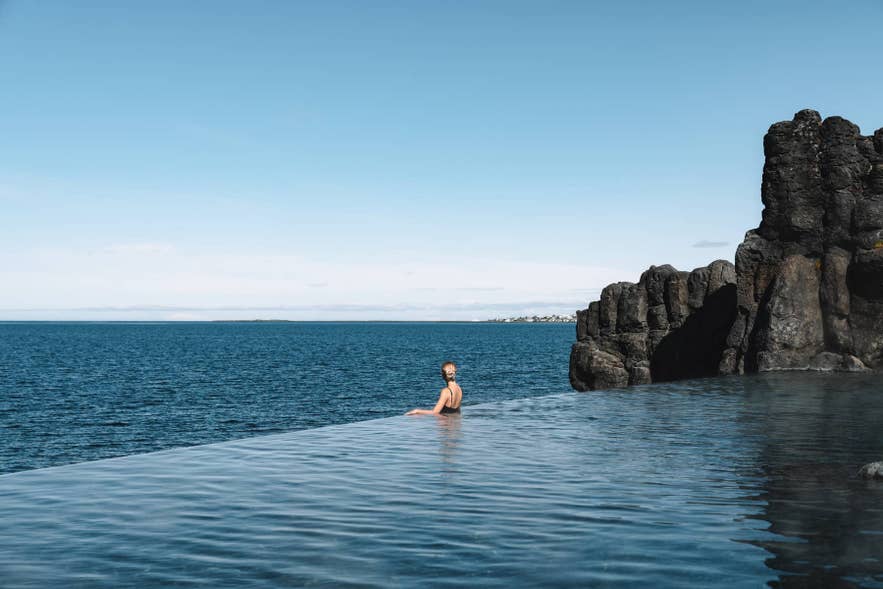
Sky Lagoon comes next with 1,128 mentions and a higher positive share of 73.6%. Located about 10 minutes from downtown Reykjavik, it’s known for its seven-step ritual, which includes a cold plunge, an ocean-view sauna, and a body scrub. Its infinity edge also overlooks the North Atlantic.
Third place goes to Iceland’s municipal swimming pools, with 335 mentions in total. The Secret Lagoon follows with 265 mentions and remains a popular stop on the Golden Circle. Opened in 1891, it’s Iceland’s oldest swimming pool and costs much less than the major geothermal lagoons.
Hvammsvik received 247 mentions and has an 80.9% positive share. Its eight pools sit along a fjord shoreline about 45 minutes from Reykjavik, where seawater can flow into the warm pools at high tide. It is also the hot spring most often named in Facebook groups as the best option near Reykjavik.
Travelers Who Try Both Prefer Sky Lagoon to the Blue Lagoon, Three to One
Comparing the Blue Lagoon and Sky Lagoon is the most common question in the study, so we looked separately at the 521 comments that mention both. Most describe the differences without choosing a favorite.
Among the 53 comments that express a clear preference, 40 favor Sky Lagoon and 13 favor the Blue Lagoon. Travelers often say Sky Lagoon feels less crowded, costs less, and is gentler on skin and hair.
Sky Lagoon’s ocean-facing infinity edge is another common reason for choosing it. The view is especially praised around sunset.
The Blue Lagoon still has two clear advantages in these discussions. Its milky-blue water is unique, and its location about 20 minutes from Keflavik Airport makes it convenient at the start or end of a trip.
The data also shows a broader pattern. First-time visitors often choose the Blue Lagoon, while returning visitors are more likely to recommend Sky Lagoon or a smaller hot spring. If you are planning a visit, the best time to visit the Blue Lagoon can also depend on crowd levels, daylight, and your itinerary.
Krauma Spa Is the Best-Loved Hot Spring in Iceland, at 92% Positive
When we rank the springs by the share of positive opinions, the order changes completely. Krauma Spa, a small geothermal spa on the Silver Circle in West Iceland, takes first place with 92% positive feedback.
That result comes from 61 mentions, compared with 1,770 for the Blue Lagoon, so it reflects a much smaller group of travelers. Krauma gets its geothermal water from Deildartunguhver, Europe’s most powerful hot spring.
GeoSea in Husavik comes second with 86.8% positive feedback. Its seawater baths overlook the bay where the town’s whale watching boats sail, and travelers mention the views far more often than average. Vok Baths follows at 83.6%, while Hvammsvik takes fourth place at 80.9%.
The three best-known lagoons in South Iceland and Southwest Iceland sit near the bottom of the ranking. The Blue Lagoon has a 70.1% positive share, followed by the Secret Lagoon at 72.6% and Sky Lagoon at 73.6%. The study of Iceland’s most recommended waterfalls found a similar pattern, with travelers often showing more enthusiasm for less crowded places.
North Iceland also performs well in the data. Forest Lagoon, just outside Akureyri, sits on a birch-covered hillside and often earns praise for its quieter, more local atmosphere. If you plan to take Ring Road trips, consider adding a geothermal stop instead of saving every spa visit for Reykjavik.
Iceland’s Best-Rated Hot Springs Sit Outside the Southwest
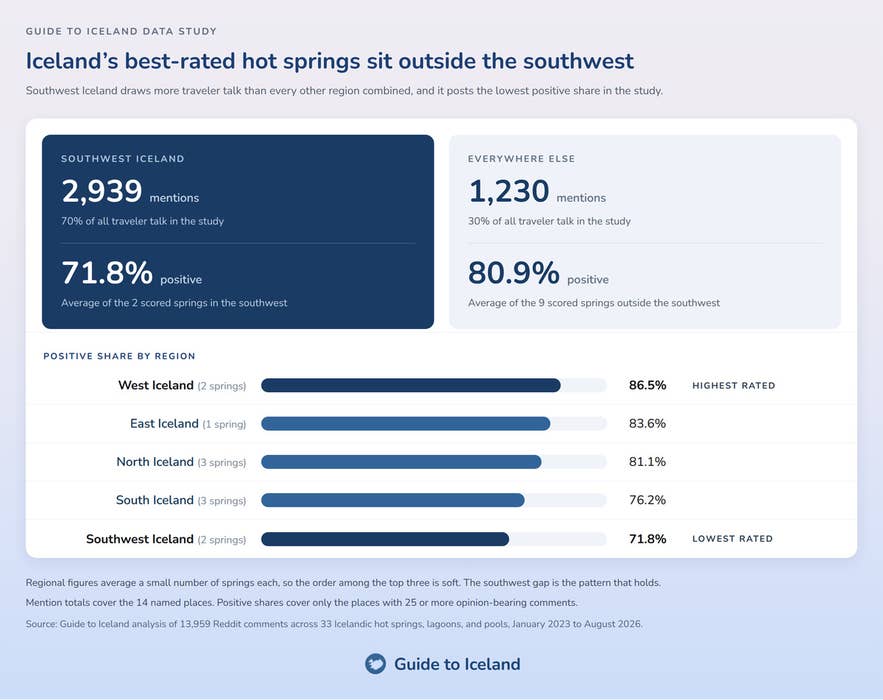
Southwest Iceland includes the Blue Lagoon, Sky Lagoon, and Laugardalslaug. Together, they account for 2,939 of the study’s 4,504 mentions, which is more than all the other regions combined. The Blue Lagoon and Sky Lagoon, the two places in the region with enough comments for a sentiment score, average 71.8% positive. That is the lowest regional average in the study.
The highest positive shares appear outside the capital region. Krauma and Hvammsvik in West Iceland average 86.5% positive. Vok Baths in East Iceland scores 83.6%, while the three North Iceland lagoons average 81.1%. South Iceland averages 76.2%.
These regional averages come from only a few places. East Iceland relies on one spa, while West Iceland relies on two, so the exact order of the top regions may shift with more data. The clearest result is that Southwest Iceland scores noticeably lower than the others.
Southwest and South Iceland together account for 75% of all mentions, but they also have the two lowest positive shares. Overall, travelers tend to rate hot springs more positively the farther they are from Keflavik.
What Each Icelandic Hot Spring Is Best For, According to Travelers
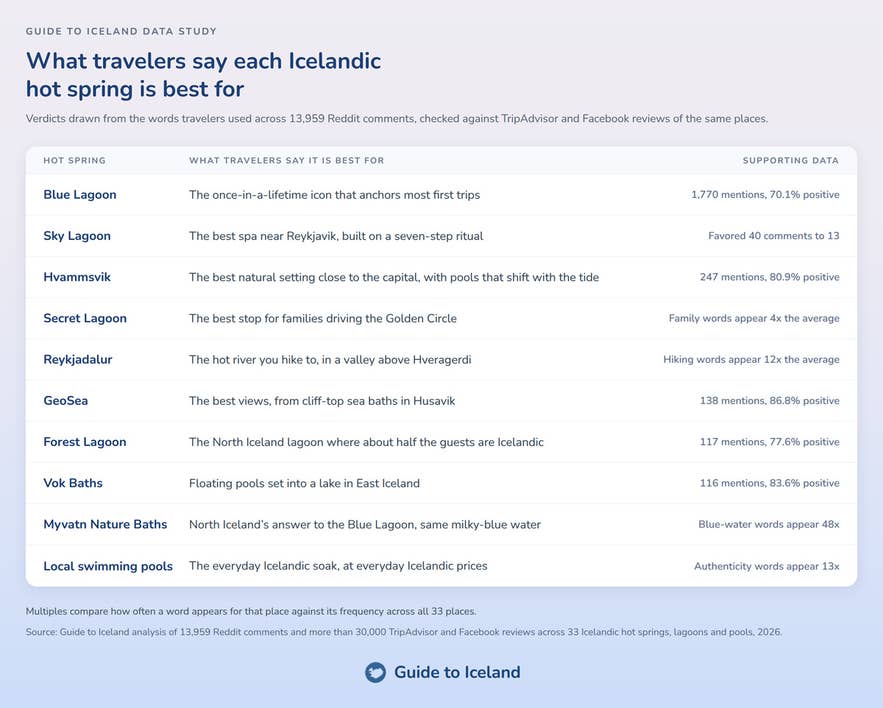
Beyond the rankings, the descriptor analysis shows what each place does better than anywhere else.
-
Best for families: Secret Lagoon. Family words appear four times more often than average in its comments, because the water is shallow, warm, and affordable enough that a short visit still feels worthwhile.
-
Best for hikers: Reykjadalur. A roughly one-hour uphill hike from Hveragerdi leads to a warm river in an open valley. Hiking-related words appear 12 times more often in comments about Reykjadalur than in comments about other hot springs. The most common complaints are shallow water during dry periods and larger weekend crowds.
-
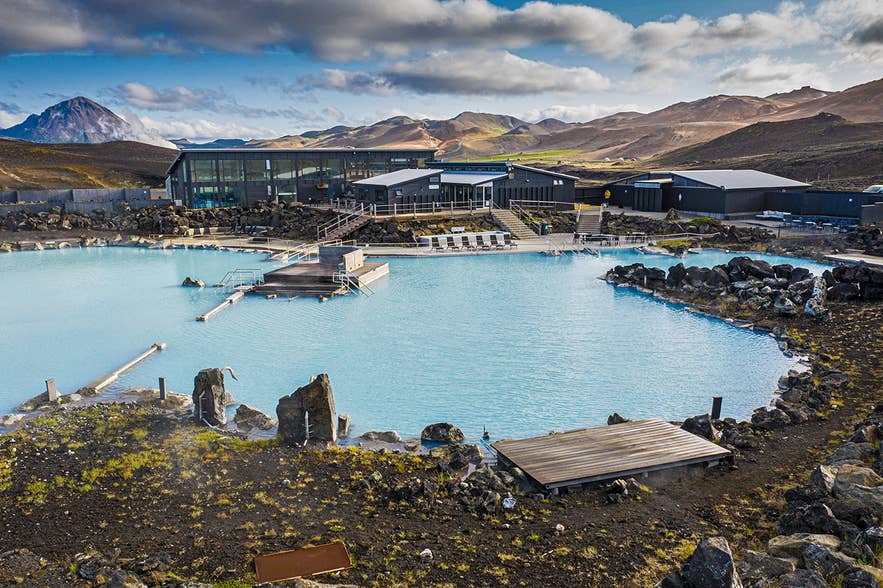
Best for blue water without the crowds: Earth Lagoon Myvatn. Formerly known as Myvatn Nature Baths, the spa has a blue-water score 48 times the average, the strongest single association in the study. It adopted the Earth Lagoon Myvatn name ahead of its redevelopment and reopened in July 2026 with a lagoon about 35% larger than before.
-
Best for novelty: Laugarvatn Fontana. Its geothermal rye bread is baked underground in hot sand for 24 hours and is the most mentioned food experience at any spring in the study. Visitors can also combine the tasting with lakeside geothermal pools, steam rooms, and a cold dip in Lake Laugarvatn.
-
Best for northern lights: Hrunalaug. The small farm pool near Fludir gets about ten times more aurora-related mentions than the average spring in the study. Hrunalaug limits visits to 90 minutes and may turn guests away when the small pools reach capacity.
Iceland’s Local Swimming Pools Are the Most Recommended Budget Soak
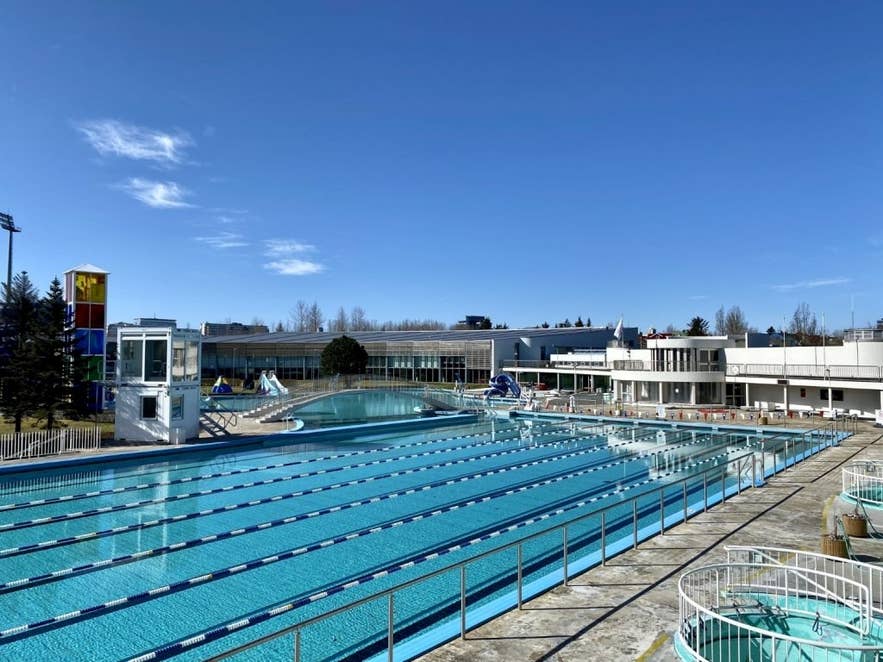
Iceland's municipal swimming pools rank third in the study with 335 mentions and a 76.2% positive share. Travelers also associate them strongly with local culture, giving them an authenticity score 13 times higher than average. At the same time, tourism professionals put local pools in the top five of our survey on the best things to do in Iceland.
One recommendation repeats throughout the traveler discussions. Instead of visiting another large geothermal lagoon, try a neighborhood pool for a more local experience at a much lower price. An adult ticket to a Reykjavik city pool costs 1,500 ISK.
Icelanders use these pools as places to relax, socialize, and chat in the hot tubs. Reykjavik alone has more than a dozen pools, and travelers mention Laugardalslaug and Sundhollin most often.
Pools outside Reykjavik often stand out for their scenery. Hofsos Swimming Pool in North Iceland, for example, has an infinity-style pool overlooking the fjord and ranks seventh in our analysis of Iceland’s hidden gems based on traveler comments. It offers a very different experience from the larger attractions on the list of best geothermal spas in Iceland.
First-time visitors should also know that Icelandic pools require everyone to shower before entering the water. Locals take this rule seriously. This guide to Icelandic swimming pool etiquette explains what to expect before your visit.
What Travelers Warn Each Other About at Iceland’s Hot Springs
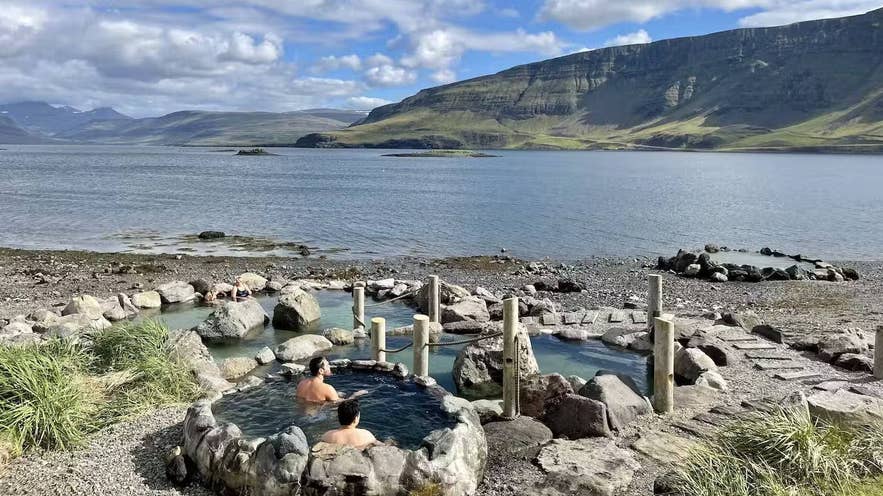 Travelers in the Reddit threads share warnings about Iceland’s hot springs almost as often as recommendations. Four issues come up repeatedly, and you can avoid most of them with a little planning.
-
Book the major lagoons early in summer: Blue Lagoon and Sky Lagoon time slots often sell out, which appears frequently in traveler complaints.
-
Expect cooler water at Seljavallalaug: This historic pool below Eyjafjallajokull gets far more complaints about cold water than the average spring in the study. Travelers also mention slippery algae and very basic changing facilities, so visit mainly for the scenery and history. The pool is cleaned only once a year, and more than two-thirds of its negative Google reviews mention the facilities or the algae.
-
Treat older Myvatn reviews with caution: Many complaints about lukewarm water and construction date from before or during the redevelopment of Myvatn Nature Baths. The spa has since reopened as Earth Lagoon Myvatn.
-
Be respectful at free hot pots: Some sit on private land, so follow any closures or signs, take all trash with you, and park only in designated areas.
The warnings line up with the reviews. In our study of the most overrated attractions in Iceland, four of the ten most overrated places were lagoons or pools, with the Blue Lagoon, Sky Lagoon, Forest Lagoon, and Seljavallalaug all in the top ten. That study recommended Hvammsvik, the best-reviewed lagoon within an hour of Reykjavik on every source it used, and Reykjadalur as better alternatives, which matches the sentiment ranking above.
Winter Is the Best Time to Visit an Icelandic Hot Spring
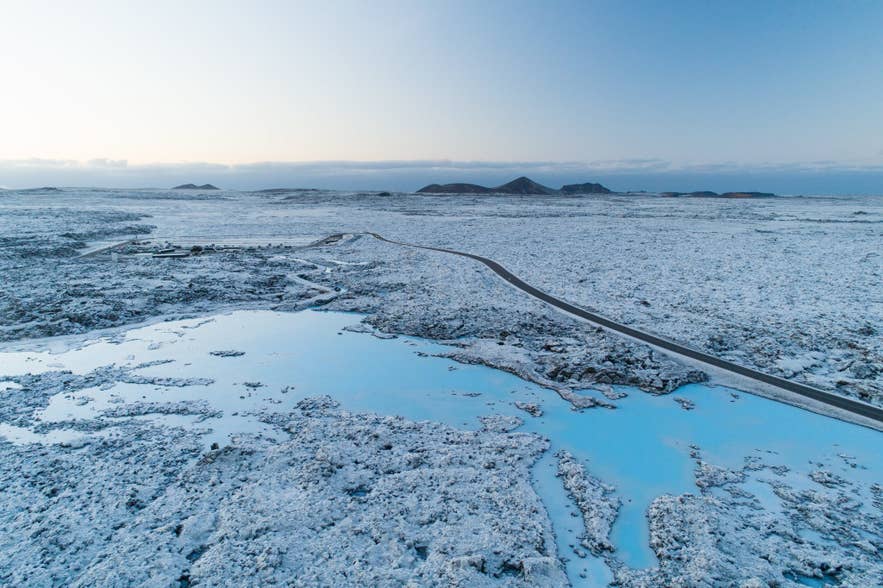
Travelers speak most positively about visiting Iceland’s hot springs in winter. Many comments describe the contrast of soaking in water around 100 F (38 C) while snow falls around you.
The northern lights add another reason to visit in winter. Dark-sky spots like Hrunalaug appear often in northern lights discussions, and travelers also report aurora sightings from city lagoons on clear nights.
Winter does come with a few practical challenges. The walk from the changing room can feel very cold, and wet hair may freeze, so travelers often recommend bringing a hat. Hike-in springs like Reykjadalur also require careful daylight planning and proper footwear, as explained in the guide to Iceland in winter.
Summer offers a different experience. The midnight sun lets you soak late into the evening in full daylight, and visiting around 10 PM can help you avoid the busiest day-tour crowds at the larger lagoons.
Reykjadalur often has deeper water after the snowmelt, and many unofficial pools become easier to include on road trips. In summer, book the famous lagoons further in advance and expect even quieter hot springs to attract more visitors.
How to Plan Your Iceland Hot Spring Visits
The comments point to a simple way to plan your hot spring stops. Choose one premium lagoon near Reykjavik. The data shows that first-time visitors often choose the Blue Lagoon, while returning visitors more often prefer Sky Lagoon.
Then add one smaller or more natural bathing experience. Hvammsvik works well for fjord views, Reykjadalur for a hike, and the Secret Lagoon for history. For the rest of your trip, local swimming pools offer an easy and affordable option.
Travelers driving around Iceland often say that GeoSea, Forest Lagoon, Vok Baths, and Earth Lagoon Myvatn offer plenty of variety in the North and East. Some even skip the famous southwest lagoons altogether.
A self-drive tour or rental car makes it easier to include these stops along your route. Lambeyri and Grettislaug, two of the top-rated sites in our study of the best campsites in Iceland, also have their own hot pools.
You can reach many lagoons near the capital on day trips from Reykjavik, while municipal pools usually do not require advance booking. Reserve premium lagoons before your trip, then keep local pools as flexible options for free evenings.
Methodology and Limitations of the Study on Iceland’s Hot Springs
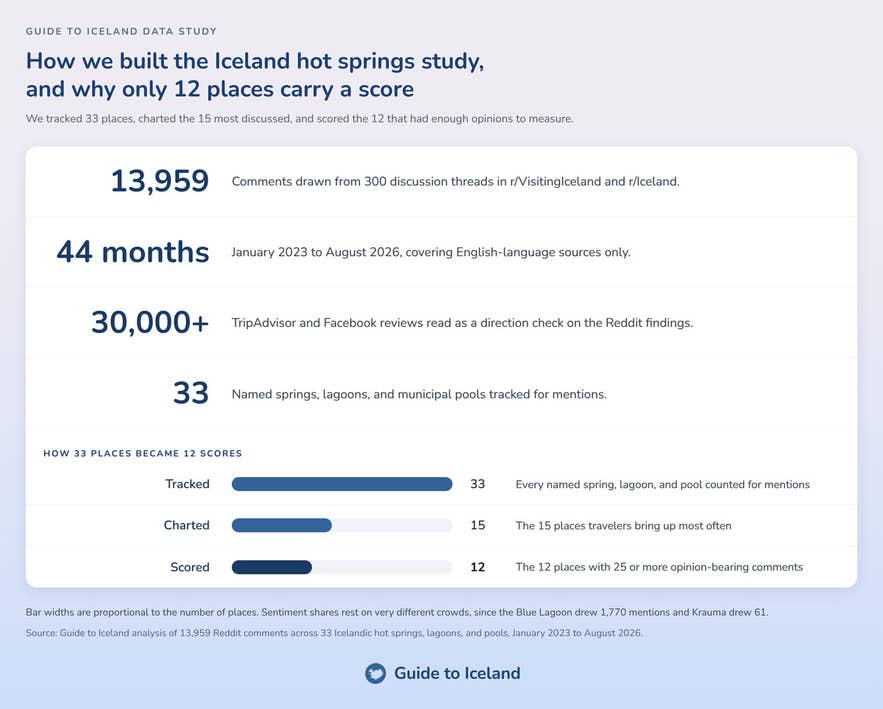
This study uses public traveler comments, not booking data. We looked at how often places were mentioned, what travelers said about them, and which topics appeared most often.
-
Data sources: We collected 13,959 comments from the 300 most relevant hot spring threads in r/VisitingIceland and r/Iceland. The comments were posted between January 2023 and August 2026 and covered 33 named hot springs, lagoons, and pools. We used English-language sources only, and platform figures reflect early September 2026.
-
Mention counts: We counted one mention each time a comment named a place. Mention totals show how often travelers discuss a location, not how good it is. We also recorded comment upvotes.
-
Municipal pools: We grouped general recommendations for local swimming pools together because travelers often recommend “the local pool” rather than a specific one. We counted named pools, such as Laugardalslaug, separately.
-
Sentiment scoring: We counted only comments that expressed a clear positive or negative opinion. Descriptive comments without a clear opinion did not affect the score. A place needed at least 25 opinion-bearing comments to receive a positive-share score, and 12 of the 33 places qualified.
-
Automated classification: The system identifies clear praise and complaints well, but it may struggle with sarcasm or comments that mix positive and negative opinions.
-
Descriptor scores: These scores show which topics appear unusually often for each place. For example, Reykjadalur scores 12 times the average for hiking, meaning hiking-related words appear 12 times more often in its comments than across the full dataset.
-
Validation: We compared the results with more than 30,000 TripAdvisor and Facebook reviews covering the same 33 places. We used these sources to check whether the overall patterns matched, not to create another score. We also checked admission prices with operators in September 2026.
There are five important limitations to keep in mind when reading the results.
-
The audience is not representative of every traveler: Reddit’s Iceland communities attract many independent, English-speaking, budget-conscious travelers. That may help explain why local pools receive such strong support, so this finding should not be treated as a universal preference.
-
The study uses English only: Travelers discussing Iceland in other languages are not included.
-
Sample sizes vary: The Blue Lagoon received 1,770 mentions, while Krauma received 61. The direct Blue Lagoon vs Sky Lagoon comparison also relies on only 53 comments that clearly preferred one over the other. Results based on smaller samples should be treated as signals rather than firm conclusions.
-
People choose whether to post: Travelers may be more likely to comment when they have a very good or very bad experience. Mention counts also reflect how well-known a place is, since famous attractions naturally appear in more discussions.
-
Conditions changed during the study: The study period included the Reykjanes eruptions and repeated Blue Lagoon closures, which may have affected how often travelers discussed it and what they said. Names, facilities, and prices can also change, as the redevelopment of Myvatn Nature Baths into Earth Lagoon shows.
Conclusion
 This study asked which hot springs travelers actually recommend, and the answer is not the ones they talk about most. The Blue Lagoon draws 1,770 mentions, and the lowest positive share of the 12 places scored, at 70.1%. Krauma, GeoSea, and Vok Baths top the table at 92%, 86.8%, and 83.6%.
The move most travelers miss costs almost nothing. Pick the premium lagoon that suits the trip, the Blue Lagoon on an airport day or Sky Lagoon on a return visit, then spend one evening at a municipal pool for 1,500 ISK. That last one is the single most upvoted piece of advice in the data.
A ranking of opinions is not a ranking of experiences. It shows where enthusiasm runs highest and where it thins out, which helps when you are choosing between two or three places rather than deciding whether any one spa is worth an afternoon.
Guide to Iceland's marketplace features tours and tickets for many of the hot springs covered here. Our partnerships did not influence the results. Each score reflects what travelers said in public comments and reviews. We report what travelers say about these places, even when it does not favor the ones we work with.

Guide to Iceland Editorials is the shared byline for our content team. We use it on pieces several people worked on together, where no single writer owns the article, and on anything rewritten often enough that a personal byline would be misleading. We also publish our original data studies under this profile. Each study answers a question travelers ask about Iceland, using primary sources such as booking records, traveler reviews and public datasets, and every study is quality checked by human experts before it's published. Everything under this byline is researched and reviewed by people who live and work in Iceland. If you spot something out of date or want to suggest a correction, message us and it reaches the whole team.