Practice safe driving in Iceland with the 10 rules every visitor should know. This guide covers the wind, gravel, single-lane bridges, roaming sheep, and winter ice that catch drivers out. Read on to learn how to stay safe behind the wheel.
Driving is one of the best ways to see Iceland, and rental cars open up every corner of the country at your own pace. The catch is that the roads here behave differently from the ones you know at home.
Why You Can Trust Our Content
Guide to Iceland is the most trusted travel platform in Iceland, helping millions of visitors each year. All our content is written and reviewed by local experts who are deeply familiar with Iceland. You can count on us for accurate, up-to-date, and trustworthy travel advice.
The weather in Iceland can turn in minutes, the wind can rip a car door off its hinges, and a sheep can appear in front of you on an empty road. None of that should put you off. It just means a little know-how goes a long way, and it is worth having before self-drive tours that keep you moving every day.
These are the 10 rules that matter most when driving in Iceland. Read them before you set off, and you will handle almost anything Iceland’s roads throw at you.
Key Takeaways
-
Check road conditions and weather before every drive at umferdin.is, en.vedur.is, and safetravel.is. Conditions change fast.
-
Wind is the hazard visitors underestimate most. Hold your door when opening it, and think twice about driving in strong gusts or a sandstorm.
-
Never stop on the road for photos. Use the marked pullouts and parking areas.
-
Slow right down for gravel, especially where asphalt turns to gravel.
-
At a single-lane bridge, the car closest to it goes first.
-
Sheep roam free between May and October, and you are liable if you hit one.
-
F-roads need a 4x4 vehicle, open only in summer, and river crossings are never covered by insurance.
-
Off-road driving is illegal everywhere and heavily fined.
-
Headlights stay on day and night, everyone wears a seatbelt, and the drink-drive limit is effectively zero.
-
The emergency number is 112.
At a Glance: The 10 Rules for Driving Safely in Iceland
Here is the whole checklist in one view before we get into the detail.
| Rule | Do this | Watch out for |
|---|---|---|
| 1. Check the conditions | Check umferdin.is, en.vedur.is, and safetravel.is before you set off | Closures, storms, long fuel gaps, PIN-only pumps |
| 2. Respect the wind | Hold the door, park nose into the wind | Gusts over 15 to 20 m/s, sandstorms, uninsured door damage |
| 3. Never stop on the road | Use marked pullouts and parking areas | Rear-end crashes from sudden stops |
| 4. Slow for gravel | Ease off before asphalt turns to gravel | Lost grip, flying stones, chipped glass |
| 5. Yield at single-lane bridges | Let the closest car go first | Blind hills, one-lane tunnels, sudden darkness |
| 6. Watch for animals | Slow down near sheep | Lambs bolting across, liability if you hit one |
| 7. F-roads need a 4x4 | Drive a 4x4, summer only | Unbridged rivers, never insured for water damage |
| 8. Never drive off-road | Stay on marked roads and tracks | Heavy fines, decades of scarring |
| 9. Take winter seriously | Use winter tires, drive in daylight | Black ice, short days, storms |
| 10. Know the rules and signs | Lights on, belts on, do not drink and drive | Speed cameras, ISK 40,000 phone fine, 0.02% limit |
1. Check the Conditions Before Every Drive
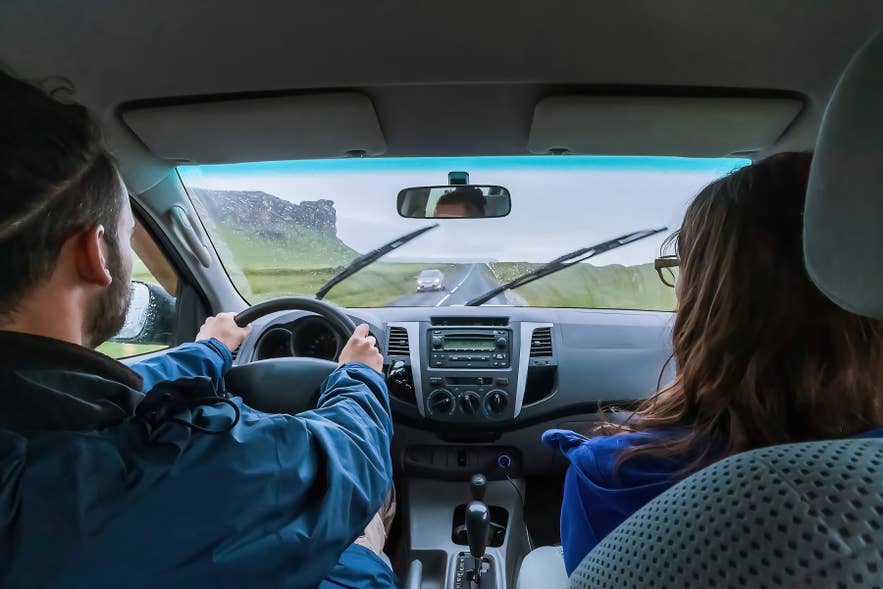
Before you turn the key and drive off for the day's adventures in Iceland, always check the local conditions and forecasts. This is the single habit that prevents the most trouble, because a road that was clear yesterday can be closed, icy, or wind-battered today.
Check live road conditions and closures at umferdin.is (or call 1777), the weather and wind forecast at vedur.is, and any active alerts at safetravel.is, where you can also leave a travel plan. Do not trust Google Maps alone, as it often fails to tell you about roads that are shut or impassable.
While you are at it, plan your fuel. Distances between gas stations can be long in the east and the Highlands, so fill up whenever you get the chance rather than waiting for the gauge to drop.
Most stations are self-service and unmanned, and the pumps need a card with a four-digit PIN. Many US cards run on chip-and-signature and get declined at the pump, so bring a PIN-enabled card or buy a prepaid fuel card inside a staffed N1 or Olis station. Additionally, check whether your car takes petrol or diesel before you fill up, since misfueling is a costly mistake.
One last thing. If you have just landed off an overnight flight, rest before you drive. Jet-lagged driving causes real accidents here, and the scenery is not going anywhere.
2. Respect the Wind
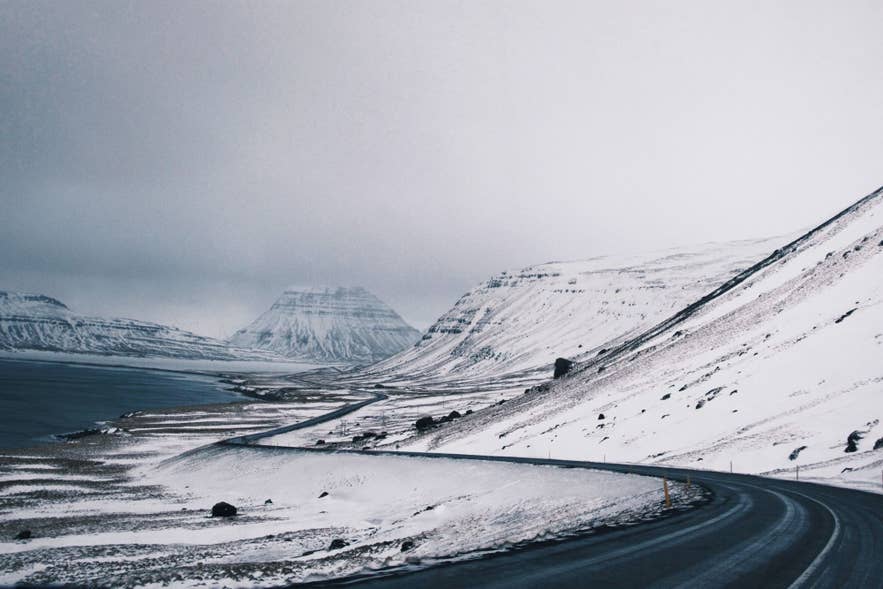
Wind is the hazard tourists underestimate most, and it does more damage in Iceland than ice. Gusts can slam a car door hard enough to bend the hinges, or push a moving car across the road.
Always hold the door firmly when you open it, and park with the front of the car facing into the wind. Keep an eye on wind warnings, and treat gusts above roughly 15 to 20 meters per second as a reason to slow down or wait. If you hit a sandstorm or ash storm, find a safe place to stop, keep the doors and windows shut, and let it pass.
Even in summer, the wind can cause troubling conditions. For example, in July 2026, on two separate occasions and in different regions of the country, a caravan was flipped over due to the wind and a trailer was blown off the road. It's also reported that travelers who ignore weather warnings may receive limited compensation from their insurance.
One more reason to take wind seriously: door damage and paint stripped by wind-blown sand are usually not covered by standard rental insurance, so the bill lands on you.
3. Never Stop on the Road
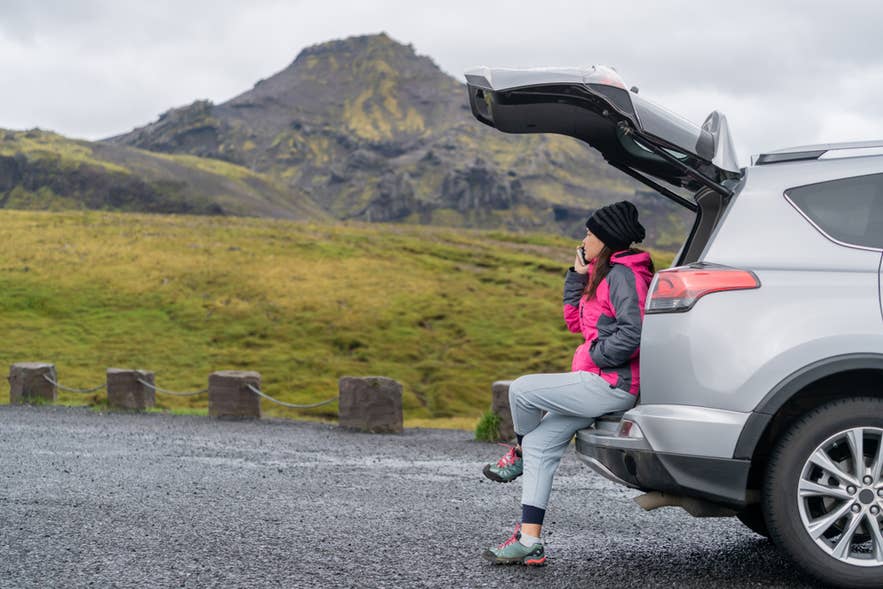
Do not stop your car on the road or the shoulder to take a photo, no matter how tempting the views are or how cute the Icelandic horses look. Sudden roadside stops are one of the most common causes of accidents involving visitors, because the driver behind you is not expecting it.
Iceland makes this easy to avoid. Marked pullouts and parking areas appear roughly every few kilometers along the main routes, and every major attraction has its own parking lot. Signal, pull fully off the road, and never reverse on the highway to get back to something you passed.
You also don't need to stop roadside to see the northern lights in Iceland. Check out the top viewing spots in Reykjavik in advance or drive out to places with little light pollution such as Thingvellir National Park or Kleifarvatn Lake, less than an hour's drive from the capital. If you're already based outside of Reykjavik, it should be relatively easy to find a dark area.
4. Slow Down for Gravel
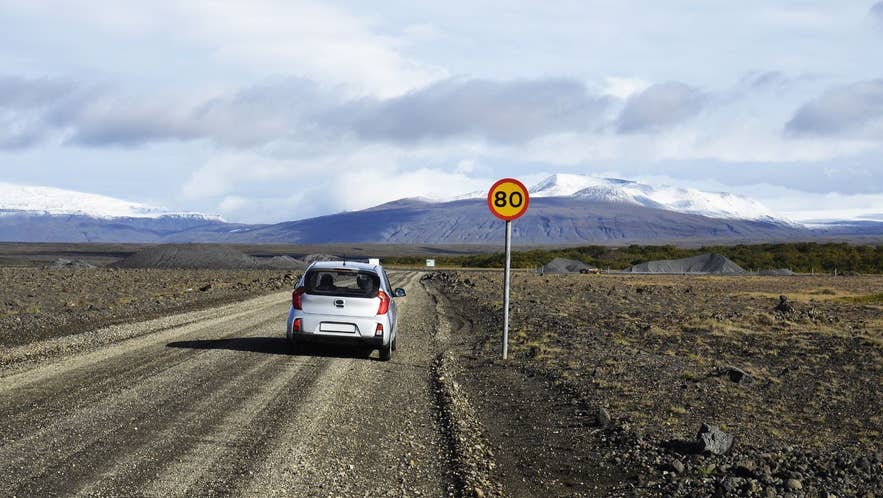
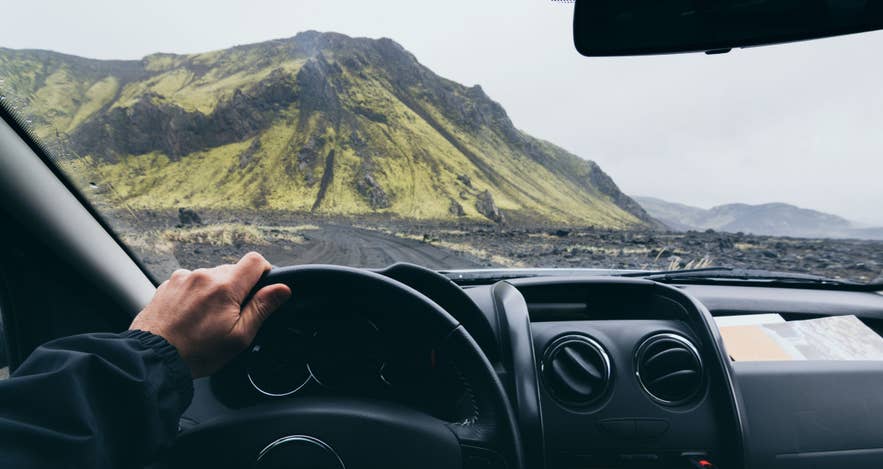
Large stretches of the Ring Road and almost every rural route turn to gravel, and the most dangerous moment is the point where asphalt ends and gravel begins. Slow down before you reach it, not after, because tires lose grip fast on the loose surface and it is easy to lose control.
The edges of gravel roads are especially loose, so keep to the firmer middle where it is safe and ease off well before an oncoming car. Slow right down when you pass, as flying stones chip windshields and headlights. That kind of damage is often excluded from basic cover too, which is why rental companies offer gravel protection.
5. Yield Correctly at Single-Lane Bridges, Tunnels, and Blind Hills
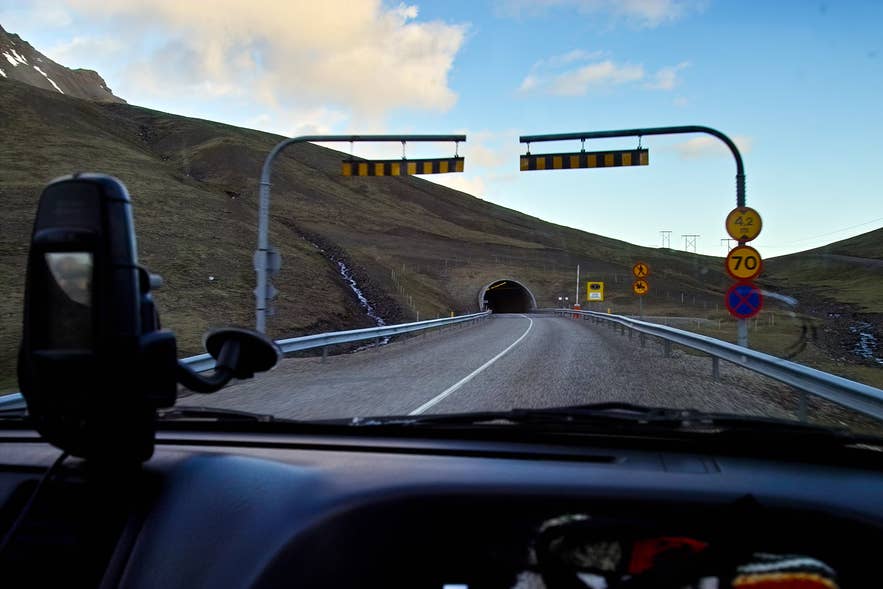
Iceland has hundreds of single-lane bridges, and the rule is simple. The car closest to the bridge has priority. If the other vehicle will clearly reach it first, stop in a safe spot and wait rather than racing for it.
Some tunnels, mainly in the Westfjords and North Iceland, are also single-lane with marked passing places, and the signs tell you who gives way. Take your sunglasses off before you enter any tunnel so the sudden darkness does not blind you. It helps to learn Iceland’s road signs before you go, since a few warn of hazards you will not see in time otherwise.
Blind hills, marked “blindhaed,” and blind bends work on the same logic. You cannot see oncoming traffic until you reach the crest, so slow down and keep well to the right.
6. Watch for Animals
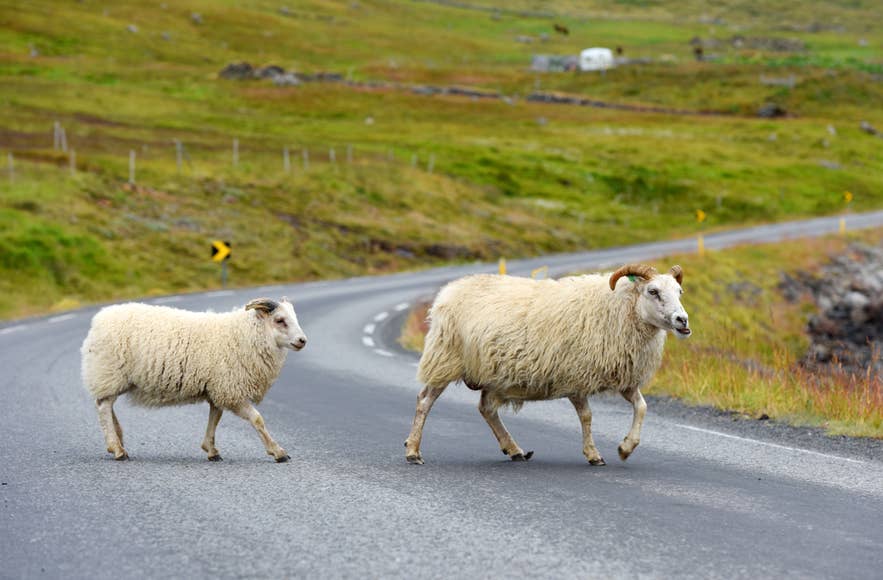
Sheep graze freely across Iceland between May and October, and they wander onto roads without warning. A ewe will often bolt across to reach a lamb on the other side, so if you see one sheep near the road, expect a second to run in front of you. Slow down and be ready to stop.
If you do hit livestock, you are legally responsible. You must report it, contact the nearest farm to find the owner, and you will be liable for compensation. Call 112 if anyone is hurt or you need help. Watch for reindeer in the east and low-flying birds as well.
7. F-Roads Need a 4x4, and River Crossings Need Real Care
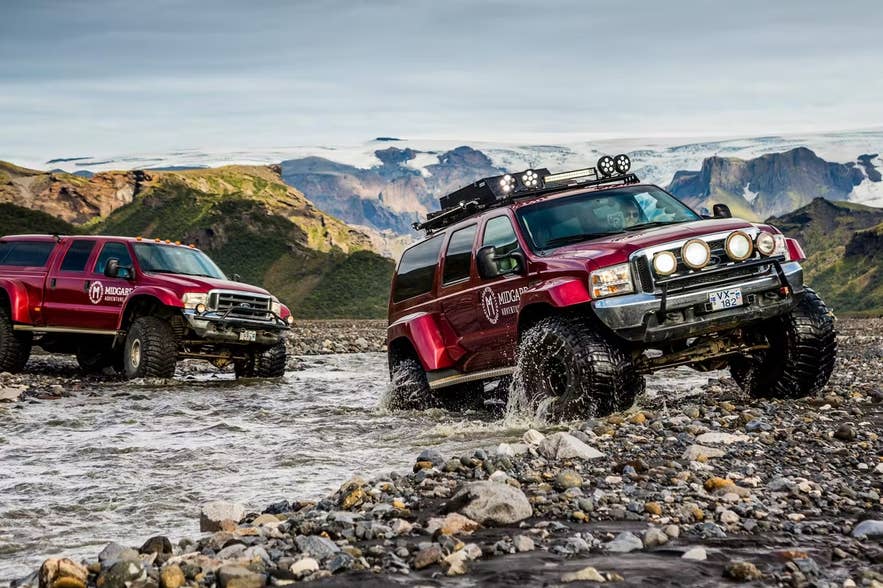
Mountain roads marked with an “F” (such as F35 or F208) lead into the Highlands, and by law you must drive them in proper 4x4 vehicles. A two-wheel-drive car is both illegal on these roads and simply not capable of them.
These are seasonal routes. They open only in summer, usually in mid-June once the Icelandic Road Administration clears them, and close again in autumn. Check the current opening dates and route details in our guide to Iceland’s mountain roads before you plan a Highlands trip.
Many F-roads include unbridged river crossings, and this is where people get into expensive trouble. No insurance in Iceland covers water damage, ever, so a flooded engine is entirely on you. If you are not confident reading a river, do not cross. Watch a local vehicle go first, cross at the widest and shallowest point, and drive slow and steady in low gear.
8. Never Drive Off-Road
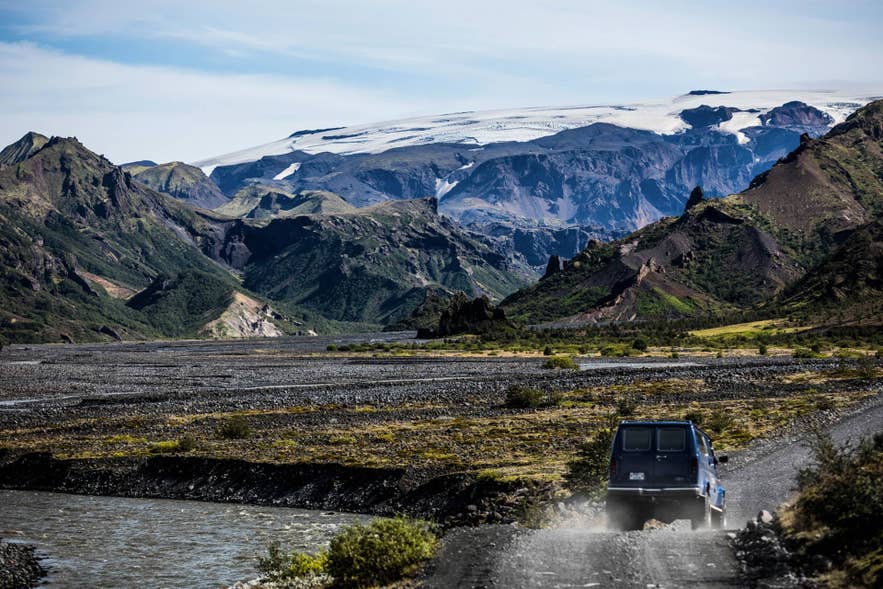
Off-road driving is illegal everywhere in Iceland, and the fines are heavy. This applies to the whole country, not just national parks, and it includes driving on closed roads, beaches, and moss fields.
Police actively enforce the off-road driving ban. As recently as June 2026, tourists caught driving off-road in South Iceland had to pay fines of hundreds of thousands of kronur.
The reason is simple. Iceland’s moss and thin vegetation can take decades to recover from a single set of tire tracks, and the scars are visible for years. Staying on marked roads and tracks is not only the law, but it also protects the untouched landscape you came here to see.
9. Take Winter Driving Seriously
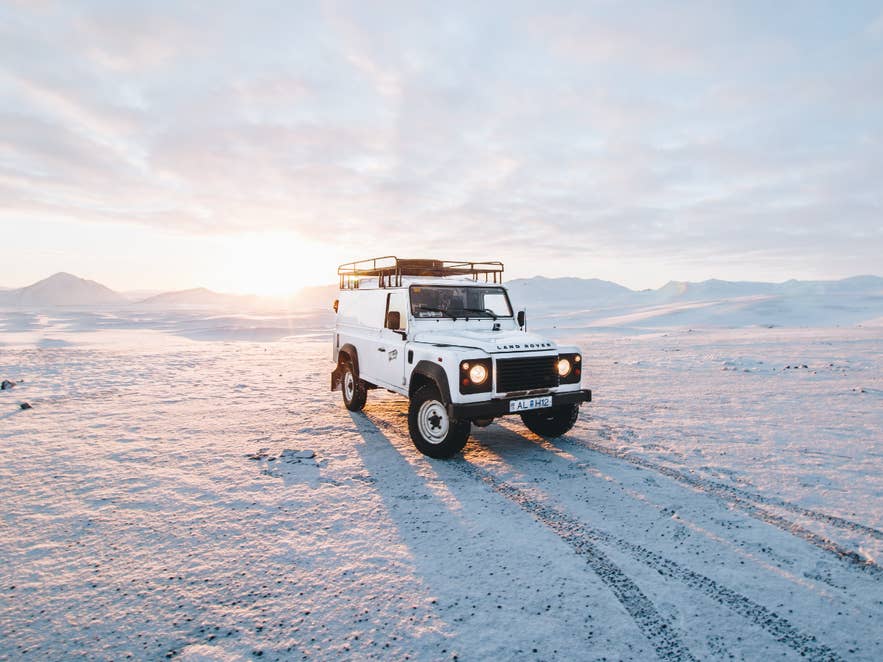
If you are visiting in the winter season, your rental car should come fitted with proper winter tires, and studded tires are permitted between early November and mid-April. That is your foundation, but it does not make you invincible.
Daylight is the first thing to plan around. When driving in December, you may get only four to five hours of light, so keep your driving to daytime and do not overestimate how far you can go. Black ice is the second, and it forms most readily on bridges and in shaded dips. Brake gently, steer smoothly, and leave far more space than usual.
Finally, carry the essentials. Warm layers, food, water, and a fully charged phone all matter. If a storm closes in, stay with your car. It is shelter, and it is far easier for rescuers to find than a person on foot.
10. Know the Rules and the Signs
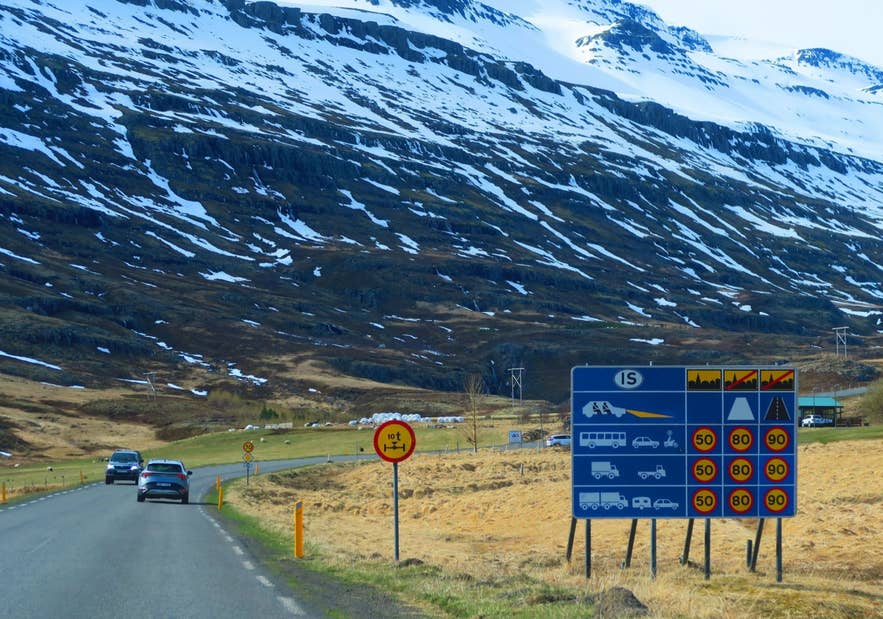
A handful of rules apply everywhere in Iceland, and getting them wrong is both dangerous and expensive. We recommend familiarizing yourself with Icelandic road signs and driving rules before you set out on the roads. Here's a short summary of what you need to know:
-
Speed limits in Iceland are 50 km/h in towns, 80 km/h on gravel, and 90 km/h on paved rural roads, unless a sign says otherwise. Residential streets are often 30, and speed cameras are common.
-
Headlights must be on at all times, day and night, all year round.
-
Seatbelts are mandatory for the driver and every passenger.
-
Drinking and driving is effectively banned. The legal limit is just 0.02%, so do not drink at all before driving.
-
Handheld phones are illegal while driving, with fines around ISK 40,000. Use a hands-free mount.
-
Roundabouts give priority to the inner lane, so a car in the inner lane may cross in front of you to exit.
-
The emergency number is 112. Download the free 112 Iceland app before you set off.
If You Need Help on the Road
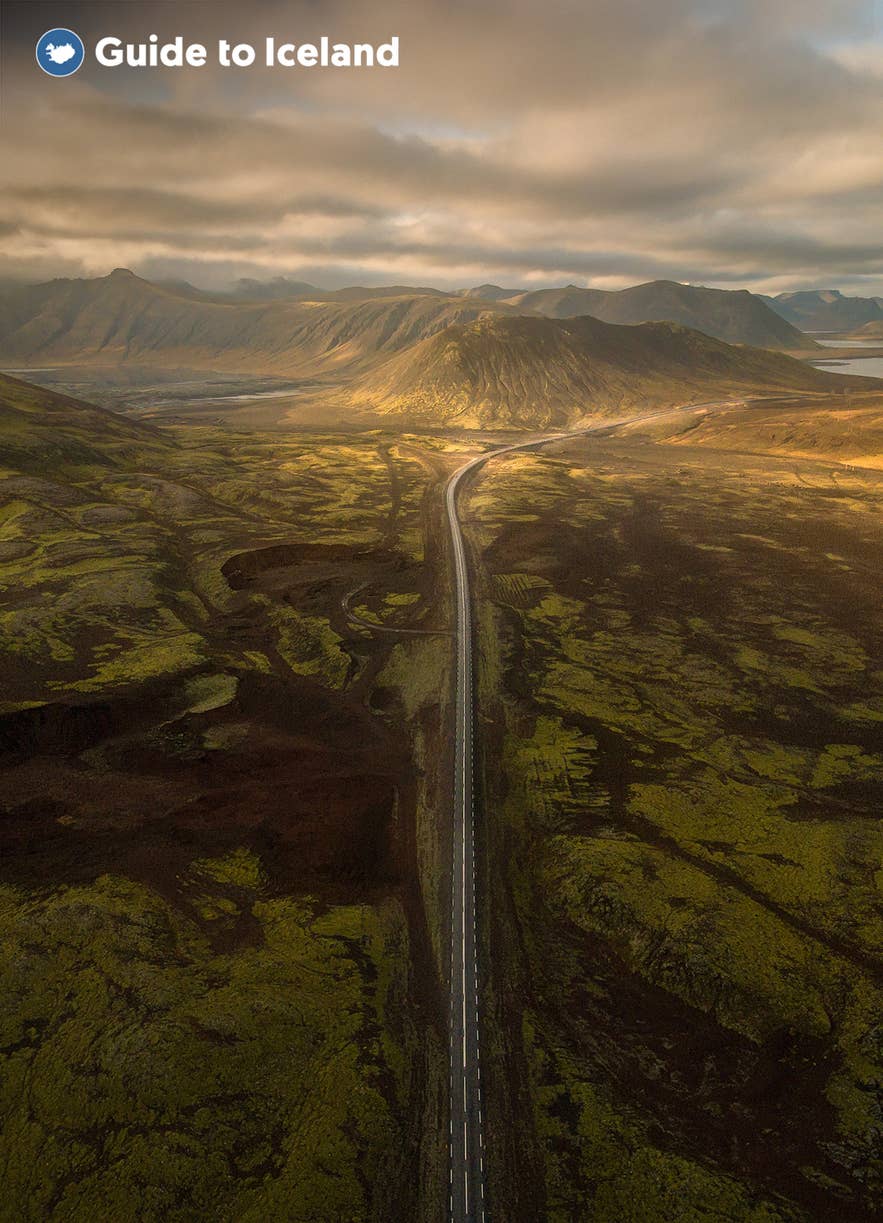
Most trips go off without a hitch, but a few basics keep a small problem small. Save 112 in your phone and download the free 112 Iceland app before you set off, since it can share your exact location on quiet roads.
If your car breaks down or picks up minor damage, pull somewhere safe and call your rental company. They will walk you through what to do, and you will usually just file a quick report. Snap a couple of photos for the insurer while you are there.
If the weather turns while you are out, the simplest thing is to stay with your car. It keeps you warm and sheltered and is easy to spot, so you can wait comfortably for conditions to ease.
Good to Know Before You Drive
 A few practical points do not fit neatly into the rules above but are worth knowing before you set off.
-
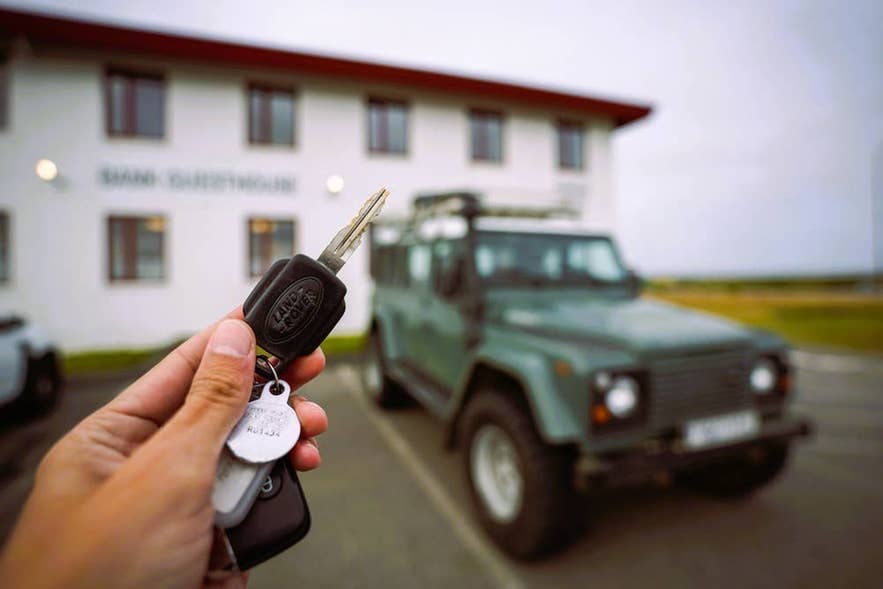
Documents and age: bring a full, valid driver's license. If it is not printed in the Latin alphabet, carry an International Driving Permit alongside it. Most companies rent to drivers aged 20 and over, with higher minimums for 4x4s and larger vehicles.
-
Tolls: Iceland has just one toll tunnel, Vadlaheidi near Akureyri (about ISK 2,110), which you pay online at tunnel.is within 24 hours of driving through. The Hvalfjordur tunnel near Reykjavik is free. See our guide to road tolls in Iceland for details.
-
No turning on red: you may not turn right on a red light unless a sign or filter signal specifically allows it, which is rare here.
-
Parking: central Reykjavik is divided into paid parking zones (P1 to P4). Pay at the meters or with a parking app, since fines are enforced.
How Safe It Is to Drive in Iceland
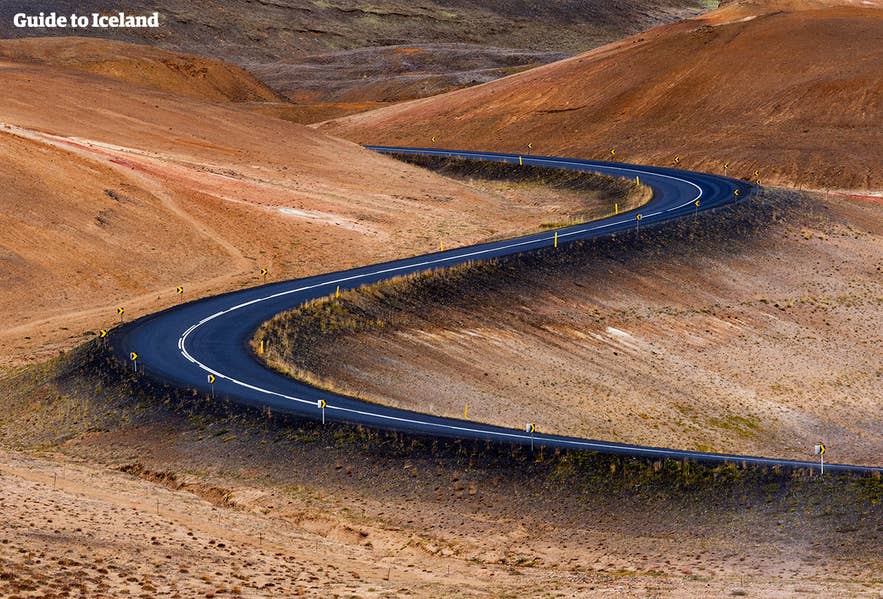
Iceland is one of the safest countries in the world to visit, and driving can be safe too, as long as you prepare well and respect the local conditions.
Traffic in Iceland is generally light, and the main roads are well maintained. What catches people out is the weather and the terrain, not the act of driving itself. Strong wind, sudden rain, loose gravel, and narrow bridges are the things to respect, and the 10 rules above cover each one in turn. Take them seriously, and you will be fine.
If you are visiting from the United States or other countries that drive on the right, the basics will feel familiar. Automatic cars are widely available, and you can stick to the paved Ring Road and popular summer routes while you familiarize yourself with driving in Iceland.
Drive Safely in Iceland and Enjoy the Road
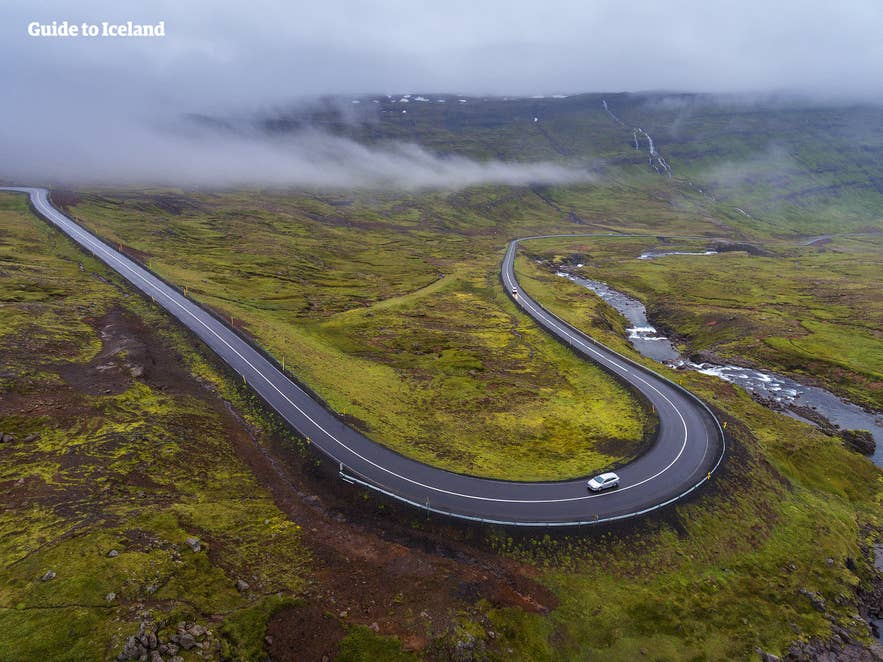
Iceland’s roads reward preparation more than skill. If you check the conditions before every drive, respect the wind and the gravel, give way correctly at bridges, watch for sheep, and keep to marked roads, you have covered the situations that catch out the vast majority of visitors.
Nervous first-timers should stick to the paved Ring Road and Golden Circle in summer and build confidence from there. Confident drivers chasing the Highlands should rent a 4x4 and read up on river crossings first. If you would rather not drive at all, you can still get around Iceland without a car.
Is it safe to drive in Iceland?
Is driving in Iceland difficult?
Do you need extra insurance to drive in Iceland?
What happens if you hit a sheep in Iceland?
Are there speed cameras in Iceland?
Can you get around Iceland without a car?
Domestic flights link Reykjavik with Akureyri, Egilsstadir, and the Westfjords. It is less flexible than having your own car and can cost more in remote regions, but it works well in summer and is often the safer choice in winter.
Can you drive in Iceland during a weather warning?
Is it safe to drive the Ring Road in winter?
Was there any relevant information you think we missed, or any advice to our other readers? Make sure to leave your queries and thoughts in the comment section below.

I was born on the west side of Reykjavík and grew up downtown, so Iceland has been my back yard for most of my life. I'm a father of two, I've traveled on five continents, and I still haven't found a country that holds my attention the way this one does.
That's why I co-founded Guide to Iceland. We connect travelers directly with Icelandic operators, guides and hosts, so the advice and the services both come from people who actually live here.
I write about the practical side of a trip: what eating out in Reykjavík really costs, whether to pick Sky Lagoon or Hvammsvík, where to stop for food along the Ring Road, and which regions give you the best odds of clear skies for the northern lights. If you're planning a trip and something doesn't add up, message me.