Understand how to cross rivers in Iceland before heading into the Highlands. River crossings require careful planning, the right vehicle, and good judgment. Read on to learn how to assess conditions, cross safely, and avoid common mistakes.
Crossing rivers in Iceland is the most demanding part of driving the Highland F-roads. It requires capable 4x4 vehicles, careful planning, and good judgment, as one wrong decision can lead to costly vehicle damage or put you in a dangerous situation.
Why You Can Trust Our Content
Guide to Iceland is the most trusted travel platform in Iceland, helping millions of visitors each year. All our content is written and reviewed by local experts who are deeply familiar with Iceland. You can count on us for accurate, up-to-date, and trustworthy travel advice.
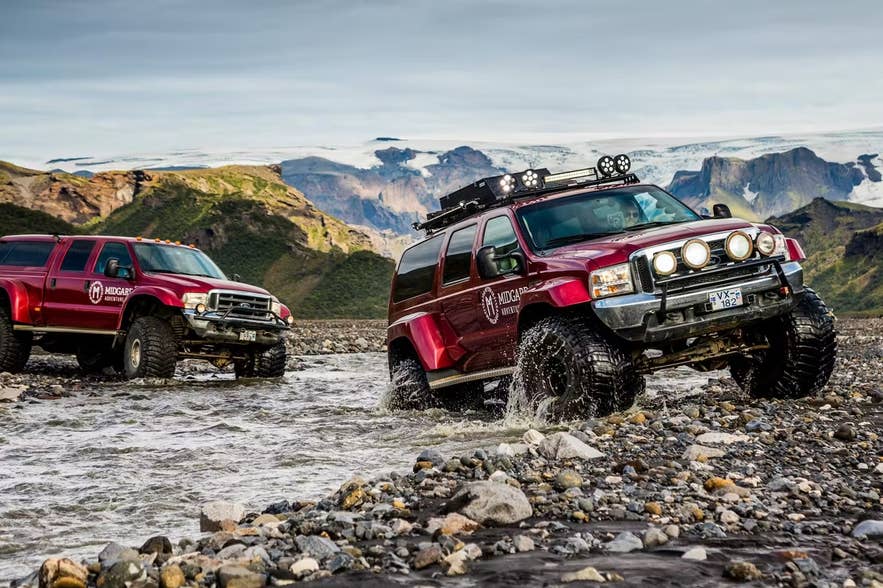
If a river crossing looks beyond your skill or your vehicle's capabilities, there is no shame in turning back. Many of the most popular places to visit in the Highlands can also be reached on guided Super Jeep tours, allowing you to experience Iceland's remote interior without tackling challenging river crossings yourself.
This guide walks through how to assess a river, safe techniques, what to do if you get stuck, and the rules that keep you out of trouble. Keep reading to learn everything you need to know about river crossing in Iceland.
Crossing Rivers in Iceland at a Glance
-
River crossings happen only on Highland F-roads, which legally require a 4x4.
-
Always assess the depth first, by watching another vehicle cross or wading in carefully.
-
Glacial rivers run lower in the morning and higher after warm afternoons or rain.
-
Cross slowly and steadily in low gear, never stopping or shifting midstream.
-
Never cross alone; travel with a second vehicle in case you get stuck.
-
Standard rental insurance usually does not cover water damage, so check your cover first.
Where To Expect River Crossings in Iceland
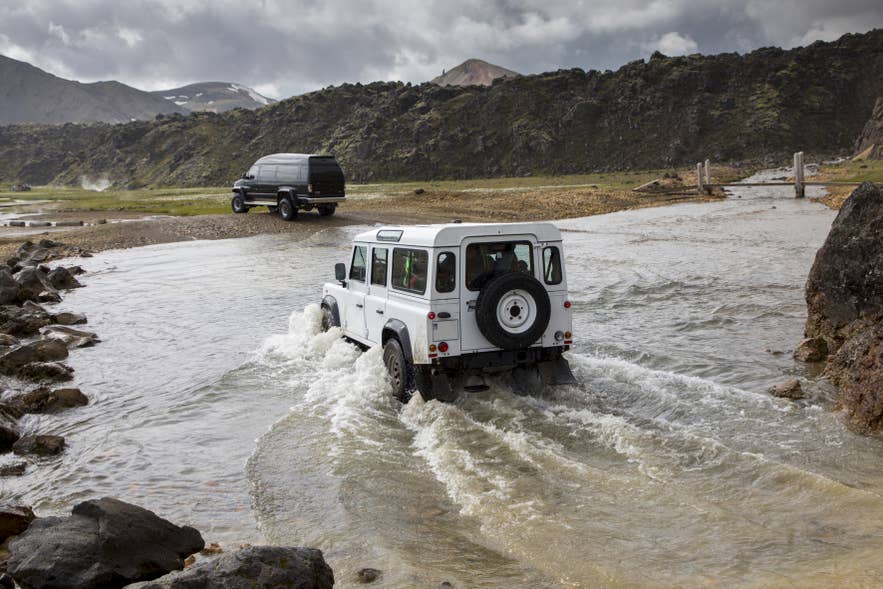 Crossing rivers in Iceland is an experience reserved almost entirely for the country's remote Highlands.
Unlike the Ring Road, many Highland F-roads pass through untouched landscapes where bridges are few and rivers flow freely across the track. These unbridged crossings are part of what makes exploring Iceland's interior such a memorable adventure, but they also demand careful planning and respect for the conditions.
The rivers in Iceland found along these F-roads or mountain roads vary greatly. Some are shallow streams with gentle currents, while others are wide glacial rivers that can rise quickly during warm weather or after heavy rain.
Glacial meltwater also gives many Iceland rivers their distinctive gray or milky appearance, making it difficult to judge depth just by looking at the surface.
Most visitors on self-drive tours never need to worry about river crossings in Iceland because the country's most popular attractions are accessible by paved roads or bridges. If your itinerary focuses on destinations like the Golden Circle, the South Coast, or the Snaefellsnes Peninsula, you'll drive over bridges instead of through rivers.
Icelandic F-Roads With River Crossings
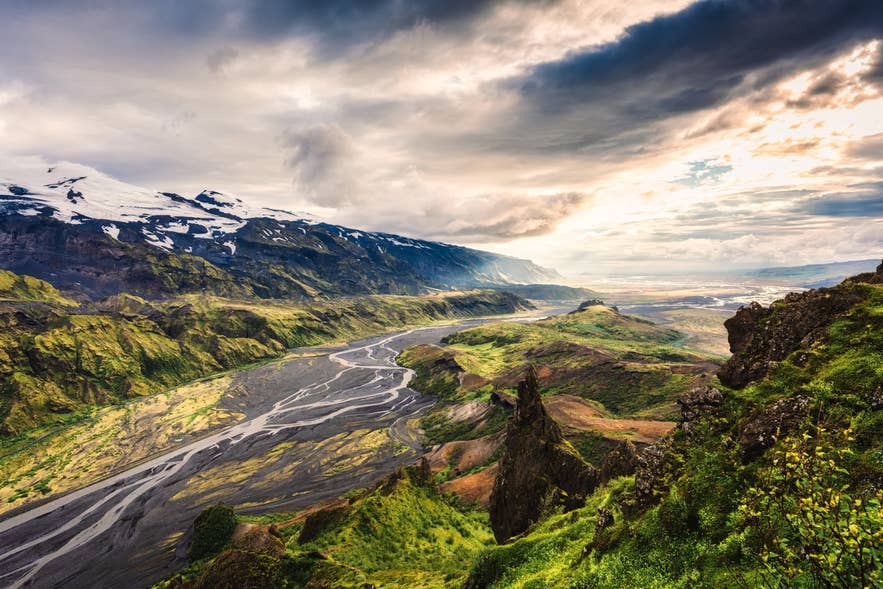 Not all F-roads in Iceland include river crossings, but many of the most remote Highland routes do. Some roads have only one or two shallow crossings that are manageable under favorable conditions, while others feature multiple glacial rivers that can become impassable after heavy rain or warm weather.
Always check the latest road conditions before setting out, as river levels can change from one day to the next.
Here are some of the best-known F-roads with unbridged river crossings:
-
F88 (Askja Route) – One of Iceland's most challenging F-roads, F88 includes crossings of rivers such as the Lindaa River, which can become deep and fast-flowing. Many travelers choose the alternative F905/F910 route to reach Askja when river conditions on F88 are unfavorable.
-
F210 (Fjallabak South) – Known for several significant glacial river crossings, F210 is considered one of the more demanding Highland roads and is recommended only for experienced drivers in capable high-clearance 4x4 vehicles.
-
F225 (Landmannaleid) – A scenic route to Landmannalaugar with several smaller river crossings. Conditions vary throughout the season, making it a popular option for drivers with some Highland experience.
-
F233 (Ofaeruleid) – Famous for its deep crossing of the Sydri-Ofaera River, this route is generally suitable only for large 4x4 vehicles or modified Super Jeeps.
-
F249 (Thorsmork Road) – The final stretch into Thorsmork Valley includes crossings of the Krossa River, one of the most dangerous rivers in Iceland for drivers. Rental companies typically prohibit crossing Krossa, and most visitors park before the river and continue on foot or join a guided Super Jeep tour.
-
F232 (Oldufellsleid) – This less-traveled Highland road includes several river crossings and rough terrain, requiring a capable 4x4 and careful route planning.
-
F261 (Emstruleid) – Depending on the section you drive, F261 includes multiple river crossings and challenging terrain that can vary significantly with weather and seasonal meltwater.
Keep in mind that not every F-road has river crossings. For example, F35 (Kjalvegur/Kjolur Route) is one of the easiest Highland roads and is typically free of major unbridged rivers. It's a popular choice for travelers exploring the interior for the first time.
Regardless of the route, always research the road ahead, monitor Icelandic weather forecasts, and never assume river conditions will be the same as they were earlier in the day.
The Right Vehicle for Crossing Rivers in Iceland
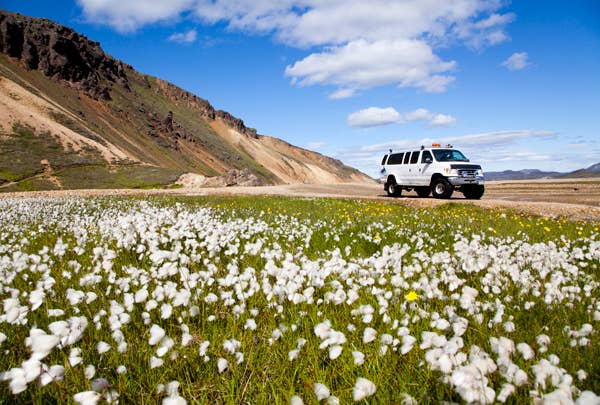
A capable vehicle is one of the most important factors for a safe river crossing in Iceland. While all Highland F-roads legally require a 4x4, it's important to remember that not all 4x4 vehicles are built for river crossings.
Some vehicles, such as the Suzuki Vitara or Dacia Duster, are designed for light gravel roads and moderate off-road conditions. Others, like the Toyota Land Cruiser and Land Rover Defender, offer the higher ground clearance and rugged features needed to tackle deeper rivers.
When renting a 4x4 vehicle, don't assume each one can handle every Highland route. Always check:
-
Ground clearance: Higher clearance reduces the risk of striking rocks or allowing water to reach critical vehicle components.
-
Maximum wading depth: Check for the vehicle's recommended fording depth and never exceed it.
-
Rental restrictions: Some rental companies prohibit driving on certain F-roads or advise against river crossings, regardless of the vehicle.
-
Car insurance: Water damage caused by river crossings is typically excluded from standard rental insurance in Iceland. If water enters the engine, transmission, electrical system, or interior, you may be responsible for the full cost of repairs.
Many rental companies offer SUVs with four-wheel drive, but these vary considerably in capability. To make choosing easier, our 4x4 rental page highlights which vehicles are approved for Highland driving and the types of F-roads they're best suited for.
Knowing When It's Safe To Cross a River in Iceland
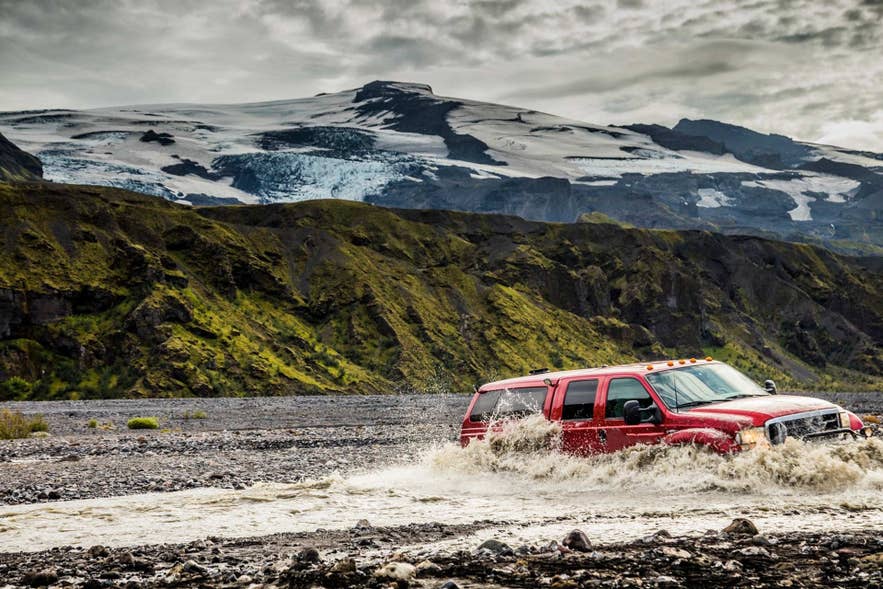
Every river crossing in Iceland is different, so never assume a river is safe simply because another traveler crossed it earlier. Weather, glacier melt, and rainfall can change water levels throughout the day, making conditions much more challenging in just a few hours.
Before driving into any river, consider the following:
-
Check the water depth. If the water is deeper than your vehicle's recommended wading depth or you can't confidently judge the depth, don't attempt the crossing.
-
Watch the current. Even shallow water can push a vehicle sideways if the current is strong. Fast-moving water is often more dangerous than deep, slow-moving water.
-
Inspect the riverbed. Loose rocks, soft sand, mud, or sudden drop-offs can cause you to lose traction or become stuck.
-
Consider recent weather. Heavy rain and warm afternoons can cause glacial rivers to rise quickly, making a crossing much more difficult than it was earlier in the day.
-
Travel with another vehicle whenever possible. Having someone nearby can make recovery much easier if you run into trouble.
-
Trust your instincts. If anything about the crossing makes you uncomfortable or uncertain, turn around. There will always be another opportunity to explore the Highlands safely.
Remember, turning back isn't a failure. It's often the smartest decision you can make when crossing rivers in Iceland.
Safe Driving Techniques for River Crossings in Iceland
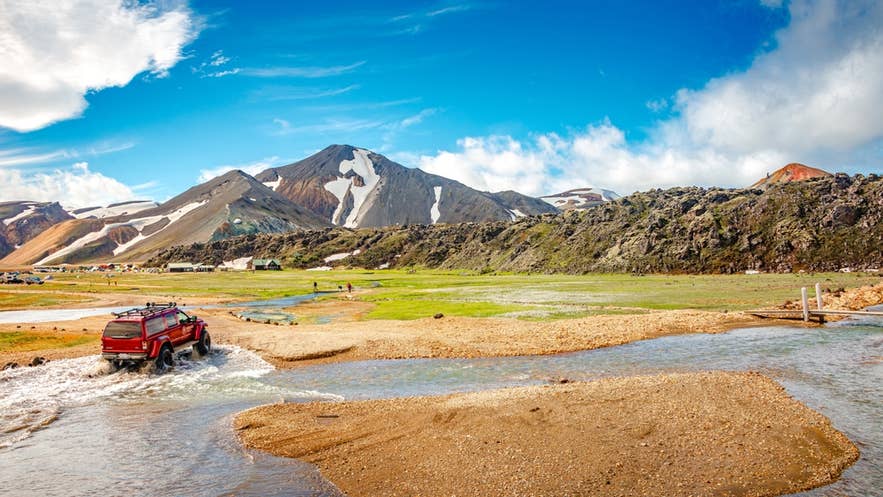 Successfully crossing rivers in Iceland is about preparation and patience, not speed. Even a relatively shallow river can become dangerous if you rush the crossing or use the wrong driving technique.
Once you've confirmed the river is safe to cross and your vehicle is suitable, follow these steps to reduce the risk of getting stuck or damaging your vehicle.
1. Prepare Your Vehicle
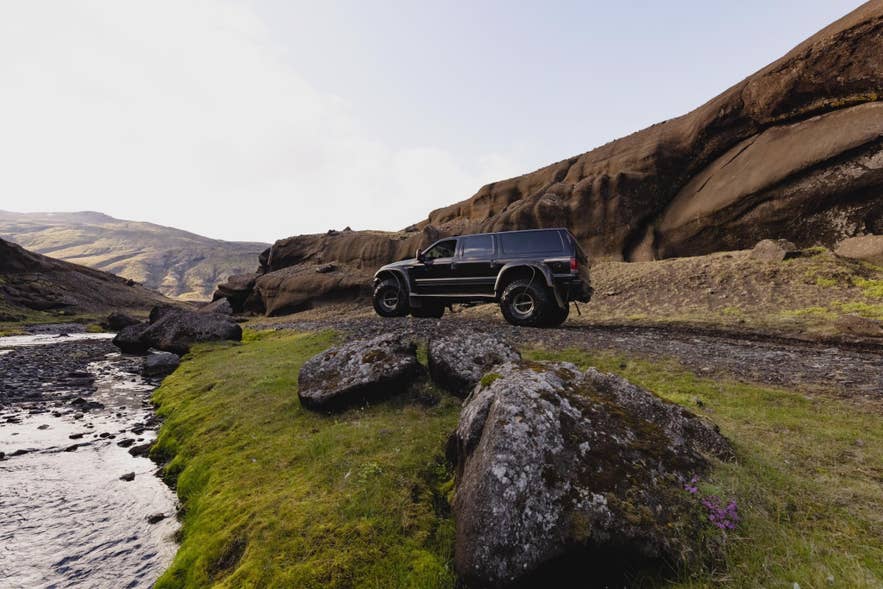
Before entering the water, stop on level ground and assess the crossing one final time. Choose the safest line through the river, ideally at a designated crossing point, where the riverbed has been used regularly, and conditions are generally more predictable.
If there isn't a clearly marked crossing, look for the widest section of the river, as the water is often shallower there and the current tends to be weaker. Avoid calm, dark pools that appear deeper than the surrounding water.
As a general rule, the slowest-moving water is often the deepest, while faster-flowing sections may be shallower. Take the time to evaluate both the water depth and the riverbed before deciding where to cross.
Engage four-wheel drive before entering the river, and if your vehicle has low-range gearing, select it now.
Finally, remove any distractions, fasten everyone's seatbelts, and secure loose items inside the vehicle. If you're traveling with another vehicle, agree on your crossing order and recovery plan before anyone enters the river.
Spending a few extra minutes preparing can make your river crossing in Iceland much safer.
2. Enter the River Slowly
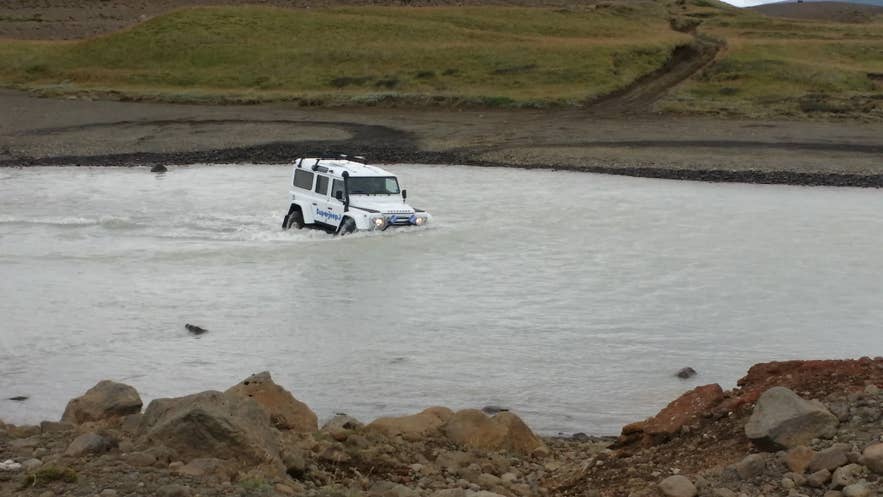
Drive into the river at a slow, controlled pace. Entering too quickly can send water over the hood and increase the chance of it reaching the engine or electrical components.
A gentle entry also allows you to feel how the vehicle responds to the riverbed beneath the tires.
As you move forward, aim to create a small bow wave in front of the vehicle. This pushes water away from the engine bay and helps keep the water level around the vehicle slightly lower.
3. Maintain a Steady Speed
Once you're in the river, maintain a slow, constant speed all the way across. Avoid sudden acceleration or braking, as either can reduce traction or disturb the bow wave you've created.
Keep the steering smooth and follow the line you planned before entering the water. If the current begins pushing the vehicle sideways, stay calm and continue steering steadily toward the exit point.
4. Avoid Stopping or Changing Gears
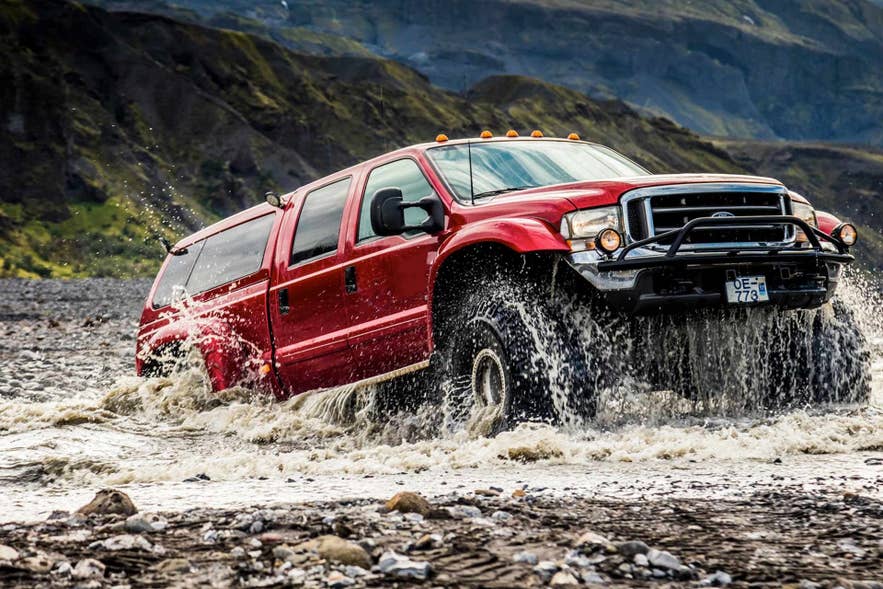
One of the most common mistakes during an Iceland river crossing is stopping halfway across. Stopping allows water to flow around the vehicle more easily and increases the chance of becoming stuck on rocks or soft riverbeds.
Similarly, never change gears while you're in the river. Depressing the clutch on a manual transmission or shifting gears can interrupt your momentum and, in some vehicles, allow water to enter components that should remain sealed.
Select the appropriate gear before entering and keep it engaged until you've reached the opposite bank.
5. Exit the River Safely
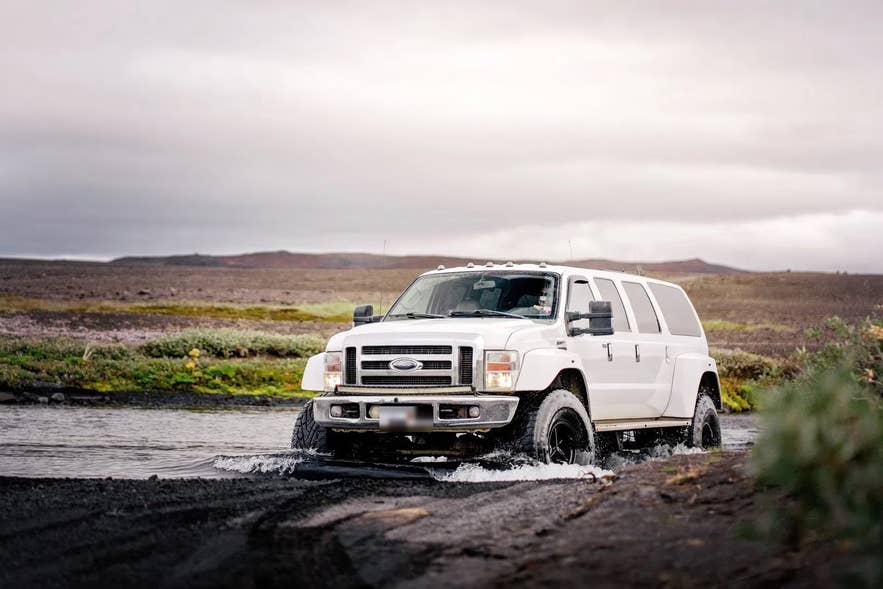 As you approach the far bank, continue driving at the same steady pace until all four wheels are on dry ground. Avoid accelerating hard as you leave the river, since the exit may be muddy, rocky, or uneven.
Once safely clear of the water, stop in a safe location and briefly inspect your vehicle. Check for warning lights, unusual noises, or anything caught underneath the vehicle.
If you've crossed several rivers during the day, it's also worth checking that your brakes are functioning normally, as they may feel less responsive until they dry out.
Rental Car Insurance & River Crossings in Iceland
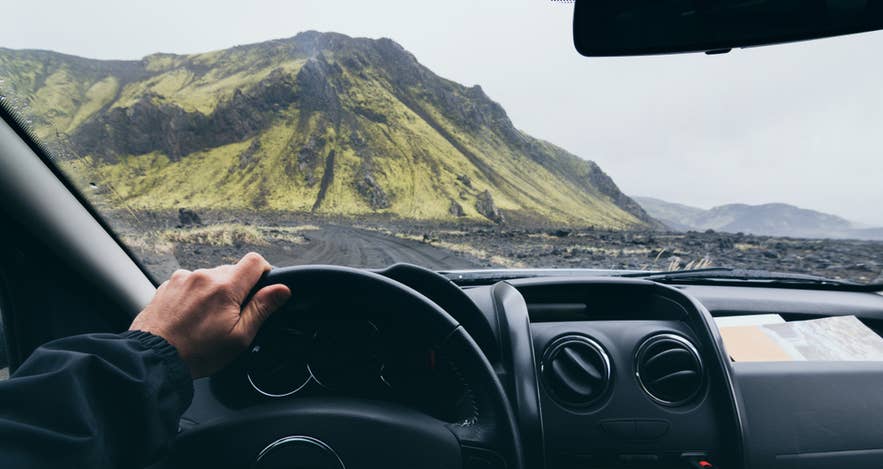 Driving on Iceland's Highland F-roads comes with extra responsibility, especially when it comes to rental car insurance.
While most rental companies allow approved 4x4 vehicles on F-roads, water damage caused by river crossings is almost always excluded from standard insurance, even if you purchased additional or premium coverage.
If water enters the engine, transmission, electrical system, or interior, you are responsible for the full cost of repairs. Engine damage caused by water ingestion (known as hydrolock) is particularly expensive and is one of the most common reasons renters receive large repair bills after attempting unsafe river crossings.
Before collecting your rental vehicle, always take time to:
-
Read the rental agreement carefully and understand what your insurance does and doesn't cover.
-
Confirm which F-roads your vehicle is permitted to drive on, as some rental companies prohibit certain routes with challenging river crossings, such as F249 leading toward Thorsmork.
-
Ask about the vehicle's recommended wading depth and never exceed it.
-
Remember that no insurance policy makes an unsafe river crossing risk-free. If you're unsure whether it's safe to continue, turning around is always the better choice.
If visiting the Highlands feels too risky, consider joining guided Super Jeep tours instead. These tours use specially modified vehicles driven by experienced local drivers who regularly assess river conditions and handle difficult crossings safely.
Common Mistakes To Avoid During River Crossings in Iceland
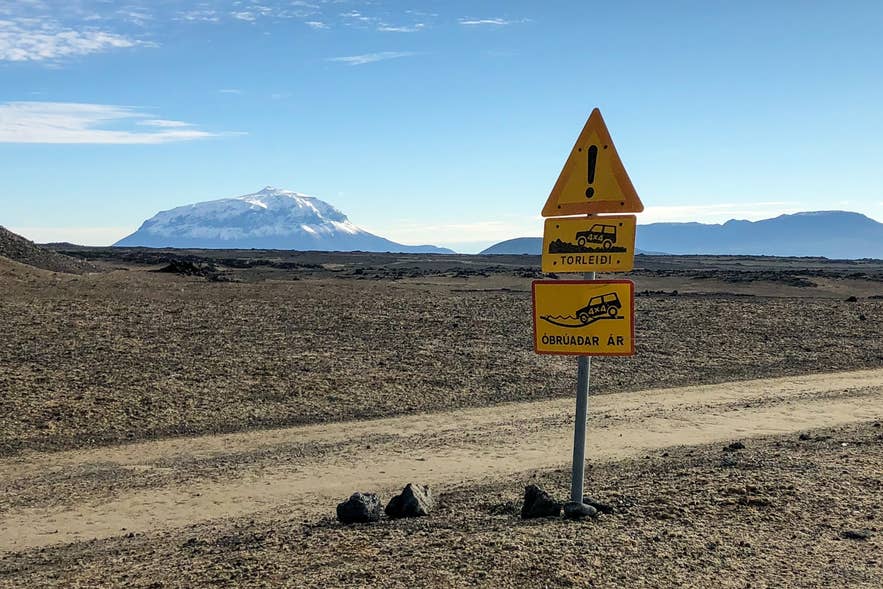 Even experienced drivers can make mistakes when crossing a river in Iceland, especially if they're unfamiliar with Highland driving.
Many incidents happen not because the river is impossible to cross, but because drivers rush the decision, misjudge the conditions, or overestimate their vehicle's capabilities.
Avoiding these common mistakes can significantly reduce the risk of getting stranded or causing costly damage.
-
Entering the river without checking the depth first. Always assess the water level and compare it with your vehicle's maximum wading depth.
-
Driving too fast. Excessive speed creates large waves that can force water into the engine bay or damage the vehicle.
-
Stopping halfway across the river. Losing momentum increases the risk of getting stuck and allows more water to flow around the vehicle.
-
Changing gears in the middle of the crossing. Select the correct gear before entering the river and maintain it until you reach the opposite bank.
-
Ignoring the current. A strong current can push a vehicle sideways, even if the water isn't particularly deep.
-
Following another vehicle without assessing conditions yourself. Larger or more capable vehicles may be able to cross safely while yours cannot.
-
Attempting a crossing after heavy rain or late in the afternoon. Glacial rivers often rise throughout the day as temperatures increase.
-
Overestimating your vehicle's capabilities. Again, not every 4x4 is designed for deep Iceland river crossings, so always know your vehicle's limits.
-
Letting pressure influence your decision. Don't feel obligated to cross because other drivers are waiting or have already gone through. If you're unsure, turning around is always the safer choice.
Taking a few extra minutes to assess the situation is far better than rushing into an unsafe river crossing in Iceland. A cautious approach helps protect both you and your vehicle while allowing you to enjoy the Highlands with greater confidence.
What To Do If You Get Stuck During a River Crossing in Iceland
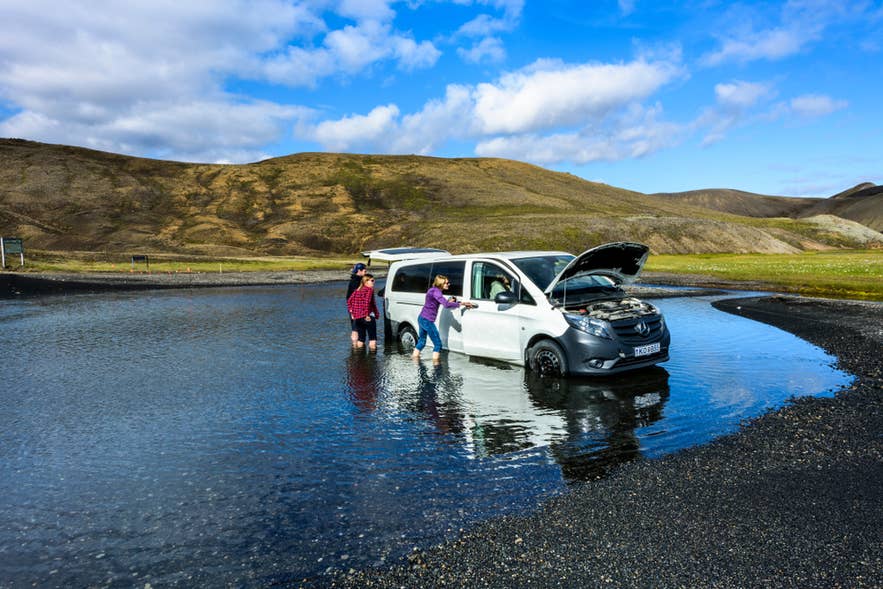 Getting stuck while crossing a river in Iceland can be stressful, but staying calm and taking the right steps can help prevent injuries and reduce damage to your vehicle.
If your vehicle stalls or becomes stranded in the river, follow these steps:
-
Stay calm and assess the situation. Check the water level, the strength of the current, and whether your vehicle is stable. If the water is rising or the current is too strong, prioritize getting yourself and your passengers to safety.
-
Do not restart the engine. If the engine stalls after taking on water, don't try to restart it. Water may have entered the engine, and attempting to restart it can cause hydrolock, resulting in severe and costly engine damage.
-
Leave the vehicle only if it's safe to do so. Exit the vehicle only if the water is shallow, the current is manageable, and you can safely reach the riverbank. Never attempt to wade through fast-moving glacial rivers, as even knee-deep water can be dangerous.
-
Ask for help if you're traveling with another vehicle. If you're traveling with another vehicle, use it to coordinate a safe recovery. Many Highland travelers carry recovery straps or tow ropes, but towing should only be attempted if both drivers have the proper equipment and experience.
-
Call for assistance if needed. If anyone is in immediate danger, call 112, Iceland's emergency number. If the situation isn't life-threatening but your vehicle cannot be recovered safely, contact your rental company or roadside assistance provider for guidance.
-
Put your safety before the vehicle. Never risk your life or the safety of your passengers to save a rental car. If conditions become dangerous, move to a safe location and wait for professional assistance.
-
Inspect the vehicle after recovery. Once your vehicle is back on dry ground, check for warning lights, unusual noises, leaks, or signs of water damage. If you suspect water entered the engine or drivetrain, don't continue driving until the vehicle has been inspected.
Remember, the goal is to keep everyone safe. A damaged vehicle can be repaired or replaced, but taking unnecessary risks during a river crossing in Iceland can have far more serious consequences.
Essential Equipment for Highland River Crossings
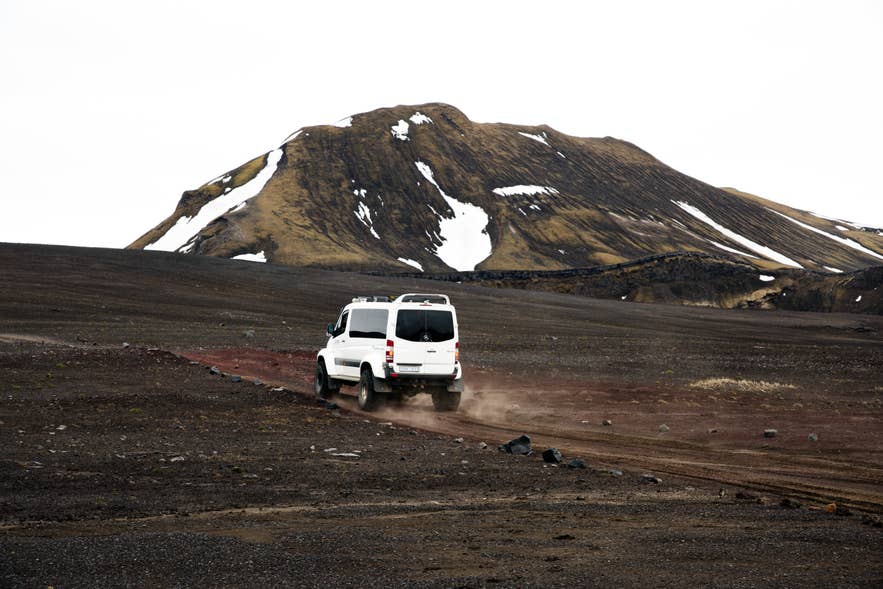
Preparing to cross rivers in Iceland involves more than choosing the right vehicle. Carrying the proper equipment can make your journey safer and help you respond if conditions change or your vehicle becomes stuck.
Before driving into the Highlands, consider packing the following essentials:
-
Recovery strap or tow rope. Useful if you're traveling with another capable 4x4 that can assist with a recovery.
-
Rated recovery points and shackles. Ensure your vehicle has proper recovery points and compatible equipment before relying on a tow.
-
Waterproof boots. These make it safer and more comfortable to check river depth and riverbed conditions before crossing.
-
Trekking pole or sturdy walking stick. Provides extra stability if you need to carefully wade into shallow water to assess a crossing.
-
Air compressor and tire pressure gauge. Helpful for adjusting tire pressure on rough Highland roads and reinflating tires before returning to paved roads.
-
Spare tire and basic repair kit. Sharp volcanic rocks can damage tires, so be prepared for punctures in remote areas.
-
Emergency communication device. Mobile coverage is limited in parts of the Highlands. A satellite communicator or personal locator beacon can be invaluable in remote locations.
-
Fully charged mobile phone and power bank. Keep your phone charged in case you need roadside assistance or must call 112 in an emergency.
-
Warm, waterproof clothing. Icelandic weather, especially in the Highlands, can change rapidly, so carry extra layers, a waterproof jacket, and gloves even during summer.
-
Food and drinking water. Pack enough supplies in case you're delayed by road closures, weather, or an unexpected recovery.
-
Emergency blanket and first aid kit. These basic safety items are worth carrying on every Highland trip.
While this equipment can improve your safety, it doesn't make every river crossing in Iceland safe to attempt. The most important piece of equipment is good judgment.
Exploring the Highlands on Guided Super Jeep Tours
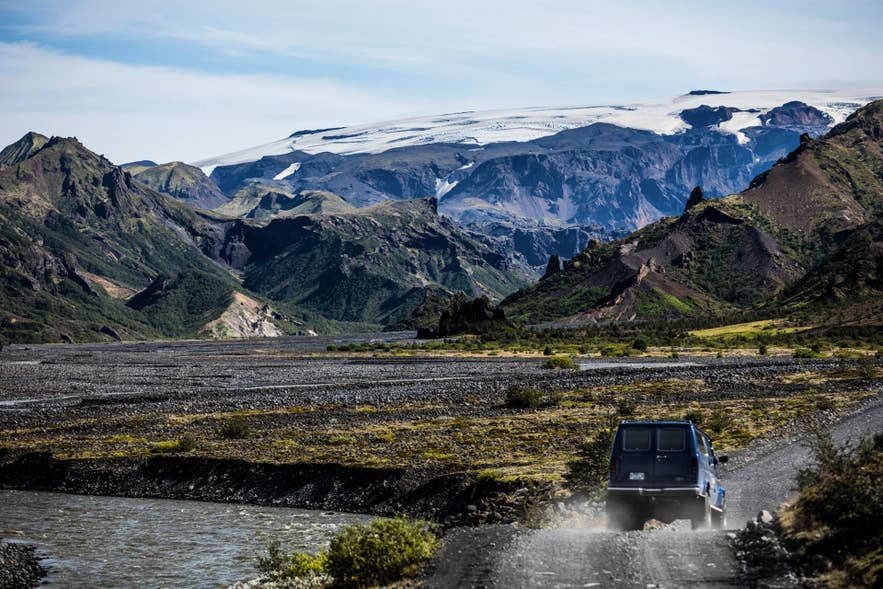 If crossing rivers in Iceland feels beyond your comfort level, you don't have to miss out on the country's spectacular interior. Guided Super Jeep tours are an excellent alternative, allowing experienced local drivers to handle challenging F-roads and Iceland river crossings while you relax and enjoy the scenery.
Here are some of the best guided Super Jeep tours to consider:
-
Landmannalaugar Super Jeep Tour – Visit the colorful rhyolite mountains, lava fields, and natural hot springs of Landmannalaugar without worrying about navigating rough F-roads or river crossings.
-
Thorsmork Super Jeep Tour – Explore the lush Thorsmork Valley, one of the most popular Highland destinations, where multiple glacial rivers make self-driving challenging for most visitors.
-
Super Jeep Tour to Landmannalaugar & Hekla Volcano – Combine a visit to the vibrant landscapes of Landmannalaugar with Iceland's famous Hekla Volcano, while an experienced guide takes care of the demanding Highland driving.
-
Highland Super Jeep Tour to Askja Caldera – Journey deep into the remote central Highlands to visit Askja Caldera and its striking volcanic landscapes, all without tackling the long drive or challenging river crossings yourself.
-
Hidden Highlands Tour of Fjallabak Nature Reserve – Discover one of Iceland's most scenic wilderness areas, featuring colorful mountains, geothermal valleys, and secluded Highland landscapes.
Making the Most of Your Highland Journey
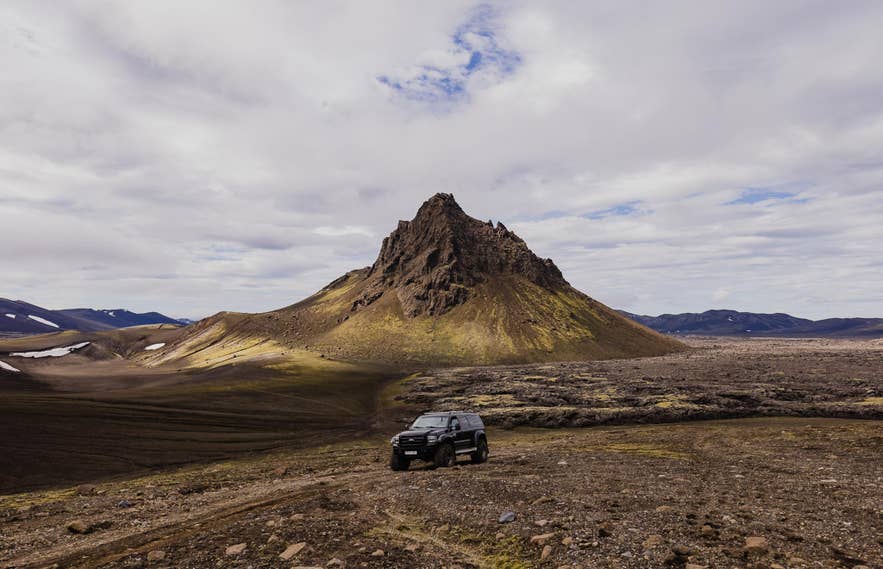
River crossings in Iceland provide access to some of the country's most breathtaking landscapes. Reaching these places is incredibly rewarding, but every river crossing should be approached with patience, preparation, and respect for the ever-changing conditions.
Before entering any river, take the time to assess the depth, current, and riverbed, and make sure your vehicle is suitable for the crossing. Drive slowly, maintain a steady pace, and never hesitate to turn around if conditions don't feel safe.
To learn more about driving safely throughout the country, check out our guide to driving in Iceland. If you'd rather leave the challenging F-roads and Iceland river crossings to experienced local drivers, guided Highland tours are an excellent way to explore Iceland's interior.
Can rental cars cross rivers in Iceland?
Always follow your rental company’s restrictions, never exceed the vehicle’s recommended wading depth, and turn around if conditions look unsafe.
Do I need a 4x4 for river crossings in Iceland?
Choose a vehicle with sufficient ground clearance and always stay within its recommended wading depth. If you’re unsure which vehicle to choose, visit our 4x4 rental page, where you’ll find details on which vehicles are suitable for driving in Iceland’s Highlands.
Do all F-roads in Iceland have river crossings?
How do I know if a river in Iceland is too deep to cross?
When is the safest time to cross rivers in Iceland's Highlands?
What should I do if my engine stalls during a river crossing in Iceland?
If it's safe, move yourself and your passengers to the riverbank, then contact your rental company, roadside assistance, or call 112 if anyone is in danger.
Does rental car insurance cover river crossing damage in Iceland?
Can I avoid river crossings when driving in Iceland's Highlands?
Which F-roads in Iceland have river crossings?
Are river crossings in Iceland dangerous?
Can I drive across the Krossa River to reach Thorsmork?
Do guided Super Jeep tours cross rivers in Iceland?
Have you crossed a river in the Icelandic Highlands, or are you planning your first F-road trip? Share some tips or your questions in the comments below, and tell us about your own experience.

I was born on the west side of Reykjavík and grew up downtown, so Iceland has been my back yard for most of my life. I'm a father of two, I've traveled on five continents, and I still haven't found a country that holds my attention the way this one does.
That's why I co-founded Guide to Iceland. We connect travelers directly with Icelandic operators, guides and hosts, so the advice and the services both come from people who actually live here.
I write about the practical side of a trip: what eating out in Reykjavík really costs, whether to pick Sky Lagoon or Hvammsvík, where to stop for food along the Ring Road, and which regions give you the best odds of clear skies for the northern lights. If you're planning a trip and something doesn't add up, message me.