Iceland usually gets snow between November and March. Reykjavik receives moderate snowfall that often melts quickly, while North Iceland, the Westfjords, and the Highlands experience much heavier and longer-lasting snow, often exceeding three feet (one meter) in winter.
Snowy landscapes create magical conditions for many of Iceland’s signature winter tours, from glacier hikes and ice cave adventures to northern lights tours. However, understanding the weather and temperatures in Iceland is key to a successful winter trip.
Why You Can Trust Our Content
Guide to Iceland is the most trusted travel platform in Iceland, helping millions of visitors each year. All our content is written and reviewed by local experts who are deeply familiar with Iceland. You can count on us for accurate, up-to-date, and trustworthy travel advice.
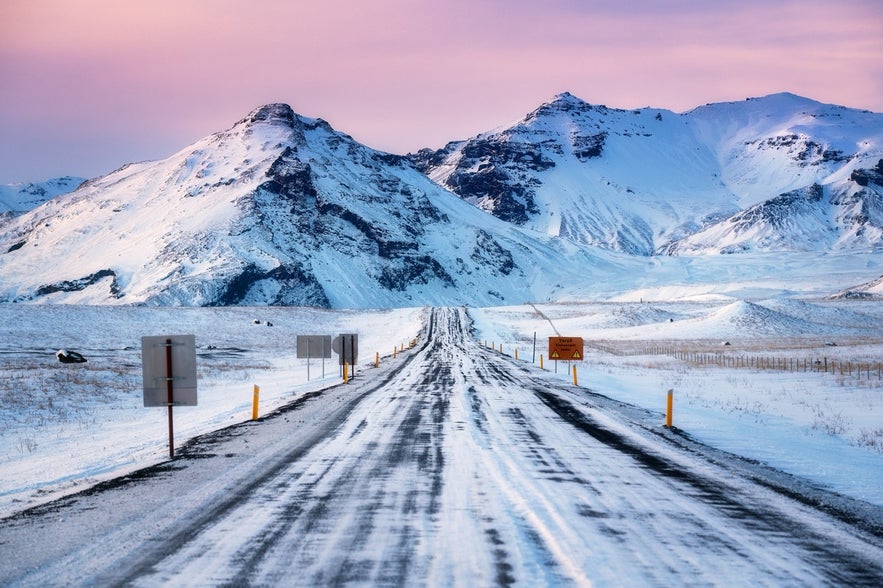
The weather conditions in Iceland can change quickly, and winter weather can create icy or snowy roads with little warning. While this rarely affects tours in Iceland, operators are well prepared and adapt plans when needed. Driving a rental car is usually manageable, provided you take care and stay updated on local road conditions.
If you’re planning a winter trip or just want to know what to expect before you go, read on to explore snow conditions in Iceland year-round and find out how snow may impact your travel itinerary in Iceland.
Key Takeaways
-
Iceland gets snow from November to March, but snowfall levels vary a lot by region.
-
Reykjavik snowfall is moderate and often melts quickly because of coastal winds.
-
Our study of the rainiest month in Iceland found that winter precipitation falls mostly as snow in the Northeast Highlands and mostly as rain in Reykjavik. Pack for wet weather in the capital and for snow inland.
-
North Iceland and the Westfjords get a lot of snow, often reaching over 1 meter in winter.
-
The Highlands stay snow-covered most of the year, making the area inaccessible in winter.
-
March has more calm snow days than any other month, according to our 26-year weather study, which makes it the best month for snowy scenery.
What To Know About Snow in Iceland
With Iceland’s famous glaciers and dramatic winter photos, you might picture the country buried in snow for most of the year. But the reality is more varied. When people ask how much snow Iceland gets, one of the questions travelers ask most about Iceland, the honest answer is that it depends a lot on where you are.
Here are some quick facts about snow in Iceland:
-
Snow arrives early and stays late: Snow in Iceland can appear as early as September and linger into May, especially in the north and in the Highlands.
-
Snowy months: Snow is most common from November to March across the country, with winter conditions peaking from December to February.
-
Regional differences: The south often sees snow melt quickly, the north holds onto snow much longer, and the Highlands stay covered for most of the year.
-
Reykjavik can change overnight: Reykjavik sometimes sees heavy snowstorms that cover the city within hours. The city is well prepared for winter, so roads and walkways are usually cleared quickly.
-
Checking the forecast: The Icelandic weather service at vedur.is gives the most reliable updates for snow, storms, and road conditions.
If you want a deeper look at how the snow in Iceland changes month by month and region by region, keep reading below.
Snow Patterns in Iceland Month-by-Month
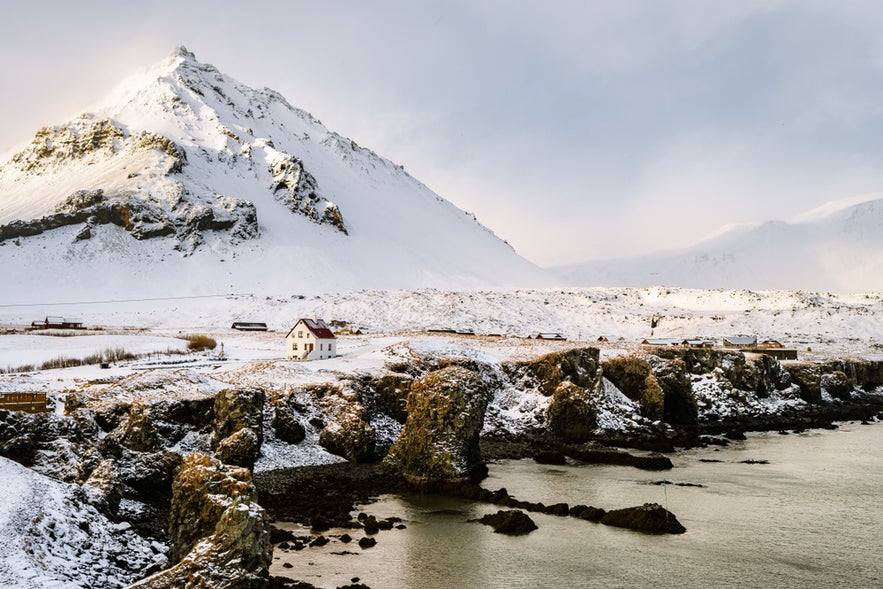
While winter in Iceland is normally associated with a lot of snow, the conditions don't look the same throughout the entire season. Some months bring steady snowfall, others see quick thaws, and the snow levels can shift overnight. To help you plan your winter itinerary in Iceland with confidence, here’s a clear month-by-month look at what kind of snow you can expect throughout the year.
Snow in Iceland in January
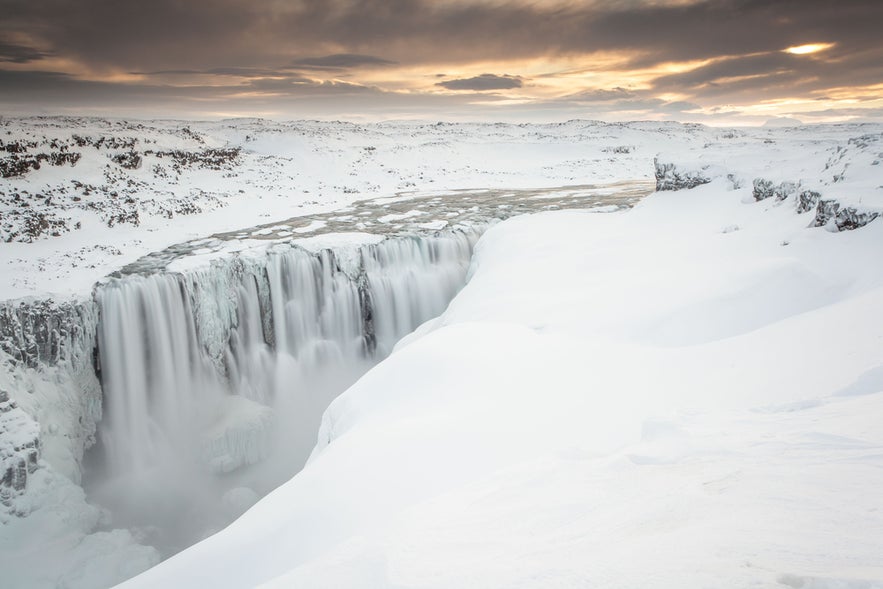
Iceland in January is deep into winter, and snow is common across the country. Temperatures average around 33.8 F (1 C), but each region experiences winter a little differently. Reykjavik snowfall comes and goes, often melting during brief warm spells, with snow depths usually around 4–10 inches (10–25 centimeters).
In the north, places like Akureyri get much heavier snow, often reaching over 20 inches (50 centimeters). The Westfjords can see even deeper snowbanks, especially in rural or mountainous areas. The Highlands are completely buried under thick, long-lasting snow during January.
Snow in Iceland in February
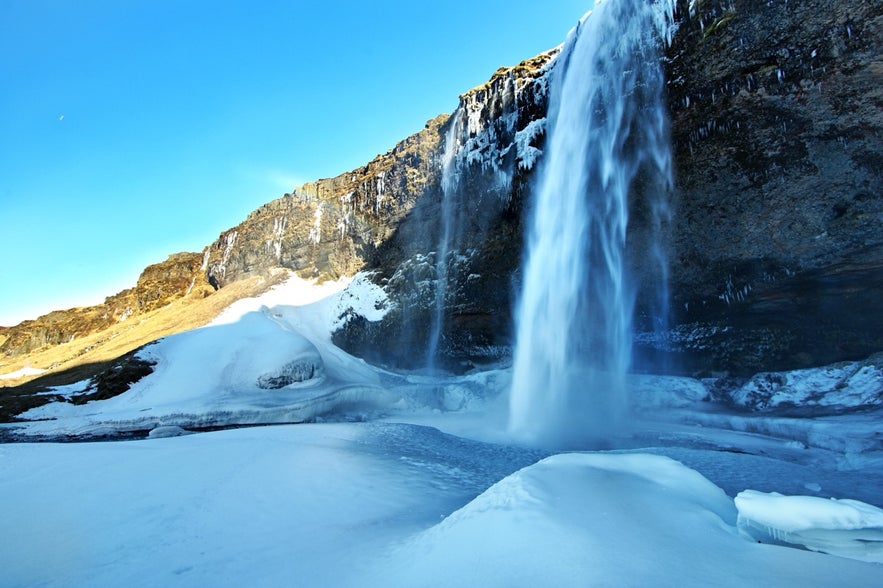
Most of the country is usually covered in snow during February. In Reykjavik and along the South Coast, occasional warm spells can melt the snow for a short time, but in the north and the Highlands, the snow stays deep and steady throughout the month.
Iceland in February feels a lot like January, with winter still in full swing. In Reykjavik, the average temperature is around 33.8 F (1 C). It’s not extremely cold by Arctic standards, but strong winds and frequent rain can make the air feel much chillier.
Snow in Iceland in March
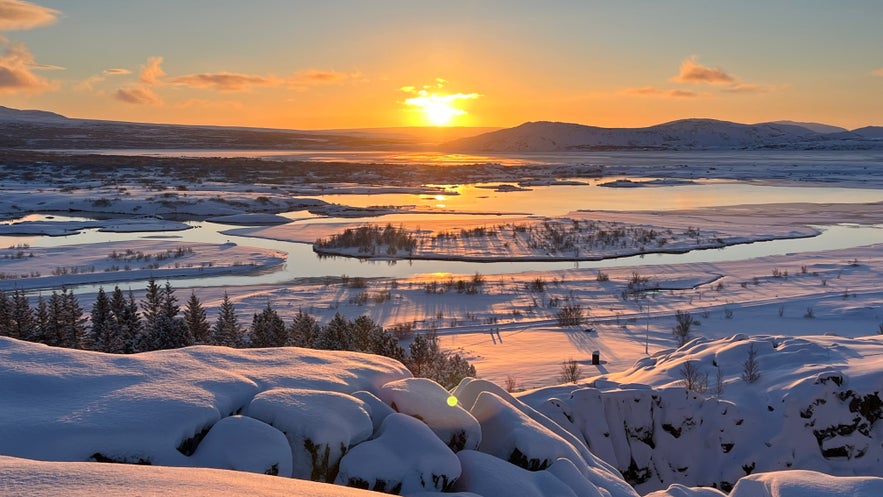
March brings slightly milder conditions, but Iceland is still very much in winter mode. The average low temperature in Iceland in March is about 28 F (-2.2 C), while the average high reaches around 38 F (3.3 C), keeping things frosty across the country.
As daylight increases, Reykjavik starts to see fewer snowfalls, and whatever snow does fall tends to melt fast. But head north, and it’s a different story. Akureyri and Isafjordur often hold onto snow during this time, while snowstorms can still sweep through the Westfjords. The Highlands also remain deeply snow-covered, with winter conditions lasting well into spring.
Snow in Iceland in April
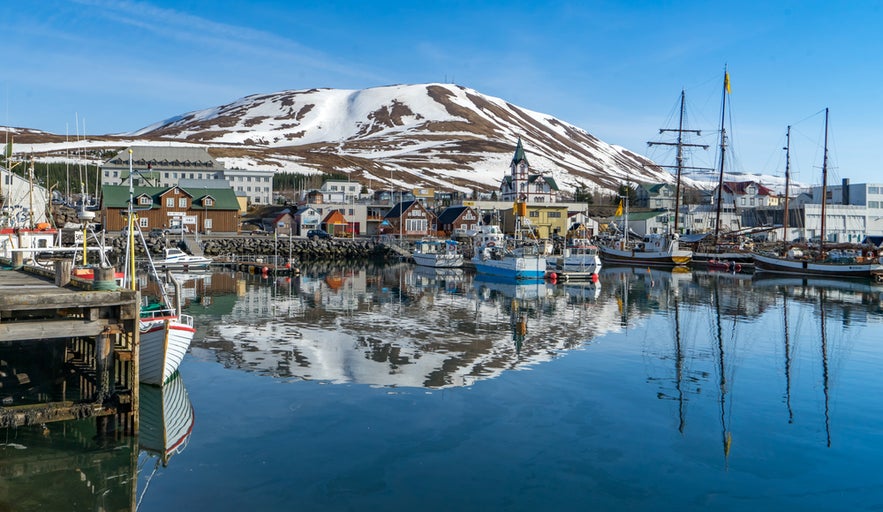
April is when the Icelandic spring finally starts to appear. Reykjavik may still get the occasional snowfall, but it happens less often, and patches of green begin to appear as the snow melts. In some years, the city sees no snow at all in April.
In the north, winter hangs on much longer. Akureyri and the surrounding areas still have plenty of snow, making this a great month for skiing. The Highlands remain completely snowed in, with a deep snow cover that won’t melt for months.
The weather in Iceland in April can change quickly as winter transitions into spring, so expect some surprises. Average temperatures sit between 39 F and 44 F (3 C to 6.8 C), staying just above freezing in most regions.
Snow in Iceland in May
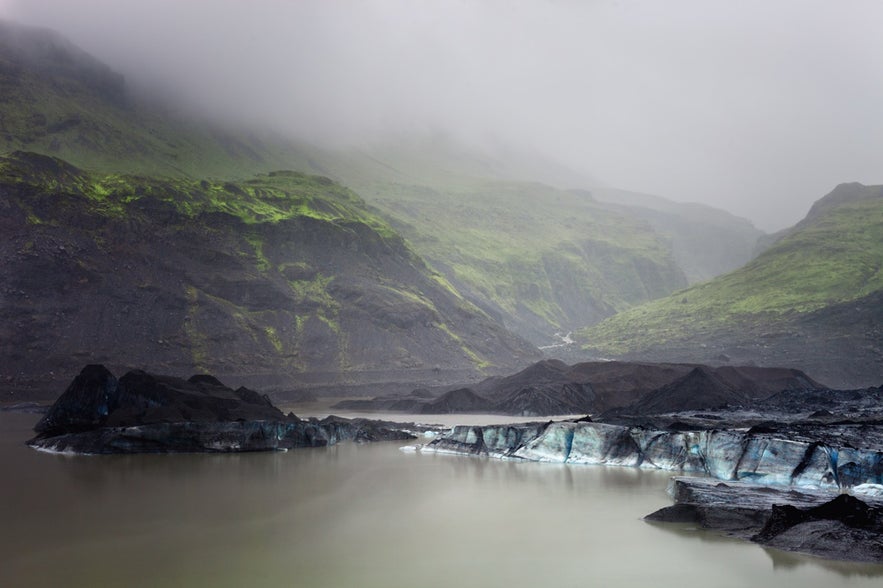
Spring is in full swing in Iceland in May, and snow becomes rare in Reykjavik and the southern regions. Most days are snow-free, though the north and the Highlands can still get the occasional light snow shower. In the Highlands, winter conditions linger, and snow begins to melt slowly.
Mountains and glaciers like Vatnajokull may still get a dusting of fresh snow now and then.
Average temperatures in May range from 36 F (2 C) to 53 F (11 C), making it one of the more comfortable spring months, even if chilly days still appear.
Snow in Iceland in June, July, and August
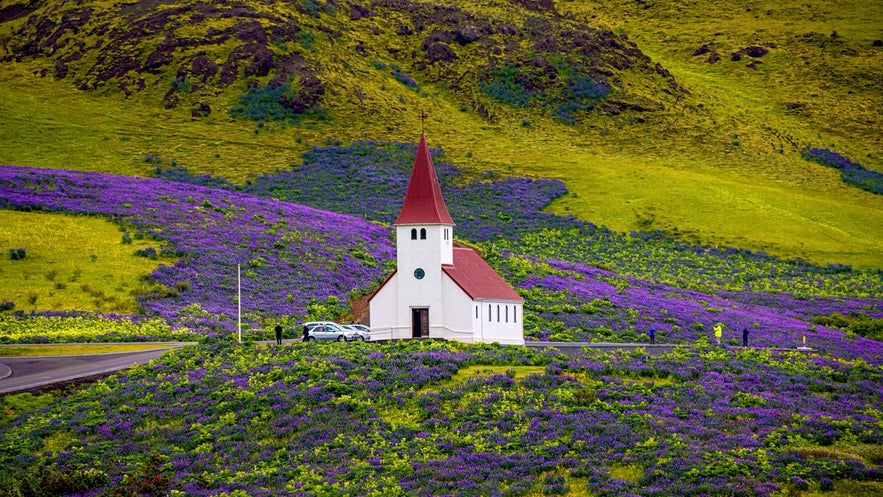
Summer in Iceland brings green landscapes and mild weather, with no snow in most populated areas. Reykjavik and the lowlands stay completely snow-free during these months. The only places that keep their snow are the glaciers and some of the highest parts of the Highlands, where snow and ice remain year-round.
The average temperature in Iceland in June through August hovers around 50 F (10 C).
Snow in Iceland in September
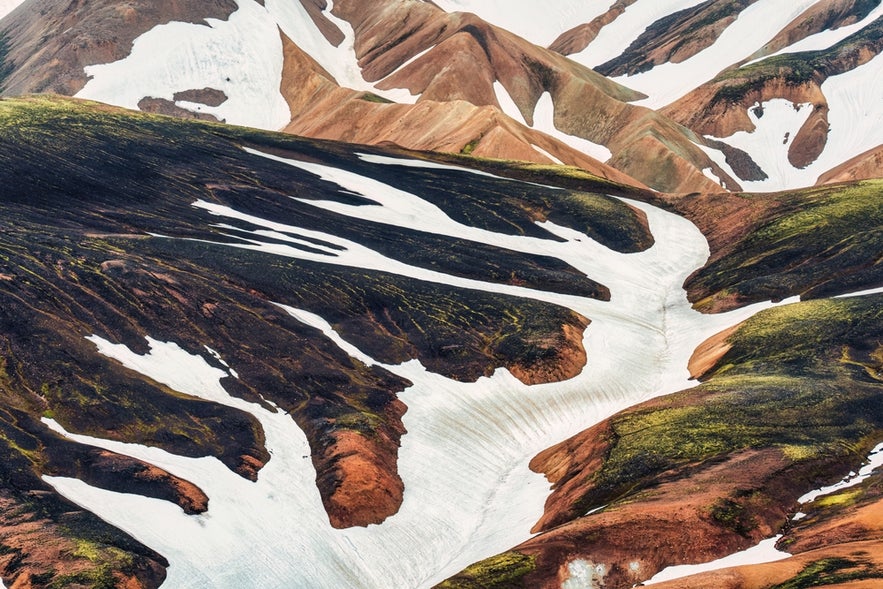
As summer fades, snow slowly begins to return to Iceland, especially in higher-altitude areas.
Reykjavik usually stays snow-free in September, but the northern regions and the Highlands may see the first light snow of the season. Snowstorms are still uncommon in Iceland in September, though the mountains in the north can get an occasional burst of winter weather.
The average temperature in September is 47.3 F (8.5 C), making snowfall unlikely.
Snow in Iceland in October
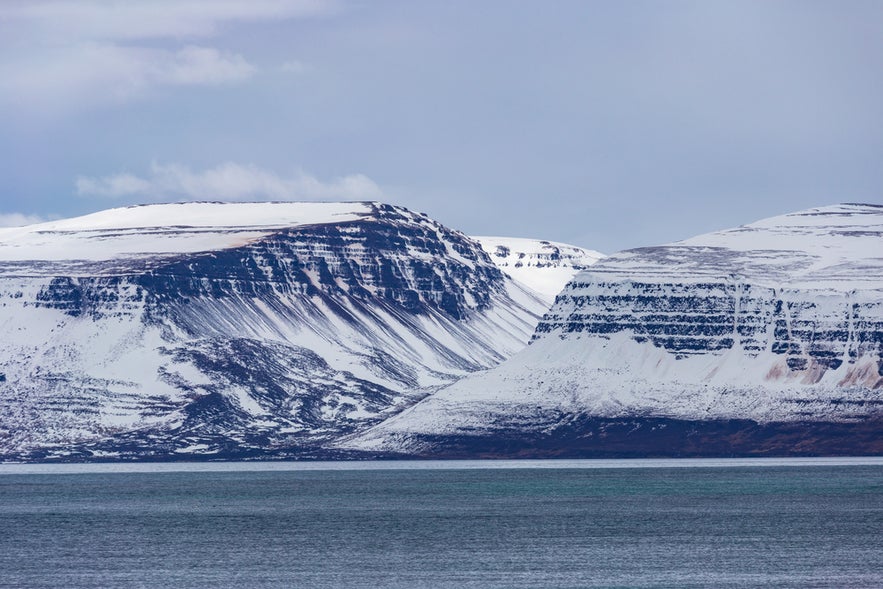
October marks the steady return of winter conditions in Iceland. Reykjavik may get a few light snow showers, but the real buildup happens in the northern regions, the Westfjords, and the Highlands. By the end of October in Iceland, early snowstorms become possible, and the north begins to look and feel like winter again.
Across most of the country, temperatures hover around 45 F (7 C), though it can feel colder when the wind picks up.
Snow in Iceland in November
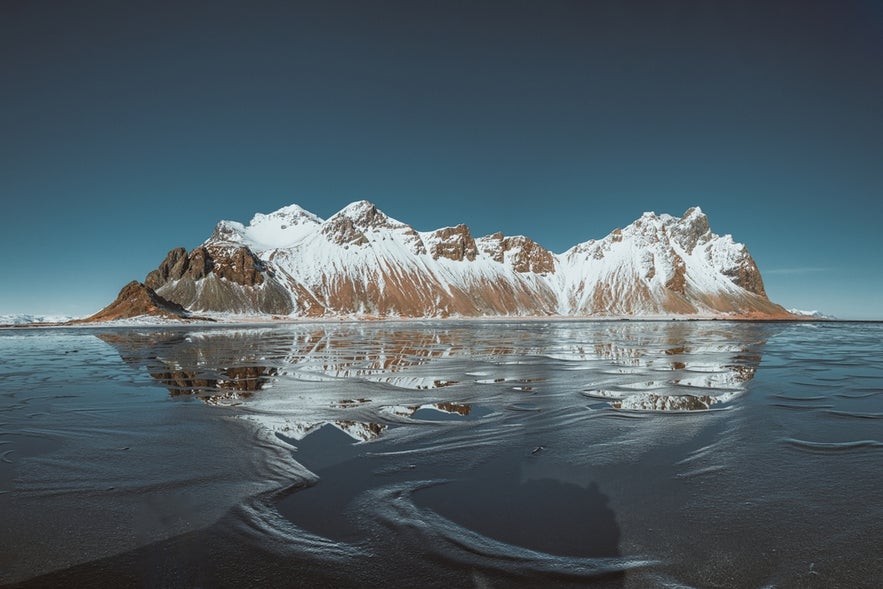
November is when winter really starts to take hold across Iceland. Snow becomes more regular, and even though Reykjavik still sees it melt on and off, the colder regions start building a proper winter landscape. In the north, snow begins to settle for the season, often reaching around 8–12 inches (20–30 centimeters). The Eastfjords see similar conditions, especially in mountain areas.
Up in the Highlands, November means deep snow and limited access, as most routes are already closed for winter.
Temperatures usually sit between 33 F and 46 F (1 C to 8 C), depending on where you are, with northern and inland regions feeling colder than the south.
Snow in Iceland in December
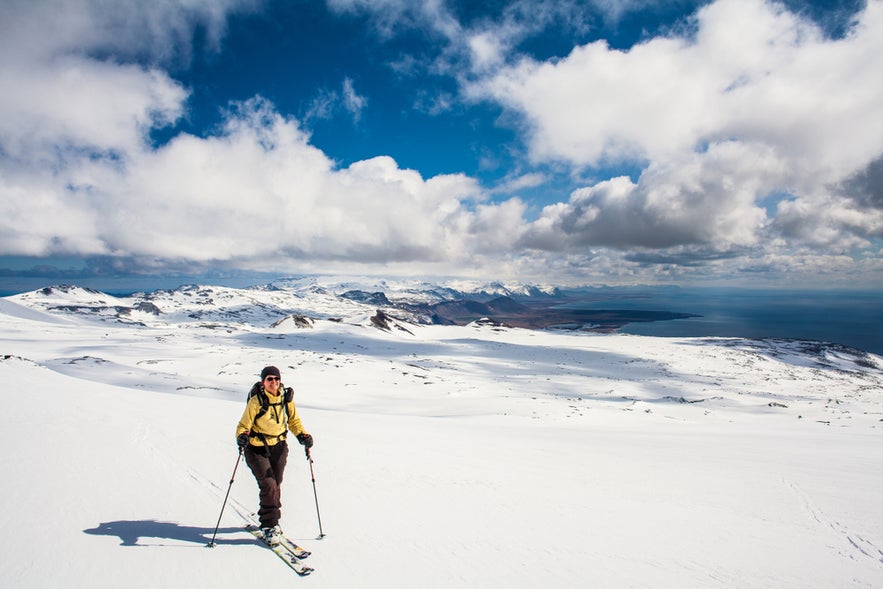
December brings true winter to Iceland, and most of the country is covered in snow by this time. Reykjavik also gets its share of snowfall, though the coastal weather often causes it to melt soon.
Temperatures generally stay close to freezing in December in Iceland, usually between 30 F and 39 F (-1 C to 4 C).
It’s a popular time for winter activities in Iceland, like skiing and snowshoeing. The snowy scenery also adds to the festive atmosphere at Reykjavik’s Christmas markets and holiday celebrations.
Snow Across Iceland’s Regions
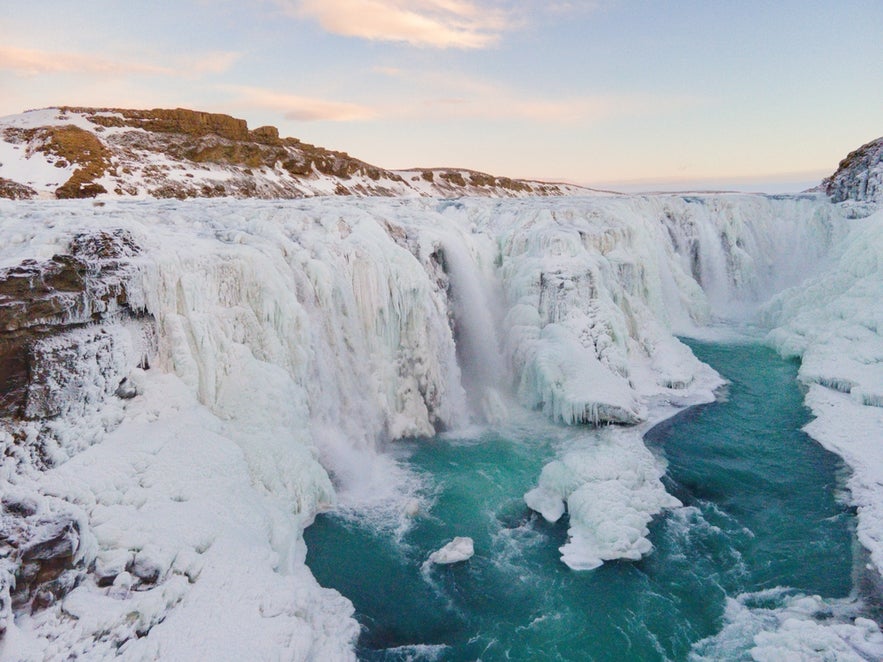
Snowfall varies widely across Iceland, especially once you move away from Reykjavik. Here’s what to expect in each region when it comes to winter and snow conditions in Iceland.
Snow on the South Coast
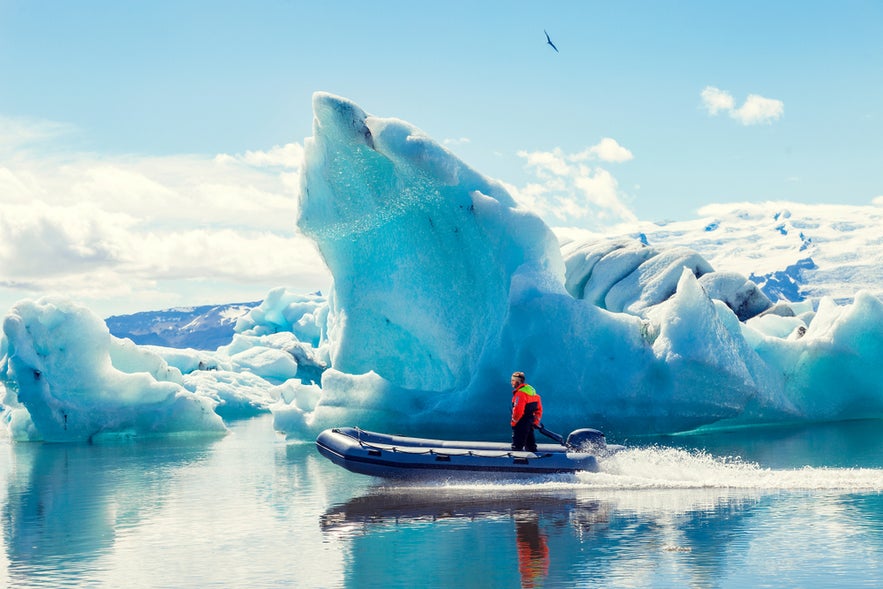
The South Coast gets less snow than many other parts of Iceland because warm winds from the Atlantic often melt it quickly. Even so, snow in Iceland can appear suddenly here, especially as you move farther inland, where snow can reach up to 10 inches (25 centimeters) in the South Coast.
Scenic spots like Skogafoss and Seljalandsfoss don’t usually freeze completely, but the ground and cliffs around them often turn icy and snow-covered in winter, giving the waterfalls a beautiful frosty backdrop. Areas like Thingvellir tend to hold onto snow longer than coastal towns such as Vik.
Snow in East Iceland
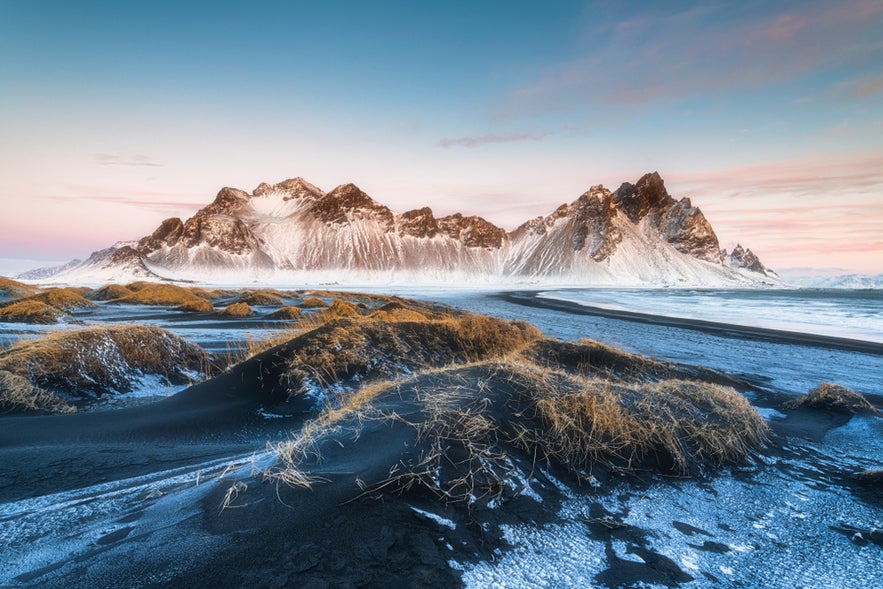
East Iceland has a mix of snowfall patterns. Fjord towns often get light snow that melts quickly, while inland valleys and mountain areas receive heavier snow that can stick around for much of winter. Snowstorms can also appear suddenly due to shifting winds.
One of the most famous sights in the region, Vestrahorn Mountain, becomes beautifully covered in snow during winter, creating some of the most striking landscapes in the Eastfjords.
Snow in North Iceland
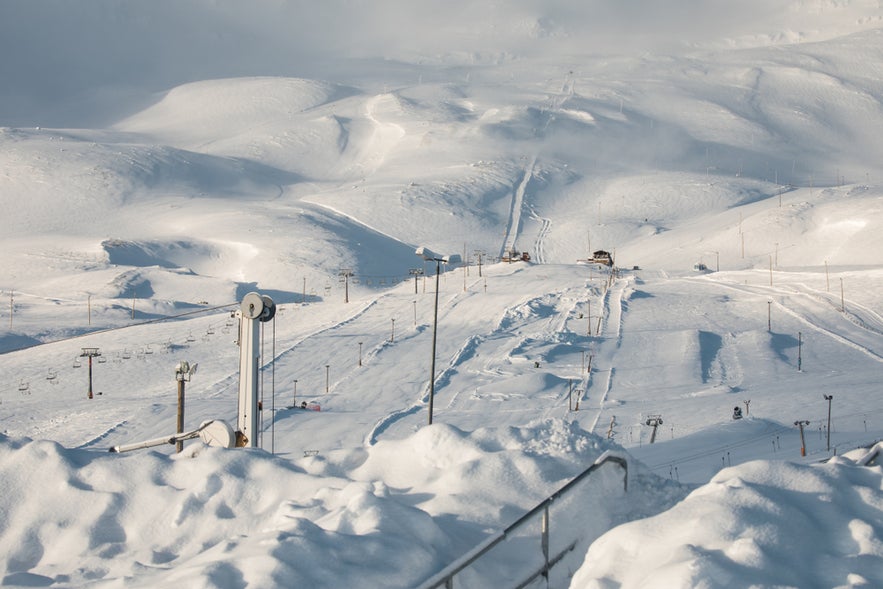
Northern Iceland is where you’ll find the deepest and most reliable snow. Snow depth here ranges between 20 inches to 3.3 feet (50 centimeters and 1 meter). Akureyri, Dalvik, and other northern towns get significantly more snowfall than Reykjavik.
Iceland's snow in the north creates perfect conditions for skiing and snowboarding, snowshoeing, and picturesque winter scenes. Snow can reach impressive depths here and last well into spring.
Snow in West Iceland
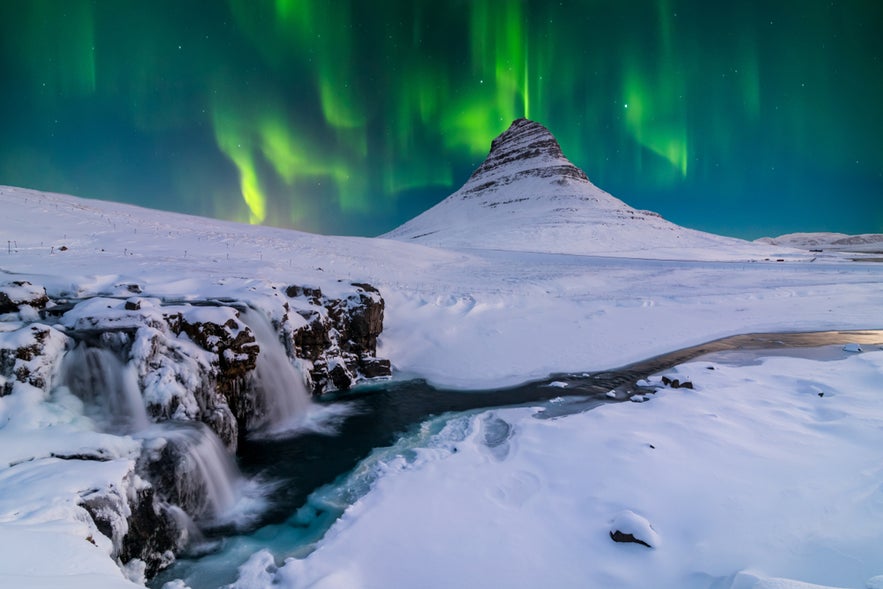
West Iceland, especially the Westfjords, is one of the snowiest regions in the country. Frequent storms create tall snowdrifts, and rural roads often require extra caution. Snow in the Westfjords can reach several feet in some places.
The Snaefellsnes Peninsula also sees regular snowfall in winter, and its most famous landmark, Kirkjufell Mountain, often becomes beautifully snow-covered, making it one of the most photographed winter scenes in Iceland.
Snow in Reykjavik
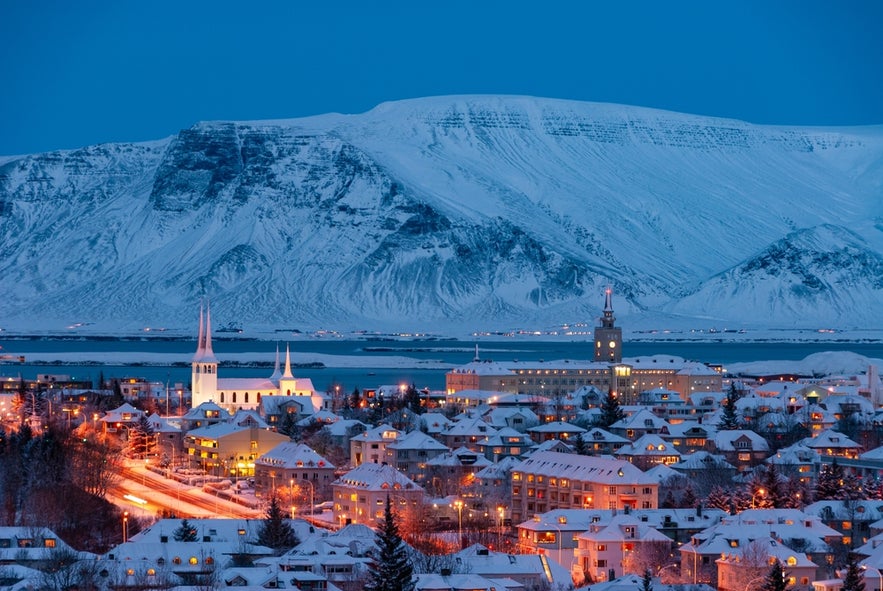
Reykjavik snowfall is much lighter than many expect. Because it's located by the ocean, snow melts quickly, even in mid-winter. You will definitely see snow in Reykjavik during a winter trip, but it often comes and goes rather than settling for long stretches.
Snow in The Highlands
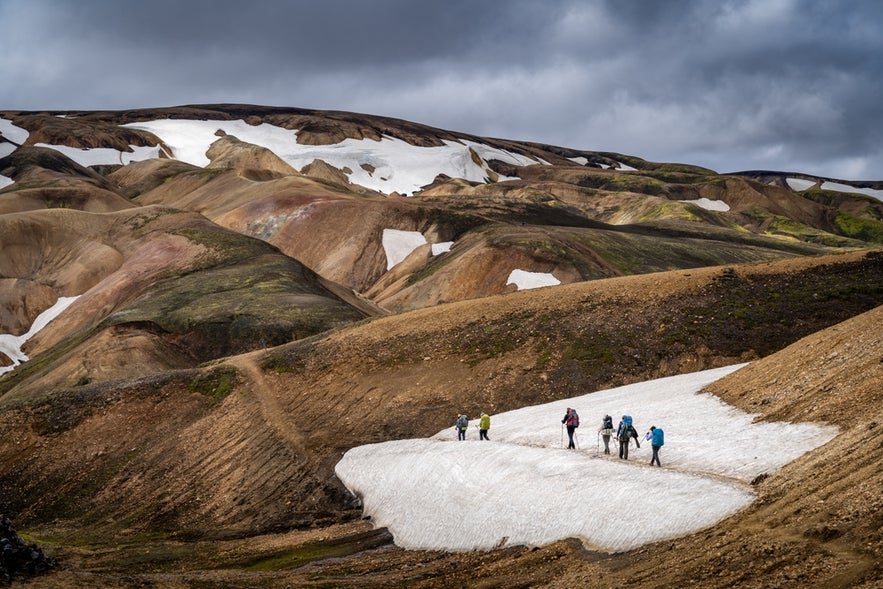
The Highlands are Iceland’s snowiest and harshest region. Snow covers the area for most of the year, and winter storms make it completely inaccessible. Roads remain closed from fall until late spring or even early summer.
How Snow Impacts Travel Plans in Iceland
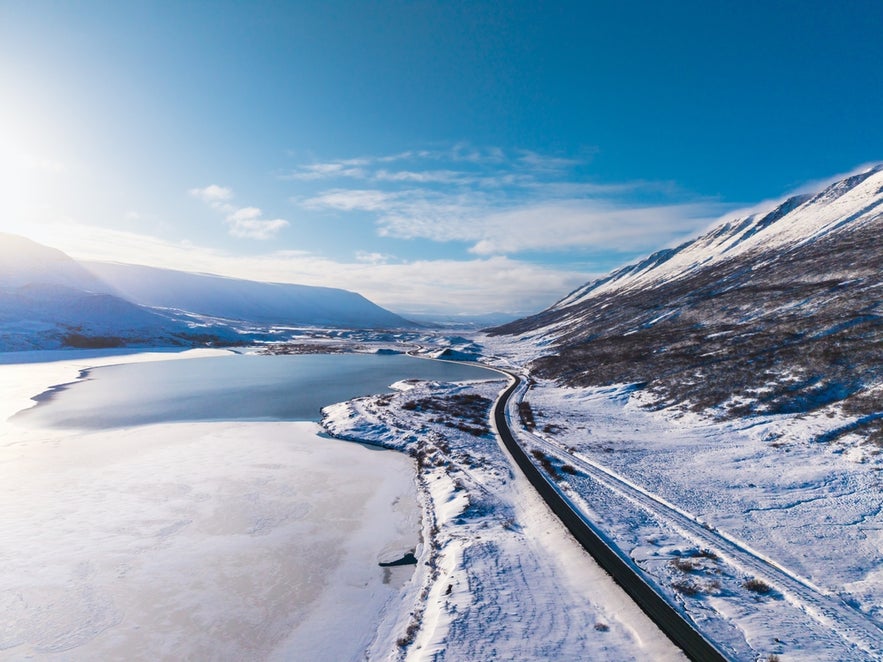 Snow affects how you experience Iceland in winter, but it doesn’t limit what you can do as much as many travelers expect. Winter travel in Iceland is magical, and with the right approach, it’s also very manageable. Here are the easiest ways to stay safe and comfortable when snow and ice appear.
Things To Do When It's Snowy in Iceland
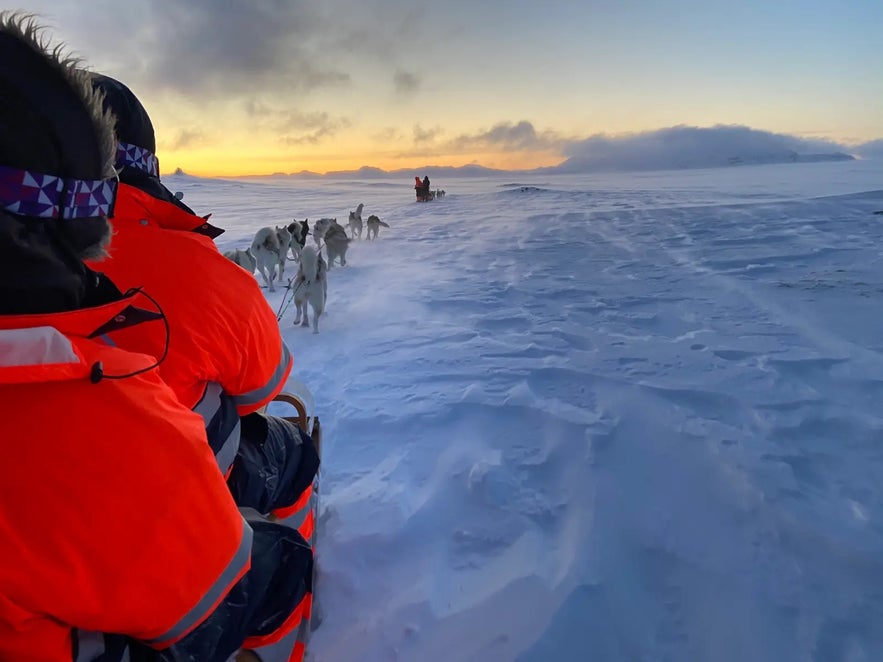 Most of the top things to do in Iceland are still possible during snowy months. The top sights of the South Coast, the Snaefellsnes Peninsula, and North Iceland are also just as accessible in winter as they are in summer.
Snow enhances some of Iceland’s most distinctive winter experiences by shaping the landscapes and conditions these activities depend on. Here are three activities that are especially magical with snow:
-
Glacier hikes – Snow adds contrast and texture to glacier surfaces, shaping the ice formations and giving the landscape a distinctly wintry character compared to snow-free conditions.
-
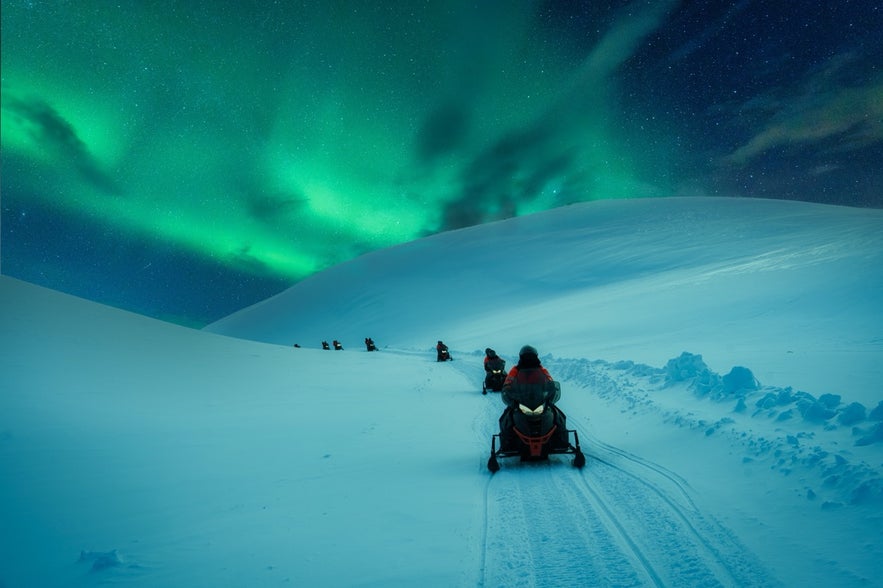
Snowmobiling – A solid layer of compact snow creates the surface needed for safe and smooth travel across glaciers, opening up wide, open areas that are otherwise inaccessible.
-
Dog sledding – Snow-covered terrain lets the sled glide smoothly, giving you a quiet, easy way to enjoy Iceland’s winter landscapes as you travel across the snow by dog team.
-
Ice cave tours – Snow combined with sustained freezing temperatures helps preserve ice caves, supporting their structure and allowing their walls and colors to form clearly.
Snow-covered landscapes also create ideal conditions for northern lights tours, winter photography, and exploring frozen waterfalls and lava fields in a completely different light.
Pick the Right Rental Car for Driving in Snow in Iceland
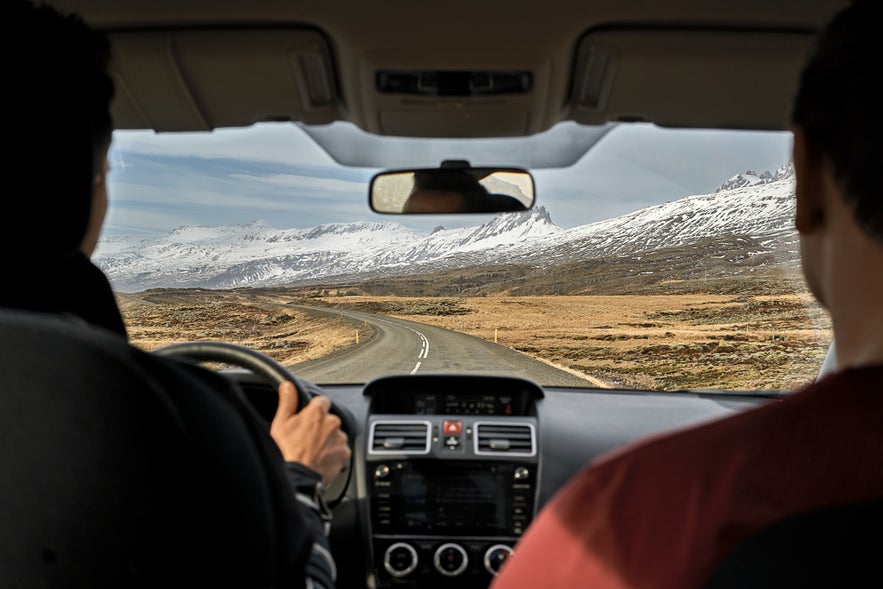
When booking rental cars in Iceland, choose a 4x4 vehicle if you're visiting in winter. These vehicles handle snowy and icy roads far better than small cars, giving you more stability and confidence, though good winter tires matter just as much. Always check road conditions on road.is before heading out.
Book Tours Instead of Driving for Safe Travel in the Snow

Guided tours in Iceland are a great choice if you prefer to relax while experts handle the winter driving. You can join guided tours, multi-day tours, or vacation packages that bundle hotels, activities, and transportation. These options take the stress out of planning and navigating Iceland’s winter weather.
Learn How To Read the Weather Forecast
Snow and ice are easy to track on Iceland’s official weather site, vedur.is. The maps show expected snowfall and when it will arrive. Check the color-coded snow charts. Lighter shades mean light snow, while darker colors show areas expecting heavier snowfall. You’ll also find temperature maps that highlight spots at or below freezing, which is useful for spotting where icy conditions might form.
Don't forget to familiarize yourself with the weather warning system in Iceland to stay safe throughout your travels.
Stay Flexible with Your Schedule
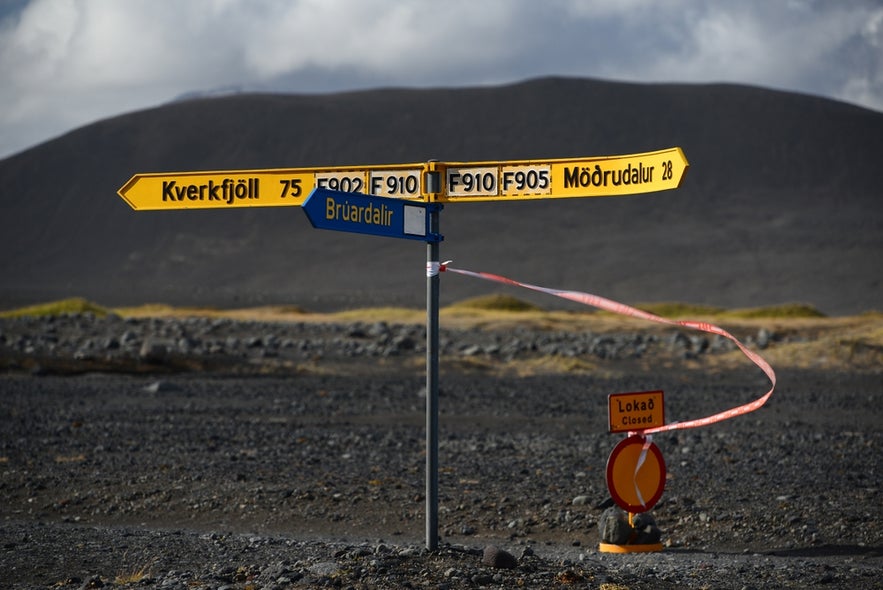
The weather in Iceland can change quickly, especially when snow and wind roll in. Keeping your plans flexible makes it easier to adjust and still enjoy your trip, even if conditions shift.
To build flexibility into your Iceland itinerary, consider the following:
-
Spend your first and last nights in Reykjavik if you are not using it as a base. This creates a buffer around your arrival and departure, reducing stress if flights, roads, or tours are affected by weather.
-
Choose guided tours led by local professionals who are used to winter conditions and can adapt routes, timing, or activities based on real-time weather and road updates.
-
Plan backup activities for each day, such as museums, geothermal pools, food tours, or short city walks, so you always have an alternative if outdoor plans need to change.
-
Avoid overpacking your schedule, especially in winter. Leaving gaps between long drives or major activities gives you room to adjust without feeling rushed.
-
Book accommodations with flexible cancellation policies whenever possible, allowing you to shift plans if weather conditions require changes.
-
Stay informed daily by checking road conditions and weather forecasts each morning, and be ready to adjust distances or destinations accordingly.
-
Keep driving days shorter than in summer, giving you more daylight flexibility and reducing pressure if conditions slow you down.
This approach helps you stay relaxed and make the most of your time, even when Iceland’s winter weather has other ideas.
Snow in Iceland: Final Thoughts
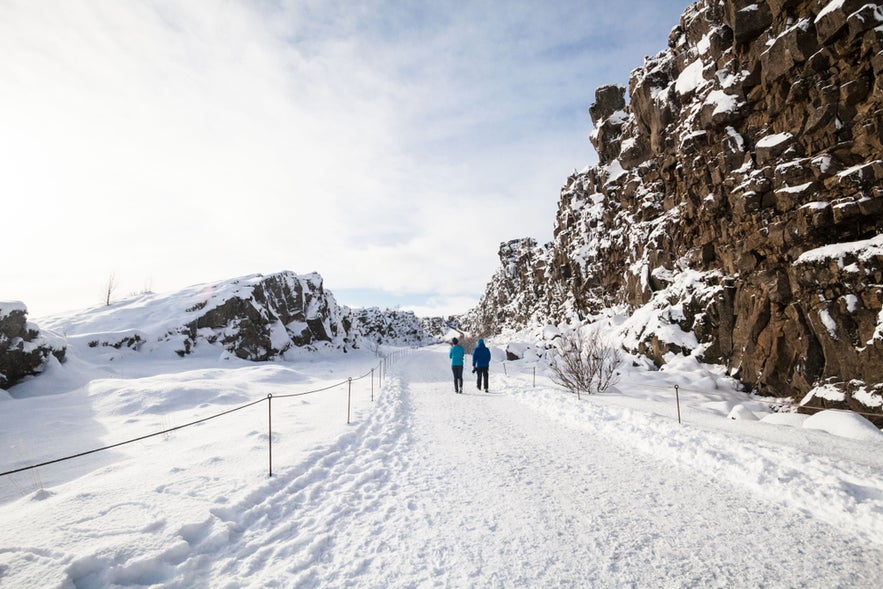
Snow in Iceland is as varied as the landscape itself. Some regions see light dustings that melt quickly, while others stay buried under thick snow for months. Whether you’re dreaming of winter waterfalls, snowy mountains, or the soft glow of Christmas markets, understanding Iceland’s snowfall patterns helps you plan with confidence.
Use this guide to snow in Iceland as your starting point when planning winter vacations in Iceland. Snowy adventures, frozen landscapes, and unique seasonal experiences are waiting for you!
When is the best time to visit Iceland for snow?
What is the snowiest month in Iceland?
Does Iceland have snow year-round?
Does it snow in Reykjavik every winter?
Is Iceland always snow-covered in winter?
Are roads open in Iceland when it snows?
Do flights get canceled in Iceland because of snow?
Can you hike or do outdoor activities in Iceland when there's snow?
Can you see the northern lights when it's snowing?
Have you experienced snow in Iceland before? Share your tips or stories in the comments; other travelers will love hearing them!

I’m Rebecca, Head of Content at Guide to Iceland. I’ve lived in Reykjavík for almost a decade and have traveled across the country in every season. I care about making travel information easy to find, accurate, and genuinely helpful.