Iceland's Golden Circle is the country's most popular sightseeing route, and self-driving is the best way to experience it at your own pace. Read on for maps, route details, top stops, and itineraries for your Iceland road trip.
If you're planning a trip to Iceland, driving the Golden Circle Route yourself is one of the best ways to experience the country's natural beauty at your own pace. Although guided Golden Circle tours are popular and convenient, self-drive excursions give you the freedom to stop where you like and spend more time at the sights that matter most to you.
Why You Can Trust Our Content
Guide to Iceland is the most trusted travel platform in Iceland, helping millions of visitors each year. All our content is written and reviewed by local experts who are deeply familiar with Iceland. You can count on us for accurate, up-to-date, and trustworthy travel advice.
The Golden Circle is easily accessible from Reykjavik and includes three of Iceland's most iconic attractions. These are Gullfoss, a powerful waterfall; Geysir, a bubbling geothermal area; and Thingvellir, a national park where history and geology collide. With well-maintained roads and clear signage, it's an ideal route for first-time and returning travelers.
In this guide, we'll show you how to plan your own Golden Circle road trip, with maps, suggested stops, and itinerary options. Find everything you need for a full-day drive or a relaxed two-day journey with Golden Circle accommodations.
Key Takeaways
-
The Golden Circle features three main attractions, namely Thingvellir National Park, Geysir Geothermal Area, and Gullfoss Waterfall.
-
The Golden Circle route is a 140-mile (230-kilometer) loop and takes between 6 and 8 hours to complete as a day trip.
-
All three main attractions are free to enter, but parking at Thingvellir and Geysir costs about 1,000 ISK (7 USD) per car. Gullfoss parking is free.
-
A standard 2WD car is sufficient in summer. In winter, a 4x4 SUV is recommended for safer driving on snow and ice.
-
A self-drive tour offers flexibility and freedom, while a guided tour provides expert insights and stress-free travel.
About Iceland's Golden Circle Route
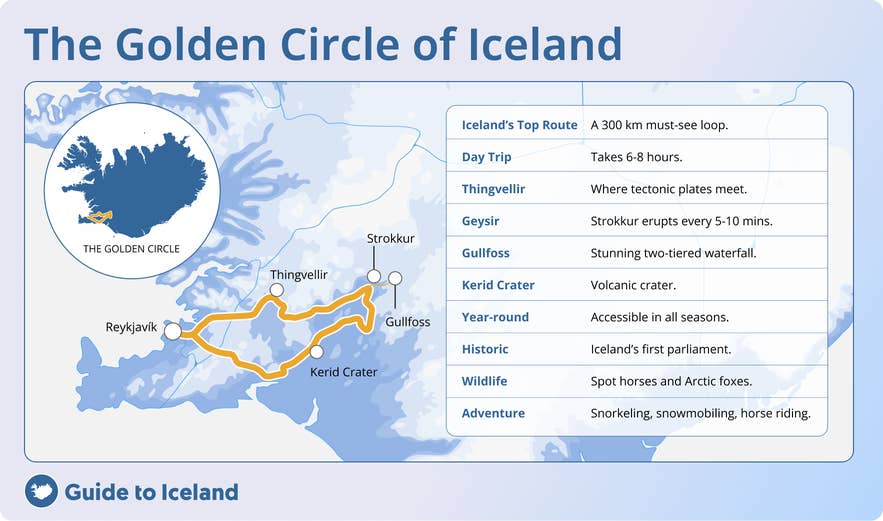
The Golden Circle is a 140-mile (230-kilometer) loop in Southwest Iceland that connects Thingvellir National Park, the Geysir Geothermal Area, and Gullfoss Waterfall. It's the country's most popular sightseeing route and an easy day trip from Reykjavik, often done as a detour while driving the wider Ring Road (1,322 kilometers or 821 miles around the whole island).
This guide focuses on the practical side of driving the loop yourself. You'll find advice on when to go, where to park, what you can do at each attraction by car, and how to plan a one-day or two-day itinerary. For full background on the route's history and each attraction, see our Golden Circle overview page.
Renting a Car for a Golden Circle Self-Drive Tour
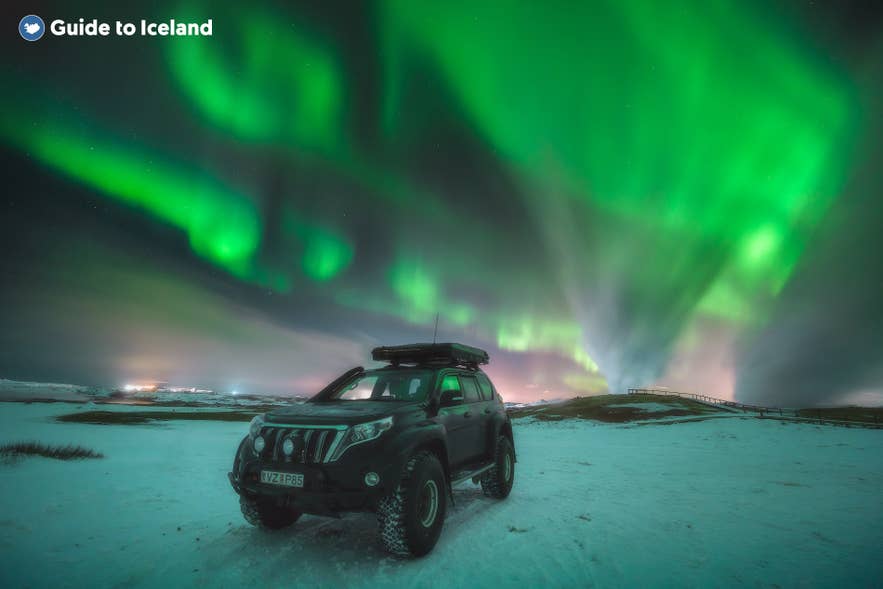
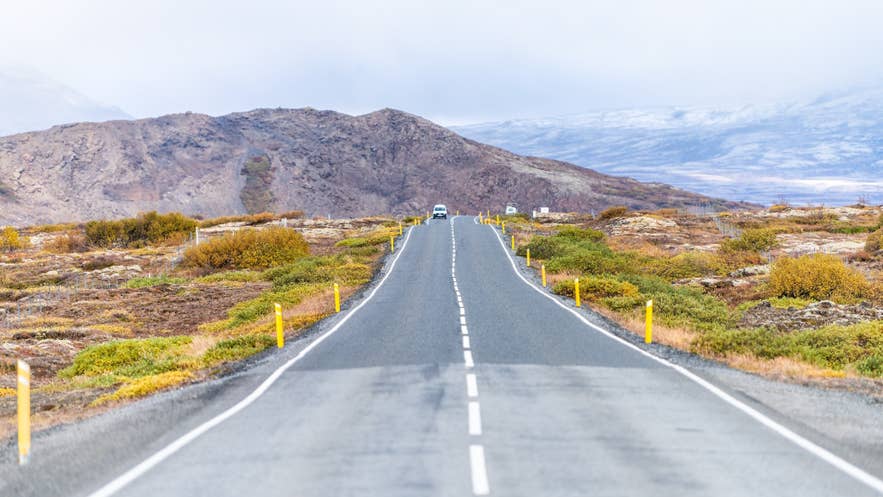
Renting a standard 2WD compact car is sufficient for driving the Golden Circle during late spring through early autumn, as Routes 1, 36, 37, and 35 are all paved and well-maintained. In winter, a 4x4 SUV is recommended for safer driving on snow, ice, and crosswinds. Camper vans are also an option if you're combining the Golden Circle with longer Iceland road trips.
Iceland's roads can change quickly with the weather, and a 4x4 offers more confidence on icy stretches and in heavy snow. You can compare prices and book through our car rentals marketplace, or go straight to the 4x4 SUV category if you're traveling in winter.
If your trip is limited to the Golden Circle and you're traveling in summer, the most economical option is usually a compact 2WD. If you're extending your trip into the Ring Road or the F-roads (Highland roads open in summer), a 4x4 SUV becomes the safer all-season choice.
Camper van rentals are typically more expensive per day than a compact 2WD car and only marginally cheaper than a small 4x4 SUV, so they rarely make sense for a one-day Golden Circle trip. They shine on a multi-day Iceland road trip, where the van doubles as your accommodation and saves on hotels and campsite fees.
Whatever vehicle you choose, the Golden Circle is the most popular driving route in Iceland, so if you do get stuck on snow or ice in winter, help is rarely far off.
Golden Circle Driving Time and Distance
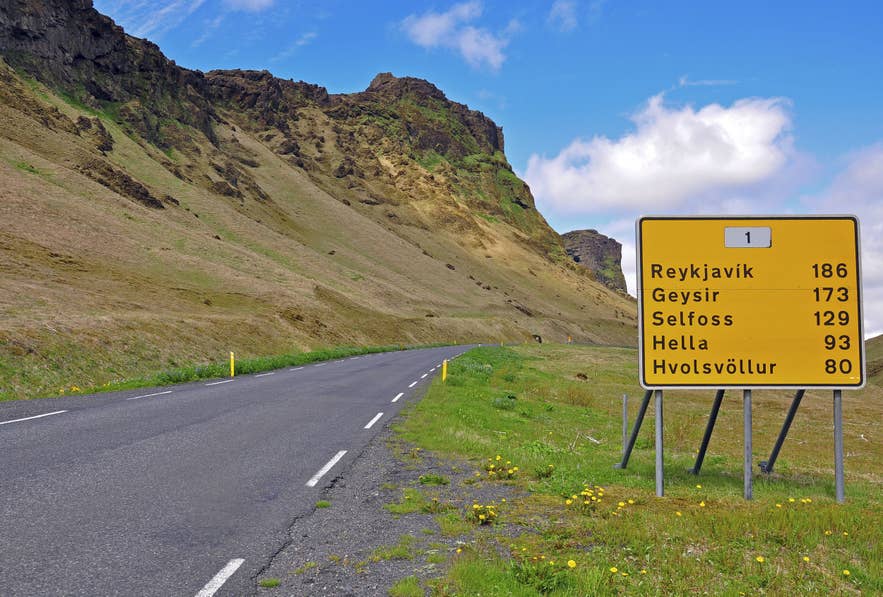
Driving the Golden Circle takes 6 to 8 hours with short stops at the three main attractions, or two days for a more relaxed pace with an overnight along the way. The loop spans 140 miles (230 kilometers) on paved roads and is drivable year-round, although winter conditions slow the drive and shorten daylight hours.
One of the biggest advantages of self-driving is the freedom to set your own pace. You decide when to leave Reykjavik, how long to stay at each site, and even whether to stretch the journey into multiple days. With Iceland's midnight sun in summer, you can drive the route in the evening or late at night, avoiding tour-bus crowds and enjoying the scenery in peace.
Starting from Reykjavik, expect about an hour of driving to reach Thingvellir (your first stop on the standard loop), and roughly the same back from Gullfoss at the end of the day.
How To Avoid Crowds on the Golden Circle
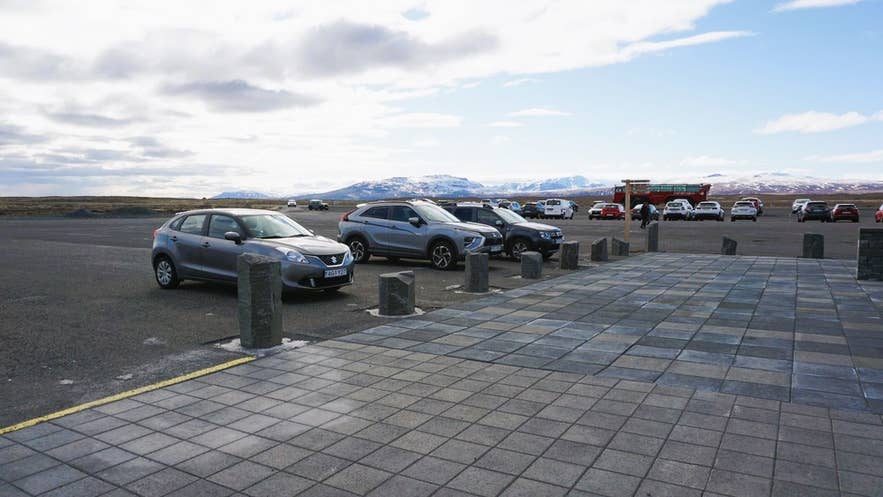
Driving the Golden Circle yourself makes it easier to avoid crowds and enjoy greater privacy. Most day trips from Reykjavik depart between 8 AM and 10 AM or between 12 PM and 2 PM, and return by 8 PM, so the busiest hours at the main attractions are 9 AM to 7 PM. Self-drivers who arrive before 9 AM or after 7 PM will find the sites noticeably quieter.
In summer, the midnight sun makes off-peak visits easy. You can comfortably reach Thingvellir, Geysir, and Gullfoss, long before or after the bus crowd. Spending a night at one of the campsites or hotels in the Golden Circle makes early-morning and late-evening visits much more practical than a single long day trip from Reykjavik.
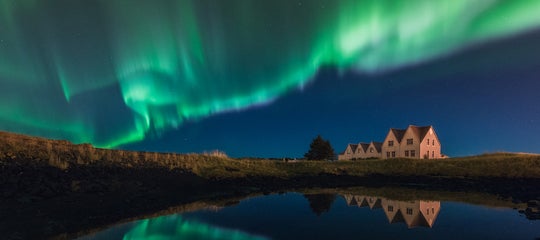
In winter, daylight is limited, but the trade-off is the chance to see the northern lights over the attractions in the evening. Thingvellir's dark sky and open horizons make it one of the best aurora-viewing spots along the route.
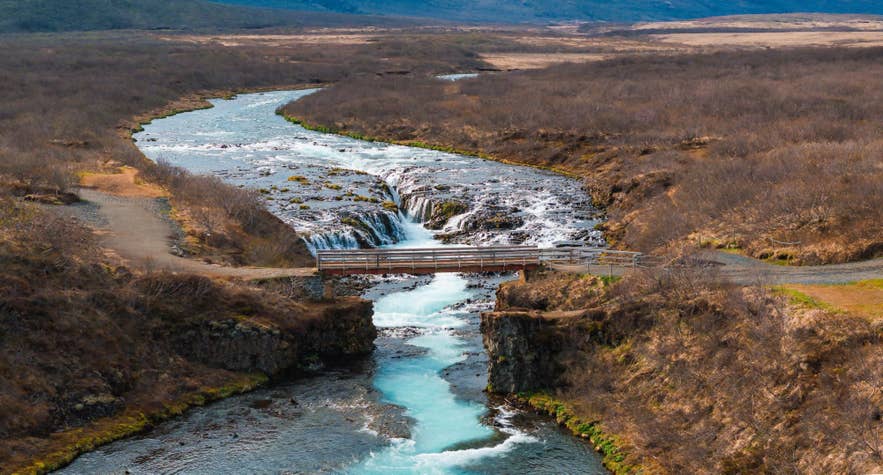
You can also avoid the busiest hours by adding a quieter detour. The lesser-visited Laugarvatn Lake area has Fontana Geothermal Spa. Bruarfoss Waterfall is another quiet detour known for its striking blue water. The Reykjadalur Hot Spring Valley, accessed by a 1.5-hour hike from Hveragerdi, is a less-crowded alternative to the main geothermal spas.
Iceland's Golden Circle Map: The Classic Route
The map shows the standard Golden Circle loop, starting from Reykjavik City Hall and continuing through Thingvellir National Park, the Geysir Geothermal Area, Gullfoss Waterfall, and the Kerid Crater detour before returning to Reykjavik.
The route typically begins at Thingvellir, where you can walk between tectonic plates, before heading on to the geothermal power of the Geysir area and the dramatic Gullfoss Waterfall.
Golden Circle Sights and Attractions
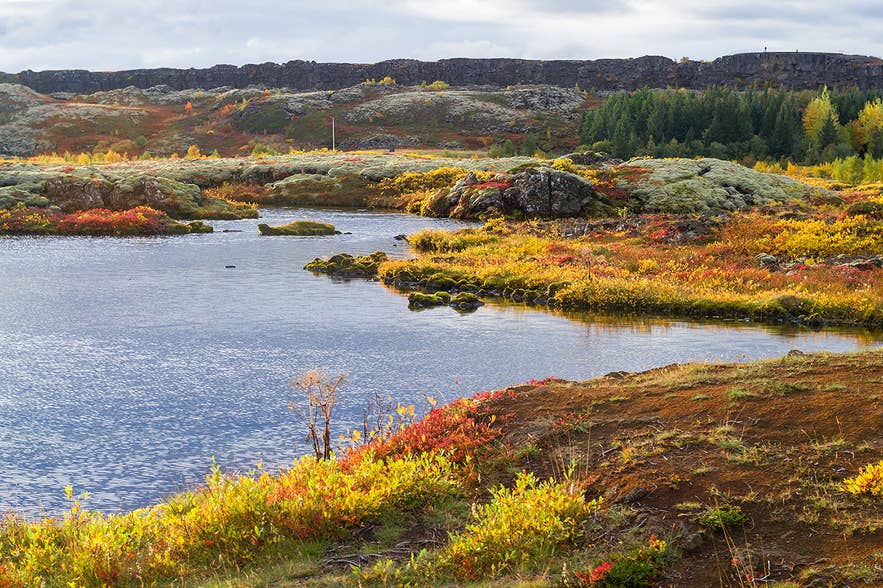
There are three main attractions on every Golden Circle itinerary, plus a popular volcanic crater detour at Kerid. Here's what you need to know for a self-drive trip, including where to park, what it costs, and what's nearest each parking lot.
Thingvellir National Park
The first stop on the Golden Circle is Thingvellir National Park, Iceland's first national park and a UNESCO World Heritage Site. The park is about 28 miles (45 kilometers) drive northeast of Reykjavik on Route 36. Entry to the park is free, but parking is 1,000 ISK (7 USD) per passenger car for the day. One fee covers all four parking lots.
P1 (Hakid) sits at the upper end of Almannagja Gorge by the Visitor Center, which is the most popular entry point. P2 (Efri-Vellir) is below the Oxararfoss Waterfall. P3 (Langistigur) is 2,950 feet (900 meters) north of the falls. P5 (Valholl) is closest to the Thingvellir Church and the Silfra Fissure.
From P1, you can walk through Almannagja Gorge, one of the clearest places to see the North American and Eurasian tectonic plates, and down to the location of Iceland's medieval parliament, the Althing, founded in 930.
From P5, you have the shortest walk to Silfra, a fissure that opened in 1789 and is now filled with exceptionally clear glacial meltwater from Langjokull Glacier. Silfra is one of the world's top snorkeling and diving sites.
In summer, Thingvellir offers free ranger-led guided tours in English daily, starting at 10 AM from Thingvellir Church and at 2 PM from the Visitor Center.
Most visitors stick to the section between P1 and P5, but the park is much larger and offers over 31 miles (50 kilometers) of marked hiking trails. On the alternative route, the intersection by Ljosafoss Power Station and the Nesjavellir Geothermal Area on Route 360 gives you a different perspective on the park's southern boundary.
Geysir Geothermal Area
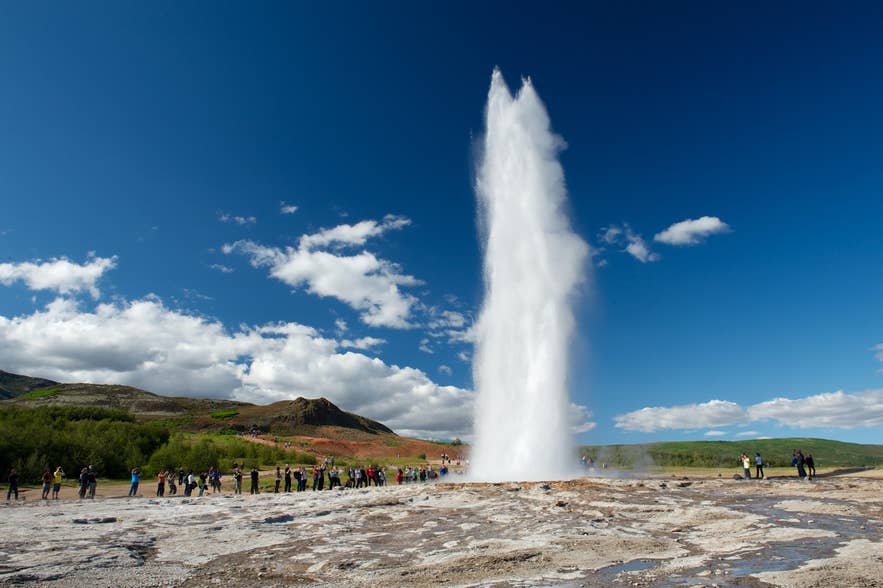
The second significant stop on the Golden Circle is the Geysir Geothermal Area, about 38 miles (61 kilometers) east of Thingvellir National Park on Routes 36 and 37.
The geothermal field itself is free to walk, but parking costs 1,000 ISK (7 USD) per passenger car. The lot operates 24/7, and you pay at the meter or through the Parka app. The Geysir Center across the road has restaurants, restrooms, a souvenir shop, and Hotel Geysir.
The area is named after Geysir, a 59-foot (18-meter) wide hot spring that has been active since at least 1294. The word "geysir" comes from the Icelandic verb geysa, meaning "to gush," and it is the source of the English word geyser.
Geysir itself is rarely active today, but Strokkur, a nearby geyser that became active after a 1789 earthquake, erupts every 5 to 10 minutes. It usually sends water 49 to 66 feet (15 to 20 meters) into the air and occasionally higher.
Gullfoss Waterfall
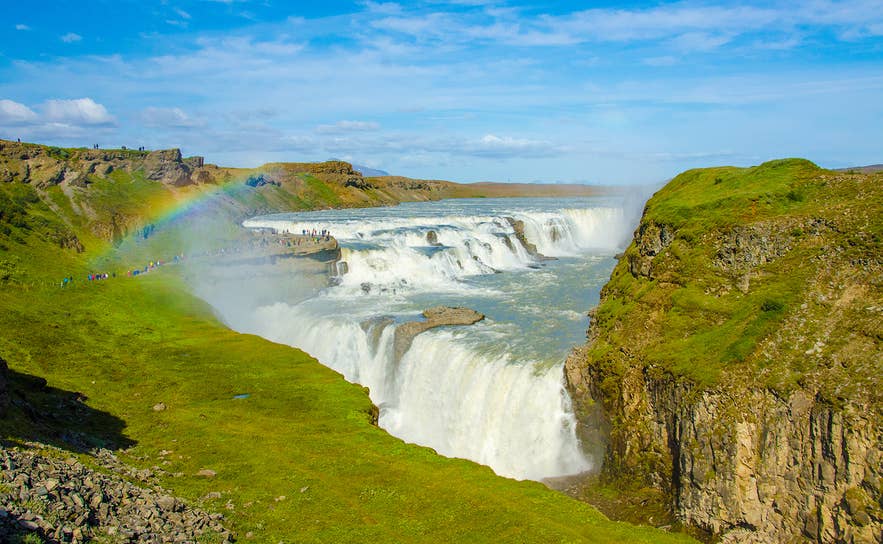
Six miles (10 kilometers) east of Geysir on Route 35 brings you to Gullfoss Waterfall. This is the third major stop on the Golden Circle.
Both entry and parking are free. Two lots are available. The upper lot next to the visitor center is the main one, with paved paths leading directly to the viewpoints. The lower lot serves as overflow and connects to the upper area via footpaths and steps. The visitor center has restrooms, a souvenir shop, and a cafe.
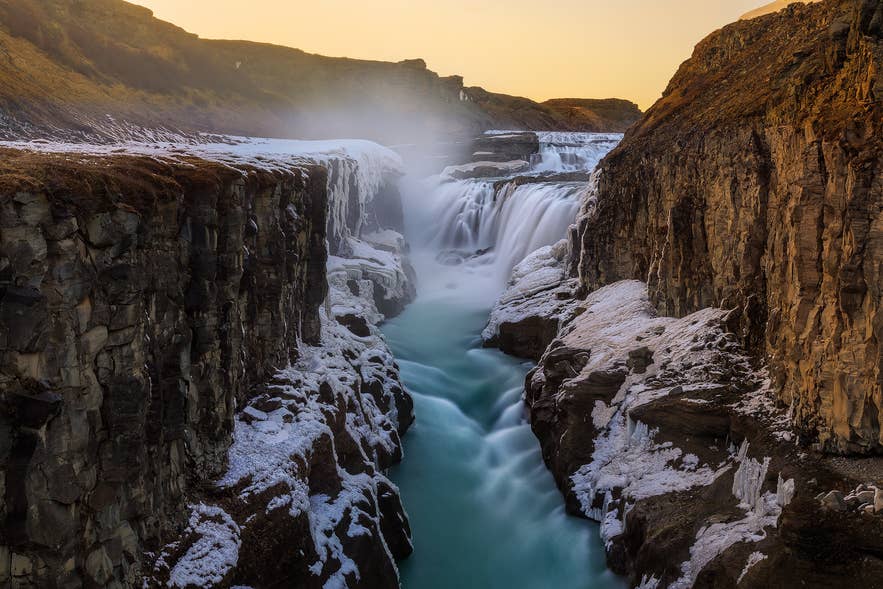
If you only see one waterfall in Iceland, make it Gullfoss. It's fed by glacial meltwater from the Hvita River and plunges over two stages. The first stage drops about 36 feet (11 meters), and the second drops 69 feet (21 meters).
Summer flow averages around 4,943 cubic feet (140 cubic meters) per second, and winter flow drops to about 2,800 cubic feet (80 cubic meters) per second. Mist from the falls produces frequent rainbows on sunny days. The upper viewpoints are open year-round, but the path to the lower-level observation platform is closed in winter due to icy conditions.
Kerid Volcanic Crater (Optional Detour)
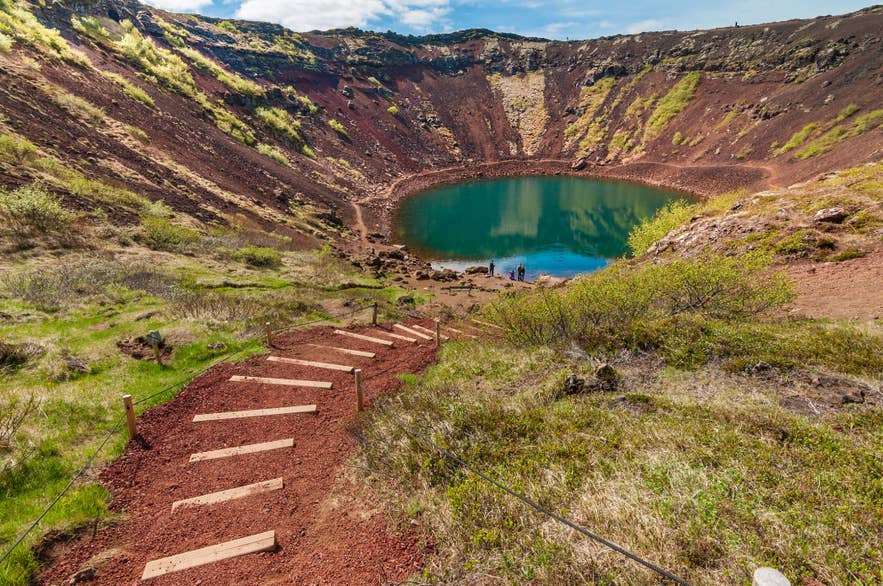
About 9 miles (15 kilometers) south of Gullfoss on Route 35, the Kerid Crater is a popular fourth stop on the Golden Circle loop, especially for travelers driving the alternative southern route. Parking is free, but the Kerid entrance fee is about 700 ISK (5 USD) per person.
The crater is striking, with vivid red volcanic slopes encircling a turquoise lake. A short rim walk takes about 15 to 20 minutes, and a full visit, including the descent to the water, typically takes 30 to 45 minutes. Kerid is easy to combine with Skalholt Cathedral and the Secret Lagoon on the southern detour.
Meet-On-Location Tours Along the Golden Circle
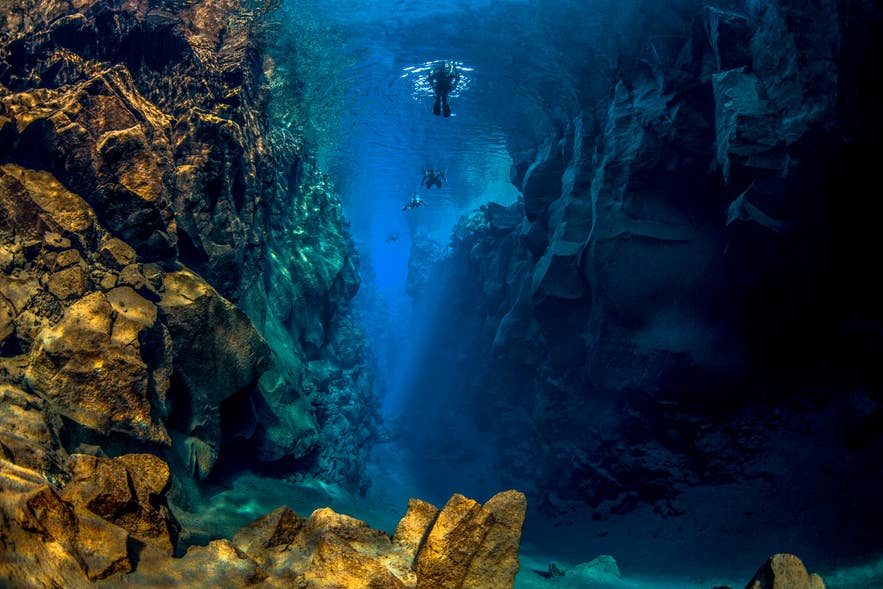
Beyond the three main attractions, you can join meet-on-location tours and experiences at specific points along the route.
-
Snorkeling in Silfra (Thingvellir National Park): A licensed-guide-only snorkel through crystal-clear glacial water between the North American and Eurasian tectonic plates.
-
Langjokull snowmobile tour from the Geysir Area: A 4.5-hour snowmobile tour with transfer to base camp.
-
Ice cave and snowmobile combo from Gullfoss: A combination tour that pairs a snowmobile ride with an ice cave visit on Langjokull Glacier, starting near Gullfoss.
-
Langjokull snowmobile tour from Gullfoss: Snowmobile on Iceland's second-largest glacier, departing from Gullfoss.
-
Langjokull glacier expedition from Gullfoss: A longer glacier adventure on Langjokull, with transfer from the Gullfoss area to a glacier base camp.
-
Ice cave and glacier tour in a glacier monster truck from Gullfoss: A monster-truck ride to Langjokull's ice cave, starting at Gullfoss.
An Alternative Golden Circle Self-Drive Route
This alternative Golden Circle drive route is one a local might take. It uses the southern Route 1 detour through the town of Hveragerdi, the Grafningur area, Kerid, and Skalholt before reaching the three main attractions in the afternoon. The route is best for spring, summer, and autumn, when the weather is pleasant and the days are long.
Step-by-Step Self-Drive Itinerary
| Time | Activity | Details |
|---|---|---|
| 7:00 AM | Breakfast in Reykjavik | Start at one of the best breakfast places in Reykjavik. Pick up pastries and coffee at Te & Kaffi. Go grocery shopping for your road trip at a budget grocery store like Kronan. |
| 8:30 AM | Drive east via Route 1, then Route 431 (which becomes Route 435) | Parts of this road are gravel, so take it slow. The route is beautiful and lightly trafficked. |
| 9:30 AM | Stop at the Nesjavellir Geothermal Plant | Pause at the observation viewpoint for a look at the steaming pipework. The main interactive Geothermal Exhibition is now at the nearby Hellisheidi Power Plant (open daily 9 AM to 5 PM, April through October), not Nesjavellir itself. |
| 10:30 AM | Drive Route 360 through the Grafningur area of Thingvellir | Stunning gravel road with picnic spots and lake views. |
| 11:30 AM | Visit the Ljosafoss Hydropower Station at Lake Ulfljotsvatn | Stop at the free, interactive "Powering the Future" Energy Exhibition. The exhibition is typically open daily from 10 AM to 5 PM in the summer. |
| 12:30 PM | Stop at the Kerid Crater | Entry is about 700 ISK (5 USD) per person. Plan 45 minutes to walk the rim and descend to the crater lake. |
| 1:30 PM | Visit Skalholt Cathedral | Entry is free, and the cathedral is open daily from 9 AM to 6 PM. See the historic church and learn about Skalholt's role as Iceland's bishopric, 1056 through 1785. |
| 2:30 PM | Lunch at Fridheimar Tomato Greenhouse | The kitchen serves lunch daily from 11:30 AM to 4 PM, but a reservation is essential. Book a table at Fridheimar several days ahead. |
| 4:00 PM | Soak at the Secret Lagoon in Fludir | Adult admission is about 4,500 ISK (37 USD). Book your Secret Lagoon admission ahead of time. |
| 6:00 PM | Drive to Gullfoss Waterfall | Free parking and free entry. Late afternoon means thinner crowds. Walk down the hiking path to the waterfall rim. |
| 7:00 PM | Geysir Geothermal Area and dinner at Hotel Geysir | Watch Strokkur erupt every 5 to 10 minutes. The Hotel Geysir restaurant is open 5 PM to 9 PM on weekdays and 5 PM to 9:30 PM on weekends. |
| 9:00 PM | Final stop | Head to Thingvellir National Park for an evening walk in the midnight sun (summer only). |
For a more relaxed one-day pace, you can skip the Nesjavellir Viewpoint, the Ljosafoss Energy Exhibition, and Skalholt Cathedral.
Day 2 Options (If You're Staying Overnight)
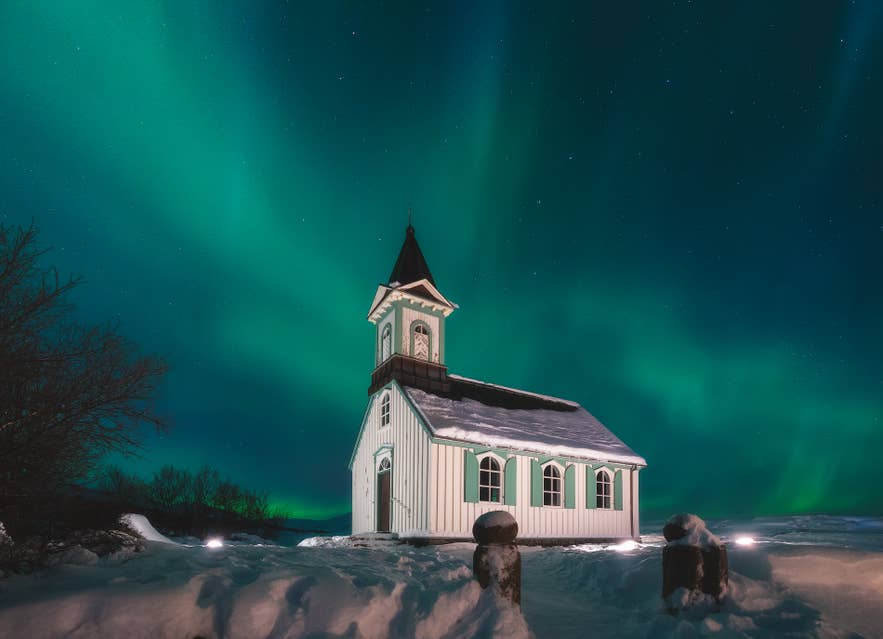
If you stayed overnight along the route, Day 2 is best spent at Thingvellir National Park. The park's size and trail network easily fill a half-day. From there, return to Reykjavik in the early afternoon, with Thingvellir only about a 28-mile or 45-kilometer drive away.
At Thingvellir, you can join the free ranger-led guided tour in English from June through August (10 AM from Thingvellir Church or 2 PM from the Visitor Center) to learn the history of the medieval Althing parliament. For a more active day, book a snorkeling tour in Silfra at Thingvellir.
On the way back to Reykjavik via Route 36, the small town of Mosfellsbaer makes a worthwhile stop. Take a tour of the Alafoss Wool Factory for Icelandic wool products, or warm up at the local geothermal pool.
Good overnight options near Thingvellir include the modern ION Adventure Hotel, located just south of the park at Nesjavellir. For a budget option in summer, the Thingvellir National Park campsite operates June through mid-September. It has hot showers, toilets, electricity, and a dish-washing area.
Self-Drive Tour Packages With the Golden Circle
If you'd rather book a planned self-drive package that includes the Golden Circle as part of a longer Iceland road trip, here are five popular options.
-
7-Day Self-Drive Tour of the Complete Ring Road of Iceland: Covers the Golden Circle with optional activities like glacier hiking, whale watching, and geothermal baths.
-
2-Week Self-Drive Tour of the Ring Road of Iceland and the Westfjords: A 14-day adventure around Iceland's Ring Road and the remote Westfjords, including the Golden Circle.
-
10-Day Self-Drive Tour of the Complete Ring Road of Iceland With Top Attractions and Snaefellsnes: A 10-day adventure with the Snaefellsnes Peninsula and the Golden Circle.
-
1-Week Summer Self-Drive Tour of the Ring Road of Iceland and Golden Circle: An 8-day tour showcasing waterfalls, glaciers, black-sand beaches, and geothermal wonders.
-
10-Day Summer Self-Drive Tour of the Ring Road of Iceland With Waterfalls and Glaciers: A 10-day in-depth tour of Iceland's south, east, and north, including the Golden Circle Route.
Plan Your Golden Circle Self-Drive Adventure
The Golden Circle is Iceland's most accessible day trip from Reykjavik, and driving it yourself is the best way to make the most of all three main attractions. A 140-mile (230-kilometer) loop with paved roads covers Thingvellir National Park, the Geysir Geothermal Area, and the powerful Gullfoss Waterfall.
If you'd rather skip the driving entirely, plenty of guided day tours cover the Golden Circle from Reykjavik. The Golden Circle Minibus Tour from Reykjavik is one of the highest-rated small-group options.
The Golden Circle is also a natural starting point for a longer self-drive trip. If you're planning to drive the full Ring Road, the 1-Week Self-Drive Tour of Iceland is a popular option that builds the Golden Circle into a multi-day route. If you're deciding how much time to allow for your Iceland trip, see our study on how many days you need in Iceland.
Wherever your Iceland trip takes you next, the Golden Circle is worth the time it takes. Pick your route, choose your pace, book your car, and head out. The combination of tectonic geology, geothermal power, and Iceland's most photographed waterfall makes the self-drive memorable in any season.
Is the Golden Circle worth it in Iceland?
When is the best time of year to visit the Golden Circle in Iceland?
What else can you see along the Golden Circle besides the main stops?
How far is the Golden Circle from Reykjavik?
Is the Golden Circle open in winter?
Do you need a 4x4 vehicle for the Golden Circle in Iceland?
In which direction should you drive the Golden Circle?
This puts the three attractions in geographic order and avoids backtracking. The alternative route goes clockwise via Hveragerdi first.
Are there gas stations and bathrooms along the Golden Circle?
There are no gas stations between Thingvellir and Geysir, so fill up in Reykjavik or Selfoss before leaving the main road.
Is the Golden Circle good for families with kids?
The Secret Lagoon is a family-friendly spa option where children aged 14 and under enter for 260 ISK (2 USD) when accompanied by an adult.
We hope this gives you ideas on what to do in the Golden Circle. What is your favorite attraction on the route? Where do you plan to go? Let us know in the comments below!

I was the Content Manager at Guide to Iceland from 2013 to 2018, and now run the creative studio Huldufugl while working as a freelance writer. I’m passionate about storytelling, Icelandic culture, and creating thoughtful experiences through words and visuals.