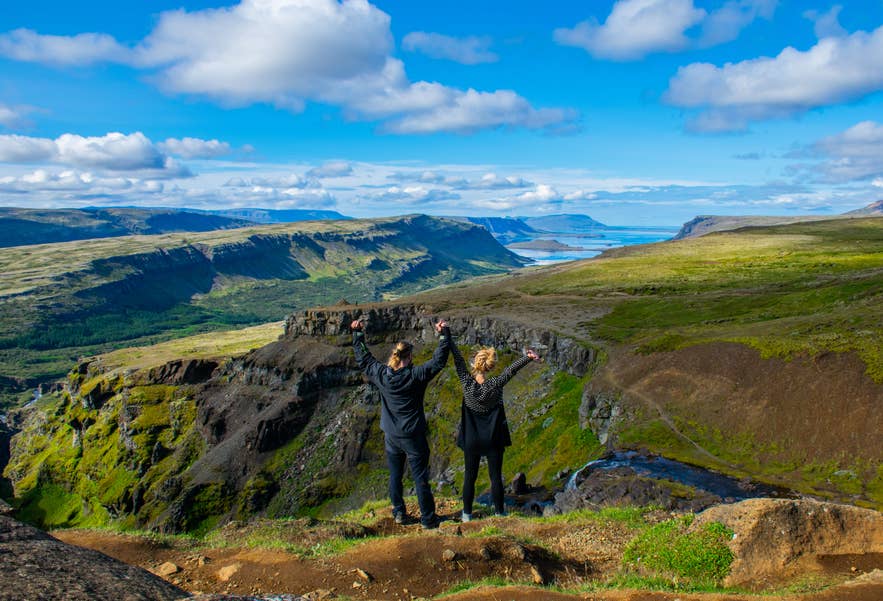
Just north of the capital, Hvalfjordur Fjord is one of the easiest day trips from Reykjavik. It is a quiet 19-mile (30-kilometer) inlet ringed by mountains that most travelers speed past through the Hvalfjordur Tunnel beneath it. Skip the tunnel, and you find the mighty Glymur Waterfall and the seaside Hvammsvik Hot Springs.
Why You Can Trust Our Content
Guide to Iceland is the most trusted travel platform in Iceland, helping millions of visitors each year. All our content is written and reviewed by local experts who are deeply familiar with Iceland. You can count on us for accurate, up-to-date, and trustworthy travel advice.
The fjord is easy to reach with a rental car and a regular stop on self-drive tours. As the gateway to West Iceland, it also slots neatly into a longer road trip.
What to Know About Visiting Hvalfjordur
-
Hvalfjordur, the Whale Fjord, sits about 40 minutes north of Reykjavik, making it an easy day trip.
-
Its star attraction is Glymur, Iceland's second-tallest waterfall, reached by a steep summer-only hike.
-
The Hvammsvik Hot Springs offer seaside geothermal pools and need to be booked in advance.
-
Driving the scenic Route 47 around the fjord takes about an hour longer than the tunnel, and the views are worth it.
-
The fjord was a major Allied naval base in World War II, and ruins and a museum remain.
-
Dark skies close to the city make it a great spot for northern lights in winter.
Map of Things to Do in Hvalfjordur
The map above plots the main stops around Hvalfjordur, from Akranes at the fjord's mouth to the Glymur trailhead at its head. The sights are spread along both shores rather than clustered in one place, so they follow the curve of Route 47 as you drive around the water.
Use it to picture how a visit fits together: a couple of nearby stops make an easy half-day, while the full loop, ending with the hike to Glymur Waterfall, fills a day. Here are the top nine things to do in Hvalfjordur, counting down to the very best.
9. Visit Bjarteyjarsandur Farm on the Fjord
On the northern shore, Bjarteyjarsandur is a working sheep farm that has been in the same family since 1887, passed down through the generations. The family raises Icelandic sheep using sustainable methods, and a visit is a rare chance to see how real Icelandic farms run day to day.
The farm welcomes guests year-round, with guided tours led by the family themselves. There is also a small farm shop selling sweaters, hats, and mittens knitted from the farm's own wool.
Depending on the season, you may even lend a hand with farm chores. In summer, you can tuck into hearty meals made with the farm's own produce and famously flavorful lamb.
The nearby shoreline also becomes a nesting site for common eider ducks, the sea birds whose soft down has been prized in Iceland for centuries, so tread gently and you may spot the mothers raising their ducklings.
The farm runs a well-loved campsite too, open year-round and a favorite with travelers driving the fjord. Its warm communal kitchen and the friendly farm dogs and sheep make for a cozy, welcoming stop.
8. Explore Akranes at the Mouth of the Fjord
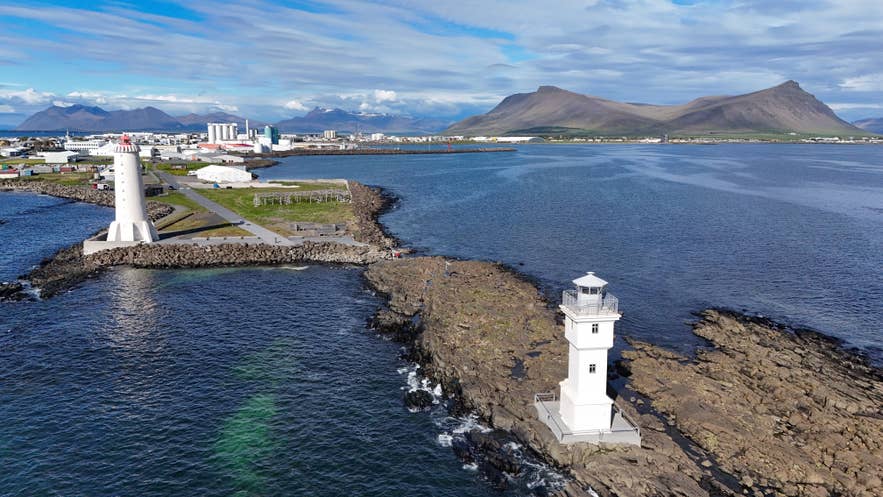 Where Hvalfjordur opens to the sea sits Akranes, a friendly fishing town that makes an easy add-on to your trip. Its landmark is the Akranesviti Lighthouse, built in 1947 and one of the few in the country that opens to visitors regularly.
You can climb to the top for sweeping coastal views, and its fine acoustics mean it doubles as a venue for concerts and art shows. A smaller lighthouse beside it, dating to 1918, is one of the oldest concrete lighthouses in Iceland.
Down on Langisandur, a Blue Flag sandy beach, the Gudlaug Hot Tub lets you soak in warm geothermal water right beside the surf. Brave swimmers take a dip in the cold Atlantic first, then warm up in the pool, which is open all year.
With these, the Akranes Folk Museum, and easy hikes up Akrafjall Mountain, Akranes is a relaxed place to wind down before heading back to the city or onward to the Snaefellsnes Peninsula.
7. Watch for Seals and Birdlife Along the Shore
Despite its name, the Whale Fjord rarely lives up to it. Whales were absent from these waters for the better part of a generation, though a small group of humpbacks made a surprise return in 2025.
For now, the fjord belongs mostly to other Icelandic wildlife. You are far more likely to spot harbor seals hauled out on the sandy flats near the head of the fjord, especially around low tide. It's one of the easier places near the capital for seal watching in Iceland.
The fjord is also rich in birdlife, so pack binoculars. Arctic terns and eider ducks work the shallows through summer, two of the many bird species in Iceland you can spot near the coast. The noisy oystercatcher, a wading bird with black-and-white plumage and a long orange bill, is impossible to miss once it arrives in spring.
If you are very lucky, you may even glimpse a white-tailed eagle hunting along the water, as Iceland's small but recovering population ranges across the west. In summer, sheep and their lambs drift across the pastures above the shore, and you will pass plenty of Icelandic horses year-round.
6. See the Peculiar Stedji Rock
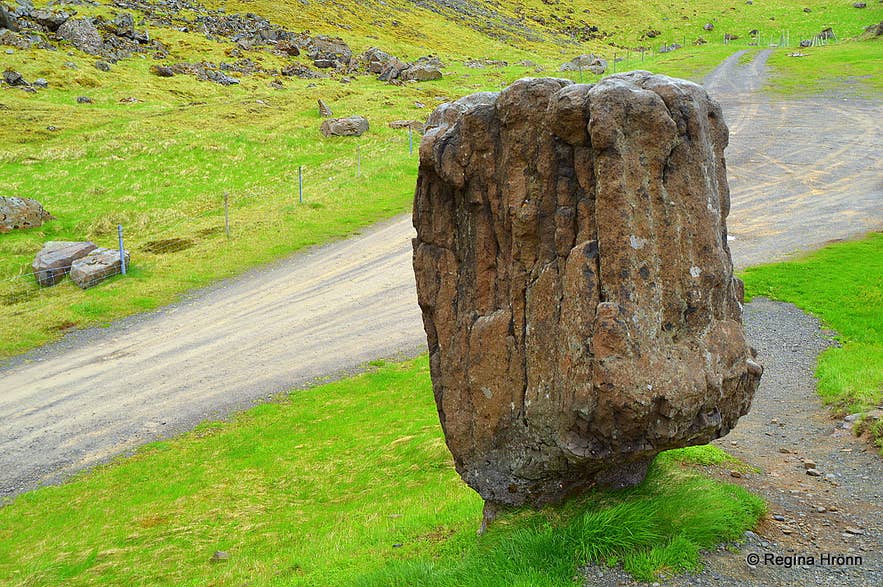 Right by the old road around the fjord stands Stedji, also called Staupasteinn, a curious goblet-shaped rock almost 10 feet (3 meters) tall. It is an easy roadside stop and a popular spot to stretch your legs on the drive around the water.
Like many Icelandic landmarks, it comes with folklore: the rock is said to be home to an elf named Staupa-Steinn. It is protected as a natural monument, so admire it but leave it as you find it.
5. Chase the Northern Lights Over the Fjord
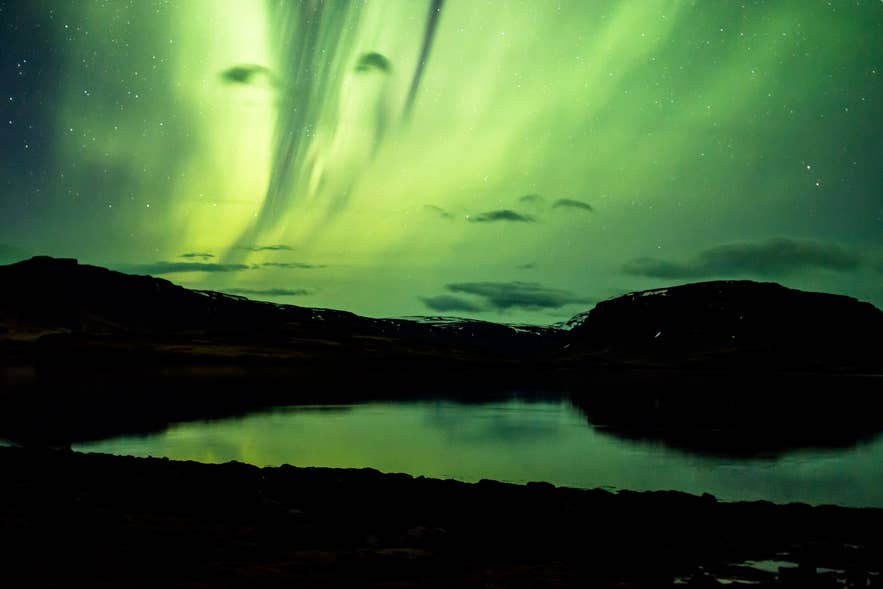 Hvalfjordur is one of the easiest dark-sky escapes from the capital, just 30 to 45 minutes north yet well clear of the city's glow. The surrounding mountains, including the steep wall of the Skardsheidi mountain range, block stray light and frame the aurora against the dark water.
The scenic Route 47 has plenty of wide, safe pull-offs where you can park and wait for a show. Guides on northern lights tours often share tips on where and how to photograph the aurora, so a tour can be a good way to learn the ropes. We have rounded up the best spots to shoot the northern lights in West Iceland if you want to go further.
If you would rather explore on your own or are staying in West Iceland, check the aurora forecast from the Icelandic Met Office before setting out. The northern lights season in Iceland runs from roughly September to April, when long, dark nights give you the best odds, though a clear sky and active aurora matter more than any single spot.
4. Step Into the World War II History
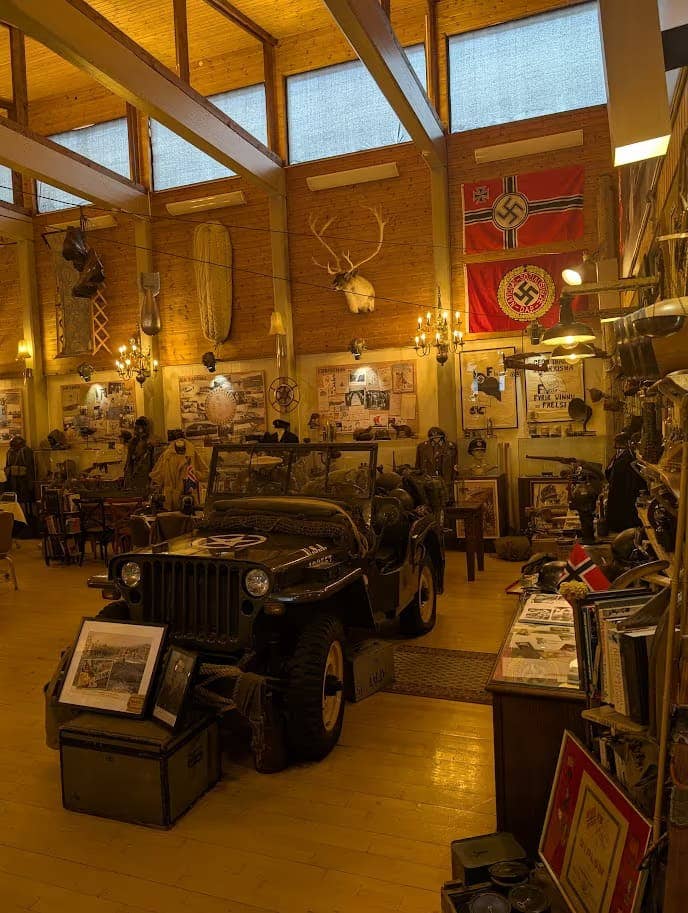
Photo from War and Peace Museum Tour.
Hvalfjordur had an important role during World War II. It served as a major Allied naval base, where convoys gathered before the perilous run to the Soviet Union.
It was from this fjord that the ill-fated Arctic convoy PQ-17 set out in 1942, with only 11 of its 35 merchant ships reaching port. At Hvitanes, you can still walk among the concrete ruins of the British base once known as HMS Baldur.
To piece the story together, visit the War and Peace Museum, which traces Iceland's wartime occupation through photographs, vehicles, and artifacts. It is a small but memorable window into a chapter that reshaped the country.
3. Drive the Scenic Route Around the Fjord
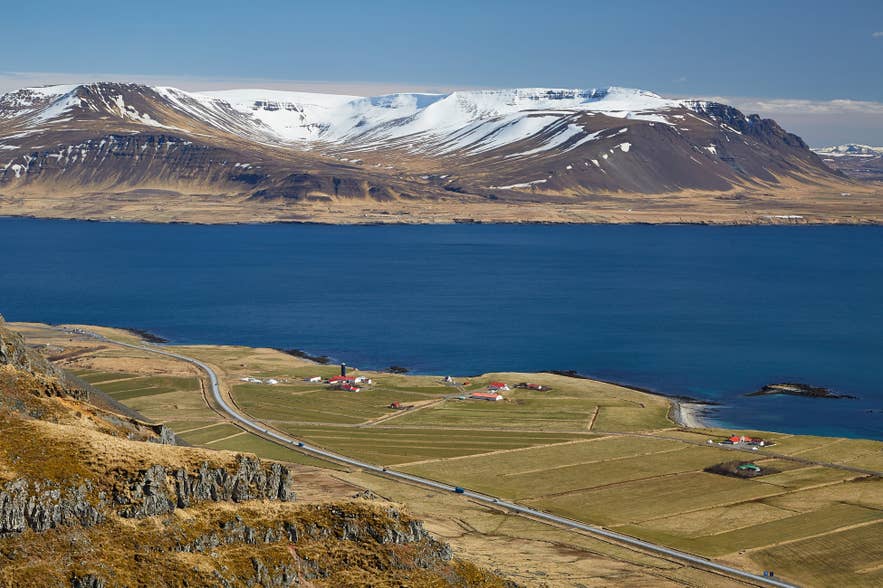 Most traffic shoots beneath the fjord through the Hvalfjordur Tunnel, which opened in 1998 and has been toll-free since 2018. To actually see the fjord, leave the tunnel to the locals and follow Route 47 around the water instead.
The detour adds about an hour and rewards you with calm water, mountain views, and almost no traffic, on one of the gentler stretches of road for anyone new to driving in Iceland. Near the head of the fjord you will pass a whaling station at Midsandur, a reminder of how the Whale Fjord earned its name.
Since the Ring Road now runs through the tunnel, the loop is an easy add-on for anyone circling the island or heading into West Iceland, rather than a stop you reach automatically.
2. Soak in the Hvammsvik Hot Springs
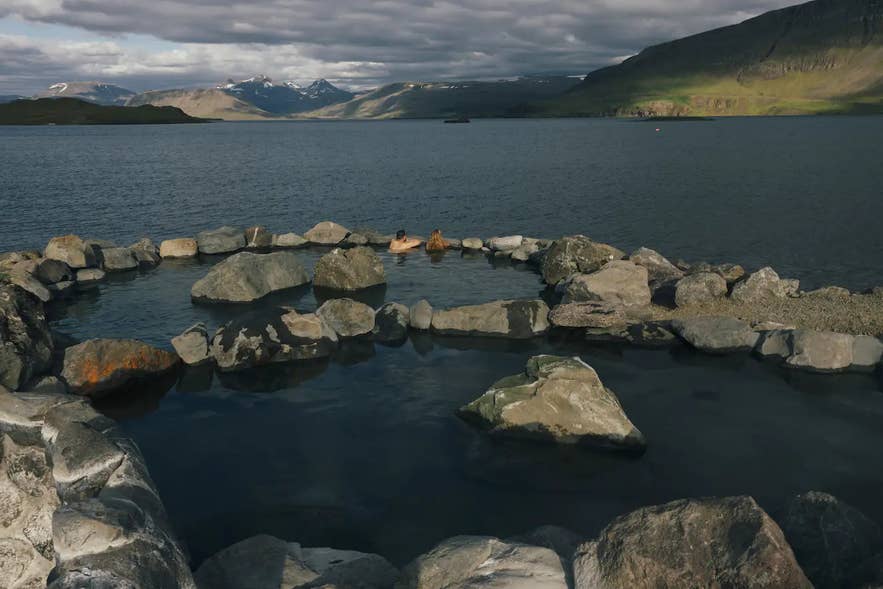
On the southern shore, the Hvammsvik Hot Springs are a cluster of natural geothermal pools set right at the edge of the sea, and one of the best geothermal pools in Iceland. Opened in 2022, the site has eight pools of varying temperatures, and the tide quietly reshapes the experience through the day.
It is a fine place to unwind, with warm water, sea views, and steam drifting off the fjord. Numbers are limited, so it is worth securing your admission to Hvammsvik Hot Springs well ahead of your visit. To linger longer, you can also book a night at the Hvammsvik Nature Resort and have the fjord to yourself once the day visitors leave.
1. Hike to Glymur, Iceland’s Second-Tallest Waterfall
The standout of Hvalfjordur is Glymur Waterfall, which tumbles 650 feet (198 meters) into a mossy canyon at the head of the fjord. It reigned as Iceland's tallest waterfall until Morsarfoss was revealed and measured in 2011. It is still the tallest of Iceland's best waterfalls you can easily reach on foot.
Reaching it is a hands-on adventure. The trail runs roughly 4.3 miles (6.9 kilometers) as a loop, with a steep scramble up the canyon and two river crossings, the first on a single log strung with a guide rope. Allow three to four hours, wear proper boots, and pack water shoes for wading the river above the falls.
Time your visit for summer, since the log is only in place from about June to September before the autumn floods sweep it away, and winter conditions make the route dangerous. The reward at the top makes it one of the finest hikes in Iceland.
If you would rather have the route and logistics handled for you, a guided tour is the easy way to tackle Glymur:
-
Private Glymur Hike with Minibus Transfer: A comfortable ride out from Reykjavik with an expert guide.
-
Private Glymur Hike with Super Jeep Transfer: A rugged 4x4 approach for those who want the ride to be part of the adventure.
-
Private Glymur Hike with Airport Transfer: Pickup from Reykjavik or Keflavik Airport, handy on an arrival or departure day.
How to Get to Hvalfjordur
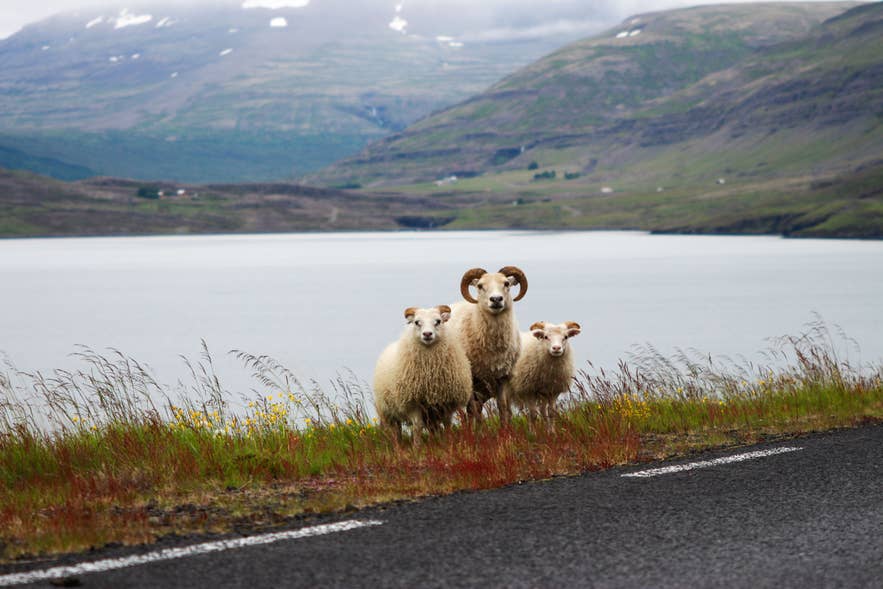 Hvalfjordur sits on the west coast between Reykjavik and Borgarnes, and reaching it is straightforward in any season. There is no public transport to the fjord, so you will need to either rent a car or join a guided Hvalfjordur tour. It also slots neatly into a wider West Iceland road trip, since the fjord sits right on the route north.
From Reykjavik, drive north on Route 1 for about 21 miles (34 kilometers) to where the road reaches the fjord. Here you choose your route: continue through the Hvalfjordur Tunnel to save time, or turn onto Route 47 and follow the water around for the slower, more scenic drive. Either way, the head of the fjord and the Glymur trailhead at the Botnsdalur car park are about an hour from the city.
Travelers arriving at Keflavik Airport can make the fjord an easy first or last stop. Follow Route 41 (Reykjanesbraut) from the airport toward the capital, about 45 minutes, then continue north on Route 1 as above. The drive takes around an hour and a half from the airport in total, so with time to spare, the fjord works as a stop on your arrival or departure day.
Planning Your Trip to Hvalfjordur
 Nine stops, and you do not need all of them. Pick two or three for a half-day, or drive the full loop and finish at Glymur for a proper day out. Either way the fjord asks for the one thing most visitors will not give it, which is the extra hour it takes to go around rather than under.
Our comprehensive Hvalfjordur travel guide covers the geography, history and practical details. West Iceland tours follow the same road if you would rather not drive.
What is Hvalfjordur known for?
How long is the hike to Glymur Waterfall?
Do you need to book the Hvammsvik Hot Springs in advance?
Can you visit Hvalfjordur in winter?
Which of these Hvalfjordur stops are you most excited to try? Share your plans in the comments below, and ask us anything about visiting the Whale Fjord.

I was born on the west side of Reykjavík and grew up downtown, so Iceland has been my back yard for most of my life. I'm a father of two, I've traveled on five continents, and I still haven't found a country that holds my attention the way this one does.
That's why I co-founded Guide to Iceland. We connect travelers directly with Icelandic operators, guides and hosts, so the advice and the services both come from people who actually live here.
I write about the practical side of a trip: what eating out in Reykjavík really costs, whether to pick Sky Lagoon or Hvammsvík, where to stop for food along the Ring Road, and which regions give you the best odds of clear skies for the northern lights. If you're planning a trip and something doesn't add up, message me.