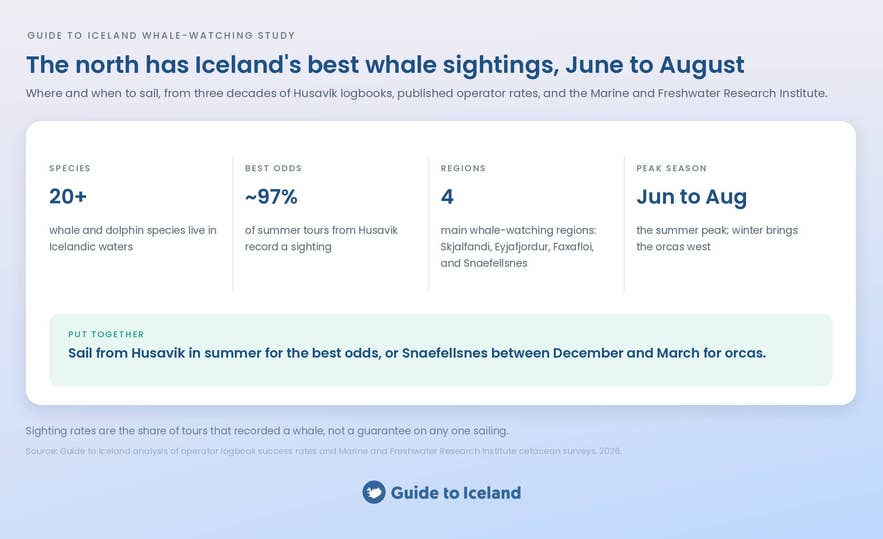
We analyzed three decades of operator logbooks, the published sighting rates of every major whale-watching harbor in Iceland, and the Marine and Freshwater Research Institute’s cetacean surveys to determine where and when you are most likely to see a whale in Iceland. The best harbor in the country reports a sighting on roughly 97% of summer tours, and on one stretch of coast the winter trip beats the summer one. Read on for the full findings.
A whale-watching ticket is one of the few things in Iceland that comes with a number attached. Operators log every trip and publish what share of them found something, so this is a rare case where travelers can compare their odds before they book rather than after. We wanted to know how far those odds actually move between one harbor and the next, and whether the harbor or the month is the bigger decision.
The number this study runs on is the sighting rate, the share of a harbor’s tours that record at least one whale, dolphin, or porpoise. Every harbor in this study clears 85% in summer, and Reykjavik holds 80% through winter, so the useful question is not which harbor finds whales and which does not. It is which species each harbor puts you in front of, and in which weeks.
Whale watching in Iceland splits into four regions, each with a different cast: humpbacks and the occasional blue whale in the North, minke whales and dolphins in the capital's Faxafloi Bay, orcas off Snaefellsnes in winter, and sperm whales in the deep water west of the peninsula. Travelers should match the region to the species they want to see, and the month to the region.
Why You Can Trust Our Content
Guide to Iceland is the most trusted travel platform in Iceland, helping millions of visitors each year. All our content is written and reviewed by local experts who are deeply familiar with Iceland. You can count on us for accurate, up-to-date, and trustworthy travel advice.
Key Findings
-
Husavik's Skjalfandi Bay has the highest sighting rate in Iceland, with roughly 97% of summer tours recording a sighting across the 30 years of logbooks kept since whale watching began there in 1995.
-
Eyjafjordur runs neck and neck with Husavik, and in summer almost every whale the boats from Akureyri, Dalvik, and Hauganes find is a humpback, on calmer water than the open bays.
-
Reykjavik's Faxafloi Bay is the only Icelandic region with true year-round departures at scale, at 85 to 95% success in summer and around 80% in winter.
-
Snaefellsnes is the one Icelandic whale trip where winter beats summer, because herring runs pull orca pods close to shore off Grundarfjordur and Olafsvik roughly from December through March.
-
Mid-June to mid-July is the blue whale window, the short stretch when blue and fin whales join the humpbacks in Skjalfandi Bay off Husavik.
-
June through August is the peak season across the north and the capital, with April to May and September to October holding up as strong shoulder seasons with thinner crowds.
-
Weather cancels a meaningful share of winter sailings. Travelers should keep a spare day around any must-do winter tour and book the first morning departure when they can, because wind in Iceland typically builds through the day.
Cite This Study
The charts and data in this study are free to use under CC BY 4.0. Credit Guide to Iceland and link to this page. Every chart has an Embed button underneath it with ready-to-paste code.
Whale-Watching Harbors in Iceland With the Best Sighting Rates
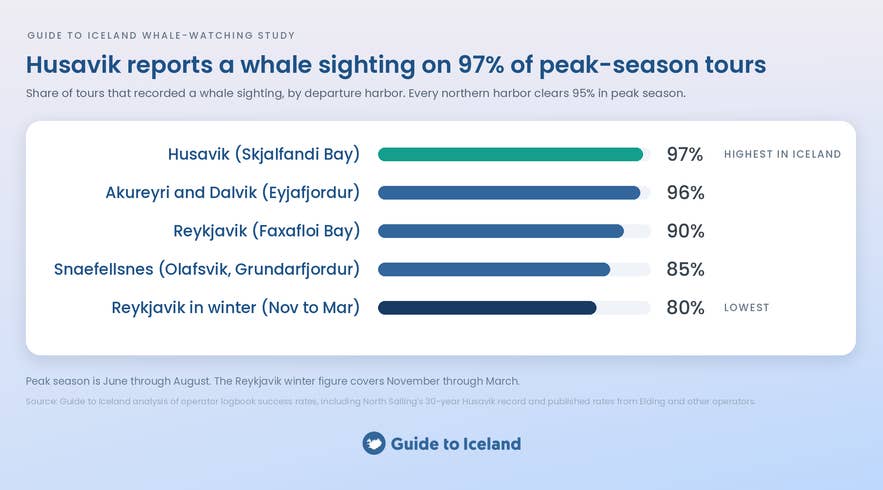
Husavik earned the "whale-watching capital of Europe" title on data: whale watching began there in 1995, and the pioneering operator's 30-year logbooks show roughly 97% of summer tours with sightings, with a dozen or more cetacean species recorded in Skjalfandi Bay. Eyjafjordur runs Husavik close from Akureyri, Dalvik, and Hauganes, and does it on calmer water than any of the open bays. Reykjavik's Faxafloi Bay trades a little diversity for convenience, at 85 to 95% success in summer and around 80% in winter, and it's the only region with true year-round departures at scale. Snaefellsnes is the region the chart undersells. Its 85% is the softest of the four summer bars above, but that figure is measuring the wrong season: this is the one Icelandic coast where the trip to book is the winter one, and no bar on the chart measures that.
Best Places to Find Whales in Iceland by Region
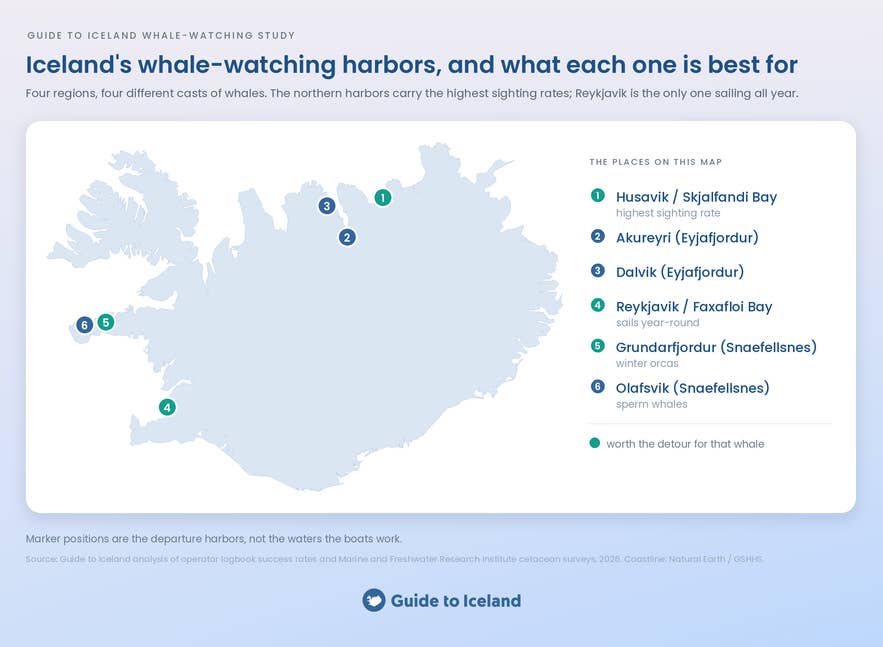
Four regions account for nearly all of Iceland’s whale watching, and the map above shows where each one sails from. They are not interchangeable. Skjalfandi Bay off Husavik and Eyjafjordur from Akureyri, Dalvik, and Hauganes sit in the same nutrient-rich northern water and share a species list built around humpbacks and minke whales, but they differ in boat size and sea conditions rather than in what swims past.
Faxafloi Bay from Reykjavik is the region you can reach without leaving the city, and the only one running at scale in winter.
Snaefellsnes is the odd one out entirely, a cold-season region whose draw is orcas and sperm whales rather than the summer humpback circuit. The sections below cover what each one is actually good for.
North Iceland: Husavik and Skjalfandi Bay
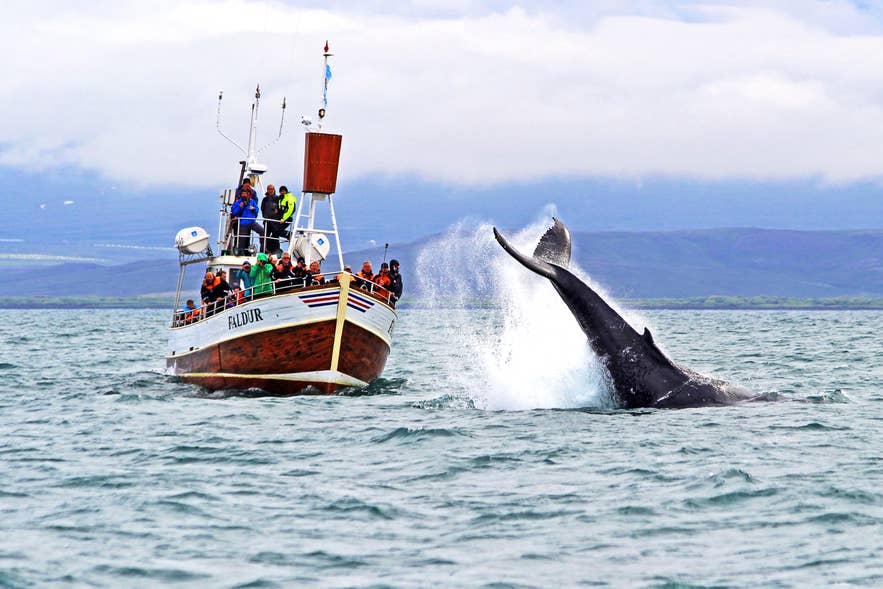
Skjalfandi Bay off Husavik is North Iceland's option for the largest whales, with humpbacks on most summer tours and blue and fin whales most likely from mid-June to mid-July. Husavik pairs the boats with Iceland's whale museum; the Husavik whale watching tour and the big whale safari with puffins are the classic picks.
North Iceland: Eyjafjordur from Akureyri and Dalvik
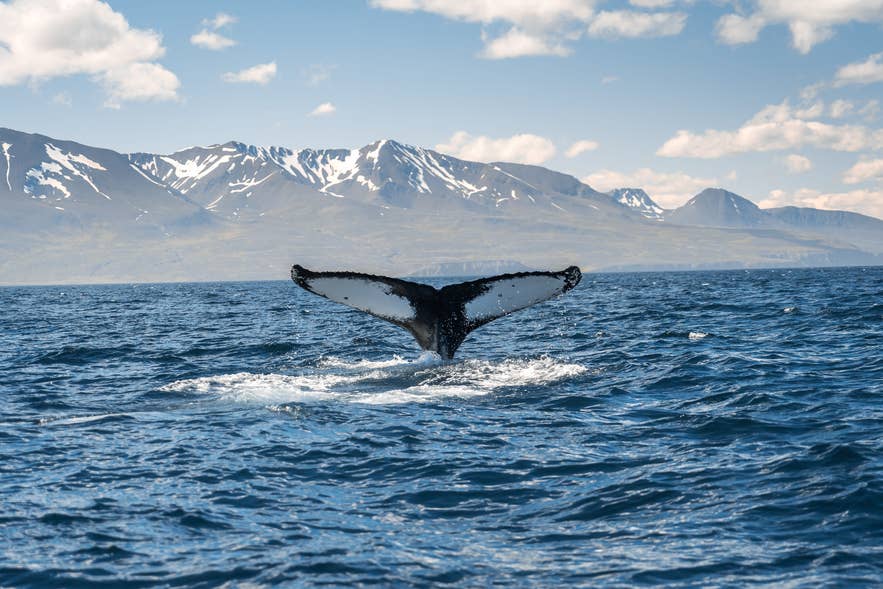
Eyjafjordur is Iceland's longest fjord, and between June and August the humpbacks own it. They are nearly all of what the boats log. Whale watching from Akureyri slots neatly into a northern itinerary alongside our things to do in Akureyri list, and Dalvik offers the small-boat version.
The Capital: Faxafloi Bay from Reykjavik's Old Harbor
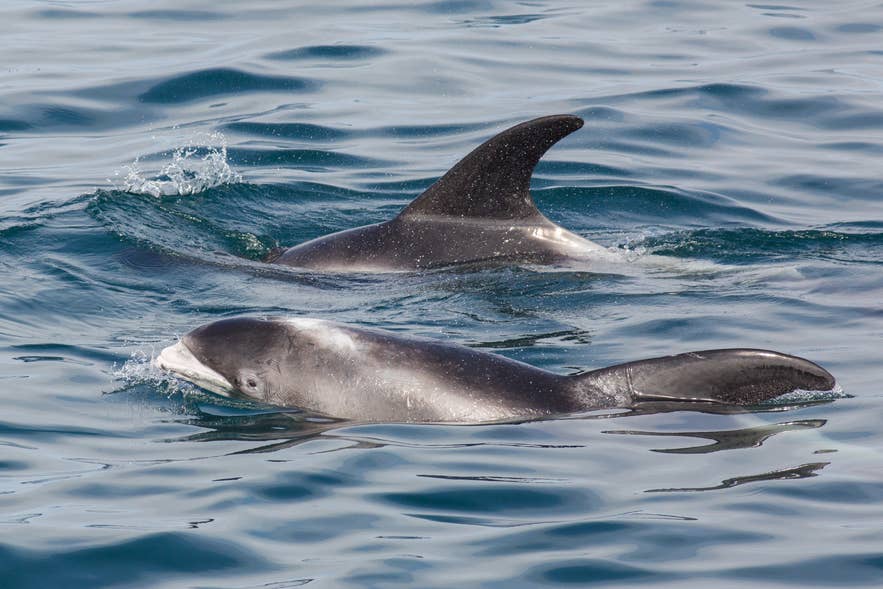
Faxafloi Bay off Reykjavik holds minke whales, white-beaked dolphins, and harbor porpoises year-round, with humpbacks increasingly common in summer and puffin islands on the route. The classic Reykjavik whale watching tour, the best-value whale watching trip, and the whales and puffins combination all leave from a ten-minute walk out of downtown Reykjavik.
West Iceland: Orcas and Sperm Whales off Snaefellsnes
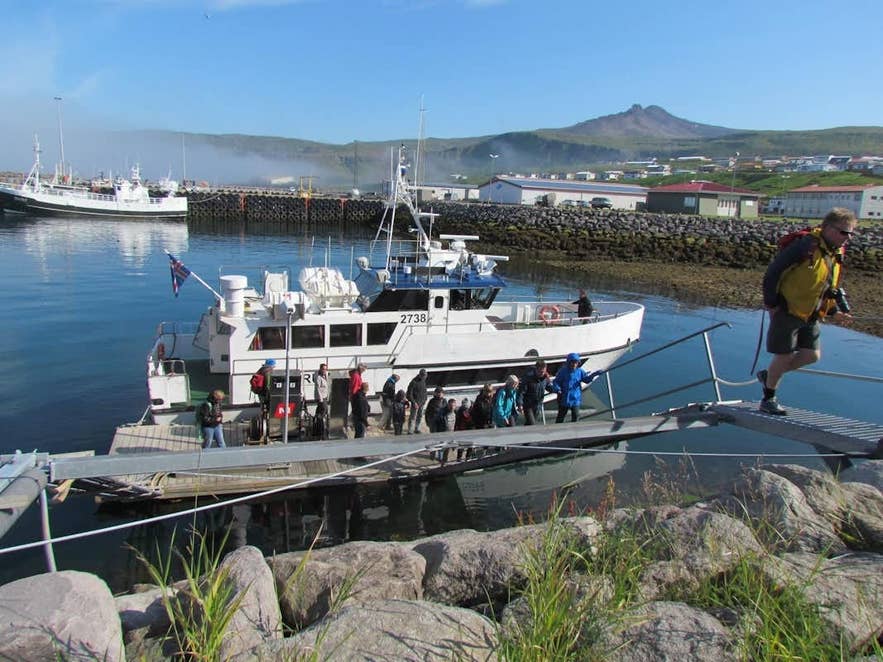
From Grundarfjordur and Olafsvik, winter herring runs pull orca pods close to shore, roughly December through March and often into spring, with Kirkjufell as the backdrop; spring and early summer add sperm whales over the deep water. The Snaefellsnes whale watching tour covers the season.
The Best Time to See Whales in Iceland
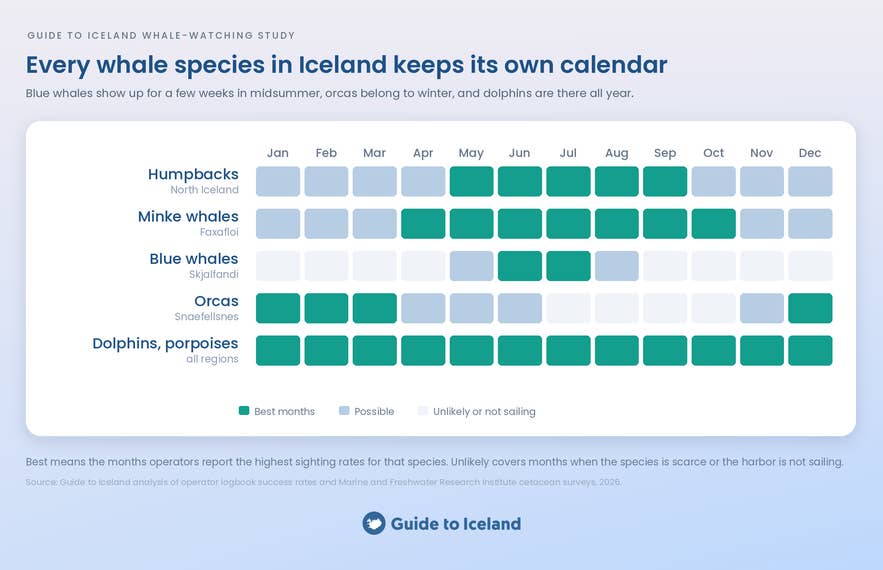
June through August is the overall peak: every harbor is running, seas are kindest, sighting rates top out, and the North's giants are feeding. April to May and September to October are strong shoulders with thinner crowds.
Winter narrows the game to two strong plays, Reykjavik's year-round departures and the Snaefellsnes orca season, and adds a caveat: weather cancels a meaningful share of winter sailings, so build a spare day around any must-do tour.
Whichever month you sail, book the first morning departure when you can, because wind in Iceland typically builds through the day. Browse every option on our whale watching tours in Iceland category.
Our tour-review study found whale watching satisfaction sits mid-table across platforms, decent but weather-hostage, which matches the physics.
How We Measured Iceland’s Whale Sighting Rates
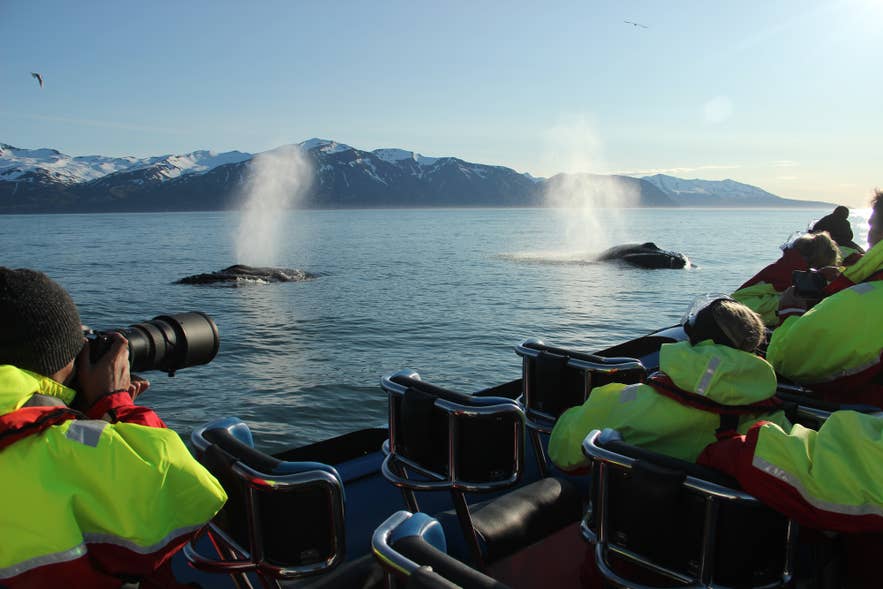
This study is built on the sighting rates that Iceland’s whale-watching operators publish from their own logbooks, read alongside the cetacean surveys of the Marine and Freshwater Research Institute.
-
The sample: Iceland’s four whale-watching regions and the harbors that sail from them — Skjalfandi Bay from Husavik; Eyjafjordur from Akureyri, Dalvik, and Hauganes; Faxafloi Bay from Reykjavik; and Snaefellsnes from Grundarfjordur and Olafsvik. For each harbor, we recorded the published sighting rate, the season that rate covers, the species the operators name, and the months tours actually sail.
-
What a sighting rate is: The share of departures on which a boat records at least one whale. It is not a rating and not a review score. A harbor at 97% is saying that 97 tours in 100 came back having seen something, not that 97% of passengers were happy with what they saw.
-
Where the numbers come from: The anchor is Husavik, where the operator that started whale watching in Iceland in 1995 has kept a logbook series running for 30 years — by some distance the longest record in the country. Every other harbor’s rate is read against it, using the figures operators in Reykjavik, Eyjafjordur, and Snaefellsnes publish for their own seasons. Which species are present, when, and in what numbers comes from the Marine and Freshwater Research Institute rather than from the operators.
-
How the harbors are made comparable: These are the operators’ own published figures, so this study compares them in rough bands rather than ranking them to the decimal. A harbor at 97% and a harbor at 96% are treated as the same answer. The gap that matters is the one between a northern fjord in July and a winter sailing out of Reykjavik, not the one between Husavik and Akureyri.
-
What counts as a whale: Operators set their own bar, and a sighting can mean anything from a distant blow on the horizon to a humpback breaching beside the hull. Nobody publishes the split. Treat a high rate as a strong chance of seeing a whale, not a promise of the photograph in the brochure.
-
What the numbers cannot show: Published sighting rates are marketing figures, self-reported and independently audited by nobody, so this study treats every one of them as an upper bound. They also count only the tours that sailed. A trip called off for weather does not appear as a failed sighting anywhere in these rates, which means the real odds of seeing a whale on a day booked in advance are lower than any number on this page — and lower in winter than in summer.
The species deep-dive lives in our best guide to whale watching in Iceland, and the series hub is wildlife and animals in Iceland.
Conclusion
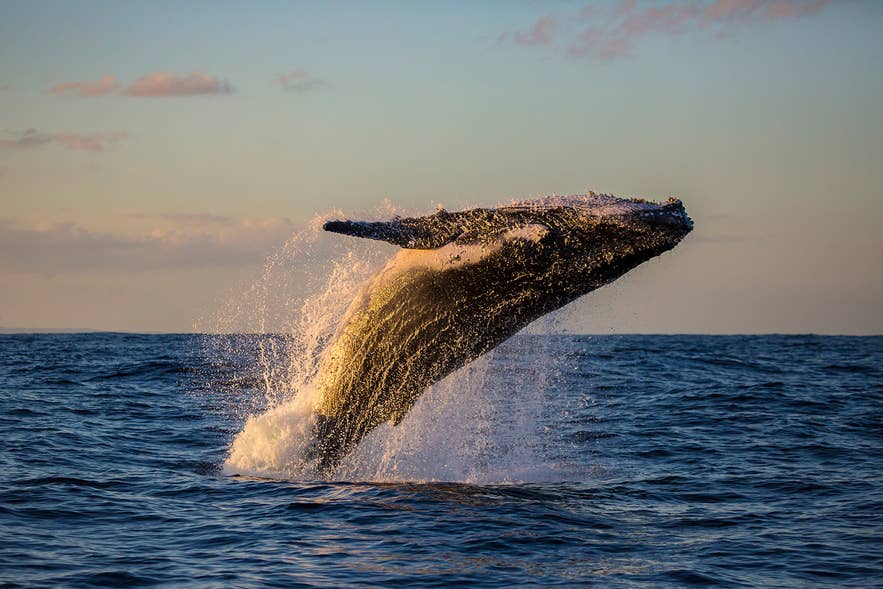
Every region in this study reports a summer sighting rate of 85% or better, so the honest answer to “where should I go whale watching in Iceland” is that you are likely to see something almost anywhere. What separates the harbors is not whether a whale turns up but which whale, and in which month.
Choose Husavik and Skjalfandi Bay for the widest range of species and the strongest summer odds in the country, or Eyjafjordur from Akureyri, Dalvik, and Hauganes for the same northern water on calmer boats. Reykjavik’s Faxafloi Bay is the one to book when the trip has to fit around a city itinerary, because it is the only region sailing year-round at scale. Snaefellsnes is the outlier, a region to plan a trip around rather than fit into one.
Plan a summer sailing for June through August, when the north and the capital both peak, and narrow it to mid-June through mid-July if blue and fin whales are what you came for. April to May and September to October hold up well and carry thinner crowds. If orcas are the target, go the other way entirely and sail Snaefellsnes between December and March. Whichever month you pick, keep a spare day around the booking, because weather cancels more sailings than whales do.
Keep Reading: More Guide to Iceland Wildlife Studies
This article is part of a Guide to Iceland research series mapping where the country’s animals actually are, region by region and month by month. Its closest companion is our Study of the Best Whale Watching Companies in Iceland, which complements the findings on where and when to see whales with a comparison of operators.
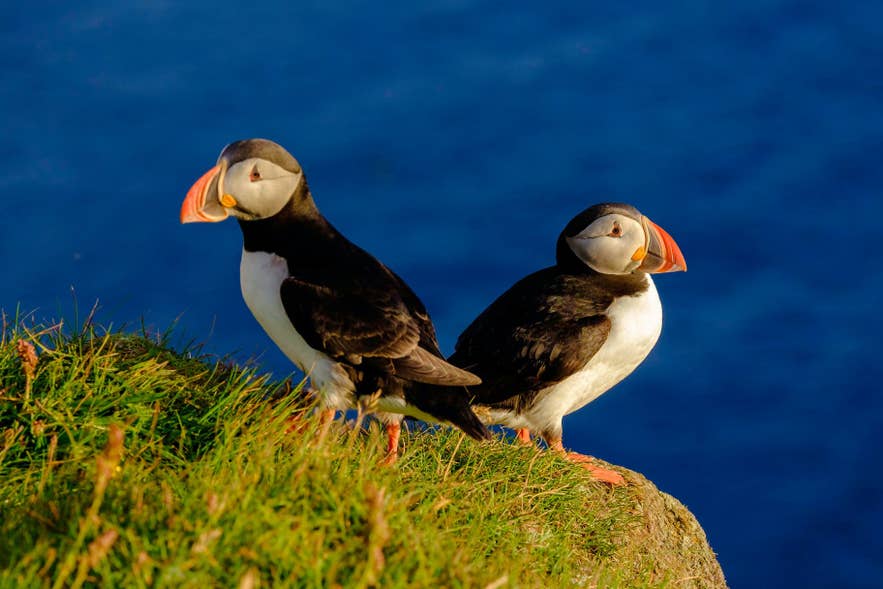
The study of Iceland’s Biggest Puffin Colonies is also relevant to a whale trip, because puffins follow a similar summer calendar and can often be seen on tours from the same harbors. Where to Find Birds in Iceland covers other birdwatching opportunities around the country.
Travelers who want marine mammals without a boat can watch seals from the shore. Our analysis of Where to See Seals in Iceland maps the most reliable resting sites, led by the Vatnsnes Peninsula in July. Where to Find Arctic Foxes in Iceland is the one land study built the same way this one is, on sighting odds rather than scenery.
If the timing in this study is what you came for, two more Guide to Iceland studies sharpen it. The Windiest Month in Iceland is the one that matters most at sea, because wind is what cancels sailings, and cancelled sailings are exactly what no published sighting rate counts. How Many Days Do You Need in Iceland is worth reading before booking anything, because the spare day this guide recommends only exists if the trip is long enough to hold one.
Guide to Iceland independently analyzed published operator sighting rates and cetacean survey data for this study. Our marketplace offers tours from several harbors covered here, but our commercial partnerships did not influence the analysis or findings.

Guide to Iceland Editorials is the shared byline for our content team. We use it on pieces several people worked on together, where no single writer owns the article, and on anything rewritten often enough that a personal byline would be misleading. We also publish our original data studies under this profile. Each study answers a question travelers ask about Iceland, using primary sources such as booking records, traveler reviews and public datasets, and every study is quality checked by human experts before it's published. Everything under this byline is researched and reviewed by people who live and work in Iceland. If you spot something out of date or want to suggest a correction, message us and it reaches the whole team.