Iceland holds the world's largest Atlantic puffin colony and the world's largest razorbill colony, packed into a handful of sites. This study maps where to find birds in Iceland by colony size, region, and month. Read on for the full findings.
There are about 81 bird species in Iceland that breed in or regularly visit the country, which is modest by European standards. Iceland's breeding birds are not spread evenly across the country.
They gather in a small number of crowded places, making birdwatching trips in Iceland easy to plan. A rental car, guided multi-day tours, or birdwatching excursions offer the easiest ways to reach the biggest bird colonies around Iceland.
Latrabjarg Cliffs in the Westfjords hold the world's largest razorbill colony, while Lake Myvatn in North Iceland has more breeding duck species than any other lake in Europe. The Westman Islands off the South Coast hold the largest Atlantic puffin colony on the planet.
We analyzed colony counts and habitat data covering Iceland's 121 Important Bird Areas (IBAs) to identify the best birdwatching places, what species you can see, and the best time to visit.
Key Findings
-
The Westman Islands hold the world's largest Atlantic puffin colony. Our count of Iceland’s biggest puffin colonies study puts the Westman Islands at 1,125,000 burrows, 42% of the national total.
-
Latrabjarg Cliffs hold the world’s largest population of razorbills. The cliffs run 8.7 miles (14 km) along the western tip of the Westfjords and rise 1,457 feet (444 m) out of the sea. Razorbills share the ledges with guillemots, kittiwakes, and fulmars.
-
Lake Myvatn has more breeding duck species than any other lake in Europe. About 15 duck species breed at Lake Myvatn. Two of them, Barrow's goldeneye and the harlequin duck, breed in no other European country.
-
Breidafjordur Bay is Iceland's white-tailed eagle stronghold. Most of Iceland's nesting white-tailed eagle pairs are on the islands of Breidafjordur Bay. The bay also holds about 425,000 puffin burrows, 16% of Iceland's total.
-
Iceland's best birding sites cluster in four regions. The Westfjords and South Iceland hold the seabird cliffs, while North Iceland's lakes and wetlands and the Reykjavik area's ponds hold the ducks, waders, and swans.
-
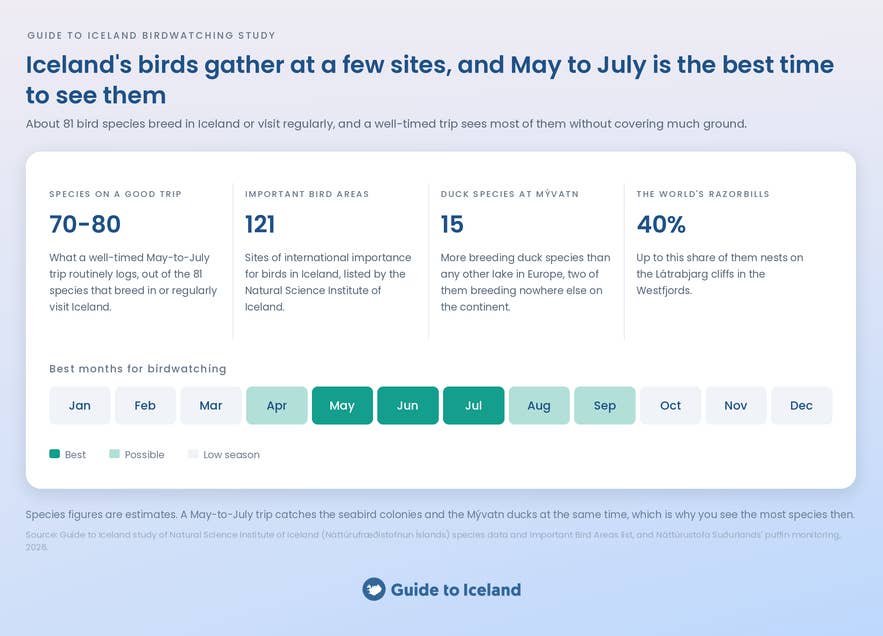
May to July is the best time for birdwatching in Iceland. A trip timed between May and July typically turns up 70 to 80 species. Iceland's seabird colonies start emptying by mid-August.
-
Iceland has 121 Important Bird Areas, covering 81 bird species that breed in Iceland or visit regularly. The Natural Science Institute of Iceland groups these areas into seabird colonies, shores and shallow marine areas, and wetlands and inland areas.
-
A large colony does not guarantee a big day of birdwatching in Iceland. Fog, wind, and the tide decide whether a cliff is busy when you arrive. Atlantic puffins also spend much of the day at sea.
Cite This Study
The charts and data in this study are free to use under CC BY 4.0. Credit Guide to Iceland and link to this page. Every chart has an Embed button underneath it with ready-to-paste code.
The Westman Islands Hold the World's Largest Atlantic Puffin Colony
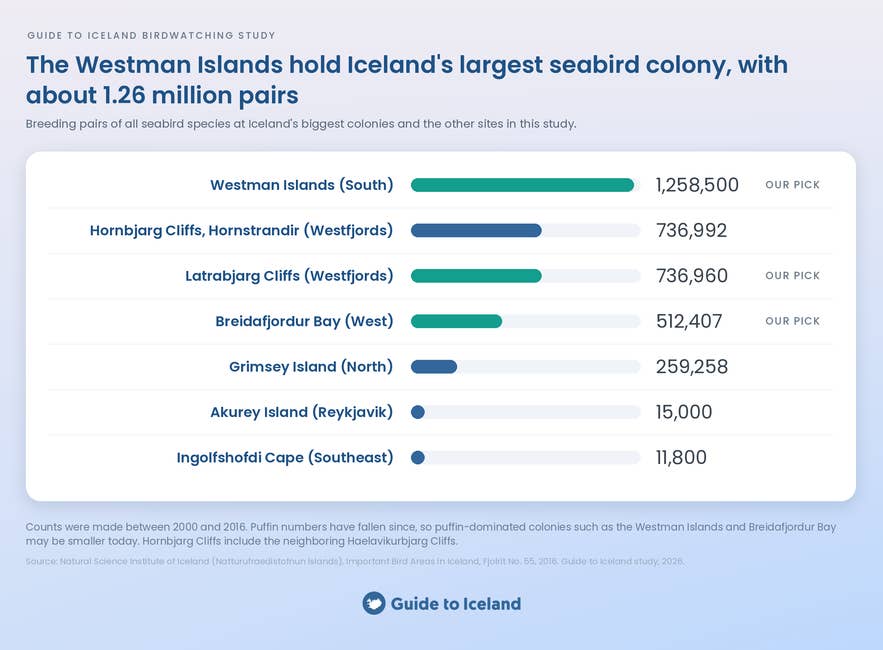
The Westman Islands off the South Coast hold about 1,258,500 breeding pairs of seabirds. It’s also home to the largest Atlantic puffin colony in the world, which is about 1,125,000 puffin burrows in 2025, 42% of Iceland's total and more than the North and East monitoring zones combined.
According to the Natural Science Institute of Iceland, the Westman Islands are also the only place in Iceland where Leach's storm petrels, European storm petrels, and Manx shearwaters breed.
About 198,000 pairs of Leach's storm petrels and about 75,000 pairs of European storm petrels nest on the islands. The Westman Islands also hold about 15,000 pairs of northern gannets, which is 40% of Iceland's gannets.
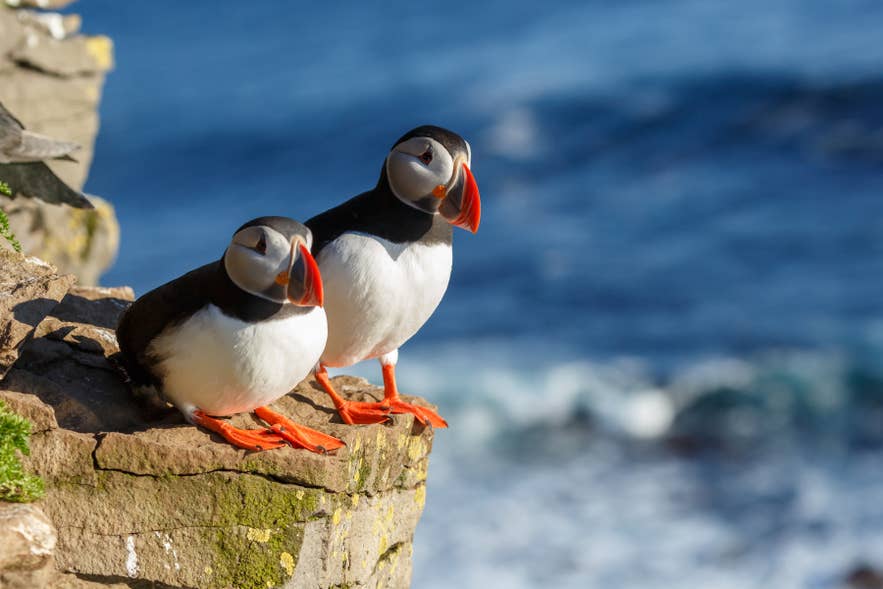
Puffins nest on the Westman Islands from late April to early September. The ferry from Landeyjahofn Harbor to Heimaey Island takes about 35 minutes, and you can also join a boat tour to the Westman Islands.
Latrabjarg Cliffs Hold the World's Largest Razorbill Colony
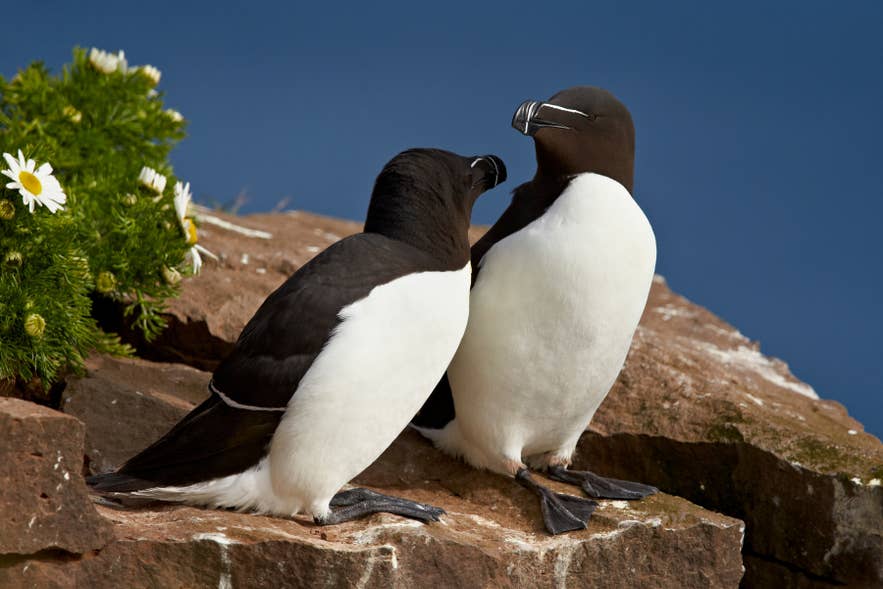 Latrabjarg Cliffs in the Westfjords hold the largest razorbill colony in the world, with about 161,000 breeding pairs, accounting for roughly 51% of all razorbills in Iceland. The Natural Science Institute of Iceland calls Latrabjarg Cliffs the largest bird cliff in Europe.
Latrabjarg Cliffs stand at the westernmost point of Iceland. The cliffs stretch 8.7 miles (14 kilometers) and rise up to 1,457 feet (444 meters) above the sea. About 737,000 pairs of seabirds breed on Latrabjarg Cliffs in total.
Razorbills share the ledges with guillemots, kittiwakes, and fulmars, which makes Latrabjarg Cliffs one of Iceland's densest seabird colonies. Puffins nest along the cliff edge from May to August, so you can see them up close from the clifftop path. Latrabjarg is also the southern breeding limit of Brunnich's guillemot, a high-Arctic seabird.
Hornbjarg Cliffs in Hornstrandir Rival Latrabjarg in Size
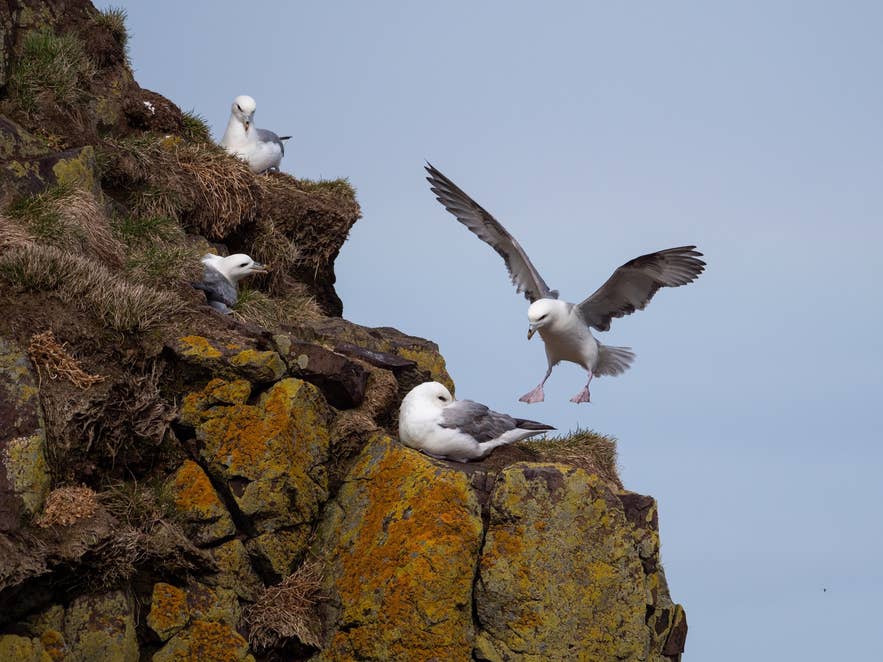 Hornbjarg Cliffs and the neighboring Haelavikurbjarg Cliffs in Hornstrandir Nature Reserve hold about 737,000 pairs of seabirds. Hornbjarg Cliffs hold 42% of Iceland's kittiwakes, with about 244,000 pairs. The cliffs also hold the largest common guillemot colony in Iceland, with about 268,000 pairs.
Hornbjarg Cliffs are the main breeding site in Iceland for Brünnich's guillemot, a high-Arctic seabird. About 184,000 pairs nest there, which is 56% of Iceland's Brünnich's guillemots.
Hornstrandir Nature Reserve has no roads, and you reach it by boat in summer. Arctic foxes also hunt below the cliffs in Hornstrandir. Read more about where to find Arctic foxes in Iceland.
Breidafjordur Bay Holds Most of Iceland's White-Tailed Eagles
 Breidafjordur Bay lies between the Snaefellsnes Peninsula and the Westfjords. The islands of Breidafjordur Bay hold about 512,000 pairs of seabirds and waterbirds.
Breidafjordur Bay is the stronghold of the white-tailed eagle in Iceland. In 2016, 47 of Iceland's 74 eagle pairs nested around Breidafjordur Bay, which is 64% of the population.
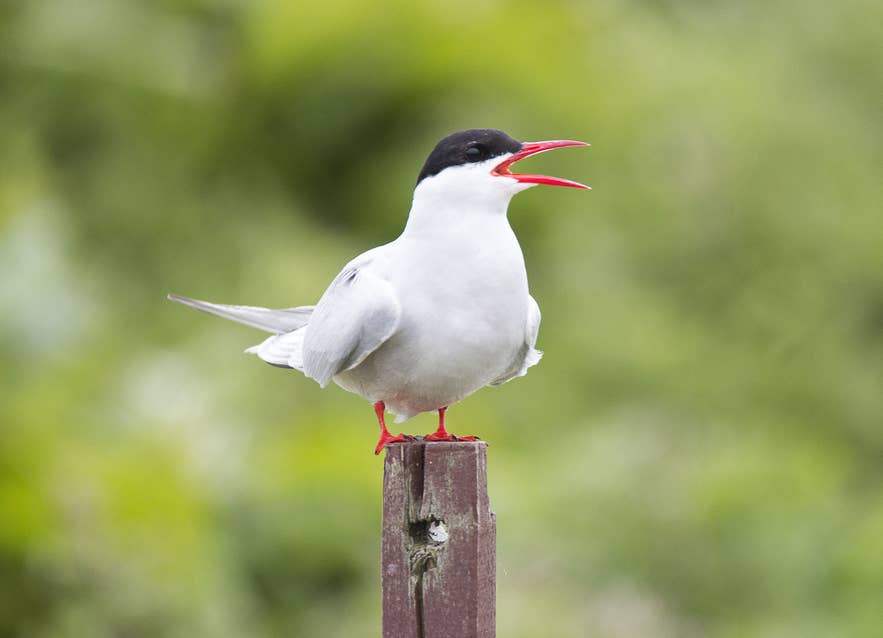
Atlantic puffins are the most common birds in Breidafjordur Bay, with about 377,000 breeding pairs in 2014. The 2025 count puts Breidafjordur Bay at about 425,000 puffin burrows, which is 16% of Iceland's total. The bay is also home to about 60,000 pairs of common eiders and 15,000 pairs of Arctic terns.
Breidafjordur Bay holds 84% of Iceland's European shags and 73% of its great cormorants. You can cross Breidafjordur Bay on the Baldur Ferry via Flatey Island.
Lake Myvatn Has More Breeding Duck Species Than Any Lake in Europe
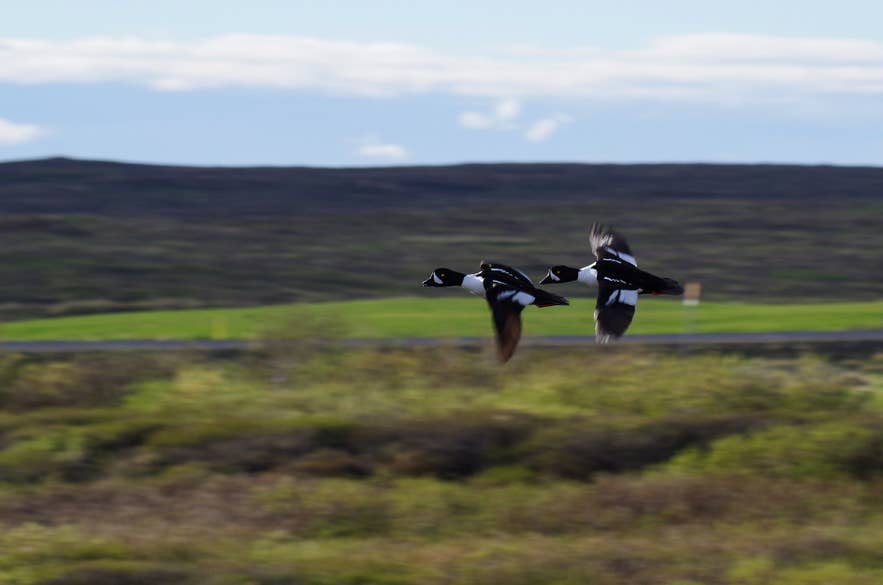
About 15 duck species breed at Lake Myvatn in North Iceland, more than at any other lake in Europe. Its shallow, nutrient-rich waters provide an ideal habitat for so many species, showing that the lake's ecological richness matters more than its size.
About 90% of Iceland's Barrow's goldeneyes live at Lake Myvatn and the Laxa River. Lake Myvatn also holds about 71% of Iceland's tufted ducks, 80% of its gadwalls, and 30% of its greater scaups.
The harlequin duck breeds nowhere in Europe except Iceland. The Laxa River at Lake Myvatn is the most important harlequin duck breeding site in Iceland. Ducks nest at Lake Myvatn from May to July.
The gyrfalcon, the world's largest falcon, also hunts in the Lake Myvatn area.
Iceland's Best Birding Sites Cluster in Four Regions
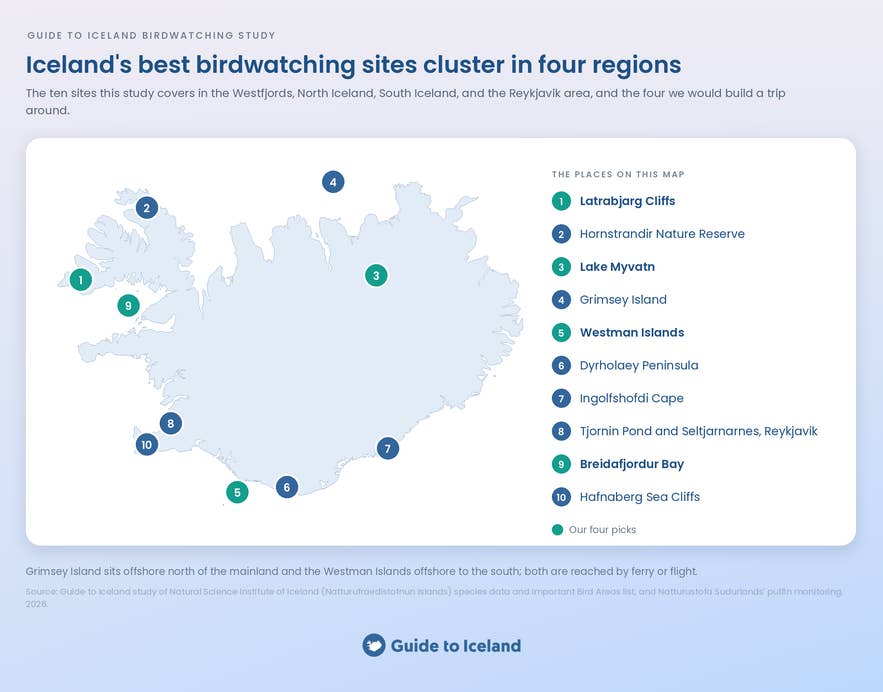
Iceland's best birdwatching sites are in four regions: the Westfjords, North Iceland, South Iceland, and the Reykjavik area. Iceland's largest seabird colonies are concentrated in the Westman Islands, the Westfjords, and Breidafjordur Bay. North Iceland's lakes and Reykjavik's ponds hold ducks, waders, and swans.
Iceland has 121 Important Bird Areas (IBAs), covering the 81 bird species that breed in Iceland or visit it regularly. BirdLife International defines an IBA as a site of international importance for birds, using the same criteria in every country.
The Natural Science Institute of Iceland (Náttúrufræðistofnun) sorts the 121 areas into 70 seabird colonies, about 25 shores and shallow marine areas, and more than 30 wetlands and other inland areas. Some of Iceland's Important Bird Areas fall into more than one category.
The Westfjords: Latrabjarg Cliffs and Hornstrandir Nature Reserve
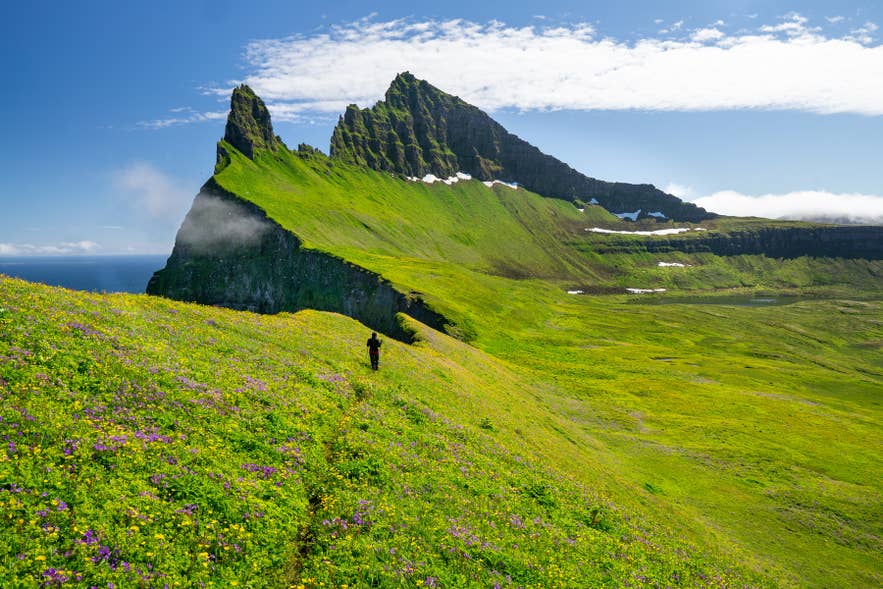 Latrabjarg Cliffs are the main birdwatching site in the Westfjords, with puffins, razorbills, and guillemots along the cliff edge. Farther north, Hornstrandir Nature Reserve combines seabird cliffs with Arctic foxes that hunt below them.
The Westfjords also border Breidafjordur Bay, where most of Iceland's white-tailed eagles nest. Seabirds nest in the Westfjords from May to August.
North Iceland: Lake Myvatn, Grimsey Island, and the Eyjafjordur Wetlands
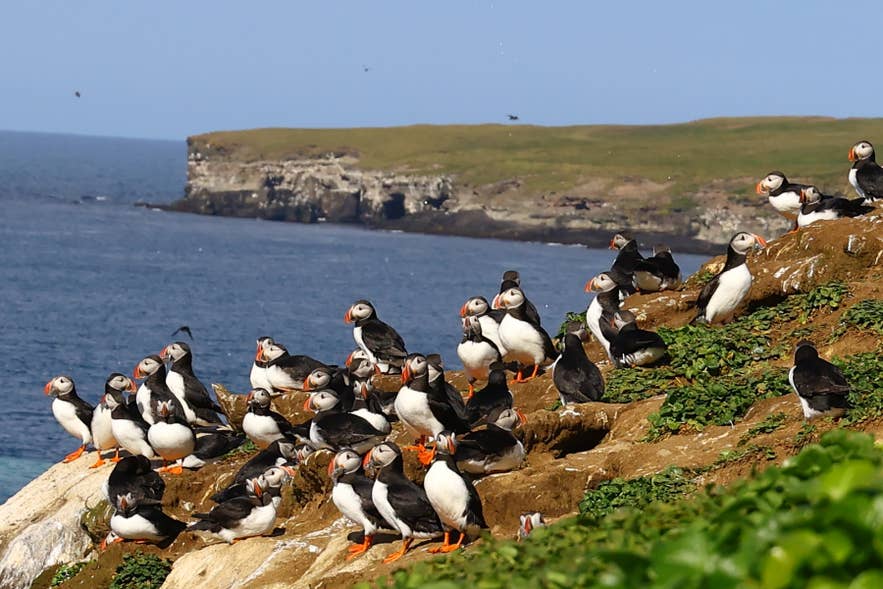 Lake Myvatn is the main birdwatching site in North Iceland, and late May and June are its best weeks for ducks. The Arctic Circle crosses Grimsey Island, which holds about 99,900 puffin burrows. The Svarfadardalur Wetlands near Dalvik add shorebirds and swans.
You reach Grimsey Island by ferry from Dalvik or by flight from Akureyri. Day tours from Akureyri go to both Lake Myvatn and Grimsey Island.
South Iceland: Westman Islands, Dyrholaey Peninsula and Ingolfshofdi Cape
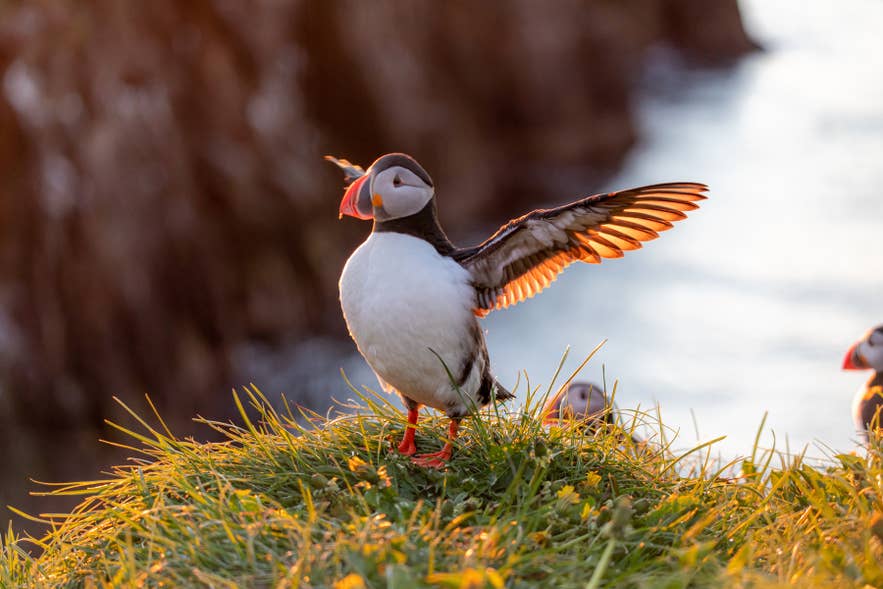 South Iceland's three main birding sites are the Westman Islands, Dyrholaey Peninsula, and Ingolfshofdi Cape. The Westman Islands offer the greatest scale, while Ingolfshofdi holds puffins and great skuas. Dyrholaey Peninsula is a cliff colony you can reach by car during self-drive tours in Iceland.
Nesting restrictions apply at Dyrholaey Peninsula from mid-May to late June, with closures from 7:00 PM to 9:00 AM. You reach Ingolfshofdi Cape in Southeast Iceland by tractor on a puffin tour.
Reykjavik and Southwest Iceland: City Birding and Rare Migrants
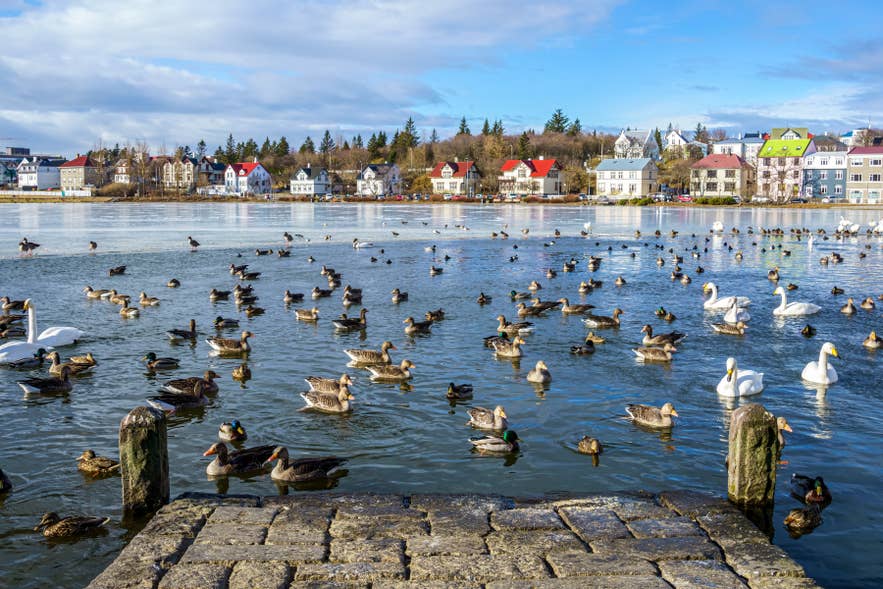 Tjornin Pond in central Reykjavik offers year-round birding on foot, with whooper swans and many duck species. Grotta Island Nature Reserve in Seltjarnarnes has Arctic terns in summer, but the island closes to visitors during the nesting season.
The Reykjanes Peninsula adds the Hafnaberg Sea Cliffs, another important seabird nesting site in Iceland. The Reykjanes Peninsula and the South Coast catch North American vagrants that fall storms blow across the Atlantic in September and October. Lake Thingvallavatn in Thingvellir National Park hosts common loons (great northern divers).
May to July Is the Best Time for Birdwatching in Iceland
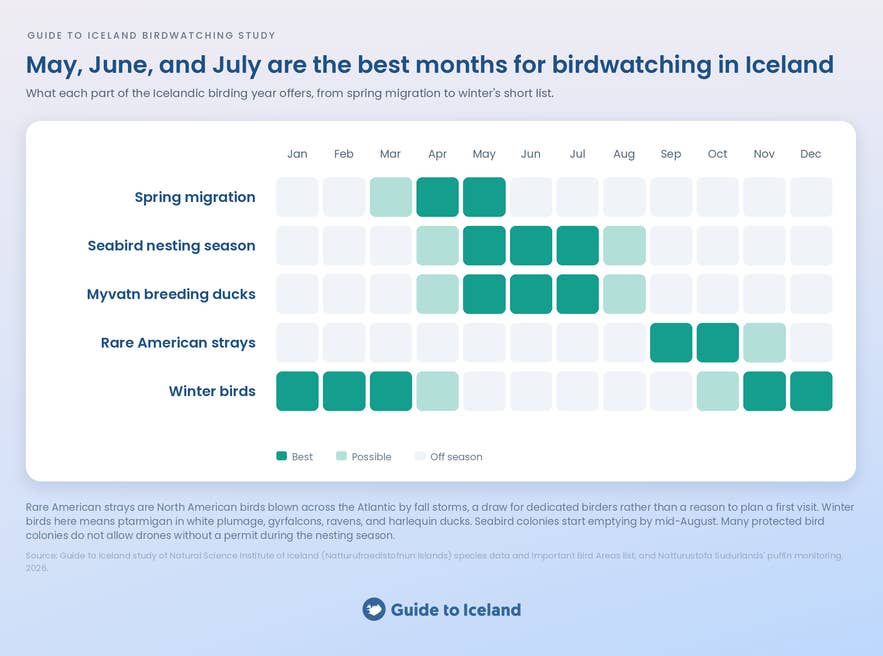
May to July is the best time for birdwatching in Iceland. Migrant birds have arrived, territories are loud, the cliffs are full, and daylight is nearly endless under the midnight sun. May and June are the strongest months for migrants and the Lake Myvatn ducks.
July in Iceland has the full seabird breeding season. Puffins in Iceland are ashore from late April to early September, with the peak in June and July. By mid-August, the seabird colonies start emptying, which is the sharpest change in the birdwatching calendar in Iceland.
Spring, fall, and winter also have birds worth seeing in Iceland. April and early May bring migrating birds that stop in Iceland to rest and feed. September and October bring rare North American vagrants.
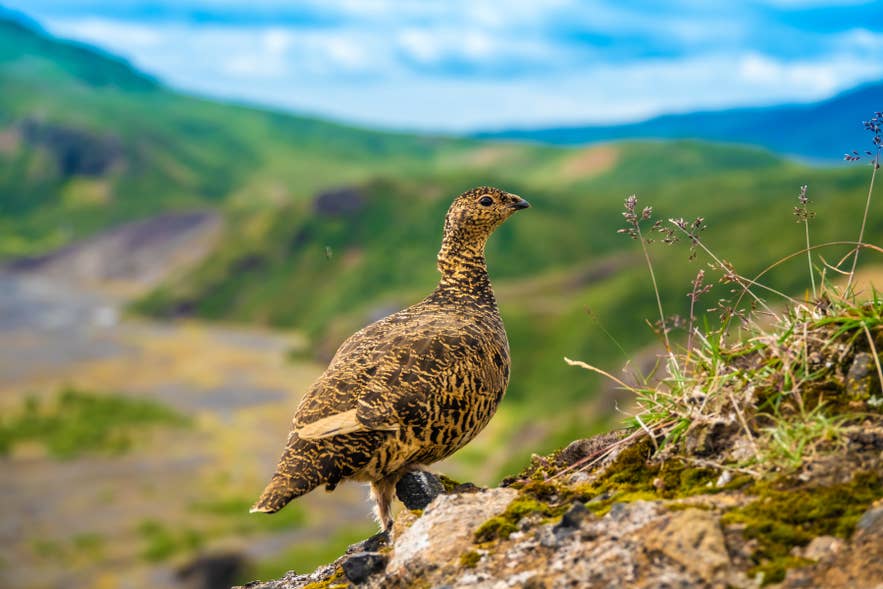
Winter birds in Iceland include ptarmigan in white plumage, gyrfalcons, ravens, and harlequin ducks on open rapids. White-tailed eagles also stay over Breidafjordur Bay in winter.
How to Plan a Birdwatching Trip to Iceland
 The findings of this study lead to four decisions for a birdwatching trip to Iceland: when to go, how to travel, which tours to book, and how to behave at the colonies. Each decision follows from where Iceland's birds breed and when they are present.
Visit Between May and July to See the Most Bird Species in Iceland
A birdwatching trip to Iceland between May and July typically turns up 70 to 80 species, counting migrants and passing birds alongside the breeders. Late May and June are the best weeks at Lake Myvatn, when the ducks are easiest to see.
Rent a Car to Reach Most Birdwatching Sites in Iceland
Latrabjarg Cliffs, Dyrholaey Peninsula, Thingvellir National Park, and the Hafnaberg Cliffs are all reachable by road. Iceland's birdwatching sites are far apart, so a rental car or a self-drive tour makes a multi-region birdwatching trip possible.
Check the nesting restrictions at Dyrholaey Peninsula before you go, because access is limited from mid-May to late June. In East Iceland, the Hafnarholmi viewing platform in Borgarfjordur Eystri offers close-range puffin viewing by road.
Read our study of the windiest month in Iceland, the sunniest month in Iceland, and the rainiest month in Iceland before your trip.
Book a Tour for the Colonies in Iceland That You Cannot Drive To
Some of Iceland's best bird colonies need a ferry, a flight, a boat, or a tractor to reach. The Westman Islands and Grimsey Island need a ferry or a flight, and Ingolfshofdi Cape is reached by tractor across the sand.
Guided birdwatching tours in Iceland cover these colonies. A puffin-watching boat trip from Reykjavik's old harbor visits the islands of Akurey and Lundey, about ten minutes from the city.
Keep Your Distance From Iceland's Bird Colonies
Many protected bird colonies in Iceland do not allow drones without a permit during the nesting season, which usually runs from spring to late summer. Latrabjarg Cliffs require a permit for drone flights.
Arctic terns dive at anyone who walks too close to their nests. Puffin burrows can weaken the ground near cliff edges, so stay on marked paths and behind barriers.
How We Analyzed Iceland's Bird Colony and Habitat Data
-
Data Collection: Species and habitat data come from the Natural Science Institute of Iceland (Natturufraedistofnun Islands). Our main source is its report, Important Bird Areas in Iceland (Fjolrit No. 55, 2016). The report defines 121 Important Bird Areas in Iceland and gives population estimates for the 81 bird species that occur regularly in Iceland. Puffin burrow counts come from the Stofnvoktun lunda 2025 report by Natturustofa Sudurlands, as analyzed in our study of the biggest puffin colonies in Iceland.
-
Inclusion and Estimation: Colony sizes are the breeding pairs of all seabird species at each site, as listed in Fjolrit No. 55. The razorbill colony at Latrabjarg Cliffs is the largest in the world, according to the same report. Lake Myvatn's duck figures come from the long-running monitoring of the Myvatn Research Station, as published in Fjolrit No. 55. This study did not count birds itself.
-
Precision: The colony counts in Fjolrit No. 55 were made between 2000 and 2016. Figures are reported at the precision the source data supports, which means round numbers for colonies and exact counts only for the site inventory. Burrow counts are not bird counts, because some burrows stay empty each season.
-
Further Detail: Species-by-species detail lives in our complete guide to birds in Iceland, and the puffin chapter of this series drills into where to see puffins in Iceland.
What the Colony Data Does Not Tell You
Colony sizes in this study are order-of-magnitude estimates, as colonial seabird counts always are. Puffin colony counts are estimates based on sampling, not headcounts. The ranking of Iceland's bird colonies is more reliable than the exact colony counts.
Breeding numbers do not predict what you see on a given day in Iceland. Fog, wind, and the tide decide whether a cliff is busy when you arrive, and the puffins in particular spend much of the day at sea.
Conclusion: Where to Find Birds in Iceland Based on Colony and Habitat Data
 Iceland has a modest bird species list, but its bird sites are among the most important in the world. The colony data point to four world-class birdwatching sites in Iceland: Latrabjarg Cliffs for razorbills, the Westman Islands for puffins, Breidafjordur Bay for eagles, and Lake Myvatn for ducks.
These four sites sit in three regions: the Westfjords and Breidafjordur Bay, South Iceland, and North Iceland. Visiting more than one of them is a routing decision rather than a detour. Plan a birdwatching trip to Iceland around colony counts, not species counts.
Book birdwatching tours in Iceland for the offshore colonies, and visit between May and July to see the most species.
For more on Iceland's wildlife, read our guides to wildlife and animals in Iceland, where to see horses in Iceland, and where to see reindeer in Iceland.
To start planning your trip to Iceland, read our studies on how many days you need in Iceland and the best and worst months to visit Iceland.

Guide to Iceland Editorials is the shared byline for our content team. We use it on pieces several people worked on together, where no single writer owns the article, and on anything rewritten often enough that a personal byline would be misleading. We also publish our original data studies under this profile. Each study answers a question travelers ask about Iceland, using primary sources such as booking records, traveler reviews and public datasets, and every study is quality checked by human experts before it's published. Everything under this byline is researched and reviewed by people who live and work in Iceland. If you spot something out of date or want to suggest a correction, message us and it reaches the whole team.