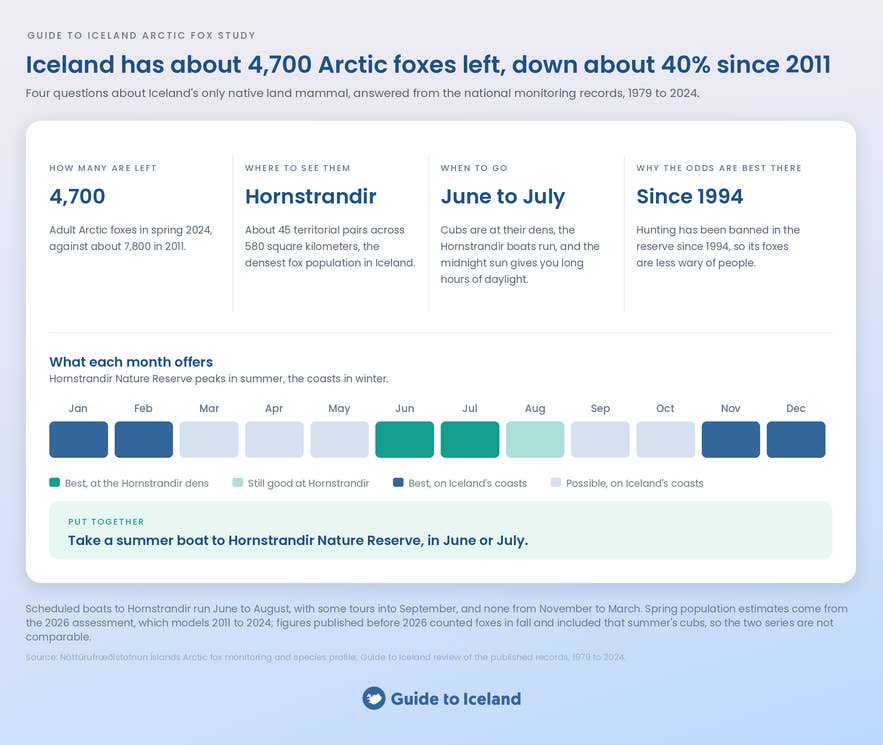
Arctic foxes live across Iceland, but the Westfjords hold the highest density. This Guide to Iceland study maps where Iceland's Arctic foxes live, names the best place to see them, and sets out the best months. Read on before planning your trip.
The Arctic fox in Iceland walked over the frozen sea at the end of the last Ice Age, thousands of years before the Vikings. Today, this Icelandic wildlife lives across the country, from the Highlands to the coast, but hunting pressure has made them wary in many areas.
Why You Can Trust Our Content
Guide to Iceland is the most trusted travel platform in Iceland, helping millions of visitors each year. All our content is written and reviewed by local experts who are deeply familiar with Iceland. You can count on us for accurate, up-to-date, and trustworthy travel advice.
According to Náttúrufræðistofnun Íslands' Arctic fox monitoring program, the population was about 4,700 adult Arctic foxes in spring 2024, down from about 7,800 in spring 2011. Guide to Iceland reviewed the published monitoring records from 1979 to 2024. We used them to map where and when you are most likely to see an Arctic fox in Iceland.
Keep reading for the full breakdown of Arctic fox numbers, distribution, and the best places to see them in Iceland.
Key Findings
-
Iceland's Arctic fox population was about 4,700 adults in spring 2024, down from about 7,800 in spring 2011. That is a fall of about 40% in 13 years.
-
Arctic fox density in Iceland is highest in the Westfjords, where seabird colonies and driftwood shores supply food through the breeding season.
-
Hornstrandir Nature Reserve is the only place in Iceland where the Arctic fox is fully protected from hunting. That protection has been in place since 1994.
-
June to July is the best time to see Arctic foxes in Iceland, when cubs are at their dens and summer boats run to Hornstrandir Nature Reserve.
-
Iceland's Arctic fox population is isolated, with no land or sea-ice link to any other population of the species.
Cite This Study
The charts and data in this study are free to use under CC BY 4.0. Credit Guide to Iceland and link to this page. Every chart has an Embed button underneath it with ready-to-paste code.
How Many Arctic Foxes Live in Iceland
The Natural Science Institute of Iceland (Náttúrufræðistofnun) monitors the Arctic fox population. Hunters send in fox carcasses, and researchers determine the age of a sample. A population model combines these ages with municipal hunting records to estimate national numbers.
The 2026 model covers 14 years, from 2011 to 2024. It estimates how many litters are born each year, how big those litters are, and how many foxes die, by age, sex, and season. Statistician Bruce J. McAdam and mammal ecologist Ester Rut Unnsteinsdottir built the model.
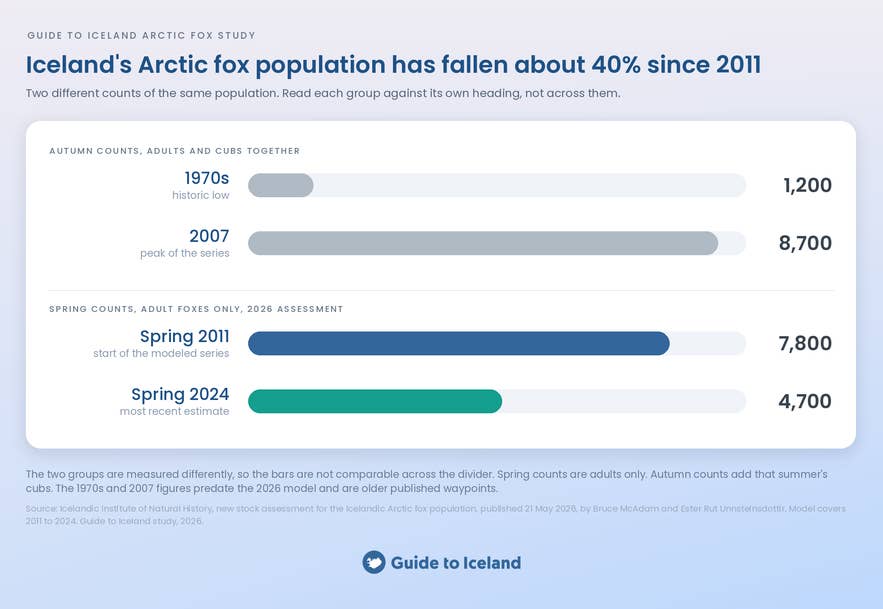
The assessment was published on May 21, 2026. It estimates about 4,700 adult Arctic foxes in Iceland in spring 2024. The same model puts the figure at about 7,800 in spring 2011.
The population reached a historic low of about 1,200 animals just before 1980, then grew to just under 8,700 by autumn 2007. It fell 44.8% over the four years to 2011, then recovered to just under 8,700 by 2018.
These numbers count adult foxes in spring, before that summer's cubs are born. Autumn counts include the cubs, so they run higher and are not comparable.
The Westfjords Have the Highest Arctic Fox Density in Iceland
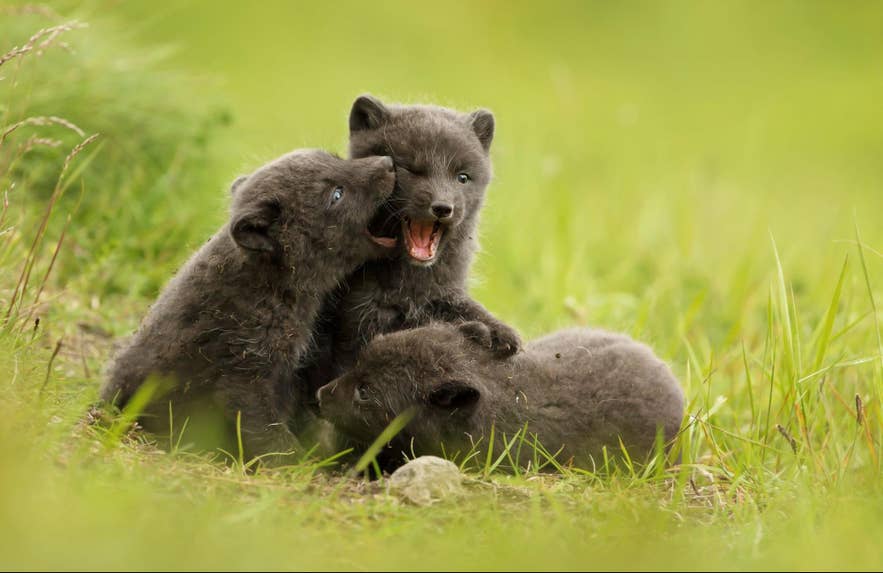 Arctic fox density in Iceland is highest in the Westfjords, especially near seabird cliffs and productive driftwood shores. Coastal foxes feed on seabirds, eggs, and shoreline carrion.
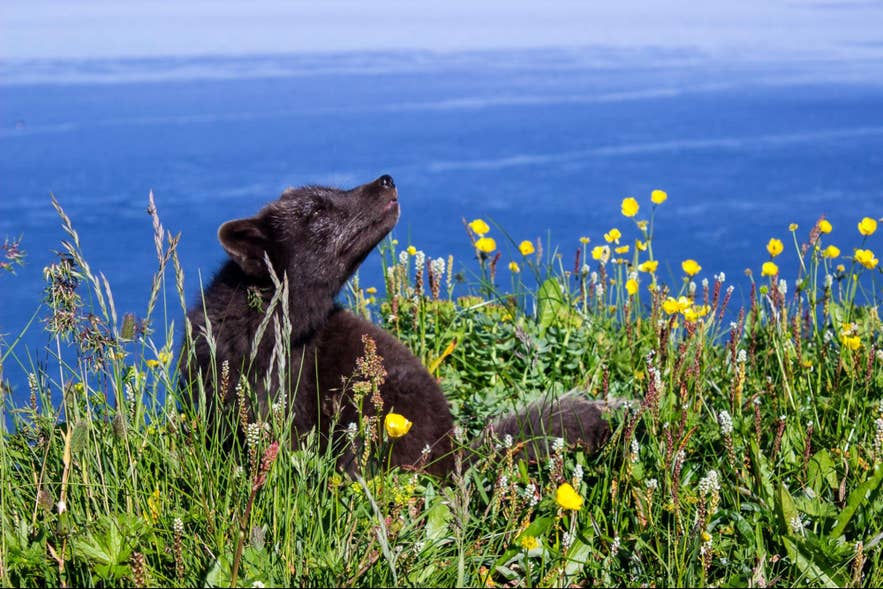
Arctic fox coat color in Iceland follows the same regional pattern. Up to 80% of Westfjords foxes have the dark brown coat, known as the blue morph. White foxes become more common toward the east. Only about 30% of Icelandic Arctic foxes are white, compared with 98% worldwide.
Inland and highland Arctic foxes in Iceland live on sparser ground. Prey is scarcest on sandy and barren terrain, and fox density is lowest there. Iceland's population is also isolated, with no land or sea-ice link to any other Arctic fox population.
Mapping Arctic Fox Sightings Across Iceland's Regions
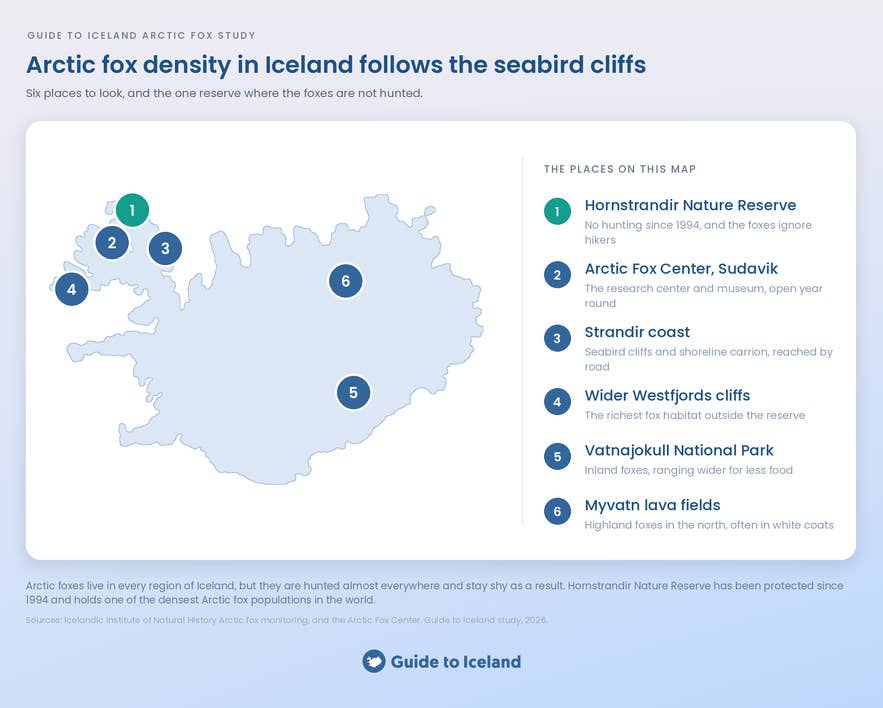
Hornstrandir Nature Reserve in the Westfjords is the best place to find Arctic foxes in Iceland. They live across the country, but are most concentrated around the seabird cliffs of the Westfjords. The wider region ranks second, while sightings elsewhere are more a matter of chance.
Hornstrandir Nature Reserve Ranks First for Arctic Fox Sightings in Iceland
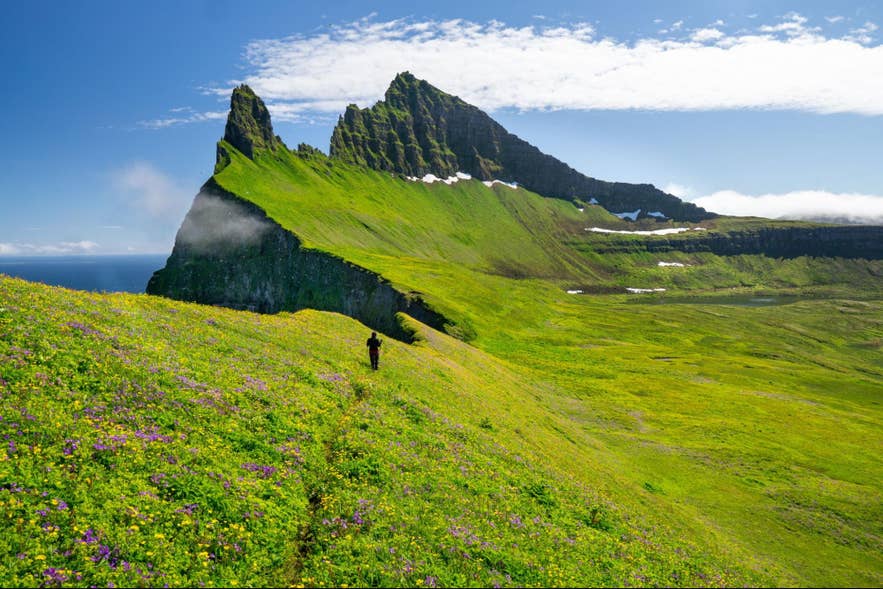 Hornstrandir Nature Reserve in the Northern Westfjords is the best place to see an Arctic fox in Iceland. The foxes have been protected from hunting there since 1994, and their long-term protection has made them less wary of people than foxes in many other parts of the country.
Visit Hornvik Bay or Hesteyri Village between June and August, when Arctic foxes raise their cubs. The cubs are often seen playing near their dens in June and July. A 2-day wildlife tour to Hornvik Bay takes you deep into the reserve with a guide.
Hornstrandir has no roads, shops, or permanent residents. You reach the reserve by boat from Isafjordur or Bolungarvik during summer in Iceland or by joining a guided Arctic fox tour in Hornstrandir. Bring everything you need and take all waste back with you.
Follow local wildlife guidelines and keep your distance from dens. Do not feed Arctic foxes or approach cubs. Staying quiet and giving foxes space helps keep their natural behavior intact.
The Wider Westfjords and the Arctic Fox Centre
 Beyond Hornstrandir, the wider Westfjords are the next best area to look for Arctic foxes. The Strandir Coast, Latrabjarg Cliffs, and the area around Dynjandi Waterfall offer good habitat. Look near beaches, cliffs, and seabird colonies, where food is easy to find.
Early morning and evening are good times to scan the shoreline for Arctic foxes. Drive slowly, stop only at safe pullouts, and check the tideline and nearby slopes. If you prefer not to drive the fjord roads yourself, join one of the Westfjords tours.
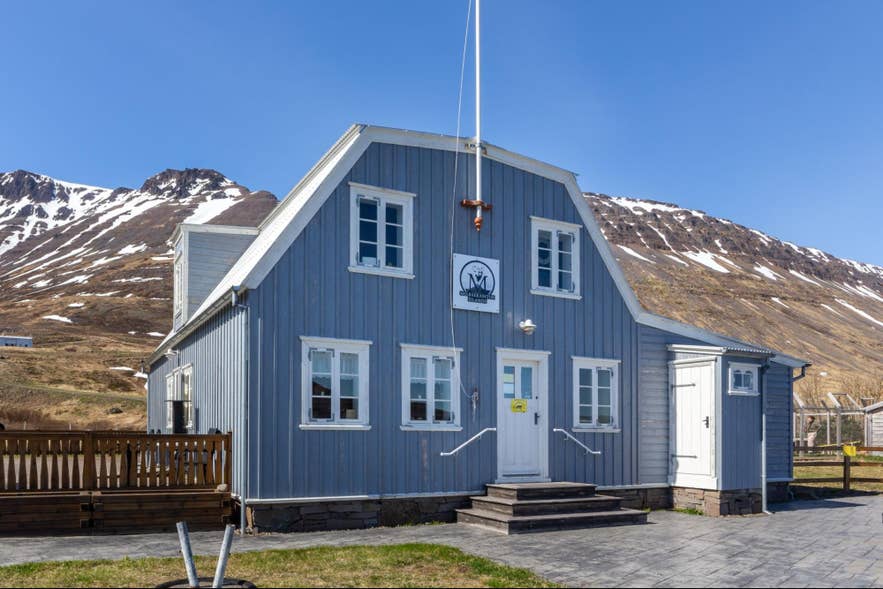
The Arctic Fox Center in Sudavik Village is not a wild sighting site. The center explains the biology and history of Iceland's only native land mammal. Basing yourself in the Westfjords puts you inside the Arctic fox's core range.
Finding Arctic Foxes Outside the Westfjords: Lucky Encounters
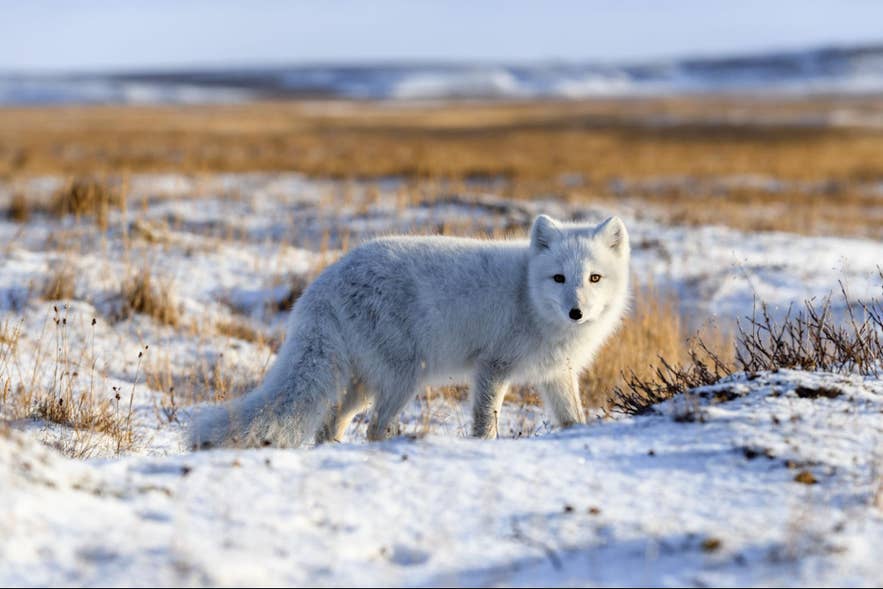 Outside the Westfjords, an Arctic fox sighting is a matter of luck. Foxes are hunted outside protected areas, so they keep their distance from people.
Arctic foxes turn up around Vatnajokull National Park, in the Highlands, across the lava fields near Myvatn, and along quiet coastlines. Expect a fleeting sighting rather than a photo session. If you want better odds outside the Westfjords, join wildlife tours in Iceland with a guide who knows the local ground.
Every region's odds rise during winter in Iceland. Hunger pulls foxes toward shorelines and farms, where food is easier to find than inland.
How Arctic Fox Activity in Iceland Changes Through the Year
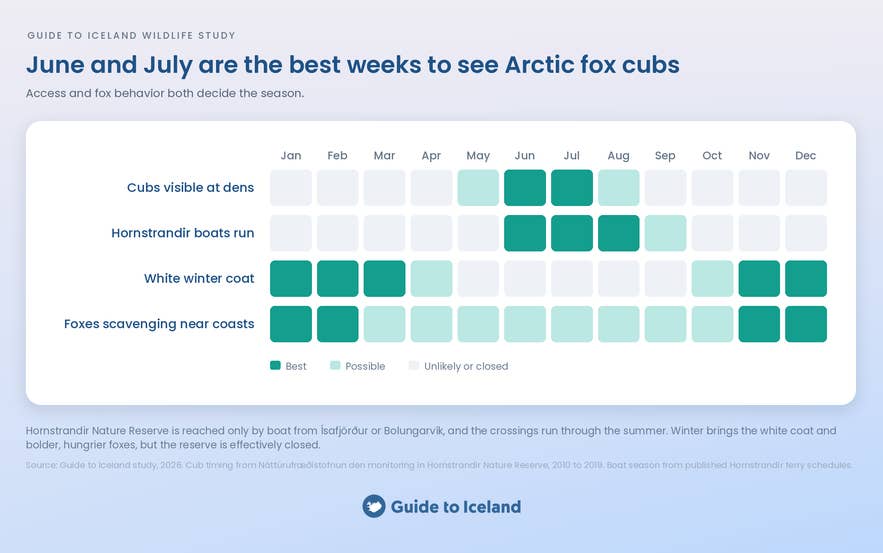
June and July are the best time to see Arctic foxes in Iceland. Cubs are at their dens, the Hornstrandir boats are running, and the midnight sun gives you long hours of daylight for spotting them.
August is still a good month for Arctic fox sightings in Hornstrandir Nature Reserve. The cubs are bigger and spend less time at the den entrances. The 3-day Arctic fox and midnight sun tour in the Westfjords runs for three days across these months.
Scheduled boats to Hornstrandir Nature Reserve run from June to August, and some tours continue into September. From November to March, no scheduled boats sail to the reserve. Arctic fox sightings in those months come down to luck.
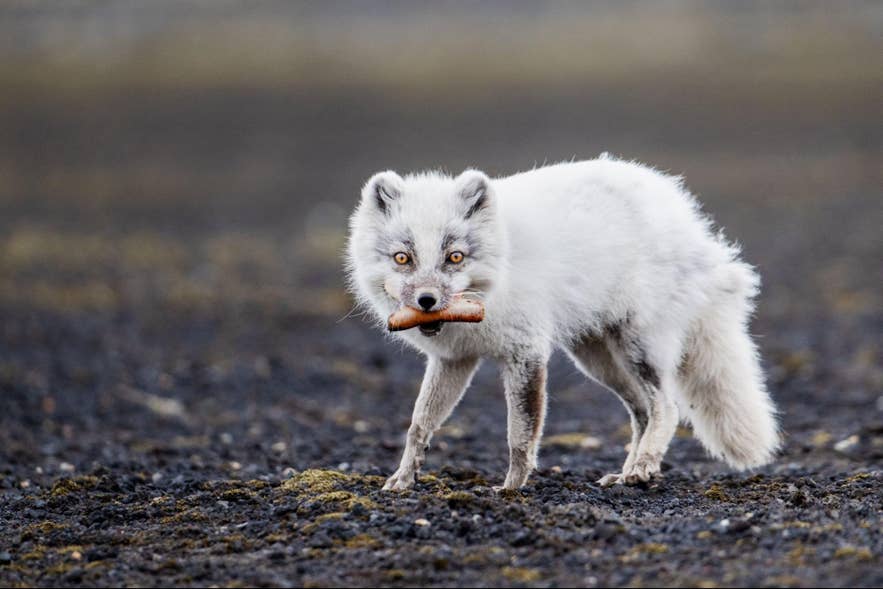 Arctic foxes forage along Iceland's shorelines all year, so a coastal sighting is possible in any month. During winter in Iceland, white-morph foxes turn almost fully white and blend into the snow. Scan snowy slopes and shorelines slowly.
Our study compared timing against location, and location wins. No month improves your odds along the Ring Road the way a summer boat to Hornstrandir does.
What Data Did We Use for This Study?
 Population estimates come from the Natural Science Institute of Iceland (Natturufræðistofnun), which runs Iceland's Arctic fox monitoring program. Its model uses municipal hunting records, necropsies, and age determinations from 2011 to 2024.
The institute's latest assessment for Arctic foxes by mammal ecologist Ester Rut Unnsteinsdottir, published on May 21, 2026, covers 2011 to 2024 data. It estimates about 4,700 adult Arctic foxes in spring 2024, down from about 7,800 in spring 2011.
Historic fall estimates, Hornstrandir figures, refuge counts, and coat color shares come from the Natural Science Institute of Iceland's species profile.
Conclusion
 Your chance of seeing an Arctic fox in Iceland depends more on where you go than on when you travel. Hornstrandir Nature Reserve is the one part of Iceland where a sighting is close to reliable.
The simplest plan is a summer boat from Isafjordur Town to Hornvik Bay or Hesteyri Village in June or July. Cubs are at their dens in those weeks, and the reserve's foxes are used to people on foot.
Staying in the Westfjords gives you more than one chance to spot an Arctic fox. Accommodations in Isafjordur put you close to tour departure points and the region's main wildlife areas. To plan a Westfjords detour, read how many days you need in Iceland.
This study is part of Guide to Iceland's wildlife research series. See where to see horses in Iceland, where to see reindeer in Iceland, and where to find puffins in Iceland. For animals on the coast, read where to see seals in Iceland.
If you travel in winter, our studies on the best month to see the northern lights and the best places to see the northern lights help you plan the dark months.
Guide to Iceland independently analyzed published Arctic fox monitoring and hunting-record data for this study. Our marketplace offers tours to several locations covered here, but our commercial partnerships did not influence the analysis or findings.

Guide to Iceland Editorials is the shared byline for our content team. We use it on pieces several people worked on together, where no single writer owns the article, and on anything rewritten often enough that a personal byline would be misleading. We also publish our original data studies under this profile. Each study answers a question travelers ask about Iceland, using primary sources such as booking records, traveler reviews and public datasets, and every study is quality checked by human experts before it's published. Everything under this byline is researched and reviewed by people who live and work in Iceland. If you spot something out of date or want to suggest a correction, message us and it reaches the whole team.