Fjallsarlon Glacier Lagoon is a glacial lagoon on Iceland’s South Coast, set directly at the edge of Vatnajokull, the largest glacier in Europe. Read on to learn where Fjallsarlon is located, what you can see and do there, the best time to visit, and practical tips for your visit.
Fjallsarlon is one of the lesser-known glacier lagoons in Iceland. It offers incredible glacier lagoon tours, floating icebergs, and a calmer atmosphere than larger lagoons nearby. It is best reached by renting a car and driving the Ring Road, which makes it easy to stop here at your own pace. You can explore the shoreline on foot or join a Fjallsarlon boat tour to experience the icebergs and glacier from up close.
Why You Can Trust Our Content
Guide to Iceland is the most trusted travel platform in Iceland, helping millions of visitors each year. All our content is written and reviewed by local experts who are deeply familiar with Iceland. You can count on us for accurate, up-to-date, and trustworthy travel advice.
The lagoon formed as Vatnajokull Glacier gradually retreated over the past century. Today, the Fjallsjokull Glacier still reaches down to the water, and ice regularly breaks off and drifts across the lagoon. The icebergs constantly change in shape and color, ranging from bright white to deep blue depending on the light and time of year.
Despite being only a 15-minute drive from the very popular Jokulsarlon Glacier Lagoon, Fjallsarlon usually feels much quieter. The glacier sits close to the shore, so you get clear views of the ice. This makes Fjallsarlon an easy, rewarding stop whether you are driving Iceland’s South Coast yourself or visiting as part of South Coast tours, especially if you want to experience glaciers and icebergs in a more relaxed setting.
Fjallsarlon Glacier Lagoon Location
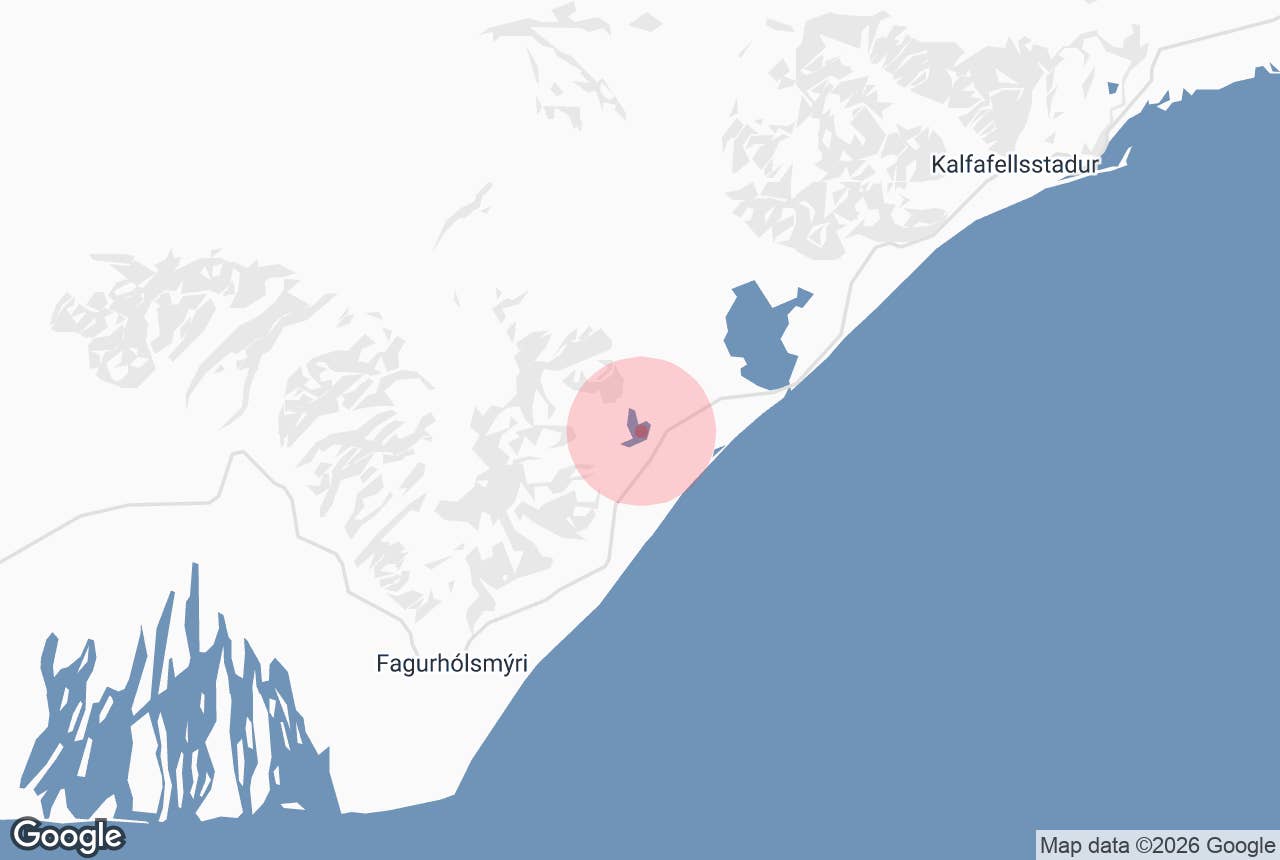
Fjallsarlon Glacier Lagoon is located on Iceland’s South Coast, just off the country’s main highway, Route 1 (the Ring Road). Because it sits right along the Ring Road, it’s an easy stop for anyone driving around Iceland or exploring the South Coast.
The lagoon is about 29 miles (47 kilometers) east of Skaftafell Nature Reserve and roughly 6 miles (10 kilometers) west of Jokulsarlon Glacier Lagoon. From Reykjavik, the drive to Fjallsarlon usually takes around 4.5 to 5 hours, depending on weather and road conditions. If you’re driving the Ring Road clockwise and coming from Hofn, it’s a much shorter drive of about 1 hour and 30 minutes.
Getting to Fjallsarlon is straightforward. The turnoff from Route 1 is clearly marked, and the lagoon is reached by a short drive from the highway. Parking areas are located close to the water, so once you arrive, it’s easy to walk to the lagoon and start exploring.
Thanks to its location, Fjallsarlon fits naturally into a South Coast itinerary. Many travelers visit it on the same day as Jokulsarlon Glacier Lagoon, Diamond Beach, or Skaftafell, making it a convenient and rewarding stop along Iceland’s most popular driving route.
Fjallsarlon is accessible year-round, but winter visits require extra planning. Always check weather conditions at vedur.is and road conditions at umferdin.is/road.is before driving.
Fjallsarlon Glacier Lagoon Geology and Formation
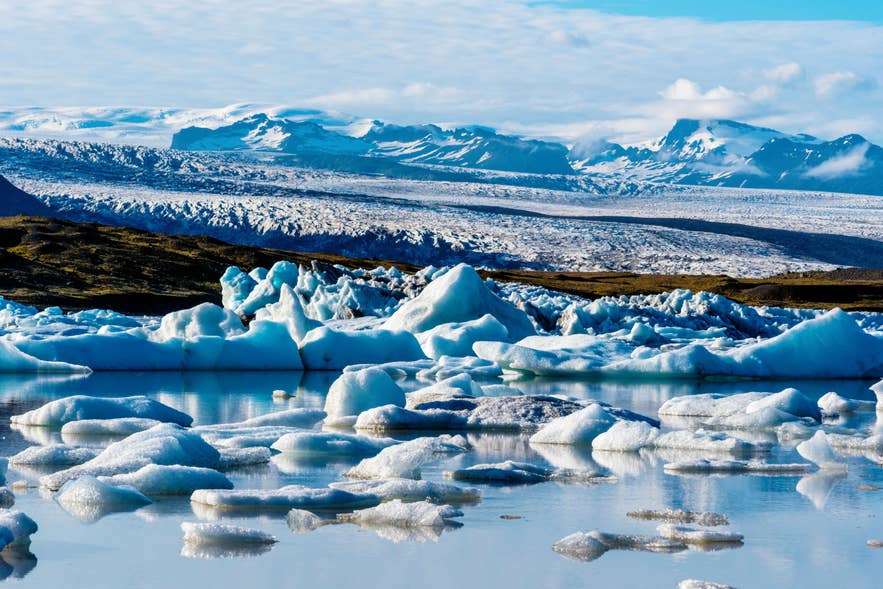 Fjallsarlon Glacier Lagoon is a relatively young natural feature, formed as glaciers in Iceland began to retreat during the 20th century. As Vatnajokull slowly melted and moved backward, it left behind a basin that filled with meltwater, creating the lagoon we see today.
The lagoon is fed by the Fjallsjokull Outlet Glacier, which flows down from Vatnajokull and reaches right to the water’s edge. Because the glacier is so close, large chunks of ice regularly break off and fall into the lagoon. These pieces of ice then float across the water as icebergs, constantly changing the look of the lagoon from day to day.
One thing that sets Fjallsarlon apart from other glacier lagoons is that it has no direct connection to the ocean. This makes it more accurate to describe Fjallsarlon as a glacial lake, even though it’s commonly called a glacier lagoon. Because the water is not mixed with seawater, it often appears darker or more brownish than the bright blue water seen at Jokulsarlon.
The icebergs in Fjallsarlon come in many shapes and colors. Some are bright white, while others show deep blue streaks formed by compressed ice and trapped air bubbles. Over time, the icebergs slowly melt, crack, and shift, giving visitors a clear view of how active and ever-changing this glacial environment really is.
Why Icebergs Calve at Fjallsarlon Glacier Lagoon
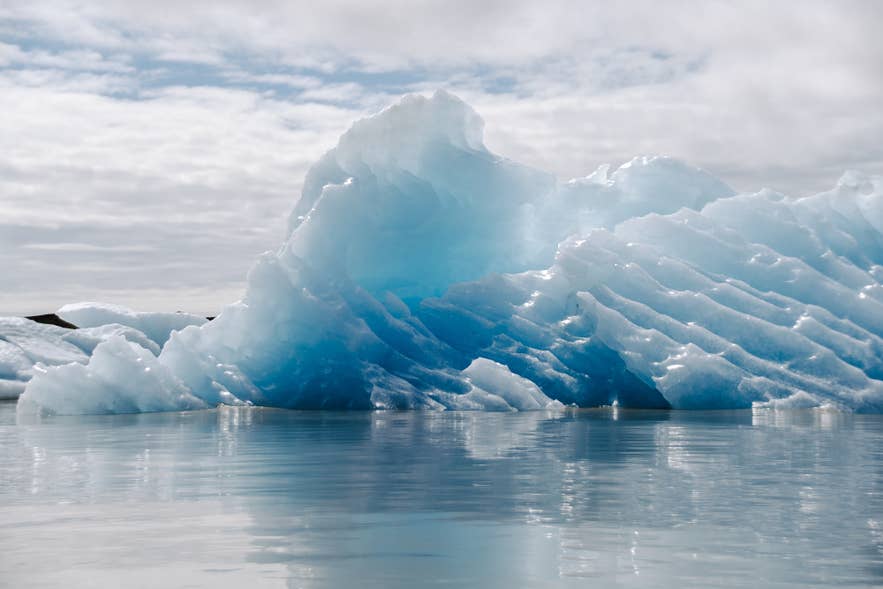 Icebergs at Fjallsarlon Glacier Lagoon form through a natural process called calving, where large pieces of ice break away from the Fjallsjokull outlet glacier and fall into the lagoon. This happens frequently because the glacier flows directly into the water.
As Vatnajokull Glacier slowly moves under its own weight, pressure builds at the front of Fjallsjokull. Cracks develop in the ice, and over time, sections break off and become floating icebergs. Meltwater from warmer temperatures also weakens the glacier, especially in summer, making calving more likely during certain periods.
Weather and seasonal changes affect how often calving occurs, which is why the icebergs at Fjallsarlon are always changing in size, shape, and position. This constant movement is what gives Fjallsarlon Glacier Lagoon its dynamic and ever-changing landscape.
Fjallsarlon vs Jokulsarlon: What’s the Difference?
Fjallsarlon Glacier Lagoon and Jokulsarlon Glacier Lagoon are located close to each other on Iceland’s South Coast, but each offers a slightly different experience. Many travelers choose to visit both, as they complement each other well.
Jokulsarlon is larger and widely known for its dramatic setting, where icebergs drift from the lagoon toward the ocean and wash up on nearby Diamond Beach. It offers wide views, a constantly moving landscape, and easy access to one of Iceland’s most photographed locations.
Fjallsarlon, while smaller, sits closer to the glacier itself. This gives you more direct views of the ice and the chance to see icebergs calving from the glacier face. Because the lagoon is more contained, the experience often feels calm and focused on the glacier and ice formations.
Both glacier lagoons showcase different sides of Iceland’s glacial landscapes, and visiting both provides a well-rounded experience of this unique region of the South Coast. If you’re including Jokulsarlon, our study of the best time to visit Jokulsarlon and Diamond Beach can help you plan when to go.
The study found the most floating ice at Jokulsarlon in February and March. April offers a balance of ice, daylight, and milder weather, though Fjallsarlon’s seasonal ice patterns were not assessed.
Best Time To Visit Fjallsarlon Glacier Lagoon
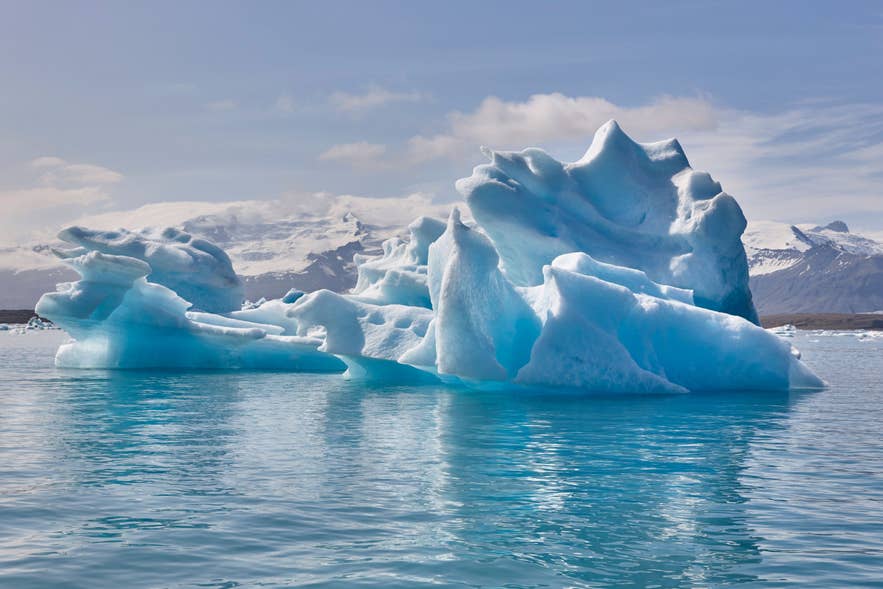 The best time to visit Fjallsarlon Glacier Lagoon is summer, from May to September. During this time, driving conditions are usually easier, daylight hours are long, and the lagoon is fully accessible. This is also the only time of year when Fjallsarlon iceberg boat tours operate, allowing you to see floating icebergs up close with the Fjallsjokull Glacier directly in front of you.
You can also visit Fjallsarlon in winter, from October to April, when the area looks very different. Fjallsarlon boat tours generally do not run, but you can walk along the shoreline and see icebergs frozen into place or slowly shifting in the lagoon.
Fjallsarlon in Summer
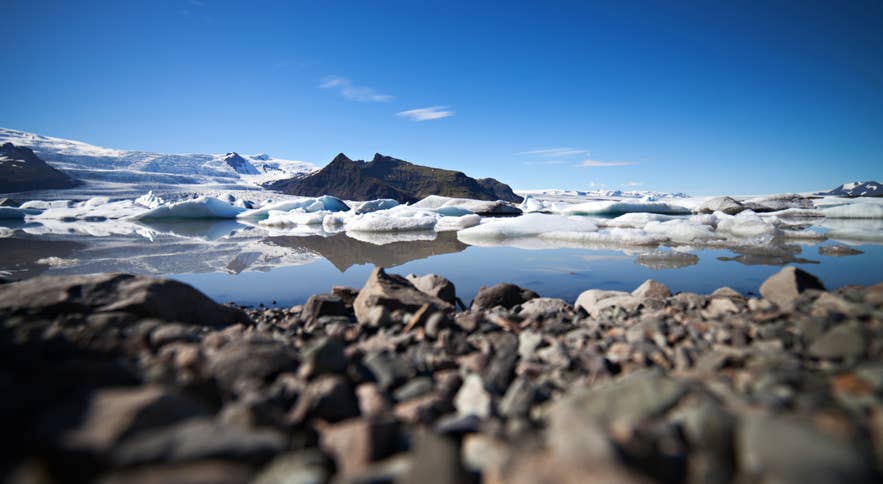 In summer, Fjallsarlon Glacier Lagoon feels open and active. The glacier face is clearly visible, icebergs drift slowly across the water, and the surrounding mountains are mostly free of snow.
Long daylight hours make it easy to take your time, whether you’re walking along the shore, taking photos, or heading out on a boat tour. The softer summer light often brings out deep blue tones in the ice, and seals are sometimes seen swimming among the icebergs.
Fjallsarlon in Winter
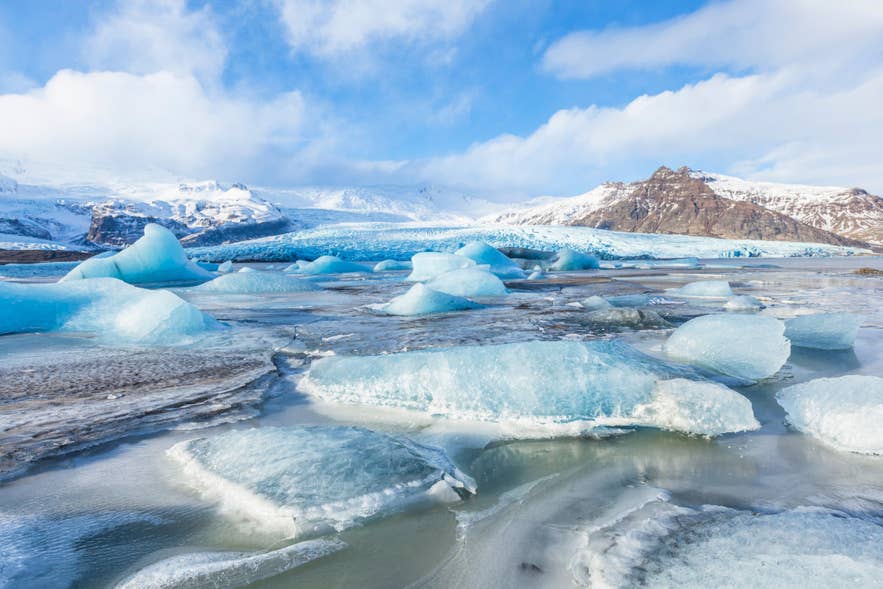 In winter, Fjallsarlon Glacier Lagoon takes on a quieter and more dramatic atmosphere. Snow often covers the ground, the glacier appears brighter against darker skies, and the lagoon may partially freeze.
Icebergs can become locked in place, creating a still and striking scene. With fewer visitors around, winter is a good time to enjoy the landscape at a slower pace, focusing on shoreline walks, photography, and the overall sense of isolation.
Fjallsarlon Parking, Facilities, and Visitor Services
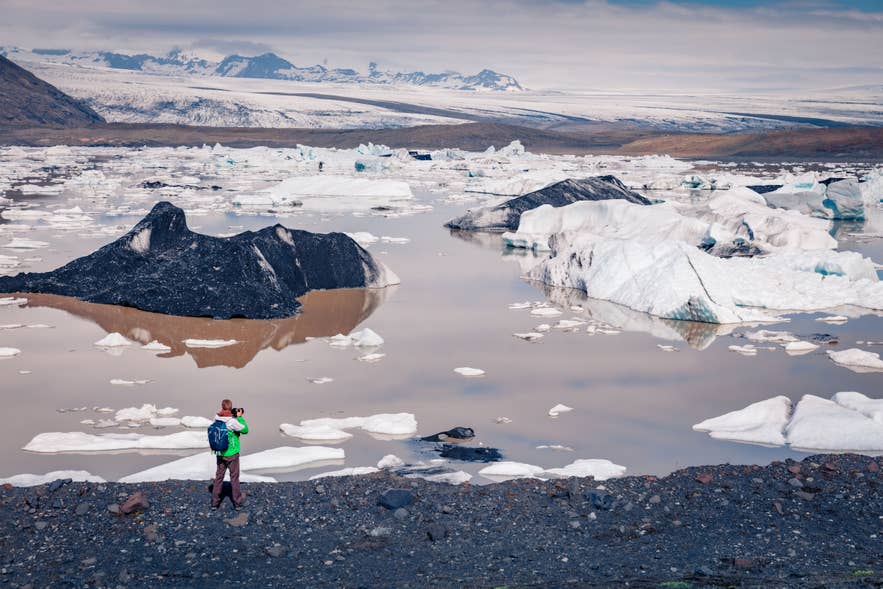 When you arrive at Fjallsarlon Glacier Lagoon, you’ll find parking areas located close to the lagoon, making access easy. Parking at Fjallsarlon is free, and the walk from the parking area to the lagoon is short and on mostly flat ground.
There are restroom facilities near the main visitor area. In some cases, a small fee may be charged to use them, which helps support maintenance at the site. It’s a good idea to carry a card or a small amount of cash, just in case.
On site, you’ll also find Frost Restaurant, the main dining facility at Fjallsarlon. It is a self-service, buffet-style restaurant offering hot and cold dishes, including soups, sandwiches, salads, desserts, and drinks. It’s generally open daily from around 9:30 AM to 4:00 PM.
Tour operators for Fjallsarlon iceberg boat tours are based near the parking area, so if you have a booked tour, you can check in on arrival.
Things To Do at Fjallsarlon Glacier Lagoon
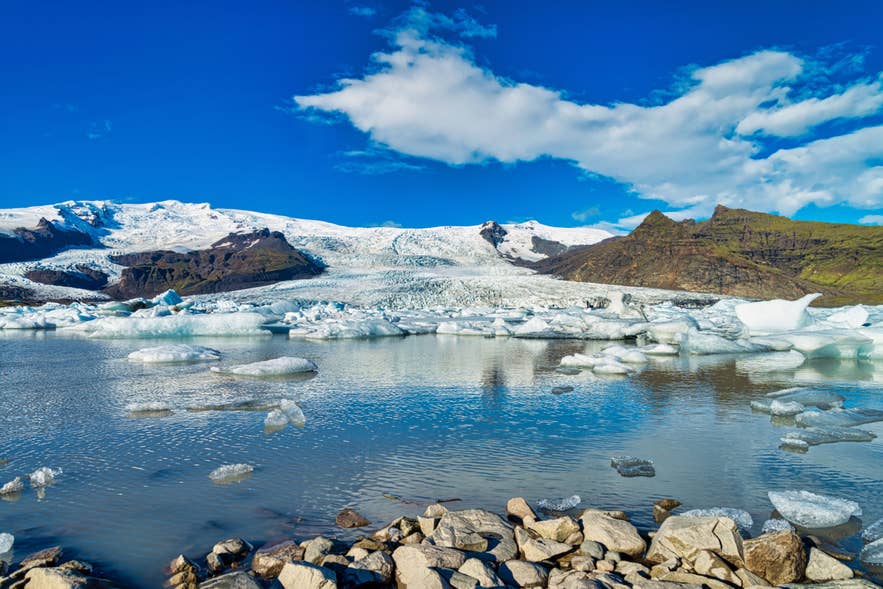 There are several ways you can experience Fjallsarlon Glacier Lagoon, whether you’re stopping briefly along the South Coast or planning to spend more time exploring the area. Activities here focus on getting close to the ice, the glacier, and the surrounding landscape.
Take an Iceberg Boat Tour at Fjallsarlon
 One of the most popular things to do at the lagoon is to join a Fjallsarlon iceberg boat tour. Fjallsarlon iceberg boat tours run during the warmer months and use small zodiac boats that take you out onto the lagoon.
From the water, you can see floating icebergs up close and enjoy clear views of the Fjallsjokull glacier. Guides share information about how the lagoon formed, how icebergs calve, and what you’re seeing as you move through the ice.
For a quieter and more personal experience on the water, you can also join a private Fjallsarlon boat tour, which allows more flexibility and a slower pace as you explore the lagoon.
Kayak Among the Icebergs at Fjallsarlon
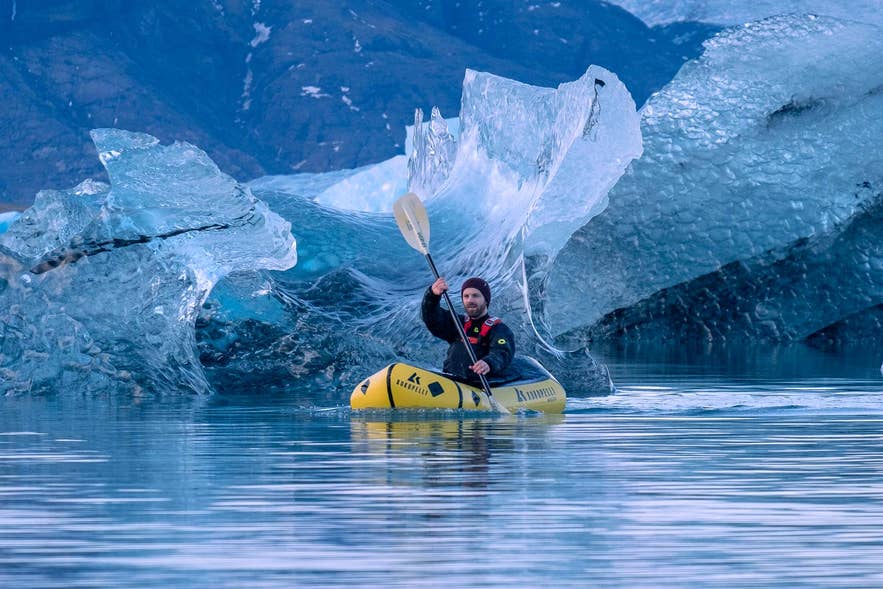 Kayaking is a calm and immersive way to explore Fjallsarlon. On a Fjallsarlon kayaking tour, you paddle quietly among the icebergs and experience the lagoon at water level.
This activity is usually available during the summer and is always guided, with all necessary equipment and safety instruction provided. Kayaking lets you move through the lagoon at a relaxed pace while staying close to the ice and glacier.
Hike on a Glacier Near Fjallsarlon
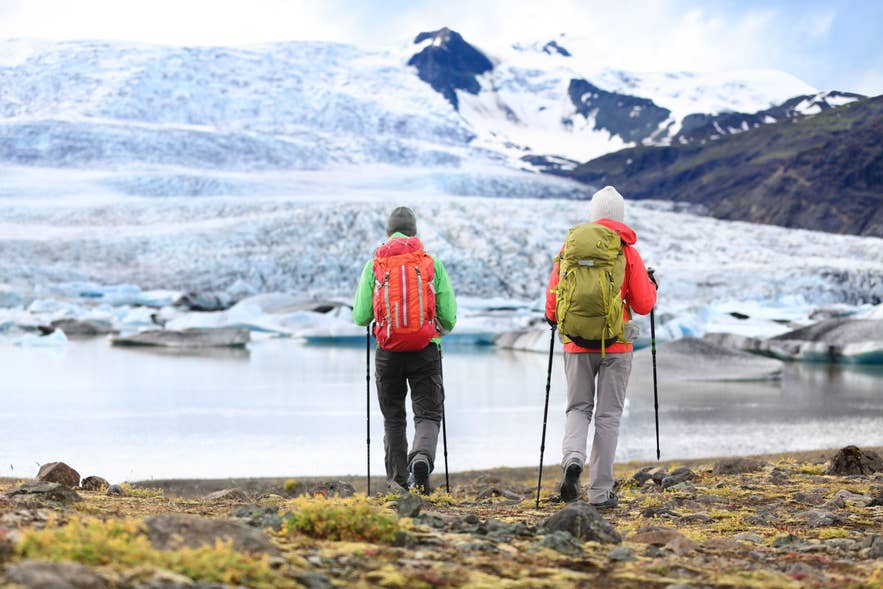 If you want to step onto the ice itself, glacier hiking near Fjallsarlon is a popular activity that allows you to explore the glacier up close. Some tours combine a walk on blue ice with a visit to the lagoon, giving you the chance to experience both the glacier surface and the floating icebergs in one trip.
These hikes are led by certified guides and include safety equipment such as crampons and helmets. Along the way, you’ll see crevasses, ice formations, and learn how the glacier is constantly changing.
Spend the Night at Fjallsarlon Glacier Lagoon
For a truly unique way to experience the area, you can take part in an overnight experience at Fjallsarlon. This activity lets you spend the night on the lagoon in a floating accommodation surrounded by icebergs and glacier views.
It’s a quiet and memorable experience, whether you visit under the midnight sun in summer or, with the right conditions, beneath the northern lights in winter.
Walk Along the Shore of Fjallsarlon Glacier Lagoon
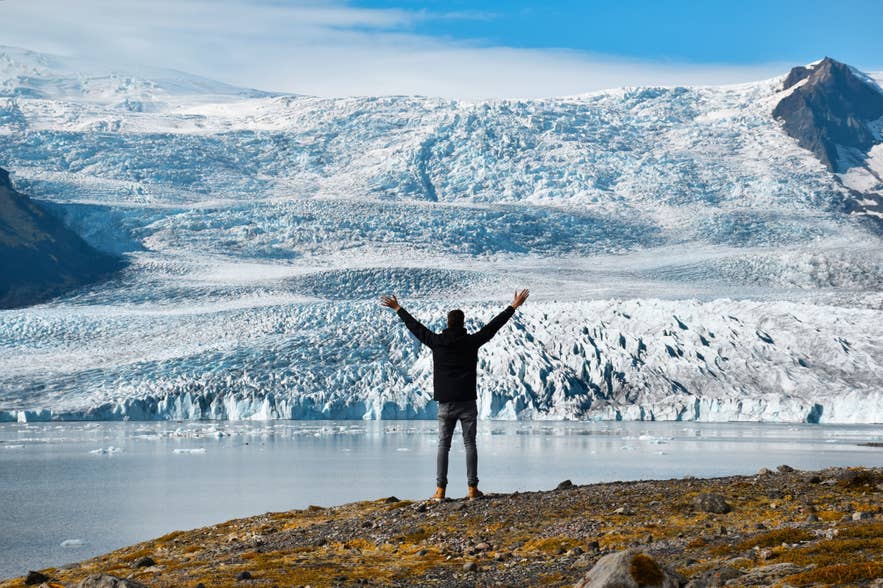 Walking along the shoreline is an activity in itself, allowing you to take in views of the icebergs and glaciers from land. The paths near the lagoon are mostly easy to walk, and this gives you time to observe the ice, listen to it crack and shift, and enjoy the scenery at your own pace.
This works well if you’re visiting outside the main tour season or simply stopping for a short break.
Wildlife at Fjallsarlon Glacier Lagoon
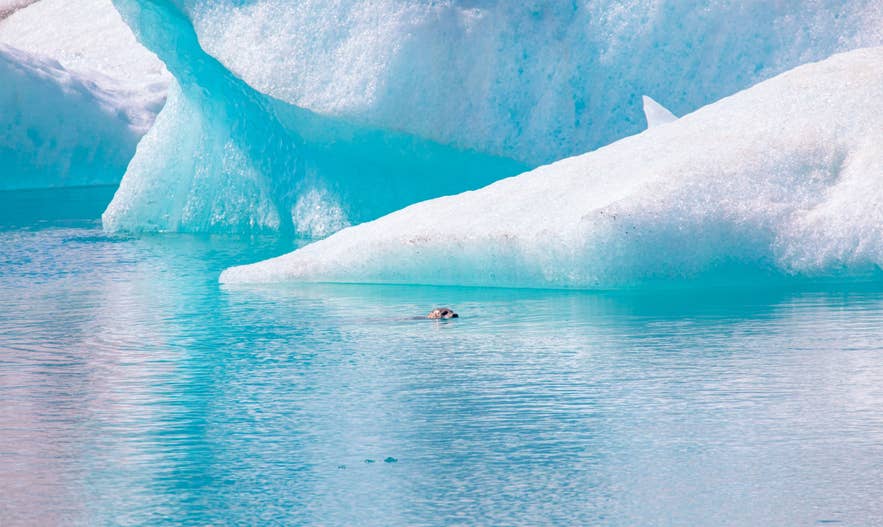 You may spot wildlife at Fjallsarlon Glacier Lagoon, especially during the summer months, although sightings are never guaranteed. The lagoon’s calm setting makes wildlife encounters feel subtle and unhurried, fitting the quiet nature of the area.
Seals are the animals most commonly seen at Fjallsarlon. In summer, you may notice them swimming between icebergs or resting near the edge of the lagoon. They often surface briefly before disappearing again, so taking your time and watching the water increases your chances of spotting them.
Birdlife is also present around the lagoon, particularly from late spring through summer. Arctic terns and great skuas nest in the area and are often seen flying low over the water or along the shoreline. Great skuas are protective of their nests and may dive toward people who get too close, so it’s important to stay on marked paths and keep a safe distance.
In winter, wildlife sightings are less common, but the quieter surroundings and frozen landscape add to the overall experience. No matter when you visit, observing wildlife from a respectful distance helps protect Fjallsarlon’s natural environment and keeps the area safe for both animals and visitors.
Fjallsarlon Glacier Lagoon in Film and Popular Culture
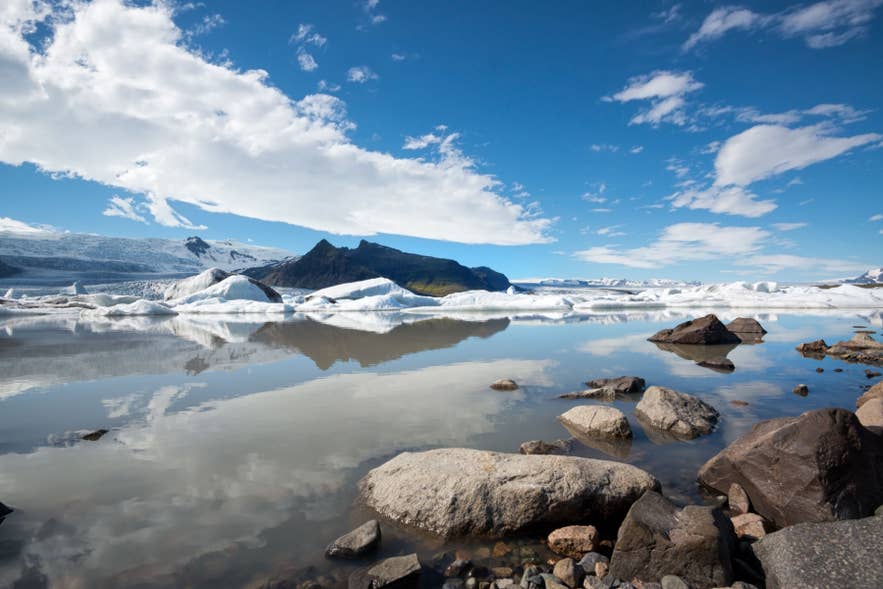 Fjallsarlon Glacier Lagoon has appeared directly in several international film and music productions thanks to its dramatic icebergs, steep glacier walls, and remote glacial setting. Located within Vatnajokull National Park, the lagoon offers a raw and visually striking environment that filmmakers have used without needing it to stand in for another location.
Against the Ice at Fjallsarlon Glacier Lagoon
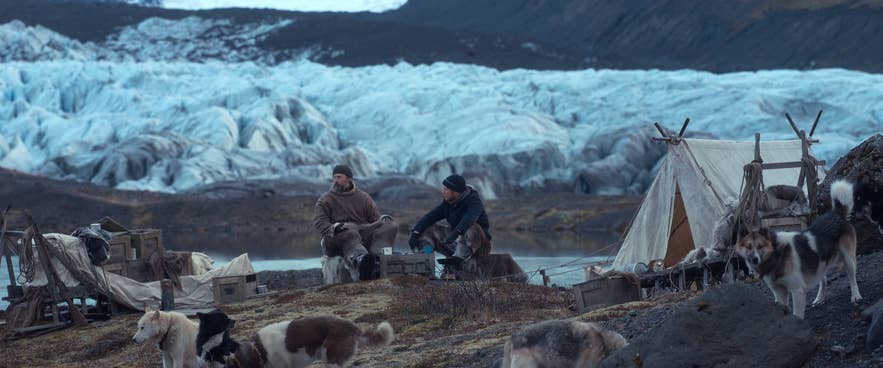 The Netflix survival drama Against the Ice (2022), starring Nikolaj Coster-Waldau, was filmed at Fjallsarlon Glacier Lagoon. The lagoon was used to represent the Arctic coastline of Greenland and was chosen for its unspoiled ice formations and sense of isolation.
Fjallsarlon’s frozen waters and surrounding glaciers play a central role in conveying the harsh conditions and scale of the environment faced by the characters.
The Secret Life of Walter Mitty and the Fjallsarlon Area
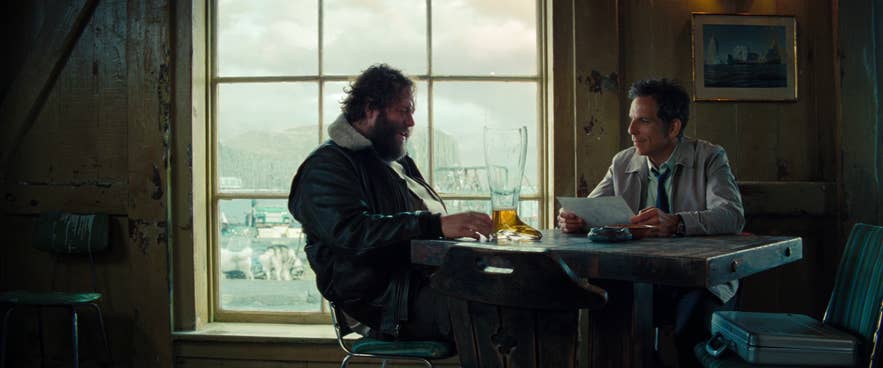
In The Secret Life of Walter Mitty, Iceland is portrayed as Iceland, with filming taking place across several locations in southeast Iceland. The Fjallsarlon area is included among the filming locations referenced within Vatnajokull National Park, which was used for its wide glacial landscapes and remote setting.
Filming took place in the surrounding glacial area and nearby terrain, where outlet glaciers, open plains, and dramatic landscapes contribute to the film’s sense of scale, adventure, and isolation.
Justice League at Fjallsjokull and Fjallsarlon
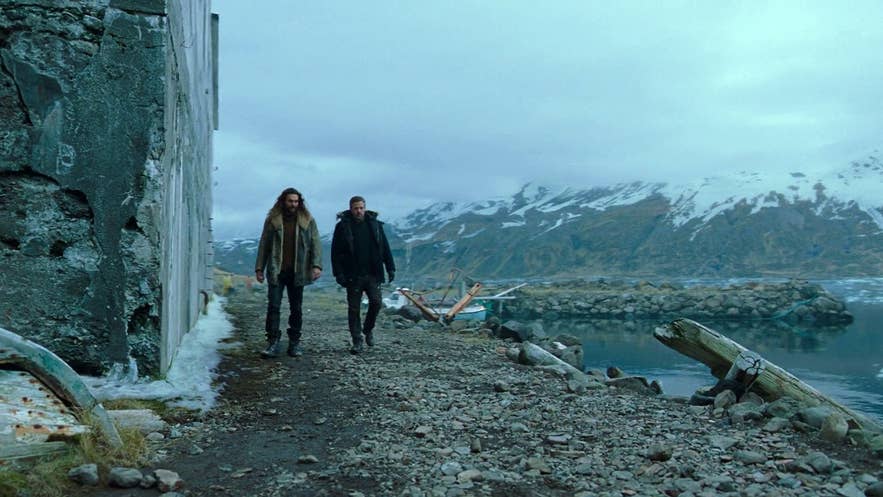 Scenes from Justice League were filmed on Fjallsjokull, the outlet glacier that flows directly into Fjallsarlon Glacier Lagoon. In the film, Bruce Wayne travels across a heavily crevassed glacier landscape using Fjallsjokull as the backdrop.
Additional scenes depicting icy coastal waters were filmed at Fjallsarlon itself, using the lagoon’s floating ice and surrounding mountains.
Music Videos Filmed at Fjallsarlon Glacier Lagoon
Fjallsarlon Glacier Lagoon has been directly featured in internationally recognized music videos, bringing global visibility to the site.
The Icelandic band KALEO filmed their music video for "Save Yourself" at Fjallsarlon. The band performed live on a floating iceberg in the lagoon, placing Iceland’s glacial landscape at the center of the performance.
The Bollywood song "Gerua" from the film "Dilwale" was also filmed at Fjallsarlon Glacier Lagoon. The video includes scenes of Shah Rukh Khan and Kajol performing on an iceberg within the lagoon, with the glacier and surrounding mountains clearly visible.
Practical Travel Tips for Visiting Fjallsarlon
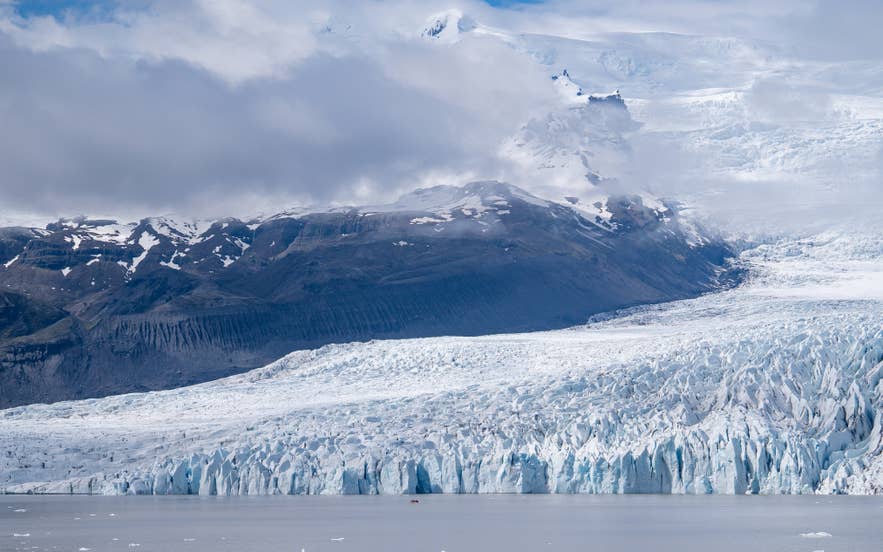 Visiting Fjallsarlon Glacier Lagoon is straightforward, but the exposed glacial environment requires preparation. Weather, wind, ice, and wildlife all play a role in how safe and comfortable your visit will be.
What To Wear at Fjallsarlon
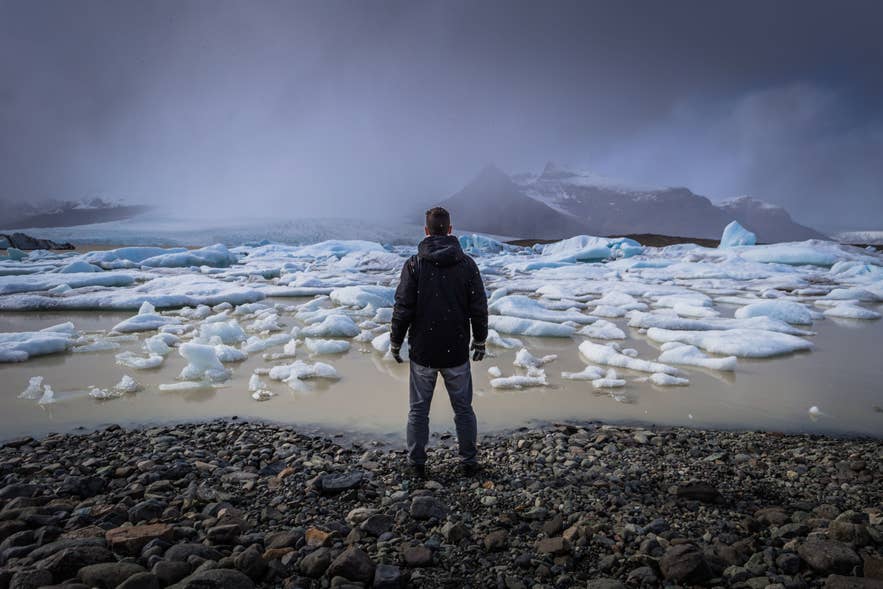 Dress for wind and cold at Fjallsarlon, regardless of the season, as you would when planning what clothes to wear in Iceland. Conditions near the glacier can feel colder than in nearby towns, so a waterproof and windproof jacket is essential, as strong winds often blow across the lagoon from the ice. Warm layers underneath are recommended even in summer.
Footwear should be sturdy and closed-toe with a good grip. The ground around Fjallsarlon can be wet, muddy, or icy, especially after rain or during colder months. In winter, insulated clothing, gloves, a hat, and waterproof boots are necessary, even for short visits.
Weather Considerations at Fjallsarlon
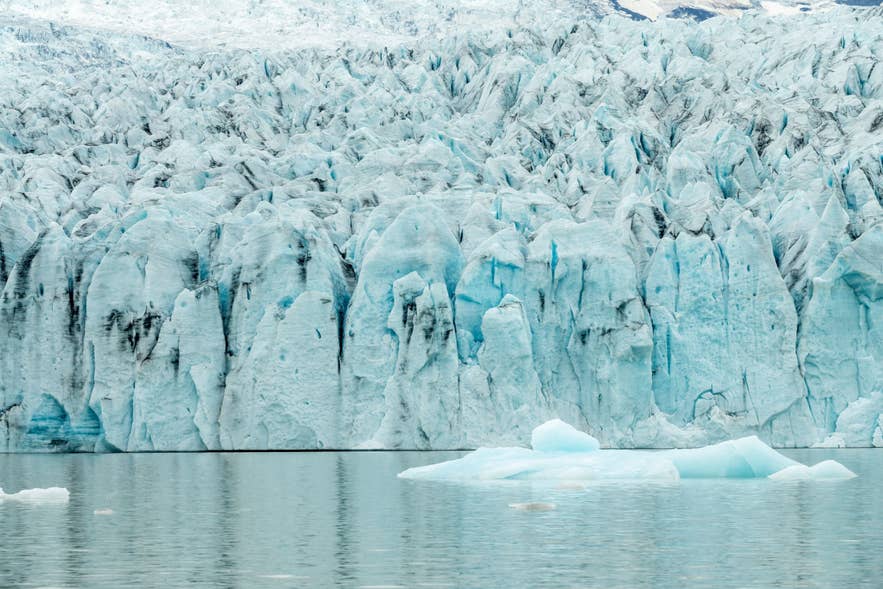 The weather at Fjallsarlon Glacier Lagoon can change quickly due to its location next to an outlet glacier and open terrain. Wind is common year-round and can sharply lower the perceived temperature. Fog can move in suddenly, reducing visibility around the lagoon and nearby roads.
Before driving to Fjallsarlon, always check the weather forecast at vedur.is and road conditions at umferdin.is/road.is. In winter, snow, ice, and strong winds can affect both the Ring Road and the access road to the lagoon. Short daylight hours also limit how much time you can safely spend outdoors.
In summer, conditions are generally more stable, but sudden rain and wind gusts are still possible. If weather conditions worsen while you are at Fjallsarlon, limit time near the shoreline, avoid exposed areas, and consider postponing your visit.
Safety Tips at Fjallsarlon
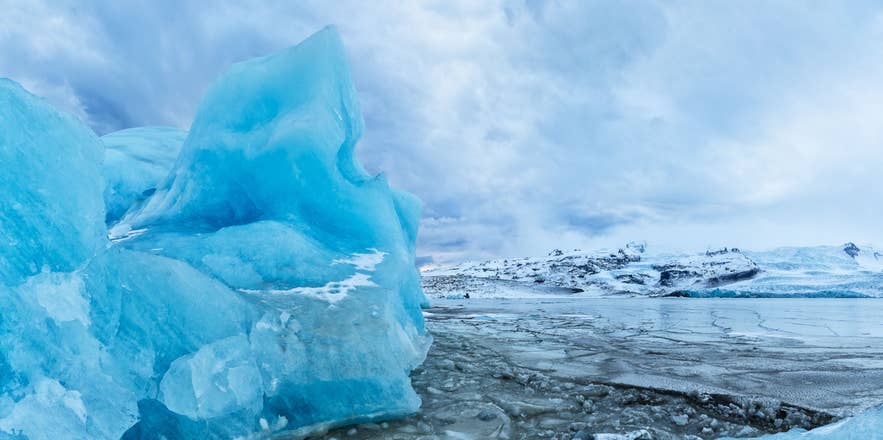 Do not walk on the ice or attempt to climb onto icebergs at Fjallsarlon. Icebergs can shift, crack, or roll without warning, even when they appear stable. Always keep a safe distance from the water’s edge, as ice can break off suddenly or create waves.
During the summer, nesting birds such as skuas are common around Fjallsarlon. These birds aggressively protect their nests and may dive toward visitors who get too close. If this happens, move away calmly and leave the area.
If you are joining a boat tour or guided activity at Fjallsarlon, follow all instructions provided by your guide and wear any required safety equipment.
Photography Tips for Fjallsarlon
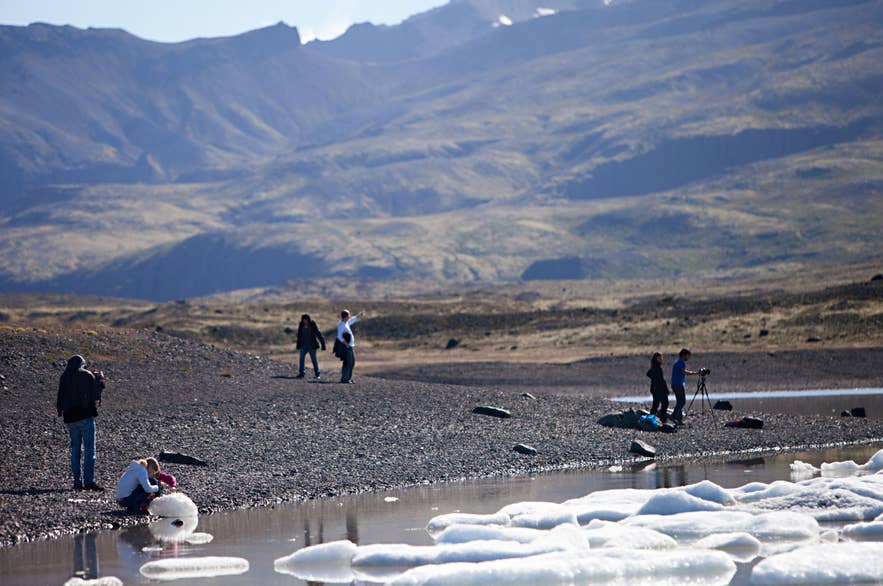 Fjallsarlon Glacier Lagoon is well-suited for photography, but conditions change constantly. Icebergs drift and rotate, and light varies throughout the day. Overcast weather often brings out deeper blue tones in the ice, while early morning and late evening light create softer contrasts.
When taking photos, stay aware of your surroundings, especially near the water. Place tripods only on stable ground and avoid setting up equipment close to the edge of the lagoon. Wind can be strong, so secure cameras and gear properly.
Responsible Tourism at Fjallsarlon
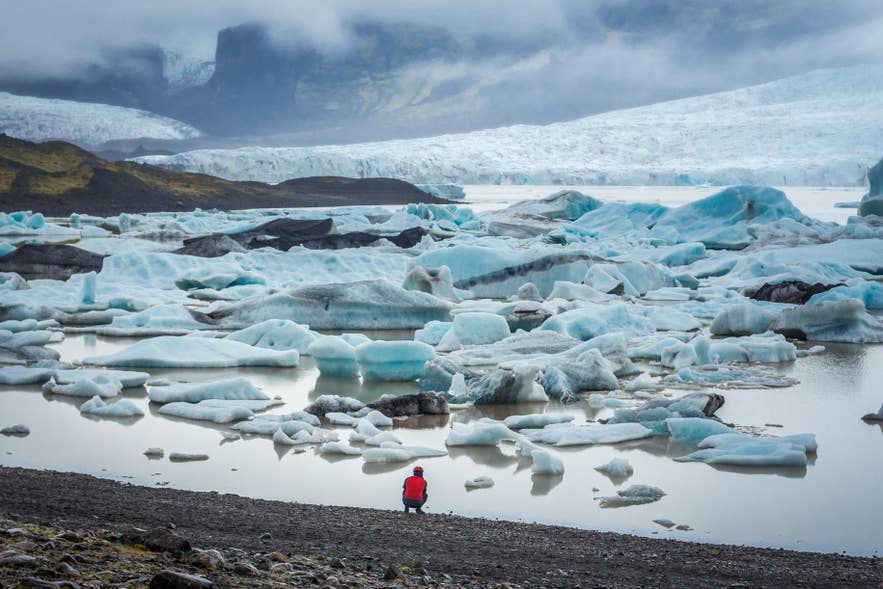 Fjallsarlon is part of a protected natural area, and responsible behavior is essential. Stay on marked paths, respect signage, and avoid disturbing wildlife. Do not remove ice, rocks, or any natural materials from the site.
Drones are not allowed at Fjallsarlon without proper permission. Always carry out everything you bring with you and leave no trace of your visit. Respect the quiet atmosphere of the lagoon and other visitors who are there to experience the landscape.
Visiting Fjallsarlon Glacier Lagoon
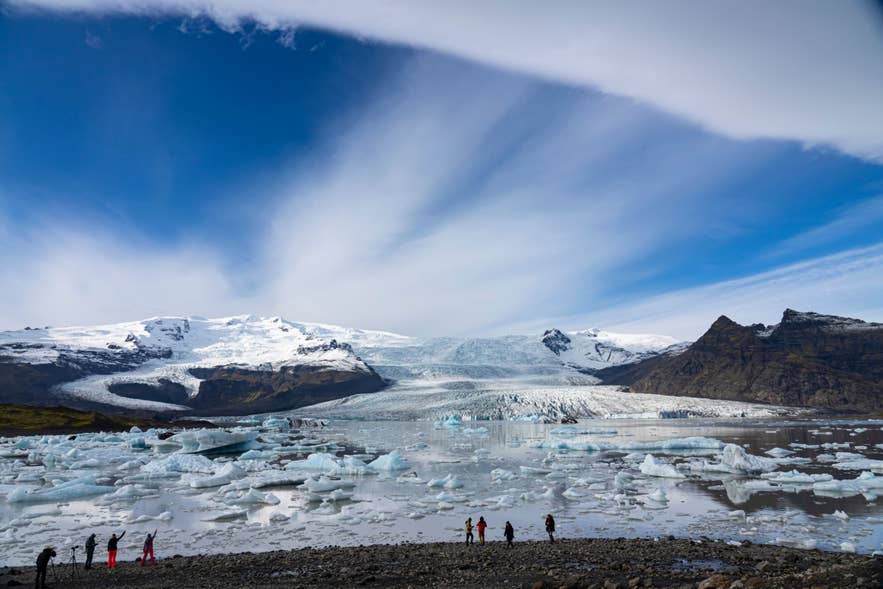 Fjallsarlon is one of several glacier lagoons in Iceland, offering close views of an active outlet glacier and a quieter setting than larger lagoons nearby. Icebergs drift slowly across the water, the glacier remains in constant view, and the area shows how ice, water, and land continue to shape the landscape.
Because it sits just off Route 1, Fjallsarlon fits easily into South Coast tours and Ring Road itineraries, especially for travelers on self-drive trips.
It pairs well with nearby stops such as Diamond Beach, Skaftafell Nature Reserve, and Vatnajokull National Park, and works equally well as a short stop or a longer visit with activities like a boat tour, kayaking, or a walk along the shore.
Staying overnight in Hofn or closer to Vatnajokull makes it easier to explore the area at a relaxed pace.
Jokulsarlon Glacier Lagoon is only a 15-minute drive away and is often visited on the same day. If you are planning to include both lagoons in your trip, you can check out our complete guide to Jokulsarlon Glacier Lagoon to help plan your visit and understand how the two experiences compare.