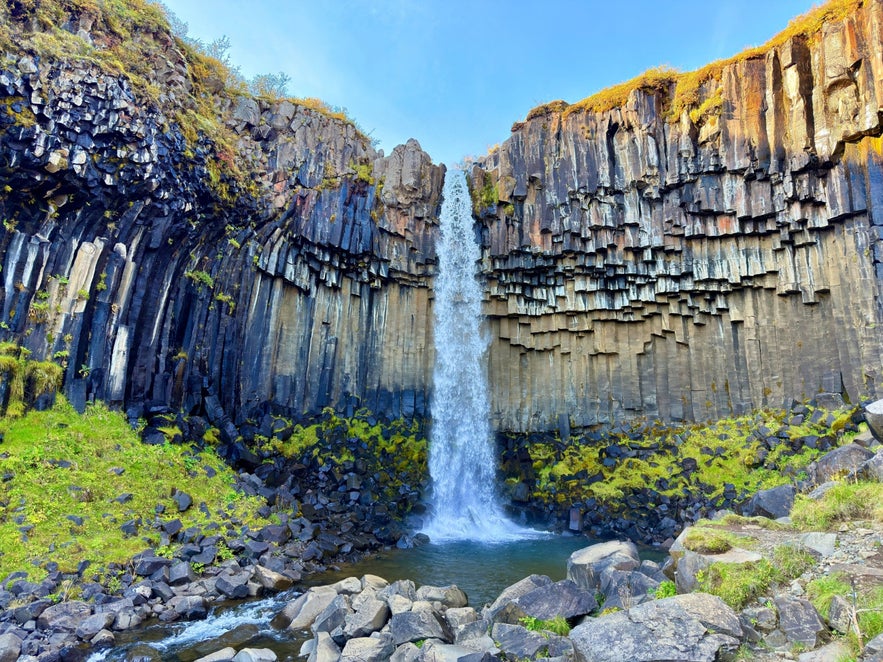
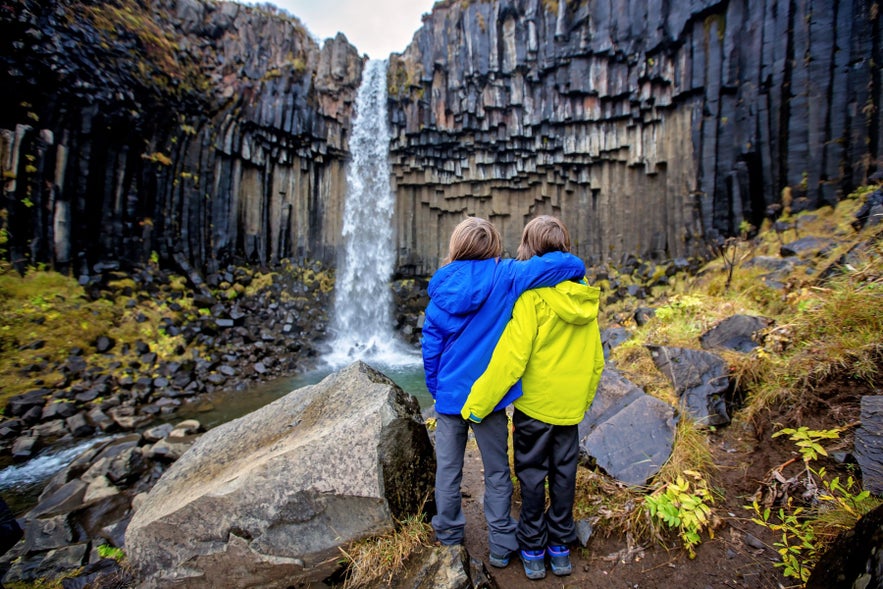
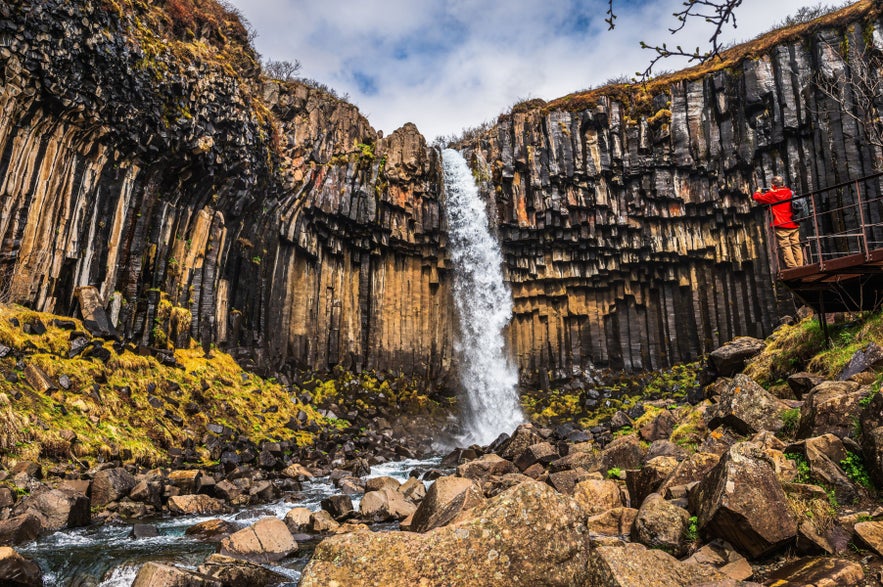
Svartifoss, or “Black Falls” in Icelandic, is a waterfall located within the dramatic landscapes of Skaftafell Nature Reserve in Vatnajokull National Park. It is famous for its unique basalt column formations, which inspired the design of Hallgrimskirkja Church in Reykjavik.
As one of the most recommended waterfalls in Iceland, Svartifoss stands out for its dramatic basalt formations and scenic surroundings. The hike to the waterfall is short but beautiful, winding through birch forests, mossy lava fields, and smaller waterfalls along the way.
To visit Svartifoss, you can join waterfall tours in Iceland, which make it easy to see this stunning spot without worrying about logistics. Many Skaftafells trips also include the waterfall, often combined with glaciers, lagoons, and other South Coast attractions.
Why You Can Trust Our Content
Guide to Iceland is the most trusted travel platform in Iceland, helping millions of visitors each year. All our content is written and reviewed by local experts who are deeply familiar with Iceland. You can count on us for accurate, up-to-date, and trustworthy travel advice.
If you prefer more flexibility, you can rent a car in Iceland and explore the area at your own pace, stopping for photos, short hikes, or hidden gems.
Keep reading to get all the tips and info you need for an unforgettable visit to Svartifoss.
Svartifoss Waterfall at a Glance
-
Location: Skaftafell Nature Reserve within Vatnajokull National Park, Southeast Iceland
-
Height: Approximately 66 feet (20 meters)
-
Famous for: Striking basalt column formations that inspired Hallgrimskirkja Church in Reykjavik
-
Hike to waterfall: About 0.9 miles (1.5 kilometers) one way, with easy to moderate difficulty
-
Best time to visit: Summer for the most accessible hiking conditions
-
Access: Choose a car rental in Iceland, go on self-drive adventures, or join Skaftafells tours
-
Nearby attractions: Svinafellsjokull Glacier, Jokulsarlon Glacier Lagoon, Diamond Beach
How To Get to Svartifoss Waterfall
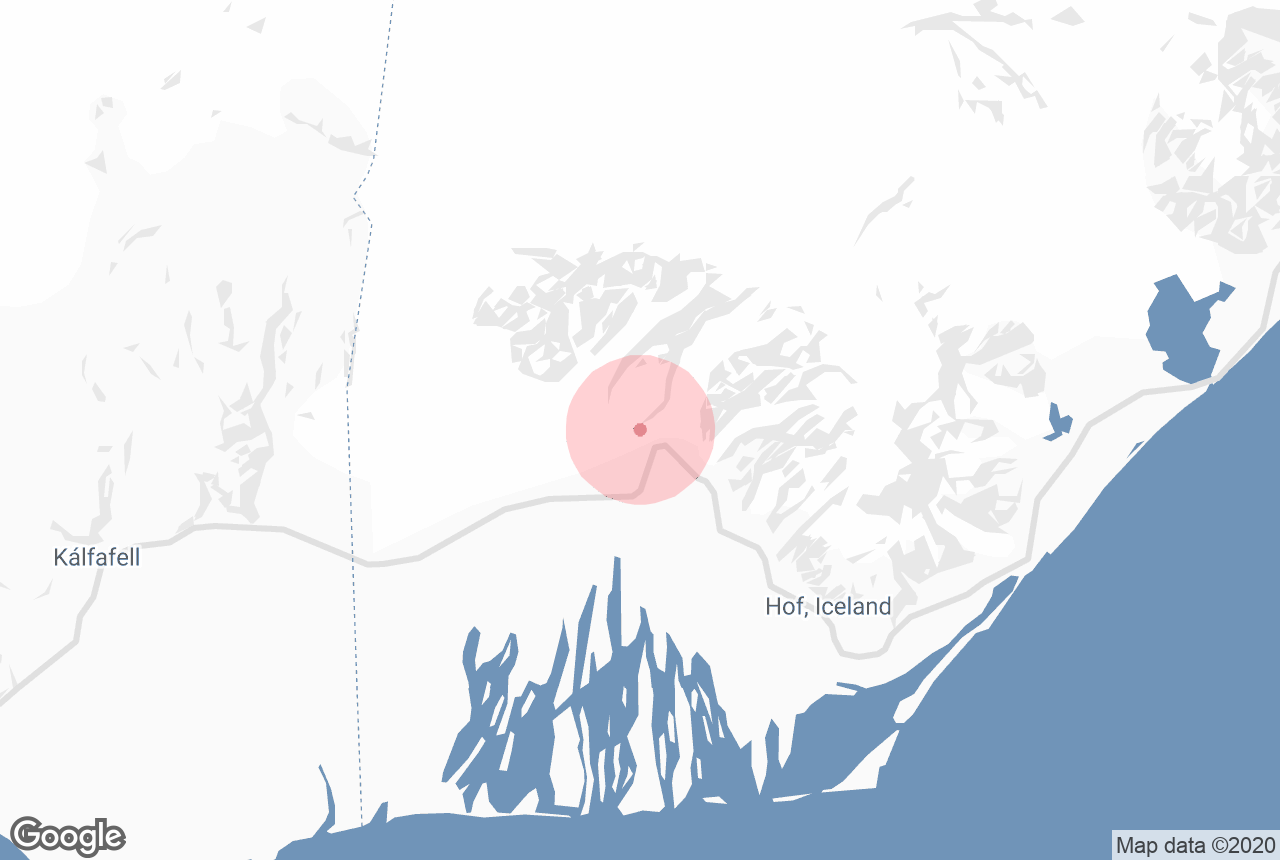
 Svartifoss is located in Skaftafell Nature Reserve, within Vatnajokull National Park in Southeast Iceland. From Reykjavik, the drive is approximately 203 miles (327 kilometers) and takes around 4.5 to 5 hours, depending on road and weather conditions. The route follows Iceland’s famous Ring Road (Route 1) almost the entire way, making it a straightforward journey.
If you’re driving, exit the Ring Road at the clearly marked turnoff for Skaftafell and follow the road to the Skaftafell Visitor Center, where parking is available. This is the main starting point for the Svartifoss hike.
Many travelers visit Svartifoss as part of a South Coast and Golden Circle self-drive trip, often combining it with other attractions along the Ring Road, such as the famous Jokulsarlon Glacier Lagoon.
Hiking to Svartifoss Waterfall
 The hike to Svartifoss begins at the Skaftafell Visitor Center and follows the well-maintained Svartifoss trail. The trail is about 0.9 miles (1.5 kilometers) one way and steadily climbs uphill, but it’s short enough to be manageable for most visitors.
Families with children, casual hikers, and older travelers can usually complete the trail comfortably, though those with limited mobility may find it challenging.
The typical Svartifoss Waterfall hike time is around 45 minutes each way, allowing plenty of time to enjoy the views and take photos.
Along the trail to Svartifoss Waterfall, you’ll walk through birch forests, mossy lava fields, and pass smaller waterfalls like Thjofafoss, Magnusarfoss, and Hundafoss. The path is clearly marked, though sections can be rocky or slippery, especially after rain or during winter, so proper travel clothes and gear are recommended.
Despite the gentle challenge, the trek is well worth it and offers one of the best hikes in South Iceland.
The Basalt Columns of Svartifoss Waterfall
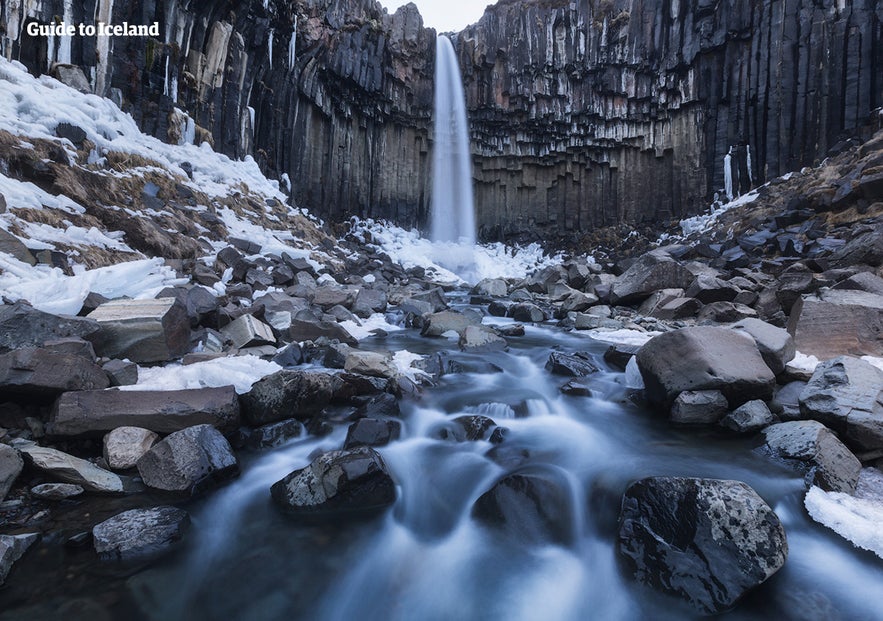
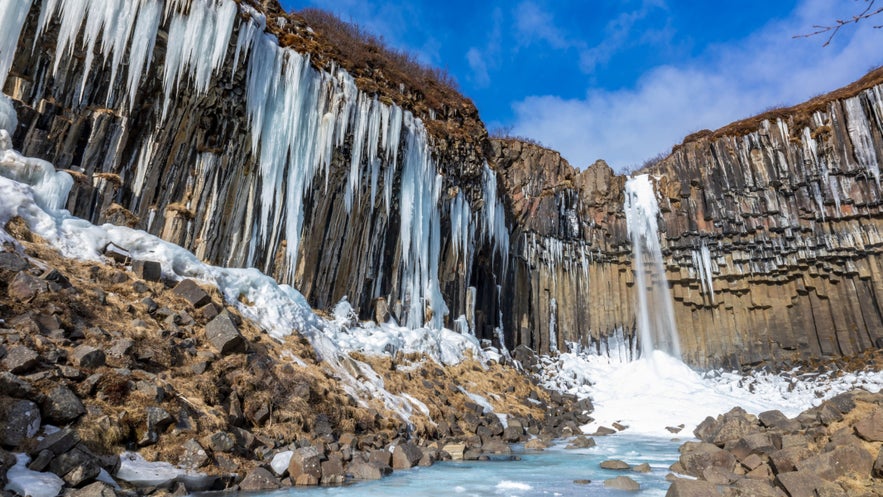
Svartifoss is best known for its striking hexagonal basalt columns, which frame the waterfall and lie scattered at its base like broken stone pillars. These dark, geometric formations are what give the waterfall its name, as Svartifoss translates to “Black Falls.”
Similar basalt columns can be found in other places in Iceland, including the Gerduberg Cliffs on the Snaefellsnes Peninsula and Reynisfjara Black Sand Beach on the South Coast.
What sets Svartifoss apart, however, is the dramatic contrast between the jet-black basalt and the rushing white water, creating a powerful and surreal scene.
The unique geology surrounding Svartifoss has inspired artists and architects for generations. The most famous example is Hallgrimskirkja Church, Reykjavik’s most famous landmark, with its stepped facade inspired by Svartifoss’s basalt columns and the shape of Thor’s hammer.
You can also see the influence of Svartifoss in the National Theatre of Iceland, as well as in Richard Serra’s artwork Milestones on Videy Island, further highlighting the waterfall’s lasting cultural impact.
Best Time To Visit Svartifoss Waterfall
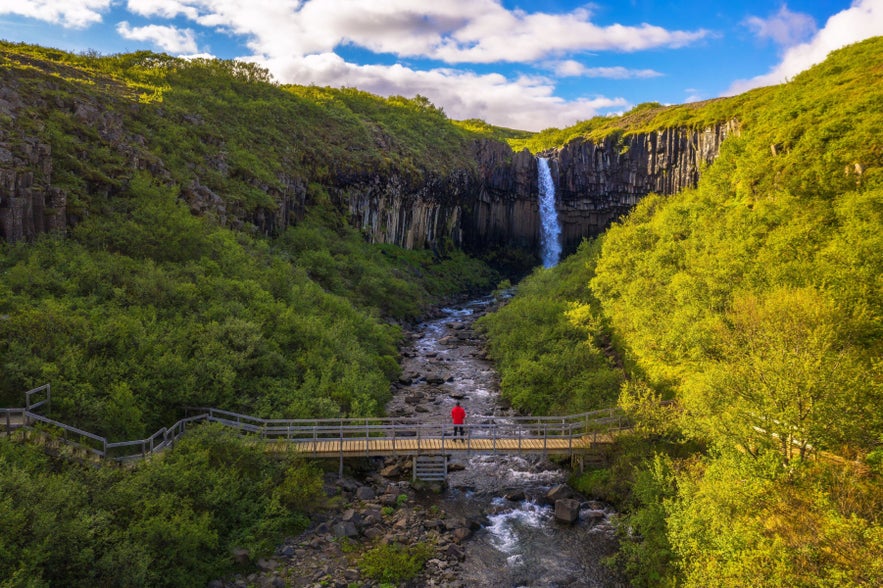
Summer is the best time to visit Svartifoss, when the Svartifoss trail is clear, the weather is milder, and daylight stretches well into the evening. From June to August, the surrounding birch forests are lush and green, making the walk especially scenic and easy to navigate. During this time, the contrast between the bright white waterfall and the dark basalt columns is at its most striking.
Thanks to better trail conditions and longer daylight hours during summer in Iceland, the Svartifoss hike is more comfortable for visitors of all experience levels. With summer self-drive tours in Iceland, you can see Svartifoss and other South Coast highlights on your own schedule, enjoying flexibility while following a suggested itinerary.
That said, you can still visit Svartifoss during winter in Iceland, and the experience is completely different. Snow and ice transform the waterfall into a dramatic sight, with frozen basalt columns and far fewer visitors.
The Svartifoss trail can be icy and more challenging at this time, so winter trips are best done by joining guided Skaftafell tours, where experienced guides provide safety equipment and local knowledge.
Tips for Visiting Svartifoss Waterfall
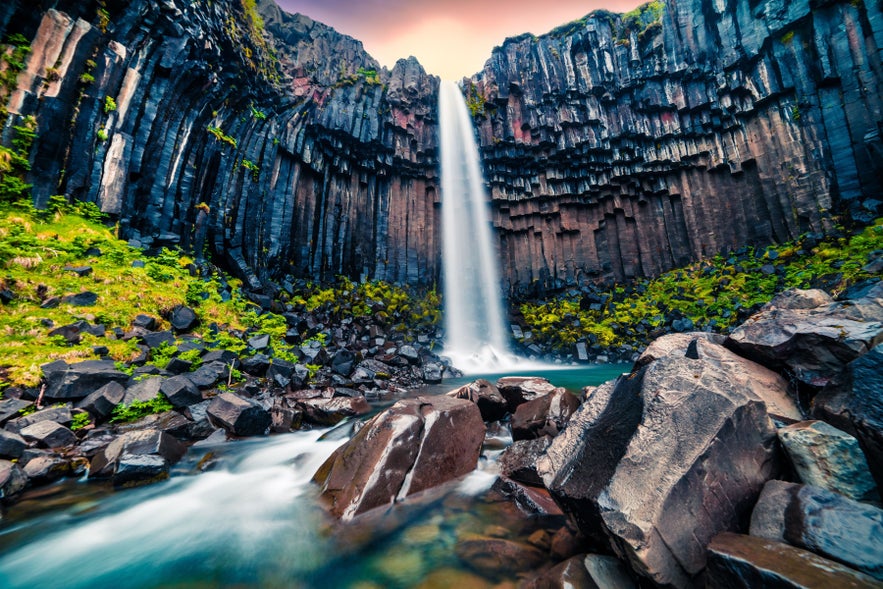 A little planning can make your visit to Svartifoss easier and more enjoyable. Here are some helpful tips to keep in mind:
-
Dress in layers. Icelandic weather can change quickly, so wear waterproof clothing and sturdy hiking shoes.
-
Bring a trekking pole. It can help with balance and make the moderately uphill Svartifoss hike easier, especially on slippery or rocky sections.
-
Stay on the trail. This protects the fragile moss and the surrounding natural environment.
-
Combine with other hikes. Skaftafell has multiple trails worth exploring if you have time. You can get information at the Visitor Center and maps to plan the best routes.
-
Bring food and water. This is especially important if you plan to explore other trails in Skaftafell.
-
Check daylight hours. In winter, daylight is limited, so plan your hike to ensure you have enough time.
-
Consider a guided tour in winter. The hike can be icy, and guides provide safety equipment and local knowledge.
Photography at Svartifoss Waterfall
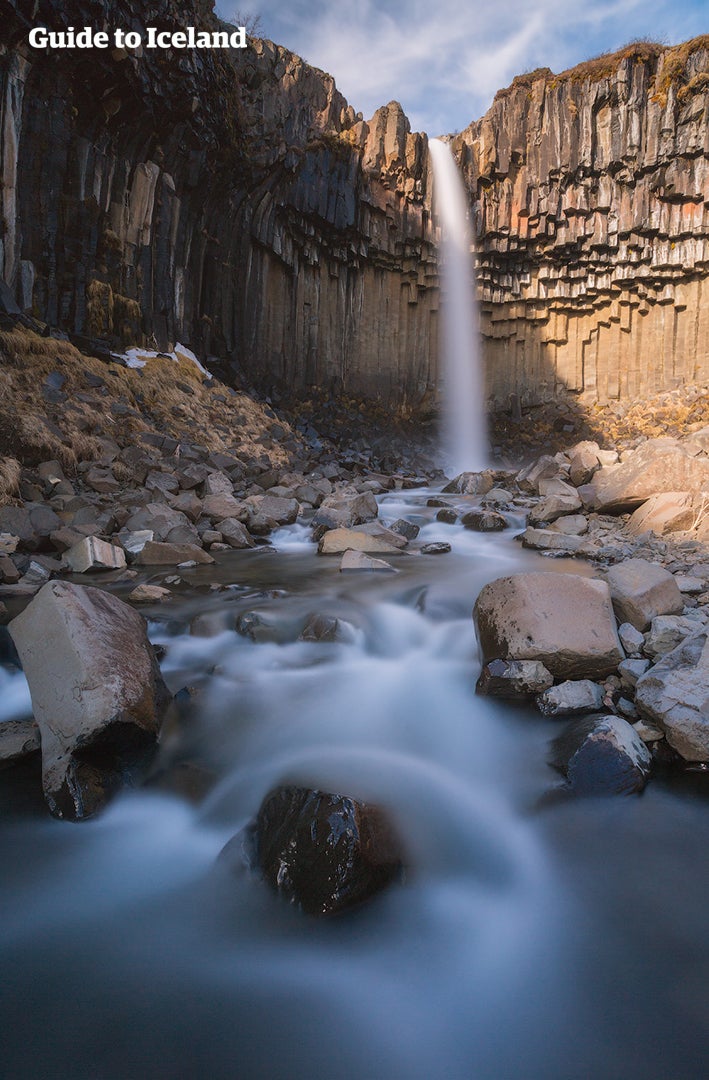
Capturing Svartifoss Waterfall in Iceland is all about highlighting its striking black basalt columns and cascading white water. To get the full effect, use a wide-angle lens to encompass the waterfall and its surrounding landscape.
Summer offers the most vibrant lighting, with mid-day sun sometimes creating rainbows in the spray. Meanwhile, overcast skies produce soft, even light that brings out the texture of the basalt. For silky, flowing water shots, a tripod and neutral density (ND) filter are essential.
Here are some additional tips to make the most of your Svartifoss photography experience:
-
Best time to shoot: Mid-day to early afternoon is ideal. Avoid early or late in the day, as the south-facing gorge can cast shadows across the waterfall.
-
Composition: Wide-angle lenses work best to capture both Svartifoss and its surroundings. You can also use the main viewing platform for safe, clear angles.
-
Lighting & exposure: The dark basalt can create high-contrast scenes. Consider using exposure bracketing or HDR to retain details in both the shadowed columns and the bright sky.
-
Gear recommendations: Bring a tripod and ND filters for long-exposure shots. A circular polarizer can reduce reflections on wet rocks and enhance the water’s contrast.
Attractions Near Svartifoss Waterfall
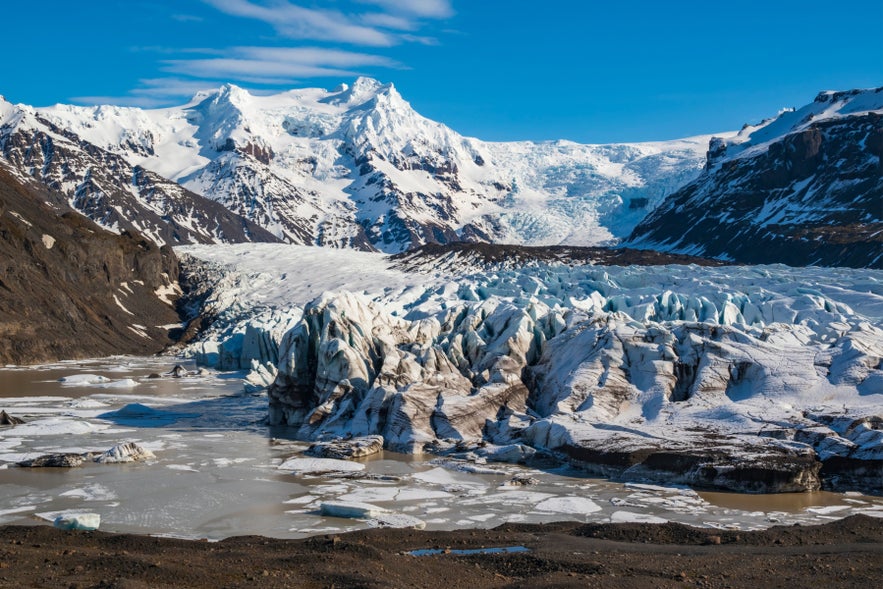
Svartifoss, located within Skaftafell, is just one highlight in an area full of natural wonders. Spending a few hours here allows visitors to explore glaciers, waterfalls, and scenic trails all in one spot.
-
Svinafellsjokull Glacier: One of Iceland’s most popular glaciers for hiking and ice climbing. Several guided glacier tours let you safely walk on the ice while taking in breathtaking views.
-
Sjonarnipa Viewpoint: A short hike leads to this viewpoint, which offers one of the best panoramic views in Iceland.
-
Hundafoss and Magnusarfoss waterfalls: Two smaller but beautiful waterfalls along the trails, perfect for a quiet stop or photography.
-
Kristinartindar Trails: Longer hikes that reward you with panoramic views of surrounding mountains, glaciers, and valleys. Perfect for those looking for a more challenging trek.
-
Skaftafell Visitor Center: Learn about the region’s glaciers, volcanic landscapes, and Icelandic flora and fauna. It’s also a helpful starting point for planning your hikes.
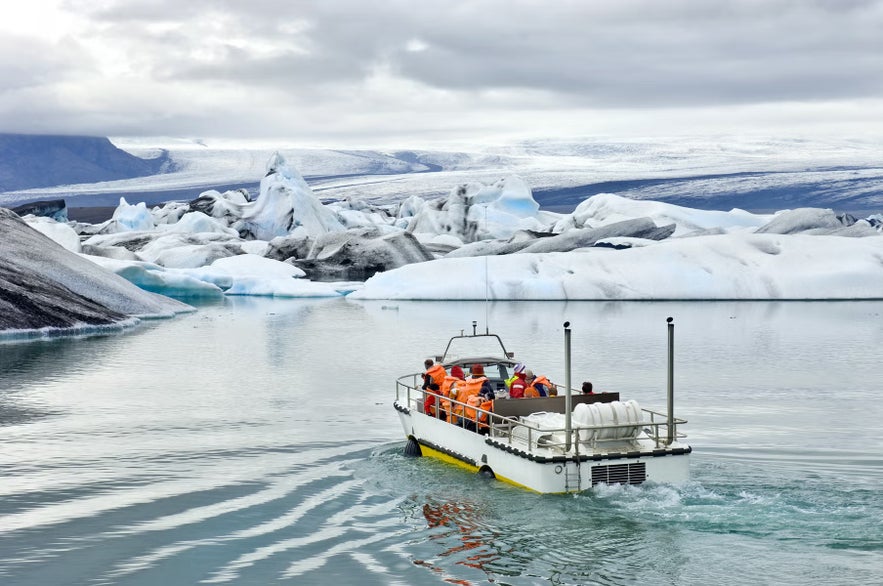
Aside from the attractions in Skaftafell, the South Coast is packed with stunning sites that are well worth visiting if you’re driving from Reykjavik along Route 1. Some highlights include:
-
Seljalandsfoss Waterfall: One of Iceland’s most famous waterfalls, where you can even walk behind the cascading water for a unique perspective.
-
Skogafoss Waterfall: Another iconic waterfall, known for its powerful flow and frequent rainbows on sunny days.
-
Myrdalsjokull and Eyjafjallajokull Glaciers: Dramatic ice caps that dominate the horizon and are perfect for glacier hikes or photography.
-
Dyrholaey Cliffs: A coastal headland offering panoramic ocean views and one of the best places in Iceland to see puffins during the summer months.
-
Reynisfjara Beach: A striking black sand beach with towering basalt columns and crashing waves, located near Vik and easily accessible from Route 1.
-
Reynisdrangar Sea Stacks: Towering basalt formations just off the black sand beaches, creating one of Iceland’s most photogenic coastlines.
-
Jokulsarlon Glacier Lagoon: A famous glacial lake with floating icebergs and seals, offering Zodiac boat tours among the ice.
-
Diamond Beach: Just across from Jokulsarlon, where ice chunks from the lagoon wash ashore on the black sand, creating a sparkling, otherworldly scene.
These stops make the drive along Iceland’s South Coast a scenic adventure, allowing you to combine waterfalls, glaciers, and coastal beauty all in one route.
Top Tours To Visit Svartifoss Waterfall
If you want to explore Svartifoss without the hassle of planning every detail, these tours and self-drive options make it easy to experience the waterfall along with other highlights of Iceland’s South Coast.
-
Mountain Trail and Waterfall Hiking Tour of Skaftafell Nature Reserve – A guided hike through scenic trails, including Svartifoss and other hidden waterfalls in Skaftafell.
-
Private Drive Your Own Super Jeep Tour in Thorsmork Valley from Reykjavik – Adventure off-road in a Super Jeep and explore dramatic landscapes, glaciers, and waterfalls.
-
3-Day South Iceland Northern Lights Winter Self-Drive Tour With Ice Caving – See Svartifoss, ice caves, and other South Coast highlights while chasing the northern lights.
-
3-Day Summer Self-Drive Tour of the Golden Circle & South Coast With Jokulsarlon – Combine Svartifoss with glaciers, lagoons, and Golden Circle sites on a flexible self-drive itinerary.
-
6-Day Self-Drive Holiday in Iceland with the Golden Circle, Blue Lagoon & Jokulsarlon – A longer self-drive tour that covers Svartifoss along with Iceland’s must-see natural highlights.
Facilities & Services Near Svartifoss
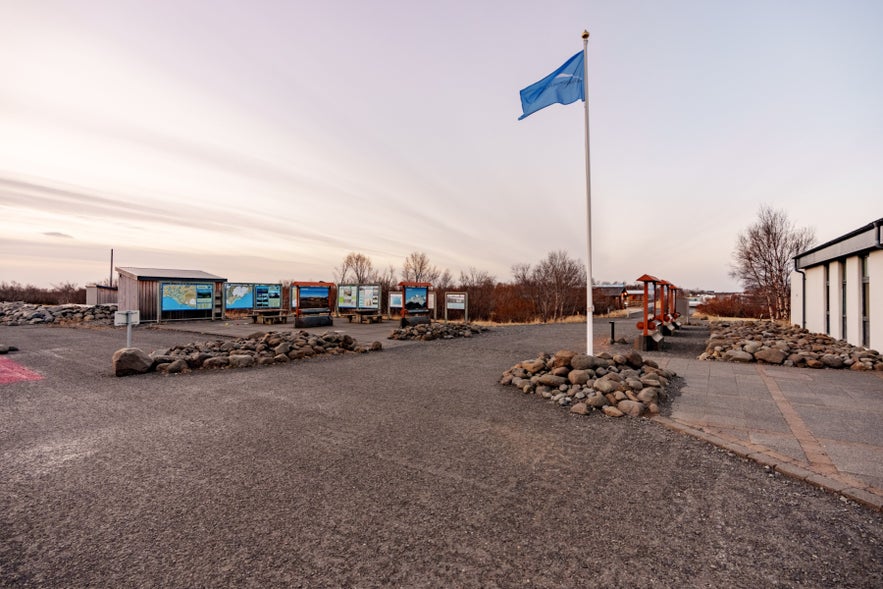
Svartifoss Waterfall is located in a well-equipped part of Vatnajokull National Park, so your visit can be comfortable and enjoyable. Near the waterfall, you’ll find:
-
Skaftafell Visitor Center: Offers maps, trail information, and helpful staff to answer questions about the hikes, including Svartifoss. You can also pick up guides on local flora, fauna, and geology.
-
Parking: Available at the Visitor Center for a small fee, which supports trail maintenance and park facilities.
-
Restrooms: Clean public restrooms are available at the Visitor Center.
-
Food & Snacks: There’s a small cafe at the Visitor Center, serving light meals, hot soup, sandwiches, and coffee. It’s mainly open during the summer and may have limited hours or be closed in winter. A food truck is sometimes available during the peak season.
-
Safety & First Aid: The Visitor Center provides safety information and emergency contact guidance. In case of injury or sudden weather changes, staff can assist visitors.
Don’t Miss Svartifoss on Your Iceland Trip
Svartifoss is one of Iceland’s most striking waterfalls, offering natural beauty, hiking adventure, and geological wonder. Whether you’re an experienced hiker or visiting for a day, this waterfall is a must-see destination on the South Coast.
You can browse the biggest selection of vacation packages in Iceland, making it easy to see Svartifoss along with glaciers, lagoons, and other iconic sights. If you prefer more flexibility, self-drive tours in Iceland allow you to explore at your own pace and stop at scenic spots along the way.
For those staying overnight, a variety of Iceland hotels and accommodations nearby make it convenient to combine the waterfall visit with other South Coast adventures.
No trip to Iceland is complete without witnessing the breathtaking basalt columns. And one of the best examples can be found at Svartifoss Waterfall itself!
What makes Svartifoss unique?
Beyond its natural beauty, Svartifoss has also left a cultural mark. Its basalt formations famously inspired Icelandic architects, most notably in the design of Hallgrimskirkja, Reykjavik’s iconic church.
How high is Svartifoss Waterfall?
How can I get to Svartifoss Waterfall?
Once you arrive, the hike begins at the Skaftafell Visitor Center and follows the well-marked Svartifoss trail. You’ll wind through birch forests, mossy lava fields, and past smaller waterfalls before reaching the main cascade.
How long is the hike to Svartifoss Waterfall?
Can I visit Svartifoss Waterfall year-round?
Is there an admission fee to visit Svartifoss?
What should I wear to visit Svartifoss?
Is Svartifoss wheelchair accessible?