Are you planning a trip to Iceland and want to see some of the nation’s man-made icons? Learn about the most famous landmarks in Iceland and discover ones that are more locally known during your adventure!
When traveling around Iceland, you’ll find varied nature and landscapes around every corner. Many of the most famous attractions in Iceland are natural landmarks, such as the Golden Circle, Skogafoss and Seljalandsfoss waterfalls, and Reynisfjara black sand beach. During your journey, you’ll also come across man-made Iceland landmarks that contrast with the surrounding landscapes.
Discover the top landmarks to see in Iceland, ranging from very famous attractions to lesser-known ones. They deserve a place on any itinerary, on a city break staying in Reykjavik accommodation or a longer tour of Iceland’s Ring Road.
Why You Can Trust Our Content
Guide to Iceland is the most trusted travel platform in Iceland, helping millions of visitors each year. All our content is written and reviewed by local experts who are deeply familiar with Iceland. You can count on us for accurate, up-to-date, and trustworthy travel advice.
Some of these landmarks can only be reached by renting a car in Iceland, which is also the most convenient way to explore the whole country. On self-drive tours in Iceland, you have complete control of your journey and can go wherever you want.
Learn about man-made attractions to see on your visit to Iceland, which reflect the country’s history and culture. They enrich any journey around the land of ice and fire.
Key Takeaways
-
Iceland’s most famous man-made landmark is Hallgrimskirkja church in Reykjavik, designed by Guðjón Samúelsson and completed in 1986.
-
The Blue Lagoon geothermal spa is the country’s most visited man-made attraction and sits a 40-minute drive from Reykjavik.
-
Reykjavik’s waterfront holds several landmarks within walking distance, including the Sun Voyager sculpture and Harpa concert hall.
-
The countryside hides lesser-known landmarks such as the Eggs of Merry Bay in the Eastfjords and the Kleifakarl Stone Man in the Westfjords.
-
Most of these landmarks are easiest to reach with a rental car, and many sit along the Ring Road.
- For your adventure, choose from the best accommodation in Iceland
- See also: the Best Attractions by the Ring Road of Iceland
Map of the Best Landmarks in Iceland
Explore the top sites in Iceland above, all conveniently pinpointed on a map to help you plan your journey.
16. The Kleifakarl Stone Man
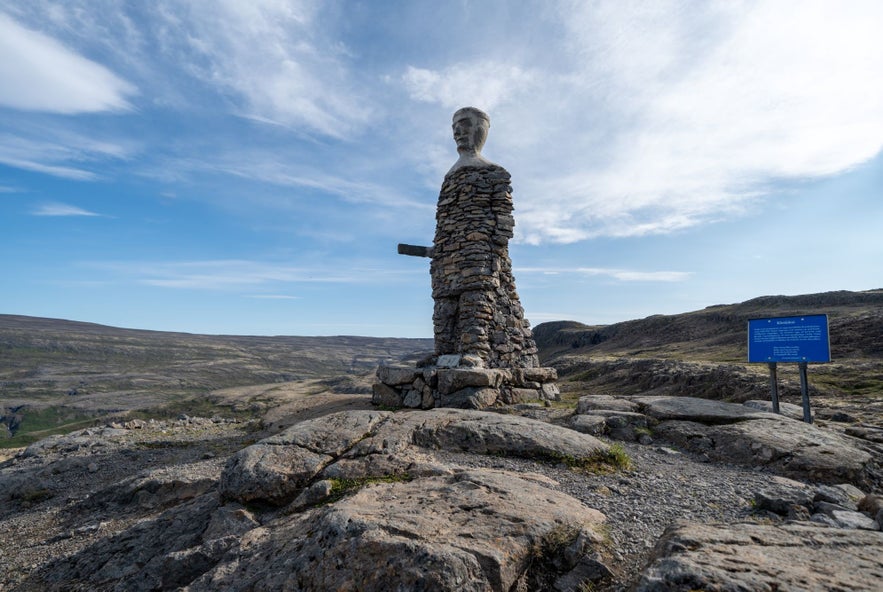
The Kleifakarl Stone Man is the largest cairn in Iceland, a towering stone figure beside Road 62 on the Kleifaheidi heath in the Westfjords. Sometimes called “Kleifakarl” or “Kleifabúi,” he sits around a 20-minute drive from Patreksfjordur village, surrounded by empty fjords and mountains.
The stone man was built in 1947 by road construction workers having fun after a hard day’s work. He stands by the road, greeting passersby with an outstretched hand, and today he marks a rest stop on top of the Kleifaheidi heath, complete with a picnic bench and wide views. Say hello when traveling around the Westfjords, and look out for him on tours in the Westfjords.
- Learn more about the Two Stone Men in the Westfjords
- Also, plan your trip with the Ultimate Guide to the Westfjords of Iceland
15. The Eggs of Merry Bay
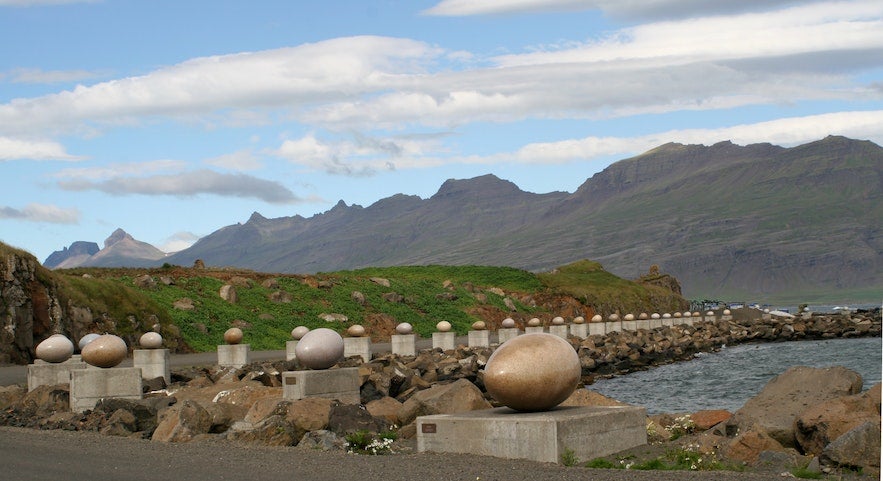
Photo from Wikimedia, Creative Commons, by Ira Goldstein. No edits made.
The Eggs of Merry Bay, known as “Eggin í Gleðivík” in Icelandic, is an art installation of 34 granite eggs lining the shore at Djupivogur in the Eastfjords. Each egg represents a different Icelandic bird that nests in the area.
The artwork was created by Sigurður Guðmundsson and inaugurated in 2009. The eggs line Gledivik bay, and the walk along the whole row is around 656 feet (200 meters), with the surrounding mountains in view. To reach them, you make your way through the industrial harbor of Djupivogur. Afterward, stop by the Langabud Cultural Center to learn more about the area.
- Discover the Best Places to Visit in East Iceland
- Learn more: Djupivogur Village and the Eggs at Gleðivík Bay
14. Seydisfjardarkirkja Church
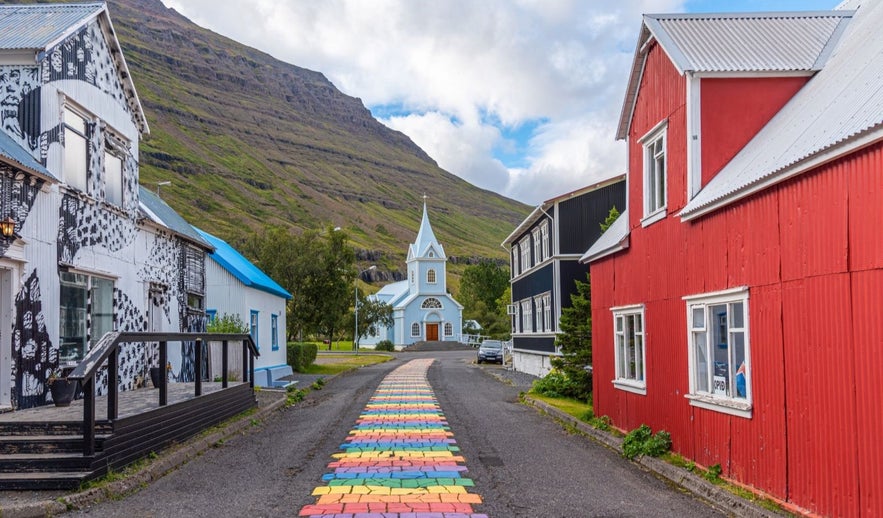
The Seydisfjardarkirkja church is a soft-blue wooden church in the town of Seydisfjordur in East Iceland, and one of the area’s most recognized buildings. Its color and early 20th-century design set it apart from the natural landscape, and it draws visitors interested in the cultural heritage of Iceland.
Seydisfjordur may be the first place you see in Iceland if you arrive by ferry from mainland Europe. If you arrive at Keflavik International Airport instead, you drive the Ring Road to the Eastfjords, a journey of eight to ten hours depending on whether you travel through South or North Iceland. Spread the trip over several days by staying in hotels around Iceland or traveling with a rental campervan.
13. Bárður Snæfellsás Statue
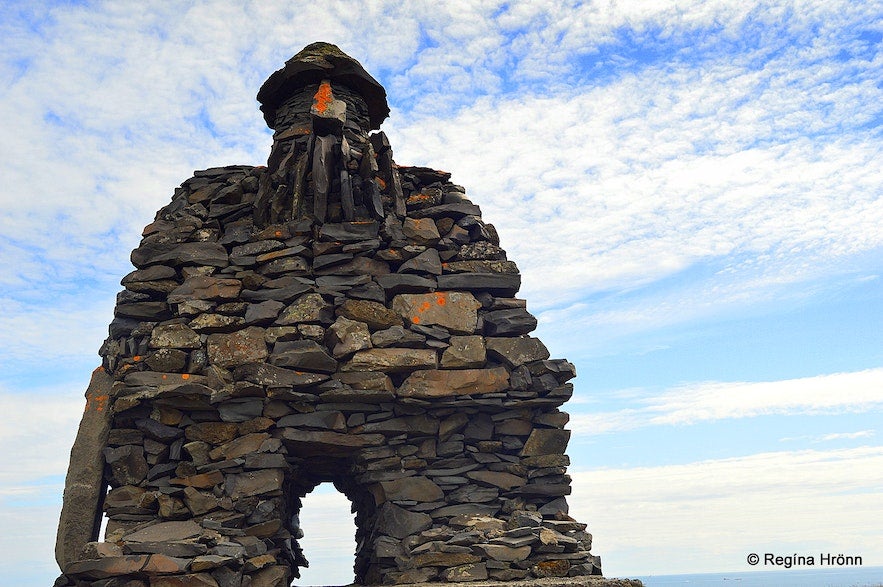
The Bárður Snæfellsás statue is a 19.6-foot (6-meter) stone figure of a mythical guardian, standing in the village of Arnarstapi on the Snaefellsnes peninsula. The sculptor Ragnar Kjartansson made it in 1985, and it has become one of the area’s defining landmarks.
Bárður Snæfellsás is a figure rooted in Icelandic literary history. According to the Icelandic sagas, he was a half-human, half-troll settler who became entwined with the supernatural, possessing great wisdom and mystical abilities. He is revered as the guardian spirit of the Snaefellsnes peninsula, where he protects and guides its inhabitants.
As you travel the peninsula, you will also see natural landmarks such as the Kirkjufell mountain and the Snaefellsjokull glacier. Visiting Arnarstapi is one of the top things to do on the Snaefellsnes peninsula, so stop by the statue and explore the surrounding nature.
12. The Arctic Henge
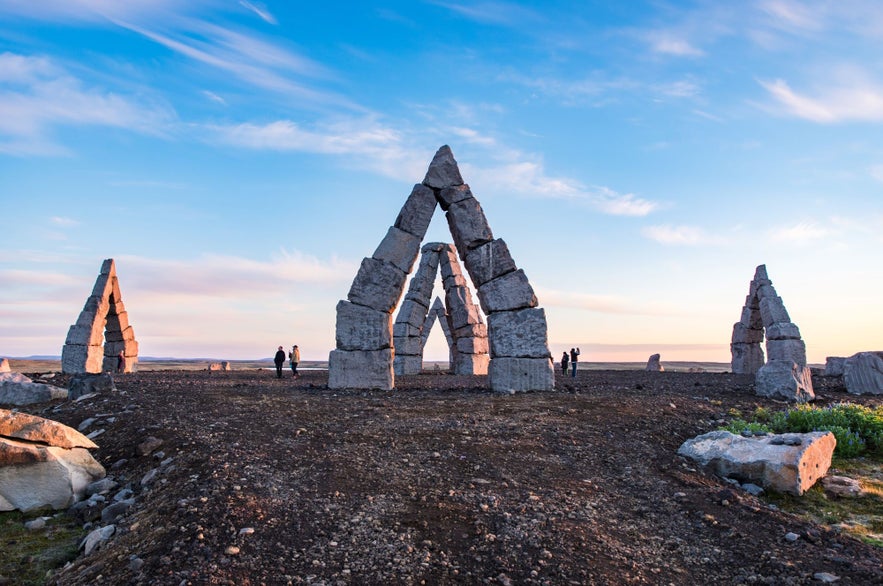
The Arctic Henge, known as “Heimskautsgerði” in Icelandic, is a large stone monument in Raufarhofn, the northernmost village on mainland Iceland. Its contemporary design draws on Norse mythology and functions as a giant sundial that frames the Arctic light and shadow patterns.
Work began on the structure in 1996. The main arches and central column are complete, and the site is open to visitors, while community-led additions continue to take shape, drawing on the Norse Eddas and sagas. It sits just over a two-hour detour from the Ring Road, with lovely nature and small villages along the way. Each season shows a different side of the Arctic Henge, and it makes a striking foreground for the northern lights.
- See more: Vikings and Norse Gods in Iceland
- See also: The Best Time to See the Northern Lights in Iceland
11. Imagine Peace Tower
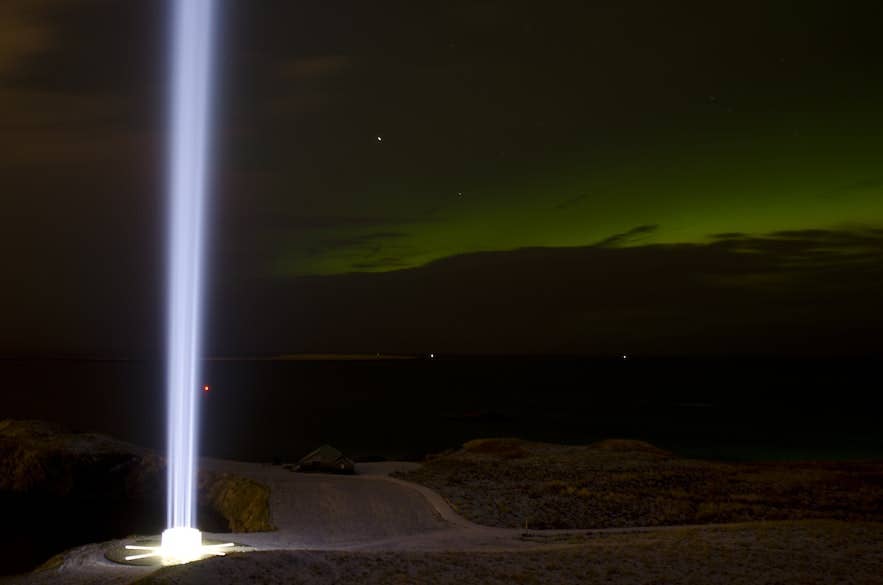
The Imagine Peace Tower is a memorial artwork on Videy Island off the coast of Reykjavik, visible across the Capital Region only between October 9th and December 8th each year. Conceived by Yoko Ono in memory of John Lennon, it projects a tall column of light into the night sky as a symbol of peace and hope.
The base carries the words “Imagine Peace” in multiple languages. Each year the tower is lit on Lennon’s birthday, October 9th, and turned off on the date of his death, December 8th, a beacon of light as the winter darkness takes over.
To visit, take a ferry from Reykjavik to Videy Island, a trip of around 5 to 10 minutes each way depending on weather. On the island, explore the nature and birdlife and stop by the historic Videy House and church, two of the oldest buildings in Iceland. The site is part of the Reykjavik City Museums, and access is included in the Reykjavik City Card.
- Check out the Ultimate Guide to Downtown Reykjavik
- See also: Top 10 Museums in Reykjavik
10. Vikurkirkja Church
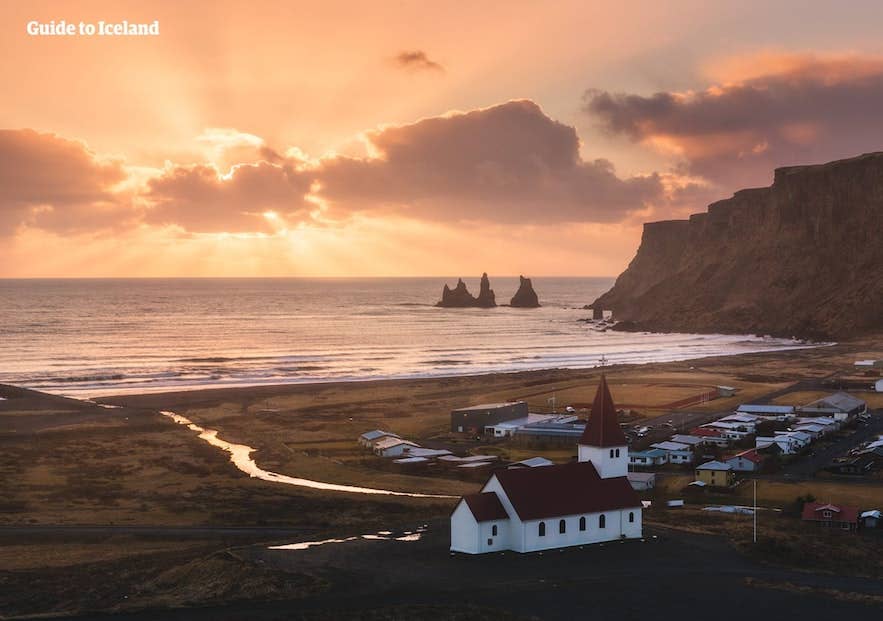
Vikurkirkja, known as “Víkurkirkja” in Icelandic, is a white church with a red roof that sits atop a cliff above the town of Vik on Iceland’s South Coast. Built in 1934, it overlooks the town, its black sand beach, and the Reynisdrangar sea stacks.
The town of Vik is around a 3-hour drive from Reykjavik and a popular stop on South Coast tours, especially in summer when the hillside around the church fills with flowering lupines. It is also a convenient resting point along the Ring Road, with good accommodation options in Vik and plenty to do, including Vik tours. Stop by the Vikurkirkja church as you travel the South Coast to take in the view.
- Check out the Ultimate Guide to Iceland’s South Coast
- Discover all the Best Restaurants in Vik
9. Budakirkja Church
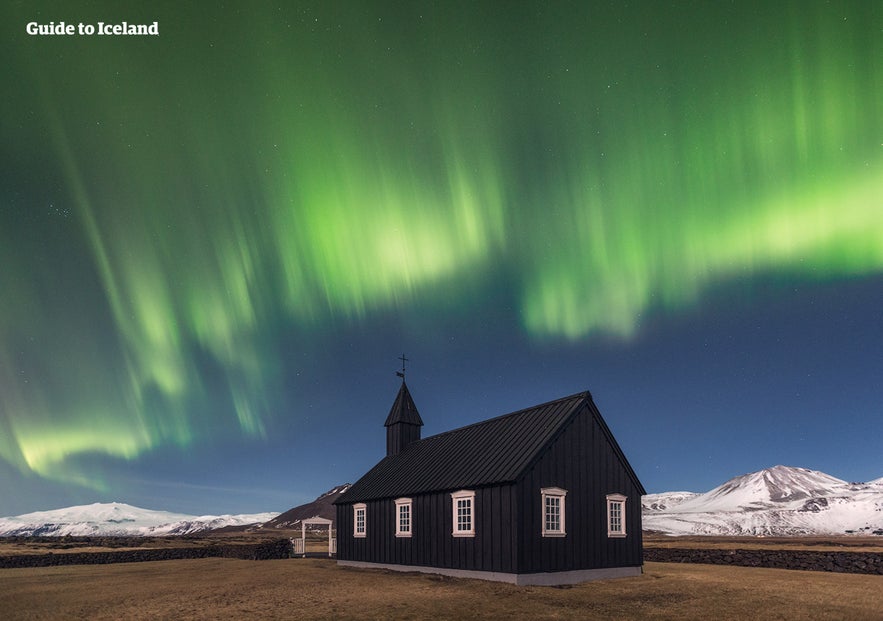
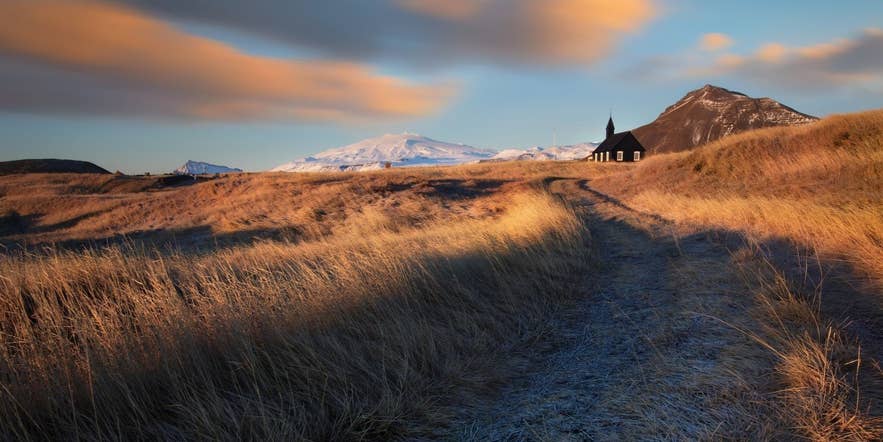
The Budakirkja church is a black wooden church on the Snaefellsnes peninsula in West Iceland, dating to the 19th century. Its black timber and white window frames make it one of the most photographed churches in the country.
Budakirkja is a two-and-a-half-hour drive from Reykjavik and a popular stop on Snaefellsnes tours, especially among photographers hoping to capture the sunset or the northern lights. The whole peninsula suits day trips from Reykjavik, and there are Snaefellsnes accommodations if you want more time in the region. You can even stay at Hotel Budir, right next to the church.
8. Bridge Between the Continents
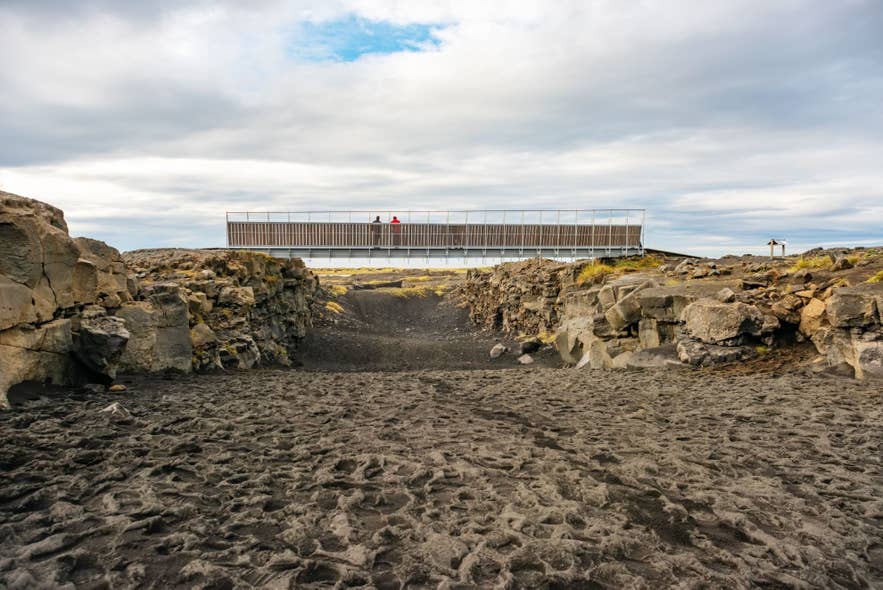
The Bridge Between Continents is a footbridge on the Reykjanes peninsula that spans the rift between the Eurasian and North American tectonic plates, letting you walk from one continent to the other. It sits on the Mid-Atlantic Ridge, where the plates pull apart an average of 0.7 inches (2 centimeters) per year.
That same plate boundary is why Iceland sees frequent volcanic eruptions and vast lava fields, as magma rises to the surface where the plates diverge. The bridge is easy to reach with a small rental car, around an hour’s drive from Reykjavik and 20 minutes from Keflavik Airport, and it is a stop on many Reykjanes tours.
- Discover Iceland’s Volcanoes: The Complete Guide
- Also, learn about Volcanic Eruptions in Iceland
7. Akureyrarkirkja Church
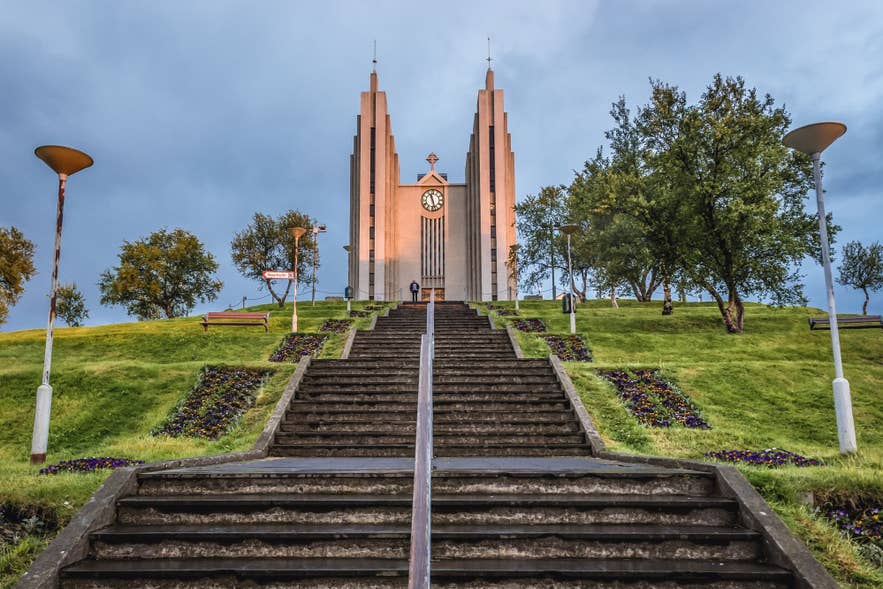
Akureyrarkirkja is a modernist church that towers over the town of Akureyri in North Iceland, and one of the most recognized churches in the country. Completed in 1940, it was designed by Guðjón Samúelsson, the architect behind Reykjavik’s Hallgrimskirkja. Both were inspired by the Icelandic landscape, reflected in their shapes.
The church sits atop a hill and offers panoramic views of the town and surrounding mountains. During town festivals, locals compete to sprint up the steps fastest. To visit, travel to Akureyri by car, bus, or domestic flight from Reykjavik, then pick up a rental car in Akureyri or join Akureyri tours. The church is right by the town center, near Akureyri accommodations and other attractions.
- Learn about all the best things to do in Akureyri
- See also: Akureyri, the Capital of North | Culture, History and Activities
6. Perlan
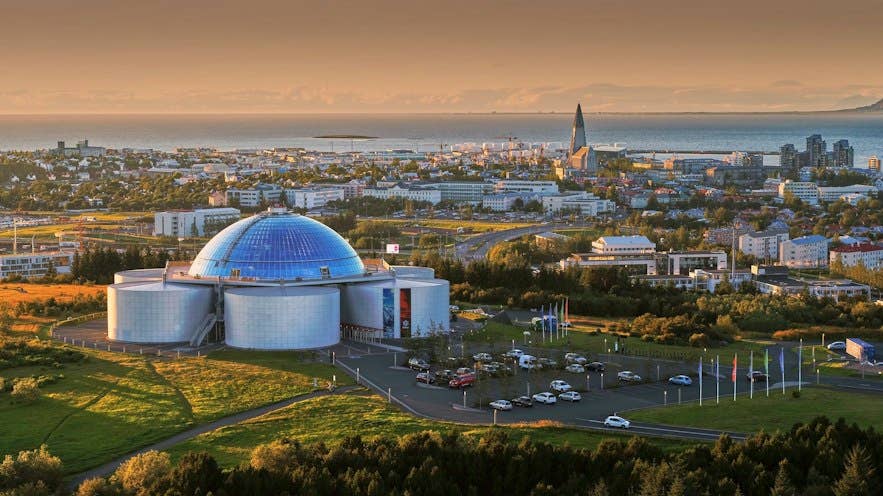
Perlan is a glass-domed building on a hill above Reykjavik that houses the Wonders of Iceland museum and a 360-degree observation deck. Originally built as hot water tanks, it now holds exhibitions on Icelandic natural wonders like volcanoes and glaciers, complete with a real ice cave and a northern lights show.
The glass dome offers views across Reykjavik and its surroundings, and the building also has a restaurant, café, and ice-cream parlor. To reach Perlan, it is easiest to drive or take public transportation, though you can also walk there in about 40 minutes from the city center. If you plan to visit, book your Wonders of Iceland tickets ahead of time.
5. Solheimasandur Plane Wreck
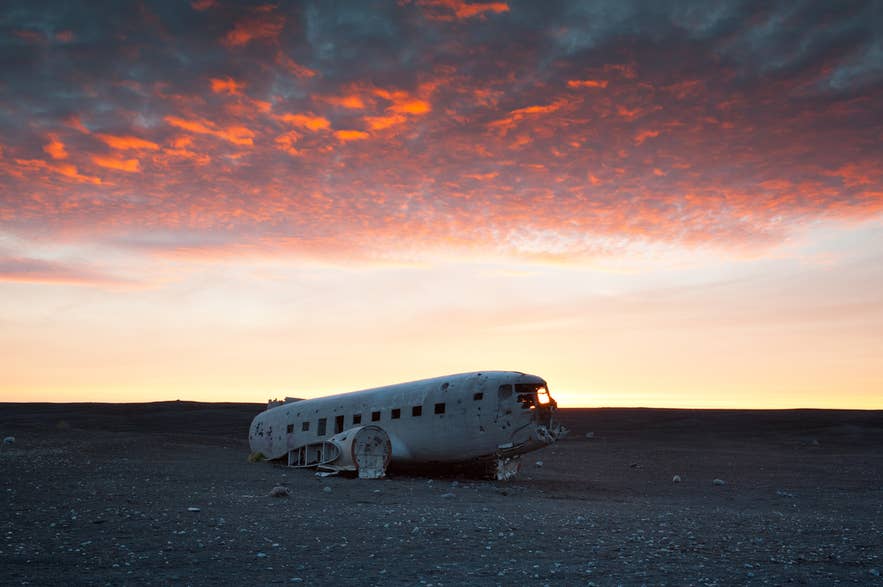
The DC-3 Plane Wreck is the remains of a US Navy DC-3 aircraft that crash-landed on the Solheimasandur black sand beach in 1973. All crew members survived, and the fuselage has stayed on the sand ever since, set against the stark landscape of Iceland’s South Coast.
Visiting takes some effort, as the wreck sits about 2.5 miles (4 kilometers) from the Ring Road. You hike to the plane along a marked path, a relatively easy walk over flat sands that takes around 45 to 50 minutes one way. The site is especially good under the midnight sun or the winter northern lights, so dress warmly.
If you prefer to skip the walk, take the shuttle to the DC-3 plane wreck for a quicker visit. You can use the time saved to go glacier hiking on the Solheimajokull glacier or visit the lighthouse on the nearby Dyrholaey peninsula.
4. Harpa Concert Hall
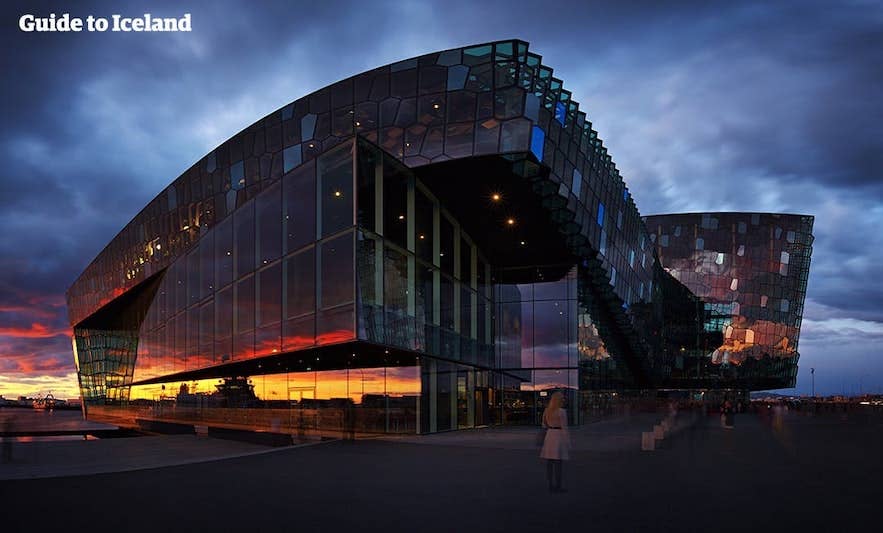
Harpa is a concert hall and conference center on Reykjavik’s old harbor, recognized for its geometric glass facade. Completed in 2011 and designed by Ólafur Elíasson with Henning Larsen Architects, it is the main hub for concerts, conferences, and performances in Iceland.
The glass panels reflect the sunset by day, and in the evening, the front is lit with colors and patterns. The interior is worth exploring, and you can dine at a restaurant on the ground floor of Harpa. Events run throughout the year, and the building sits in the main downtown area by the old harbor, reachable on foot from many attractions or by public bus. There is also underground parking for your Reykjavik rental car.
3. The Sun Voyager Sculpture
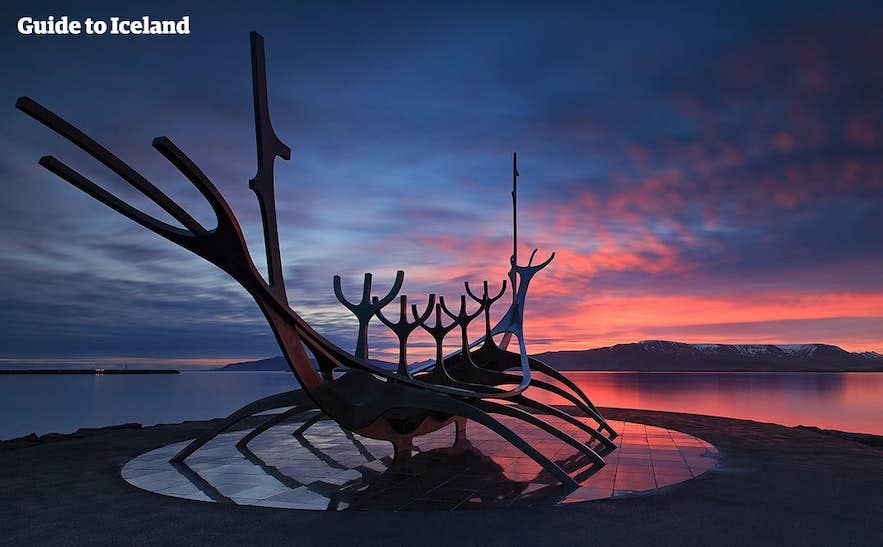
The Sun Voyager, or “Sólfarið,” is a stainless steel sculpture on Reykjavik’s waterfront that symbolizes the sun, exploration, and new beginnings. It is often mistaken for a Viking ship, but the artist Jón Gunnar Árnason (1931–1989) intended it as a dreamboat and an ode to the sun. It is one of the most visited attractions in the capital.
The sculpture stands along the waterfront, a 10-minute walk from the Harpa Concert Hall. Walk the shoreline to find more attractions, including small lighthouses and other artwork, and continue all the way to the Grotta nature reserve for views over Faxafloi bay and the Esjan mountain. The path is especially good at sunset, and with luck you can catch the sculpture with the northern lights behind it.
- The Sun Voyager is one of the Best Places to See the Northern Lights in Reykjavik
2. The Blue Lagoon
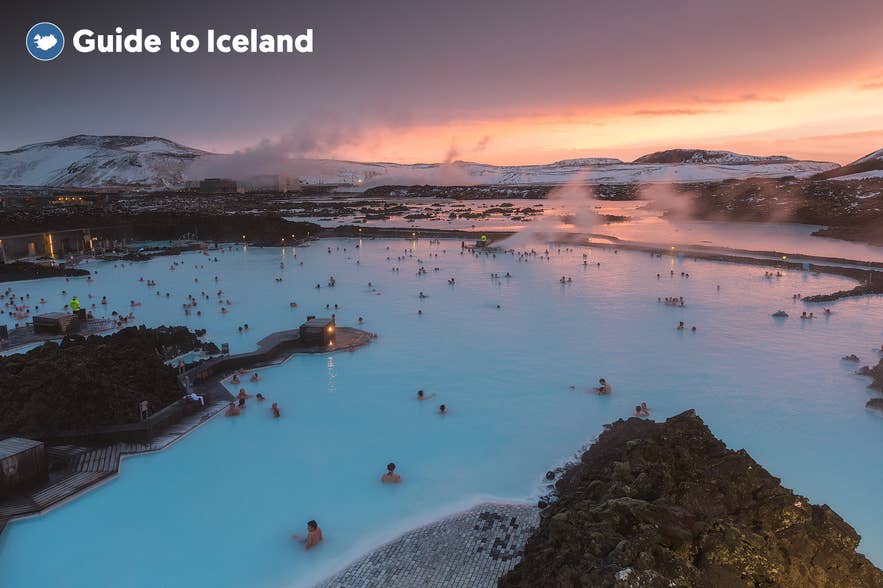
The Blue Lagoon is a geothermal spa set in a lava field on the Reykjanes peninsula, and one of Iceland’s most visited attractions. Its milky-blue, mineral-rich water, especially the silica mud, is known for its effect on the skin, and you can add services like massages and facials.
The spa is surrounded by mossy lava fields and volcanic terrain, a place to unwind and take in the country’s bathing culture. As one of the most popular attractions in Iceland, it is important to book your Blue Lagoon entry well in advance. It is around a 40-minute drive from Reykjavik and 30 minutes from Keflavik International Airport, and you can find Blue Lagoon tours and airport shuttles that bring you to and from the spa.
- See more: Iceland’s Blue Lagoon: The Ultimate Travel Guide
- See also: The Best Hotels Near The Blue Lagoon in Iceland
- Learn about Swimming Pool Etiquette in Iceland
1. Hallgrimskirkja Church
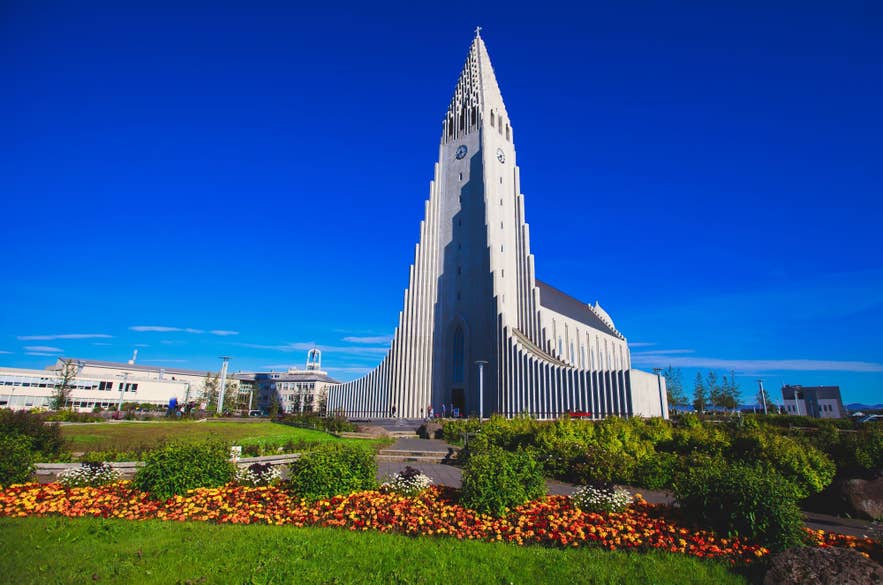
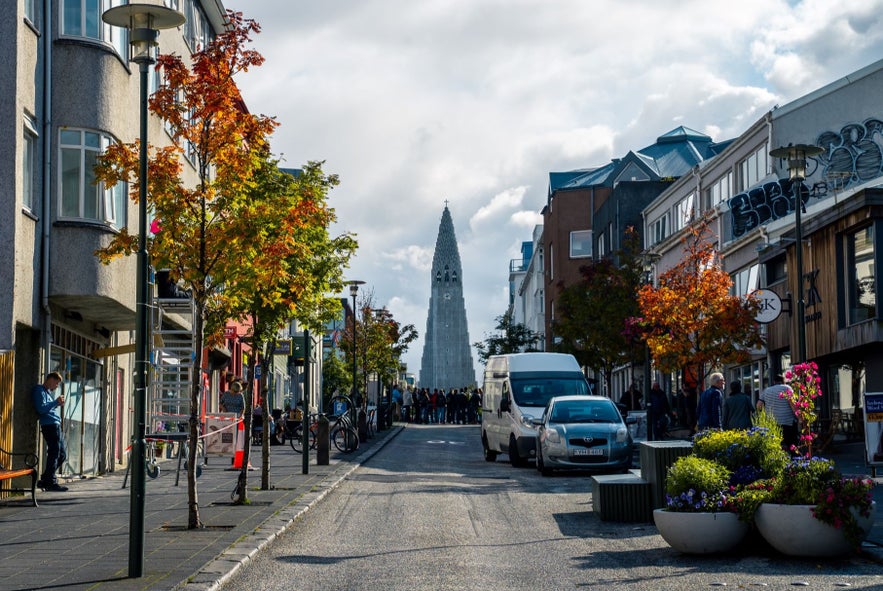
Hallgrimskirkja is a 74.5-meter (244-foot) Lutheran church in central Reykjavik and the most recognized landmark in Iceland. Designed by architect Guðjón Samúelsson, its towering facade resembles the hexagonal basalt columns found in Iceland’s nature. Construction started in 1945 and finished in 1986, making it the tallest church in Iceland and the second-tallest building in the country.
Inside, visitors can see the minimalist design and the pipe organ, which has more than 5,000 pipes. You can also go up the church tower for panoramic views of Reykjavik and the surrounding area.
The church faces the rainbow-painted Skolavordustigur street and other shopping streets in Reykjavik, lined with stores, galleries, cafés, restaurants, and cultural attractions. This Reykjavik landmark belongs on any Iceland itinerary.
- Enhance your city trip by dining at the Best Restaurants in Reykjavik
- Also, discover the Best Shops in Reykjavik
What is the most famous landmark in Iceland?
Is the Blue Lagoon a natural or man-made landmark?
What is the most photographed sculpture in Iceland?
Can you visit Iceland’s landmarks without a car?
What is Iceland’s oldest landmark on this list?
Summary of the Top Landmarks in Iceland
Iceland’s landmarks offer a wide range of experiences for visitors. From the Blue Lagoon and Hallgrimskirkja church to artworks and historic buildings around the country, each one gives insight into Iceland’s cultural and artistic heritage. As you explore Reykjavik and the countryside, let these landmarks guide your route alongside the natural attractions along the Ring Road.
They complement the landscapes while celebrating Icelandic culture, and they help make any journey around the country more memorable.
Which of these locations will you add to your wish list? Are you planning a trip to Iceland? Have you visited any of these landmarks before? Share your thoughts and experiences in the comment section below!

I'm an Icelandic folklorist writing about Icelandic nature and culture for travelers. I share practical guides, cultural insights, and tips on hidden spots, helping you experience the best of Iceland and maybe come to love it as much as I do!