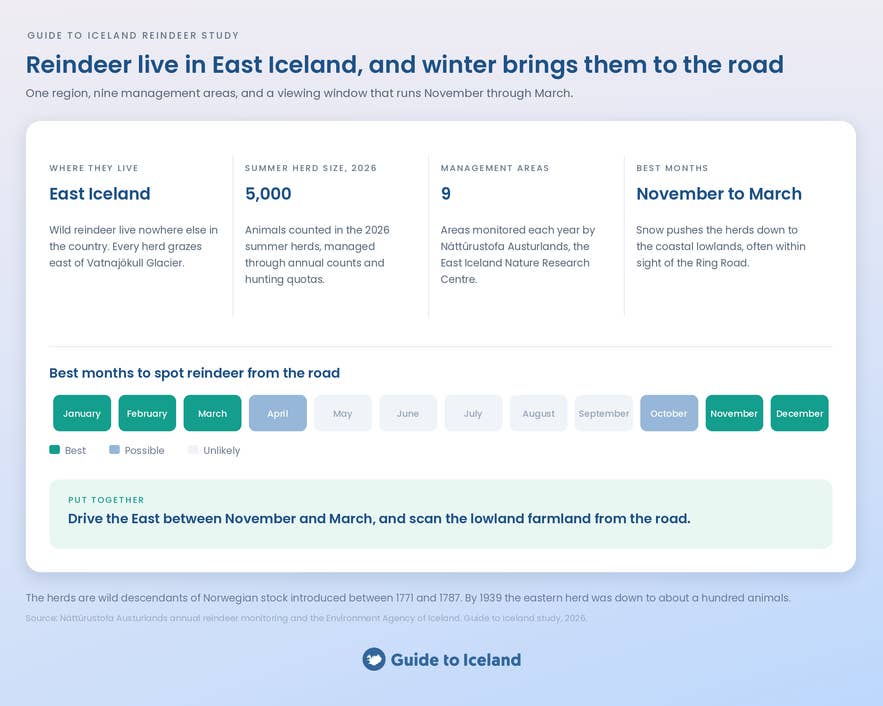
Reindeer live only in East Iceland and nowhere else in the country. This Guide to Iceland study maps East Iceland’s wild herds by area and by month, and ranks the five areas by winter sighting likelihood.
Reindeer in Iceland are the easiest animal to locate and the trickiest to time. Get the region right and the season wrong, and you can drive the whole of East Iceland without seeing one.
This Icelandic wildlife is a descendant of Norwegian stock introduced between 1771 and 1787. Several reindeer herds were established around the country, but only the eastern one survived.
The Ministry for the Environment, Energy and Climate puts the summer population at about 5,000 animals in 2026. Icelandic reindeer are split across nine management areas, and every one of those areas lies east of Vatnajokull Glacier.
Guide to Iceland analyzed published monitoring reports to map reindeer in Iceland by season. We then ranked every area by how likely a winter sighting is from the road.
Reindeer are the largest wild land mammal in Iceland, and you can spot them from the road on self-drive tours through East Iceland. Every viewing area in this study sits beside a public road, so a wildlife tour in Iceland or driving in a rental car can reach them.
Key Findings
-
East Iceland is the only place in the country where wild reindeer live. Every area in this study that sits outside East Iceland scores zero on our winter sighting index, because no wild herd lives in the rest of Iceland.
-
Iceland’s summer reindeer herds held about 5,000 animals in 2026. Those animals are split across nine hunting areas and 19 grazing areas that the monitoring reports of Náttúrustofa Austurlands track individually.
-
Iceland's reindeer herds move to the coastal lowlands from November through March. Roadside sighting likelihood peaks across East Iceland in these months.
-
Fljotsdalsherad around Egilsstadir ranks first on the winter sighting index. Herds come down to the farmland there from November through March.
-
The Eastfjords between Reydarfjordur and Djupivogur also score high on the winter sighting index. Herds graze the fjord slopes directly above the road through the winter months.
-
The Jokuldalur valleys and the Vopnafjordur uplands hold wintering herds. These areas see far fewer travelers than the fjord route.
-
The Hofn hinterland and Lonsoraefi form the southern end of the winter reindeer range. Almannaskard Pass near Hofn is the closest reindeer come to Iceland’s main tourist route.
-
The Snaefell highlands hold Iceland's reindeer herds from May through August, during calving and summer grazing. This area scores low in winter, and reaching it requires a highland vehicle or a hike.
Cite This Study
The charts and data in this study are free to use under CC BY 4.0. Credit Guide to Iceland and link to this page. Every chart has an Embed button underneath it with ready-to-paste code.
Reindeer Live in East Iceland and Nowhere Else in the Country
The reindeer population in Iceland runs from the Snaefell Mountain to the fjords and valleys of East Iceland. Monitoring reports from Náttúrustofa Austurlands divide this range into nine hunting and management areas and 19 reindeer grazing areas.
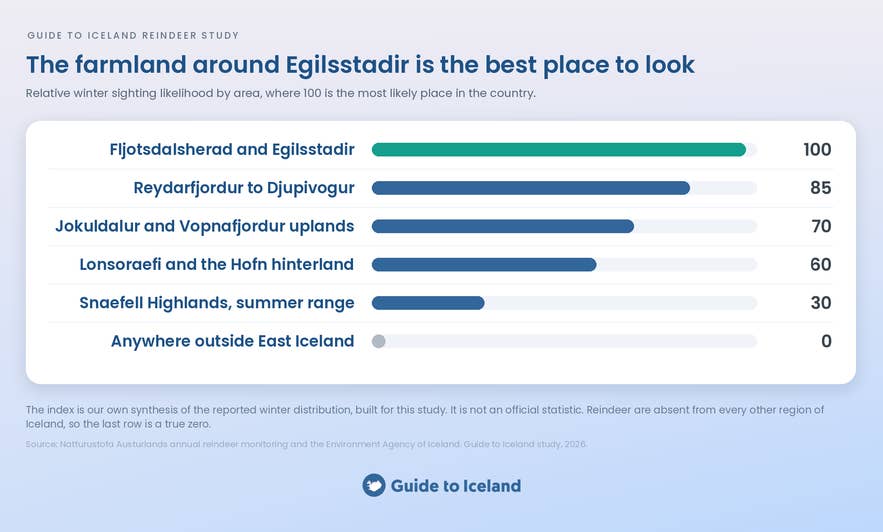
Guide to Iceland built a winter sighting index from that reported distribution. This index ranks the five main areas where travelers look for reindeer in Iceland. The index scores those five areas from 0 to 100, where 100 marks the area with the strongest reported winter presence.
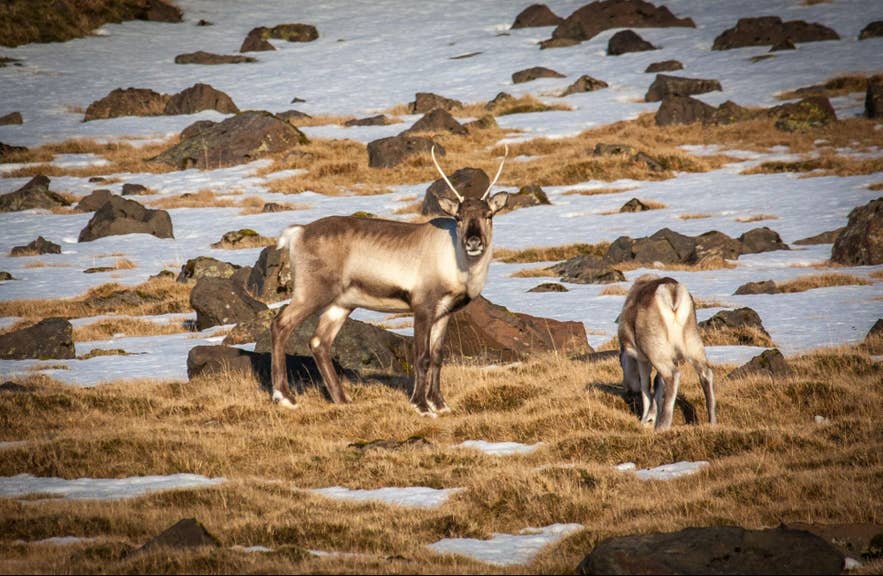
Fljotsdalsherad and the farmland around Egilsstadir score 100 on our winter sighting index. This is the highest score because monitoring reports show reindeer in this area most consistently during winter in Iceland.
The 100-point score represents the highest reported winter presence among the areas included in the study. Other areas are measured against Fljotsdalsherad, so a score of 85 indicates that reindeer are seen in winter almost as often, while a score of 30 indicates a much lower presence.
The Eastfjords between Reydarfjordur and Djupivogur score 85 on the winter reindeer sighting index. Jokuldalur and the Vopnafjordur uplands follow at 70, and Lonsoraefi with the Hofn hinterland at 60.
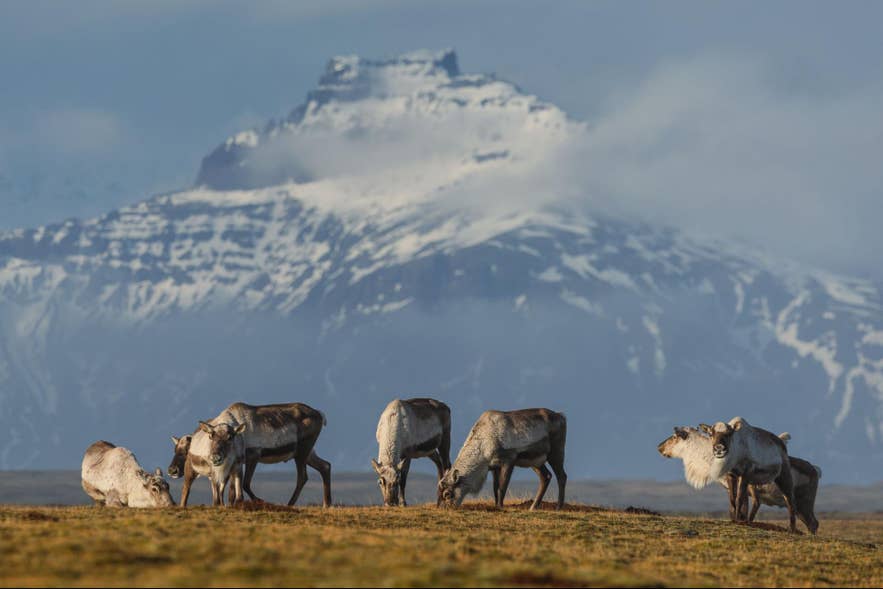
The Snaefell highlands score 30, but this reflects their importance as a summer reindeer range rather than a strong area for winter sightings. Areas outside East Iceland score 0 because wild reindeer do not have established populations elsewhere in Iceland.
The winter reindeer sighting index compares the reported distribution of reindeer between areas rather than counting the animals in each area. A higher score therefore indicates a more frequently reported winter range, not a larger reindeer population.
For travelers looking for reindeer in Iceland between November and March, the index shows which parts of East Iceland have the strongest reported winter presence. The methodology section explains how the winter reindeer sighting index was calculated.
Mapping the Largest Reindeer Herds in Iceland
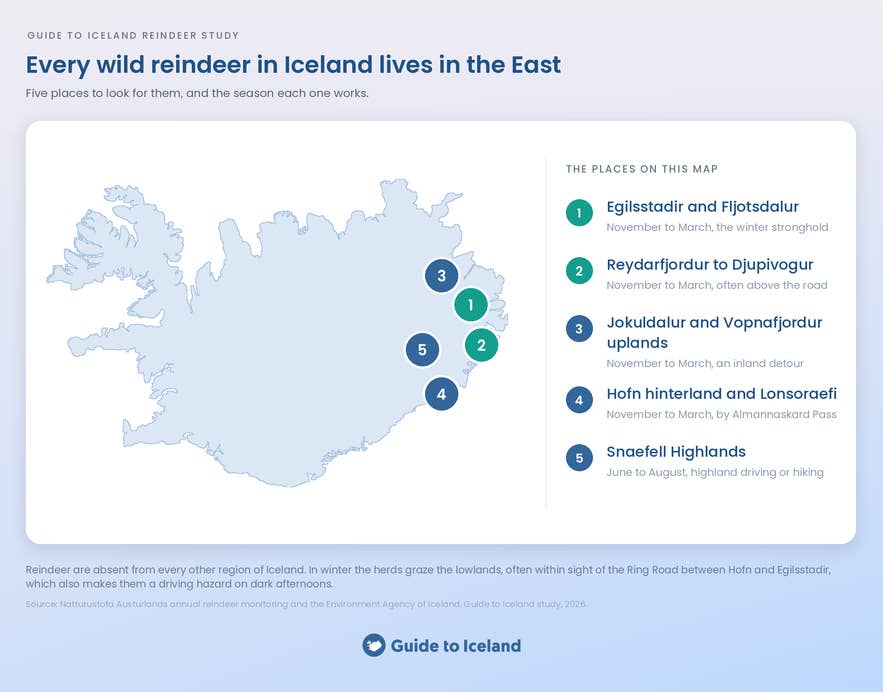
Reindeer are found across East Iceland, particularly in the farmland around Egilsstadir, the Eastfjords, the Hofn hinterland, and the Snaefell highlands. The first three are winter ground for reindeer, and the Snaefell highlands are where the herds spend the summer.
This study compares these areas by reindeer winter sighting index, seasonal distribution, and accessibility for travelers. The map shows where reindeer are most commonly found throughout the year and how their range changes between summer and winter.
Fljotsdalsherad Ranks First on the Winter Reindeer Sighting Index
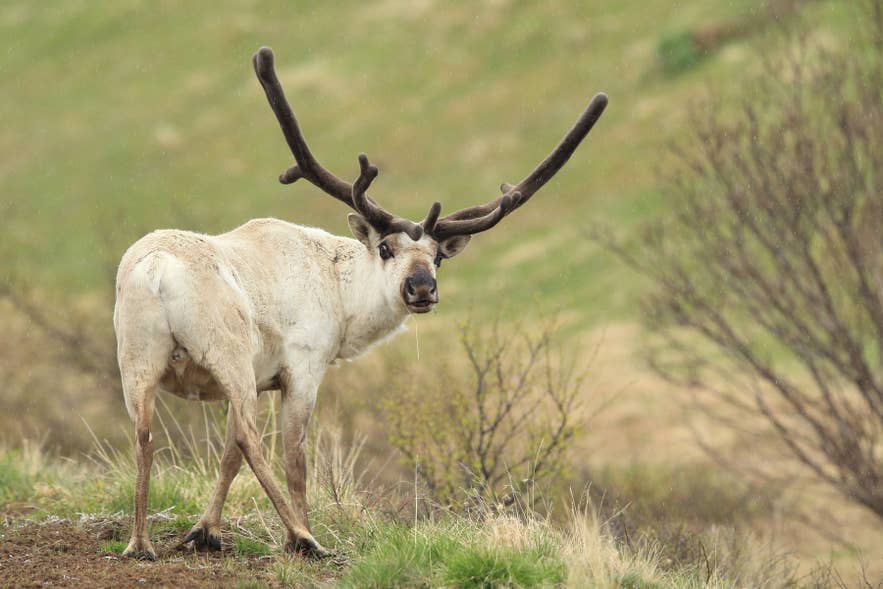
The area around Egilsstadir and Fljotsdalur Valley scores 100 on our winter sighting index. The fields and birch slopes around Egilsstadir, Fellabaer, and Lagarfljot Lake see herds regularly from late autumn.
Fljotsdalsherad is also the easiest reindeer area to reach in winter. Egilsstadir sits on the Ring Road, which is maintained through the winter, making the area accessible by standard rental car. The town also has an airport with flights from Reykjavik to Egilsstadir that take about one hour.
The drive from Egilsstadir toward Hengifoss Waterfall passes through reindeer grazing ground. Watch the surrounding fields and hillsides as you drive, especially between November and March.
Local tip: Wild reindeer should never be fed, but at Reindeer Park in Fellabaer, a five-minute drive from Egilsstadir, you can feed and pet rescued reindeer up close. The family-run park cares for calves found orphaned near Snaefell Mountain, and it’s open daily from 11:00 to 17:00 in the high season. It’s the best backup plan if the wild herds stay out of sight.
The Eastfjords: Reindeer From Reydarfjordur to Djupivogur
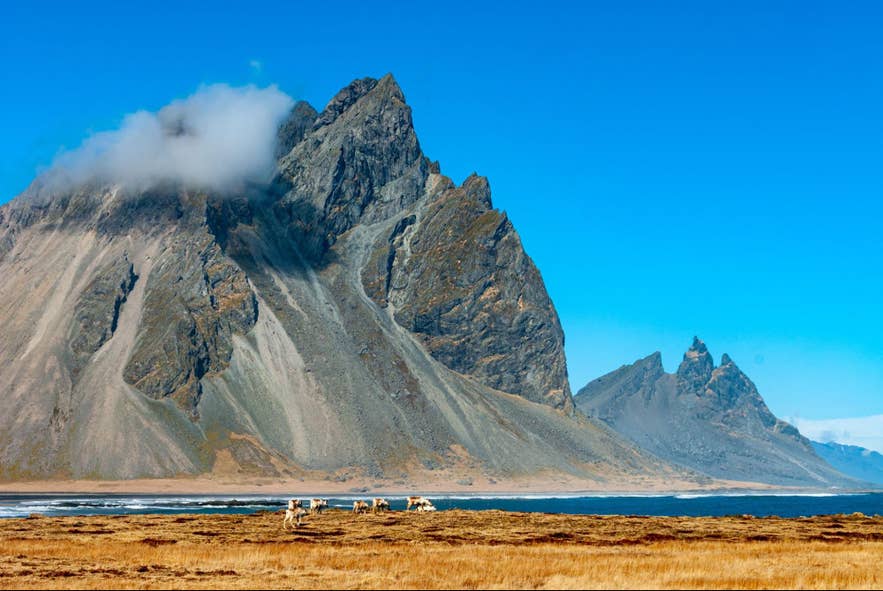
The Eastfjords are one of the best regions to look for wild reindeer in Iceland during winter. The fjord slopes south of Reydarfjordur hold wintering reindeer and score 85 on our winter sighting index. Groups sometimes stand directly above the road, which makes the fjord route the most photogenic stretch of the range.
The drive through Faskrudsfjordur, Stodvarfjordur, and Breiddalsvik is the classic reindeer sighting stretch in East Iceland. Herds can sometimes be seen close to the road, making this coastal route one of the most accessible areas for looking for reindeer during a winter road trip.
The Eastfjords route continues south toward Djupivogur, a small coastal town near the southern end of the fjord region. Guided Eastfjords tours also give travelers without a rental car a way to explore this part of the reindeer range.
For more places to stop along the route, see our guide to the top places to visit in East Iceland.
Jokuldalur and Vopnafjordur: Reindeer Away From the Crowds
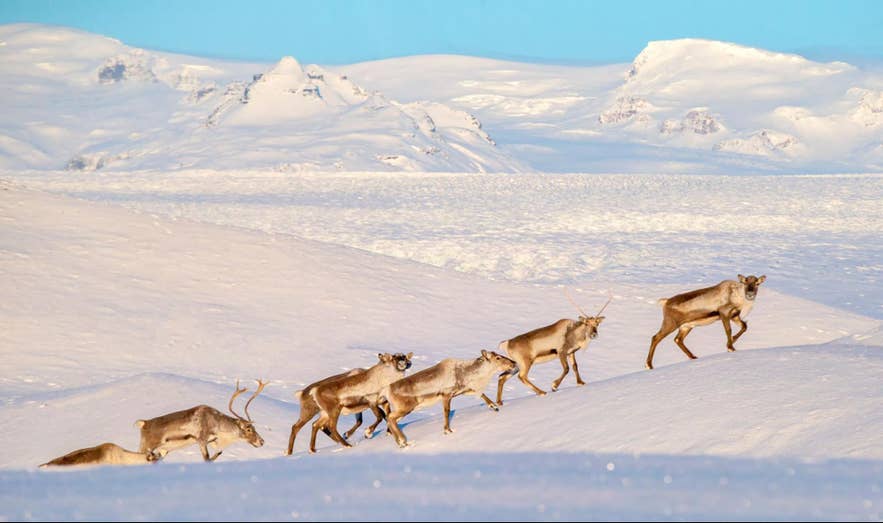
Jokuldalur and the uplands behind Vopnafjordur are another area to look for reindeer in winter, scoring 70 on our winter sighting index. Jokuldalur is a long valley east of Iceland’s central Highlands, while Vopnafjordur is a remote fjord on the northeastern coast.
Reindeer use the valleys and uplands in this part of East Iceland during winter. The area sees fewer travelers than the main Eastfjords route, so it can suit travelers looking for a quieter drive and a chance to see reindeer away from the busier coastal roads.
The trade-off is accessibility. Jokuldalur and the Vopnafjordur uplands sit off the Ring Road, so reaching either area requires a detour from Iceland’s main driving route.
Hofn and Lonsoraefi: Reindeer on the Route to Jokulsarlon
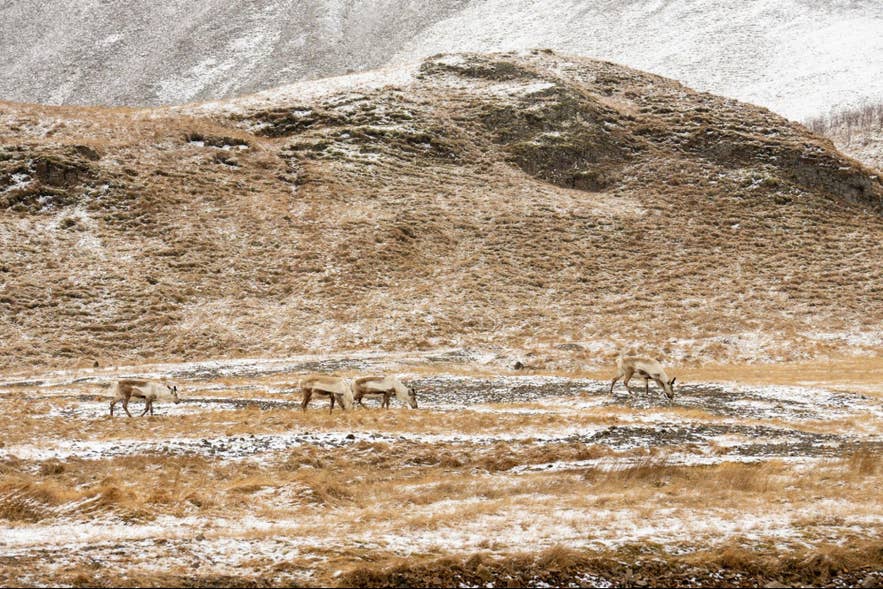
Hofn and the Lonsoraefi area are at the southern edge of Iceland’s wild reindeer range. Travelers spot reindeer in winter along the road between Hofn and Almannaskard Pass, including on the drive to and from Jokulsarlon Glacier Lagoon.
The Almannaskard stretch brings reindeer closer to Iceland’s main tourist route than most other parts of their range. Winter self-drive tours along the South Coast toward Hofn can therefore combine sightseeing with a chance to see wild reindeer in Iceland.
The Snaefell Highlands: Where Reindeer Go in Summer
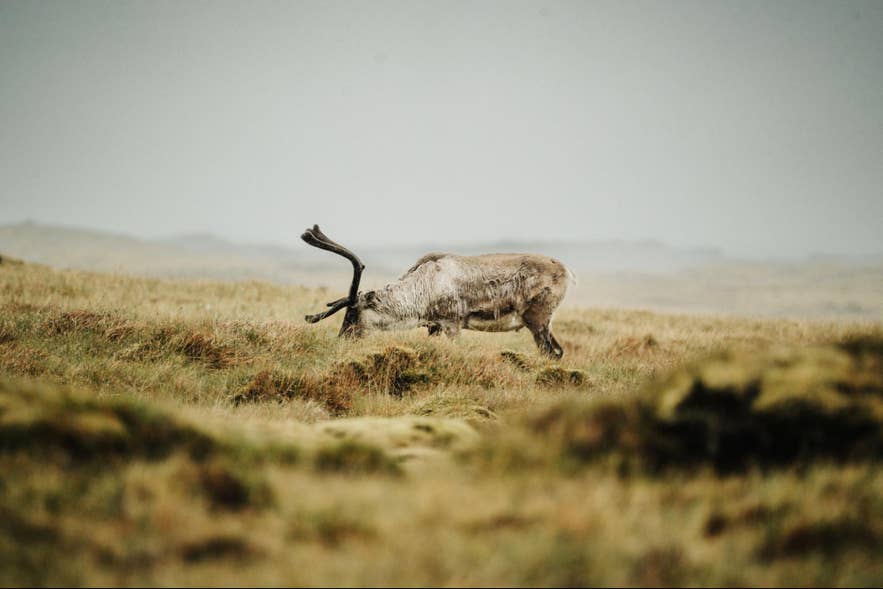
If you want to see reindeer in Iceland in summer, head for the Highlands around Snaefell Mountain inside Vatnajokull National Park. Reindeer move into the highlands to calve and graze during the warmer months. Calving runs from May into June, so keep well away from the herds in those weeks.
Summer sightings are less predictable because the herds spread across a large, remote area inside Vatnajokull National Park. Reaching the Snaefell region also requires more effort than looking for reindeer in the winter lowlands. For self-drive travelers, 4x4 cars are recommended for the F909 and F910 mountain roads.
How the Reindeer Herds in Iceland Move Through the Year
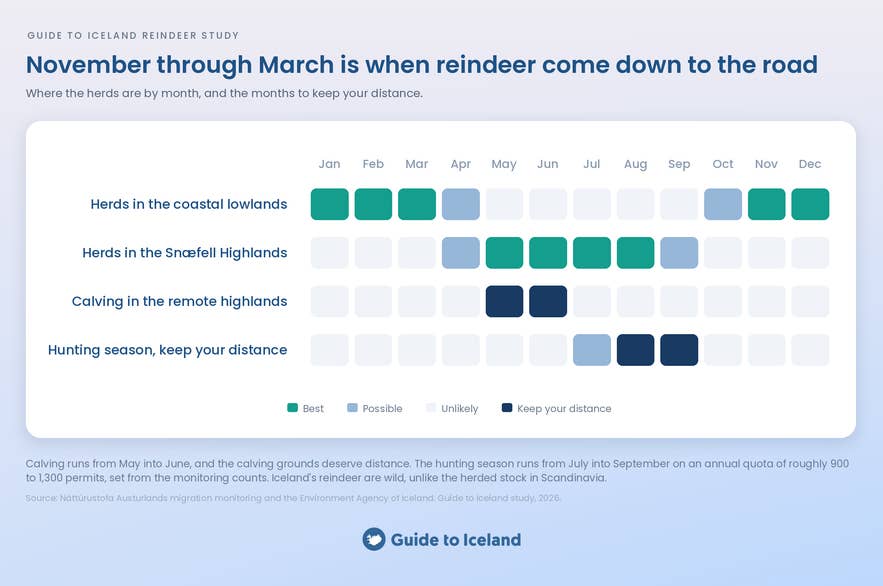
Roadside reindeer sighting likelihood in East Iceland peaks from November through March. Winter snow pushes herds from the highlands toward coastal lowlands and lower valleys, which raises the chance of reindeer sightings in East Iceland. Late autumn and early spring are transitional months and still worth trying.
In summer, reindeer spread across Iceland’s remote highlands, which makes sightings less predictable. Mid-July through September is the regulated reindeer hunting season in Iceland. The Ministry for the Environment, Energy and Climate set the 2026 quota at 936 animals (499 cows and 437 bulls) based on population monitoring.
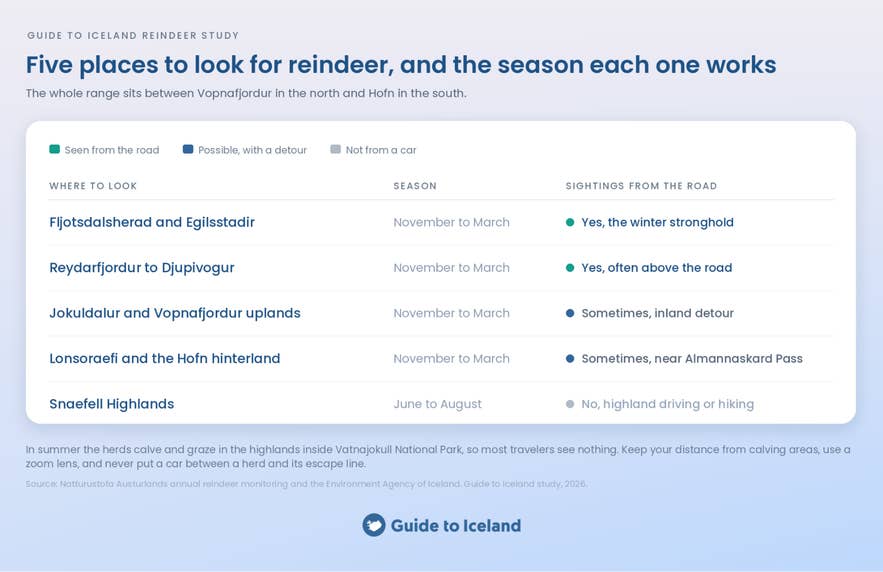
Reindeer in Iceland are wild, unlike the herded reindeer found in parts of Scandinavia. Keep a safe distance from any reindeer you see, use a zoom lens instead of approaching, and never park a vehicle between a herd and its escape route.
Winter is the best season for reindeer sightings in Iceland, but driving in East Iceland requires careful planning. Snow, ice, wind, and changing road conditions affect winter driving in East Iceland.
How We Mapped Iceland’s Reindeer Herds
Guide to Iceland built this study from the published monitoring record for Iceland’s reindeer, then mapped the results by area and by month. This study covers East Iceland only, because East Iceland is the one region in the country where reindeer live.
Herd numbers, area boundaries, and seasonal distribution come from the annual monitoring reports of Náttúrustofa Austurlands, the East Iceland Nature Research Centre. Náttúrustofa Austurlands is responsible for monitoring the reindeer population, while Náttúruverndarstofnun, the Nature Conservation Agency, handles hunting management and the sale of hunting permits.
The nine-area management structure and the summer and winter migration pattern also come from the Náttúrustofa Austurlands monitoring reports. The population history in this study follows the published record for Icelandic reindeer, including the 18th-century introductions.
The index ranks the five areas in this study by how likely a winter reindeer sighting is, so it is not a count of animals. Anywhere outside East Iceland scores 0, because reindeer do not live in the rest of the country.
For the hunt itself, see our guide to hunting in Iceland. For the other wild animals in the country, start with our overview of wildlife and animals in Iceland.
Conclusion
Travelers who want the best chance of seeing reindeer in Iceland should consider staying in East Iceland between November and March. Fljotsdalsherad scores 100 on our winter sighting index, and the herds come down to the farmland rather than staying in the highlands.
Travelers who want a photograph rather than a distant sighting should drive the fjords between Reydarfjordur and Djupivogur. The slopes there rise straight from the road, so you may see reindeer wintering above you at eye level.
For travelers who want to see reindeer without the crowds, head to Jokuldalur Valley and the Vopnafjordur uplands. Jokuldalur Valley and Vopnafjordur score 70 on our winter sighting index, and they see a fraction of the traffic that the Eastfjords route carries.
Travelers already exploring the South Coast can see reindeer without adding a detour. The Almannaskard Pass stretch near Hofn sits on the road to Jokulsarlon Glacier Lagoon.
Winter travelers driving on to Jokulsarlon Glacier Lagoon can look for seals among the icebergs. Our research on where to see seals in Iceland found more seals feeding in the lagoon in winter, the same months the reindeer come down.
Guide to Iceland ran this as an objective and independent study. The herd figures and the seasonal distribution come from published monitoring reports, and the sighting index is our own synthesis of that record.

Guide to Iceland Editorials is the shared byline for our content team. We use it on pieces several people worked on together, where no single writer owns the article, and on anything rewritten often enough that a personal byline would be misleading. We also publish our original data studies under this profile. Each study answers a question travelers ask about Iceland, using primary sources such as booking records, traveler reviews and public datasets, and every study is quality checked by human experts before it's published. Everything under this byline is researched and reviewed by people who live and work in Iceland. If you spot something out of date or want to suggest a correction, message us and it reaches the whole team.