This Guide to Iceland study looks at national livestock counts to find out which regions have the most sheep, how their numbers compare with Iceland’s population, and when you’re most likely to see them. Read on to learn more and see the September rettir round-ups.
Iceland has long been known for having more sheep than people, but that is no longer the case. Recent population and livestock figures show that people now outnumber Icelandic sheep nationally, reversing a familiar part of Iceland’s rural story.
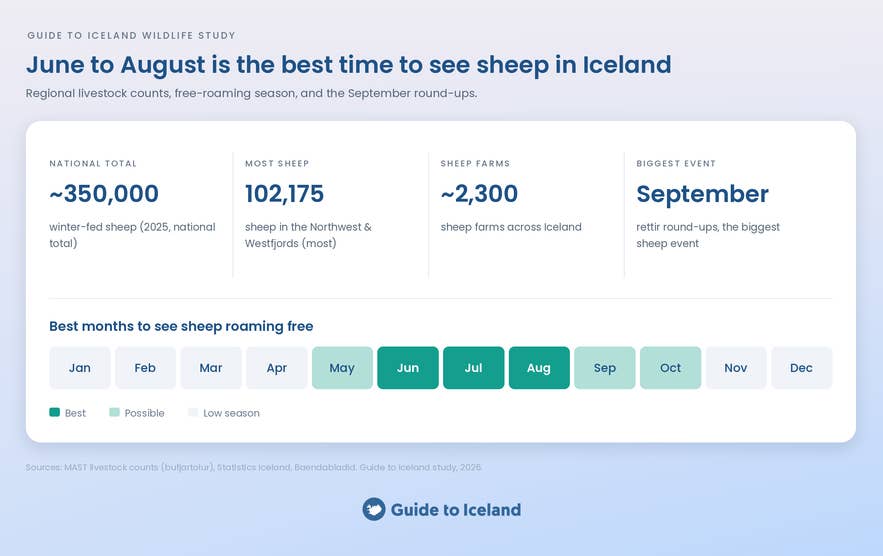
The sheep are far from evenly distributed, with the Northwest and Westfjords accounting for 102,175 sheep and the capital area with fewer than 2,200. For visitors, the numbers help explain where sheep are most common and when you’re likely to see them.
Why You Can Trust Our Content
Guide to Iceland is the most trusted travel platform in Iceland, helping millions of visitors each year. All our content is written and reviewed by local experts who are deeply familiar with Iceland. You can count on us for accurate, up-to-date, and trustworthy travel advice.
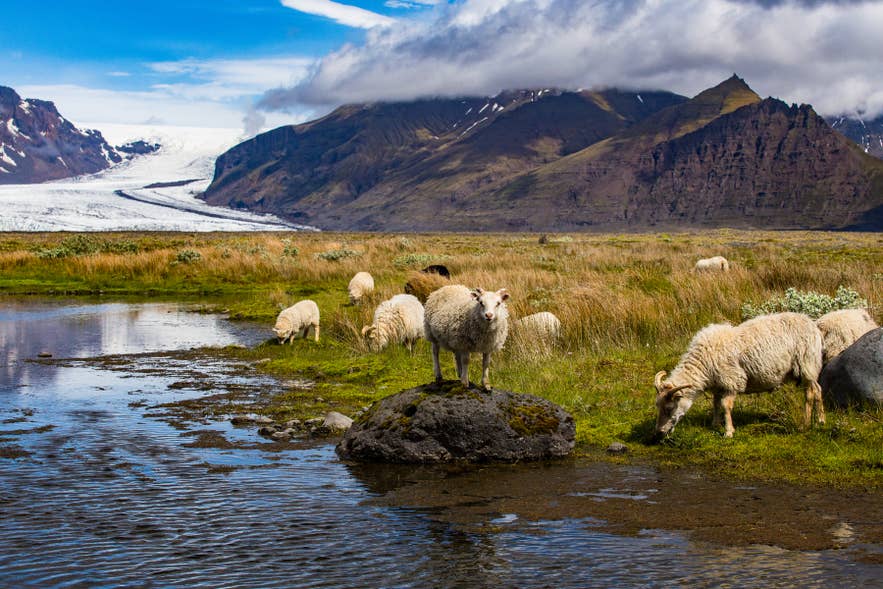
During summer in Iceland, sheep roam freely across rural areas, often appearing beside roads and in fields as you travel around. If you’re driving a rental car in Iceland, this can mean slowing down for sheep that wander onto the road. Staying at farm accommodation in Iceland can also put you closer to everyday sheep farming.
The biggest seasonal event comes in September, when farmers gather sheep from their summer grazing areas during the rettir. If you plan to take self-drive tours, knowing where the largest sheep populations are and when the rettir takes place can add a distinctly Icelandic experience to a road trip.
Key Findings
-
Iceland's sheep population has declined sharply since 1980. The national flock has fallen from roughly 828,000 winter-fed sheep in 1980 to under 350,000 by 2025.
-
The Northwest and Westfjords have the most sheep in Iceland, with 102,175 sheep at the 2025 benchmark count.
-
The Northeast has the second-largest regional flock, with 68,789 sheep.
-
The Southwest has just over 2,200 sheep, despite being home to two-thirds of Iceland's human population.
-
Borgarbyggd has the largest municipal sheep count, with around 35,000 sheep.
-
June, July, and August are the main months to see sheep by the roadside, after lambs and ewes are released to roam freely for the summer.
-
September is the month for rettir, when farmers, families, and horses gather sheep from the mountains and sort them in large circular pens.
-
Sheep are found throughout rural Iceland in summer, but the highest concentrations are in the country's main sheep-farming regions.
Cite This Study
The charts and data in this study are free to use under CC BY 4.0. Credit Guide to Iceland and link to this page. Every chart has an Embed button underneath it with ready-to-paste code.
Iceland's Sheep Population in Numbers
 The sheep population in Iceland has fallen significantly over the past several decades. Nationally, the flock has been shrinking from roughly 828,000 winter-fed sheep in 1980 to under 350,000 by 2025, spread across about 2,300 farms. This decline has also reversed a long-standing pattern: there are now more people in Iceland than sheep.
Sheep are still a familiar sight throughout rural Iceland, particularly during the summer grazing season, but the national flock is now less than half the size it was in 1980.
Where To Find the Largest Sheep Flocks in Iceland
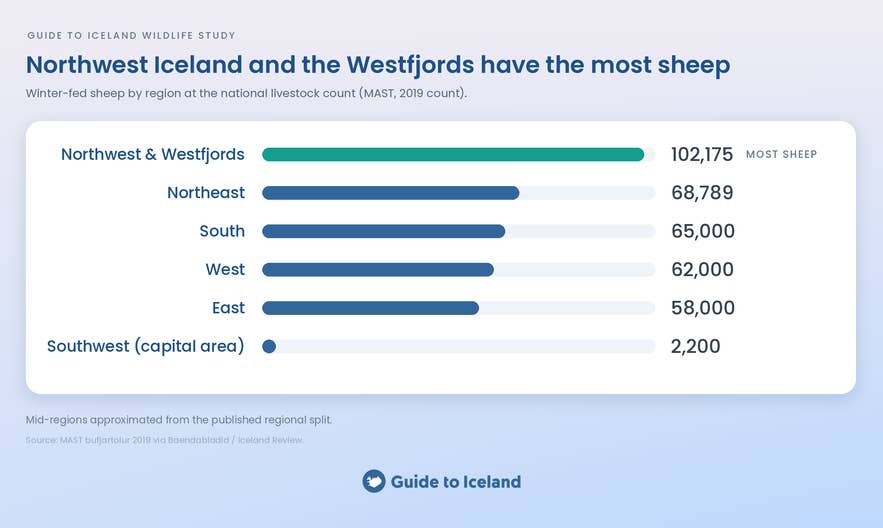
Iceland's official livestock counts (búfjártölur), compiled by MAST and published through the Ministry's agricultural dashboard, break winter-fed sheep down by region. The livestock counts show:
-
The Northwest, including the Westfjords, leads decisively with 102,175 sheep at the 2025 benchmark count.
-
This is followed by the Northeast region, with 68,789 sheep count.
-
The Southwest, home to two-thirds of Iceland's human population, has almost none by comparison, with just over 2,200 sheep.
-
At municipality level, Borgarbyggd in West Iceland has held the single largest count, with around 35,000 sheep. This helps explain why the farmland around Borgarfjordur can look especially full of sheep from the road.
This shows how strongly sheep farming in Iceland is concentrated outside the country’s most populated area.
Where To See Sheep in Iceland by Region
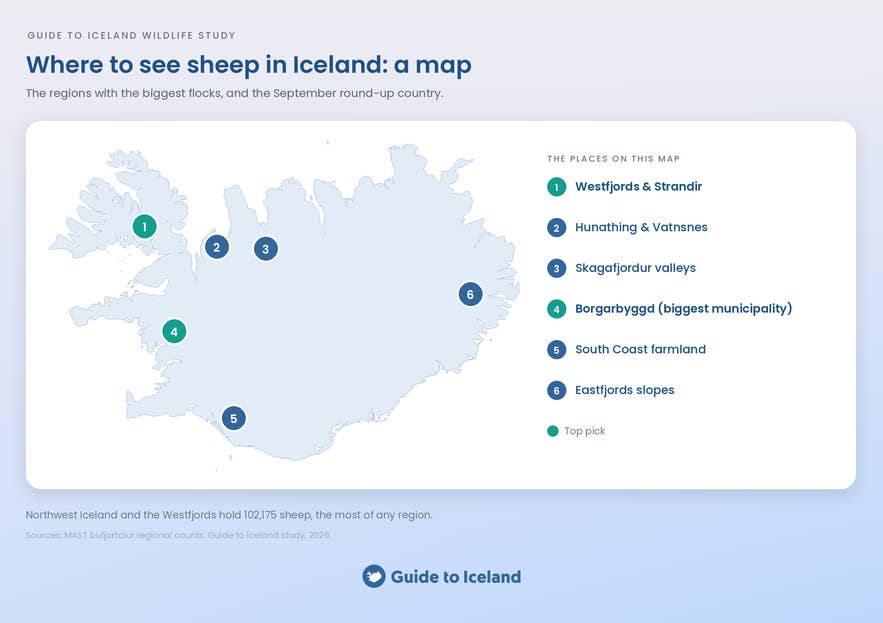
The number of sheep varies considerably between regions, but visitors can encounter them throughout rural Iceland during the summer. The areas below are particularly relevant based on the regional livestock counts and farming patterns in the study.
Northwest Iceland and the Westfjords: Iceland's Sheep Heartland
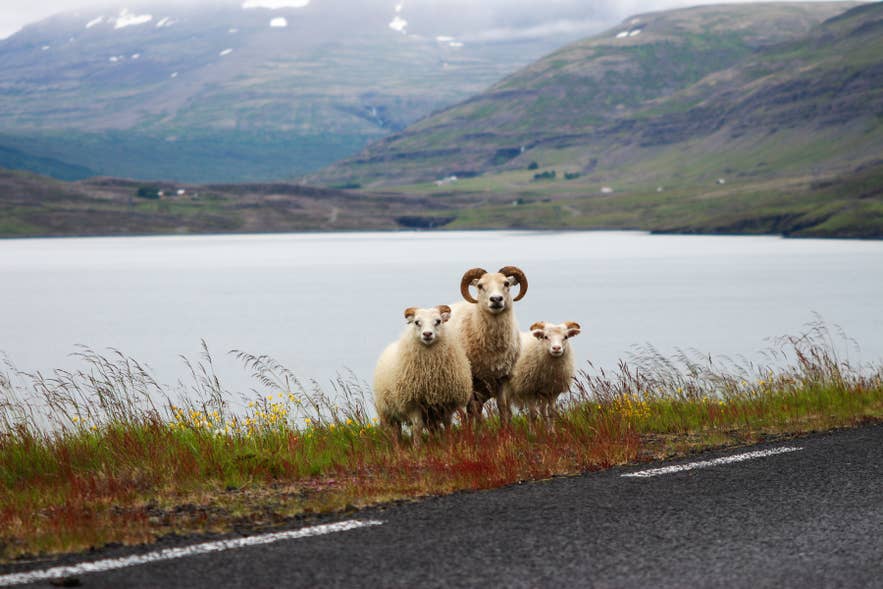 The Northwest and Westfjords have the highest sheep numbers in Iceland. The valleys of Hunathing and Strandir, along with the fjord roads of the Westfjords, are classic sheep-farming areas. Here, low-intensity grazing is often the main type of farming the terrain allows.
During summer, sheep can be found along rural roads and across the surrounding mountains and valleys, so you should be prepared for animals near or on the road when driving in Iceland.
For a closer look at Iceland's sheep-farming traditions, you can visit the Sheep Farming Museum near Holmavik, which explores the history and everyday life of sheep farming in the region.
West Iceland: Borgarbyggd's Large Sheep Flocks
 Borgarbyggd in West Iceland has the country's largest municipal sheep count, with around 35,000 sheep. The farmland between Borgarnes and Husafell is dotted with farms and lies on routes used by travelers heading toward the Snaefellsnes Peninsula.
This makes West Iceland one of the places where visitors can easily encounter sheep while exploring the countryside.
Northeast Iceland: Skagafjordur and Eyjafjordur Valleys
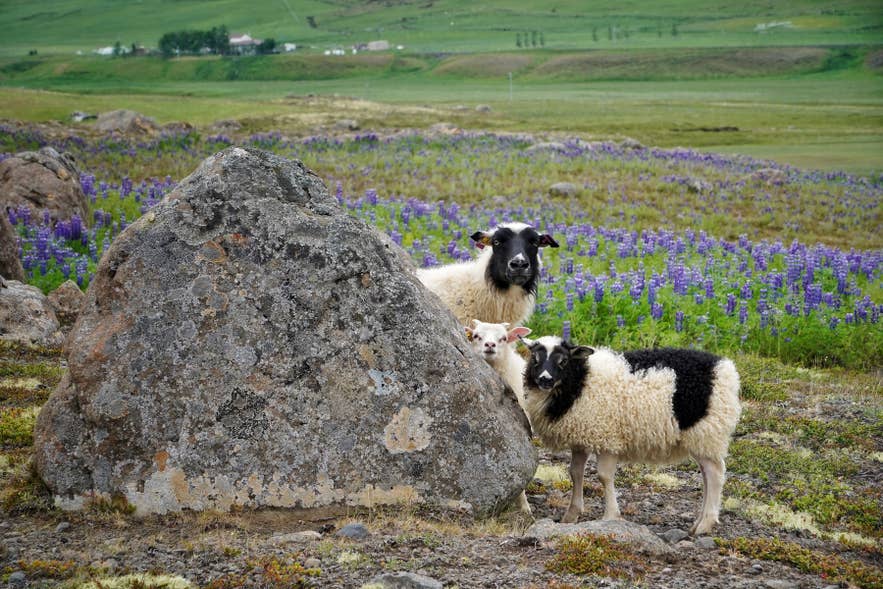 The Northeast has the second-largest regional flock, with 68,789 sheep at the 2025 benchmark count. The broad valleys south of Saudarkrokur and Akureyri combine sheep and horse farming, creating some of the country's classic agricultural landscapes.
September is also an important time here, when local rettir bring farmers and communities together to gather and sort sheep after their summer grazing season.
South and East Iceland: Sheep in Wide Open Landscapes
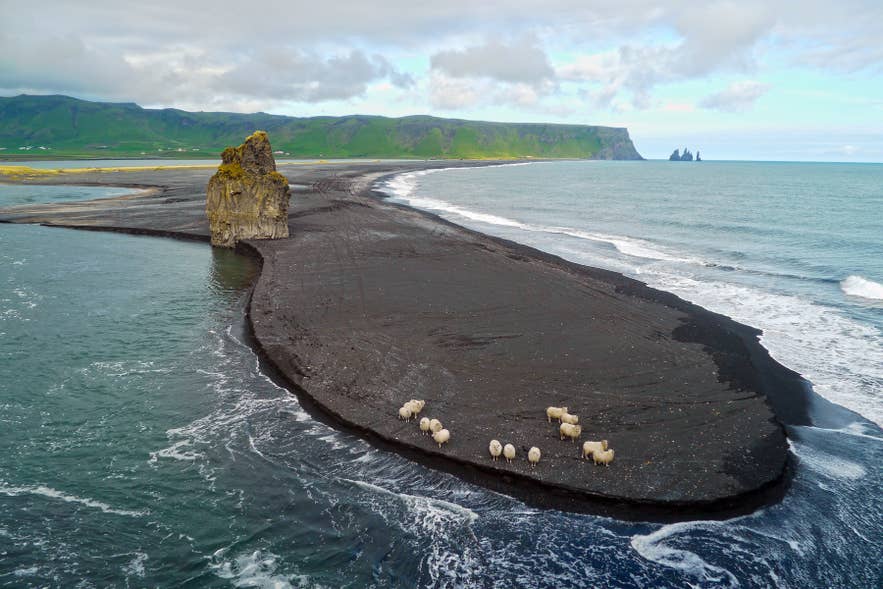 South and East Iceland have fewer sheep per square kilometer than the country's main sheep-farming regions, but sheep are still a common sight in rural areas during summer.
Along the South Coast, you may see flocks grazing beneath Eyjafjallajokull, while in East Iceland, sheep can appear on the slopes and farmland around the Eastfjords. Many of Iceland's major Ring Road attractions pass through areas where sheep graze during the summer.
Best Time To See Sheep in Iceland
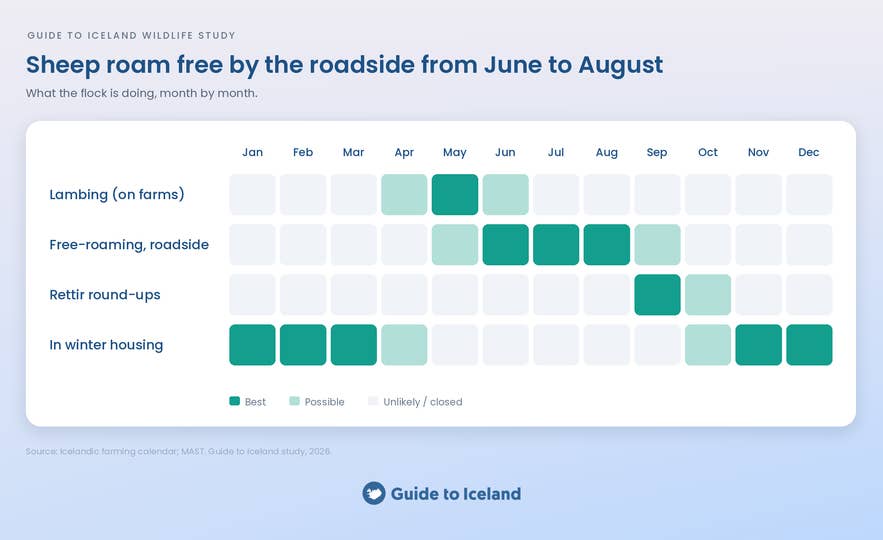
The Icelandic farming calendar determines when sheep are most visible. Lambs are born on farms in May, and within weeks, ewes and lambs are released to roam freely until autumn.
This makes summer (June, July, and August) the main roadside-sheep months. From late winter through April, most flocks are kept in barns, so rural Iceland can look much quieter before the summer grazing season begins.
The Icelandic Sheep Round-Ups
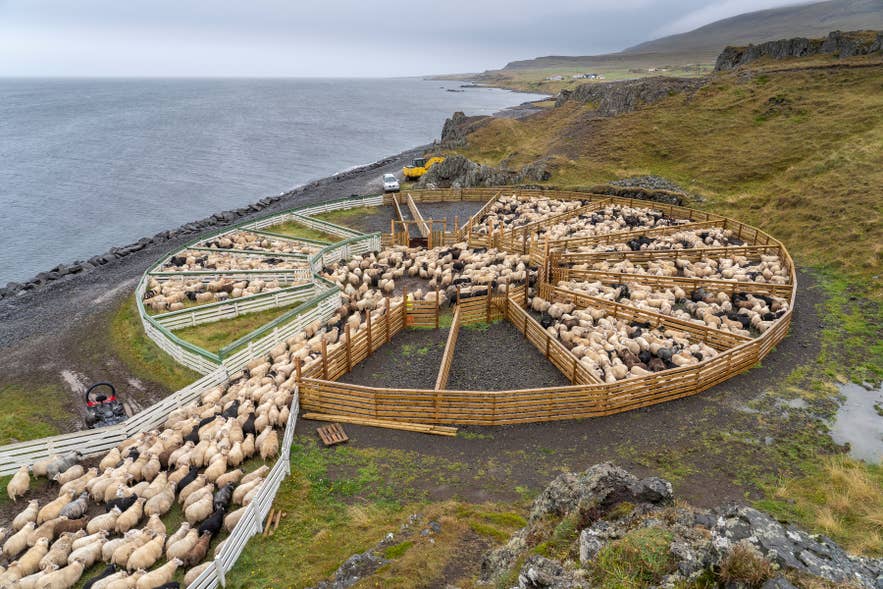 The single biggest sheep-related event for visitors is rettir, the communal round-up held across Iceland in September. Farmers, families, and horses gather sheep from the mountains over several days before sorting them in large circular pens.
Rettir are public and free to watch, and visitors are welcome to observe these traditional farming events. Some events also allow visitors to take part in the work.
The timing varies between regions and farms, so travelers interested in attending rettir should check the local schedule before visiting. If sheep and Icelandic wool are part of your interests, you can also pair the experience with a guide to the lopapeysa sweater, one of the top souvenirs that visitors actually buy in Iceland.
Sheep on the Road in Iceland
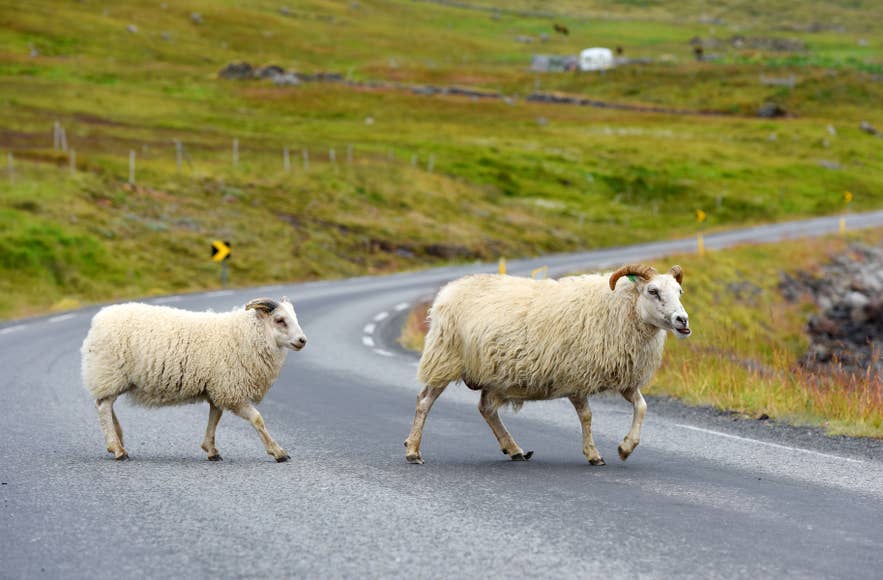
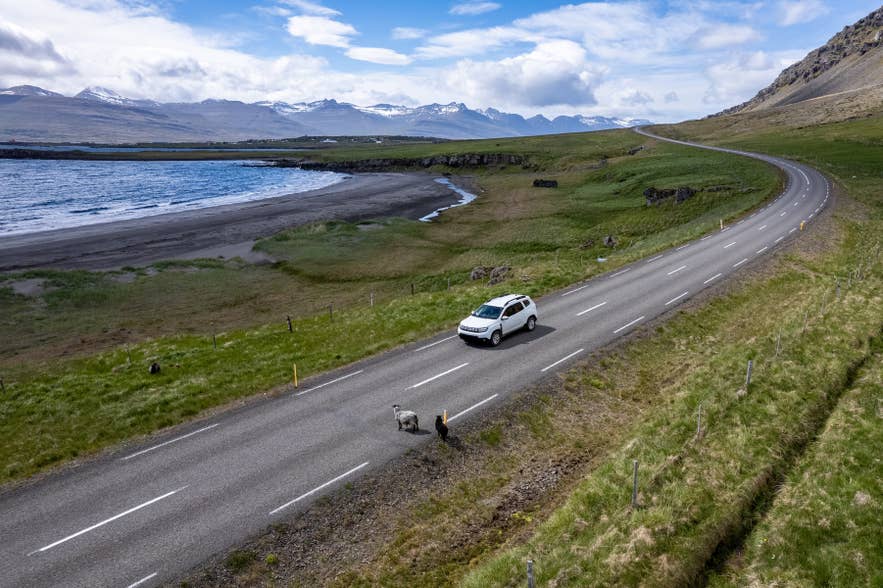 Free-roaming sheep are a common sight on rural roads during summer, particularly in the country's main sheep-farming regions. They can move unpredictably, especially when an ewe and lamb are separated by the road.
If you are driving, slow down whenever you see sheep near the road and be prepared for them to cross suddenly. This is especially important in the sheep-dense Northwest.
We also recommend reading our guide on driving in Iceland and checking road conditions before setting out on a road trip.
How We Analyzed Iceland's Sheep Population
Regional and national sheep numbers come from Iceland's official livestock counts (búfjártölur), compiled by MAST and published through the Ministry of Food, Agriculture and Fisheries' agricultural dashboard (Mælaborð landbúnaðarins), with historical series from Statistics Iceland and reporting in Bændablaðið.
Farm counts and the long-term decline are from the same official series. The seasonal calendar reflects the standard Icelandic farming year: May lambing, summer commons grazing, and September rettir.
Where regional figures between the published Northwest, Northeast, and Southwest counts had to be interpolated, the infographic notes it.
For more about the animal itself, see our ultimate guide to Icelandic sheep, while the Icelandic sheepdog guide covers the breed's traditional co-worker.
For a wider view of Icelandic wildlife, see our guide to wildlife and animals in Iceland.
Conclusion
 Icelandic sheep are easiest to see in summer, when ewes and lambs roam freely across rural Iceland from June to August. The Northwest and the Westfjords hold the largest flocks, followed by the Northeast. Borgarbyggd in West Iceland has the largest flock of any municipality.
The national flock is now less than half its 1980 size, and people in Iceland now outnumber sheep. Sheep farming still shapes the Icelandic countryside, and the September rettir are one of the best ways to see rural traditions up close. Check the local rettir schedule before you go, and drive slowly wherever sheep graze near the road.
To plan your trip around the sheep season, see our sunniest month in Iceland study. Our study on how many days you need in Iceland can help you set a trip length that fits the rural regions.
For more of Iceland's wildlife by region and season, read our studies on where to find Arctic foxes in Iceland, and where to see horses in Iceland. Our studies on where to see seals in Iceland and where to find puffins in Iceland cover the coast.
Guide to Iceland ran this as an objective and independent study. The sheep figures come from Iceland's official livestock counts, compiled by MAST, and the historical series from Statistics Iceland. Our marketplace sells self-drive tours, car rentals, and farm stays in every region covered here. No partnership shaped which region came out on top.

Guide to Iceland Editorials is the shared byline for our content team. We use it on pieces several people worked on together, where no single writer owns the article, and on anything rewritten often enough that a personal byline would be misleading. We also publish our original data studies under this profile. Each study answers a question travelers ask about Iceland, using primary sources such as booking records, traveler reviews and public datasets, and every study is quality checked by human experts before it's published. Everything under this byline is researched and reviewed by people who live and work in Iceland. If you spot something out of date or want to suggest a correction, message us and it reaches the whole team.