
Strokkur is a geyser located in the Geysir Geothermal Area in Haukadalur Valley, one of the main highlights of Golden Circle tours. It erupts every 6 to 10 minutes, shooting boiling water 49 to 66 feet (15 to 20 meters) into the air.
Why You Can Trust Our Content
Guide to Iceland is the most trusted travel platform in Iceland, helping millions of visitors each year. All our content is written and reviewed by local experts who are deeply familiar with Iceland. You can count on us for accurate, up-to-date, and trustworthy travel advice.
Strokkur has been erupting reliably since 1963, when locals cleared a blocked conduit that had silenced the geyser for decades. Today, Strokkur's eruptions are the centerpiece of the Haukadalur Geothermal Area, drawing visitors year-round to watch boiling water launch skyward against Iceland's volcanic landscape.
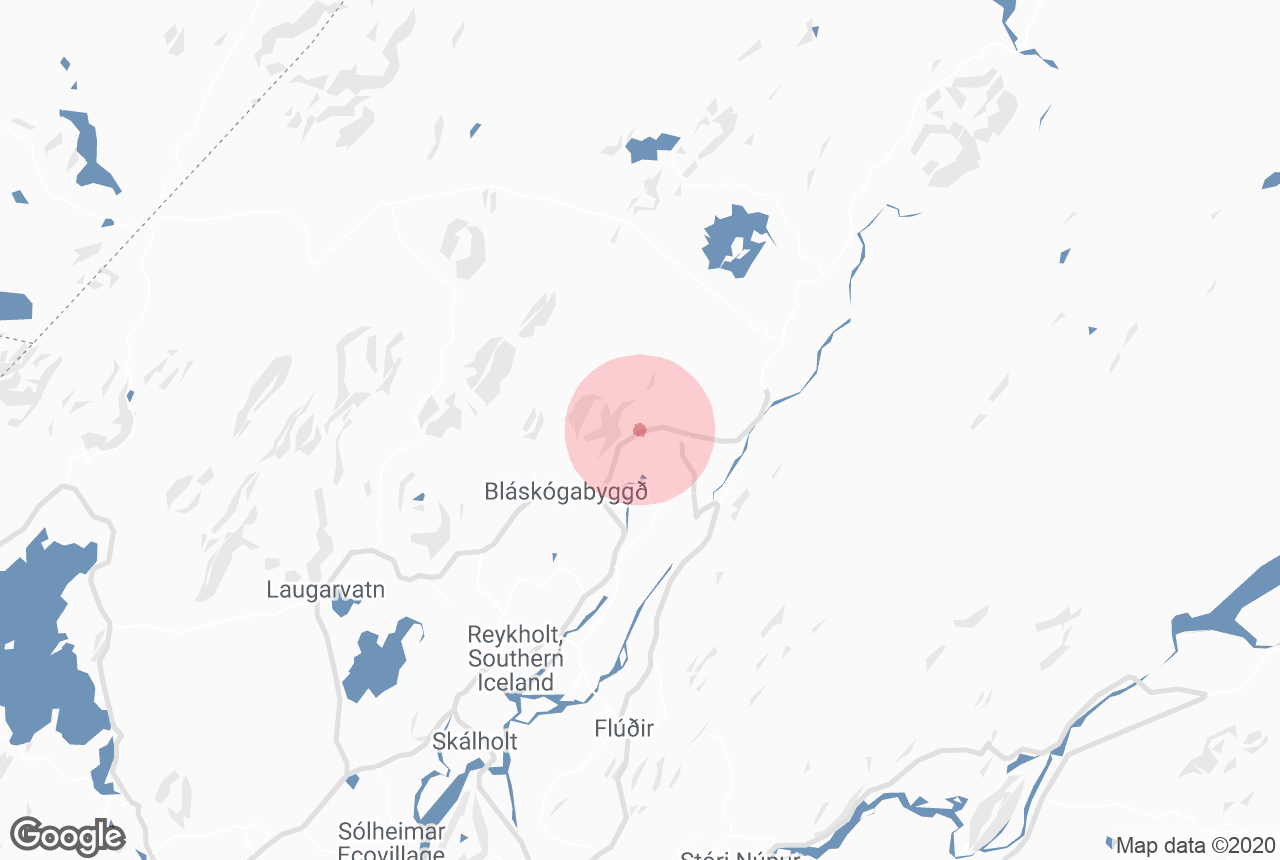
Travelers can visit Strokkur on a range of self-drive packages or by renting a car and driving Route 35 from Reykjavik, a distance of about 62 miles (100 km). The geothermal area surrounding Strokkur offers far more than the geyser alone.
Key Takeaways:
-
Strokkur (pronounced STROHK-ir) is one of only a handful of geysers in the world that erupts this reliably and this frequently. There are no tickets to buy, no schedule to check, and never more than ten minutes to wait between eruptions.
-
Most eruptions reach 49 to 66 feet (15 to 20 meters). In rare cases, the water column can climb as high as 130 feet (40 meters).
-
There is no admission fee. The Geysir Geothermal Area is open 24/7, with parking at around 1,000 ISK at the Geysir Center across the road.
-
Strokkur is located on the Golden Circle, about 62 miles (100 km) from Reykjavik along Route 35. The drive takes roughly 1 hour and 40 minutes on paved roads.
-
Most visitors spend 30 to 60 minutes at the geyser, with up to 90 minutes for those exploring the full Haukadalur Geothermal Field.
-
The water in and around the vents is boiling. Stay on the marked paths at all times, and keep a safe distance from all hot springs and steaming fissures.
Strokkur Geyser and the Haukadalur Geothermal Area
 Strokkur is the centerpiece of Haukadalur Valley and the main reason this geothermal area ranks among Iceland's most visited sites. Active geysers are rare worldwide because three precise geological conditions must exist in the same location. Only a handful of places on Earth have the right combination.
The first is an intense heat source. Iceland sits on top of the Mid-Atlantic Ridge between the North American and Eurasian tectonic plates, which means magma is close enough to the surface to boil water on contact.
The second is a supply of underground water. In Strokkur's case, glacial meltwater from Langjokull, Iceland's second-largest glacier, seeps through porous lava rock and travels underground in all directions. Evidence of this flowing water can also be found at Thingvellir National Park, where freshwater springs emerge directly from the earth.
The third is a specific underground plumbing system. Above the heat source, there must be a chamber where water can collect like a reservoir. From this chamber, a narrow vent must reach the surface, and its walls must be lined with silica so the superheated water cannot escape sideways before enough pressure builds.
When the pressure finally overcomes the weight of the water column above, the geyser fires.
The water reaches roughly 250 F (120 C) before erupting. Despite the dramatic appearance, each eruption expels only about 2.6 quarts of water per second.
It is the speed of the ejection, roughly 37 miles per hour (60 km/h), that creates the towering column rather than the volume of water. The geyser's basin sits at an elevation of 330 feet (110 meters) above sea level and reaches depths of up to 74 feet (23 meters).
This combination of heat, water, and silica-lined plumbing is so uncommon that geysers exist in only a few geothermal regions globally, including Iceland, Yellowstone in the United States, and the Taupo Volcanic Zone in New Zealand.
Strokkur's neighbor, the Great Geysir, sits just 165 feet (50 meters) to the north. Geysir is the hot spring that gave the English language the word "geyser," and it was historically the more famous of the two, once erupting to heights of nearly 200 feet (60 meters).
Geysir is now largely dormant and erupts only on rare occasions. Many photos and postcards labeled "Geysir" actually show Strokkur, which is the geyser visitors see erupting today.
 Beyond Strokkur and Geysir, the valley is full of geothermal features worth exploring. Fumaroles, hot springs, mud pools, and smaller geysers are scattered across the valley floor.
The ground itself is stained vivid colors by mineral deposits: yellow from sulfur, green from copper, and red from iron. Visitors can walk the marked paths to see steaming fissures and bubbling vents up close.
History of Strokkur Geyser
 Strokkur was first documented in 1789, after one of the many earthquakes in Iceland unblocked the geyser's underground conduit and allowed it to erupt freely. Throughout the 19th century, the geyser was highly active and is estimated to have reached heights of up to 200 feet (60 meters) during its strongest periods.
At the turn of the 20th century, another earthquake blocked the conduit again, and Strokkur fell silent for decades. In 1963, on the advice of the Geysir Committee, local residents manually cleared the blocked channel from the bottom of the basin.
The geyser has been erupting regularly ever since. Seismological research led by scientist Eva Eibl has catalogued over 90,000 individual Strokkur eruptions using seismic instruments placed near the geyser between 2017 and 2020.
The data reveals patterns that are invisible to the casual observer: after a single eruption, the average wait is about 3.7 minutes, while a double eruption (two bursts in quick succession) is followed by a longer gap of about 6.2 minutes. Triple, quadruple, and even sextuple eruptions have been recorded, though they are rare.
The research also found that weather conditions affect eruption frequency. On cold, windy days, more heat escapes from the surface pool, and Strokkur erupts less often.
Visitors standing at the closest viewing distance of about 33 feet (10 meters) from Strokkur can sometimes feel the ground vibrating beneath their feet. They are standing directly above what scientists call the "bubble trap," the underground chamber where gas accumulates before each eruption.
In October 2024, park rangers reported unusual activity across the broader Geysir Geothermal Area. Several typically inactive hot springs, including Blesi, Smidur, Fata, and Konungshver, began boiling vigorously and erupting in small bursts at the same time.
Water levels in Blesi dropped by 16 to 20 inches (40 to 50 cm) and in Konungshver by 8 to 12 inches (20 to 30 cm). Strokkur itself reached heights of around 100 feet (30 meters) during this period, well above its usual range.
Visitors should always stay on designated paths and exercise caution around active vents.
Photographing Strokkur
 The best position for photographing an eruption is to the south or southeast of the vent, which puts the sun behind you during the middle of the day and gives the clearest view of the water column against the sky.
Standing to the west, at the closest viewing distance of about 33 feet (10 meters), puts you nearest to the action but can leave you shooting into backlight during afternoon hours.
Watch for the bubble. Just before each eruption, a dome of pale blue water swells at the surface of the basin. That is your cue.
A fast shutter speed (1/1000 or higher) freezes the water in mid-air, while a slightly slower speed (1/250 to 1/500) captures some motion in the column. Burst mode helps, since the eruption lasts only two to three seconds.
Winter and autumn offer the most dramatic conditions for photography. The steam is denser and more visible against cold air, and low sun angles during these months create strong contrast and long shadows across the geothermal field.
In summer, the late evening light (after 8:00 PM) is softer and warmer than the flat midday sun.
How to Get to Strokkur Geyser
 Strokkur is located just off Route 35 in Haukadalur Valley, about 62 miles (100 km) northeast of Reykjavik. The Geysir Geothermal Area is also included in a wide range of Golden Circle tours, combining Strokkur with Gullfoss Waterfall, Thingvellir National Park, and more recently, the Kerid Crater.
Golden Circle tours are available as guided day trips from Reykjavik, self-drive itineraries with pre-booked accommodation and a rental car, or multi-day guided packages that pair the Golden Circle with other regions.
 The right format depends on how much time you have, how independently you want to travel, and what other parts of Iceland are on your itinerary.
Golden Circle Day Tours
 Day tours are the most popular way to visit Strokkur from Reykjavik. These guided trips cover the three main Golden Circle stops in a single day and include transportation, a local guide, and stops at each attraction.
-
Golden Circle Minibus Tour from Reykjavik: A small-group trip with Icelandic food samples and local music along the way, giving the classic Golden Circle route a more cultural, personal feel than standard coach tours.
-
Golden Circle and Blue Lagoon Tour With Admission: Combines all three Golden Circle stops with a visit to the Blue Lagoon geothermal spa and Kerid Crater, covering five attractions in a single day with admission included.
-
Golden Circle & Snowmobiling Tour from Reykjavik: Adds a snowmobile ride across Langjokull Glacier to the classic Golden Circle route, departing from Gullfoss after visiting Strokkur.
Golden Circle Self-Drive Itineraries
 Travelers who prefer to explore independently can rent a car and drive the full Golden Circle loop in a single day. The drive from Reykjavik to Strokkur takes roughly 1 hour and 30 or 40 minutes along paved roads that are accessible year-round.
Parking is available directly across the road from the geothermal area. From there, it is a short walk to the viewing area.
Most self-drive itineraries place the Golden Circle on the first or second day.
-
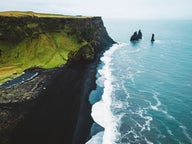
5-Day Self-Drive Tour of South Iceland With the Golden Circle and Blue Lagoon: Covers the Golden Circle, South Coast waterfalls, Reynisfjara Black Sand Beach, and Jokulsarlon Glacier Lagoon at your own pace, with optional add-ons like glacier hiking and snowmobiling.
-
6-Day Self-Drive Tour of the Golden Circle, Blue Lagoon & Jokulsarlon Glacier Lagoon: Extends the South Coast route with extra time at Vatnajokull National Park and Skaftafell, including the option to hike to Svartifoss or join a glacier walk.
-
7-Day Self-Drive Tour of West and South Iceland with the Golden Circle: Combines the Golden Circle and South Coast with the Snaefellsnes Peninsula, covering both Iceland's southern and western highlights in one itinerary.
Multi-Day Tours Including Strokkur
 Multi-day guided tours typically include Strokkur as part of a broader itinerary covering the south coast, glaciers, or the full Ring Road. These packages include accommodation, transportation, and a guide throughout.
-
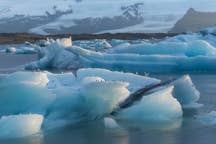
3-Day Golden Circle, South Coast & Jokulsarlon Tour with Ice Cave from Reykjavik: Covers the Golden Circle on day one, then continues along the south coast to glacier hiking, ice caving, and floating icebergs at Jokulsarlon Glacier Lagoon.
-
6-Day Ring Road Tour in Iceland with Glacier Hike, Ice Caving, and Whale Watching: Circles the full Ring Road with stops for glacier excursions in the south, whale watching in the north, and time in East Iceland's remote fjords.
-
8-Day Guided Tour of the Complete Ring Road of Iceland & Snaefellsnes Peninsula: Takes a slower pace around the Ring Road with a detour to the Snaefellsnes Peninsula, allowing more time at each stop than shorter itineraries.
Top 5 Things to Do Near Strokkur
 Strokkur's location in the Haukadalur Valley and on the Golden Circle route puts a range of attractions within easy reach.
The Geysir Center, located directly across the road from the geothermal area, has a restaurant, a cafe called Kantína serving hot meals, a soup outlet called Supa, and an ice cream shop, along with a large gift shop and clean restrooms.
It is the main hub for food, supplies, and facilities in the area, since the geothermal field itself has no amenities. Parking is paid and can be handled at the information center or via app.
From geothermal walks to powerful waterfalls, these are the best things to do near Strokkur.
5. Play a Round at Geysir Golf Course

Photo from Haukadalsvöllur / Geysir Golf Course Iceland (Facebook). No edits made.
For an unexpected diversion, the Geysir Golf Course sits within walking distance of the geothermal area. This 9-hole course winds through heather-lined fairways with two rivers crossing the playing area and no artificial mounding, giving it a raw, natural feel.
The course is open during the summer months, and the combination of steaming vents visible from the fairways and the volcanic landscape surrounding the greens makes it one of the more unusual rounds of golf in Iceland.
Buggy rentals and a driving range are available on-site. Quad biking and horse rentals are also available nearby for travelers looking for something active beyond the geothermal field.
4. Walk the Haukadalur Church Loop
 Travelers who want more than the short geothermal walk can take the Haukadalur Church loop, a 2.9-mile (4.7 km) trail that circles through the valley and takes roughly 1 hour and 20 minutes at a relaxed pace.
The trail passes through quieter countryside beyond the main geothermal field, offering views of the surrounding hills and a small historic church. It is a good option for visitors who arrive early or have extra time at the Geysir stop and want to stretch the visit beyond the usual 30 to 60 minutes most travelers spend at Strokkur.
3. Explore the Haukadalur Geothermal Field
The geothermal field surrounding Strokkur extends well beyond the geyser itself. The main walking loop covers roughly 2 miles (3.2 km) and takes about 45 to 60 minutes at a leisurely pace, including time to wait for eruptions.
The pathway, which includes boardwalks in places, leads directly past the Great Geysir's large blue basin, the vivid turquoise Blesi hot spring, mud pools, smaller geysers like Smiður and Litli-Strokkur, and steaming fissures.
The main viewing path from the parking area to Strokkur is paved and boardwalked in places, making it passable for strollers and wheelchairs, though some sections closer to the outer geothermal features are gravel and uneven.
The entire area is free to access and open year-round. Water temperatures in the pools and vents reach 175 to 212 F (80 to 100 C), so staying on the marked paths is essential, particularly during summer when the area gets crowded.
The sulfur smell is strong in places. Arriving early in the morning or later in the evening helps avoid the busiest tour bus hours and gives a quieter experience of the field.
2. Drive to Gullfoss Waterfall
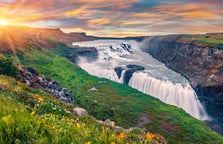
Gullfoss Waterfall is about 6 miles (10 km) further northeast along Route 35, roughly a 10-minute drive from Strokkur on fully paved roads. One of Iceland's most powerful waterfalls, Gullfoss plunges 105 feet (32 meters) in two tiers into a dramatic canyon carved by the Hvita River.
Two free parking lots are available: an upper lot near the cafe and visitor center, and a lower lot closer to the falls. Both connect to viewing platforms, with a 10- to 20-minute walk depending on which lot you use. The upper lot is more convenient for a quick stop; the lower lot puts you closer to the spray.
In winter, the roads remain accessible, but studded tires are recommended due to potential ice. Make sure to check road conditions before driving.
Most visitors combine Gullfoss and Strokkur in the same stop on the Golden Circle. From Gullfoss, it is roughly 50 to 60 minutes to Thingvellir National Park to complete the loop.
Travelers who want to explore Gullfoss in more depth can browse Gullfoss Waterfall tours, many of which include Strokkur and the rest of the Golden Circle in the same itinerary.
1. Visit Thingvellir National Park
Thingvellir National Park, a UNESCO World Heritage Site, is roughly 37 miles (60 km) west of Strokkur along Routes 35 and 365. The park sits in a rift valley where the North American and Eurasian tectonic plates are actively pulling apart, and it was the original site of Iceland's national assembly, the Althingi, founded in 930 AD.
Visitors can walk through the Almannagja Gorge between the continental plates, see the Oxararfoss Waterfall cascading into the rift, and visit Logberg (Law Rock), where Iceland's earliest laws were declared. Lake Thingvallavatn, the largest natural lake in Iceland, borders the park to the south.
For a more immersive experience, snorkeling tours in the Silfra Fissure offer crystal-clear glacial water with visibility exceeding 330 feet (100 meters) between the tectonic plates.
The park is free to enter, with paid parking that is valid all day. The main paths from the Hakid Visitor Center down into the gorge are paved or boardwalked and accessible for strollers and wheelchairs.
Plan to spend at least 1 to 2 hours for the main viewpoints, or a full day to explore the longer hiking trails that extend deeper into the valley. The landscape shifts dramatically between seasons: green and lush in summer, stark and icy with frozen columns in winter.
Best Places to Stay Near Strokkur Geyser
 Staying near Strokkur allows you to experience the Geysir area outside of peak daytime hours, when the crowds thin out and the light shifts. There are several Golden Circle accommodations within easy reach of the geyser, ranging from full-service hotels to budget-friendly camping.
3. Geysir Campsite
The Geysir Campsite is the most budget-friendly option near Strokkur and a natural base for travelers with rental campervans. It sits in a grassy, partially forested area directly across from the Geysir Center in Haukadalur Valley, putting Strokkur within walking distance.
The site is open from mid-May to mid-September and costs roughly 2,500 ISK per person per night, with extra charges for electricity and showers paid per use.
The service house has hot showers, toilets, washing machines, and waste disposal for chemical toilets and mobile homes. Electricity hookups are available in about half of the camping area; the other half is reserved for tents only.
A children's playground sits next to the service house, and free Wi-Fi is available throughout. The Geysir Glíma restaurant, cafe, and shops are directly across the road. Quiet hours start at midnight, and motor vehicles cannot move between midnight and 8:00 AM.
2. Litli Geysir Hotel
 Litli Geysir Hotel is a 3-star hotel surrounded by open countryside, just steps from the geothermal area. It strikes a balance between comfort and value, and its telescopes and fireplace lounge make it a particularly strong pick for winter visitors hoping to catch the northern lights.
The hotel has 22 rooms, all modern and allergy-friendly, with private bathrooms, flat-screen TVs, wooden floors, and soundproofing. The hotel also has free Wi-Fi, on-site parking, an electric vehicle charging station, and ground-floor accessible rooms.
An on-site restaurant serves traditional Icelandic cuisine with views of the hot spring area, and guests also have easy access to three additional restaurants and a cafe at the adjacent Geysir Center. The Geysir Golf Course is a short walk away.
1. Hotel Geysir
 Hotel Geysir is the most upscale option near Strokkur and the closest hotel to the geothermal area itself. This 4-star, 77-room property sits directly across from the Geysir Geothermal Area, with 24 double studio bungalows along the river and 12 rooms in the main wing.
Options range from standard doubles to deluxe suites, with large windows facing the geothermal landscape, coffee machines, and private bathrooms with showers or tubs. Some rooms have balconies.
The hotel has three restaurants, three bars and lounges, and a cafe, serving breakfast (with a mimosa bar), lunch, and à la carte dinner. A rooftop terrace offers 360-degree views of the surrounding valley and has a small herb garden.
For relaxation, guests can use the indoor heated Geysir hot tub. The hotel also has a 24-hour front desk, free Wi-Fi, free self-parking, an electric vehicle charging station, laundry service, and multilingual staff.
Strokkur is a short walk from the hotel entrance, making it the most convenient option for visitors who want to watch eruptions at sunrise or late in the evening without driving anywhere.
Protecting Strokkur: Visitor Safety and Conservation

Strokkur is guarded against interference, with chains and barriers keeping visitors at a safe distance from the vent. This protection exists in part because of what happened to the Great Geysir.
For years, soap was pumped into Geysir's vents to trigger more dramatic eruptions for tourists. Over time, this damaged the vent structure and contributed to the geyser's eventual dormancy.
Strokkur has not been immune to interference. In April 2015, Chilean artist Marco Evaristti poured five liters of red food coloring into the geyser as a piece of what he called "landscape art," turning the eruption pink.

Photo from mbl.is. No edits made.
The erupting water carried the dye onto the surrounding ground and into nearby puddles, with traces still visible that afternoon. The landowner pressed charges under Icelandic conservation legislation.
However, the South Iceland District Court acquitted Evaristti, ruling that the specific provisions he was charged under did not clearly prohibit his actions. The incident remains a sore point for conservation advocates and a reminder of how vulnerable the geothermal features are to human interference.
Visitors should exercise caution throughout the Haukadalur Geothermal Area. The water in and around the vents is boiling, and steam can cause burns even through clothing.
There is no hospital in the immediate vicinity. Stay on the marked paths at all times and keep a safe distance from all hot springs, mud pools, and steaming fissures.
Visiting Strokkur Across the Seasons
 Strokkur erupts year-round, but the experience changes significantly depending on when you visit.
Strokkur in Summer (June to August)
Summer in Iceland brings extended daylight, meaning you can visit Strokkur as late as 10:00 or 11:00 PM and still see eruptions in full light. The Haukadalur Geothermal Field is at its most vivid during these months, with green hillsides framing the steaming vents.
The trade-off is crowds. Tour buses arrive steadily between 10:00 AM and 3:00 PM, and the viewing area around Strokkur can feel packed.
Early mornings before 8:00 AM or late evenings offer a much quieter experience. Even in summer, weather in the valley shifts quickly, so pack layers and something windproof and waterproof.
Strokkur in Winter (November to March)
Winter strips the landscape back. Eruptions launch against snow-covered hills and dark skies, with steam catching whatever light is available.
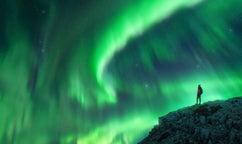
On clear evenings, the northern lights can appear directly above the geothermal field. Sunrise and sunset are the best windows for photography, when the low light creates high-contrast silhouettes.
The roads stay open and paved year-round, but studded tires are recommended. Driving conditions can be tough in Iceland in winter, which makes guided tours a popular choice. Daylight is limited to roughly 4 to 6 hours at the deepest point of the season.
The paths around the geothermal field get icy. Crampons or microspikes are highly recommended. Geothermal steam and mist can freeze on clothing, so waterproof outer layers help more than you might expect.
The cold also affects Strokkur itself: on windy, freezing days, more heat escapes from the surface pool and eruptions can be slightly less frequent. Between eruptions, the Geysir Center across the road offers food, restrooms, and shelter.
Spring (April to May)
Crowds thin out, the light softens, and the landscape starts waking up after winter. Snow may still cling to the surrounding hills, creating a sharp contrast with the steaming geothermal field below.
Spring in Iceland brings unpredictable weather to the valley. Temperatures can dip below freezing early in the season, and icy patches may linger on the paths.
Waterproof layers and sturdy footwear are essential. Northern lights are still possible in April, and by late May daylight stretches to nearly 20 hours, giving plenty of flexibility for timing your visit.
Fall (September to October)
Iceland in fall offers some of the most photogenic conditions at Strokkur. The surrounding hills turn warm orange and brown, contrasting sharply with the bright blues and whites of the geothermal pools. Cooler air makes the steam columns taller and more visible.
Crowds drop off after the summer peak, and the northern lights season begins again in September. Early fall still offers bright, long days. By late October, daylight shortens noticeably and you may catch an eruption at twilight.
The area is exposed and windy, so bring windproof and waterproof layers. October can also bring early ice on the roads, so check conditions at vedur.is before driving.
Visiting Strokkur on the Golden Circle
Few moments in Iceland are as simple and rewarding as watching Strokkur erupt. A pale blue bubble swells at the surface, the crowd goes quiet, and then the water fires skyward in a single, clean column.
It lasts only a few seconds. Then the basin settles, steam drifts across the valley, and the whole cycle begins again.
Strokkur is one of those rare attractions that delivers exactly what it promises, every time, for free. Plan your visit with one of many Golden Circle tours or browse self-drive packages for a flexible itinerary.
Travelers who prefer full independence can rent a car and drive Route 35 from Reykjavik on their own, watching the landscape shift from city to countryside to steaming valley in under two hours.
Is the Strokkur Geyser still active?
Are Geysir and Strokkur the same?
How often does Strokkur erupt?
How much does it cost to go to Strokkur Geyser?
What is the temperature of Strokkur Geyser's water?
How does the Strokkur Geyser work?
Where is the Strokkur Geyser located?
How much time should I spend at Strokkur?
Are there toilets at Strokkur?