Discover the best rental car for your Iceland adventure with ease on the Guide to Iceland car rental marketplace. Boasting an extensive selection from over 40 leading car rental companies, including the top car rental companies in Iceland, we offer you the most competitive rates and wide-ranging choices to suit your needs.
Our user-friendly search engine simplifies the process, enabling you to effortlessly compare prices and availability to secure the best car rental deals in Iceland. If your travel dates are flexible, see our guide to when is the best time to visit Iceland and our study on the cheapest month for a self-drive tour in Iceland to understand how prices change throughout the year.
Timing matters more for cars than for almost anything else you book. Our study on the cheapest time to visit Iceland analyzed 350,249 bookings and found that a rental car costs 65% more in July than in January, with the month of travel explaining a third of all car rental price variation.
Enjoy peace of mind with each booking, as nearly all cars come with CDW insurance, and benefit from our flexible policy that allows free cancellation and a full refund up to 24 hours before pickup.
Types of Rental Cars in Iceland
In Iceland, there are several types of car rentals available to suit different needs and budgets. Some of the most common types of car rentals in Iceland are:
-
Economy cars: These are the smallest and most affordable cars available, suitable for city driving and short trips.
-
SUVs & 4x4 vehicles: Four-wheel-drive cars offer extra space for passengers and are ideal for driving in rough terrain and winter conditions.
-
Campervans: These vans are equipped with a bed, kitchenette, and storage space, allowing travelers to camp across the country and explore at their own pace.
-
Luxury cars: High-end vehicles offer maximum comfort, style, and performance, suitable for special occasions and luxury travel.
-
Motorhomes: Larger than campervans, with full living space on board, suited to longer road trips and families traveling together.
When choosing a vehicle, consider the season, road conditions, route, trip length, and number of passengers. It helps to settle your itinerary first, as the length of your trip determines how long you’ll need the rental car. See our study on how many days you need in Iceland for data-backed guidance on planning your time in Iceland.
If you are considering a lower-emission option, our guide to exploring Iceland with a hybrid or electric car covers charging, range, and route planning.
Where To Rent a Car in Iceland
The majority of travelers rent a car at Keflavik International Airport, Iceland’s main entry point. Located about 40 minutes from Reykjavik, Keflavik has suppliers offering pick-up and drop-off around the clock, so late arrivals and early departures are covered. Check the pick-up details on the booking page, as hours vary by supplier. Renting at the airport allows you to begin your journey immediately without additional transfers.
It's also possible to rent cars from Reykjavik, Iceland’s capital and a popular starting point for exploring the country. Travelers can rent in Keflavik and return the vehicle in Reykjavik, or vice versa, though additional fees may apply for this service. If you are basing yourself in the capital, read up on parking in Reykjavik before you arrive.
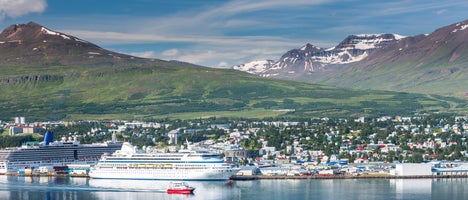
For those venturing beyond the southwest, car rentals are offered in key towns like Akureyri in the north, Egilsstadir in the east, and Hofn in the southeast. Rentals are also available in regions such as the Westman Islands, the Westfjords, and the Snaefellsnes peninsula. However, options outside of Reykjavik and Keflavik are more limited, with fewer agencies and vehicle types.
Car Rental Pickup in Iceland
Picking up your rental car in Iceland is a straightforward process, with multiple locations to choose from based on your travel plans.
Most travelers pick up their rental cars at Keflavik International Airport (KEF), where a few car rental companies have in-terminal desks. However, the majority of rental agencies are located just a few hundred meters from the airport and offer complimentary shuttle services to their offices or desks. Shuttle pick-up points are conveniently marked outside the arrivals hall.
For those starting their journey in the capital, Reykjavik also has several car rental locations, making it easy to explore Iceland without immediately renting at the airport.
Travelers exploring other parts of Iceland, such as Akureyri, Egilsstadir, or the Westfjords, will also find rental options, though availability may be more limited outside major hubs. Booking in advance ensures the best selection and rates, especially during peak travel seasons.
Rules & Regulations for Driving in Iceland
Driving in Iceland can be a unique and exciting experience, but it also requires careful preparation and attention to safety. Whether you're sightseeing on the South Coast or exploring remote areas, understanding the essentials of driving in Iceland and Iceland's road signs will help you enjoy a safe and memorable journey. Here’s what you need to know.
Car Rental Requirements in Iceland
To rent a car in Iceland, you must:
- Have a valid driver’s license for at least one year.
- Be at least 20 years old to rent a standard car.
- Be at least 23 years old to rent a 4x4, SUV, van, camper van, or minibus, and 25 for luxury cars and motorhomes.
- Provide an International Driving Permit if your license is not in Latin characters.
Age limits vary by supplier and by vehicle, so check the requirement on the vehicle's listing before booking.
Speed Limits in Iceland
Speed limits in Iceland are strictly enforced:
- 90 km/h (56 mph) on paved rural roads.
- 80 km/h (50 mph) on gravel roads.
- 50 km/h (31 mph) in towns and cities.
In certain areas, such as school zones, residential neighborhoods, or near construction sites, the speed limit can be lower. Always follow posted speed limits, as they take precedence over general rules. If no signs are visible, assume the limit is 50 km/h.
Driving on F-Roads in Iceland
Mountain roads, known as F-roads, require a 4x4 vehicle and are only open during the summer. Always check the weather and road conditions before venturing into Iceland’s Highlands. You are also advised to leave your travel plan on safetravel.is for safety.
Iceland’s No Off-Road Driving Policy
Off-road driving is illegal in Iceland due to its devastating impact on the fragile environment, and this includes beaches, lava fields, and moss-covered terrain. Damage to moss-covered lava fields takes decades to recover and is sometimes irreversible. Violators face fines of up to 500,000 ISK (about 4,000 USD) or even imprisonment, and off-road driving voids your rental insurance.
Winter Tires in Iceland
All rental cars in Iceland are fitted with winter tires from November 1 until April 14, at no extra cost. Studded tires are permitted during that same window and are common on rental fleets, as they grip better on packed snow and ice. Snow chains are not used on rental cars in Iceland and are restricted because of the damage they cause to road surfaces.
Road Costs in Iceland
Fuel is the running cost most travelers plan for, and our guide to gas stations in Iceland covers where to fill up and how payment works. Two further costs are easy to overlook. Iceland charges a kilometer-based road tax on all vehicles, which is already included in the rental price when you book through Guide to Iceland. Iceland also has two toll points: the Vadlaheidargong tunnel near Akureyri, and a section of the Ring Road near Hofn that has been tolled since September 2026. See our guide to road tolls in Iceland for how and where to pay.
Safety Rules for Driving in Iceland
With proper preparation and attention to safe driving practices in Iceland, travelers can enjoy an unforgettable experience on the road. Follow these essential rules to stay safe on your journey:
- Never drive under the influence.
- Never use a mobile phone while driving.
- Stick to posted speed limits, as traffic cameras are common, and fines are high.
- Only stop for photos at designated pull-off areas to avoid accidents.
- Always check weather and road conditions before setting out.
- Dial 112 in case of emergencies for immediate assistance.
Iceland’s roads can be narrow, winding, and prone to high winds, so always drive cautiously. Keep headlights on at all times, and ensure all passengers wear seatbelts. Additionally, sheep roam freely across rural areas during summer, so drive cautiously and be prepared to stop if they cross the road unexpectedly.
Driving in Iceland's Weather
Driving in Iceland offers stunning views of glaciers, waterfalls, and geothermal hot springs, but unpredictable weather makes preparation essential. Always check the latest forecast before heading out and adjust your plans accordingly. Our Iceland weather and road conditions page brings the forecast and live road status together in one place, and the Icelandic Meteorological Office publishes the detailed regional outlook.
Driving in Summer
May to August brings the best driving weather in Iceland, according to our study of the best and worst months to visit Iceland, with June and July the driest and calmest. September is the wettest month of the year, so allow extra time for wet roads. Our guide to Iceland in summer covers the season in full.
Longer daylight hours make summer driving easier, but it’s still important to monitor daily forecasts for unexpected changes. Sudden rain, fog, or strong winds can still create challenges in any month.
For a stress-free experience, consider summer self-drive tours in Iceland, which include a rental car, accommodations, optional activities, and a customizable itinerary.
Driving in Autumn
September, October, and November make up the shoulder season, and conditions shift quickly across it. Rain is heaviest at the start, and by November you can meet the first snow and ice, particularly in the north and east and on higher ground. Daylight shortens noticeably over these three months, so plan shorter driving days than you would in summer. Highland F-roads begin closing from September onwards, with exact dates depending on the weather.
Driving in Winter
Winter driving can be a unique and rewarding experience, but it requires extra preparation, especially from December through March. Our guide to Iceland in winter sets out what to expect. Snowstorms, high winds, fog, and icy roads are common, and daylight hours are shorter, down to four or five hours in midwinter. With the proper preparation, including winter tires and checking weather updates, you can safely enjoy driving in Iceland.
To simplify planning, explore winter self-drive tours in Iceland, which bundle everything you need for a safe and scenic adventure.
Why Rent a Car in Iceland
Renting a car in Iceland is the most convenient way to explore the country’s stunning landscapes and unique attractions. Public transportation options are limited, and many of Iceland’s most iconic destinations—like remote waterfalls, glacier lagoons, and volcanic craters—are only accessible by car. A rental puts the attractions along the Ring Road and the Golden Circle within easy reach.
The benefits of renting a car in Iceland:
- Flexibility: Renting a car in Iceland lets you explore at your own pace.
- Convenience: Avoid relying on public transportation or restrictive tour schedules.
- Cost-effectiveness: A rental car can be cheaper than other options for groups.
- Independence: Plan your own itinerary and change plans freely while traveling.
- Scenic routes: Enjoy Iceland’s stunning landscapes and stop whenever you want.
- Remote access: Reach remote areas of Iceland not accessible by public transport.
- Avoid crowds: Escape busy tourist spots and explore off-the-beaten-path locations.
In conclusion, renting a car in Iceland offers a convenient and flexible way to explore the country.
Summary
Overall, drivers who are aware of the weather, the road conditions, and their own driving skills will have a safe and enjoyable time driving in Iceland. By staying informed about the weather, road conditions, and your own capabilities, you’ll be able to fully enjoy the breathtaking landscapes and unique experiences Iceland has to offer. Safe driving!