Iceland motorcycle tours take riders across paved coastal roads, gravel tracks, and remote Highland routes surrounded by volcanoes, glaciers, geothermal areas, and fjords. This guide compares guided tours and independent travel while covering routes, seasons, laws, equipment, and planning.
Guided options range from a short Highland motorcycle expedition to a seven-day Westfjords motorcycle journey. The right option for you depends on your riding experience, preferred terrain, daily distance, accommodation, and the amount of support you want.
Why You Can Trust Our Content
Guide to Iceland is the most trusted travel platform in Iceland, helping millions of visitors each year. All our content is written and reviewed by local experts who are deeply familiar with Iceland. You can count on us for accurate, up-to-date, and trustworthy travel advice.
Independent riders can explore the Ring Road, Golden Circle, South Coast, Westfjords, or Snaefellsnes Peninsula. Standalone motorcycle rentals may be available from specialist providers, while riders traveling through Europe can bring their own motorcycle by ferry to Iceland.
Highland riding requires more experience and preparation than paved touring. Rough surfaces, limited services, changing access, and unbridged rivers make guided support particularly useful on demanding routes through Iceland’s interior.
Keep reading to compare the best motorcycle tours and routes in Iceland. Learn which skills and equipment you need for paved roads, gravel tracks, and remote Highland travel.
Key Takeaways About Motorcycle Travel in Iceland
-
June through August generally offers the most practical conditions for paved motorcycle travel. Highland road openings vary by road and year.
-
Riders need a valid motorcycle license, an approved helmet, and protective gear suited to cold, rain, wind, and the planned terrain.
-
Independent riders can use paved routes, bring a motorcycle by ferry, or check whether specialist motorcycle rentals are available for their travel dates.
-
Rough F-roads require gravel experience and a suitable dual-sport, enduro, or adventure motorcycle. Guided motorcycle tours are recommended on these routes.
-
Check road conditions on Umferdin before each ride. The official 1777 traffic service can provide further information about road and travel conditions.
-
Off-road motorcycle riding is illegal. Riders must remain on recognized roads and tracks, including on sand, lava, and apparently barren ground.
-
Guided motorcycle tours can arrange the motorcycle, route, fuel, accommodation, and local support. Some also provide a backup motorcycle and support vehicle.
Why Explore Iceland by Motorcycle?

On a motorcycle, Iceland surrounds you instead of passing by a window. Riders feel the air cool near the glaciers, catch the sulfur smell of geothermal areas, and cross lava fields shaped by the country’s volcanoes. At the end of a riding day, a soak in one of Iceland’s best hot springs is the ideal way to warm up after hours in the wind.
Summer’s extended daylight gives riders more time to cover long distances without rushing between stops. Near the summer solstice, Iceland experiences the midnight sun, so sightseeing can continue well into the evening.
Best Motorcycle Routes in Iceland

Iceland’s best motorcycle routes range from one-day paved circuits to week-long coastal journeys. Choose a route based on your available time, motorcycle, gravel-riding experience, and comfort traveling through areas with limited services.
Most road-legal motorcycles can cover paved routes. Touring and sport-touring motorcycles provide more comfort for long distances, while adventure motorcycles with suitable tires and ground clearance are better suited to routes mixing pavement and gravel.
-
Golden Circle: Allow one full day for this paved loop through Thingvellir, Geysir, and Gullfoss. The main roads and access roads to these three attractions are paved, but riders should expect heavier traffic and possible strong winds. Read our guide to driving the Golden Circle.
-
South Coast: Allow at least two days for a round trip between Reykjavik and Diamond Beach. Route 1 and the access roads to major attractions are paved, though some optional detours include gravel. Use our Reykjavik to Diamond Beach driving guide.
-
Ring Road: Route 1 has been fully paved since 2019 and connects the South Coast, Eastfjords, North Iceland, and West Iceland. Some attraction detours and parking areas are gravel. Allow at least seven days and explore the best attractions along the Ring Road.
-
Westfjords: Allow about six days from Reykjavik for this mainly paved route through Holmavik, Isafjordur, Dynjandi, Latrabjarg, and Raudisandur. Gravel sections, steep passes, and narrow coastal roads require additional care. Read our ultimate guide to the Westfjords.
-
Snaefellsnes Peninsula: Allow one or two days for this coastal circuit. The main roads are paved, but some approaches to individual attractions are gravel, and exposed coastal sections can be windy. See the top things to do on the Snaefellsnes Peninsula.
For the Highlands, we recommend joining a guided motorcycle tour. Lava deserts, river crossings, and remote scenery make these routes rewarding for experienced riders, but they can involve deep gravel, severely uneven surfaces, steep sections, and unbridged rivers. Remote locations and changing conditions require careful preparation.
How to Experience Iceland by Motorcycle

There are two main ways to experience Iceland by motorcycle: join a guided tour or bring your own bike. The right choice depends on how independently you want to travel, the terrain you plan to ride, and how much preparation you want to manage.
Standalone motorcycle rentals may also be available from specialist providers, although options are limited. Confirm current availability, license requirements, insurance, equipment, and permitted roads directly with the rental company.
A guided motorcycle tour combines a planned route with a motorcycle and local guide. It is particularly suited to riders who want to explore remote Highland or Westfjords routes without organizing every part of the journey themselves.
Bringing your own motorcycle gives you greater control over the bike, route, pace, and length of the trip. It requires more preparation, but it can suit riders planning a longer journey or those who prefer traveling independently on a familiar motorcycle.
The following sections compare the available guided tours and explain how to transport your own motorcycle to Iceland.
Best Guided Motorcycle Tours in Iceland

The best guided motorcycle tour in Iceland depends on the region you want to explore and the number of riding days you prefer. Three of the listed tours focus on the Highlands, while the seven-day option follows a longer route through the Westfjords and Snaefellsnes Peninsula.
-
3-Day Highlands Motorcycle Tour: This shorter introduction to the Highlands visits Thingvellir, Geysir, Gullfoss, Langjokull, Kerlingarfjoll, Fjallabak, and Landmannalaugar. Riders spend two nights in mountain huts.
-
4-Day Highlands and South Coast Motorcycle Tour: This route adds more of the southern Highlands and South Coast. Highlights include Hekla, Landmannalaugar, Langisjor, Eldgja, Laki, Vik, and Skogafoss, with three nights in mountain huts.
-
6-Day Highlands Motorcycle Tour: This is the most extensive Highland itinerary. It crosses Langjokull, Kerlingarfjoll, Sprengisandur, Veidivotn, Landmannalaugar, Eldgja, and Laki before reaching the South Coast. Five nights are spent in mountain huts.
-
7-Day Westfjords Motorcycle Tour: This option replaces the central Highlands with coastal and gravel-road riding. It visits Latrabjarg, Dynjandi, Isafjordur, Djupavik, Strandir, Stykkisholmur, and Snaefellsnes, with six hotel nights.
Routes may change when weather, river levels, or road closures affect the planned itinerary. Check the current route and available dates before booking.
Bringing Your Own Motorcycle to Iceland

You can bring a motorcycle to Iceland by passenger ferry, sea freight, or air freight. The Norrona ferry is the simplest option for most riders traveling from Europe, while separate freight may suit longer trips, distant origins, or groups transporting several bikes.
Taking the Ferry to Iceland With a Motorcycle

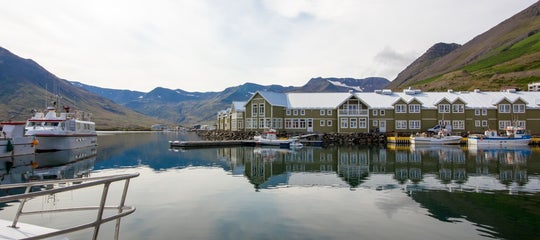
The Norrona is the only passenger ferry connecting mainland Europe with Iceland. It sails from Hirtshals, Denmark, through the Faroe Islands to Seydisfjordur in East Iceland and allows passengers to bring motorcycles.
Fares and schedules change by season. Reserve the motorcycle space and cabin early for summer, enter the bike’s correct dimensions, and check the vehicle check-in time. The ferry carries the rider and motorcycle together, avoiding separate freight collection and passenger flights.
Read our guide to taking the ferry to Iceland for more information about the route, sailing experience, cabins, vehicle transport, and arrival in Seydisfjordur.
Shipping a Motorcycle by Sea or Air

Sea freight lets you send the motorcycle separately on a pallet or inside a container and fly to Iceland. This may suit riders coming from outside Europe, planning a long stay, or sharing a container with a group.
Request a complete quote covering packing, cargo insurance, port handling, customs services, storage, and return shipping. Sea freight may cost more than the passenger ferry once separate Iceland flights and local transport are included.
Air freight is faster but usually much more expensive. The motorcycle must meet strict requirements and documentation, so this option is mainly used for time-sensitive or specialist travel.
What to Know Before Bringing a Motorcycle to Iceland

Bringing a motorcycle to Iceland requires temporary-import approval, valid documents and insurance, payment of the road-use fee, and export within the permitted period. Complete these requirements with the carrier or customs broker before departure.
-
E9 declaration: Complete an E9 temporary-import declaration before arrival and submit it to Icelandic Customs with the carrier or customs broker. Keep a paper or electronic copy with the motorcycle throughout the trip.
-
Required documents: You may be asked to submit the motorcycle registration, driving license, proof of ownership or permission to use the bike, and proof of liability insurance. Sea-freight arrivals may also require a bill of lading and transport invoice.
-
Insurance: Motorcycles registered outside the European Economic Area require a Green Card. Riders should confirm that their insurance remains valid in Iceland and carry proof of cover.
-
Road-use fee: Customs records the odometer on arrival. Visits of 30 days or less receive a fixed charge based on the planned stay, while longer visits are charged according to distance. Payment instructions are sent by email or text.
-
Import period: Duty-free temporary import is available to riders who remain permanent residents abroad. The motorcycle must arrive within one month of the rider, leave within 12 months, and be used only privately.
Learn more about the E9 declaration, temporary-import conditions, kilometer fees, and permitted length of stay on the Iceland Revenue and Customs guide to temporarily importing a vehicle.
Best Time for Motorcycle Travel in Iceland

June through August is generally the most practical time for motorcycle travel on Iceland’s paved roads. These months provide the mildest average temperatures and longest daylight, although rain and strong wind remain possible.
Paved routes may also be suitable in May and September, but shorter daylight and a greater risk of frost, snow, or ice make plans less reliable. Conditions can be particularly difficult on higher roads and mountain passes, even when lowland roads remain clear.
For a Highland motorcycle trip, mid-July through August offers a more reliable planning window. Official opening records for 2021 to 2025 show that some routes across Sprengisandur, southern Fjallabak, Skagafjordur, and Eyjafjordur opened as late as mid-July.
Past opening dates do not guarantee access in another year. Snow cover, thaw, road damage, and environmental conditions determine when each route opens, so check Umferdin and the Icelandic Met Office forecast before every riding day.
Planning an Independent Motorcycle Trip in Iceland

Planning an independent motorcycle trip in Iceland requires realistic daily distances, confirmed fuel stops, suitable accommodation, and preparation for breakdowns. Base the itinerary on the motorcycle’s range and riding conditions rather than copying a car itinerary.
-
Calculate realistic riding days: Plot each route in Google Maps, then check the roads on Umferdin. Add time for fuel, meals, attractions, rest, gravel, and weather. Treat the calculated driving time as a minimum.
-
Plan every fuel stop: Calculate the motorcycle’s loaded range and keep a reserve for detours or closures. Mark several gas stations using the N1, Olis and OB, and Orkan station maps.
-
Arrange overnight stays: Book hotels and guesthouses early, especially on remote routes because the next available property may add considerable distance. Ask about surfaced parking, luggage storage, and somewhere to dry wet gear. Compare options in our guide to where to stay in Iceland.
-
Plan campsites carefully: Check for showers, charging points, cooking facilities, and shelter from wind. Camping outside established sites is restricted in many protected areas, while traditional tents may be allowed elsewhere under specific conditions. Read our guide to camping in Iceland.
-
Prepare for repairs: Service the motorcycle and fit tires for the roughest surface on your route. Carry tools, spare fuses, a puncture-repair kit, a compact pump, and essential parts. Confirm which workshops service your motorcycle and whether roadside assistance covers recovery in Iceland.
-
Pack for the motorcycle: Use waterproof luggage and protect documents, electronics, and dry clothing. Bring waterproof riding gear, insulating layers, spare gloves, protective boots, and enough straps to stop luggage from shifting.
-
Share the journey: Give someone your route, motorcycle details, accommodation, and check-in times. Submit a SafeTravel travel plan and update it if the route changes.
-
Prepare for emergencies: Carry first-aid supplies, food, water, an emergency blanket, a charged phone, and backup power. Call 112 in an emergency or use the 112 Iceland app to send your location. Consider a satellite communicator for isolated routes.
Motorcycle Laws and Road Rules in Iceland

If you are visiting Iceland with a foreign motorcycle license, you may only ride the motorcycle categories it covers in your home country. Licenses issued outside the EEA must use Latin letters or include a translation into Icelandic, Danish, Norwegian, Swedish, or English.
Approved motorcycle helmets are mandatory for both riders and passengers. The rider is responsible for ensuring that each passenger wears one. Choose a helmet that also provides suitable protection against Iceland’s cold, rain, and wind.
The same general traffic laws apply to cars and motorcycles. Learn about speed limits, lights, mobile phone use, alcohol, off-road driving, bridges, roundabouts, and signs in our guides to driving in Iceland, speed limits, and road signs.
Final Tips for Motorcycle Travel in Iceland

The best way to experience Iceland by motorcycle depends on your riding skills, preferred terrain, and desired level of support. A six-day guided Highland motorcycle tour suits experienced riders seeking remote gravel routes, while a one-week motorcycle excursion in the Westfjords offers more coastal touring.
Independent riders should choose a motorcycle suited to the complete route and leave room for weather or road changes. Confirm fuel stops, accommodation, insurance, repairs, and emergency communication before departure.
Whichever route you choose, match the journey to your ability and treat changing conditions as part of motorcycle travel in Iceland. Prepare carefully, remain flexible, and choose an easier alternative whenever the road or weather exceeds your experience.
Do you need a motorcycle license in Iceland?
What riding experience do Iceland motorcycle tours require?
What motorcycle gear should you bring to Iceland?
Can you rent a motorcycle in Iceland?
Can motorcycles use Iceland's F-roads?
Is off-road motorcycle riding legal in Iceland?
What do guided motorcycle tours in Iceland include?
How many days do you need for a motorcycle trip in Iceland?
Which Iceland motorcycle route would you choose: the remote Highlands, the winding Westfjords, or a paved journey around the Ring Road? Share your choice and what appeals to you about the route in the comments below.

Michael Chapman is a British travel writer living in Reykjavík. A former scuba and lava cave guide, he draws on firsthand experience to write about Iceland’s nature and culture. He’s also the author of Hidden Iceland (2020).