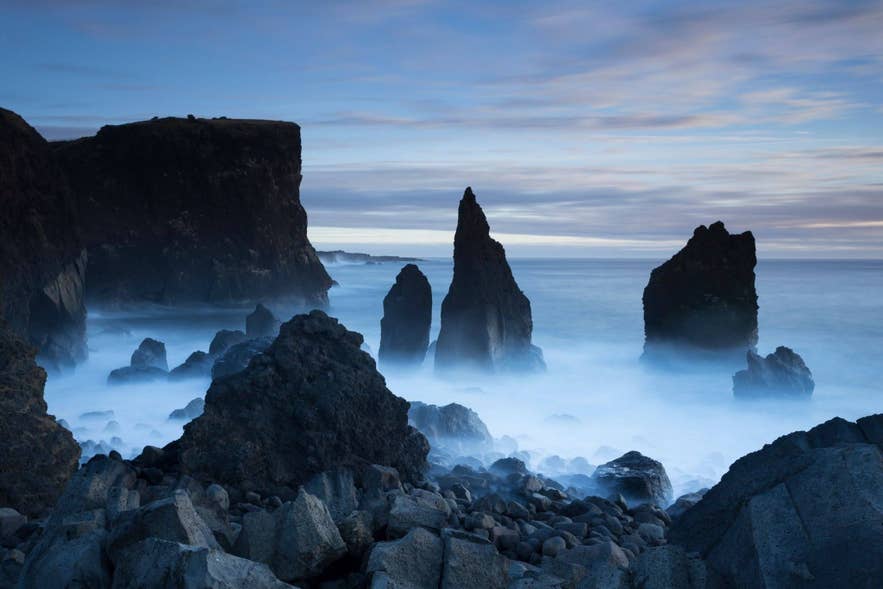
Iceland’s landscapes may look like something out of a fantasy novel, but some corners of the country come with quietly unsettling stories. Hidden among the lava fields, waterfalls, and windswept coastlines are places where the atmosphere feels different.
Why You Can Trust Our Content
Guide to Iceland is the most trusted travel platform in Iceland, helping millions of visitors each year. All our content is written and reviewed by local experts who are deeply familiar with Iceland. You can count on us for accurate, up-to-date, and trustworthy travel advice.
This list explores Iceland’s most haunted locations, each open to the public and tied to legends passed down through generations. Some are famous landmarks with a mysterious twist, while others are hidden deep in the countryside, known mostly to those who’ve heard the tales.
Visitors have reported strange sounds, sudden chills, and feelings of being watched. Travelers have described shadowy shapes moving across the glaciers and footprints appearing in fresh snow with no one nearby.
These places are known for their scenic beauty, but they also carry an eerie charm that might leave you glancing over your shoulder. To explore them at your own pace, browse our widest selection of car rentals or find a great selection of accommodations across Iceland.
Key Takeaways
-
Real places, eerie legends: Explore real locations across Iceland where ghost stories and folklore are deeply rooted in history and landscape.
-
Urban and remote haunts: Visit haunted places ranging from central Reykjavik landmarks like Tjornin Pond and Hotel Borg to remote natural sites like Mount Hekla and Dimmuborgir Lava Field.
-
Strange sights and sensations: Travelers report whispers, shadowy figures, cold spots, and strange lights, especially in quiet, isolated locations.
-
Tragic histories and restless spirits: Many haunted sites are tied to sorrowful events, such as executions at Thingvellir National Park or the poisoning at the Dillon House.
-
Accessible yet unsettling: Most places are open to visitors and easy to reach, but many leave a lingering sense of being watched.
10. Pass By Tjornin Pond Where the Still Water Hides Secrets
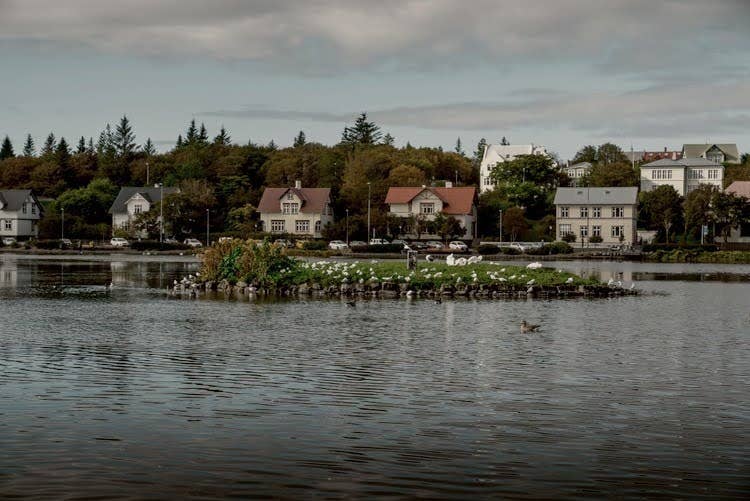 Tjornin Pond is one of Reykjavik’s most peaceful spots. It’s located in the center of the city, surrounded by parks, walking paths, and government buildings. But there’s a quiet story tied to its frozen surface.
According to legends, a young woman gave birth in secret many years ago, afraid of the shame it would bring. One freezing night, she walked to the edge of Tjornin Pond and placed the baby beneath the ice.
Since then, people say her presence has remained. The woman is said to wander along the pond, searching or mourning, her grief frozen in time. Some visitors have reported seeing pale fingers under the ice or hearing whispers rise from the water, even on windless days.
By day, Tjornin Pond looks completely normal. Locals feed ducks and swans along the shore, and the city moves steadily around it. It’s a quiet, peaceful spot in the heart of Reykjavik. But sometimes, that calm feels just a little too still.
If you’re exploring Reykjavik’s haunted places, Tjornin might not be the first that comes to mind. But sometimes it’s the quiet places that echo longest.
How to visit: Tjornin is in the very center of Reykjavik, a short walk from City Hall. You can simply step off a Golden Circle day tour or any Reykjavik city tour, and you're already there.
9. Watch the Shadows Move On Snaefellsjokull Glacier
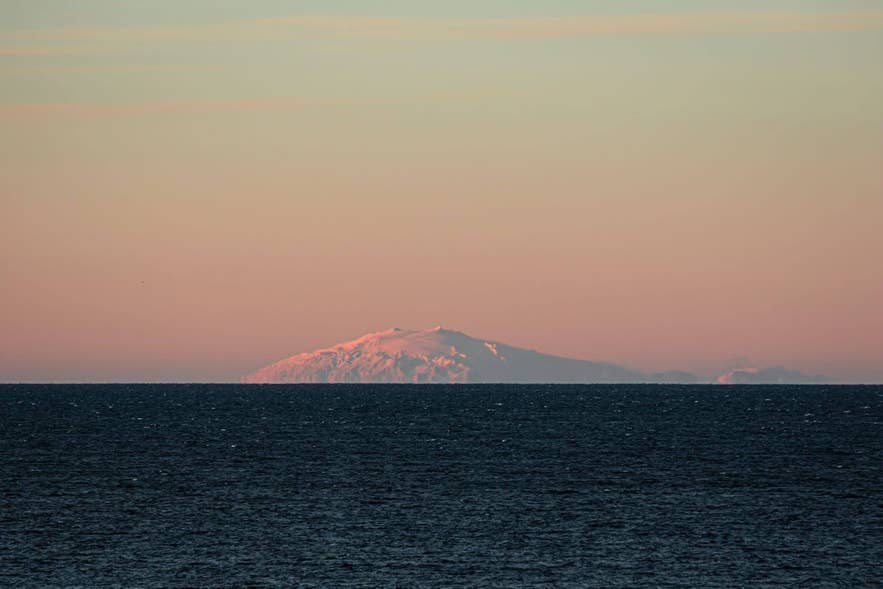 Snaefellsjokull Glacier is known for its beauty and its role in Jules Verne’s “Journey to the Center of the Earth.” But ask around, and you’ll find it also has a reputation for being one of the strangest haunted places in Iceland.
People have seen strange shapes on the glacier and found footprints in fresh snow, even though no one else was there. Glowing orbs are sometimes seen on clear nights, floating just above the ice before they fade into the darkness.
Some believe the glacier is connected to other dimensions — New Age visitors have long described it as one of the world's great energy centers.
There’s no single story to explain what happens here. Just small, unsettling moments that make the glacier feel less empty than it looks.
Snaefellsjokull is part of Snaefellsjokull National Park and accessible by car during the summer months. On clear days, the glacier is even visible from Grotta Lighthouse on the outskirts of Reykjavik. Many visitors leave not only impressed by the scenery, but with the feeling that something unseen was watching from the ice.
How to visit: The Snaefellsnes Peninsula is roughly a 2-hour drive from Reykjavik via Route 54, following Route 1 north before turning west. Snaefellsnes day tours are also available with pickup from central Reykjavik, ranging from small-group to private options.
8. Walk the Black Shore at Djupalonssandur Beach, but Don’t Look Back
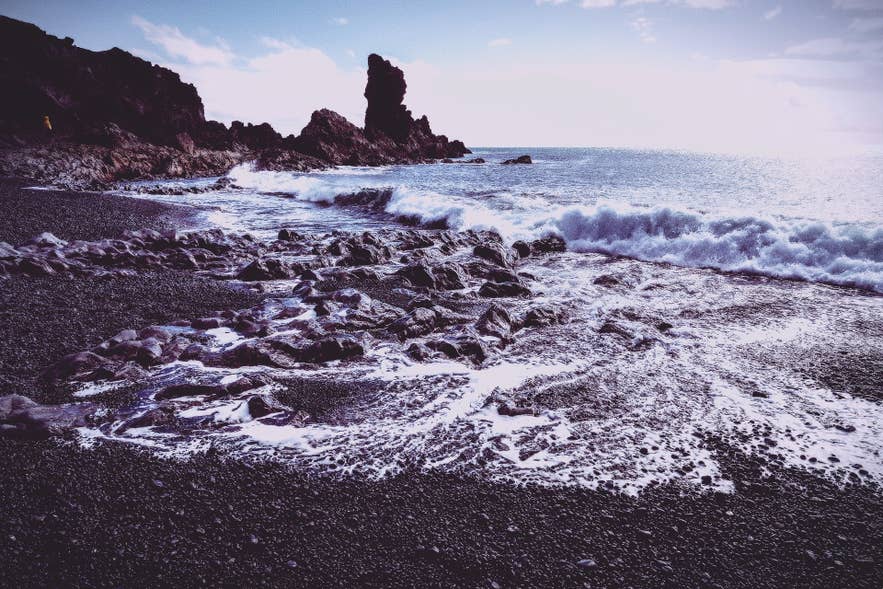 There’s a silence on Djupalonssandur Beach that doesn’t feel right. The waves crash loudly, but the quiet moments between them feel heavy. Some people have heard voices near the shore. Others glimpse figures that disappear when they turn. This stretch of black sand is known for shipwrecks, but something older seems to linger.
Many lives were lost in the cold surf, and some believe not all of them moved on. Sobbing has been heard in the wind, and a lone figure is sometimes seen walking the water’s edge before fading into the mist. A few even claim the rocks shift slightly, as if something beneath them is trying to rise.
Locals warn against picking up stones from the beach. People who do often report strange misfortune until the stone is returned. Whether you believe the stories or not, most choose to leave the shore as they found it.
If you’re visiting haunted places in Iceland and heading west, Djupalonssandur is worth the stop. Just take your time, and don’t walk too far alone.
How to visit: Djupalonssandur sits on the western tip of the Snaefellsnes Peninsula, a short drive from the Snaefellsjokull Glacier. The two make a natural pair on the same day trip out of Reykjavik.
7. Visit the Execution Grounds at Thingvellir National Park
 Thingvellir National Park is one of Iceland’s most important historical sites and a UNESCO World Heritage Site since 2004. The Althingi, Iceland’s first parliament, was founded here in 930 AD among cliffs, rifts, and rivers.
Thingvellir is also tied to a darker history. This quiet valley was once a place of execution, and some say the landscape still carries the memory of what happened there.
Between 1618 and 1749, 18 women were drowned at a spot called Drekkingarhylur, or the Drowning Pool, for crimes such as infanticide and incest. Men convicted of similar or other capital offenses faced beheading or hanging.
Place names throughout the park still reflect this history, including Galgaklettur (Gallows Rock), Höggstokkseyri (Execution Block Spit), and Brennugjá (Burning Gorge), where witches were executed by fire. A memorial plaque marks the drowning pool today.
People still visit the spot today, but not everyone feels comfortable staying long. Some have reported hearing soft crying near the water. Others have seen shapes moving in the mist, always just far enough to question what they saw.
Some locals believe the energy here is still restless. Others say the ground remembers. A few visitors have described walking the trails and suddenly feeling like they weren’t alone.
Thingvellir is just an hour from Reykjavik and part of the Golden Circle Route. It’s easy to explore by foot, but if you’re looking for haunted places in Iceland with real history behind them, this is one to include.
How to visit: Thingvellir is the starting point of the Golden Circle day tour, Iceland's most popular driving route. Most tours from Reykjavik stop here first. If driving independently, take Route 36 east from the capital.
6. Visit Hekla, the Gateway to Hell
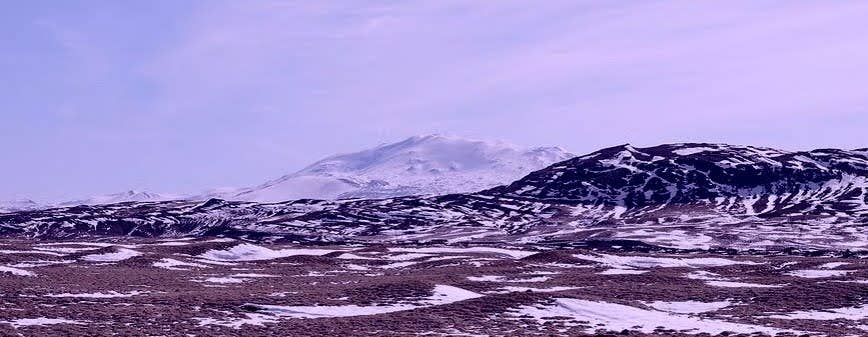 Mount Hekla sits in the southern highlands of Iceland, its summit often hidden by cloud. It’s one of the most active volcanoes in the country, but it’s not just the eruptions people talk about. For centuries, Hekla has been known as the Gateway to Hell.
The stories go back to 1104, when Hekla's first recorded eruption buried entire farms and settlements under ash, spreading fear far beyond Iceland's borders. Medieval writers and monks later described the volcano as a gateway to Hell, while old legends claimed the souls of the damned were trapped beneath the mountain.
Over the centuries, Hekla’s eruptions only strengthened the stories surrounding it. During a major eruption in the 1300s, witnesses reported seeing birds flying through the smoke and flames, which many believed were spirits escaping the mountain. Icelandic folklore also says witches gather on Hekla during Easter.
Hekla has erupted more than 20 times and remains one of Iceland’s most unpredictable volcanoes. Hikers can still follow the trail to the summit, but the mountain’s barren slopes and steaming landscape give it an unsettling atmosphere unlike anywhere else in Iceland.
Located about a two-and-a-half-hour drive from Reykjavik, Hekla remains one of the country’s most legendary and mysterious natural landmarks.
How to visit: Join a South Iceland or Hekla area day tour from Reykjavik, or drive yourself. The Hekla Center at Leirubakki Farm near the volcano is a great first stop for current trail and volcanic updates. Always check the Icelandic Met Office website before visiting the summit.
5. Stay a Night in Room 48 at Hotel Borg if You Dare
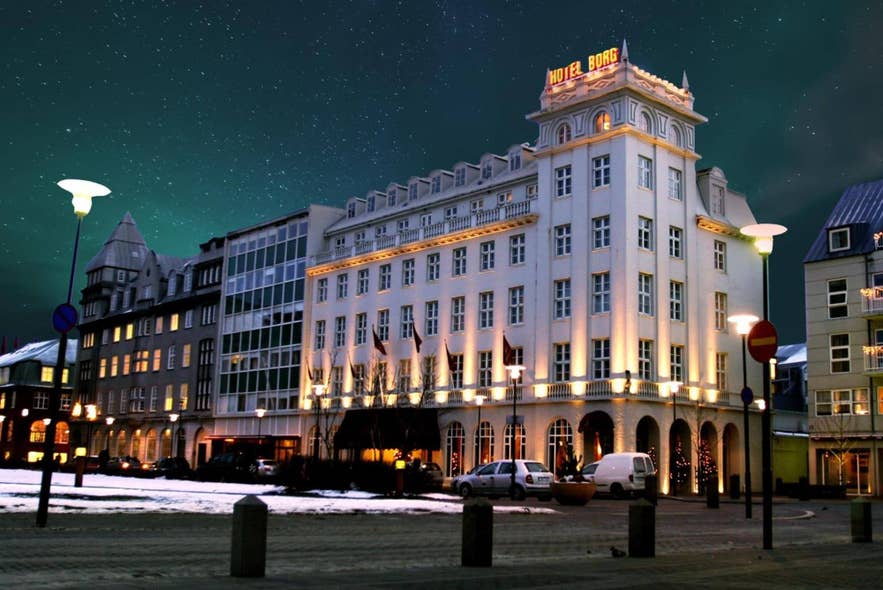 Hotel Borg is one of Reykjavik’s most iconic buildings. Known for its art deco design and central location, it’s been a city landmark for decades. But behind the polished halls and historic charm are stories that make some guests hesitate, especially when it comes to Room 48.
The room is often called the dark room. Not because of how it looks, but because of what people have experienced inside.
Guests have reported hearing a deep voice in the middle of the night, even when they were alone. Others say their children spoke to someone who wasn’t there. The lights switch on by themselves. Cold patches come and go without reason.
The hotel has never officially confirmed the stories, but they’ve never denied them either. Staff keep quiet, and Room 48 remains open for anyone curious enough to book it.
Among the many Reykjavik hotels available in the city center, Hotel Borg remains one of the most famous for its ghost stories and mysterious reputation.
Hotel Borg is in the center of Reykjavik and easy to reach. If you plan to stay, ask for Room 48. It’s a beautiful room, but don’t expect to be alone.
How to visit: Hotel Borg sits on Austurvollur Square, within walking distance of Tjornin Pond, Hofdi House, and Holavallagardur Cemetery. Tour bus Stop 3 (Laekjargata) is nearby, and the exterior and lobby are worth seeing on a Reykjavik walking tour.
4. Stand Where the Dillon House Once Stood
 In the middle of Reykjavik, there’s an ordinary car park that most people walk past without a second thought. But not long ago, this was the site of what many called the most haunted house in the city.
Built in 1835, the home later gained national attention after a murder-suicide in 1953. A pharmacist living in the house poisoned his wife and three children before taking his own life. The case shocked Iceland and remains one of the most disturbing crimes in the nation’s history.
After the tragedy, stories about strange activity quickly spread. Former residents reported flickering lights, sudden cold spots, and furniture moving without explanation. Some visitors claimed they heard voices or sensed they were being watched inside the empty rooms.
One of the most chilling stories came from Danish students who stayed there in the 1960s. A student later described seeing the same ghostly scene night after night: a silent family seated around the kitchen table as the father passed around a bottle.
Eventually, the house was removed and relocated to the Arbaer Open Air Museum, where it still stands today. Its original site is now just a quiet parking lot, but some say the family still watches, waiting for the bottle to claim another.
How to visit: The original plot is at the corner of Sudurgata and Tungata in central Reykjavik, now a simple car park. The house itself is at the Arbaer Open Air Museum in eastern Reykjavik, reachable by bus route 19 from Hlemmur or a 10-minute drive from the city center.
3. Step Into Dimmuborgir, but Don’t Stay Too Late
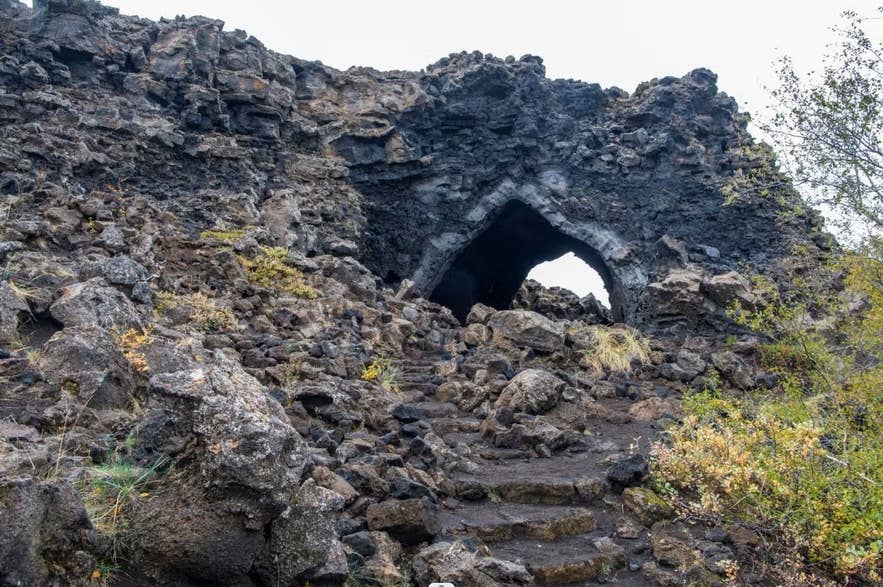 In North Iceland near Lake Myvatn, Dimmuborgir Lava Field is known for its jagged lava formations and eerie stillness. The paths twist through rock pillars and caves that look like ruins, but the stories here go deeper than the landscape.
Locals say the area is a portal to the underworld. Some visitors have heard whispers, felt cold spots, or seen shadows move between the rocks. There are reports of footsteps behind you that stop when you turn around.
The longer you stay, the more the place shifts. The silence gets heavier. The path feels different. Some travelers leave early and won’t say why. Others have walked off the trail and had trouble finding their way back. A few say the land feels like it’s watching.
Dimmuborgir is open year-round and easy to reach by car. Most people visit during the day. Some locals won’t stay after dark.
How to visit: Dimmuborgir is open year-round, about 5 miles (8 kilometers) east of Reykjahlid near Lake Myvatn. It’s easy to reach by car via Route 848 and around a 45-minute drive from Akureyri.
2. Explore the Haunted History of Hofdi House
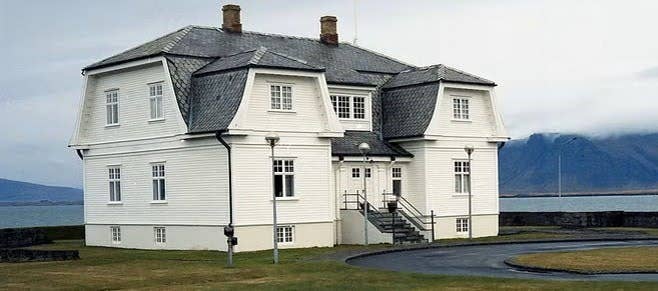 Hofdi House, located on Reykjavik's northern shoreline at Borgartun 105, is best known for hosting the 1986 summit between U.S. President Ronald Reagan and Soviet leader Mikhail Gorbachev. But ask around, and you'll hear very different kinds of stories.
The house was built in 1909 for the French consul, Jean Paul Brillouin. It later came into the hands of Einar Benediktsson, an influential Icelandic judge and poet, who moved in around 1914.
Benediktsson claimed the house was haunted by a young woman named Sólborg. She had poisoned herself after a verdict he delivered in a notorious assault and infanticide case. She would appear to him at night, distraught and weeping.
Subsequent residents reported similar disturbances. The ghost became known as the "White Lady." In 1952, British consul John Greenway was so unsettled that he formally wrote to the British Foreign Office requesting to sell the house. His complaint: unexplained "bumps in the night." The Icelandic Foreign Ministry's response has since become famous: "We do not confirm or deny that Hofdi has a ghost."
You can’t go inside unless you’re invited to a private event, but the house still draws curious visitors. If you’re nearby, it’s worth a quiet stop. Just don’t be surprised if the windows feel like they’re watching you back.
How to visit: Hofdi House sits along Reykjavik’s northern waterfront, about a 20-minute walk or 5-minute drive from the city center. The Sun Voyager and Harpa Concert Hall are nearby, making it an easy stop on a waterfront walk. No ticket is needed to view the exterior.
1. Step Inside Reykjavik’s Most Haunted Cemetery
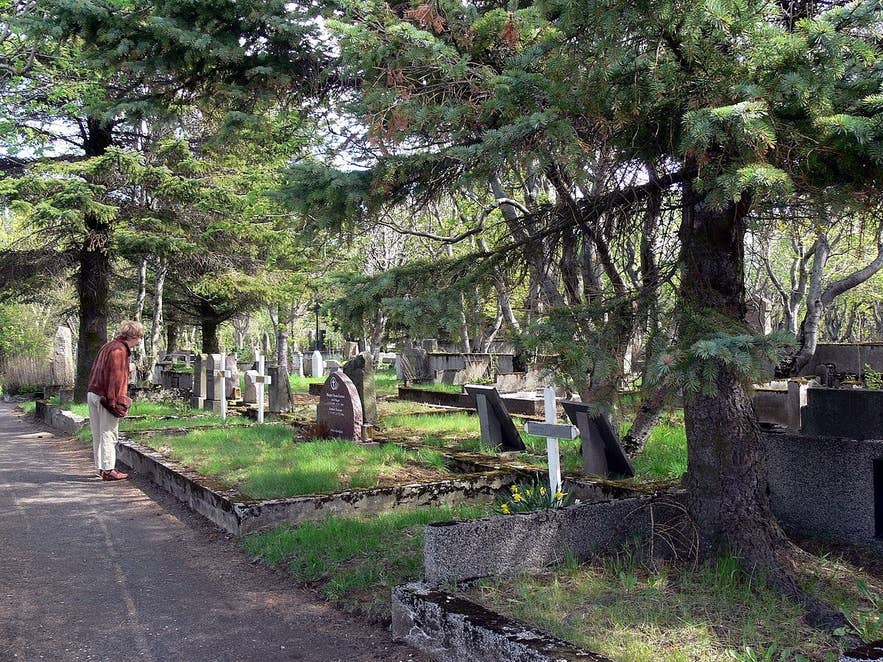 A short walk from Reykjavik’s city center brings you to Holavallagardur Cemetery. The ivy-draped graves, twisted trees, and narrow paths give it an almost peaceful place.
Built in the 1800s, it’s the final resting place of some of Iceland’s most well-known figures, like poet Einar Benediktsson. But alongside the history are stories that are harder to explain. Visitors have reported sudden chills, strange light flickers, and the feeling of being watched when no one is nearby.
One of the most disturbing stories is about a woman in black, often seen standing beside the same grave. Her face is blurred, and she doesn’t move. The second you take a step toward her, she disappears.
According to local folklore, the first person buried in a cemetery is bound to stay behind to watch over the dead. At Holavallagardur, that’s Gudrun Oddsdottir, laid to rest in 1838. Some say if you walk the grounds quietly enough, you might feel her nearby, still watching.
It’s common for visitors to feel an overwhelming stillness here, or to sense someone walking just a few steps behind them. Even if you don’t believe in Iceland’s ghosts, Holavallagardur has a way of getting under your skin.
How to visit: Holavallagardur Cemetery is on Sudurgata, a short walk west of Tjornin Pond. It’s always open and free to enter, about a 10-minute walk from the city center. From Tjornin Pond, head west along the southern shore to reach the gates.
What These Haunted Places in Iceland Leave Behind
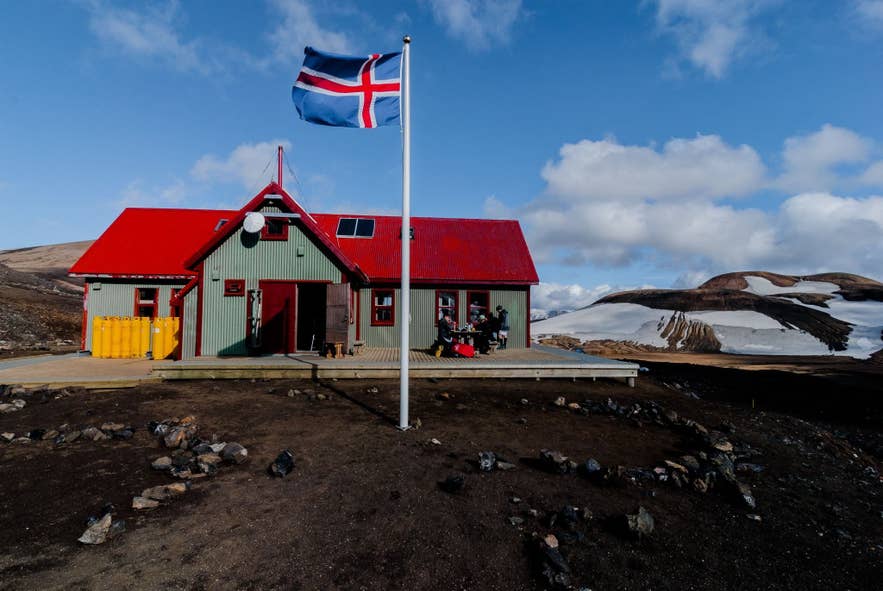 Iceland is known for its landscapes, but the stories tied to them are just as lasting. These haunted places are not part of any performance. They are real locations with history, quiet reputations, and moments people still talk about.
Some are easy to find, while others are hidden between buildings or sitting quietly on the edge of a trail. What they share is a feeling that something is still there. Not loud. Just present.
If the stories here sparked your curiosity, there's plenty more to explore. Icelandic folklore runs far deeper than ghost stories alone, touching on elves, hidden people, and creatures tied to the land itself. The country's sagas are just as gripping, and many of the places they describe are still standing.
If you're planning to explore haunted places in Iceland, take your time. Stay a little longer than you normally would. And pay attention to the quiet. That's where most of the stories begin.
Are the haunted places in Iceland real locations?
Is it safe to visit haunted places in Iceland?
What kind of paranormal activity is reported at haunted places in Iceland?
Are there ghost tours of haunted places in Iceland?
Have you ever visited a haunted place in Iceland or felt a chill in an unexpected location? Share your ghost stories, eerie encounters, or the haunted site you'd most like to explore in the comments below!

I was born on the west side of Reykjavík and grew up downtown, so Iceland has been my back yard for most of my life. I'm a father of two, I've traveled on five continents, and I still haven't found a country that holds my attention the way this one does.
That's why I co-founded Guide to Iceland. We connect travelers directly with Icelandic operators, guides and hosts, so the advice and the services both come from people who actually live here.
I write about the practical side of a trip: what eating out in Reykjavík really costs, whether to pick Sky Lagoon or Hvammsvík, where to stop for food along the Ring Road, and which regions give you the best odds of clear skies for the northern lights. If you're planning a trip and something doesn't add up, message me.