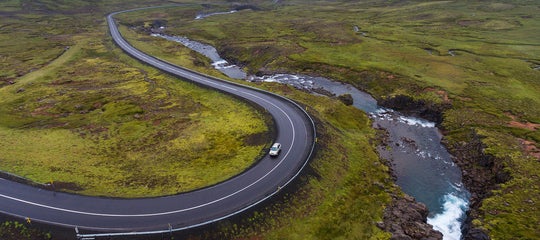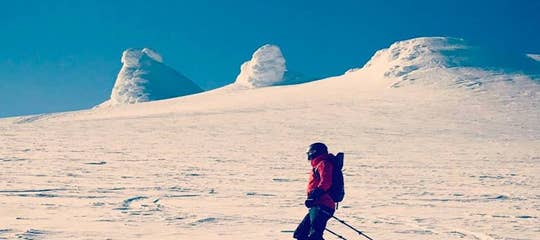
The first question most people ask is when to visit, and the honest answer depends on what you want: summer for self-drive tours and hiking activities, winter for northern lights hunting and ice caving excursions.
Iceland's weather is milder than its name suggests. A warm branch of the Gulf Stream keeps coastal temperatures well above what you'd expect this close to the Arctic Circle.
Reykjavik's January average is around 33°F, roughly the same as New York's. Summers are the trade-off: July averages just 53°F. The compensation is light, with around 21 hours of daylight in June.
Why You Can Trust Our Content
Guide to Iceland is the most trusted travel platform in Iceland, helping millions of visitors each year. All our content is written and reviewed by local experts who are deeply familiar with Iceland. You can count on us for accurate, up-to-date, and trustworthy travel advice.
For anyone planning tours and vacations here, Iceland asks for more preparation than most destinations do. A forecast checked the night before is worth more than an average checked in advance.
Key Takeaways
-
Iceland's weather is famously unpredictable. Sun, rain, and snow can all arrive in a single day.
-
Average temperatures range from around 32°F (0°C) in winter to 52°F (11°C) in summer.
-
Daylight shifts fast, from 4 to 5 hours in late December to about 21 hours by late June.
-
Wind and chill can make it feel colder than the thermometer says, especially near the coast.
-
Pack layers and waterproof everything, no matter the season.
-
Summer is best for road trips and hiking; winter is best for northern lights and ice cave tours.
The Icelandic Climate
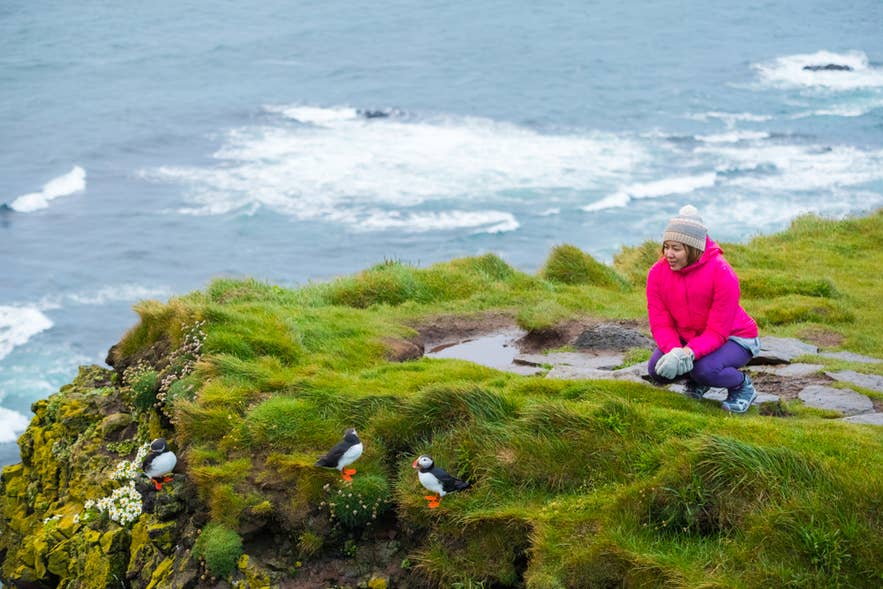 Iceland has a cool maritime climate shaped almost entirely by the ocean around it. The Gulf Stream carries warm water up from the Caribbean along the west and south coasts, keeping winters far gentler than Iceland’s latitude would suggest.
Winters stay relatively mild, and summers stay cool, so the gap between the coldest and warmest months is much smaller than in most places this far north.
That maritime setting is also why the weather is so changeable. Warm Atlantic air constantly meets cold Arctic air pushing down from the north, driving high winds, storms, and rain, with the south wetter than the north.
For planning, this matters more than any single temperature reading. Because the thermometer rarely sits at either extreme, you are dressing for wind, damp, and sudden shifts rather than deep cold or real heat.
In practice, that means a windproof, waterproof outer shell earns its place more often than a heavy parka. It also means any forecast is best read as a rough guide that can change within the hour, so flexible plans beat fixed ones in every season.
Regional Weather Conditions in Iceland
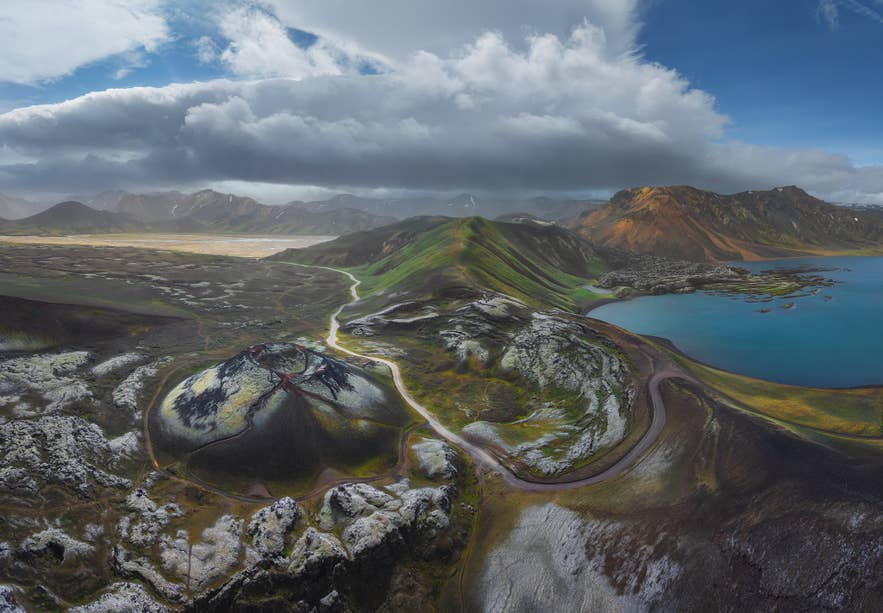 Iceland's weather varies more by region than by month, and the Icelandic Meteorological Office issues its warnings along five regional lines: North, South, East, West, and the Highlands.
The breakdown below follows those same divisions, so what you read here matches the color-coded warning map you will check on vedur.is before heading out. Reykjavik is covered separately first, since most trips start there.
Reykjavik Weather
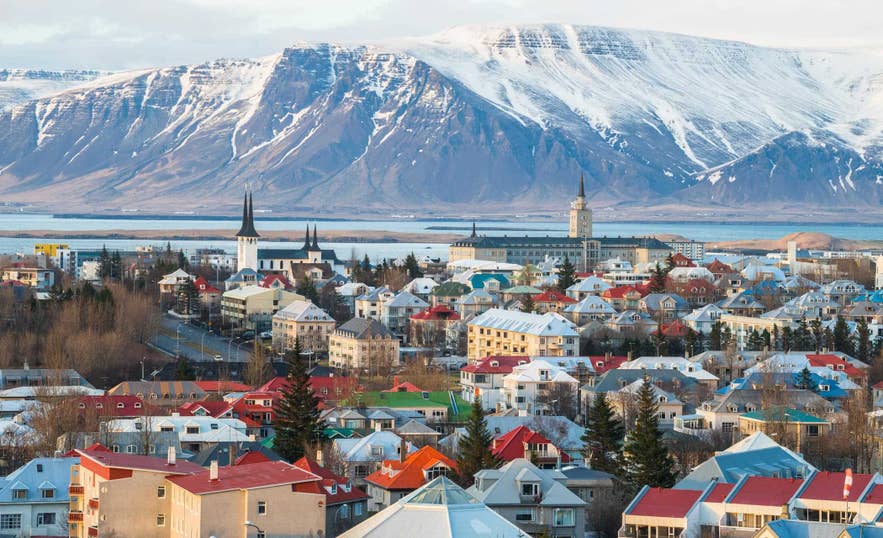
Reykjavik averages around 32°F (0°C) in winter and 54°F (12°C) at the height of summer, milder than its subarctic latitude suggests, because the Gulf Stream keeps the coast from freezing hard.
In summer, temperatures can still swing, occasionally dropping to 44°F (7°C) or, on a rare warm day, climbing toward 77°F (25°C). In winter, they can dip to about 14°F (-10°C) in a cold snap, though milder spells may reach 50°F (10°C).
Because the capital is sheltered and coastal, it generally stays milder than the more northern and inland parts of the country, where readings vary more sharply. Wind chill is the thing to plan for here as a calm 36°F (2°C) day and a windy one feel nothing alike.
Reykjavik weather by season looks roughly like this:
-
Winter (December to February): 32°F (0°C)
-
Spring (March to May): 37°F (3°C)
-
Summer (June to August): 52°F (11°C)
-
Autumn (September to November): 41°F (5°C)
Daylight is the other half of the Reykjavik story. The city goes from just 4 to 5 hours of daylight around the December solstice to nearly 21 hours in late June. The same streets that are dark by mid-afternoon in winter stay bright close to midnight in summer.
South Iceland Weather
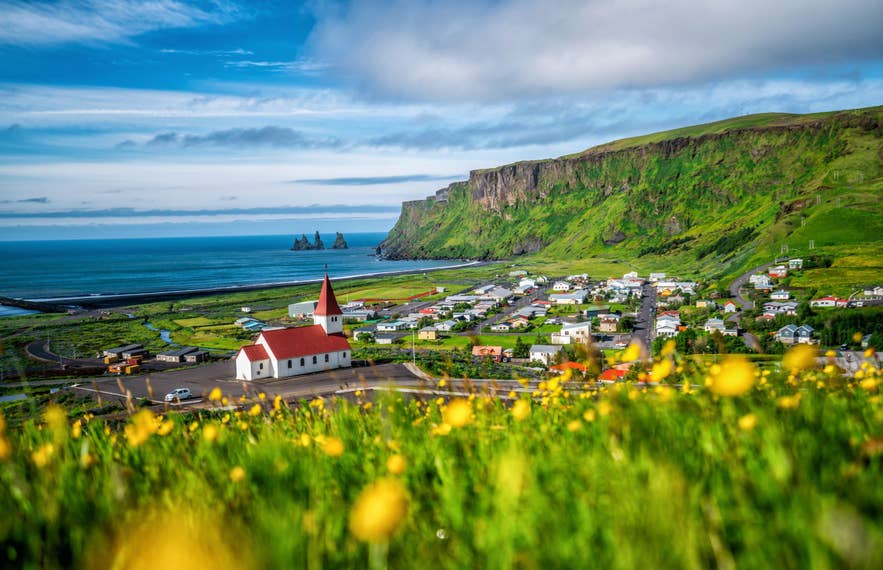 South Iceland is the mildest part of the country and also the wettest, averaging around 34°F (1°C) in winter and 50°F (10°C) in summer.
The coast from the Reykjanes Peninsula east toward Vik catches the brunt of Atlantic weather systems, so rain is frequent and some exposed spots collect up to 98 inches (2,500 mm) a year.
Winters are comparatively gentle, with fewer hard freezes than the north, but wind and driving rain are common. This is where waterproofs earn their place, and where black ice can form on popular routes when temperatures hover near freezing.
For all its rain, the south is also where many of the country's headline sights sit, so build flexibility into your plans rather than counting on clear skies. The far southeast is the exception: the coast from Kirkjubaejarklaustur to Hofn has the country’s clearest skies during the aurora months.
North Iceland Weather
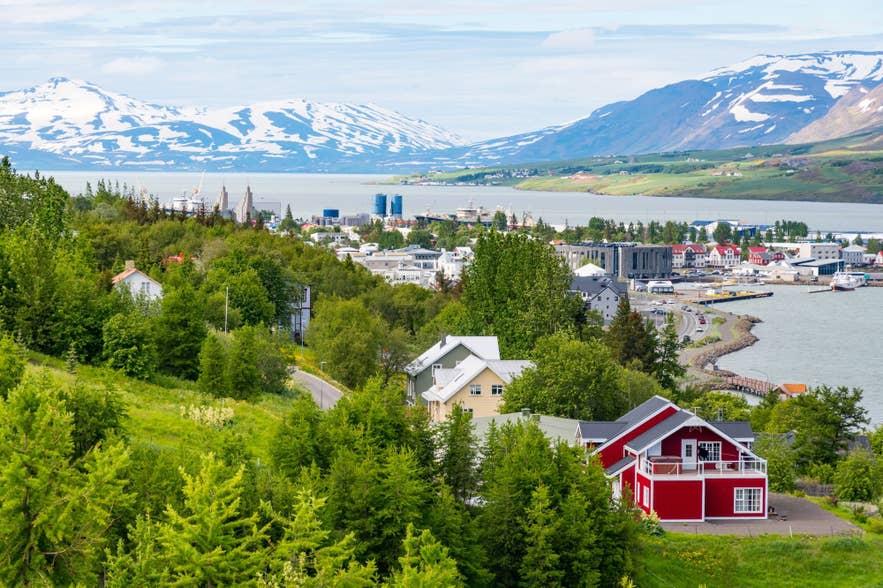
North Iceland has the country's coldest winters and, in summer, some of its best weather, averaging around 30°F (-1°C) in winter and 54°F (12°C) in July.
Sheltered from the wettest Atlantic systems, the north is drier and sunnier than the south in summer. Warm, still days around Akureyri and Lake Myvatn can be a genuine highlight. Winters are colder, with more consistent snow, which is why Akureyri is considered the best place for skiing in Iceland.
Away from the coast, the picture changes fast. Inland and at higher elevations, temperatures drop off quickly, so even a warm, bright day around Akureyri can mean cold, raw conditions up in the interior and the Highlands to the south.
For northern lights planning, note that the north is one of the cloudier regions from September through April in our cloud data, with Lake Myvatn the clear local exception.
East Iceland Weather
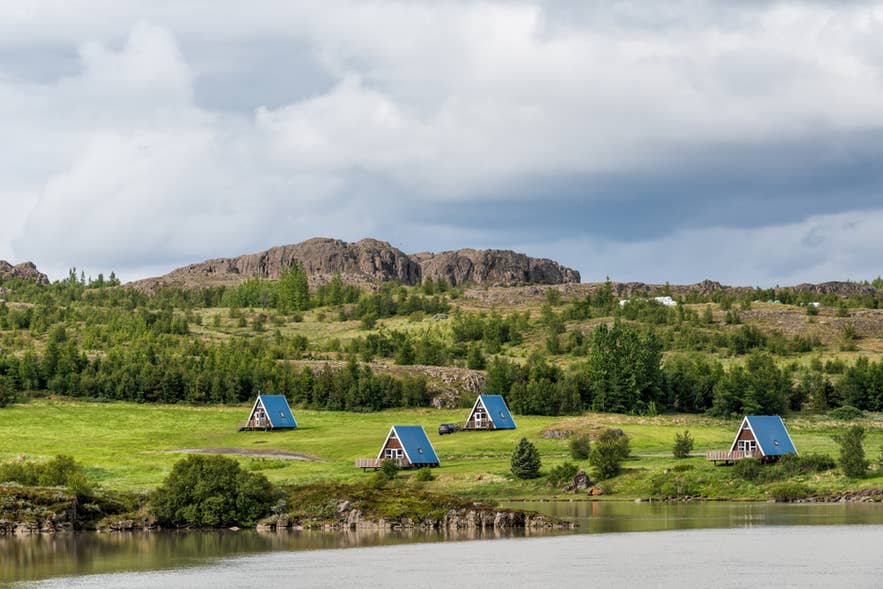 East Iceland is the driest and sunniest region in summer, with July averages around 50°F (10°C) and some of the warmest individual days recorded anywhere in the country. That edge carries into the aurora season: in our 89-year cloud study, the east coast around Djupivogur and Seydisfjordur recorded some of the clearest skies in the country from September through April.
The Eastfjords and the inland hub of Egilsstadir sit in the rain shadow of the country's interior, so summers here are notably drier than on the south coast. That same continental setting makes winters colder inland, dropping to around 25°F (-4°C) at Egilsstadir during cold spells, while the coast stays a little milder.
The East is the least-visited stretch of the Ring Road, which is part of its appeal, but services are more spread out, so plan fuel and food stops with the distances in mind.
West Iceland Weather
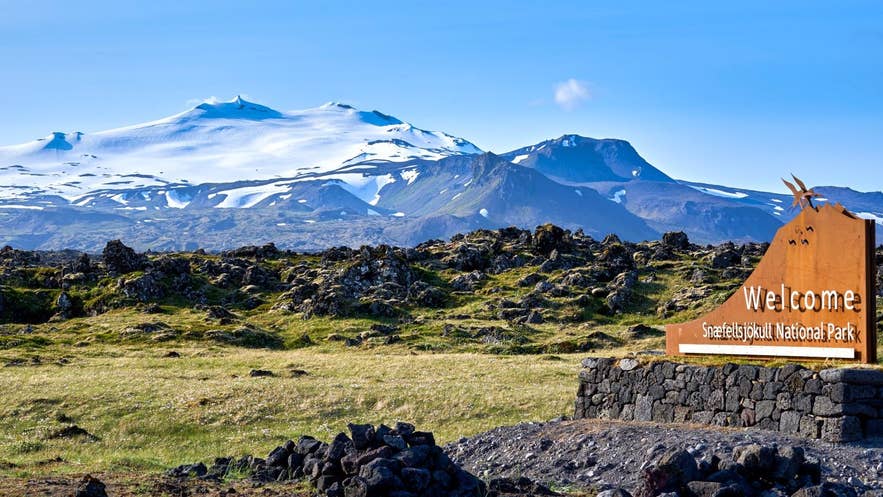 West Iceland runs mild but exposed, averaging around 30°F (-1°C) in winter and 50°F (10°C) in summer.
The region takes in Borgarfjordur and the Snaefellsnes Peninsula, where the glacier-topped Snaefellsjokull draws its own weather and winds funnel hard around the headlands.
Conditions are broadly similar to Reykjavik's, but the exposure on Snaefellsnes means gusts and sudden showers arrive with little warning. Check the wind forecast before driving the peninsula's coastal roads, which sit open to the sea.
Westfjords Weather
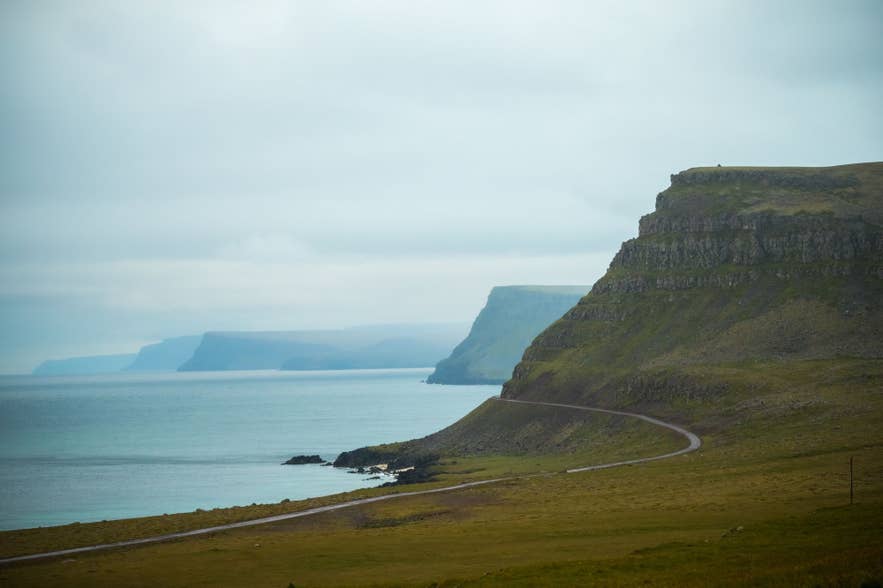
The Westfjords have cooler, shorter summers than the rest of the west, with July highs averaging around 50°F (10°C).
Even in summer, conditions can turn quickly here, with rain or chilly winds sweeping the fjords. Winters can be harsh, and some towns become hard to reach when heavy snow closes mountain roads.
It is best to save Westfjords tours for the summer months so weather delays do not derail your plans. Even then, leave buffer time in your itinerary.
Highlands Weather
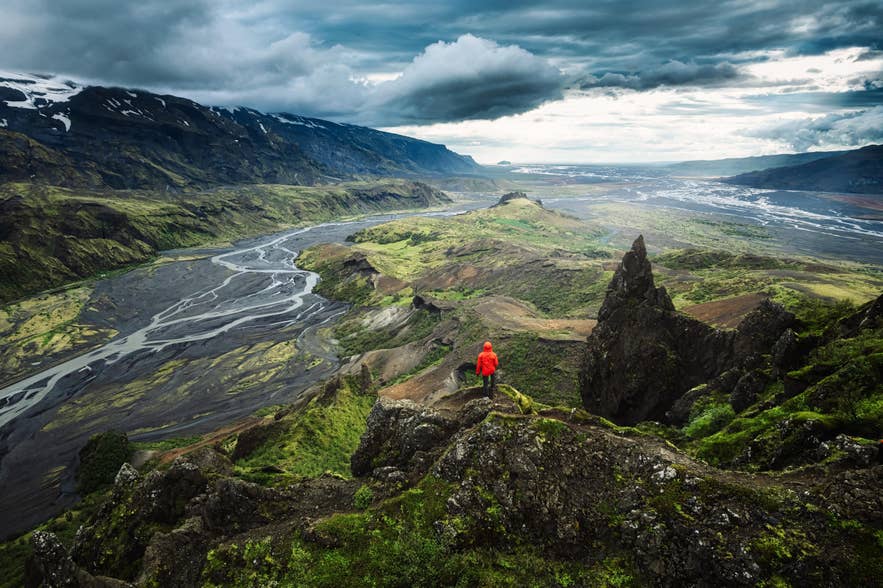 The Highlands are colder, more exposed, and less predictable than anywhere else in Iceland. They are also closed to traffic for most of the year.
At elevation, the interior sits below freezing for around seven months, dropping to 5°F (-15°C) or lower from November to April. Even in July, the average is only about 46°F (8°C).
The mountain F-roads that cross the region typically open sometime in late June or early July, once rivers and passes are clear. They close again with the first serious autumn weather.
This is the one part of the country where getting the weather wrong can be dangerous. Never enter the Highlands without checking real-time road conditions and weather forecasts first, and turn back if conditions deteriorate.
Understanding Weather Forecasts in Iceland
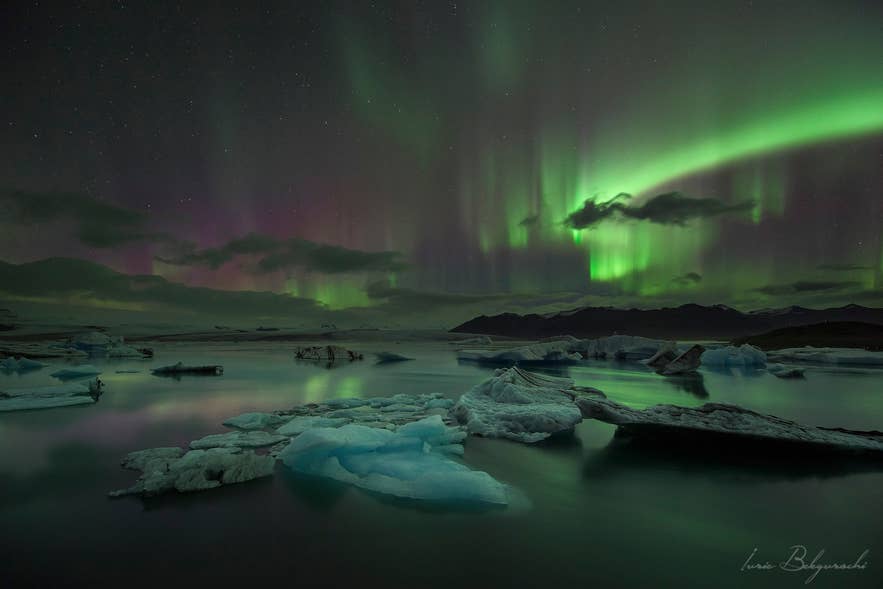 Iceland's weather can change fast, sometimes several times in a single day. Learning to read the local forecasts, including the weather warning system, is one of the smartest things you can do as a traveler.
Once you know what to look for, planning your day and staying safe becomes much easier. The official source for all of it is the Icelandic Meteorological Office (IMO) at vedur.is, with real-time road conditions at umferdin.is.
The Wind Warning System in Iceland
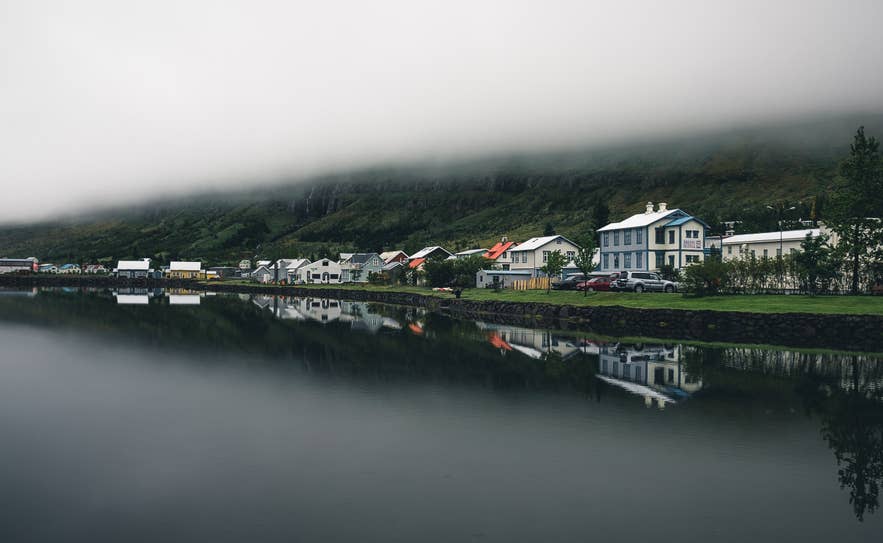 Wind is one of Iceland's biggest travel factors, and gusts can come out of nowhere and hit hard. The IMO runs a color-coded weather warning system to keep locals and travelers safe, and wind is its most common trigger.
The warnings escalate through three colors:
-
Yellow means be cautious. Conditions can be uncomfortable outdoors and awkward to drive in, especially on rural roads or in camper vans or other high-sided vehicles.
-
Orange means dangerous weather is expected. Skip any unnecessary trips, and expect both driving and outdoor plans to be affected.
-
Red means extreme, high-risk conditions. These are rare but serious, so stay indoors and travel only in an emergency.
These alerts are region-specific, matching the North, South, East, West, and Highlands divisions above. One area can be calm while another gets hit by storm-force winds.
The forecasts include maps, wind-speed charts, and updates every few hours.
One thing to keep straight: the yellow, orange, and red warnings rate how dangerous conditions will be, while the wind forecast map on vedur.is is a separate tool that shades the map by wind speed in meters per second (m/s).
According to the IMO's wind forecast guide, the calmest winds sit at the light end of the scale, with the color deepening to purple above roughly 50 mph (22 m/s) and red above 63 mph (28 m/s). That scale rescales to each forecast, so calmer days show only the lower end. A colorful wind map reflects wind strength, not the fixed severity of a weather warning.
Wind is most common in winter and spring, but it can happen any time of year, and a clear sky doesn't always mean a calm day. If you're renting a car, ask the rental company or your accommodation to point out current warnings. They're usually happy to help you judge when to head out and when to wait it out with a warm drink.
Snow and Icy Conditions in Iceland
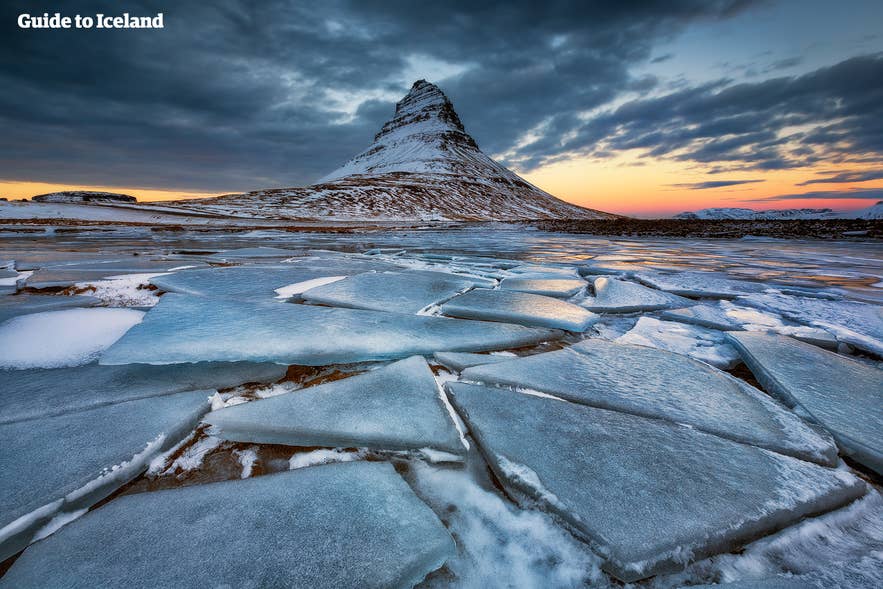 Snow is part of life in Iceland for much of the year, arriving in the fall and lingering into late spring. Just how much snow Iceland gets depends on where you are.
The north and Highlands see far more than the south, though even Reykjavik can wake to a heavy overnight snowfall. Ice, especially black ice, is common and hard to spot.
Snow and ice show up clearly in the forecasts on vedur.is. Lighter colors mean light snow, and darker shades mean heavier snow. The temperature map is shaded in degrees Celsius, in 2°C steps, and its scale shifts with each forecast, so read the values rather than the colors and watch for anywhere at or below freezing, 32°F (0°C), where ice can form.
Forecasts update several times a day, so check again before you head out. Pay special attention to the morning and evening forecasts, when surfaces freeze most easily.
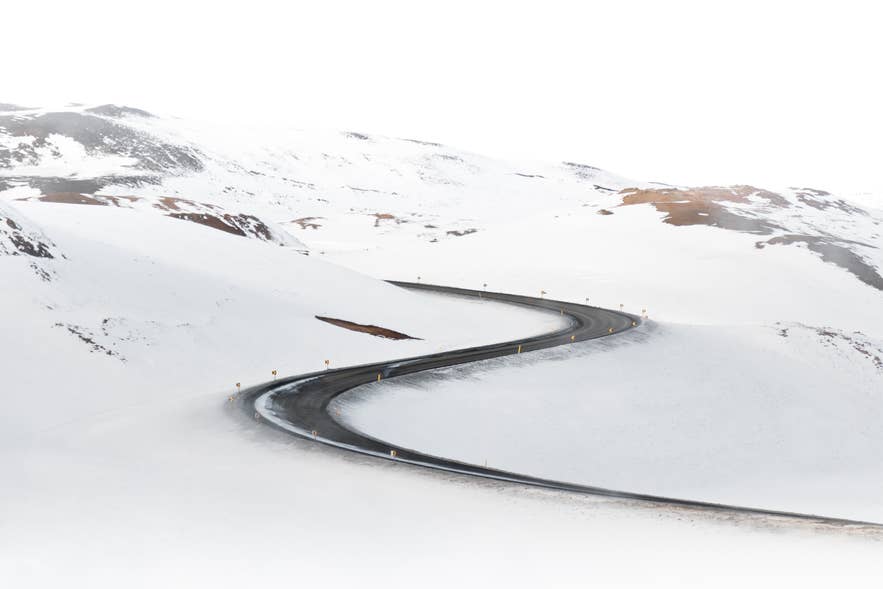 Black ice is a thin, nearly invisible layer that often forms when temperatures hover around 32°F (0°C). It is most common on roads, sidewalks, and steps, in shaded spots and on bridges, and during early mornings and late evenings.
Even a road that only looks wet may be icy. Walk carefully in boots with good grip, and if you're driving, slow down and give yourself extra time. For icy paths around popular waterfalls and viewpoints in the shoulder seasons, a set of lightweight crampons or microspikes over your boots is worth packing.
From October to April, winter tires are required, and 4x4 vehicles are strongly recommended. Some mountain roads and rural areas, such as parts of the Westfjords, may close during storms.
Check umferdin.is for live road conditions, snow alerts, and webcams of popular routes. If snow or ice is in the forecast, do as the locals do and be ready to change your plans.
Rain and Flooding Risk in Iceland
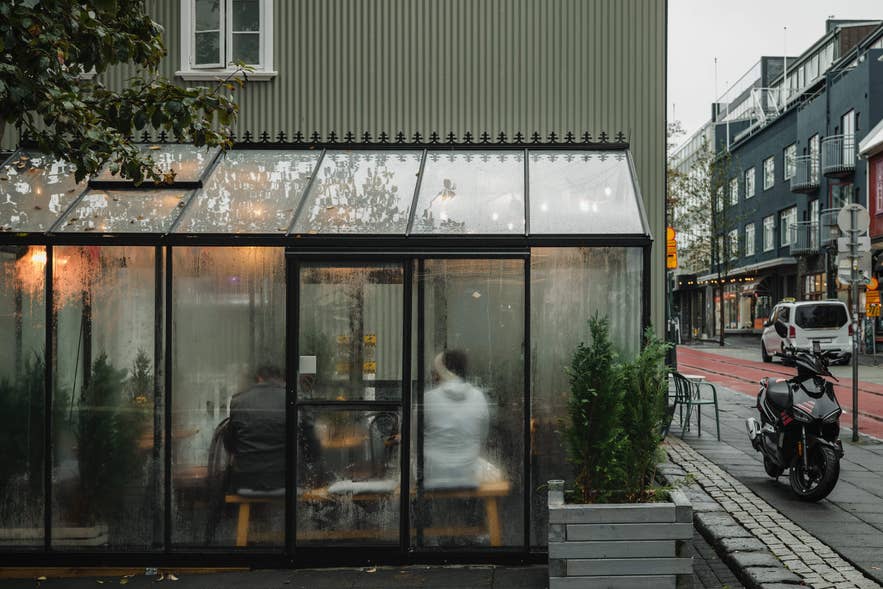 Rain is common in Iceland and can arrive at any time of year. It ranges from light drizzle to sudden heavy showers, especially along the South Coast and in Reykjavik. Even a sunny summer day can bring a short burst of rain, so waterproof clothing is essential.
The IMO shows rain forecasts by area on vedur.is, where the color scale runs from light yellow for the lightest rain to red for the heaviest, mapping the rainfall expected to accumulate over one-, three-, or six-hour windows. Check the timing too, since some days start clear and turn wet by afternoon.
After long or heavy rain, Iceland's rivers can rise fast, especially in low valleys, near steep hills in the south, and during the spring melt. Forecasts may include flood alerts, and in the rare case of a glacial flood (jökulhlaup), warnings come well in advance. In Reykjavik, winter rain on frozen ground can pool on roads and sidewalks that can't absorb it.
During or after heavy rain, don't cross rivers or streams, where levels can rise quickly and turn dangerous. Skip hikes in flood-prone areas, too.
If you're driving, don't assume every road is safe. F-roads get especially risky when rivers swell, so check vedur.is and umferdin.is before you go.
UV Index and Sunlight Hours in Iceland
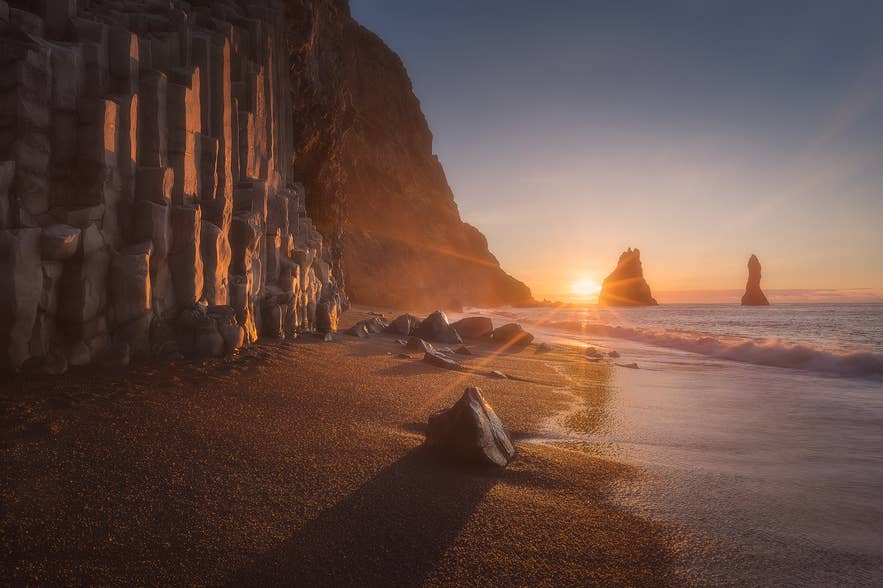 The sun in Iceland may not feel strong, but the cool air is deceptive. On clear summer days, the UV index in Reykjavik can reach the moderate-to-high range, enough to cause sunburn even when you're bundled in a jacket, especially around midday.
Snow, ice, and water reflect the sun and raise your exposure, so glacier hikes and Highland trips call for extra care.
Early mornings and evenings are much gentler. Sunscreen is smart if you'll be outdoors around midday, even on cloudy days, and sunglasses help on bright, reflective terrain.
For the current level, the Icelandic Radiation Safety Authority posts live UV readings for Reykjavik and points to the free SunSmart app, available on the App Store and Google Play, for a forecast.
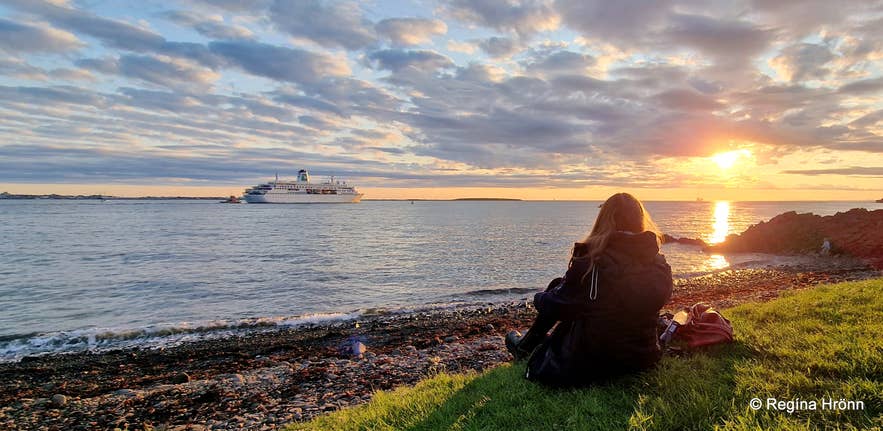 Daylight is the bigger story. In June, the sun barely sets, and around the summer solstice, Reykjavik gets up to 21 hours of light, bright enough for a midnight walk. In December, there may be only 4 to 5 hours of daylight, and the sun rises late, stays low, and sets by early afternoon.
Those short days suit slower adventures, like soaking in hot springs and geothermal pools or watching for the northern lights. Daylight hours are predictable, so plan around the month-by-month figures and glance at the current UV reading if you'll be out in the midday summer sun.
Cloud and Aurora Forecasts for Northern Lights Viewing in Iceland
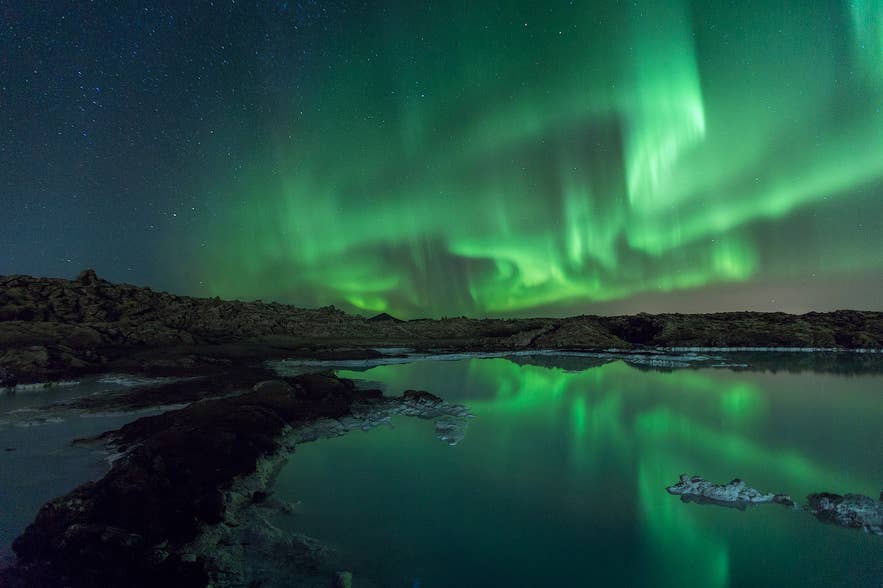 For the northern lights, the sky matters as much as the solar activity, because even a strong display won't break through solid clouds. The IMO's cloud-cover map shows where the skies are clear: white means clear, green means cloud, and light green means partial cloud.
A patch of white over your location is your green light to go. Even when most of the map is green, a break in the clouds during strong activity can still deliver.
The map updates daily, usually in the evening, and many travelers check around 6 PM to decide whether to drive out. To improve your odds, get well away from town glow and aim for the darkest hour you can. Once you're on site, give your eyes at least 20 to 30 minutes to adjust before you decide the sky is empty.
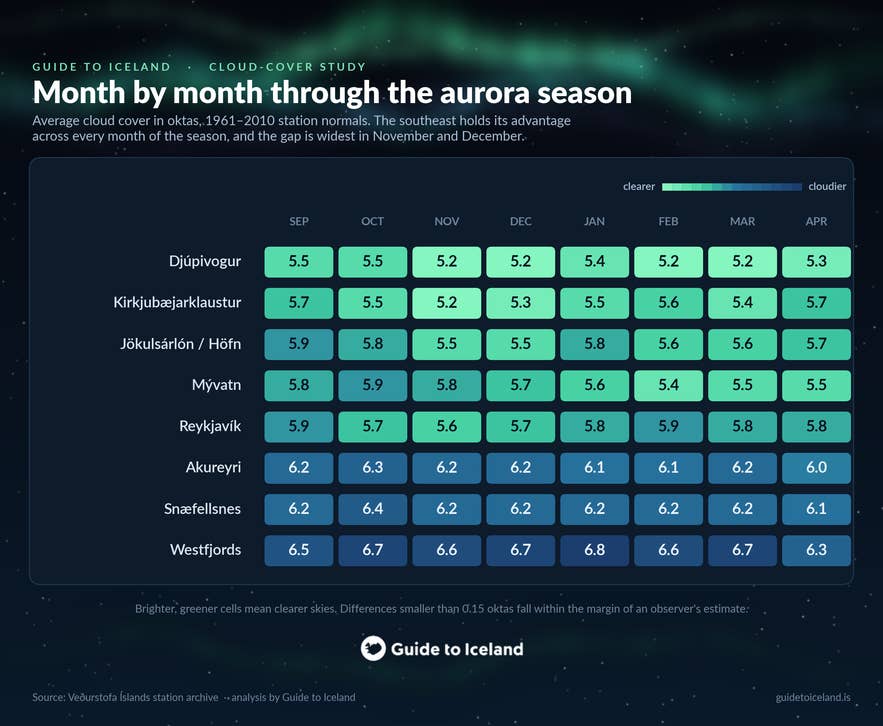
A forecast covers the next few nights; choosing where to base yourself is a longer bet. Our study of 89 years of Met Office cloud data ranks 22 aurora destinations: the southeast coast between Kirkjubaejarklaustur and Djupivogur has the clearest skies, the Westfjords the cloudiest, and North Iceland doesn’t hold the advantage it’s usually credited with.
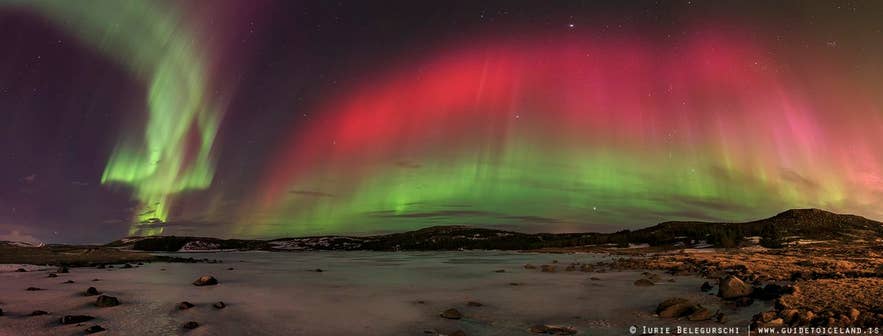 Solar activity is the other half. The IMO's aurora forecast overlays that same cloud-cover map with an activity rating from 0 to 9, closely tied to the global Kp-index.
A rating of 4 or higher is great, but even a 2 or 3 can bring visible lights on a dark, clear night away from light pollution. Treat it as a guideline rather than a guarantee: on a high-activity night (say 7 out of 9) you might see nothing, while on a quiet night (a 1 or 2) you can occasionally catch a fantastic display.
The weather decides whether you see the aurora, but the calendar decides how much there is to see. October to November and February to March are the best months to see the northern lights in Iceland, while December and January are the weakest despite having the longest nights.
Volcanic Activity and Gas Emissions in Iceland
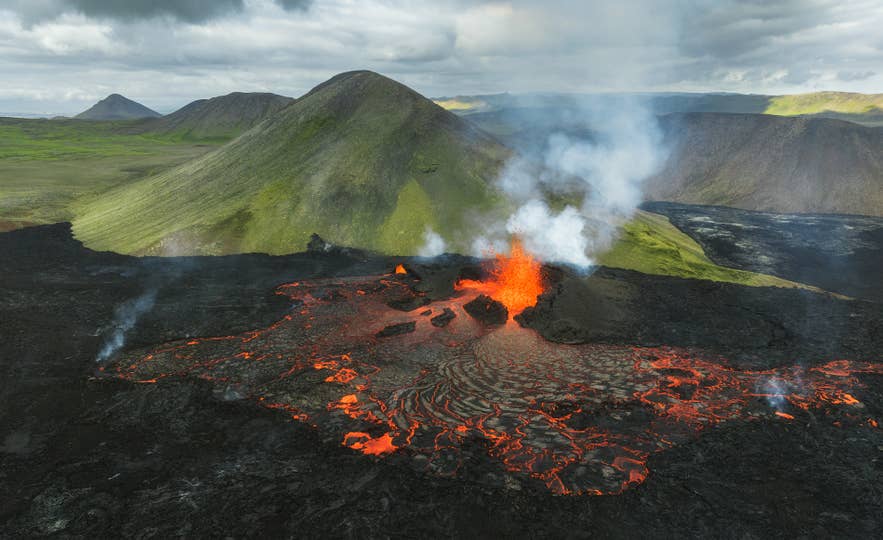 Volcanoes are part of life in Iceland, and the country is well prepared for them. When an eruption happens, experts watch it closely and safety systems are already in place. For most travelers, the practical question is simpler: how to tell whether the air where you are is safe to breathe.
An active volcano can release gas. It is usually not a problem, but it can affect air quality near the eruption site or wherever the wind carries it.
When a volcano is erupting, the IMO issues a gas dispersion forecast for the affected area, showing where the wind will push it. For live readings at any time, the Environment Agency's Air Quality Iceland site tracks gases like sulfur dioxide, with green for low levels and yellow, orange, or red for higher ones.
If levels are high where you are, stay indoors and keep your windows closed.
These updates matter most if you're taking volcano tours or otherwise heading near an active area. Tour companies, hotels, and local news will share them if conditions change.
Iceland is very safe to visit even when a volcano is active. Follow the local guidance and the air quality readings, and you can explore its volcanic landscapes with confidence.
Travel Safety: SafeTravel and the 112 App
Alongside the forecasts, two official tools are worth setting up before you drive out of the city.
SafeTravel (safetravel.is), run by the Icelandic Association for Search and Rescue (ICE-SAR), lets you read current travel alerts and leave a travel plan for remote routes, so someone knows your intended itinerary.
The 112 Iceland app connects you to the national emergency number and can send your location to responders or let you check in along the way.
Neither replaces good planning, but together with vedur.is and umferdin.is, they are the backbone of how locals stay safe, and they cost nothing to use.
Iceland’s Seasons, Month by Month
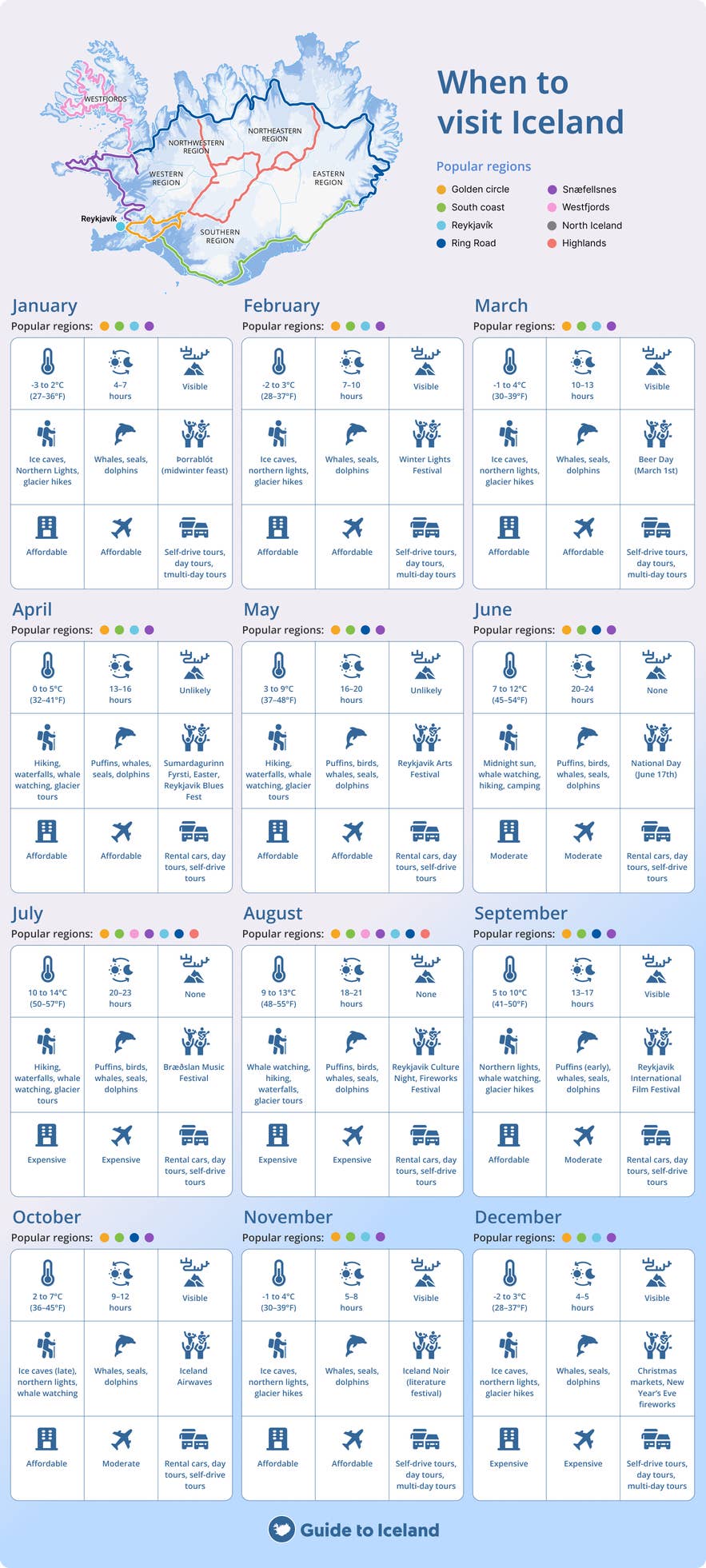 All seasons in Iceland have something to offer, and the temperature varies widely between them.
Summer is the high season and the most popular time to come, with milder weather, long days, and spectacular scenery. If it is your first visit to Iceland, we recommend summer.
For travelers revisiting Iceland for a second or third trip, consider one of the other seasons. Our study of the cheapest time to visit Iceland found that April, January, and November offer the lowest overall trip costs. A seven-day mid-range trip in these months costs 2,505 USD to 2,547 USD per person, including flights.
Winter unlocks the northern lights and the blue ice caves, and nothing quite beats New Year's Eve in Reykjavik.
Spring Weather in Iceland
Spring arrives in April and May, though Icelanders celebrate the first day of summer on the first Thursday after April 18, an official public holiday on which it is not unheard of for snow to fall.
This is when snow melts in the mountains and Highlands and the first flowers appear along Reykjavik's coastline. Migrating birds return. You can see puffins in Iceland from April, and the golden plover, the traditional herald of spring, appears around late March.
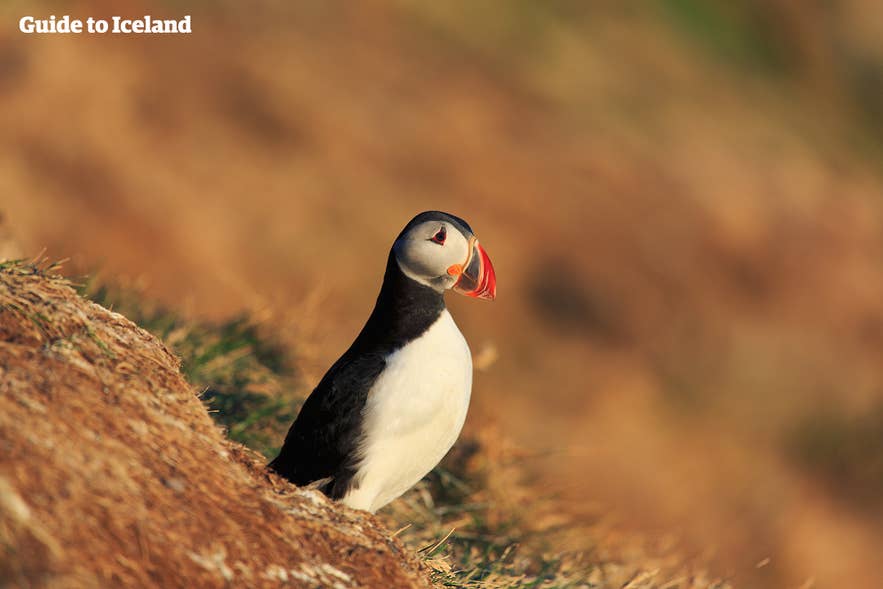
Reykjavik's spring can serve up anything from snow, sleet, and rain to bright sun. The average temperature sits between 32°F and 50°F (0°C to 10°C). The south can be wet while North Iceland stays drier and colder, and the Highlands remain cold and closed to traffic.
Spring is an excellent time to visit: you can still catch the northern lights, the weather is milder, prices are lower, and tour and accommodation availability is easier before the high season begins.
As the roads clear, it is a strong season for spring self-drive tours. For travelers who would rather not plan each day, spring vacation packages bundle the car, stays, and activities.
Summer Weather in Iceland
Iceland's summer runs from late May or early June through August and is the busiest time to visit. Average temperatures are around 52°F (11°C), and July, the warmest month, sees typical daytime highs of 50°F to 59°F (10°C to 15°C), occasionally rising toward 68°F (20°C) in a warm spell.
The midnight sun makes the days extraordinarily long, close to 21 hours around the June 21 solstice. With almost no darkness, summer self-drive tours let you explore around the clock. After the solstice, the days shorten by only a minute or two at first, and the drawn-out sunsets and sunrises make this a paradise for photographers chasing the golden hour.
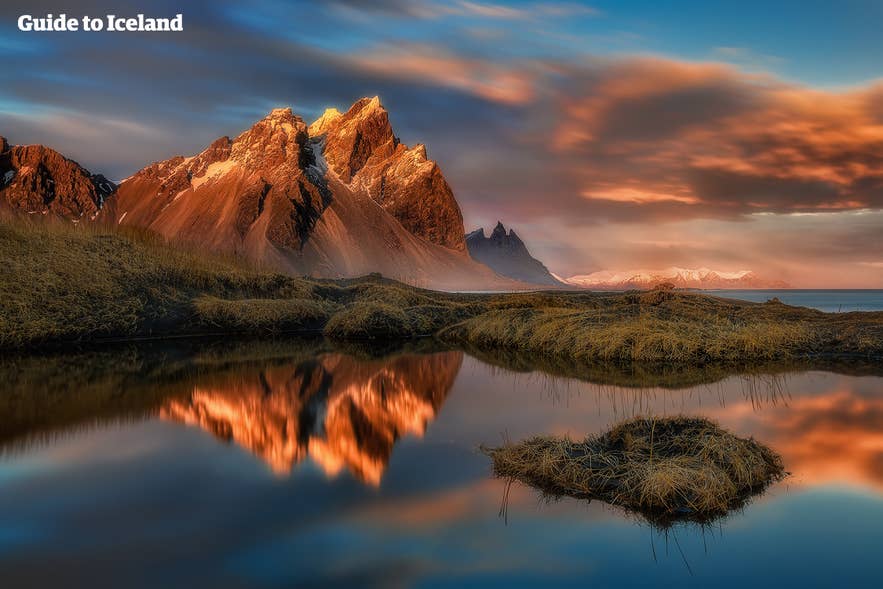
There is no true darkness in high summer, so pack an eye mask or use blackout curtains for sleep. Most summer tours in Iceland make the most of the long days, opening up mountains, glaciers, volcanoes, and waterfalls in their best colors. It is the best weather of the year, though still unpredictable. Iceland is windy enough that the chill can bite even in July.
Summer festivals fill the calendar, and camping comes into its own. From late June or early July, the Highland roads open, giving access to Landmannalaugar, Thorsmork, and other famous hiking routes in Iceland, including the Laugavegur Hiking Trail and Fimmvorduhals.
Fall Weather in Iceland
Fall runs from late August into late October or early November. Late August is still relatively warm, but each passing day cools a little. Prices for accommodation drop through September and October, and the fall colors come in.
You might catch the first snowfall of the year. Fall temperatures resemble spring, between 32°F and 50°F (0°C to 10°C), though autumn tends to feel windier.
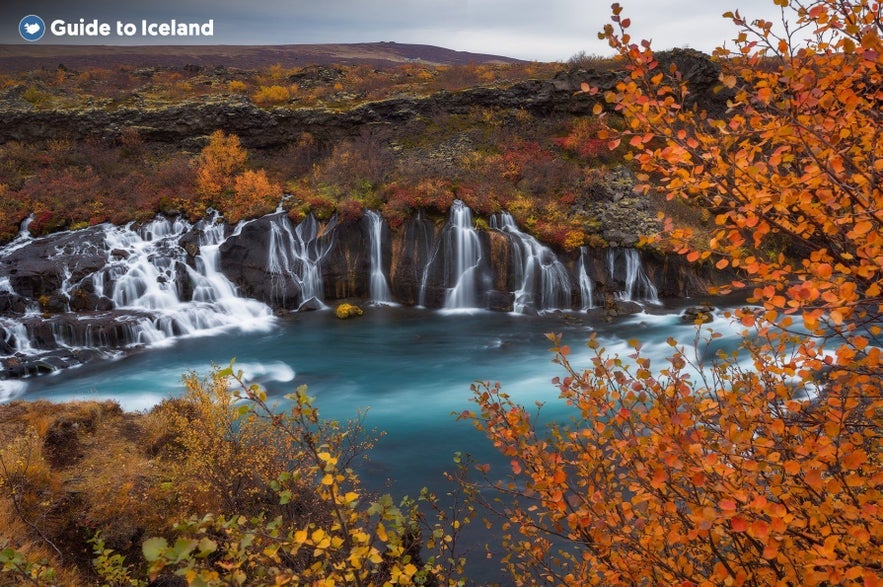 As the birds head south, some experiences such as river rafting and Highland excursions close for the season, while berry and mushroom picking come into their own, with wild blueberries, crowberries, and redcurrants to find.
Keep an eye on the night sky, because the aurora season is beginning. That is why many fall vacation packages are built around the northern lights.
Winter Weather in Iceland
Winter is Iceland's longest season, generally running from November to March, and its darkest. The shortest day falls around December 21, when there are only 4 to 5 hours of daylight. It is also the most rewarding season for a certain kind of trip.
Christmas fills every street and garden with fairy lights, the hot springs feel their best in the cold, and winter is the only time to explore the blue ice caves beneath Vatnajokull, Europe's largest glacier. Glaciers you can see year-round become genuinely spectacular in winter.
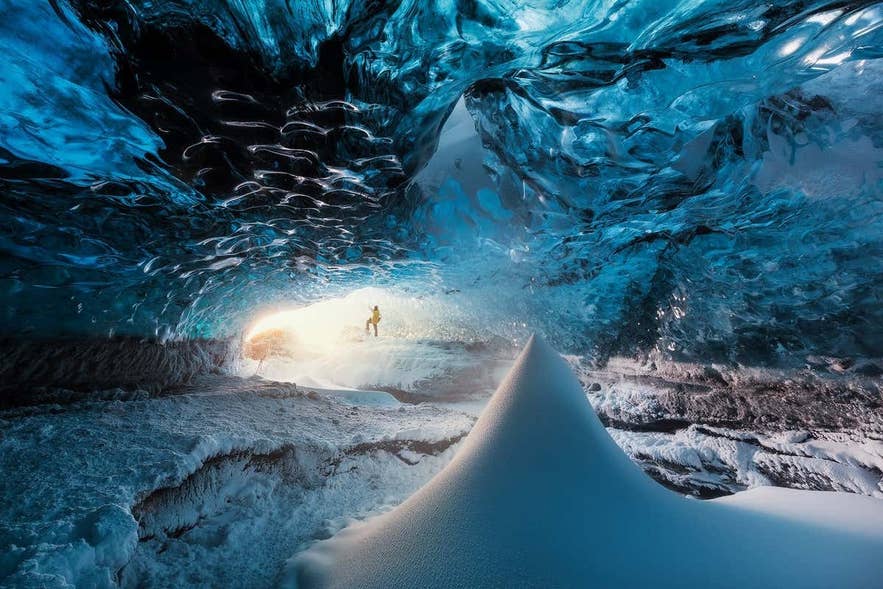 Winter is also Iceland's most unpredictable season, though it may be less cold than you expect. In the south, including Reykjavik, the average is around 32°F (0°C), ranging from about 23°F (-5°C) to 41°F (5°C), with wind chill the main thing to plan for.
Snow can fall anywhere from October to April, heaviest between late December and February, appearing and melting and appearing again rather than blanketing the country all season. Pack plenty of warm layers, ideally wool or fleece, so you can adjust as conditions change.
The Highlands are closed, but adventurous glacier hiking tours run through the winter. They depend on weather and visibility and can be canceled at a few hours' notice, with another tour or a full refund offered in return.
Winter is also the season for the northern lights. The aurora is visible in Iceland from roughly September to March, when the nights are dark for long enough. It cannot be seen at the height of summer (June and July) because of the midnight sun.
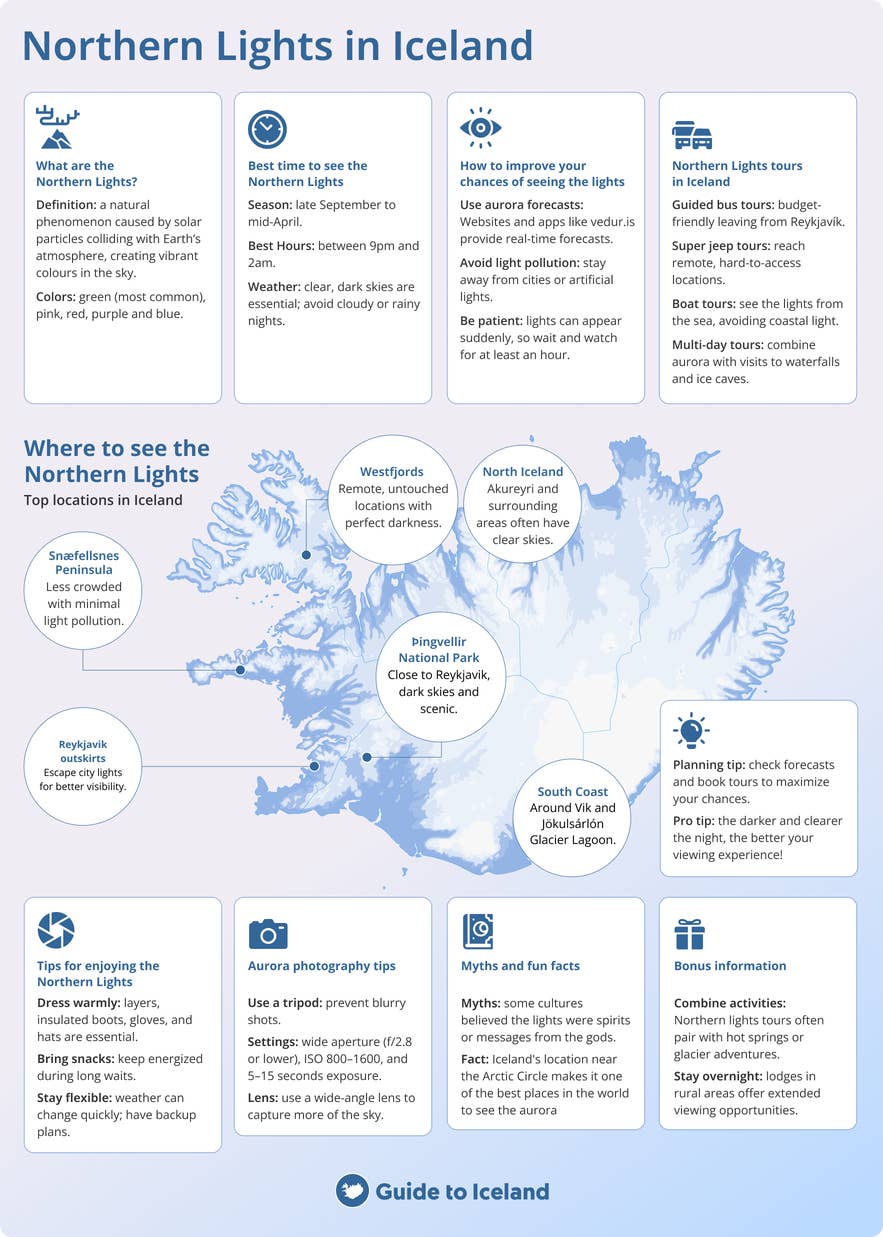 From time to time activity peaks: a solar maximum occurred in 2024 to 2025, and heightened activity is expected to continue into 2026, making this a strong year for aurora chances.
For a fuller guide to timing, locations, and photography, see our dedicated article on the northern lights in Iceland.
Visiting Iceland Month by Month
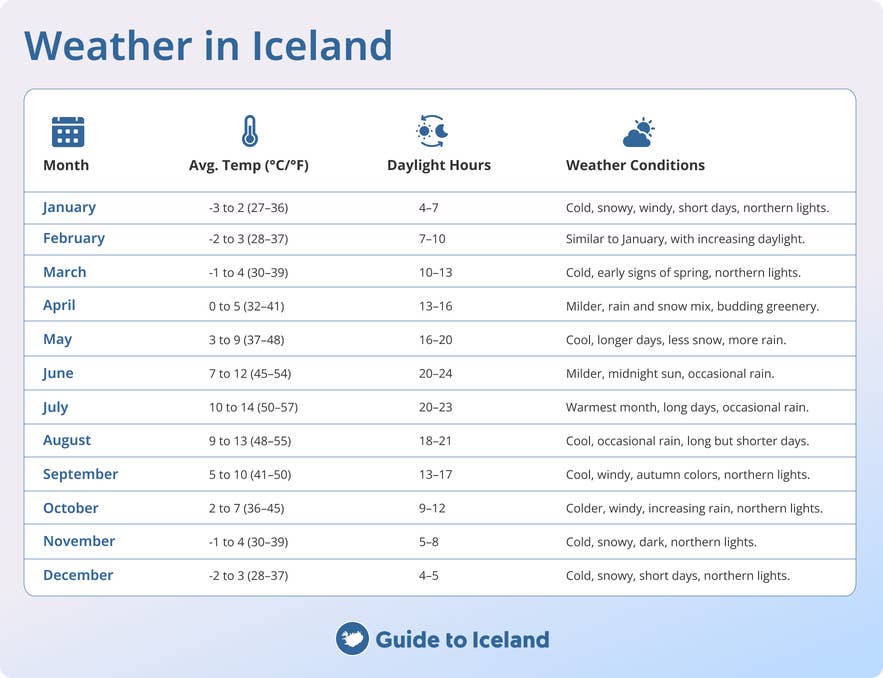
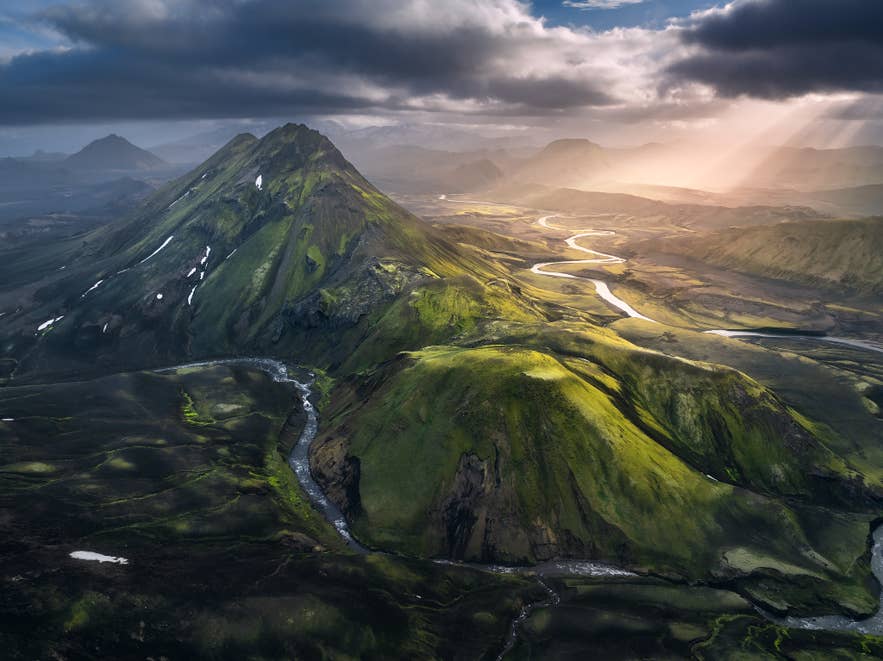 For a closer look, here is what each month feels like on the ground, from the weather and daylight to what is open and how the roads drive.
January in Iceland
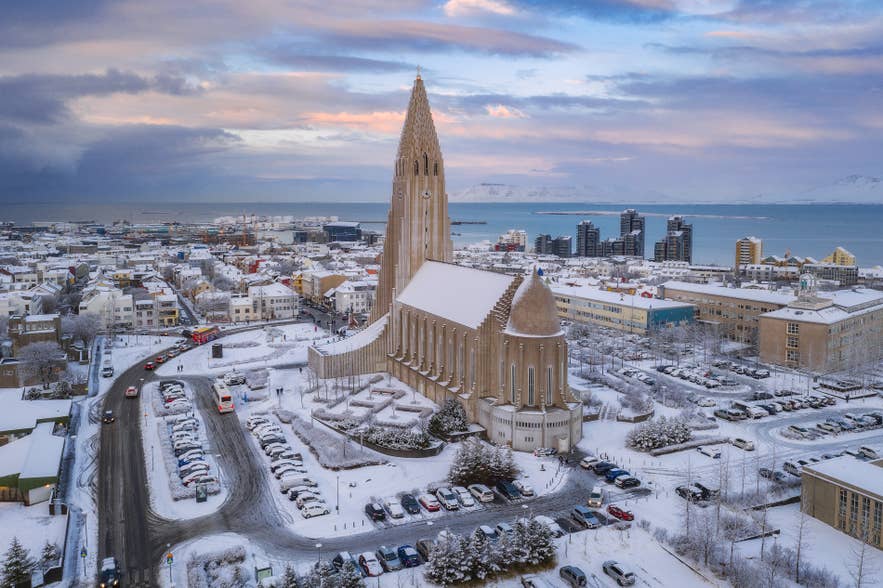
Cold and dark, January is the heart of the Icelandic winter. Reykjavik averages around 33°F (1°C), the days give only about 5 to 7 hours of light, and those long nights make it one of the best months of the year for the northern lights. Head north or inland and it turns colder and snowier still.
Temperatures in Reykjavik in January swing between about 23°F and 34°F (-5°C to 1°C) and feel colder in the wind, with snow, rain, and sleet all in the mix. The short days suit cozy, geothermal plans, so activities range from ice caving adventures and aurora tours that leave the city to long soaks in the Sky Lagoon.
Winter driving is at its most serious this month. For anyone driving in Iceland in January, winter tires are required and a 4x4 is strongly recommended.
Black ice and sudden storms are common, so plan short routes, start early, and check umferdin.is and vedur.is before you set off. The Highlands are closed, and rural roads can shut with little notice.
February in Iceland
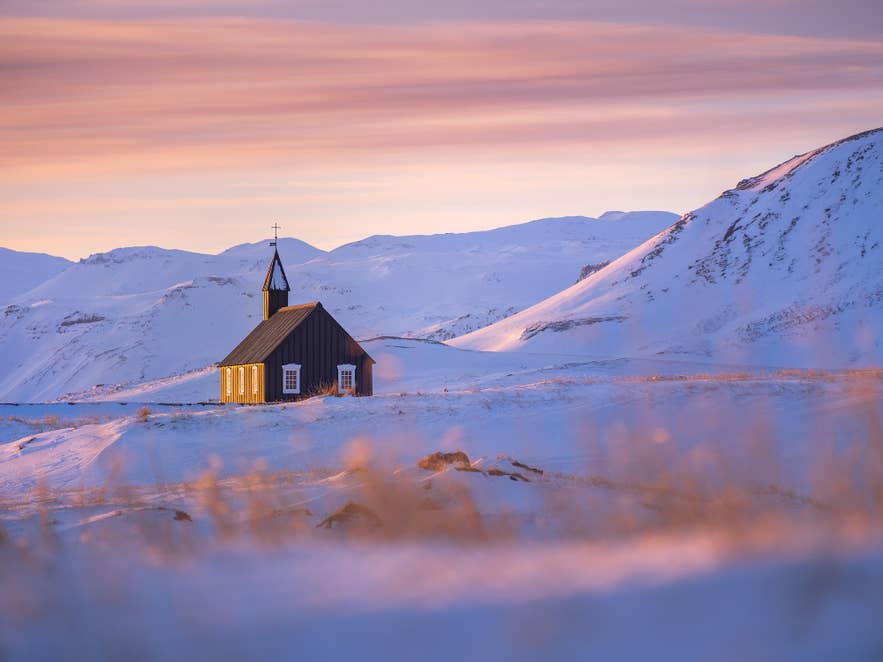 Daylight returns in a hurry in February, climbing to about 7 to 10 hours by month's end, even as winter keeps its grip. Reykjavik still averages around 33 to 34°F (1°C), the north holds onto its snow, and dark, clear nights keep aurora odds high. Rain, snow, and sleet often trade places within a day, adding up to roughly 3.3 inches (83 mm) of precipitation.
Cold and damp describes Reykjavik in February, with icy pavements common in the early morning and late evening. The standout among things to do during this month is the Winter Lights Festival, whose illuminated art brightens the dark evenings and pairs well with aurora tours, geothermal pools, and unhurried museum visits.
Conditions for driving in Iceland in February mirror January. Storms can shut roads for hours, so build slack into your plans, stay within the daylight, and follow the weather and road warnings closely.
March in Iceland
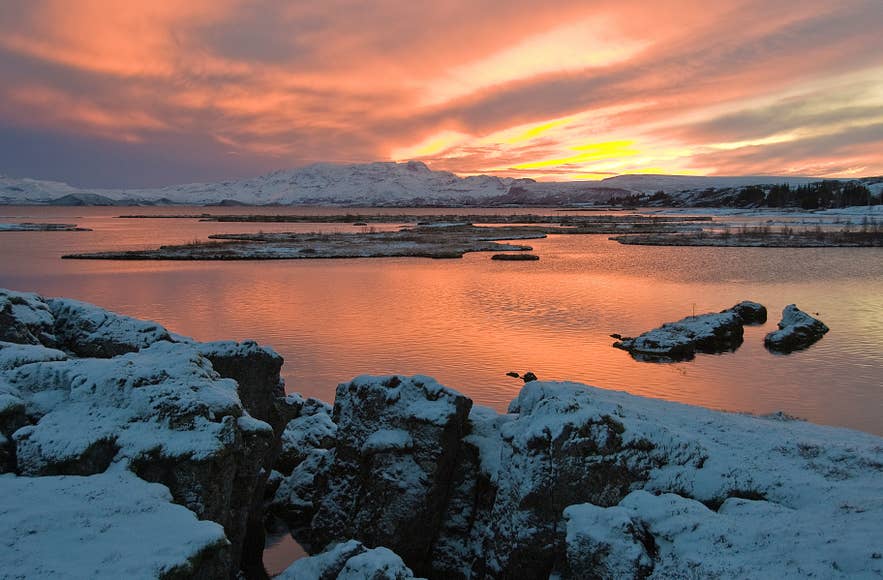
March is when the country starts tilting toward spring, even if it still feels like winter. Daylight surges from about 10 hours to 13 by the equinox, and Reykjavik ranges from roughly 28°F to 37°F (-2°C to 3°C).
Early in the month, the evenings stay dark enough that the northern lights are often still on show. As the weeks pass, snow, ice, and wind slowly hand over to rain across the capital.
If you are weighing what to do in Reykjavik in March, DesignMarch fills the city with design and architecture events, alongside the best winter activities, and day trips grow easier as the light returns.
Winter tires and caution are still the rule for driving in Iceland in March. Midwinter storms ease, but conditions can flip fast, the Highlands stay closed, and mountain roads remain snowbound. Check umferdin.is before you leave town.
April in Iceland
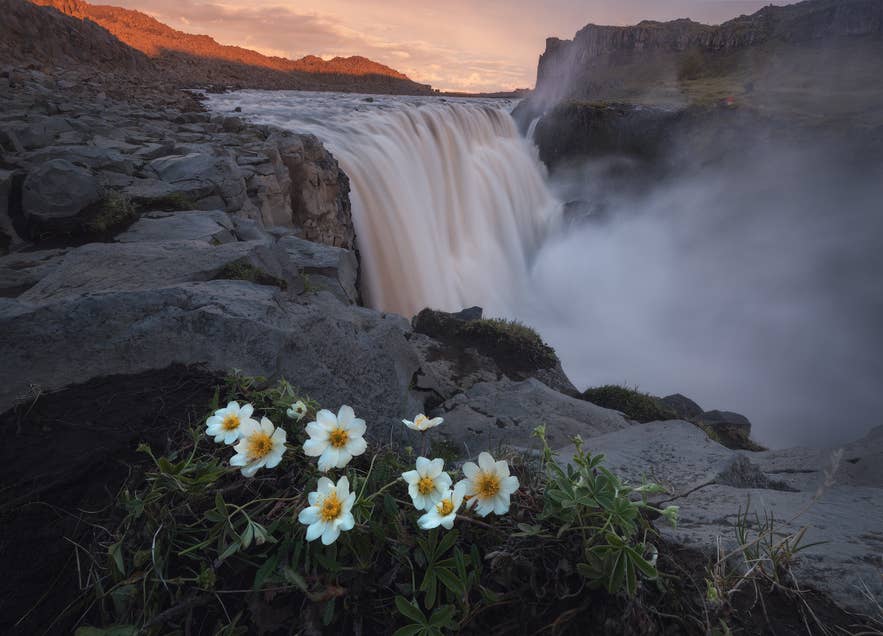
Few months are as changeable as April, when snow, rain, and bright sun can all arrive within a few hours. Temperatures usually land between 39°F and 44°F (4°C to 7°C), daylight reaches roughly 13 to 16 hours, and Icelanders mark the traditional First Day of Summer on the first Thursday after April 18.
The capital runs a touch milder than the countryside, though Reykjavik in April can still throw down a surprise snow shower. Whale-watching tours start up again from Reykjavik Harbor, the First Day of Summer brings parades and brass bands, and the longer days reopen city walks and excursions.
As snow melts off the main routes, driving in Iceland in April gets easier, though winter tires are still smart and the Highland F-roads stay closed. Watch for meltwater, loose gravel, and ice lingering in shaded corners. Keep an eye on umferdin.is for routes that are cleared or still shut.
May in Iceland
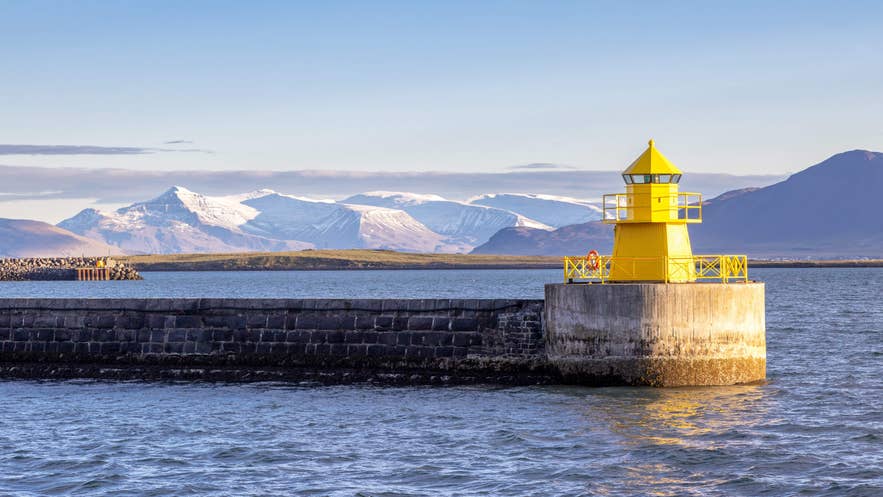 Mild, green, and bright, May is one of the best-value months to visit, with far thinner crowds than high summer. Temperatures rise from about 36°F (2°C) early on to 53°F (11°C) later, snow is rare at sea level, and daylight stretches from around 16 hours to nearly 21 by the end of the month.
Café terraces open and the light lingers late once you reach Reykjavik in May. Puffin and whale-watching tours run from the Old Harbor and the Reykjavik Arts Festival takes over venues around town.
On the lowland routes and the Ring Road, driving in Iceland in May is straightforward, but most Highland F-roads stay shut until late June or July. Expect the odd snow shower inland, strong gusts on exposed stretches, and gravel on the smaller side roads.
June in Iceland
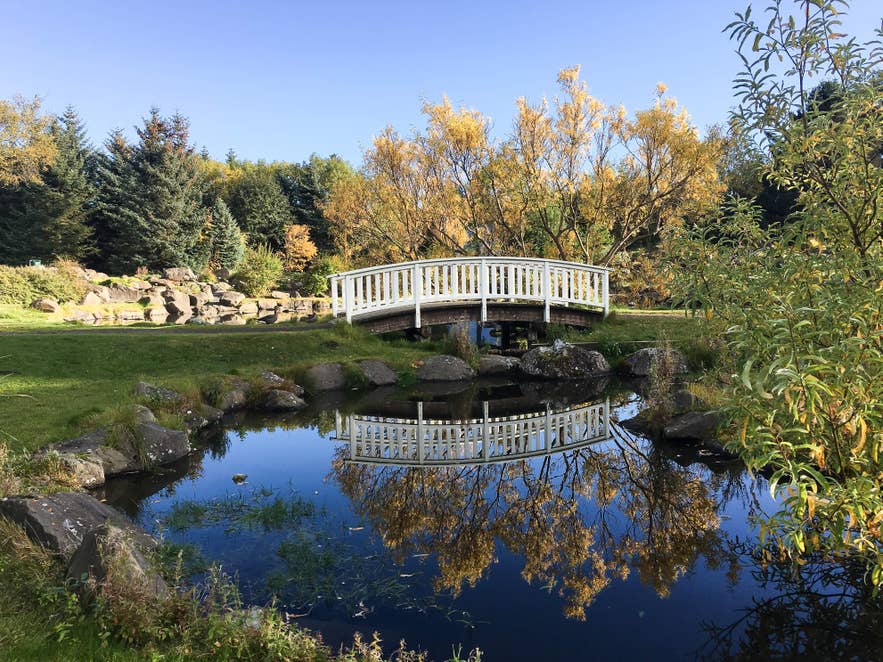 June belongs to the midnight sun, with up to 21 hours of daylight around the solstice on June 21 and skies that never fully darken. Averages sit near 50°F (10°C), the wind eases, and the settled, mild weather is what makes this the prime month for self-drive tours and hiking trips.
Bright almost around the clock, Reykjavik in June pairs pleasant days with cool evenings. National Day on June 17 fills the streets, puffin and whale tours leave the Old Harbor, and midnight-sun strolls and the outdoor pools round out the things to do in the capital.
Long light and dry, open roads make driving in Iceland in June the easiest of the year. The Highland F-roads start opening from late June, but they demand a 4x4 and river crossings. Check umferdin.is for opening dates and stay alert to wind, single-lane bridges, and sheep on rural roads.
July in Iceland
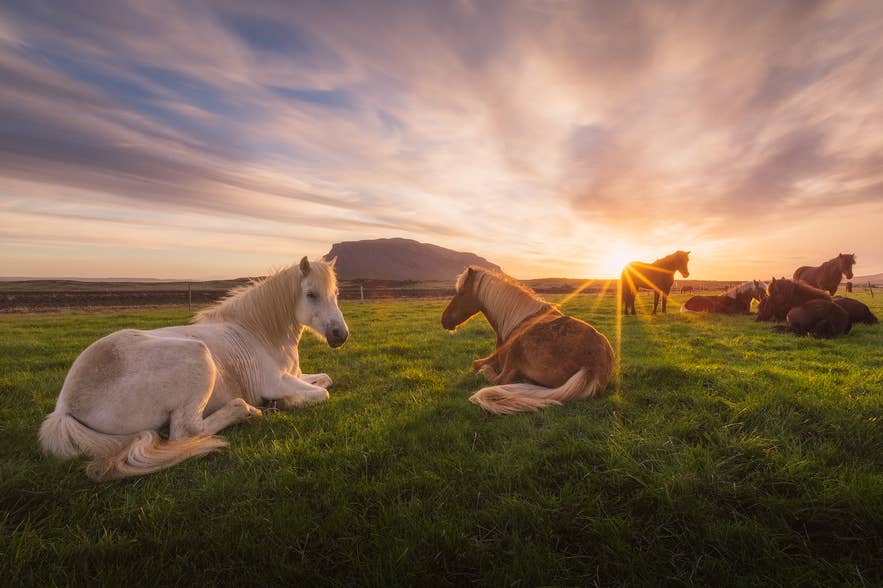 The warmest month of all, July averages 52°F (11°C) with typical highs of 50°F to 59°F (10°C to 15°C) and daylight still running to about 20 hours. Across much of the country it is the driest, sunniest stretch of the year, even if a sudden shower or gust can still blow through.
Warm, bright, and at its liveliest, Reykjavik in July offers open-air pools, outdoor cafe culture, and a packed events calendar. Whale-watching boats leave the Old Harbor, and the Golden Circle and South Coast make easy day tours, so there is no shortage of things to do.
Every main road and most Highland F-roads are open, which makes driving in Iceland in July the most reliable of the year. The F-roads still call for a 4x4 and care at river crossings. Since the long days tempt you into big distances, keep an eye on fatigue, wind, and gravel on the interior tracks.
August in Iceland
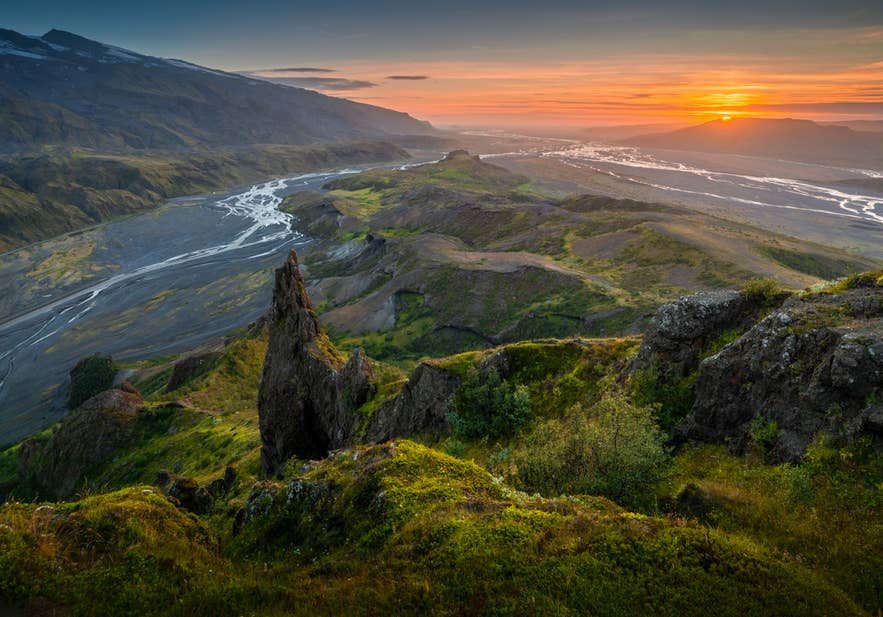 August stays mild and lively, averaging around 52°F (11°C) with roughly 18 hours of daylight early in the month. It is the peak of the travel season, and in its final week the returning darkness brings the first faint chance of the northern lights.
The capital is where the action is, with Culture Night, Reykjavik Pride, and the Reykjavik Marathon all landing here and drawing big crowds. Beyond the festivals, things to do in Reykjavik in August include whale watching, the outdoor geothermal pools, and late-summer day trips taken before the crowds thin.
All routes are open and the days are still long, so driving in Iceland in August stays easy, even as rain and wind pick up toward month's end. The Highland F-roads remain passable for now, making it a good window for interior routes, but keep checking umferdin.is as autumn weather rolls in.
September in Iceland
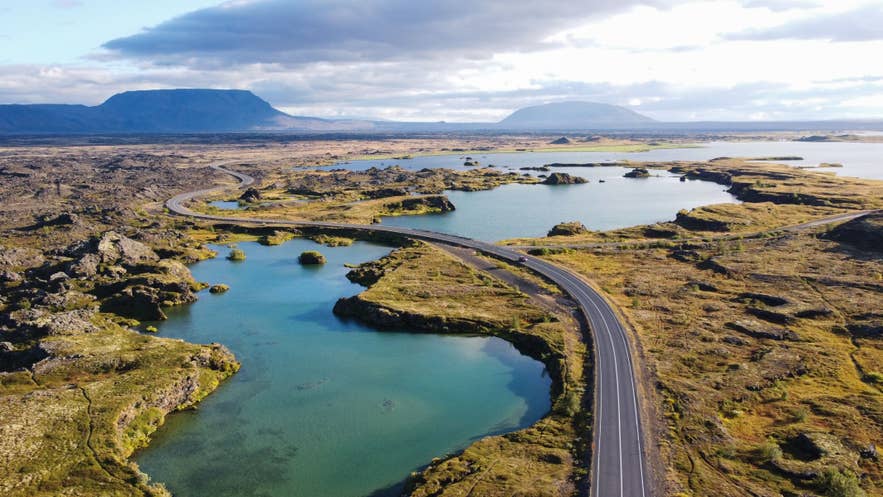 Autumn arrives in September, cooler and more changeable, with averages around 47°F (8°C). Daylight shrinks from roughly 13.5 to 11.5 hours over the month, and as the nights darken again, the northern lights return to the sky.
Slightly milder than the countryside but often wet and windy, Reykjavik in September quiets down as the summer crowds head home. The Reykjavik International Film Festival gives the calendar a lift, and early-season aurora tours, museums, pools, and day trips round out what to do in the city.
For the most part, driving in Iceland in September is still manageable, though shorter days and rising wind and rain ask for more care. The Highland F-roads begin closing later in the month, so check umferdin.is and time your drives to finish before dark.
October in Iceland
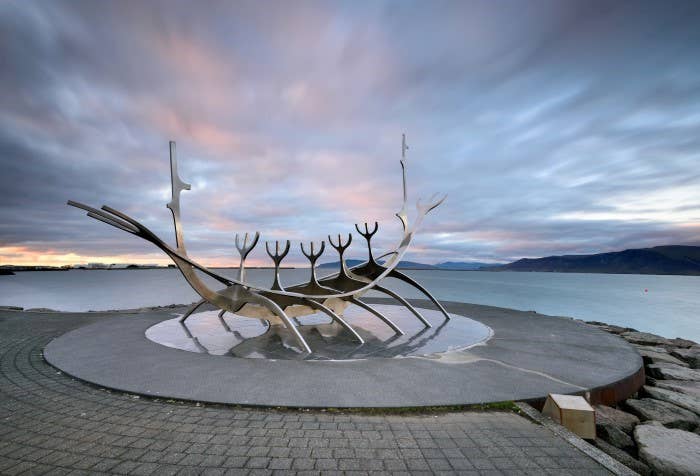 October is the tip into winter, colder, windier, and wetter, with Reykjavik around 41°F (5°C) and the north and Highlands already dropping below freezing. It ranks among the wettest months, daylight falls from about 11.5 hours to 8, and the lengthening nights are good news for aurora hunters.
Cool and frequently rainy, Reykjavik in October lends itself to a cozy, indoor-leaning trip. A soak at the Sky Lagoon or the local pools, museums, cafes, and aurora tours top the list of things to do, and the first ice cave day trips to the south begin as the caves reopen.
Winter readiness comes back this month for anyone driving in Iceland in October. Winter tires go on, snow can arrive later in the month. With daylight short, it pays to keep routes conservative, watch for the season's first black ice, and check umferdin.is and vedur.is before setting out.
November in Iceland
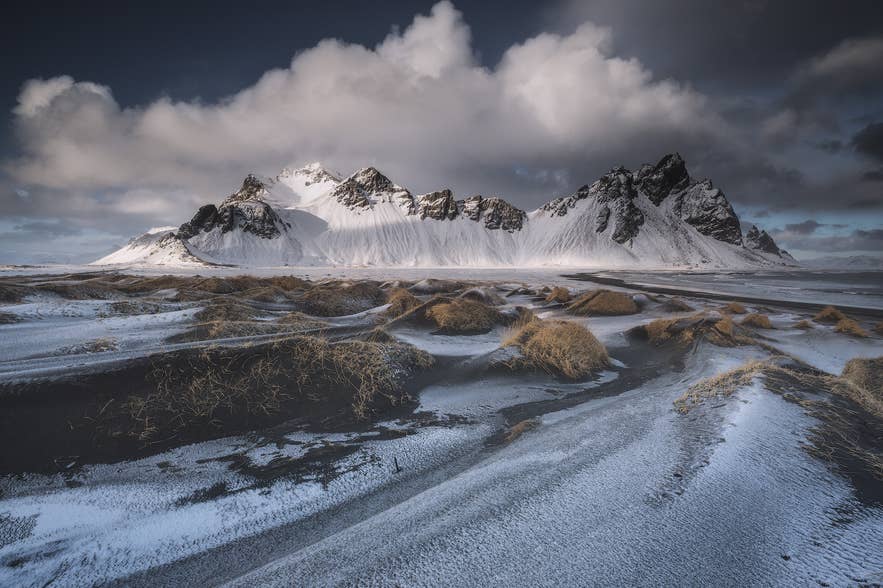 Full winter settles in through November, with colder days, more precipitation, and daylight sliding from about 8 hours to just 5 by month's end. Reykjavik ranges from 33°F to 46°F (1°C to 8°C), the north turns colder and snowier, and the long nights make it a strong month for both the northern lights and the freshly reopened ice caves.
Dark and often stormy, Reykjavik in November sees rain, sleet, and steadily building snow. The Iceland Airwaves music festival is the month's marquee event, and aurora tours, geothermal pools, and the first Christmas lights around the city fill out your time in the city.
By this month, winter driving is in earnest, so anyone driving in Iceland in November should count on winter tires, a 4x4, black ice, and storms that can close roads. With so little daylight, distances shrink, so keep plans flexible and check umferdin.is and vedur.is before every drive.
December in Iceland
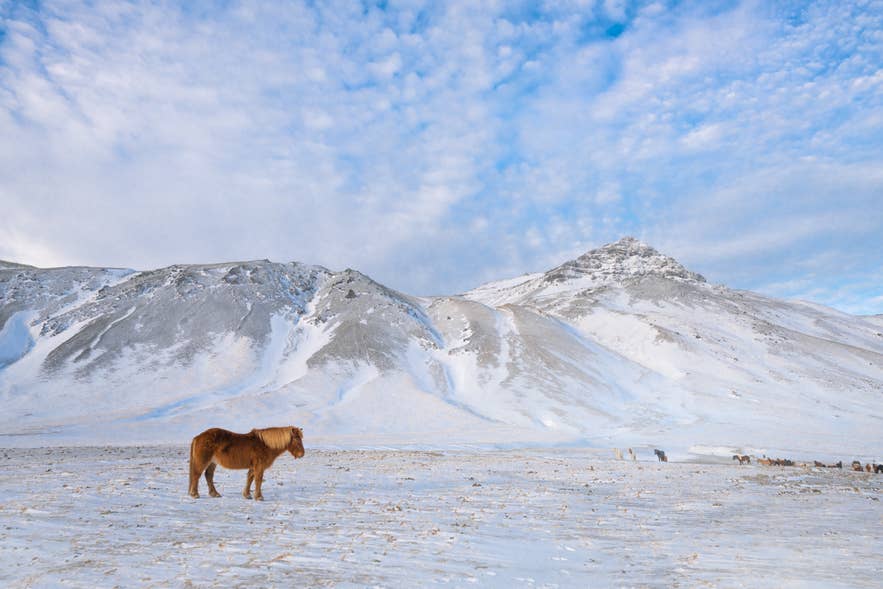 The darkest month, and among the coldest and wettest, December offers only 4 to 5 hours of daylight around the solstice, with Reykjavik hovering near 33°F (1°C). Those long nights and the festive mood are exactly why it is such a favorite for the northern lights, ice caves, and Christmas travel.
Sheltered and coastal, Reykjavik in December stays a shade milder than the countryside. Geothermal pavement heating clears snow from some central streets, but only locally, with little bearing on the citywide averages.
The city serves up Christmas markets and the Yule Lads, the famous New Year's Eve fireworks, aurora and ice cave tours, and plenty of warm geothermal pools.
Nothing tests you like driving in Iceland in December, between the ice, snow, storms, and near-total lack of daylight. Winter tires and a 4x4 are essential, the Highlands are closed, and conditions can change within the hour.
Keep distances short, drive in daylight, and check umferdin.is and vedur.is constantly. The month brings about 3.8 inches (97 mm) of precipitation.
There's No Wrong Time to Visit Iceland
While the weather and seasons vary a great deal across the year, Iceland is one of the most rewarding countries in the world for nature lovers in every one of its twelve months.
Summer brings the midnight sun; winter brings the northern lights. Some experiences belong to one season and not the other: June offers puffins tours, warmer days, and camping trips, while December offers aurora tours, ice caving excursions, and the glow of the Icelandic Christmas.
No single season holds everything, and there is something for everyone whenever you come. Traveling in the off-season also means fewer crowds, and because the attractions are so nature-focused, you can find wide-open spaces to yourself even in summer.
Understanding the weather is the key to making the most of any season, from summer's endless daylight to winter's snowbound evenings lit by the aurora. Prepare for the conditions, keep your plans flexible, and check vedur.is and umferdin.is before you set out.
Book your trip to Iceland today and experience the country's beauty across the whole turning year.
What is the weather like in Iceland all year round?
Spring in Iceland (April to May) is cool and unpredictable, with temperatures between 32°F and 50°F (0°C and 10°C).
Summer in Iceland (June to August) is mild and bright, averaging around 52°F (11°C) in Reykjavik. Days stretch to about 21 hours of daylight in June.
Fall in Iceland (September to October) turns cooler and windier, with temperatures between 32°F and 50°F (0°C and 10°C). The northern lights return as the nights darken.
Winter in Iceland (November to March) is cold and dark, with Reykjavik averaging around 33°F (1°C) in January. The north gets heavier snow, so self-drivers need winter tires and should plan around short days.
What is the average temperature in Iceland?
Is Iceland cold?
What is the sunniest month in Iceland?
For the best odds of clear skies, plan a May trip along the south and southwest coast, or visit the north in June.
Does Iceland get hot in summer?
What is the warmest month in Iceland?
Does it snow in Iceland?
What is the coldest month in Iceland?
What is the rainiest month in Iceland?
What is the driest month in Iceland?
What is the windiest month in Iceland?
When is the best time to visit Iceland?
Have you been to Iceland before? What time of year do you think is the best time to visit? Let us know in the comments below!

I was the Content Manager at Guide to Iceland from 2013 to 2018, and now run the creative studio Huldufugl while working as a freelance writer. I’m passionate about storytelling, Icelandic culture, and creating thoughtful experiences through words and visuals.