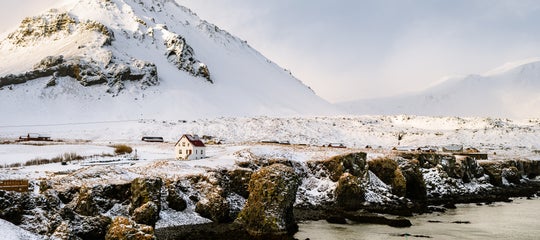
Iceland vs. Norway is a choice between two Nordic countries that suit very different trips. This comparison sets their scenery, travel costs, and northern lights side by side. Read on to find out which one fits your vacation.
A Nordic vacation is a major expense, and picking the wrong country can strain your time or budget.
Iceland keeps planning simple because its volcanoes, glaciers, and waterfalls sit along one main road. Many visitors book car rentals in Iceland and go on Ring Road tours. The road can be driven in seven to eight days, according to our study of how many days you need in Iceland.
Norway is more than three times the size of Iceland. Its fjords, mountain trails, and Arctic islands are spread along a coastline that takes several weeks to cover. Travelers with less time often find that a single region of Norway fills their whole trip.
Why You Can Trust Our Content
Guide to Iceland is the most trusted travel platform in Iceland, helping millions of visitors each year. All our content is written and reviewed by local experts who are deeply familiar with Iceland. You can count on us for accurate, up-to-date, and trustworthy travel advice.
The two countries also differ on price, winter weather, and where the northern lights appear. Each section below compares them on one of those points, using official statistics and our own studies. Keep reading to see which destination matches your plans.
Key Takeaways for Iceland vs. Norway
These points summarize how the two countries compare for travelers.
-
Iceland suits a trip of one to two weeks. One main road links most of its major sights, so little time is lost between stops.
-
Iceland offers a wide variety of nature in one country. Glaciers, waterfalls, fjords, and black sand beaches add to its volcanic scenery.
-
Geysers, lava fields, and geothermal pools set Iceland apart. Mainland Norway has no active volcanoes.
-
Norway is the stronger choice for fjord cruises and long mountain hikes. Its largest fjords are longer and deeper than Iceland's.
-
Both countries are expensive. Most natural attractions in Iceland charge no entrance fee, which helps keep costs down.
-
Northern lights trips are simpler to plan in Iceland. The lights can appear over the whole country, while Norway's reliable viewing is in the far north. Reykjavik itself is a good base, according to our study of Iceland's clearest skies for the northern lights.
-
Summer is the easiest season for a first visit to either country. Our study of the best and worst months to visit Iceland puts June and July on top for weather. Summer in Norway also runs from June to August.
Iceland vs. Norway at a Glance
The table below compares both countries on the factors that shape most trips.
| Comparison | Iceland | Norway |
| Signature scenery | Volcanoes, glaciers, geysers, and black sand beaches | Fjords, mountain plateaus, and Arctic islands |
| Active volcanoes | 32 volcanic systems | None on the mainland |
| Fjords | Westfjords and Eastfjords | Sognefjord, Geirangerfjord, and Naeroyfjord |
| Typical trip length | 7 to 14 days for the Ring Road | 2 to 3 weeks for several regions |
| Getting around | One main road around the country | Roads, car ferries, trains, and domestic flights |
| Eurostat price ranking in Europe | Most expensive | Sixth most expensive |
| Northern lights season | September to April, nationwide | September to April, mainly in the north |
| Winter temperatures | About 33 F (0.7 C) in Reykjavik in January | Mild on the coast, far colder inland |
| Best suited to | Road trips of one to two weeks | Longer trips built around fjords and hiking |
Scenery in Iceland vs. Norway: Volcanoes, Glaciers, and Fjords
Iceland's scenery changes often over short distances. The drive from Reykjavik to Diamond Beach covers about 235 miles (378 kilometers) of the South Coast. It passes waterfalls, black sand beaches, glaciers, and a lava field along the way.
Iceland's landscapes come from volcanic activity that is still shaping the island. The country's volcanoes belong to 32 volcanic systems. Eruptions happen every four to five years on average, according to our study of how often volcanoes erupt in Iceland.
Travelers can see this activity up close on volcano tours in Iceland. One dormant volcano, Thrihnukagigur, is the only one on Earth where visitors can descend into a magma chamber. The Inside the Volcano tour lowers travelers 400 feet (120 meters) into it from May to October.
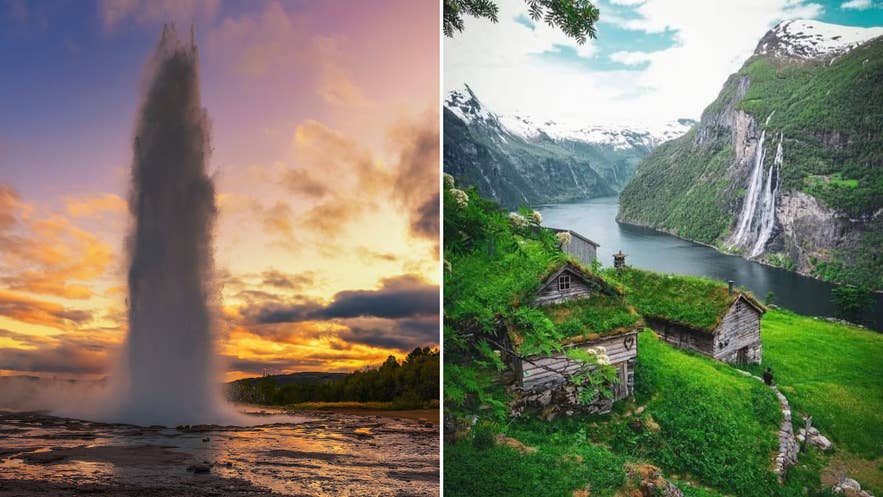
Geothermal heat reaches the surface in many geothermal areas in Iceland. At the Geysir area, the Strokkur geyser erupts every few minutes.
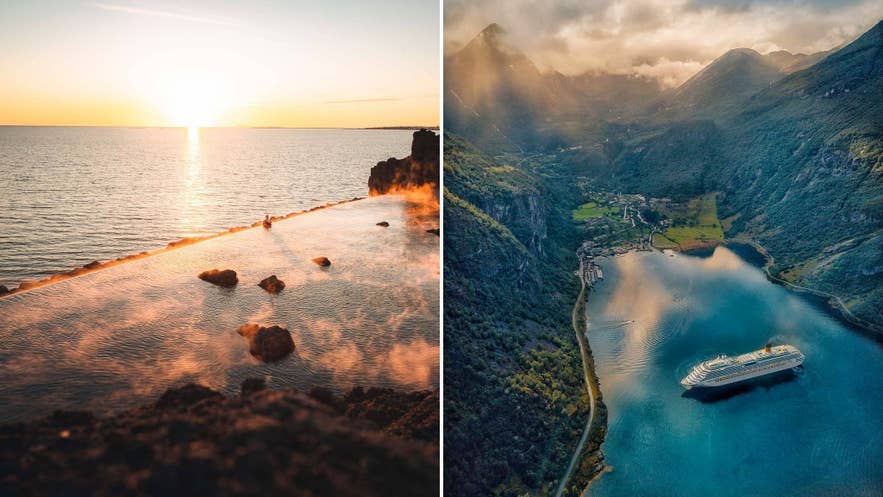
The same heat warms hot springs and geothermal pools across the country. They include the world-famous Blue Lagoon and Deildartunguhver Hot Spring, the most powerful hot spring in Europe.
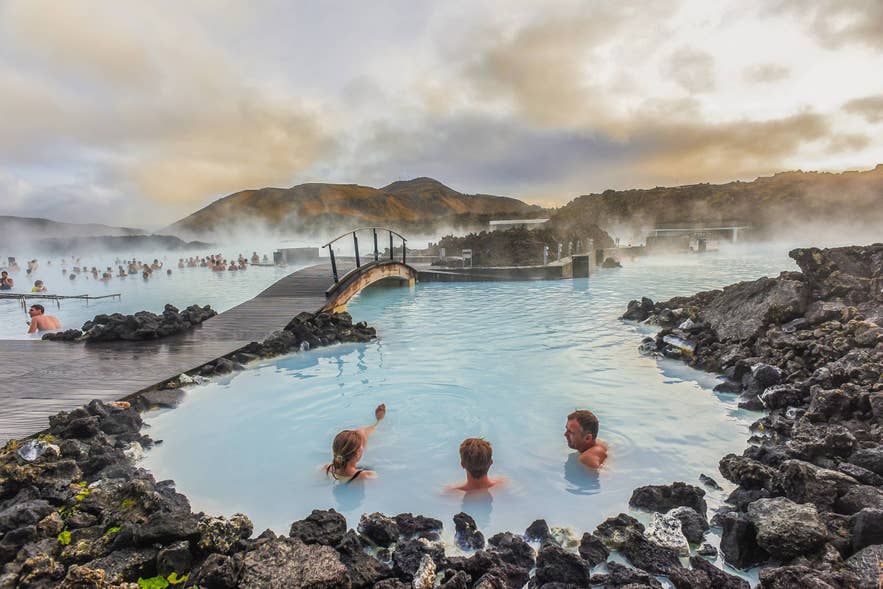
Glaciers are just as much a part of Iceland's scenery. Vatnajokull Glacier covers about 8 percent of the country, and its ice breaks off into Jokulsarlon Glacier Lagoon.
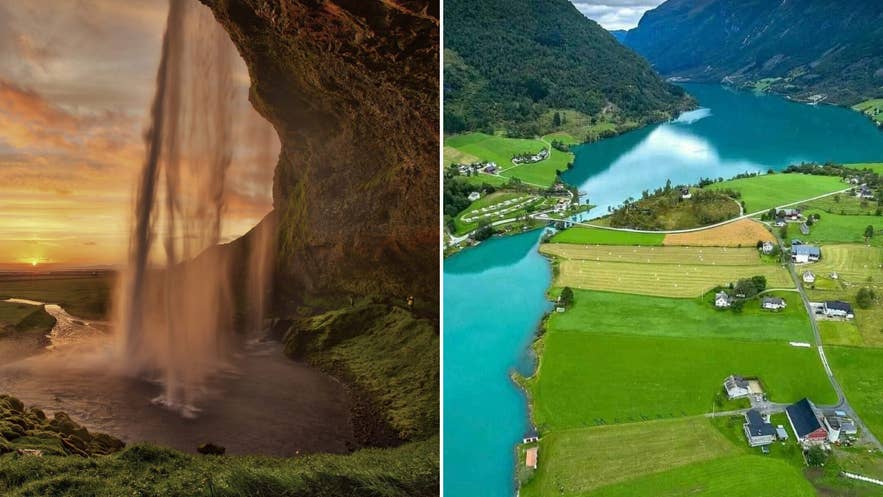
Norway's best-known scenery is its fjords, which are longer and deeper than Iceland's. Sognefjord, the longest and deepest in Norway, runs 128 miles (206 kilometers) inland and reaches 4,291 feet (1,308 meters) deep. Geirangerfjord and Naeroyfjord are both UNESCO World Heritage Sites.
Fjords in Iceland are found mainly in the Westfjords and the Eastfjords, where small fishing villages sit below steep mountains. Many of the country's most underrated places are in the Westfjords and the Highlands, according to our study of Iceland's best hidden gems.
Mainland Norway has no active volcanoes, so geysers and lava fields are particular to an Iceland trip. Norway's active volcano, Beerenberg, stands on the remote Arctic island of Jan Mayen.
Trip Length and Getting Around in Iceland vs. Norway
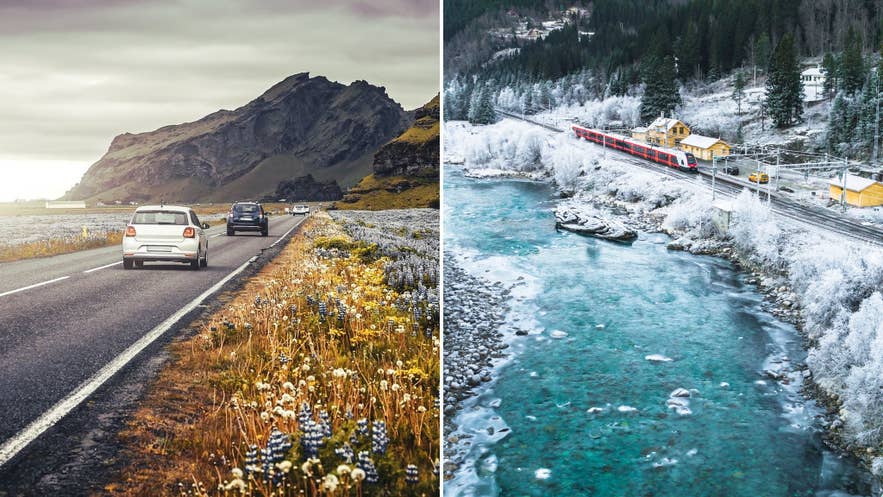
Iceland is the easier country to cover in one trip. The Ring Road loops around the island in 828 miles (1,332 kilometers). A 7-day tour around Iceland covers the full circuit, and slower trips take up to two weeks.
A shorter visit still covers several major sights. Travelers with four or five days can stay in Reykjavik. From there, day trips reach the Golden Circle and the South Coast.
Norway stretches more than 1,000 miles (1,600 kilometers) from south to north, so its main sights lie far apart. Trains make the south easy to travel without a car. The Bergen Railway links Oslo and Bergen in about seven hours.
Norway's northernmost station is in Bodo, well south of Tromso. Travelers heading farther north add a domestic flight or a coastal ferry. Covering both the fjords and the north usually takes two to three weeks.
Reaching Iceland is quick from both sides of the Atlantic. Flights to Iceland take around six hours from New York and three hours from London. Many airlines that fly to Iceland connect North America and Europe. A stopover in Iceland is therefore easy to add to a transatlantic trip.
Cost of Travel in Iceland vs. Norway
Both countries rank among the most expensive in Europe. In Eurostat's latest price comparison, Iceland ranked first and Norway sixth. Prices in Iceland were 83.7 percent above the EU average, against 38.4 percent in Norway.
Iceland's main sights help balance the budget. Most natural attractions charge no entrance fee, although many have paid parking. Tap water is safe to drink everywhere, so there is no need to buy bottled water.
Car rental, fuel, and lodging make up most of the cost of a trip to Iceland.
April, January, and November are the cheapest months, according to our study of the cheapest time to visit Iceland. A week-long trip in August costs about a third more than one in those months.
Camping lowers costs in both countries. Norway's right of access lets you pitch a tent on uncultivated land for up to two nights. The tent must stand at least 500 feet (150 meters) from the nearest inhabited house. The rule covers tents but excludes vehicles.
Camping in Iceland centers on roughly 180 registered campsites. Most charge 1,500 to 2,500 ISK (around 12 to 20 USD) per person per night. Campervans and cars must stay at a campsite overnight.
Northern Lights in Iceland vs. Norway
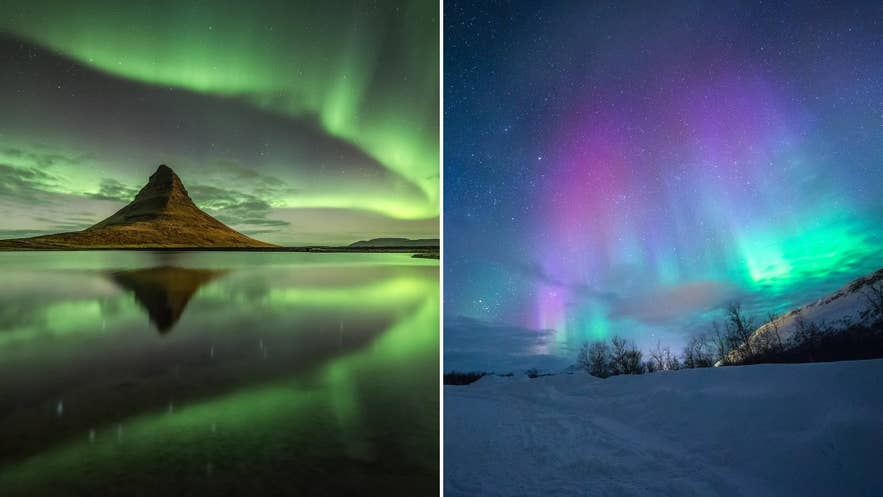
The aurora season runs from September to April in both countries. All of Iceland lies far enough north for the lights. As a result, the northern lights in Iceland can appear above Reykjavik on a clear, active night.
Norway's reliable viewing is in the north, above the Arctic Circle. Tromso is the main base, which means an extra domestic flight for visitors who arrive in Oslo or Bergen.
Cloud cover decides most nights in either country. Guides in northern Norway can drive inland toward drier air when the coast is overcast. Our study of the best places in Iceland to see the northern lights points to the southeast coast. The area around Jokulsarlon Glacier Lagoon had some of the clearest skies in 89 years of cloud records.
Northern lights tours leave Reykjavik throughout the season. Guides check the cloud forecast during the day and choose that night's destination from it. Most operators offer a free retry if the lights do not appear, according to our study of the best northern lights tour operators in Iceland.
Weather in Iceland vs. Norway
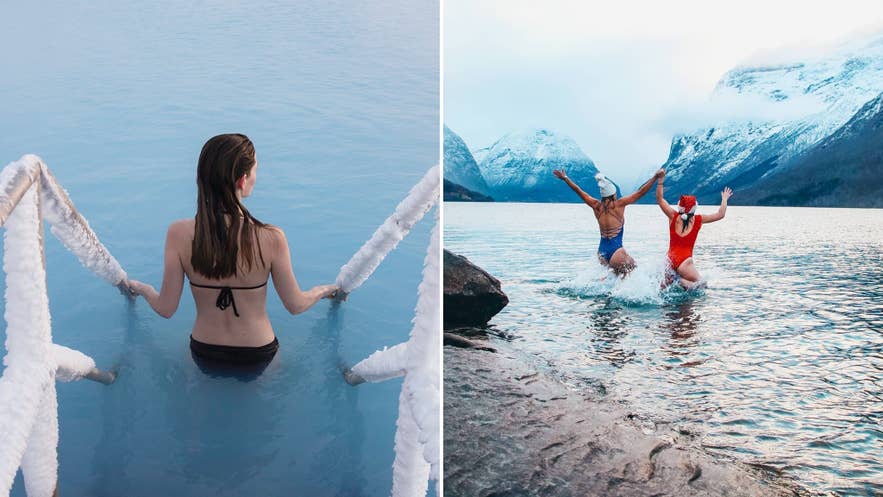
Iceland's winters are milder than its name suggests. Reykjavik averages 33 F (0.7 C) in January, according to our study of the warmest and coldest months in Iceland.
Norway's coast is similarly mild, but its interior gets far colder. Karasjok, in the northern interior, averages about 1 F (-17 C) in January, according to Statistics Norway.
Summer is the season when Norway is warmer. Oslo averages about 62 F (16 C) in July. Reykjavik averages 53 F (11.7 C) in the same month. The weather in Iceland also changes quickly and is often windy, so windproof layers are useful in every season.
Best Time To Visit Iceland or Norway
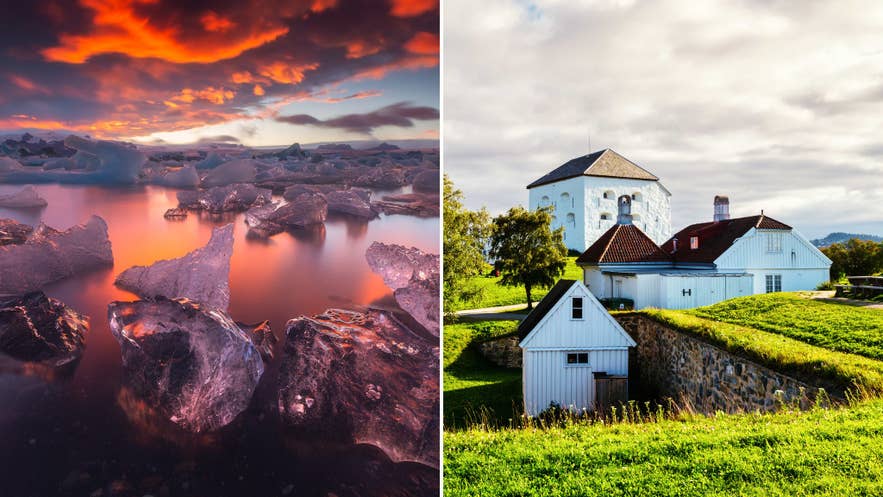
Summer is the simplest season for a first trip to either country. Iceland has near-constant daylight from mid-May to late July, a period known as the midnight sun. Mountain roads into the Highlands of Iceland usually open only in summer. July and August are the best months to plan for.
Northern Norway lies above the Arctic Circle, so the sun stays above the horizon there for weeks in midsummer. June to August is also the main season for Norway's fjord cruises and mountain trails.
Winter travel centers on the northern lights in both destinations. Iceland adds natural ice caves, and ice cave tours run from October to April. Guided tours are the easiest way to travel in those months, especially for visitors who are new to winter driving.
The best time to visit Iceland depends on which of those experiences matters most to you.
Activities and Wildlife in Iceland vs. Norway
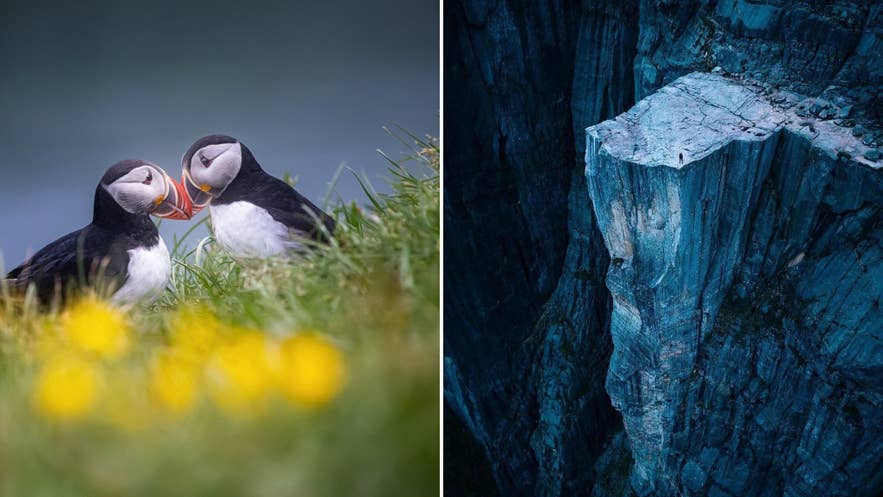
Many of Iceland's activities depend on its glaciers and geothermal heat. Glacier tours run all year, and bathing in geothermal spas is comfortable in any weather.
Most animals that visitors see in Iceland live along the coast. Whale watching tours usually run from April to October. Puffins nest on the sea cliffs from late April to late August.
Wildlife in Iceland also includes Arctic foxes and the reindeer herds of East Iceland. Hiking in Iceland ranges from short walks to waterfalls to multi-day routes through the Highlands.
Norway is the stronger choice for long mountain hikes. Preikestolen and Trolltunga are its best-known trails, and both overlook fjords. Norway's forests are also home to moose, which do not live in Iceland.
How To Plan a Trip to Iceland or Norway
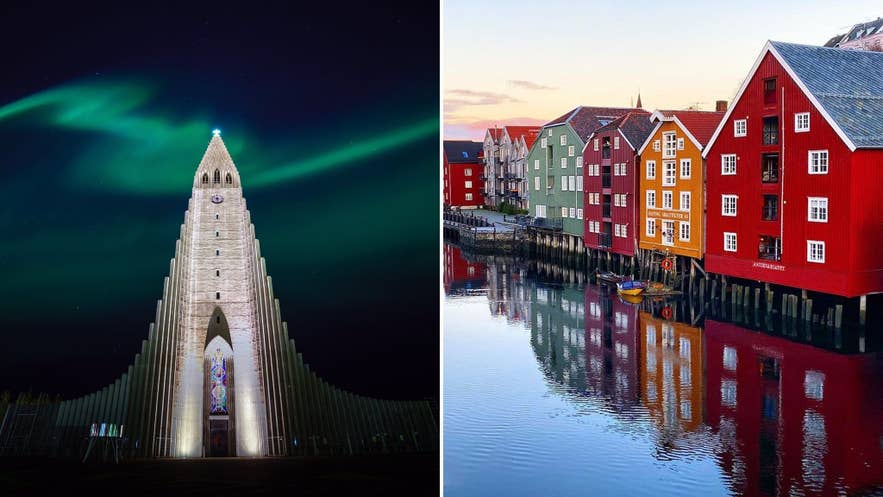
Most trips to Iceland follow one of three formats. Self-drive tours include a rental car, a planned route, and accommodation along the way.
Vacation packages in Iceland add guided excursions, which suits winter visits and travelers who prefer not to drive. A third option is to stay in the capital and join day tours from Reykjavik.
Independent travelers can book rental cars in Iceland and accommodation separately.
A Norway trip takes a different kind of planning, because the main sights lie far apart. Most itineraries focus on one or two regions. Trains connect the cities of the south, and domestic flights reach Tromso and the far north.
Choosing Between Iceland and Norway for Your Trip
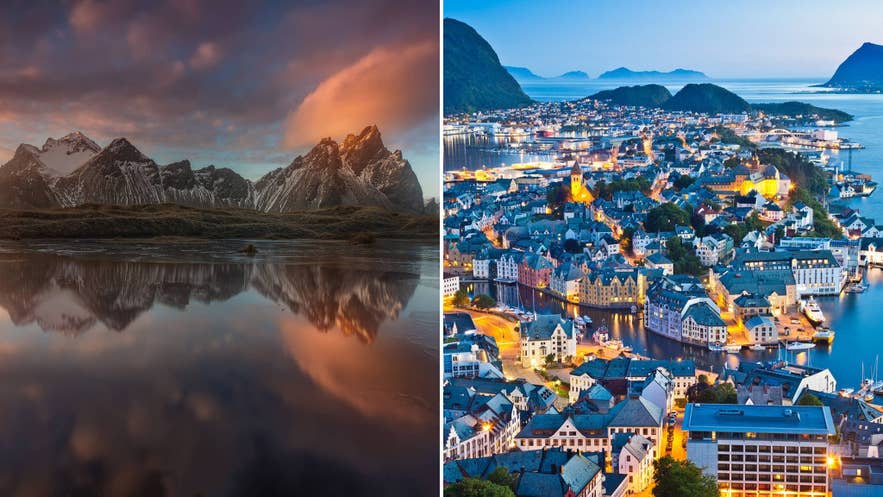
Iceland is the better match for a trip of one to two weeks that covers a whole country. It is also the choice for varied scenery on one route, including volcanoes, glaciers, and black sand beaches. Geothermal bathing is part of the trip, and the northern lights need no extra flight north.
First-time visitors usually include the Golden Circle and the South Coast in their itinerary. Both rank among the most popular things to do in Iceland.
Families may lean toward Iceland as well. It scored 16 points against Norway's 12 on a seven-measure family scorecard in our study of how good Iceland is for kids.
Norway is the better match for travelers drawn to fjords, long mountain hikes, and scenic train journeys. Its size rewards a longer trip or a close look at one region.
Both countries also fit into one trip. Flights from North America to Oslo connect through Keflavik International Airport, so stopover trips in Iceland are easy to add on the way. Travelers starting in Europe or Asia can visit in either order, since the same route links Iceland and Norway.
Is Iceland or Norway better to visit?
Which is more expensive, Iceland or Norway?
Which is colder, Iceland or Norway?
Which is better for the northern lights, Iceland or Norway?
Does Norway have volcanoes like Iceland?
Does Iceland have fjords like Norway?
How many days do you need in Iceland vs. Norway?
Which month is best to visit Iceland and Norway?
How similar is Norway to Iceland?
Which country are you leaning toward, Iceland or Norway? Tell us in the comments below, and ask us anything about planning your trip.

I was born on the west side of Reykjavík and grew up downtown, so Iceland has been my back yard for most of my life. I'm a father of two, I've traveled on five continents, and I still haven't found a country that holds my attention the way this one does.
That's why I co-founded Guide to Iceland. We connect travelers directly with Icelandic operators, guides and hosts, so the advice and the services both come from people who actually live here.
I write about the practical side of a trip: what eating out in Reykjavík really costs, whether to pick Sky Lagoon or Hvammsvík, where to stop for food along the Ring Road, and which regions give you the best odds of clear skies for the northern lights. If you're planning a trip and something doesn't add up, message me.