Find out the most unique experiences in Iceland with this guide to the country’s unusual attractions, dramatic landscapes, and cultural traditions. Discover activities such as walking behind waterfalls, visiting hidden canyons, and exploring geothermal and glacial environments shaped by natural forces.
Some experiences align with adventure tours, where you can snowmobile across glaciers or kayak under the midnight sun. Others connect with volcano tours, which help visitors reach steaming mud fields and active volcanic zones. Northern light tours offer an unforgettable option to watch the winter skies light up with vibrant auroras.
Many of Iceland’s frozen landscapes appear in glacier tours, such as hiking on ice streaked with volcanic ash, exploring deep blue ice caves, or kayaking among floating icebergs. Meanwhile, whale watching and puffin tours bring travelers to the remote coastlines and cliffs where Iceland’s marine life thrives.
This guide now takes you through these experiences one by one, offering practical information so you can plan a journey shaped by the rare and remarkable. Continue reading to discover the attractions, traditions, and natural wonders that make Iceland such a unique destination.
Why You Can Trust Our Content
Guide to Iceland is the most trusted travel platform in Iceland, helping millions of visitors each year. All our content is written and reviewed by local experts who are deeply familiar with Iceland. You can count on us for accurate, up-to-date, and trustworthy travel advice.
Key Takeaways
-
Iceland delivers standout geothermal and volcanic experiences, including watching Strokkur Geysir erupt, exploring Namafjall Geothermal Area, hiking new lava fields, and descending into a dormant volcano.
-
Glacier and ice adventures highlight the country’s frozen landscape, with snowmobiling, glacier hiking, blue ice caving, and glacier lagoon kayaking.
-
Water and wildlife activities showcase Iceland’s natural richness, including snorkeling in Silfra Fissure, whale watching in the town of Husavik, puffin viewing at Latrabjarg Cliff, and midnight sun kayaking.
-
Cultural and culinary highlights add memorable variety, including visits to the Phallological Museum, fermented shark tastings, geothermal bread baking, Viking festivals, and beer spa relaxation.
-
Scenic natural gems elevate any itinerary, including Seljalandfoss Waterfall, Gljufrabui Waterfall, Viti Crater, Diamond Beach, and ever-changing volcanic landscapes.
25. Visit the World's Only Penis Museum
The Icelandic Phallological Museum, located in Reykjavik, is a truly unique experience in Iceland. It is one of the weirdest museums in the country and the only museum in the world dedicated entirely to the male organ, which makes it a guaranteed unforgettable stop for curious travelers.
Showcasing nearly 300 specimens, the entrance to the Phallological Museum provides a surprising and often humorous look at science, history, and folklore. This accessible institution is a top choice for those seeking unusual things to do in Iceland that guarantee a memorable story.
The museum is centrally located at Hafnartorg Square on Kalkofnsvegur Street. It is generally open daily from 10 AM to 7 PM. Visitors should check out the on-site Phallus Cafe and Bistro, which offers themed food and drinks, including unique souvenir beers and penis-shaped waffles.
24. Dare to Try Iceland's Fermented Shark
Trying hakarl, the fermented shark meat, is the ultimate culinary rite of passage and one of the most unusual things to do in Iceland. The meat of the Greenland shark is naturally toxic, so it requires curing for months to become edible. This unique process gives hakarl its notorious, ammonia-rich smell.
The experience is rooted in Icelandic tradition, dating back to the Vikings. Hakarl is traditionally served in small cubes and chased with a shot of Brennivin (Iceland's caraway-flavored schnapps, nicknamed "Black Death"). This is a must-do for any food adventurer seeking a truly unique experience in Iceland.
Travelers can easily find hakarl cubes and other traditional delicacies on a food walking tour in Reykjavik or by dining at some of Reykjavik's restaurants, such as Hresso. For an immersive experience, visit the Bjarnarhofn Shark Museum on the Snaefellsnes Peninsula to see the full curing process.
23. Hike the Rim of a Volcanic Crater
 Hike the rim of the spectacular Viti Crater in the Krafla Volcanic Area. This is one of the most vividly colorful and unique things to do in Iceland, offering an unmissable geological experience in North Iceland. The crater's name translates to "hell," and it holds a stunning, emerald-blue lake.
The crater was formed during an 18th-century eruption. A Super Jeep tour to Viti Crater offers views that interplay between the dramatic terrain and the nearby geothermal power plant, where Iceland harnesses its volcanic energy. For travelers seeking a truly unique experience in Iceland, a walk around this site is essential.
Viti Crater is in North Iceland near the Lake Myvatn Area. A short, easy trail takes about 30 minutes to walk around part of the rim. Parking is available and is often a paid zone. Always stay on marked paths, as the lava fields can be hot and unstable. Access is generally year-round, but exercise caution during winter.
22. Find the Secret Waterfall in a Canyon
Gljufrabui Waterfall, the "Canyon Dweller," offers a truly unique experience in Iceland because this 131-foot (40-meter) waterfall is almost completely hidden from view. Visitors must go on a mini-adventure and navigate a shallow stream through a narrow opening in the cliffs to step inside the moss-covered, roofless gorge.
Once inside the hidden chamber, the sound and sight of the cascading water are amplified, creating a magical and intimate scene. Gljufrabui offers one of the top things to do in Iceland because it rewards the effort of seeking it out with a stunning, secretive natural spectacle.
Gljufrabui is conveniently located in the South Coast, just a short five-minute walk north of the much larger Seljalandsfoss Waterfall. Sturdy, waterproof footwear is highly recommended. The site is accessible year-round, though winter conditions can be icy.
21. Walk Behind Seljalandsfoss Under the Midnight Sun
 Walking behind the cascade of Seljalandsfoss Waterfall is a unique experience in Iceland, offering a 360-degree perspective rarely available at other waterfalls globally. This activity becomes truly magical during the midnight sun season (late May to mid-August), when the sun remains visible for 24 hours a day.
In the late evening, the waterfall is less crowded, and the low-sitting sun shines through the curtain of water, illuminating the mist with a golden glow. This allows travelers to experience one of the top walk-behind falls in the country and capture a truly unique experience in Iceland.
Seljalandsfoss Waterfall is right off the Ring Road and is often part of South Coast tours. The waterfall is open 24 hours, and access is free, but parking is a paid zone. The path behind the waterfall is often closed in winter due to ice and the risk of falling ice formations, so summer is the ideal time to visit.
20. Watch Strokkur Erupt Every 5 Minutes
The Strokkur Geyser provides one of the most reliable and unique experiences in Iceland, showcasing the island's geothermal power. Located in the Haukadalur Valley, Strokkur erupts every five to ten minutes. This guarantees that travelers will witness the spectacular show, unlike many other geysers globally, which are dormant or unpredictable.
Each eruption shoots scalding hot water 50 feet to 65 feet (15 meters to 20 meters) high, sometimes reaching up to 130 feet (40 meters). The surrounding geothermal area, with its bubbling mud pots and mineral deposits, adds to the appeal. This is an essential thing to do in Iceland that captures the raw energy beneath the surface.
The Geysir Geothermal Area, where Strokkur is located, is part of the popular Golden Circle Sightseeing Route and is about a 1.5-hour drive from Reykjavik. Access to the geothermal area and viewing the geyser is free. Parking is available and is a paid zone. The area is open year-round and is included in Golden Circle tours.
19. Zoom Across Iceland's Largest Glaciers
Snowmobiling is one of the most exhilarating and unique things to do in Iceland, offering access to otherworldly landscapes that are otherwise unreachable. The ultimate thrill is racing across the vast, pristine ice caps of Vatnajokull, Europe's largest glacier, or Langjokull, Iceland's second largest.
This guided adventure allows you to feel the speed as you zoom past ice formations, crevasses, and towering glacial peaks. Snowmobiling tours are available all year round and are an easy way for travelers to explore the scale of Iceland's interior, providing a fantastic contrast to the coastal sights.
Snowmobile tours operate daily on Langjokull and Vatnajokull near the South Coast. You can book a combo tour, such as a Golden Circle and snowmobiling tour, for a convenient way to see major landmarks and enjoy glacier views in one trip. All necessary gear, including helmets and thermal overalls, is provided.
18. Attend Iceland's Largest Viking Festival
 Attending the annual Hafnarfjordur Viking Festival is a truly unique experience in Iceland, offering cultural immersion unavailable elsewhere. Held in the town of Hafnarfjordur, just south of Reykjavik, this is the oldest and largest festival of its kind in the country.
For several days each June, travelers can witness Viking battle reenactments, watch blacksmiths and artisans at work, and try out Viking games like axe throwing. The festival is a standout option for those seeking unusual things to do in Iceland, offering an immersive look at one of the country’s best festivals and its living heritage.
The Hafnarfjordur Viking Festival typically takes place around Iceland's National Day, June 17th, and lasts about five days. Admission is generally free. The town is easily reached by car or by taking Bus Number 1 from Downtown Reykjavik (about a 20-minute ride). Check specific dates and times before visiting.
17. Join a Whale Safari in Iceland's North
Joining a whale watching tour from Husavik offers a unique experience in Iceland for wildlife lovers. Husavik, the "Whale Capital of Iceland," boasts a high whale sighting success rate, often between 97% and 99% in peak summer months. This makes North Iceland one of the most reliable places in Europe to see humpback whales.
While in Husavik, you can also explore the Husavik Whale Museum, which features a blue whale skeleton. Alternatively, entry to the GeoSea Sea Baths offers a relaxing experience, or you can visit the Eurovision Museum, which highlights the town’s connection to the movie “Eurovision Song Contest: The Story of Fire Saga.”
Husavik is located about a six-hour drive from Reykjavik, typically visited as part of a Ring Road or Diamond Circle tour. A Husavik whale watching boat tour generally lasts about three hours and provides warm flotation overalls.
16. Witness Europe’s Largest Puffin Colony
 Visiting the Latrabjarg Cliffs in the Westfjords Region is a truly unique experience in Iceland, as this is Europe's largest seabird cliff. It reaches heights of over 1,400 feet (400 meters) and stretches for 8.7 miles (14 kilometers), serving as home to millions of nesting birds, including the Atlantic puffin.
The isolation of the cliffs means the puffins are unafraid of humans, allowing you to observe them from just a few feet away. This is one of the top things to do in Iceland for wildlife lovers, offering opportunities to photograph these beautiful birds during the summer nesting season from mid-May to mid-August.
Latrabjarg Cliff is located at the westernmost point of Iceland. It is remote, requiring a long drive into the Westfjords. Access is free, but the road (Route 612) is a rough, unpaved gravel road, and driving slowly is mandatory. Joining a Latrabjarg guided tour is recommended for those who want an easier, safer way to reach this remote landmark.
15. Kayak Mount Kirkjufell at Midnight
If walking behind a waterfall at midnight is too wet, kayaking is the most serene way to enjoy Iceland's eternal summer. Paddling in the water under the midnight sun is a tranquil yet unique experience in Iceland from late May to mid-August. The sun never fully sets, casting a golden-red light on the Icelandic landscape.
The experience lies in the calm atmosphere: paddling across still waters in the middle of the night, often with fewer crowds and spectacular reflections. On the Snaefellsnes Peninsula, you can kayak beneath the Kirkjufell Mountain, gaining a unique perspective of one of Iceland's top natural landmarks.
Kirkjufell Mountain itself is one of the most photographed peaks in the country, known for its perfectly shaped silhouette rising sharply above the coastline. The drive from Reykjavik is about two and a half hours. Parking is available at the base of the mountain and is typically a paid zone.
14. Hike to Bathe in a Geothermal River
A private hiking tour of the Reykjadalur Valley to reach its thermal river is one of the most natural and unique experiences in Iceland. Unlike luxury spas, this experience is entirely wild. A natural river heated by the Earth's core flows down the valley, creating a creek warm enough for bathing.
The journey requires a 45- to 60-minute hike (about 2.5 miles or 4 kilometers one way) through a geothermal area, complete with steaming vents and bubbling mud pots. Your reward is finding the perfect spot in the river where cooler water mixes with the hot to create a naturally heated outdoor bath.
The trailhead to Reykjadalur Valley is located near the town of Hveragerdi, about a 45-minute drive from Reykjavik. The river itself is free to access. Parking is available at the trailhead and is a paid zone. Remember to stay on the marked path, as the surrounding hot springs can be boiling hot.
13. Bake Geothermal Rye Bread Underground
Participating in a geothermal bread-making experience in Fontana Spa is a fantastic and unique culinary experience in Iceland. This tradition, dating back centuries, involves baking dark rye bread by sealing the dough in a pot and burying it in the hot volcanic sand. Here, the Earth's heat acts as an oven.
You then witness the bread being dug up, steaming and fragrant, after being slow-cooked for 24 hours. This dense, slightly sweet bread is traditionally served warm with butter and local smoked trout. This activity is a top choice for those seeking unusual things to do in Iceland while exploring the Golden Circle.
The geothermal bakery experience is offered at Laugarvatn Fontana Spa. This location also features geothermal baths, allowing you to combine this unique culinary activity with relaxation.
12. Bathe in Warm Beer With Your Own Tap
 A private beer spa experience in North Iceland blends Icelandic bathing culture with the country's craft beer scene. You relax in a private, warm bath filled with a nourishing mixture of young, unfermented, non-alcoholic beer, live brewer's yeast, and hops.
Bathing in beer is said to be rich in Vitamin B and antioxidants, which are beneficial for the skin and hair. The experience is enhanced by a draft tap right next to your wooden tub, allowing you to enjoy one of Iceland’s top beers while you soak. This activity is a truly unusual thing to do in Iceland, which guarantees relaxation.
The beer spa is located in Arskogssandur in North Iceland, about a 30-minute drive from Akureyri. A single bath session lasts about 30 minutes, followed by a 20-minute rest in a relaxation room. The spa is usually open on Thursday, Saturday, and Sunday from 12 PM to 8 PM.
11. Hike a Glacier Etched With Volcanic Ash
 A glacier hiking tour is accessible and a truly unique experience in Iceland, allowing you to walk on a massive ice cap with the help of a certified guide. The popular glacier for hiking is Solheimajokull, an outlet of the Myrdalsjokull Ice Cap.
While climbing, you explore ice formations, deep crevasses, and layers of black volcanic ash embedded in the ice. These dark streaks are remnants of the 2010 Eyjafjallajokull eruption, providing an up-close view of Iceland's "fire and ice" geology. This is a top choice for those seeking things to do in Iceland that guarantee an adventure.
Glacier hiking on Solheimajokull is available year-round and requires a reasonable fitness level. Tours typically last 2.5 to 3 hours and start from the Solheimajokull Parking Lot on the South Coast. All safety gear, including crampons, helmets, and ice axes, is provided. Waterproof hiking boots are mandatory and can be rented.
10. Walk Among the Roaring Mud Pots of Hverir
 Visiting the Namafjall Hverir Geothermal Area is a highly sensory and unique experience in Iceland, often described as walking on the surface of Mars. Located in North Iceland near Lake Myvatn, this site is a display of the Earth's raw power, characterized by boiling mud pots, hissing steam vents, and an intense sulfur odor.
The unique thing to do here is to witness the concentration of geothermal activity up close. The ground is painted in yellows, reds, and oranges by sulfur and mineral deposits. Short, well-marked paths allow visitors to safely walk among these bubbling pots, providing an unforgettable photo opportunity.
Namafjall Hverir is conveniently located right off the Ring Road (Route 1) in North Iceland. Access to the area is free, though there is a paid parking zone. The area is open 24 hours a day. For easier access, Namafjall Hverir is often included in Lake Myvatn tours.
9. Land on a Glacier or Volcanic Summit by Helicopter
Taking helicopter tours is the ultimate way to see the country's volcanic heart and glacial expanse, offering a truly unique experience in Iceland. These tours go beyond scenic flight, providing the exclusive opportunity to land on mountains or glaciers in Iceland.
A helicopter tour of Reykjavik with a mountain summit landing offers a sweeping view of the capital and its nearby volcanic terrain. You can also take a helicopter tour of the volcanic eruption site of Sundhnukagigar Craters or join a Vatnajokull Glacier helicopter tour, depending on which landscape you want to see from above.
8. Watch the Aurora From a Warm Geothermal Pool
 Watching the northern lights while soaking in one of the country’s top geothermal pools is the ultimate relaxing and unique experience in Iceland. This activity transforms the cold, demanding wait for the lights into a comfortable luxury, allowing visitors to enjoy the aurora borealis in warmth.
Iceland is perfectly positioned under the auroral oval, offering some of the best northern lights viewing spots. Many luxury spas offer outdoor hot tubs with minimal light pollution, providing a comfortable platform to watch the lights. This is one of the most rewarding things to do in Iceland from late September to early April.
Purchasing a Blue Lagoon ticket or securing entry to the Sky Lagoon gives travelers access to two of Iceland’s most famous geothermal spas, both ideal for aurora viewing on clear winter nights. Remember to check the aurora forecast beforehand to increase your chances of seeing the lights.
7. Go Where Icebergs Glitter on Diamond Beach
Walking along Diamond Beach (Breidamerkursandur) is a truly unique experience in Iceland because it showcases the island's ice and fire landscape. Icebergs, some over 1,000 years old, break off the nearby Vatnajokull Glacier and drift through the Jokulsarlon Glacier Lagoon.
Once polished by the ocean, the chunks of ice wash ashore onto the black volcanic sand. This creates a dramatic scene, with glittering "diamonds" of ice scattered across a dark canvas. The scenery is constantly changing with the tides, meaning every visit offers a unique experience in Iceland and an incredible photo opportunity.
Diamond Beach is located on the South Coast, directly across Route 1 from the Jokulsarlon Glacier Lagoon, about a five-hour drive from Reykjavik. Access to the beach is free, but the parking is a paid zone. A South Coast tour with the Diamond Beach included is also available for travelers who prefer not to drive.
6. Walk Inside the Crystal Blue Ice Cave
Exploring natural blue ice caves is arguably the most visually stunning and unique experience in Iceland, offering a chance to step inside a glacier. These transient masterpieces form each winter in Iceland as meltwater carves tunnels through the ice of Vatnajokull.
The unique color of the ice, a deep, ethereal blue, is a result of centuries of compression, squeezing out air, allowing only blue light to reflect. This seasonal adventure provides a breathtaking and unusual thing to do in Iceland, immersing travelers in a crystalline world found nowhere else.
Travelers can join an ice cave tour in Vatnajokull Glacier to experience Iceland’s natural blue ice formations. Meanwhile, a Katla ice cave tour offers access to an ice cave formed beneath an active volcano. These tours provide safety equipment and expert guidance, which makes it easy to explore these frozen environments.
5. Hike on Newly Formed Lava Fields
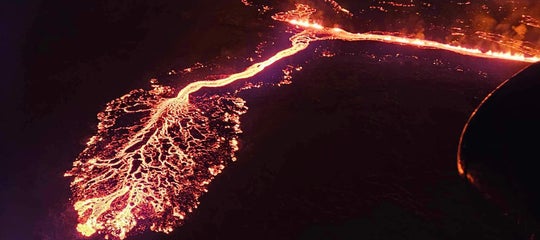
Hiking the Reykjanes Peninsula to explore the sites of recent volcanic activity, such as in Fagradalsfjall Volcano, is a truly unique experience in Iceland. This is one of the only accessible places on Earth where you can safely walk through fields of newly cooled lava, stepping onto land that was created within the last few years.
A hiking tour to Fagradalsfjall Eruption Site offers one of the most unusual things to do in Iceland, giving travelers a close look at the volcanic activity. Even when the volcano is not erupting, the fresh lava often still steams in places, which makes the landscape feel alive.
The Fagradalsfjall Area is about a 45-minute drive from Reykjavik, with marked parking areas leading to the trailheads. Parking is paid, and the hike can take two to four hours depending on the route and conditions.
4. Explore the World's Largest Man-Made Ice Tunnel
 Exploring the world's largest man-made ice tunnel is a spectacular and truly unique experience in Iceland. Into the Glacier Tunnel, carved into the Langjokull Glacier, is a year-round alternative to the seasonal natural ice caves, allowing visitors to venture into the ancient ice cap regardless of the season.
An Into the Glacier ice tunnel tour usually begins with a ride in a Super Truck up the glacier. Once inside the tunnels, you walk through illuminated chambers, seeing ancient ice that has been compressed for over 1,000 years. Layers of volcanic ash are visible in the walls, and the tunnel even features a unique ice chapel.
The tunnel is open all year round. Tours typically depart from a base camp near the Husafell Farm or Gullfoss Waterfall and last about 3 to 4 hours in total, including the transfer. Warm, waterproof clothing is essential, as the temperature inside the tunnel remains near freezing year-round.
3. Kayak Among Giant Floating Glaciers
Kayaking on the Jokulsarlon Glacier Lagoon is a highly serene and unique experience in Iceland. This activity is the ultimate way to escape the crowds and immerse yourself in the glacial landscape, paddling your kayak silently past icebergs from Vatnajokull Glacier.
Travelers looking for a quieter alternative can also kayak on Heinaberg Glacier Lagoon, a lesser-visited spot that offers the same peaceful atmosphere with fewer crowds. This is one of the most eco-friendly things to do in Iceland, providing spectacular and serene photographic opportunities.
Glacier kayaking tours are a seasonal activity, typically available from May to September. All necessary equipment, including dry suits and safety gear, is provided. Participants must meet minimum age and weight requirements, which vary by operator.
2. Snorkel Between Two Continents
 Snorkeling the Silfra Fissure is a truly unique experience in Iceland and one of the world's top dive sites. Located in Thingvellir National Park, the Silfra Fissure is the only place on Earth where you can float directly in the rift between the Eurasian and North American tectonic plates.
The experience is magnified by the water's clarity. The water is filtered glacial meltwater, resulting in underwater visibility that often exceeds 300 feet (100 meters). Equipped with a dry suit, you will glide through the rift's four sections, a must-try thing to do in Iceland that makes you feel like you are flying in liquid air.
The Thingvellir National Park, where Silfra is located, is a popular stop on the Golden Circle, about an hour's drive from Reykjavik. A Silfra snorkeling tour is available all year round, as the water temperature remains a constant 35 F to 39 F (2 C to 4 C).
1. Descend into the World's Only Lava Vault
Exploring the Thrihnukagigur Volcano is the ultimate geological and unique experience in Iceland. This is the only place on Earth where you can safely descend 400 feet (120 meters) into a massive, dormant lava vault that was left intact after its last eruption 4,000 years ago.
An inside the volcano tour of Thrihnukagigur begins with a moderate hike across ancient lava fields before you are lowered into the chamber via a custom-built open lift system. Once inside, you are surrounded by walls splashed with vivid mineral colors, a space large enough to hold the Statue of Liberty.
This is a top choice for travelers seeking a truly unusual thing to do in Iceland and an unparalleled journey into the Earth's fiery core. The activity is seasonal, typically operating from May to October. The total experience, including the hike (3.5 kilometers or 2 miles each way) to the crater, lasts about 5 to 6 hours.
Don’t Miss Out on the Unique Experiences in Iceland
 Exploring the country offers access to some of the most unforgettable and truly unique experiences in Iceland. Its dramatic landscapes and one-of-a-kind activities create a travel experience that stands apart, giving visitors an exciting mix of adventure, nature, history, and local flavor.
Travelers who want more inspiration can dive into additional things to do and places to visit, along with tips on what to avoid in Iceland to plan a smooth and memorable trip. Each experience adds a new layer to understanding Iceland, revealing the island’s connection to fire, ice, and centuries of tradition.
Your adventure can be as bold, serene, curious, or playful as you want it to be, with options that fit every kind of traveler. Each moment invites you to shape a journey that reflects your own pace, interests, and sense of discovery.
What are the most unique things to do in Iceland?
What unusual experiences are available only in Iceland?
Where can you try fermented shark in Iceland?
What is the most unique museum in Iceland?
Where can you walk behind a waterfall in Iceland?
Where can you see a geyser erupt in Iceland?
Can you snorkel between tectonic plates in Iceland?
What are the best wildlife experiences in Iceland?
Where can you hike along a volcanic crater in Iceland?
What is the hidden canyon waterfall in Iceland?
Can you kayak during the midnight sun in Iceland?
Where can you hike to a geothermal river in Iceland?
Can you snowmobile on glaciers in Iceland?
What is the beer spa in Iceland?
Where can you see boiling mud pots in Iceland?
Can you walk on fresh volcanic lava in Iceland?
When can you explore natural ice caves in Iceland?
What is the man-made ice tunnel in Iceland?
Can you kayak among icebergs in Iceland?
What is Iceland's largest Viking festival?
Why is Diamond Beach considered unique?
Which unique experience in Iceland are you most excited to try on your trip? Share your thoughts in the comments!

I was the Content Manager at Guide to Iceland from 2013 to 2018, and now run the creative studio Huldufugl while working as a freelance writer. I’m passionate about storytelling, Icelandic culture, and creating thoughtful experiences through words and visuals.