Finding the right map of Iceland helps turn ideas into a workable travel plan. This guide brings together carefully selected Iceland attraction maps that show how regions, routes, and major sights relate to one another across the country.
If you plan to rent a car and travel independently, these maps make it easier to organize realistic driving days and plan self-drive tours at a comfortable pace. They help you see how key routes connect towns, natural landmarks, and overnight bases before you start building a day-by-day itinerary.
If you prefer guided experiences, the maps also help place Iceland’s top tour destinations in context. They show how popular routes work for classic sightseeing tours as well as longer multi-day excursions, which makes it easier to understand where tours operate and how regions fit together.
Keep reading to explore each Iceland map in detail and see how they can be combined. With the right overview in place, planning your route and choosing what to prioritize becomes far more straightforward.
Why You Can Trust Our Content
Guide to Iceland is the most trusted travel platform in Iceland, helping millions of visitors each year. All our content is written and reviewed by local experts who are deeply familiar with Iceland. You can count on us for accurate, up-to-date, and trustworthy travel advice.
How To Use These Iceland Maps
-
Start with regional maps to decide which parts of Iceland you want to focus on, then move to route-specific maps for day-by-day planning.
-
Use route maps for areas like the Golden Circle and the Diamond Circle to connect major sights into a realistic driving loop.
-
Check city and town maps to choose practical base locations for overnight stays and nearby day trips.
-
Refer to attraction maps to group nearby sights together and reduce unnecessary driving.
-
Turn to specialized maps for caves, glaciers, geothermal baths, or filming locations to fine-tune an existing route.
Where Is Iceland Located?
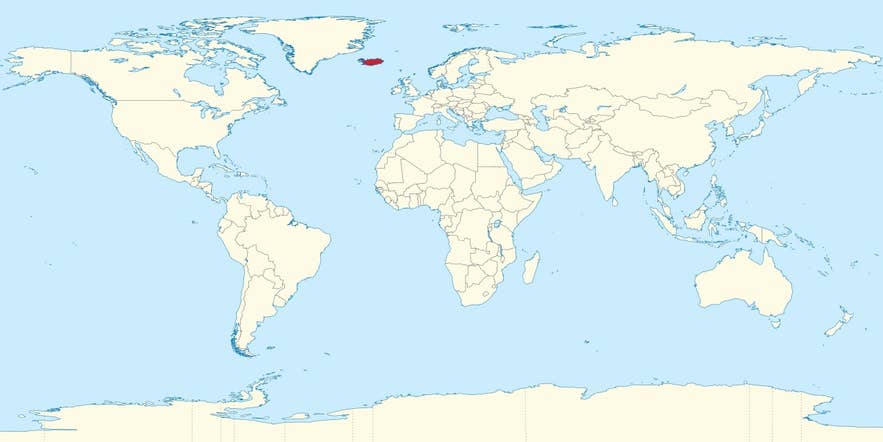
Photo from Wikimedia, Creative Commons, by TUBS. No edits made.
Iceland is an island country in the North Atlantic Ocean, located between Greenland in North America and mainland Europe. It sits west of Norway, east of Greenland, and north of the United Kingdom, placing it roughly midway between North America and Europe.
Most of Iceland lies just south of the Arctic Circle, while the small island of Grimsey, about 25 miles (40 kilometers) off the north coast, sits directly on the Arctic Circle. This position gives Iceland its northern climate and dramatic landscapes shaped by glaciers, volcanoes, and the Mid-Atlantic Ridge.
Regional Map of Iceland
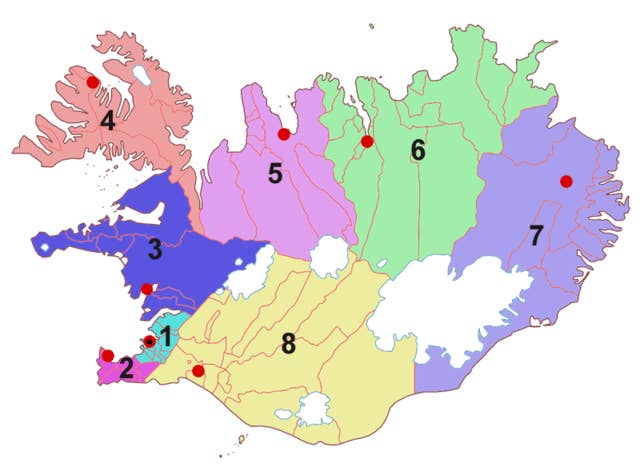
Photo from Wikimedia, Creative Commons, by Bjarki S. No edits made.
Iceland is divided into eight regions. This map of Iceland shows how the country is split at a regional level, with each area marked by color and number. The table below provides a clear overview of the regions of Iceland and how they are commonly described.
| Region | Name | Overview |
|---|---|---|
| 1 | Capital Region | Home to Reykjavik, Iceland’s capital and cultural hub, with popular sights including Hallgrimskirkja Church and the Harpa Concert Hall. The region also serves as the main starting point for the Golden Circle Sightseeing Route. |
| 2 | Southern Peninsula | A region shaped by lava fields and rugged coastline. You’ll find the Keflavik International Airport, Blue Lagoon, and the geothermal landscapes of the Reykjanes Peninsula here. |
| 3 | West Iceland | A diverse region with fjords, valleys, and historic settlement areas. It provides access to the Snaefellsnes Peninsula, home to Mt. Kirkjufell and Snaefellsjokull National Park. |
| 4 | Westfjords | One of Iceland’s most remote regions, defined by deep fjords and dramatic coastal landscapes. Isafjordur serves as the main service town, with attractions such as Dynjandi Waterfall and the Latrabjarg Cliffs nearby. |
| 5 | Northwest Iceland | A sparsely populated region known for its wide valleys. The Skagafjordur area is a long-established center for horse breeding, where you can take a horse riding tour in North Iceland. |
| 6 | Northeast Iceland | Centered around Akureyri, the largest town outside the capital. This region includes Diamond Circle attractions: Lake Myvatn, Godafoss Waterfall, Dettifoss Waterfall, Asbyrgi Canyon, and the town of Husavik. |
| 7 | East Iceland | Characterized by long fjords and mountain terrain, often referred to as the Eastfjords. Key towns include Seydisfjordur and Egilsstadir, with attractions such as Studlagil Canyon and the Vok Baths drawing visitors to the region. |
| 8 | South Iceland | One of the most visited regions, covering the South Coast and towns such as Selfoss and Vik. It is known for waterfalls like Seljalandfoss and Skogafoss, black sand beaches, glaciers, and access routes into the Highlands. |
There's a bit of overlap between Northwest Iceland and Northeast Iceland. Sometimes, they're collectively referred to as North Iceland. The Highlands, located in Central Iceland, are sometimes referred to as a region of their own due to their size and distinct landscape.
Road Maps of Iceland
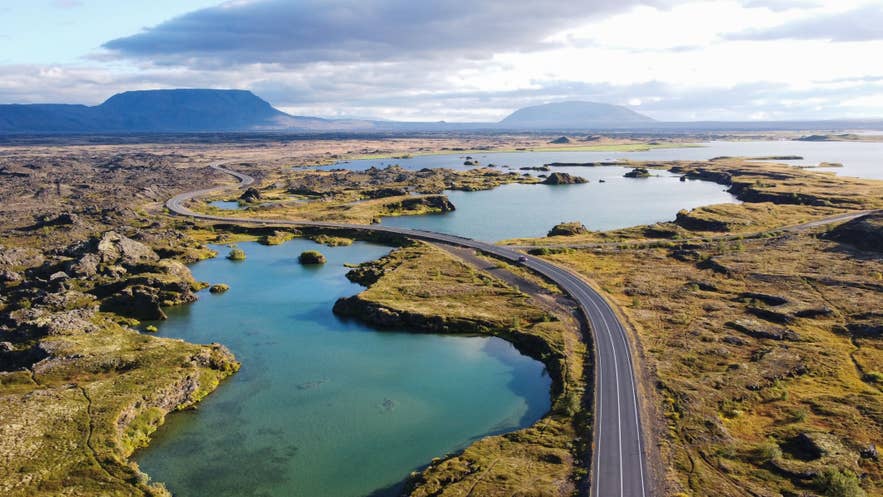
Exploring Iceland’s diverse landscapes is easy with the right map. These maps of Iceland highlight key routes, regions, and well-known attractions across the country, supporting both longer road trips and day trips from Reykjavik.
The Iceland maps below give a clear overview of how the country is laid out and where major destinations are located, which makes it easier to understand how different regions and attractions relate to one another.
Once you're on the road, you'll rely on your phone to get between these stops, so it's worth knowing where Google Maps is reliable in Iceland and where coverage drops off.
Iceland Ring Road and Snaefellsnes Map With Attractions
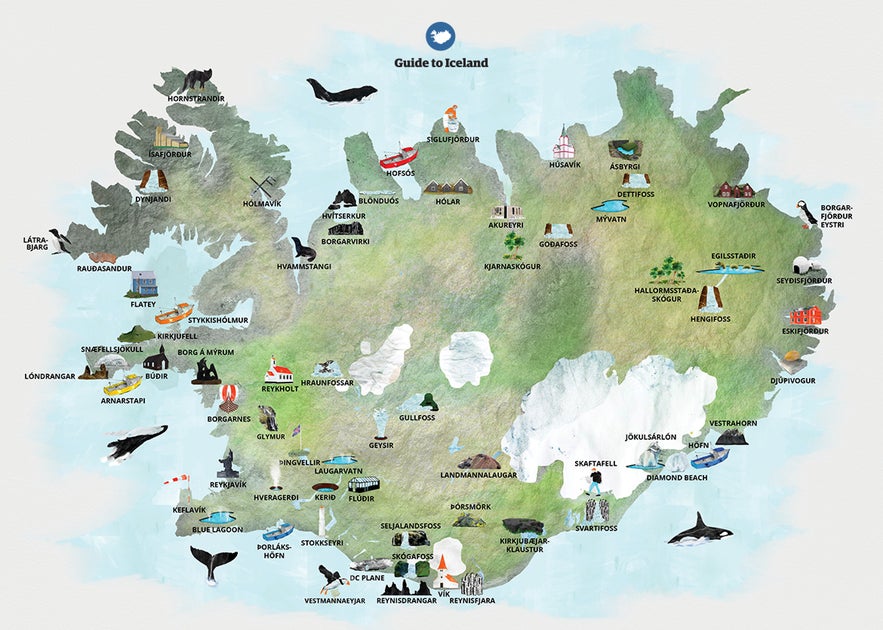
This Iceland sightseeing map highlights all the main attractions along the Ring Road and Snaefellsnes Peninsula. The Ring Road (Route 1) is the most comprehensive road trip route in Iceland, as it circles the entire island.
This map of Iceland's attractions includes the most famous waterfalls, volcanoes, glaciers, and beaches along the route. It's also easy to stray a little off the Ring Road to include some of the lesser-known attractions in the beautiful Eastfjords.
If you want to visit Iceland's northern or eastern regions, you should aspire to drive the whole Ring Road from Reykjavik. It's roughly the same distance to drive from Reykjavik to the town of Egilsstadir in East Iceland via the northern or southern routes. And the two routes show a vastly different side of the country.
For a more comfortable pace, plan to spend more than a week traveling around Iceland using this route. A 10-day self-drive tour of Ring Road and the Snaefellsnes peninsula makes it possible to see a wide range of landscapes while keeping daily drives manageable.
Iceland Ring Road and Westfjords Map With Attractions
The Westfjords are Iceland's second most remote area, right after the uninhabited Highlands. It's not part of the Ring Road and requires a bit of a detour. But by adding it to the trip, along with the Snaefellsnes Peninsula, you'll fully encircle Iceland.
Many of the roads in the Westfjords are gravel, and snowstorms on mountain passes are common, so you'll need to take your time as you drive. The Westfjords are barely accessible during winter due to heavy snowfalls, closed roads, and even avalanche threats, but they are magical in summer.
For travelers with enough time, a 14-day self-drive tour around Iceland and the Westfjords allows for this extended route. To reduce driving time, you can take the Baldur ferry between Stykkisholmur and Brjanslaekur, with the option to stop at Flatey Island, a small island known for its traditional houses, birdlife, and walking paths.
The Golden Circle & West Iceland Driving Map With Attractions
This map of Iceland attractions features the best locations in Southwest Iceland, including the Golden Circle sites and the many highlights of the Snaefellsnes Peninsula. It provides a clear overview of how these popular routes and regions connect within a single area.
The Golden Circle is the country's most popular sightseeing route, where you can visit the Gullfoss Waterfall, the Geysir Geothermal Area, and Thingvellir National Park. The map also includes sights like the Hraunfossar Waterfall and attractions such as the world-famous Blue Lagoon.
While traveling in West Iceland, you may want to spend more than a day exploring the vast and diverse Snaefellsnes Peninsula. Often called “Iceland in Miniature,” the region reflects many of the country’s landscapes in one area, including glaciers, lava fields, coastal cliffs, and fishing villages.
From October to March, travel in West Iceland may be slower due to limited daylight and winter conditions. It is best to take a two-day West Coast and Snaefellsnes winter tour, which covers the main highlights efficiently, or a six-day winter self-drive tour of the Golden Circle and Snaefellsnes, which allows a more relaxed pace.
Iceland's South Coast and Snaefellsnes Peninsula Driving Map
The landscape of the South Coast of Iceland is known for its volcanic deserts and beautiful waterfalls. It has quickly become one of the most popular routes because it's close to Reykjavik and accessible year-round. In one day, you can enjoy day-trips from Reykjavik, hike tours, or a longer self-drive adventure.
Travelers with only a few days in Iceland can choose a two-day summer South Coast tour or a two-day winter South Coast tour, both of which cover the area’s main highlights. Jokulsarlon Glacier Lagoon is also within reach, and between mid-October and March, a guided visit inside natural crystal blue ice caves is possible.
With additional time, the route shown on the Iceland map continues west toward the Snaefellsnes Peninsula. Notable sights include Snaefellsjokull National Park, Kirkjufell Mountain, and Djupalonssandur Black Sand Beach.
Combining the South Coast, the Snaefellsnes Peninsula, and the Golden Circle creates a well-rounded road trip through Southern and Western Iceland. All three routes can be covered affordably on a seven-day budget self-drive tour of South Iceland.
Map of the Golden Circle
The Golden Circle is Iceland’s most well-known sightseeing route and one of the easiest to explore in a single day from Reykjavik. The Iceland map shows how this loop east of the capital is commonly followed on a Golden Circle tour from Reykjavik, connecting several of the country’s most visited natural landmarks.
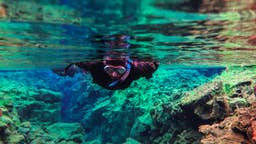
The route’s highlights include Thingvellir National Park, where the Eurasian and North American tectonic plates meet and where Iceland’s parliament was founded over 1,000 years ago. The park is also home to Silfra Fissure, a rift with exceptionally clear glacial water, where visitors can snorkel between the two tectonic plates.
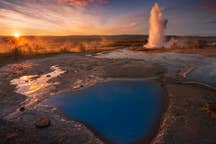
Nearby is the Geysir Geothermal Area, home to Strokkur Geyser, which erupts regularly. Gullfoss, one of Iceland’s most famous waterfalls, completes the core trio with its powerful, multi-tiered cascade into a rugged canyon.
Map of North Iceland
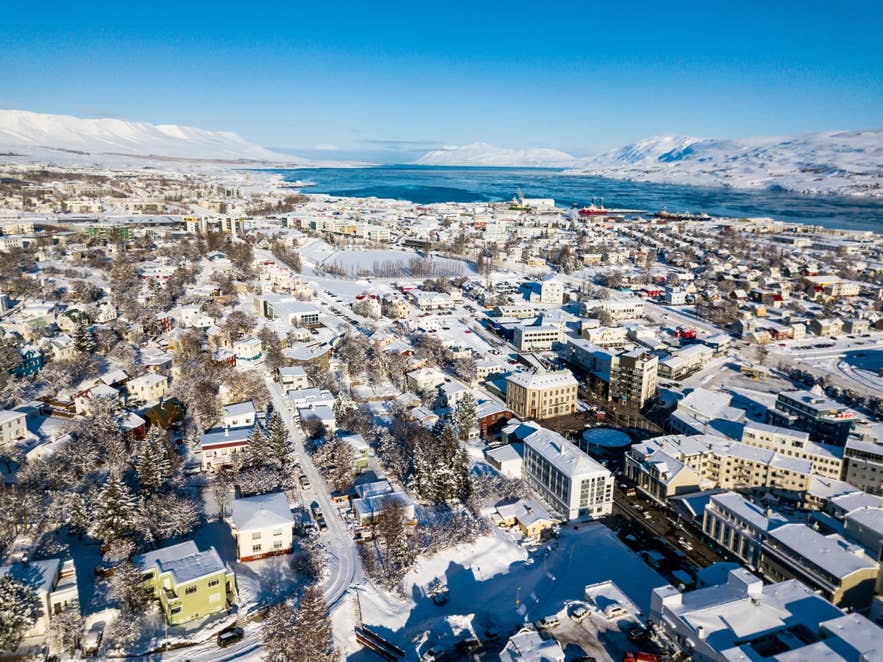
North Iceland is a diverse region shaped by fjords, volcanic landscapes, lakes, and coastal towns. The North Iceland maps below provide an overview of the region’s main centers and natural attractions, many of which are explored through well-defined sightseeing routes.
The region is anchored by Akureyri and includes several of North Iceland’s best-known sights. The sections below focus on more detailed maps of the Diamond Circle and Lake Myvatn.
Map of the Diamond Circle
One of the main sightseeing routes in North Iceland is the Diamond Circle, which links several of the region’s most well-known natural attractions. The Diamond Circle map shows how these key sites are arranged around North Iceland and how they connect by road.
Highlights along the route include Dettifoss, one of Europe’s most powerful waterfalls, and Godafoss, often called the “Waterfall of the Gods.” The route also passes Asbyrgi Canyon, a distinctive horseshoe-shaped gorge, and the volcanic landscapes surrounding Lake Myvatn, known for lava formations and geothermal features.
The Diamond Circle is commonly explored on a self-drive trip that covers North Iceland, and many visitors also choose a Diamond Circle tour from Akureyri. The locations marked on the map provide a clear overview of how the route ties together major sights across the region.
Map of Lake Myvatn Geothermal Area
Located along the Diamond Circle in North Iceland, Lake Myvatn is one of the country’s most concentrated sightseeing areas. The Lake Myvatn map highlights a large number of attractions clustered around the lake, shaped by volcanic activity and geothermal forces.
Within a relatively small area, visitors can explore lava formations at Dimmuborgir, pseudocraters at Skutustadagigar, and active geothermal zones such as Namafjall and Hverir. Volcanic sites around Krafla further illustrate how recent eruptions have influenced the landscape.
Because so many attractions are located close together, Lake Myvatn is easy to explore at a relaxed pace. The area is commonly visited on a Lake Myvatn sightseeing tour from Akureyri or as part of a two-day Lake Myvatn and northern lights tour, allowing time for evening aurora viewing.
Map of Westfjords Attractions
The Westfjords are one of Iceland’s most remote regions, defined by deep fjords, steep mountains, and long stretches of coastline. The Westfjords map above highlights the region’s main attractions, with Isafjordur serving as the primary base for visitors.
These sights include the Hornstrandir Nature Reserve, home to Arctic foxes and some of Iceland's most notable birds, like Arctic terns and black guillemots. If you want to go birdwatching, visit the Latrabjarg Cliffs. The cliffs are 9 miles (14 kilometers) long and are the largest bird cliffs in Europe, so it's a great place to see the famous Iceland puffin.
While in the Westfjords, you can also visit the "Jewel of the Westfjords," the stunning Dynjandi Waterfall, with its cascading flow down dramatic cliffs. We also recommend seeing Raudisandur Beach, which is unusual for Iceland, as its sands are naturally reddish-pink rather than the typical volcanic black.
Try this two-day wildlife tour in the Westfjords to see what animals you can spot, or go on a 10-hour hiking tour through the Hornstrandir Nature Reserve. The Westfjords also have an excellent 2-hour kayaking tour from Isafjordur, providing a different perspective on the dramatic coastline and surrounding fjords.
Reykjavik Maps
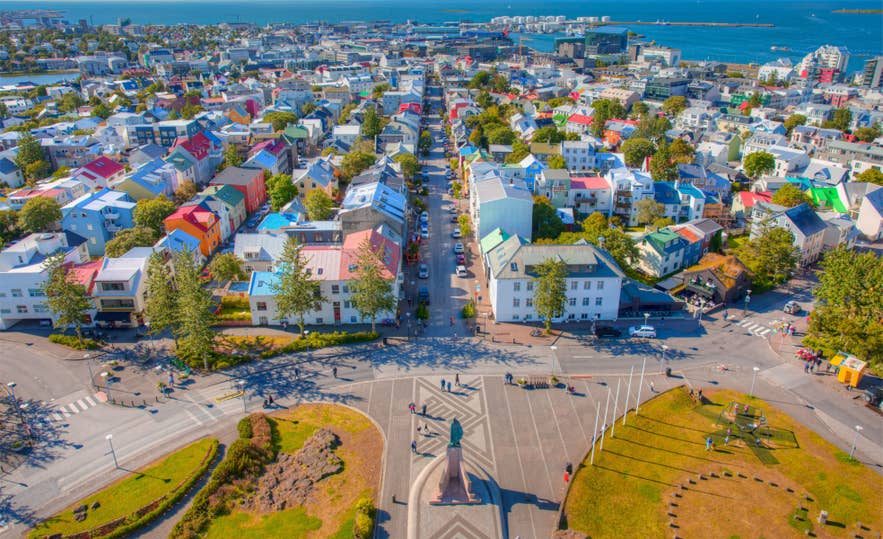
Reykjavik maps provide a clear overview of the city’s layout and key areas. Each Reykjavik map highlights main attractions, nightlife districts, swimming pools, and a central walking street to support easy planning in the capital.
Map of Reykjavik's Main Attractions
A detailed map of Iceland is not complete without a closer look at the capital. The city is compact and easy to explore on foot, which makes walking tours in Reykjavik a practical way to see many of the most popular spots. The Reykjavik attractions map above highlights the city’s best-known sights.
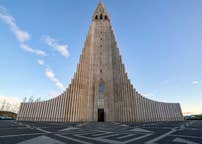
The most recognizable landmark in the city is Hallgrimskirkja, a 245-foot (74.5-meter) church that dominates Reykjavik’s skyline. Visitors can take an elevator to the top of the tower for panoramic views over the city. You can also get a Perlan Museum ticket for scenic views and access to the interactive Wonders of Iceland exhibition.
Harpa Concert Hall and Conference Center is one of Reykjavik’s most visited cultural sites, known for its distinctive glass facade and busy schedule of concerts and events. Nearby, the sculpture Solfarid (the Sun Voyager) sits along the waterfront, one of the city’s most photographed spots.
For green spaces and a slower pace, Tjornin Pond near City Hall offers a central place to walk and relax. Reykjavik’s main shopping streets, including Laugavegur and Skolavordustigur, are also marked on the map and are home to galleries, cafes, bars, and restaurants.
Just outside the city center, Grotta Lighthouse is a popular place for coastal views, sunset walks, and northern lights sightings in winter. Videy Island, reached by ferry from the Old Harbor, offers open landscapes, historic buildings, and the Imagine Peace Tower Installation.
Map of Reykjavik's Nightlife
This map highlights some of Reykjavik’s most popular nightlife areas and venues, all located within easy walking distance in the city center. The compact layout of the city makes it easy to move between bars, music venues, and late-night spots without relying on transport.
Most of Reykjavik’s bars are clustered along and around Laugavegur. Many spots operate as cafes or restaurants during the day and shift into bars or music venues in the evening. Popular stops for craft beer include Skuli Craft Bar, while places like Idno are well known for hosting live music and performances.
Happy hour is a common part of nightlife in Reykjavik and a practical way to save money, as beers in Iceland can be relatively expensive. Most offers run in the late afternoon or early evening and usually include discounted beer, wine, or cocktails, which makes it a good time to start the evening before prices increase later at night.
Map of Reykjavik's Swimming Pools
Public swimming pools are woven into everyday life in Reykjavik and are used year-round by locals. This map of Reykjavik’s swimming pools shows where the city’s main public pools are located, many of which would be considered spa facilities in other countries despite their affordable entry fees.
The largest pool in Reykjavik and all of Iceland is the Laugardalslaug Swimming Pool, which sports both an indoor and outdoor pool, saunas, a massage room, seven hot tubs, and a cold tub. If that wasn't enough, there's also a large gym next door, with a secluded spa for an additional cost.
Closer to the city center, Sundholl Reykjavikur is the capital’s oldest swimming pool. After a renovation in 2017, it now includes an outdoor pool, a sauna, and hot and cold tubs. Other popular pools near central Reykjavik include Vesturbaejarlaug and Seltjarnarneslaug, both outdoor heated pools with several hot tubs and sauna facilities.
Skolavordustigur Rainbow Street Map
Skolavordustigur is one of Reykjavik’s most recognizable streets, known for its rainbow-painted roadway and direct line through the city center. The Skolavordustigur Rainbow Street map highlights this short but lively stretch, which is lined with cafes, restaurants, design shops, and galleries and is often included on walking routes through downtown Reykjavik.
At the top of the street stands Hallgrimskirkja, the most important landmark along Skolavordustigur and the street’s main visual focal point. The church and its staircase form the backdrop for many of the street’s most recognizable views.
Along the street, you’ll find Kol Restaurant, which serves modern Icelandic dishes, and Cafe Babalu, a small cafe known for its eclectic decor and relaxed seating just off the main road. The street is also home to Icelandic design and clothing shops, including 66 North and Rammagerdin, which line the lower and central sections.
Tourist and Attraction Maps of Iceland
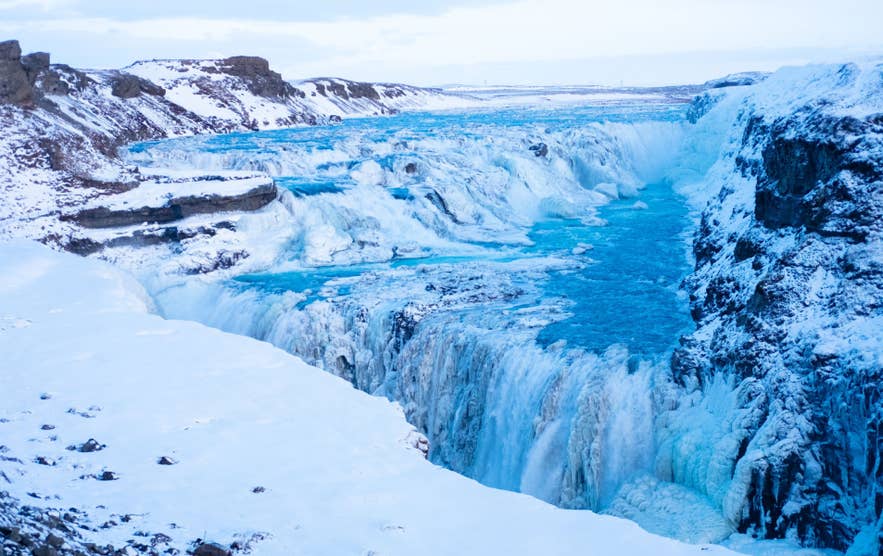
Iceland is home to breathtaking landscapes, from powerful waterfalls to volcanic marvels. These detailed maps of Iceland's attractions highlight places of interest around the whole country, including hiking trails, geothermal areas, and iconic landmarks.
Explore more specific maps of Iceland’s natural highlights, including majestic waterfalls, soothing hot springs and swimming pools, and impressive volcanoes below. These guides will help you uncover Iceland’s most remarkable sights.
Map of Glaciers in Iceland
Glaciers cover a significant portion of Iceland and play a major role in shaping the country’s landscapes, rivers, and volcanic features. The glaciers in Iceland map highlights the most accessible and well-known ice caps, many of which are accessible through glacier tours.
Vatnajokull, the largest glacier in Europe by volume, dominates Southeast Iceland and provides access to glacier hiking in Skaftafell and a boat ride in Jokulsarlon Glacier Lagoon. Langjokull, the second-largest ice cap, is located in West Iceland and is known for the Into the Glacier tour and its proximity to the Golden Circle.
Along the South Coast, Myrdalsjokull and Eyjafjallajokull are among the most visible glaciers, often seen from Route 1 and nearby viewpoints. In West Iceland, Snaefellsjokull stands out as a glacier-capped volcano.
Map of Snaefellsjokull National Park
Snaefellsjokull National Park covers the western tip of the Snaefellsnes Peninsula and is one of Iceland’s most varied protected areas. The map provides an overview of the park’s main highlights and where they are located along the coastline and surrounding landscapes.
At the center of the park is Snaefellsjokull Volcano, a glacier-capped peak that defines the area and gives the park its name. Visible from much of the peninsula, it anchors the volcanic terrain, lava fields, and coastal scenery found throughout the park.
Several landmarks are also marked on the map. These include Djupalonssandur Beach, known for its black-pebble shoreline, and the Londrangar Cliffs, which rise sharply from the coast. Coastal viewpoints around Arnarstapi add cliffside scenery and walking paths. Many of these sites can be visited on a Snaefellsnes Peninsula tour from Reykjavik.
Map of Skaftafell Nature Reserve
Skaftafell Nature Reserve is located within Vatnajokull National Park, and you can see where the nature reserve is located on the map. The area is a hiker's paradise with many hikes available for a day hike or a multi-day journey. It also makes a suitable base for anyone who wants to take a hiking tour of Hvannadalshnukur, the highest peak in Iceland.
Other popular routes in the area include a walk up to Svartifoss Waterfall with its iconic basalt columns, and another to Svinafellsjokull Glacier, an outlier glacier of Vatnajokull. You can join a mountain trail and waterfall hiking tour of Skaftafell Nature Reserve, which combines the scenic paths with incredible glacier and waterfall views.
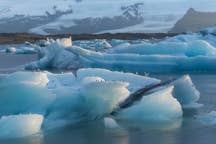
Also nearby is the Jokulsarlon Glacier Lagoon, where icebergs break off from the glacial and drift slowly toward the sea. You can try kayaking in Jokulsarlon for a closer look at the icebergs. After visiting the lagoon, icebergs can often be seen washed up on the black sand shoreline of Diamond Beach just across the road.
Map of Iceland's Waterfalls
Iceland has countless waterfalls spread across the country, far more than could ever be listed in one place. Instead of trying to include them all, the map above highlights some of the most dramatic, powerful, and well-known cascades that are relatively easy to visit on waterfall tours.
Some of the most notable waterfalls shown on the map include:
-
Gullfoss: Iceland’s most famous waterfall and a major stop on the Golden Circle, known for its powerful cascade and frequent rainbows on sunny days.
-
Seljalandsfoss: A South Coast waterfall famous as one of the top walk behind waterfalls in Iceland.
-
Skogafoss: One of the largest waterfalls in Iceland, located along the Ring Road, with a hiking trail that continues upstream past many more falls.
-
Dettifoss: Widely regarded as the most powerful waterfall in Europe, located in Northeast Iceland along the Diamond Circle.
-
Godafoss: Known as the “Waterfall of the Gods,” the iconic Godafoss Waterfall in North Iceland is easily accessible and frequently photographed for its curved shape and broad cascade.
-
Dynjandi: A dramatic, tiered waterfall in the Westfjords, spreading out like a fan as it descends a tall cliff.
-
Kirkjufellsfoss: A small but iconic waterfall on the Snaefellsnes Peninsula, Kirkjufellsfoss is most often photographed with the cone-shaped Kirkjufell Mountain rising directly behind it.
Map of Iceland’s Geothermal Spas and Hot Springs
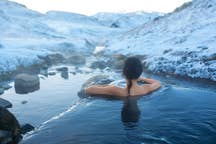
This attraction map of Iceland highlights some of the country’s most popular public swimming pools, geothermal baths, and spa complexes. Geothermal pools are a central part of daily life in Iceland and are used regularly by locals across the country.
Bathing has long served as a place for relaxation, exercise, and social interaction in Iceland. The tradition is so deeply rooted that Iceland’s bathing culture was recognized by UNESCO in 2025 as part of its intangible cultural heritage list, reflecting its importance beyond tourism.
Notable geothermal spas shown on the map include:
-
Blue Lagoon: Iceland’s most famous geothermal spa, known for its milky-blue water and extensive facilities. Purchasing a Blue Lagoon ticket in advance is required due to limited capacity.
-
Sky Lagoon: Admission to the Sky Lagoon gives access to a modern geothermal spa near Reykjavik, offering ocean views along with sauna and cold plunge facilities.
-
Secret Lagoon: Iceland’s oldest swimming pool, located in Fludir in South Iceland, which makes it easy to pair a visit to the Secret Lagoon with a Golden Circle tour.
-
Fontana Spa: A popular Golden Circle stop with lakeside saunas and a geothermal bread-baking experience using natural heat from the ground.
-
Earth Lagoon Myvatn: A well-known geothermal spa that can easily be included in Lake Myvatn tours, frequently compared to the Blue Lagoon for its mineral-rich water and volcanic setting.
-
Vok Baths: This distinctive geothermal spa near Egilsstadir features floating pools on a lake fed by naturally heated water and is accessed with a Vok Baths ticket.
Map of Iceland's Volcanoes
Iceland sits on the Mid-Atlantic Ridge, where tectonic plates meet, and volcanic activity has shaped the island over thousands of years. Volcanoes are found across the country, influencing landscapes, soil, and geothermal activity that power many of Iceland’s hot springs.
Volcanic features in Iceland do not always appear as single peaks. Some are covered by glaciers, while others form lava fields, fissures, craters, or geothermal areas instead of a distinct summit. The map of Iceland’s volcanoes shows how these volcanic systems are distributed across regions and in areas commonly reached by visitors.
Well-known sites accessible to visitors or included on volcano tours include:
-
Snaefellsjokull: A glacier-covered volcano on the Snaefellsnes Peninsula, visible from many points along the coast and accessible via a Snaefellsjokull glacier hike.
-
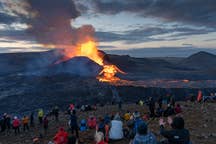
Fagradalsfjall: Located on the Reykjanes Peninsula near Reykjavik, this volcanic area features recent lava fields and hiking routes and can be reached by a Fagradalsfjall shuttle ride.
-
Hekla: One of Iceland’s most active volcanoes, Hekla rises prominently in South Iceland and is clearly visible from surrounding roads and viewpoints.
-
Eyjafjallajokull: A glacier-covered volcano visible from Route 1 and nearby viewpoints, best known for its 2010 eruption and a good option for summit hiking in South Iceland.
-
Krafla: A volcanic system near Lake Myvatn in North Iceland, where visitors can walk among lava fields, craters, and geothermal features within the Krafla area.
-
Askja: A large volcanic caldera in the central Highlands, Askja is accessible only during summer, with hiking routes leading to crater lakes and viewpoints inside the caldera.
Map of Caves in Iceland
Iceland’s underground landscapes offer a different perspective on the country’s geology, with caves found beneath lava fields and glaciers across several regions. The caves in Iceland map highlights accessible sites and shows where these cave systems are located in relation to common travel routes.
Among the lava caves is Thrihnjukagigur, a rare site near Reykjavik where one can take the Inside the Volcano tour to descend into the empty magma chamber. Another option is Vatnshellir on the Snaefellsnes Peninsula. A guided visit to Vatnshellir leads visitors down into an ancient lava tube with visible lava layers and rock formations.
The map also includes ice caves in Iceland, some of which can be visited year-round under the right conditions. Beneath Vatnajokull Glacier, naturally formed ice caves, such as the iconic Crystal Ice Cave, are typically explored during winter when conditions are most stable. In contrast, the Katla ice cave tour near Myrdalsjokull can be visited throughout the year.
Map of Turf Houses in Iceland
Turf houses are an important part of Iceland’s architecture and cultural history, built to provide insulation against harsh weather using grass, stone, and timber. The turf houses map highlights some of the best-preserved and most accessible examples across the country, many of which are now protected heritage sites or open-air museums.
Some of the most notable turf houses marked on the map include:
-
Glaumbaer Turf Farm (North Iceland): One of the largest and best-preserved turf farm complexes in Iceland, offering a clear picture of rural life in past centuries.
-
Laufas Turf House (North Iceland): A well-known turf house near Akureyri, featuring traditional construction and interiors arranged around a historic farmhouse.
-
Keldur Turf House (South Iceland): Considered one of the oldest surviving turf houses in Iceland, with underground passages and long-standing historical significance.
-
Bustarfell Turf House (East Iceland): A well-preserved turf farmhouse located in a remote valley, showing how isolated communities adapted to the landscape.
-
Skogar Turf Houses (South Iceland): Part of the Skogar Museum, these reconstructed turf buildings illustrate traditional Icelandic farm life and building techniques.
Map of Game of Thrones Filming Locations in Iceland
Iceland was used extensively as one of the filming locations for Game of Thrones, particularly for landscapes representing the far North. The Game of Thrones filming locations map highlights the most recognizable and accessible sites in Iceland that appeared in the series and are commonly visited today.
One of the most iconic locations is Kirkjufell, which appeared in Season 7 as “the mountain shaped like an arrowhead,” a key landmark in Jon Snow’s journey beyond the Wall. In Southeast Iceland, Vatnajokull and its outlet glaciers provided the setting for icy landscapes and large-scale battle scenes involving the Night King and the White Walkers.
In North Iceland, the lava fields at Dimmuborgir were used as Mance Rayder’s Wildling Camp, while nearby Grjotagja Cave appeared in Season 3 during Jon Snow and Ygritte’s cave scene. Further south, Thingvellir National Park stood in as the mountain pass leading to the Bloody Gate, the fortress guarding the Vale of Arryn.
Map of Iceland's Towns
Reykjavik is Iceland’s only city, while the rest of the country is made up of towns and villages that are small by international standards. Many of these settlements act as regional hubs or convenient bases for exploring nearby attractions. The Iceland map highlights several towns that travelers commonly pass through or stay in while exploring the country.
Notable towns marked on the map include:
-
Akureyri: The largest town outside the Capital Region and the main hub of North Iceland, often used as a base for exploring the Diamond Circle and Lake Myvatn.
-
Selfoss: A major service town in South Iceland, well positioned for trips along the Golden Circle and the South Coast.
-
Vik: The best-known village on the South Coast, close to black sand beaches, coastal cliffs, and several major natural attractions, which makes it a common overnight stop.
-
Egilsstadir: The largest settlement in East Iceland and the region’s primary service center, with an airport and access to the Eastfjords.
-
Seydisfjordur: A small but distinctive East Iceland town known for its colorful buildings, arts scene, and ferry connection in Iceland.
-
Isafjordur: The largest town in the Westfjords, often used as a base for exploring the region’s remote fjords and coastal landscapes.
-
Stykkisholmur: A coastal town in West Iceland that serves as a gateway to the Snaefellsnes Peninsula and the Baldur ferry route to the Westfjords.
Outside Reykjavik, towns typically have fewer accommodation options, restaurants, and shops, but most provide essential services such as grocery stores, fuel stations, and lodging for travelers passing through.
Driving Map of Iceland's Towns and Cities
If you're planning to tour the most popular towns, check out the suggested route on this map of Iceland. It can be done in seven days, but you'll definitely want more time to explore the attractions you'll pass along the way. The route starts and ends in Reykjavik and passes through towns such as Vik, Selfoss, Egilsstadir, and Isafjordur.
Map of Akureyri
Akureyri is one of the main bases for exploring North Iceland, with a compact town center and easy access to surrounding sights. The Akureyri map highlights key attractions in and around town, many of which can be visited on foot or reached with short drives.
Key sights in Akureyri include the Akureyri Botanical Gardens and the historic Laufas Turf House nearby. Akureyrarkirkja Church, set above the town, is one of the area’s most recognizable landmarks. Several of these attractions are commonly included on Akureyri tours if you want a more in-depth understanding of these spots.
From Akureyri, short trips lead to attractions in the surrounding area. The nearby town of Dalvik serves as the ferry point to Hrisey Island, a quiet destination known for birdlife and walking paths. In winter, Hlidarfjall is one of Iceland’s best ski areas, while the Christmas House offers a year-round stop focused on seasonal traditions.
Husavik Map
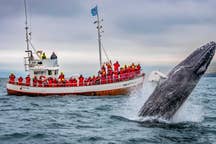
Husavik is a small town in North Iceland and one of the best places in the country for whale-watching tours. Boats depart from the harbor, with sightings commonly including baleen whales, dolphins, and porpoises. Seabirds, including Arctic puffins, are also frequently seen in the surrounding waters.
The town gained wider international attention after being featured in the 2020 film "Eurovision Song Contest: The Story of Fire Saga." Since then, Jaja Ding Dong Husavik, a bar inspired by the film, has become a recognizable stop for visitors and a lighthearted addition to the town’s harbor area.
Beyond whale watching and pop culture, Husavik has attractions linked to its maritime history. The Husavik Whale Museum and the Exploration Museum are located near the harbor, along with the town’s lighthouse. The Husavik map above shows how the town’s main attractions are laid out, with many located within easy walking distance of one another.
Map of Selfoss
Selfoss is a town in South Iceland that serves as a practical base for exploring nearby natural attractions. The map of Selfoss above highlights key points in and around town, including local landmarks and access routes to popular sightseeing areas.
Among the things to do in Selfoss are visits to Selfosskirkja, the town’s main church, and the Bobby Fischer Center, which honors the world chess champion who spent his later years in Iceland. The town is also especially convenient for trips around the Golden Circle, with access to nearby attractions like Kerid Crater, Ingolfsfjall Mountain, and the Reykjadalur Valley.
Plan Your Trip With Maps of Iceland
Planning a trip to Iceland becomes much easier with the right tools. The maps of Iceland bring together the country’s main regions, routes, and attractions, which makes it easier to see how everything connects before you arrive. Each Iceland travel map is designed to support trip planning, road trip routing, and sightseeing decisions.
To further support your planning, guides on things to do in Iceland and when to visit Iceland add valuable context to the maps, showing how experiences shift with the seasons and across different regions. Used together, they help transform route overviews into well-paced itineraries that reflect both travel conditions and personal interests.
What country does Iceland belong to?
Before independence, Iceland was under Danish rule for centuries, though it had gradually gained autonomy during the early twentieth century. Today, Iceland governs itself through a parliamentary republic, with the Althingi parliament, founded in 930, serving as one of the oldest legislative institutions in the world.
What should I know before traveling to Iceland?
Here are a few key things first-time visitors should know:
- The weather changes quickly: Icelandic weather can shift from sunshine to rain and strong wind within hours. Even in summer, pack waterproof layers, sturdy shoes, and warm clothing.
- Food and dining can be expensive: Restaurant meals often cost 3,400 to 5,400 ISK (25 to 40 USD) per person. Many travelers save money by shopping at grocery stores like Kronan.
- Driving takes longer than expected: The Ring Road (Route 1) circles the island for about 828 miles (1,332 kilometers). Frequent photo stops, gravel roads, and weather conditions can slow travel.
- Credit cards are accepted almost everywhere: You rarely need cash in Iceland. Cards and contactless payments work at gas stations, parking meters, and small cafes.
- Check road and weather updates daily: Conditions can change quickly. Use umferdin.is for road closures and vedur.is, the Icelandic Meteorological Office website, for weather alerts.
Is Iceland closer to America or Europe?
Flights from cities such as London, Copenhagen, and Amsterdam usually take about three hours, while flights from the U.S. East Coast, including New York or Boston, typically take five to six hours.
Where is the prettiest place in Iceland?
That said, Iceland’s beauty varies by landscape, and several places regularly rank among the most breathtaking:
- Jokulsarlon Glacier Lagoon (Southeast Iceland): A lagoon of drifting icebergs beside Vatnajokull, Europe’s largest glacier. Just across the road is Diamond Beach, where ice fragments wash onto black sand.
- Studlagil Canyon (East Iceland): Known for its tall basalt columns and bright turquoise glacier river. The canyon became widely known after the Karahnjukar Dam changed the river’s sediment flow.
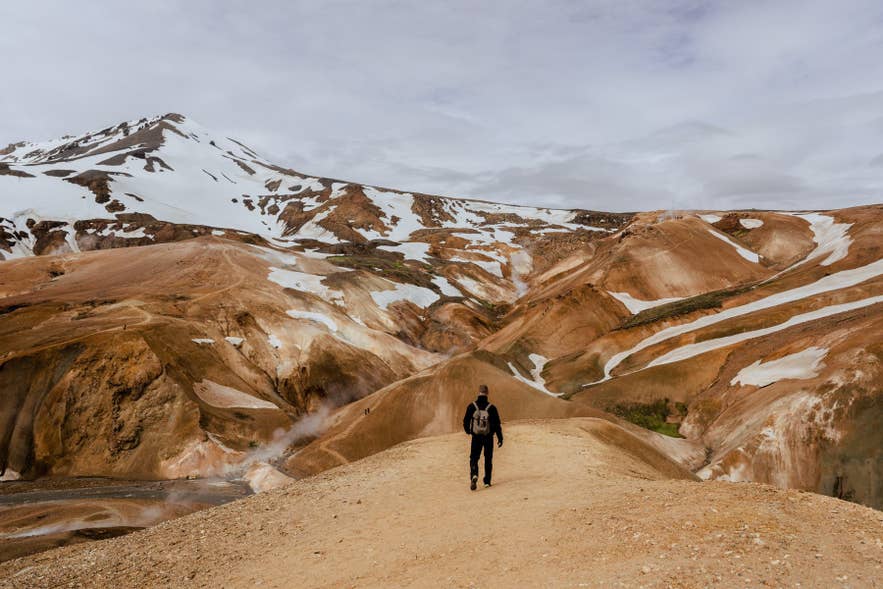
- Landmannalaugar (Iceland Highlands): Famous for colorful rhyolite mountains, lava fields, and natural hot springs. Accessible by F-roads such as F208 in summer with a 4x4 vehicle.
- Kirkjufell Mountain and Kirkjufellsfoss Waterfall (Snaefellsnes Peninsula): One of Iceland’s most photographed mountains, located near the town of Grundarfjordur.
- Dynjandi Waterfall (Westfjords): A massive tiered waterfall that spreads like a bridal veil down the mountainside. The main cascade is about 330 feet (100 meters) tall and is one of the most dramatic waterfalls in Northwest Iceland.
How far is Greenland from Iceland?
The closest stretch lies between Iceland’s Westfjords and the eastern coast of Greenland. In practical travel terms, flights from Reykjavik to Greenland, including routes to Nuuk, Kulusuk, or Ilulissat, usually take around two hours. Because of this short distance, Iceland often serves as a gateway for travelers visiting Greenland.
What is the number one attraction in Iceland?
Located about 31 miles (50 kilometers) from Reykjavik and 12 miles (20 kilometers) from Keflavik International Airport, the Blue Lagoon is one of the first or last stops for many travelers. Visitors soak in warm water that stays around 99 to 102 F (37 to 39 C) year-round while surrounded by black volcanic rock and steam rising from the lagoon.
Are jeans ok for Iceland?
How long does it take to fly from the US to Iceland?
Travel time depends on your departure city. Direct flights from New York, Boston, or Washington, D.C. usually take about five to six hours. Flights from Chicago or Denver take closer to seven hours, while departures from Los Angeles or Seattle generally take seven to eight hours.
What country is closest to Iceland?
Greenland lies west of Iceland, while the nearest European mainland countries are farther away. For comparison, Norway is about 600 miles (970 kilometers) from Iceland, and the Faroe Islands, a Danish territory, are about 280 miles (450 kilometers) southeast of Iceland.
Did these Iceland travel maps help you plan your route or narrow down which areas to visit? If you’ve traveled in Iceland before, which maps or routes did you find most useful? We’d love to hear your thoughts in the comments below.

I was the Content Manager at Guide to Iceland from 2013 to 2018, and now run the creative studio Huldufugl while working as a freelance writer. I’m passionate about storytelling, Icelandic culture, and creating thoughtful experiences through words and visuals.